

Symptoms:
- Men experiencing pelvic pain may describe it as burning, itching, aching, or other uncomfortable sensations within the penis, scrotum, testicles, perineal region, and sometimes the anal area.
- Sitting for long periods, participating in particular types of physical activity, or wearing certain clothing styles are frequent triggers that aggravate pelvic pain.
- Alongside this, men frequently report urinary difficulties such as urgency, frequent urination, hesitancy in starting, pain while urinating, and a weaker or slower urinary stream.
- Pelvic pain can also manifest during ejaculation, with discomfort noted in the penis, scrotum, or perineum at the time of release.
- Erectile dysfunction and reduced ejaculation strength are additional issues that may accompany these symptoms for some men.
- Gastrointestinal distress, including bloating, abdominal discomfort, and constipation, is also often linked with pelvic pain.
- These gastrointestinal problems may be brought on or worsened by sexual activity or physical exercise, though they can also occur on their own.
- Symptoms may come and go, presenting intermittently for some, while others experience them in a continuous and persistent manner.
Symptoms:
- Men experiencing pelvic pain may describe it as burning, itching, aching, or other uncomfortable sensations within the penis, scrotum, testicles, perineal region, and sometimes the anal area.
- Sitting for long periods, participating in particular types of physical activity, or wearing certain clothing styles are frequent triggers that aggravate pelvic pain.
- Alongside this, men frequently report urinary difficulties such as urgency, frequent urination, hesitancy in starting, pain while urinating, and a weaker or slower urinary stream.
- Pelvic pain can also manifest during ejaculation, with discomfort noted in the penis, scrotum, or perineum at the time of release.
- Erectile dysfunction and reduced ejaculation strength are additional issues that may accompany these symptoms for some men.
- Gastrointestinal distress, including bloating, abdominal discomfort, and constipation, is also often linked with pelvic pain.
- These gastrointestinal problems may be brought on or worsened by sexual activity or physical exercise, though they can also occur on their own.
- Symptoms may come and go, presenting intermittently for some, while others experience them in a continuous and persistent manner.
Associated Diagnoses
Chronic Pelvic Pain Syndrome/Male Pelvic Pain, Chronic Nonbacterial Prostatitis, Pudendal Neuralgia, Hard Flaccid Syndrome and Interstitial Cystitis/Painful Bladder Syndrome are all pain syndromes that cause pelvic pain due to pelvic floor dysfunction.
Associated Diagnoses
Chronic Pelvic Pain Syndrome/Male Pelvic Pain, Chronic Nonbacterial Prostatitis, Pudendal Neuralgia, Hard Flaccid Syndrome and Interstitial Cystitis/Painful Bladder Syndrome are all pain syndromes that cause pelvic pain due to pelvic floor dysfunction.
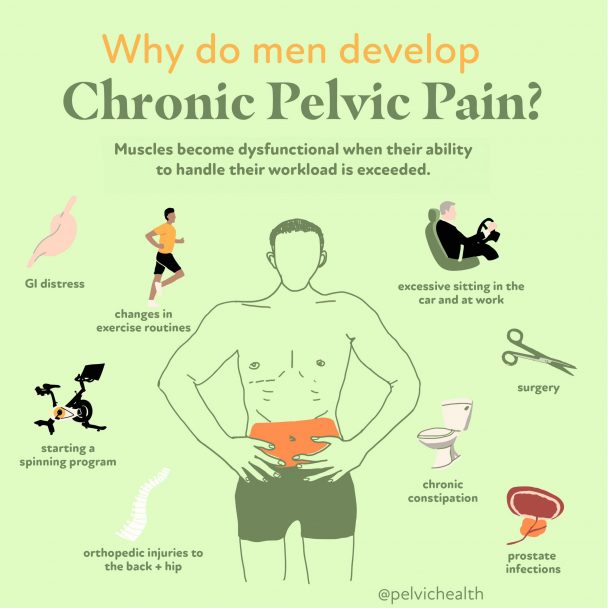
- Surgical trauma (vasectomy, benign prostatic hyperplasia (BPH) interventions, prostatectomy)
- Orthopedic injuries or other traumas (spine, hip, knee, and/or ankle injuries/pathology, accidents)
- Biomechanical or structural dysfunction (hip dysfunction, piriformis syndrome, scoliosis, leg length discrepancy)
- Excessive exercise or changes to exercise routine
- Excessive sitting
- Chronic constipation and straining
- Jelqing and/or attempts at gential enhancement or foreskin regeneration
- In rare cases, bladder, prostate, or sexually transmitted infections after successful resolution of infection
- The majority of men with pelvic pain, with or without urinary or bowel complaints, have pelvic floor dysfunction

Causes of Pelvic Pain
- Surgical trauma (vasectomy, benign prostatic hyperplasia (BPH) interventions, prostatectomy)
- Orthopedic injuries or other traumas (spine, hip, knee, and/or ankle injuries/pathology, accidents)
- Biomechanical or structural dysfunction (hip dysfunction, piriformis syndrome, scoliosis, leg length discrepancy)
- Excessive exercise or changes to exercise routine
- Excessive sitting
- Chronic constipation and straining
- Jelqing and/or attempts at gential enhancement or foreskin regeneration
- In rare cases, bladder, prostate, or sexually transmitted infections after successful resolution of infection
- The majority of men with pelvic pain, with or without urinary or bowel complaints, have pelvic floor dysfunction
Diagnostic Challenges
Studies have revealed that men living with pelvic pain can spend as many as seven years seeking an accurate diagnosis. The challenge lies in the fact that the symptoms overlap significantly with conditions such as prostate infection, bladder issues, or sexually transmitted infections. Since confirming a prostate infection is a complex and burdensome process, many urologists skip formal testing and instead prescribe antibiotics as a general measure. Another barrier to proper care is the lack of awareness among medical providers that pelvic floor dysfunction occurs in men as well as women. To complicate matters further, much of the training for pelvic floor physical and occupational therapy has been directed toward female patients, leaving male patients underserved. At PHRC, however, this limitation does not exist. We have extensive experience working with men who have pelvic floor dysfunction, and there are days in our practice when the number of men we treat even exceeds the number of women.
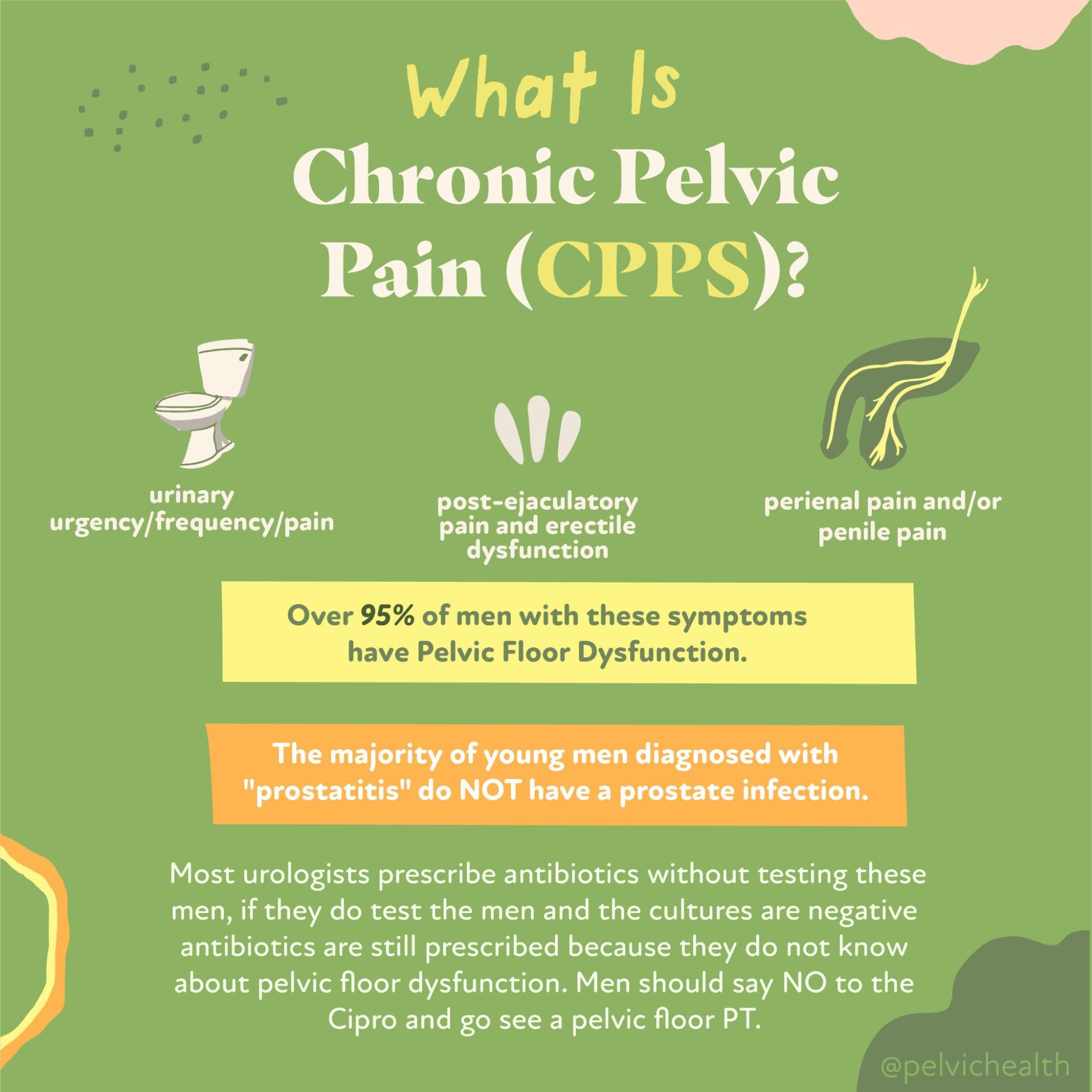
For men with pelvic pain, misdiagnosis is unfortunately common, with the majority being told they have prostatitis and being prescribed antibiotics despite the absence of infection. Research demonstrates that more than ninety percent of men presenting with genitourinary pelvic pain symptoms do not, in fact, have a prostate infection. Instead, they are categorized within the National Institutes of Health prostatitis classification system, under Category IIIa and Category IIIb, which together describe Chronic Pelvic Pain Syndrome (CPPS).
The classification system established by the National Institutes of Health is outlined in the following way:
Category I: Acute bacterial prostatitis, generally presenting with strong prostatitis symptoms, systemic infection, and an acute urinary tract infection caused by bacteria.
Category II: Chronic bacterial prostatitis, resulting from an ongoing bacterial infection in the prostate gland, which can present with or without symptoms but usually involves recurring urinary tract infections caused by the same bacterial strain.
Category IIIa: Inflammatory chronic pelvic pain syndrome, characterized by the discovery of white blood cells in semen, in prostatic secretions, or within a midstream urine specimen collected as the third sample.
Category IIIb: Noninflammatory chronic pelvic pain syndrome, in which semen and prostatic secretions show no white blood cells.
Category IV: Asymptomatic inflammatory prostatitis, where prostate inflammation is detected despite the absence of urinary or genital symptoms.
Diagnostic Challenges
Studies have revealed that men living with pelvic pain can spend as many as seven years seeking an accurate diagnosis. The challenge lies in the fact that the symptoms overlap significantly with conditions such as prostate infection, bladder issues, or sexually transmitted infections. Since confirming a prostate infection is a complex and burdensome process, many urologists skip formal testing and instead prescribe antibiotics as a general measure. Another barrier to proper care is the lack of awareness among medical providers that pelvic floor dysfunction occurs in men as well as women. To complicate matters further, much of the training for pelvic floor physical and occupational therapy has been directed toward female patients, leaving male patients underserved. At PHRC, however, this limitation does not exist. We have extensive experience working with men who have pelvic floor dysfunction, and there are days in our practice when the number of men we treat even exceeds the number of women.
For men with pelvic pain, misdiagnosis is unfortunately common, with the majority being told they have prostatitis and being prescribed antibiotics despite the absence of infection. Research demonstrates that more than ninety percent of men presenting with genitourinary pelvic pain symptoms do not, in fact, have a prostate infection. Instead, they are categorized within the National Institutes of Health prostatitis classification system, under Category IIIa and Category IIIb, which together describe Chronic Pelvic Pain Syndrome (CPPS).
The classification system established by the National Institutes of Health is outlined in the following way:
Category I: Acute bacterial prostatitis, generally presenting with strong prostatitis symptoms, systemic infection, and an acute urinary tract infection caused by bacteria.
Category II: Chronic bacterial prostatitis, resulting from an ongoing bacterial infection in the prostate gland, which can present with or without symptoms but usually involves recurring urinary tract infections caused by the same bacterial strain.
Category IIIa: Inflammatory chronic pelvic pain syndrome, characterized by the discovery of white blood cells in semen, in prostatic secretions, or within a midstream urine specimen collected as the third sample.
Category IIIb: Noninflammatory chronic pelvic pain syndrome, in which semen and prostatic secretions show no white blood cells.
Category IV: Asymptomatic inflammatory prostatitis, where prostate inflammation is detected despite the absence of urinary or genital symptoms.
Treatment:
How We Can Help You In Belmont
Men in Belmont who experience pelvic pain can gain significant relief and guidance through an evaluation with pelvic floor physical and occupational therapists who are trained to address this specific condition. At the evaluation, our therapists will carefully gather your history, explore your current symptoms, revisit your prior diagnoses, and discuss any treatments you have already attempted, whether or not those treatments have been helpful. We know that men in Belmont often come to us after years of frustration, and we want you to know that we fully understand the challenges you have endured in getting to this point.
The physical examination includes a detailed assessment of your muscles, connective tissues, joints, nerves, and body movement patterns. After completing the exam, your therapist will go over the results with you, providing a clear picture of how your pain may have developed. From there, an assessment will be created, outlining both short-term and long-term goals for treatment. Most men in Belmont attend therapy one to two times per week for a period of about 12 weeks. In addition, you will receive a personalized home exercise program that complements your therapy sessions. To ensure the most complete recovery, your therapist will work closely with other members of your healthcare team. Our mission is to provide the men of Belmont with comprehensive care that not only addresses pelvic pain but restores overall quality of life.

Treatment:
How We Can Help You In Belmont
Men in Belmont who experience pelvic pain can gain significant relief and guidance through an evaluation with pelvic floor physical and occupational therapists who are trained to address this specific condition. At the evaluation, our therapists will carefully gather your history, explore your current symptoms, revisit your prior diagnoses, and discuss any treatments you have already attempted, whether or not those treatments have been helpful. We know that men in Belmont often come to us after years of frustration, and we want you to know that we fully understand the challenges you have endured in getting to this point.
The physical examination includes a detailed assessment of your muscles, connective tissues, joints, nerves, and body movement patterns. After completing the exam, your therapist will go over the results with you, providing a clear picture of how your pain may have developed. From there, an assessment will be created, outlining both short-term and long-term goals for treatment. Most men in Belmont attend therapy one to two times per week for a period of about 12 weeks. In addition, you will receive a personalized home exercise program that complements your therapy sessions. To ensure the most complete recovery, your therapist will work closely with other members of your healthcare team. Our mission is to provide the men of Belmont with comprehensive care that not only addresses pelvic pain but restores overall quality of life.
How Can We Help You?
If you would like to reach out with your questions or comments, please use the form provided below. Be sure to include your e-mail address, as this allows us to respond directly to you. All information you share with us is handled with care, and you can feel confident that your privacy will always be respected.


Join The Newsletter. Win a copy of our book, “Pelvic Pain Explained!”
We greatly enjoy hearing from our website visitors and learning more about the people who connect with us. Please share a little bit about who you are, and consider subscribing to the PHRC e-newsletter to receive updates, valuable information, and ongoing resources.
*Subscribers automatically eligible to win our book, “Pelvic Pain Explained.”

Pelvic Pain Explained is a work that sheds light on the story of how pelvic pain arises in patients, the struggles faced during the process of diagnosis, the difficulty that both patients and providers face in evaluating and selecting treatment approaches, and the way this hidden condition influences relationships and daily life. Beyond this, it provides readers with greater understanding and depth about an issue that is too often overlooked.