

Symptoms:
- Pelvic pain in men usually presents as burning, itching, aching, or other painful sensations affecting the penis, scrotum, testicles, perineum, or anal region.
- Such pain is frequently worsened by prolonged sitting, particular exercises, or restrictive clothing that places strain on the pelvic area.
- Urinary complications often occur alongside pelvic pain, with symptoms such as urgency, frequent trips to the bathroom, hesitancy, painful urination, or a slower and weaker urinary stream.
- Pain with ejaculation is another frequent concern, often felt within the penis, scrotum, or perineal region.
- Erectile difficulties, sometimes accompanied by a noticeable weakening in ejaculation force, can also occur as part of this condition.
- Men may additionally suffer from gastrointestinal complaints including bloating, abdominal discomfort, and constipation.
- These digestive problems are sometimes worsened by ejaculation or physical exertion, though they may also arise without any clear trigger.
- For some men the symptoms appear on and off over time, while for others they remain constant and ongoing.
Symptoms:
- Pelvic pain in men usually presents as burning, itching, aching, or other painful sensations affecting the penis, scrotum, testicles, perineum, or anal region.
- Such pain is frequently worsened by prolonged sitting, particular exercises, or restrictive clothing that places strain on the pelvic area.
- Urinary complications often occur alongside pelvic pain, with symptoms such as urgency, frequent trips to the bathroom, hesitancy, painful urination, or a slower and weaker urinary stream.
- Pain with ejaculation is another frequent concern, often felt within the penis, scrotum, or perineal region.
- Erectile difficulties, sometimes accompanied by a noticeable weakening in ejaculation force, can also occur as part of this condition.
- Men may additionally suffer from gastrointestinal complaints including bloating, abdominal discomfort, and constipation.
- These digestive problems are sometimes worsened by ejaculation or physical exertion, though they may also arise without any clear trigger.
- For some men the symptoms appear on and off over time, while for others they remain constant and ongoing.
Associated Diagnoses
Chronic Pelvic Pain Syndrome/Male Pelvic Pain, Chronic Nonbacterial Prostatitis, Pudendal Neuralgia, Hard Flaccid Syndrome and Interstitial Cystitis/Painful Bladder Syndrome are all pain syndromes that cause pelvic pain due to pelvic floor dysfunction.
Associated Diagnoses
Chronic Pelvic Pain Syndrome/Male Pelvic Pain, Chronic Nonbacterial Prostatitis, Pudendal Neuralgia, Hard Flaccid Syndrome and Interstitial Cystitis/Painful Bladder Syndrome are all pain syndromes that cause pelvic pain due to pelvic floor dysfunction.
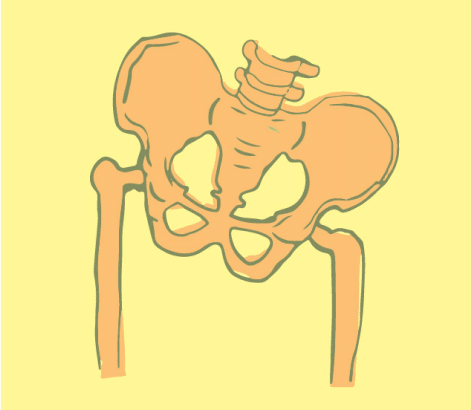
- Surgical trauma (vasectomy, benign prostatic hyperplasia (BPH) interventions, prostatectomy)
- Orthopedic injuries or other traumas (spine, hip, knee, and/or ankle injuries/pathology, accidents)
- Biomechanical or structural dysfunction (hip dysfunction, piriformis syndrome, scoliosis, leg length discrepancy)
- Excessive exercise or changes to exercise routine
- Excessive sitting
- Chronic constipation and straining
- Jelqing and/or attempts at gential enhancement or foreskin regeneration
- In rare cases, bladder, prostate, or sexually transmitted infections after successful resolution of infection
- The majority of men with pelvic pain, with or without urinary or bowel complaints, have pelvic floor dysfunction

Causes of Pelvic Pain
- Surgical trauma (vasectomy, benign prostatic hyperplasia (BPH) interventions, prostatectomy)
- Orthopedic injuries or other traumas (spine, hip, knee, and/or ankle injuries/pathology, accidents)
- Biomechanical or structural dysfunction (hip dysfunction, piriformis syndrome, scoliosis, leg length discrepancy)
- Excessive exercise or changes to exercise routine
- Excessive sitting
- Chronic constipation and straining
- Jelqing and/or attempts at gential enhancement or foreskin regeneration
- In rare cases, bladder, prostate, or sexually transmitted infections after successful resolution of infection
- The majority of men with pelvic pain, with or without urinary or bowel complaints, have pelvic floor dysfunction
Diagnostic Challenges
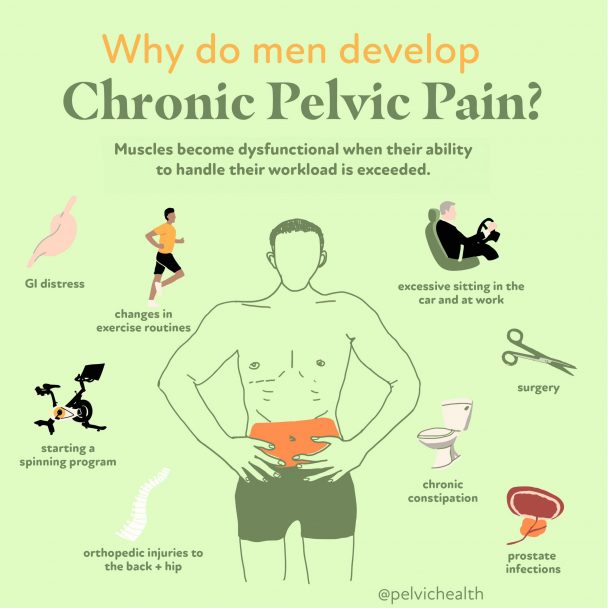
Research findings indicate that men experiencing pelvic pain may wait as long as seven years before achieving an accurate diagnosis. This delay arises because the symptoms of male pelvic pain resemble those linked to prostate disease, bladder infections, or sexually transmitted infections, which often leads to confusion in medical assessment. Testing for prostate infections involves lengthy and difficult procedures for both patient and doctor, which is why many urologists choose to bypass this process by prescribing antibiotics as an initial treatment without verification. The lack of provider awareness that men can develop pelvic floor dysfunction further contributes to mismanagement. To make things even more complicated, many pelvic floor physical therapists and occupational therapists receive training that focuses exclusively on women. At PHRC, our clinicians approach things differently, with extensive experience in treating male patients. In fact, on certain days our clinics treat more men than women for pelvic floor-related concerns.
Men experiencing pelvic pain are almost always given the diagnosis of prostatitis and provided with antibiotic treatment, even though testing reveals they do not have an infection. Evidence from research shows that over ninety percent of men with pelvic pain affecting the genitourinary system do not actually suffer from a prostate infection. Instead, they fall into the National Institutes of Health prostatitis classification categories, specifically IIIa and IIIb, which are grouped under Chronic Pelvic Pain Syndrome (CPPS).
The prostatitis classification system from the National Institutes of Health includes the following categories:
Category I: Acute bacterial prostatitis, a diagnosis marked by severe pelvic or urinary symptoms, systemic illness, and an acute urinary tract infection associated with bacteria.
Category II: Chronic bacterial prostatitis, caused by a chronic bacterial infection in the prostate, which may or may not involve symptoms but frequently leads to repeated urinary tract infections with the same bacterial strain.
Category IIIa: Inflammatory chronic pelvic pain syndrome, in which semen, expressed prostatic secretions, or the third midstream bladder sample test positive for white blood cells.
Category IIIb: Noninflammatory chronic pelvic pain syndrome, in which no white blood cells are detected in semen or in prostatic secretions.
Category IV: Asymptomatic inflammatory prostatitis, identified by prostate inflammation in men who do not experience any urinary or pelvic symptoms.
Diagnostic Challenges
Research findings indicate that men experiencing pelvic pain may wait as long as seven years before achieving an accurate diagnosis. This delay arises because the symptoms of male pelvic pain resemble those linked to prostate disease, bladder infections, or sexually transmitted infections, which often leads to confusion in medical assessment. Testing for prostate infections involves lengthy and difficult procedures for both patient and doctor, which is why many urologists choose to bypass this process by prescribing antibiotics as an initial treatment without verification. The lack of provider awareness that men can develop pelvic floor dysfunction further contributes to mismanagement. To make things even more complicated, many pelvic floor physical therapists and occupational therapists receive training that focuses exclusively on women. At PHRC, our clinicians approach things differently, with extensive experience in treating male patients. In fact, on certain days our clinics treat more men than women for pelvic floor-related concerns.
Men experiencing pelvic pain are almost always given the diagnosis of prostatitis and provided with antibiotic treatment, even though testing reveals they do not have an infection. Evidence from research shows that over ninety percent of men with pelvic pain affecting the genitourinary system do not actually suffer from a prostate infection. Instead, they fall into the National Institutes of Health prostatitis classification categories, specifically IIIa and IIIb, which are grouped under Chronic Pelvic Pain Syndrome (CPPS).
The prostatitis classification system from the National Institutes of Health includes the following categories:
Category I: Acute bacterial prostatitis, a diagnosis marked by severe pelvic or urinary symptoms, systemic illness, and an acute urinary tract infection associated with bacteria.
Category II: Chronic bacterial prostatitis, caused by a chronic bacterial infection in the prostate, which may or may not involve symptoms but frequently leads to repeated urinary tract infections with the same bacterial strain.
Category IIIa: Inflammatory chronic pelvic pain syndrome, in which semen, expressed prostatic secretions, or the third midstream bladder sample test positive for white blood cells.
Category IIIb: Noninflammatory chronic pelvic pain syndrome, in which no white blood cells are detected in semen or in prostatic secretions.
Category IV: Asymptomatic inflammatory prostatitis, identified by prostate inflammation in men who do not experience any urinary or pelvic symptoms.
Treatment:
How We Can Help You In Daly City
For men in Daly City who are dealing with the challenges of pelvic pain, an evaluation with pelvic floor physical and occupational therapists can provide the targeted care that has often been missing in their journey. At your evaluation, our therapists will take the time to review your history in detail, including your current symptoms, the diagnoses you may have been given in the past, and the treatments you may have tried, along with how successful or unsuccessful those treatments have been. We are aware that men in Daly City often feel discouraged after years of misdiagnosis and ineffective care, and we want you to know that we truly understand that frustration.
When it comes to your physical examination, our therapists will assess your muscles, nerves, joints, tissues, and movement mechanics to uncover the source of your pain. Once the examination is complete, your therapist will go over the findings with you and provide an assessment that explains how the pain developed. Treatment goals will then be set for both the short term and the long term. Typically, therapy sessions are held one to two times per week for approximately 12 weeks, supported by a home exercise program designed for you. We will also collaborate with the other professionals on your healthcare team to ensure continuity of care. For men in Daly City, our aim is to offer the guidance, treatment, and support needed to recover and to regain control over daily life.

Treatment:
How We Can Help You In Daly City
For men in Daly City who are dealing with the challenges of pelvic pain, an evaluation with pelvic floor physical and occupational therapists can provide the targeted care that has often been missing in their journey. At your evaluation, our therapists will take the time to review your history in detail, including your current symptoms, the diagnoses you may have been given in the past, and the treatments you may have tried, along with how successful or unsuccessful those treatments have been. We are aware that men in Daly City often feel discouraged after years of misdiagnosis and ineffective care, and we want you to know that we truly understand that frustration.
When it comes to your physical examination, our therapists will assess your muscles, nerves, joints, tissues, and movement mechanics to uncover the source of your pain. Once the examination is complete, your therapist will go over the findings with you and provide an assessment that explains how the pain developed. Treatment goals will then be set for both the short term and the long term. Typically, therapy sessions are held one to two times per week for approximately 12 weeks, supported by a home exercise program designed for you. We will also collaborate with the other professionals on your healthcare team to ensure continuity of care. For men in Daly City, our aim is to offer the guidance, treatment, and support needed to recover and to regain control over daily life.
How Can We Help You?
To get in touch with us, please complete the form below with your questions or comments. Your e-mail address must be included in order for us to send a reply. Every piece of information you provide will remain secure and confidential, so you can feel comfortable reaching out.


Join The Newsletter. Win a copy of our book, “Pelvic Pain Explained!”
We look forward to connecting with visitors to our website. We encourage you to share a little more about yourself and, while you are here, sign up for the PHRC e-newsletter to receive updates and the latest information.
*Subscribers automatically eligible to win our book, “Pelvic Pain Explained.”

At its essence, Pelvic Pain Explained is the story of how pelvic pain develops in patients, the obstacles encountered in receiving an accurate diagnosis and effective treatment, and the immense challenge of sorting through different treatment strategies. It also illustrates the impact that an unseen medical condition has on daily routines, family dynamics, and personal relationships, while offering readers much more insight into this often misunderstood subject.