

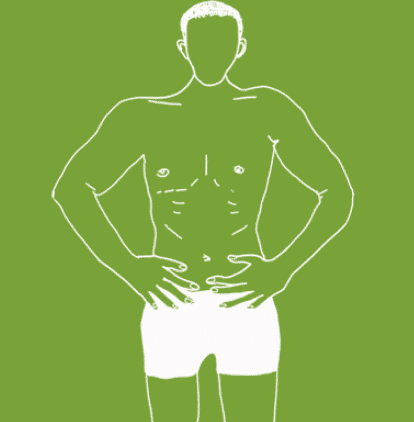
Symptoms:
- Male pelvic pain is often described as burning, itching, aching, or other painful sensations affecting areas such as the penis, scrotum, testicles, perineum, and anus.
- Sitting for extended periods, performing specific exercise routines, or wearing certain clothing may all contribute to an increase in discomfort.
- Along with pelvic pain, many men experience urinary issues that include urgency, increased frequency, hesitancy, pain during urination, or a weaker urinary stream.
- Ejaculation may trigger pain in sensitive areas like the penis, scrotum, or perineum, making sexual activity distressing.
- Erectile dysfunction is another symptom that may appear, often paired with reduced power or force during ejaculation.
- Gastrointestinal symptoms such as bloating, abdominal pain, and constipation are frequently observed alongside pelvic pain.
- These digestive problems can intensify after ejaculation or exercise, but in some cases they arise without provocation.
- Symptoms can vary greatly, being either intermittent with occasional relief or continuous and persistent.
Symptoms:
- Male pelvic pain is often described as burning, itching, aching, or other painful sensations affecting areas such as the penis, scrotum, testicles, perineum, and anus.
- Sitting for extended periods, performing specific exercise routines, or wearing certain clothing may all contribute to an increase in discomfort.
- Along with pelvic pain, many men experience urinary issues that include urgency, increased frequency, hesitancy, pain during urination, or a weaker urinary stream.
- Ejaculation may trigger pain in sensitive areas like the penis, scrotum, or perineum, making sexual activity distressing.
- Erectile dysfunction is another symptom that may appear, often paired with reduced power or force during ejaculation.
- Gastrointestinal symptoms such as bloating, abdominal pain, and constipation are frequently observed alongside pelvic pain.
- These digestive problems can intensify after ejaculation or exercise, but in some cases they arise without provocation.
- Symptoms can vary greatly, being either intermittent with occasional relief or continuous and persistent.
Associated Diagnoses
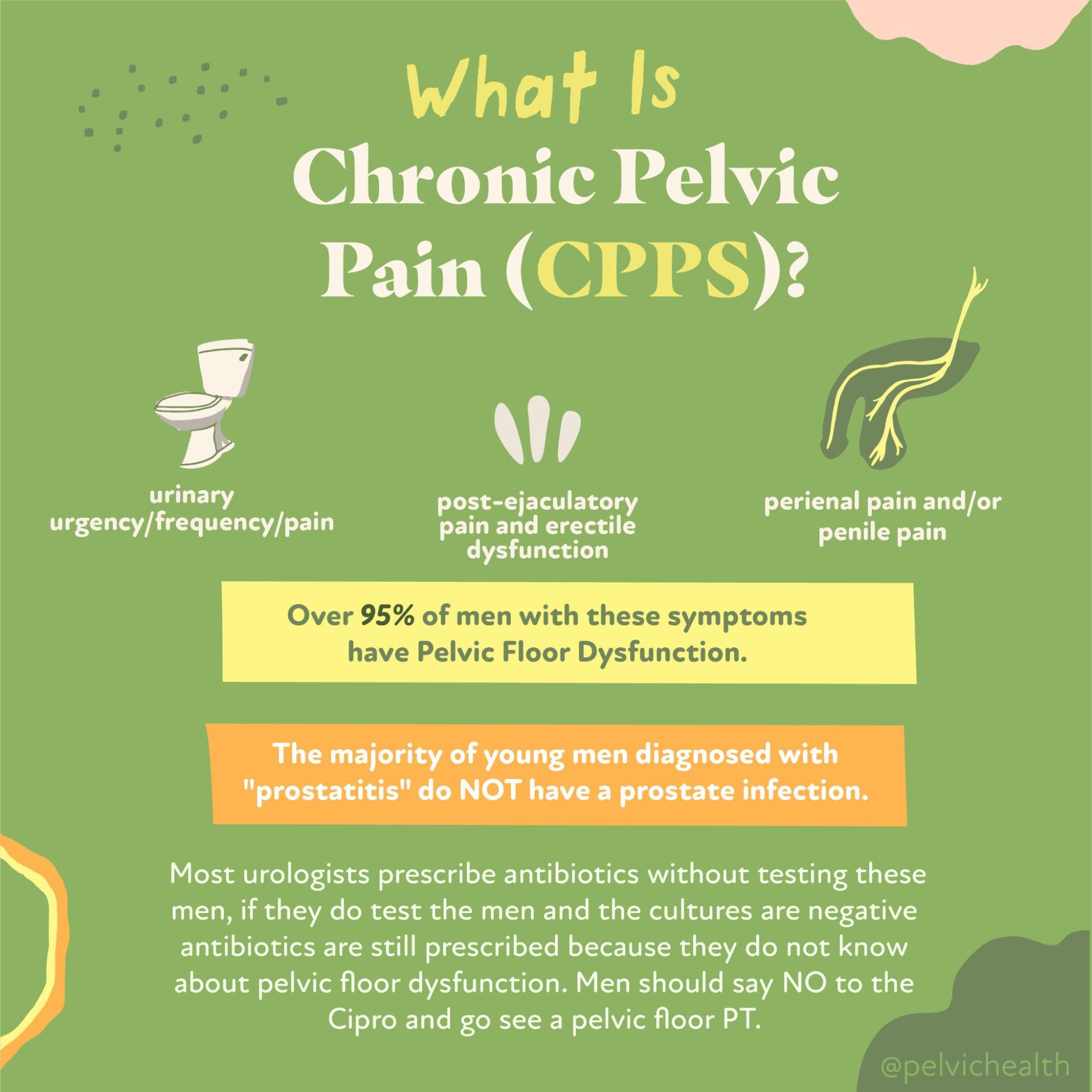
Chronic Pelvic Pain Syndrome/Male Pelvic Pain, Chronic Nonbacterial Prostatitis, Pudendal Neuralgia, Hard Flaccid Syndrome and Interstitial Cystitis/Painful Bladder Syndrome are all pain syndromes that cause pelvic pain due to pelvic floor dysfunction.
Associated Diagnoses
Chronic Pelvic Pain Syndrome/Male Pelvic Pain, Chronic Nonbacterial Prostatitis, Pudendal Neuralgia, Hard Flaccid Syndrome and Interstitial Cystitis/Painful Bladder Syndrome are all pain syndromes that cause pelvic pain due to pelvic floor dysfunction.
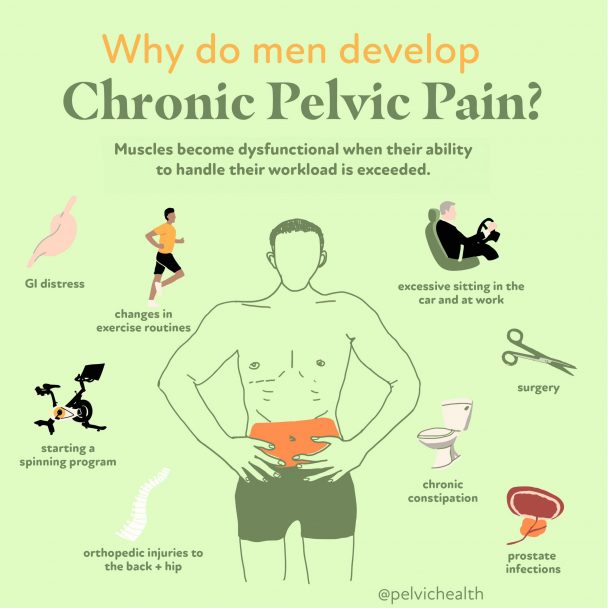
- Surgical trauma (vasectomy, benign prostatic hyperplasia (BPH) interventions, prostatectomy)
- Orthopedic injuries or other traumas (spine, hip, knee, and/or ankle injuries/pathology, accidents)
- Biomechanical or structural dysfunction (hip dysfunction, piriformis syndrome, scoliosis, leg length discrepancy)
- Excessive exercise or changes to exercise routine
- Excessive sitting
- Chronic constipation and straining
- Jelqing and/or attempts at gential enhancement or foreskin regeneration
- In rare cases, bladder, prostate, or sexually transmitted infections after successful resolution of infection
- The majority of men with pelvic pain, with or without urinary or bowel complaints, have pelvic floor dysfunction

Causes of Pelvic Pain
- Surgical trauma (vasectomy, benign prostatic hyperplasia (BPH) interventions, prostatectomy)
- Orthopedic injuries or other traumas (spine, hip, knee, and/or ankle injuries/pathology, accidents)
- Biomechanical or structural dysfunction (hip dysfunction, piriformis syndrome, scoliosis, leg length discrepancy)
- Excessive exercise or changes to exercise routine
- Excessive sitting
- Chronic constipation and straining
- Jelqing and/or attempts at gential enhancement or foreskin regeneration
- In rare cases, bladder, prostate, or sexually transmitted infections after successful resolution of infection
- The majority of men with pelvic pain, with or without urinary or bowel complaints, have pelvic floor dysfunction
Diagnostic Challenges
Clinical research has made clear that men with pelvic pain frequently wait up to seven years before being given the correct diagnosis. This delay occurs because the symptoms mirror those of prostate infections, bladder conditions, or sexually transmitted infections, which can easily mislead providers. Since diagnosing prostate infections requires a lengthy and difficult process, many urologists decide to prescribe antibiotics without performing the necessary tests. Another issue is that many physicians do not recognize that pelvic floor dysfunction can affect men, not only women. The challenge is compounded by the fact that most pelvic floor therapy programs for physical and occupational therapists focus primarily on women. At PHRC, this is not the case. Our team is highly experienced in working with men, and on certain days we actually treat more male patients with pelvic floor dysfunction than female patients.
Men who present with pelvic pain are frequently misdiagnosed with prostatitis and often receive unnecessary prescriptions for antibiotics, despite the absence of infection. Studies confirm that more than ninety percent of men with genitourinary pelvic pain symptoms do not have a prostate infection. Instead, their condition is classified according to the National Institutes of Health prostatitis syndromes as Category IIIa and Category IIIb, collectively known as Chronic Pelvic Pain Syndrome (CPPS).
The prostatitis classification framework created by the National Institutes of Health is outlined as follows:
Category I: Acute bacterial prostatitis, typically presenting with marked prostatitis symptoms, systemic signs of illness, and a bacterial urinary tract infection of acute onset.
Category II: Chronic bacterial prostatitis, the result of a continuing bacterial infection in the prostate gland that may present with or without symptoms but often causes recurrent urinary tract infections by the same bacterial strain.
Category IIIa: Inflammatory chronic pelvic pain syndrome, diagnosed when white blood cells are discovered in semen, prostatic secretions, or in the third midstream urine sample.
Category IIIb: Noninflammatory chronic pelvic pain syndrome, determined when semen and expressed prostatic secretions show no white blood cells.
Category IV: Asymptomatic inflammatory prostatitis, a category where inflammation of the prostate is present without any genitourinary symptoms being reported.
Diagnostic Challenges
Clinical research has made clear that men with pelvic pain frequently wait up to seven years before being given the correct diagnosis. This delay occurs because the symptoms mirror those of prostate infections, bladder conditions, or sexually transmitted infections, which can easily mislead providers. Since diagnosing prostate infections requires a lengthy and difficult process, many urologists decide to prescribe antibiotics without performing the necessary tests. Another issue is that many physicians do not recognize that pelvic floor dysfunction can affect men, not only women. The challenge is compounded by the fact that most pelvic floor therapy programs for physical and occupational therapists focus primarily on women. At PHRC, this is not the case. Our team is highly experienced in working with men, and on certain days we actually treat more male patients with pelvic floor dysfunction than female patients.
Men who present with pelvic pain are frequently misdiagnosed with prostatitis and often receive unnecessary prescriptions for antibiotics, despite the absence of infection. Studies confirm that more than ninety percent of men with genitourinary pelvic pain symptoms do not have a prostate infection. Instead, their condition is classified according to the National Institutes of Health prostatitis syndromes as Category IIIa and Category IIIb, collectively known as Chronic Pelvic Pain Syndrome (CPPS).
The prostatitis classification framework created by the National Institutes of Health is outlined as follows:
Category I: Acute bacterial prostatitis, typically presenting with marked prostatitis symptoms, systemic signs of illness, and a bacterial urinary tract infection of acute onset.
Category II: Chronic bacterial prostatitis, the result of a continuing bacterial infection in the prostate gland that may present with or without symptoms but often causes recurrent urinary tract infections by the same bacterial strain.
Category IIIa: Inflammatory chronic pelvic pain syndrome, diagnosed when white blood cells are discovered in semen, prostatic secretions, or in the third midstream urine sample.
Category IIIb: Noninflammatory chronic pelvic pain syndrome, determined when semen and expressed prostatic secretions show no white blood cells.
Category IV: Asymptomatic inflammatory prostatitis, a category where inflammation of the prostate is present without any genitourinary symptoms being reported.
Treatment:
How We Can Help You In Mountain View

Men in Mountain View who deal with pelvic pain have the opportunity to receive focused and compassionate care through an evaluation with pelvic floor physical and occupational therapists. During the evaluation, your therapist will carefully listen as you explain your symptoms, go through your medical history, review any diagnoses you may have received, and assess past treatments, noting both effective and ineffective outcomes. We know that men in Mountain View often come to us feeling discouraged after years of misdiagnosis or failed treatments, and we want you to know that your experience is fully understood and validated here.
Your physical examination will consist of a careful evaluation of your muscles, joints, nerves, tissues, and movement habits. Once the exam is complete, your therapist will provide you with a clear summary of the findings and an explanation of how your pain developed. From there, an assessment will be written with specific goals for both the short term and the long term. Most men in Mountain View attend therapy sessions one to two times per week for around 12 weeks, supported by a personalized home exercise program. Our therapists also collaborate with the other professionals involved in your care to make sure your treatment is complete and well-coordinated. For men in Mountain View, our priority is to help you overcome pelvic pain and restore your quality of life.

Treatment:
How We Can Help You In Mountain View
Men in Mountain View who deal with pelvic pain have the opportunity to receive focused and compassionate care through an evaluation with pelvic floor physical and occupational therapists. During the evaluation, your therapist will carefully listen as you explain your symptoms, go through your medical history, review any diagnoses you may have received, and assess past treatments, noting both effective and ineffective outcomes. We know that men in Mountain View often come to us feeling discouraged after years of misdiagnosis or failed treatments, and we want you to know that your experience is fully understood and validated here.
Your physical examination will consist of a careful evaluation of your muscles, joints, nerves, tissues, and movement habits. Once the exam is complete, your therapist will provide you with a clear summary of the findings and an explanation of how your pain developed. From there, an assessment will be written with specific goals for both the short term and the long term. Most men in Mountain View attend therapy sessions one to two times per week for around 12 weeks, supported by a personalized home exercise program. Our therapists also collaborate with the other professionals involved in your care to make sure your treatment is complete and well-coordinated. For men in Mountain View, our priority is to help you overcome pelvic pain and restore your quality of life.
How Can We Help You?
To send us your comments or ask any questions, please use the form below. It is essential that you include your e-mail address so that we can provide you with a response. All of the information you provide will be kept private, as we are committed to ensuring confidentiality.


Join The Newsletter. Win a copy of our book, “Pelvic Pain Explained!”
We value hearing from our website visitors and look forward to learning more about you. Please tell us a bit about yourself and take advantage of the opportunity to sign up for the PHRC e-newsletter, where the latest updates and helpful resources are shared.
*Subscribers automatically eligible to win our book, “Pelvic Pain Explained.”

Pelvic Pain Explained describes the journey of patients who suffer from pelvic pain, the difficulties that occur during diagnosis and treatment, and the challenge of navigating multiple treatment approaches. It also focuses on the way this hidden condition affects everyday experiences, personal connections, and emotional well-being, while offering much more in the way of understanding and insight.