

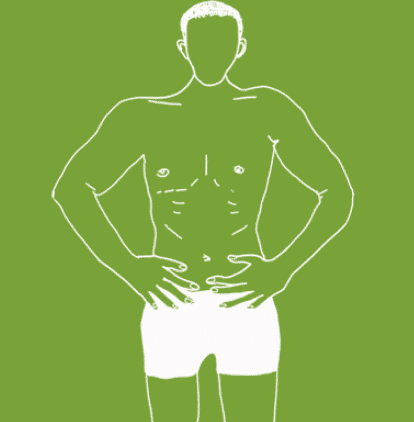
Symptoms:
- Pelvic pain in men can involve burning sensations, itching, aching, or other forms of discomfort felt in areas such as the penis, scrotum, testicles, perineum, and sometimes the anal region.
- This discomfort is often intensified by external factors including prolonged sitting, specific exercise activities, and certain types of restrictive or tight-fitting clothing.
- In addition to the pain itself, many men develop urinary issues that may include urgency, increased frequency, hesitancy when starting urination, as well as pain or a diminished urinary flow.
- Pain in the pelvic region may also extend to ejaculation, where men report discomfort in the penis, scrotum, or perineum during the process.
- Some men also note erectile dysfunction, often paired with reduced intensity or decreased strength of ejaculation.
- Gastrointestinal symptoms are another concern, with bloating, abdominal discomfort, and constipation commonly reported.
- In certain cases, gastrointestinal distress may worsen with activities such as exercise or ejaculation, but it can also occur unexpectedly and without obvious cause.
- These symptoms do not always remain consistent, as some men find them occurring in cycles, while others deal with constant, unrelenting discomfort.
Symptoms:
- Pelvic pain in men can involve burning sensations, itching, aching, or other forms of discomfort felt in areas such as the penis, scrotum, testicles, perineum, and sometimes the anal region.
- This discomfort is often intensified by external factors including prolonged sitting, specific exercise activities, and certain types of restrictive or tight-fitting clothing.
- In addition to the pain itself, many men develop urinary issues that may include urgency, increased frequency, hesitancy when starting urination, as well as pain or a diminished urinary flow.
- Pain in the pelvic region may also extend to ejaculation, where men report discomfort in the penis, scrotum, or perineum during the process.
- Some men also note erectile dysfunction, often paired with reduced intensity or decreased strength of ejaculation.
- Gastrointestinal symptoms are another concern, with bloating, abdominal discomfort, and constipation commonly reported.
- In certain cases, gastrointestinal distress may worsen with activities such as exercise or ejaculation, but it can also occur unexpectedly and without obvious cause.
- These symptoms do not always remain consistent, as some men find them occurring in cycles, while others deal with constant, unrelenting discomfort.
Associated Diagnoses
Chronic Pelvic Pain Syndrome/Male Pelvic Pain, Chronic Nonbacterial Prostatitis, Pudendal Neuralgia, Hard Flaccid Syndrome and Interstitial Cystitis/Painful Bladder Syndrome are all pain syndromes that cause pelvic pain due to pelvic floor dysfunction.
Associated Diagnoses
Chronic Pelvic Pain Syndrome/Male Pelvic Pain, Chronic Nonbacterial Prostatitis, Pudendal Neuralgia, Hard Flaccid Syndrome and Interstitial Cystitis/Painful Bladder Syndrome are all pain syndromes that cause pelvic pain due to pelvic floor dysfunction.
- Surgical trauma (vasectomy, benign prostatic hyperplasia (BPH) interventions, prostatectomy)
- Orthopedic injuries or other traumas (spine, hip, knee, and/or ankle injuries/pathology, accidents)
- Biomechanical or structural dysfunction (hip dysfunction, piriformis syndrome, scoliosis, leg length discrepancy)
- Excessive exercise or changes to exercise routine
- Excessive sitting
- Chronic constipation and straining
- Jelqing and/or attempts at gential enhancement or foreskin regeneration
- In rare cases, bladder, prostate, or sexually transmitted infections after successful resolution of infection
- The majority of men with pelvic pain, with or without urinary or bowel complaints, have pelvic floor dysfunction

Causes of Pelvic Pain
- Surgical trauma (vasectomy, benign prostatic hyperplasia (BPH) interventions, prostatectomy)
- Orthopedic injuries or other traumas (spine, hip, knee, and/or ankle injuries/pathology, accidents)
- Biomechanical or structural dysfunction (hip dysfunction, piriformis syndrome, scoliosis, leg length discrepancy)
- Excessive exercise or changes to exercise routine
- Excessive sitting
- Chronic constipation and straining
- Jelqing and/or attempts at gential enhancement or foreskin regeneration
- In rare cases, bladder, prostate, or sexually transmitted infections after successful resolution of infection
- The majority of men with pelvic pain, with or without urinary or bowel complaints, have pelvic floor dysfunction

Diagnostic Challenges
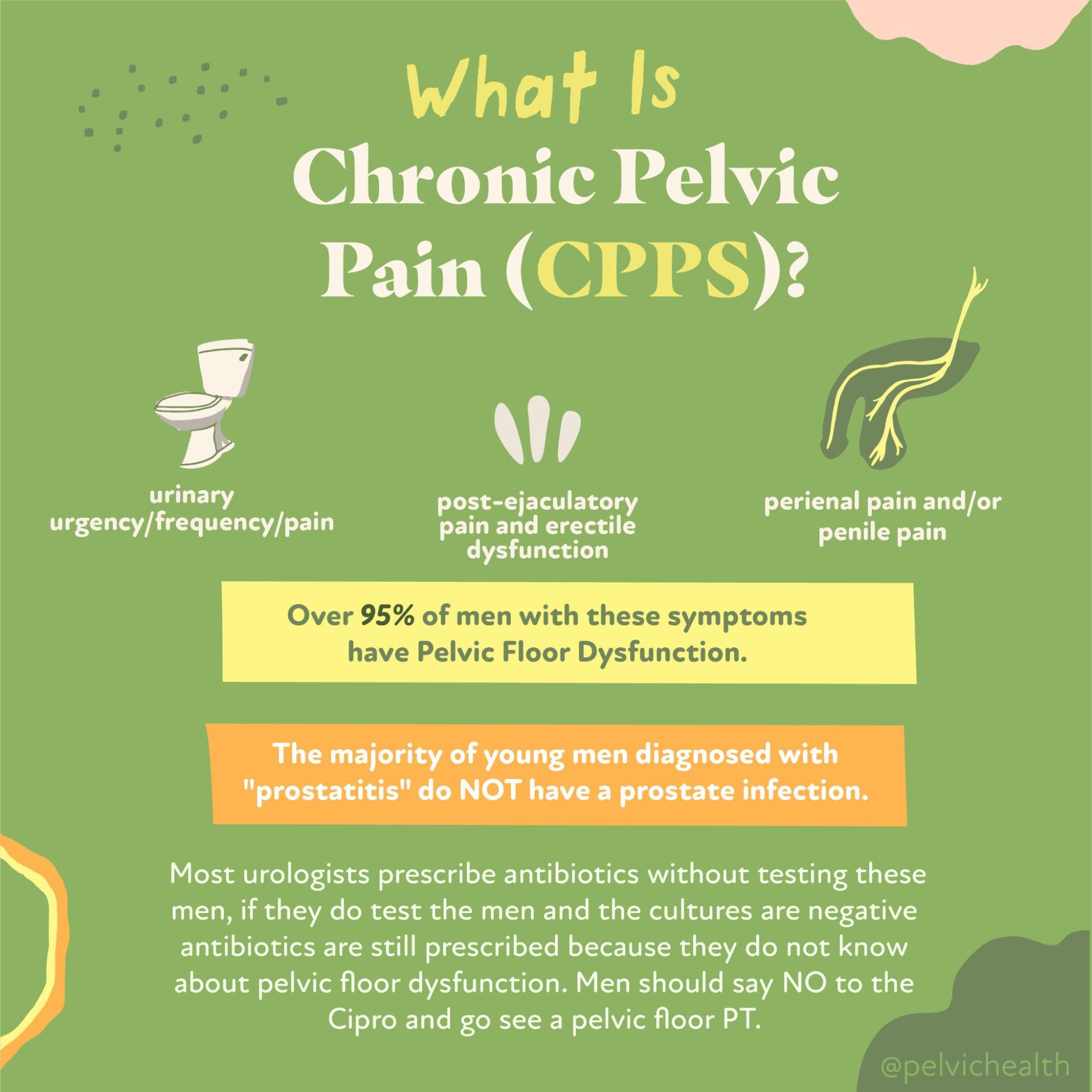
Medical research has demonstrated that men who experience pelvic pain often endure a long and frustrating journey to diagnosis, sometimes waiting up to seven years for clarity. One major reason for this delay is that the symptoms mirror those of prostate problems, bladder infections, or sexually transmitted infections, which causes confusion during evaluation. Because testing for prostate infections requires significant time and effort from both the patient and the provider, many urologists prescribe antibiotics without performing the necessary tests. Unfortunately, most clinicians are also not fully aware that pelvic floor dysfunction can affect men as well as women. Matters are further complicated by the fact that many pelvic floor physical and occupational therapists are trained exclusively in women’s health. At PHRC, however, this is not the case, as we actively work with male patients every day and in fact, there are times when we treat more men than women.
In most cases, men experiencing pelvic pain are misdiagnosed as having prostatitis and are subsequently prescribed antibiotics, even though diagnostic evidence reveals that there is no infection present. Studies indicate that over ninety percent of men with pelvic pain and genitourinary symptoms do not actually have a bacterial prostate infection. Rather, they fall within the National Institutes of Health’s prostatitis classification system, specifically in Category IIIa or Category IIIb, both of which fall under the condition known as Chronic Pelvic Pain Syndrome (CPPS).
According to the National Institutes of Health, the prostatitis classification system is organized as follows:
Category I: Acute bacterial prostatitis, which is accompanied by intense prostatitis symptoms, evidence of systemic infection, and an acute urinary tract infection caused by bacteria.
Category II: Chronic bacterial prostatitis, a condition caused by a persistent bacterial infection of the prostate that may present with or without prostatitis symptoms but is typically linked with recurrent urinary tract infections caused by the same bacterial organism.
Category IIIa: Inflammatory chronic pelvic pain syndrome, diagnosed when white blood cells are present in semen, in expressed prostatic secretions, or in the third midstream urine specimen.
Category IIIb: Noninflammatory chronic pelvic pain syndrome, where no white blood cells are detected in semen or expressed prostatic secretions.
Category IV: Asymptomatic inflammatory prostatitis, which involves inflammation of the prostate gland in men who do not show any symptoms affecting the genitourinary system.
Diagnostic Challenges
Medical research has demonstrated that men who experience pelvic pain often endure a long and frustrating journey to diagnosis, sometimes waiting up to seven years for clarity. One major reason for this delay is that the symptoms mirror those of prostate problems, bladder infections, or sexually transmitted infections, which causes confusion during evaluation. Because testing for prostate infections requires significant time and effort from both the patient and the provider, many urologists prescribe antibiotics without performing the necessary tests. Unfortunately, most clinicians are also not fully aware that pelvic floor dysfunction can affect men as well as women. Matters are further complicated by the fact that many pelvic floor physical and occupational therapists are trained exclusively in women’s health. At PHRC, however, this is not the case, as we actively work with male patients every day and in fact, there are times when we treat more men than women.
In most cases, men experiencing pelvic pain are misdiagnosed as having prostatitis and are subsequently prescribed antibiotics, even though diagnostic evidence reveals that there is no infection present. Studies indicate that over ninety percent of men with pelvic pain and genitourinary symptoms do not actually have a bacterial prostate infection. Rather, they fall within the National Institutes of Health’s prostatitis classification system, specifically in Category IIIa or Category IIIb, both of which fall under the condition known as Chronic Pelvic Pain Syndrome (CPPS).
According to the National Institutes of Health, the prostatitis classification system is organized as follows:
Category I: Acute bacterial prostatitis, which is accompanied by intense prostatitis symptoms, evidence of systemic infection, and an acute urinary tract infection caused by bacteria.
Category II: Chronic bacterial prostatitis, a condition caused by a persistent bacterial infection of the prostate that may present with or without prostatitis symptoms but is typically linked with recurrent urinary tract infections caused by the same bacterial organism.
Category IIIa: Inflammatory chronic pelvic pain syndrome, diagnosed when white blood cells are present in semen, in expressed prostatic secretions, or in the third midstream urine specimen.
Category IIIb: Noninflammatory chronic pelvic pain syndrome, where no white blood cells are detected in semen or expressed prostatic secretions.
Category IV: Asymptomatic inflammatory prostatitis, which involves inflammation of the prostate gland in men who do not show any symptoms affecting the genitourinary system.
Treatment:
How We Can Help You In Oakland
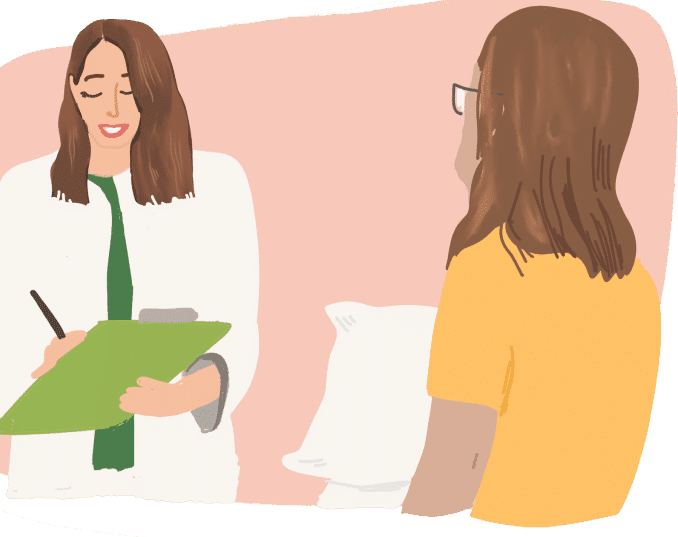
For men in Oakland who are dealing with pelvic pain, seeking an evaluation with pelvic floor physical and occupational therapists can provide the answers and support you have been searching for. At the beginning of your care, your therapist will go through your medical history with you, review your current symptoms, revisit your past diagnoses, and carefully examine the treatments you may have already undergone, including whether they were beneficial or not. We understand that many men in Oakland who finally arrive at our clinic have already been through a long and discouraging process, and it is important to us that you feel heard and understood from the very first visit.
During the physical examination itself, our skilled therapists will carefully evaluate your muscles, tissues, nerves, joints, and movement patterns to understand the true source of your pain. After the exam is complete, your therapist will share the findings with you, explain how your condition may have developed, and then create both immediate and long-term goals for your recovery. Treatment generally involves therapy one to two times per week for a period of roughly 12 weeks, with an individualized home exercise program provided to reinforce the progress made in your sessions. To ensure your healing is supported from all angles, we also coordinate with your other healthcare providers as needed. For men in Oakland, we are here to support you through the process of recovery and help you live a healthier, more comfortable life.

Treatment:
How We Can Help You In Oakland
For men in Oakland who are dealing with pelvic pain, seeking an evaluation with pelvic floor physical and occupational therapists can provide the answers and support you have been searching for. At the beginning of your care, your therapist will go through your medical history with you, review your current symptoms, revisit your past diagnoses, and carefully examine the treatments you may have already undergone, including whether they were beneficial or not. We understand that many men in Oakland who finally arrive at our clinic have already been through a long and discouraging process, and it is important to us that you feel heard and understood from the very first visit.
During the physical examination itself, our skilled therapists will carefully evaluate your muscles, tissues, nerves, joints, and movement patterns to understand the true source of your pain. After the exam is complete, your therapist will share the findings with you, explain how your condition may have developed, and then create both immediate and long-term goals for your recovery. Treatment generally involves therapy one to two times per week for a period of roughly 12 weeks, with an individualized home exercise program provided to reinforce the progress made in your sessions. To ensure your healing is supported from all angles, we also coordinate with your other healthcare providers as needed. For men in Oakland, we are here to support you through the process of recovery and help you live a healthier, more comfortable life.
How Can We Help You?
We invite you to fill out the form below if you would like to share any questions or comments with us. In order for us to provide you with a reply, please remember to include your e-mail address. Your privacy is of utmost importance, and we guarantee that any information you provide will remain confidential and secure.


Join The Newsletter. Win a copy of our book, “Pelvic Pain Explained!”
Our team truly values getting to know the people who visit our site. Please tell us a little about yourself, and in doing so, you can also sign up to receive the PHRC e-newsletter, which delivers helpful resources and important news directly to you.
*Subscribers automatically eligible to win our book, “Pelvic Pain Explained.”

The book Pelvic Pain Explained tells the story of how pelvic pain develops in patients, the barriers both patients and providers face in reaching an accurate diagnosis, and the often complex journey of weighing and navigating treatment choices. It further illustrates how living with such an unseen condition deeply affects personal identity, relationships, and quality of life, while also offering much more insight into this challenging experience.