

Symptoms:
- Burning, itching, aching, and other types of pain in the penis, scrotum, testicles, perineum, or anal area are all characteristic features of male pelvic pain.
- The discomfort can be exacerbated by routine activities such as prolonged sitting, engaging in particular forms of exercise, or wearing tight or restrictive clothing.
- Urinary symptoms are frequently observed, including urgency, frequent urination, difficulty beginning to urinate, painful urination, and a slower urinary stream.
- During ejaculation, pain may appear in the penis, scrotum, or perineum, adding further distress for affected men.
- Some men experience erectile dysfunction in conjunction with a weaker or reduced ejaculation.
- Digestive issues such as abdominal bloating, constipation, and gastrointestinal distress often accompany pelvic pain.
- These digestive symptoms can worsen following ejaculation or exercise, but they may also emerge spontaneously.
- Men may live with these symptoms intermittently, experiencing periods of relief, or they may deal with them persistently without break.
Symptoms:
- Burning, itching, aching, and other types of pain in the penis, scrotum, testicles, perineum, or anal area are all characteristic features of male pelvic pain.
- The discomfort can be exacerbated by routine activities such as prolonged sitting, engaging in particular forms of exercise, or wearing tight or restrictive clothing.
- Urinary symptoms are frequently observed, including urgency, frequent urination, difficulty beginning to urinate, painful urination, and a slower urinary stream.
- During ejaculation, pain may appear in the penis, scrotum, or perineum, adding further distress for affected men.
- Some men experience erectile dysfunction in conjunction with a weaker or reduced ejaculation.
- Digestive issues such as abdominal bloating, constipation, and gastrointestinal distress often accompany pelvic pain.
- These digestive symptoms can worsen following ejaculation or exercise, but they may also emerge spontaneously.
- Men may live with these symptoms intermittently, experiencing periods of relief, or they may deal with them persistently without break.
Associated Diagnoses
Chronic Pelvic Pain Syndrome/Male Pelvic Pain, Chronic Nonbacterial Prostatitis, Pudendal Neuralgia, Hard Flaccid Syndrome and Interstitial Cystitis/Painful Bladder Syndrome are all pain syndromes that cause pelvic pain due to pelvic floor dysfunction.
Associated Diagnoses
Chronic Pelvic Pain Syndrome/Male Pelvic Pain, Chronic Nonbacterial Prostatitis, Pudendal Neuralgia, Hard Flaccid Syndrome and Interstitial Cystitis/Painful Bladder Syndrome are all pain syndromes that cause pelvic pain due to pelvic floor dysfunction.
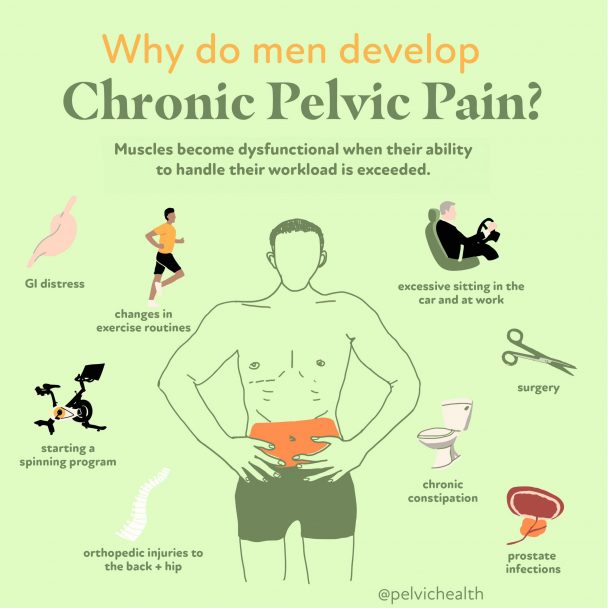
- Surgical trauma (vasectomy, benign prostatic hyperplasia (BPH) interventions, prostatectomy)
- Orthopedic injuries or other traumas (spine, hip, knee, and/or ankle injuries/pathology, accidents)
- Biomechanical or structural dysfunction (hip dysfunction, piriformis syndrome, scoliosis, leg length discrepancy)
- Excessive exercise or changes to exercise routine
- Excessive sitting
- Chronic constipation and straining
- Jelqing and/or attempts at gential enhancement or foreskin regeneration
- In rare cases, bladder, prostate, or sexually transmitted infections after successful resolution of infection
- The majority of men with pelvic pain, with or without urinary or bowel complaints, have pelvic floor dysfunction

Causes of Pelvic Pain
- Surgical trauma (vasectomy, benign prostatic hyperplasia (BPH) interventions, prostatectomy)
- Orthopedic injuries or other traumas (spine, hip, knee, and/or ankle injuries/pathology, accidents)
- Biomechanical or structural dysfunction (hip dysfunction, piriformis syndrome, scoliosis, leg length discrepancy)
- Excessive exercise or changes to exercise routine
- Excessive sitting
- Chronic constipation and straining
- Jelqing and/or attempts at gential enhancement or foreskin regeneration
- In rare cases, bladder, prostate, or sexually transmitted infections after successful resolution of infection
- The majority of men with pelvic pain, with or without urinary or bowel complaints, have pelvic floor dysfunction
Diagnostic Challenges
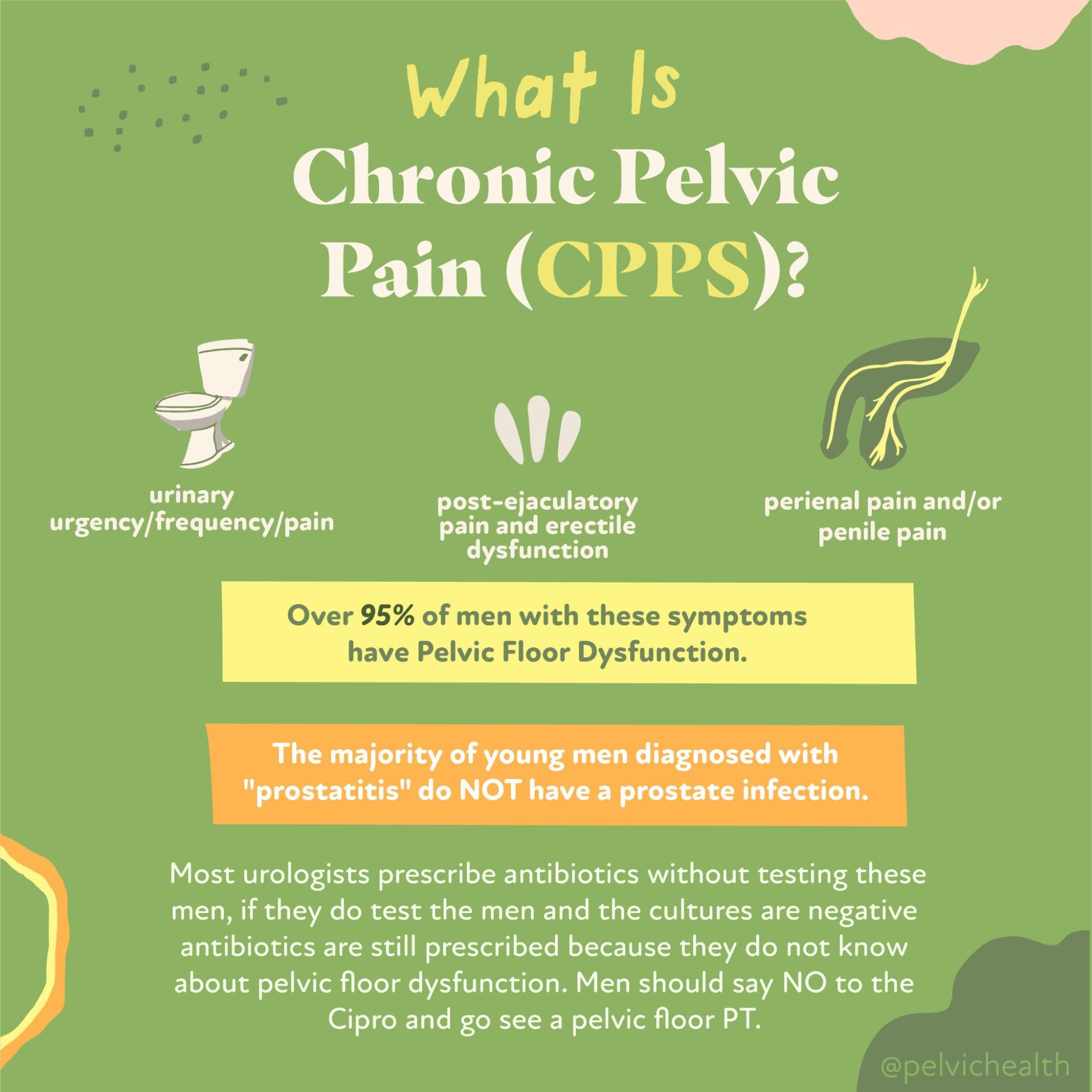
Evidence shows that men who live with pelvic pain may endure up to seven years of uncertainty before being accurately diagnosed. This is primarily due to the fact that male pelvic pain presents with symptoms that overlap with prostate conditions, bladder infections, or sexually transmitted infections. Because confirming prostate infections involves an extensive process that places demands on both the patient and the provider, urologists often default to prescribing antibiotics without the appropriate testing. A further complication is that many doctors do not realize men can be affected by pelvic floor dysfunction. In addition, a large portion of pelvic floor therapy training for both physical therapists and occupational therapists is centered on women, leaving men underserved. At PHRC, this limitation does not exist. We work with male patients regularly, and on some days we treat more men for pelvic floor dysfunction than women.
The majority of men with pelvic pain are incorrectly diagnosed as having prostatitis and are prescribed antibiotics that are not medically necessary, as there is no infection present. Research clearly indicates that more than ninety percent of men experiencing genitourinary pelvic pain symptoms do not actually have a prostate infection. Instead, their condition is described within the National Institutes of Health prostatitis classification system as Category IIIa or Category IIIb, both of which are recognized as Chronic Pelvic Pain Syndrome (CPPS).
The National Institutes of Health prostatitis classification system is composed of the following categories:
Category I: Acute bacterial prostatitis, which presents with significant prostatitis symptoms, systemic infection, and a bacterial urinary tract infection that develops acutely.
Category II: Chronic bacterial prostatitis, defined as a persistent infection of the prostate caused by bacteria, with or without visible symptoms, and often accompanied by recurrent urinary tract infections from the same strain of bacteria.
Category IIIa: Inflammatory chronic pelvic pain syndrome, confirmed when semen, prostatic secretions, or a third midstream bladder specimen show white blood cells.
Category IIIb: Noninflammatory chronic pelvic pain syndrome, diagnosed when there are no white blood cells found in semen or in expressed prostatic secretions.
Category IV: Asymptomatic inflammatory prostatitis, involving inflammation of the prostate without any noticeable urinary tract or genital symptoms.
Diagnostic Challenges
Evidence shows that men who live with pelvic pain may endure up to seven years of uncertainty before being accurately diagnosed. This is primarily due to the fact that male pelvic pain presents with symptoms that overlap with prostate conditions, bladder infections, or sexually transmitted infections. Because confirming prostate infections involves an extensive process that places demands on both the patient and the provider, urologists often default to prescribing antibiotics without the appropriate testing. A further complication is that many doctors do not realize men can be affected by pelvic floor dysfunction. In addition, a large portion of pelvic floor therapy training for both physical therapists and occupational therapists is centered on women, leaving men underserved. At PHRC, this limitation does not exist. We work with male patients regularly, and on some days we treat more men for pelvic floor dysfunction than women.
The majority of men with pelvic pain are incorrectly diagnosed as having prostatitis and are prescribed antibiotics that are not medically necessary, as there is no infection present. Research clearly indicates that more than ninety percent of men experiencing genitourinary pelvic pain symptoms do not actually have a prostate infection. Instead, their condition is described within the National Institutes of Health prostatitis classification system as Category IIIa or Category IIIb, both of which are recognized as Chronic Pelvic Pain Syndrome (CPPS).
The National Institutes of Health prostatitis classification system is composed of the following categories:
Category I: Acute bacterial prostatitis, which presents with significant prostatitis symptoms, systemic infection, and a bacterial urinary tract infection that develops acutely.
Category II: Chronic bacterial prostatitis, defined as a persistent infection of the prostate caused by bacteria, with or without visible symptoms, and often accompanied by recurrent urinary tract infections from the same strain of bacteria.
Category IIIa: Inflammatory chronic pelvic pain syndrome, confirmed when semen, prostatic secretions, or a third midstream bladder specimen show white blood cells.
Category IIIb: Noninflammatory chronic pelvic pain syndrome, diagnosed when there are no white blood cells found in semen or in expressed prostatic secretions.
Category IV: Asymptomatic inflammatory prostatitis, involving inflammation of the prostate without any noticeable urinary tract or genital symptoms.
Treatment:
How We Can Help You In Palo Alto

For men in Palo Alto who are suffering from pelvic pain, undergoing an evaluation with pelvic floor physical and occupational therapists can be the key step toward recovery. In this initial evaluation, your therapist will carefully go through your medical history, review your symptoms, revisit past diagnoses, and take into account all of the treatments you have already tried, including how effective or ineffective they may have been. We know that many men in Palo Alto arrive at our clinic after years of frustration, and we want you to know that we fully understand how difficult that process has been.
The physical examination involves a close look at muscles, tissues, joints, nerve function, and movement patterns. Once the evaluation is finished, your therapist will go over the results with you, explain how your pain may have developed, and create a treatment plan with both short-term and long-term goals. The typical course of therapy is one to two sessions per week for about 12 weeks, combined with a home exercise program that complements your in-office treatment. We also place a strong emphasis on collaborating with other healthcare providers involved in your case to ensure the best possible outcome. For men in Palo Alto, we are committed to providing care that addresses pelvic pain thoroughly and helps restore overall health and well-being.

Treatment:
How We Can Help You In Palo Alto
For men in Palo Alto who are suffering from pelvic pain, undergoing an evaluation with pelvic floor physical and occupational therapists can be the key step toward recovery. In this initial evaluation, your therapist will carefully go through your medical history, review your symptoms, revisit past diagnoses, and take into account all of the treatments you have already tried, including how effective or ineffective they may have been. We know that many men in Palo Alto arrive at our clinic after years of frustration, and we want you to know that we fully understand how difficult that process has been.
The physical examination involves a close look at muscles, tissues, joints, nerve function, and movement patterns. Once the evaluation is finished, your therapist will go over the results with you, explain how your pain may have developed, and create a treatment plan with both short-term and long-term goals. The typical course of therapy is one to two sessions per week for about 12 weeks, combined with a home exercise program that complements your in-office treatment. We also place a strong emphasis on collaborating with other healthcare providers involved in your case to ensure the best possible outcome. For men in Palo Alto, we are committed to providing care that addresses pelvic pain thoroughly and helps restore overall health and well-being.
How Can We Help You?
If you have questions or would like to provide feedback, please make use of the form below. An e-mail address is required to ensure that we can send you a response. Rest assured that every piece of information you share with us will be safeguarded and treated as strictly confidential.


Join The Newsletter. Win a copy of our book, “Pelvic Pain Explained!”
We enjoy the chance to connect with the people who visit our website. Please tell us a bit about yourself and consider subscribing to the PHRC e-newsletter, where you will receive ongoing updates and valuable information.
*Subscribers automatically eligible to win our book, “Pelvic Pain Explained.”

Pelvic Pain Explained captures the story of how patients come to experience pelvic pain, the struggles faced by both patients and healthcare providers during diagnosis, and the complicated process of exploring treatment options. It also highlights the burden of living with a condition that others cannot see, a condition that affects personal relationships, lifestyle, and emotional health, while sharing much more knowledge and perspective.