

Symptoms:
- Common symptoms of pelvic pain in men include burning, itching, aching, or general discomfort affecting the penis, scrotum, testicles, perineum, or anal area.
- Aggravating factors often include sitting for extended periods, engaging in specific physical activities, or wearing clothing that applies pressure to the pelvic region.
- Alongside pelvic pain, many men also develop urinary symptoms such as urgency, frequent urination, difficulty initiating flow, painful urination, or a reduced urinary stream.
- Ejaculation can trigger or worsen symptoms, with discomfort often concentrated in the penis, scrotum, or perineum during the process.
- Erectile dysfunction may also be present, commonly accompanied by weaker ejaculation strength.
- Gastrointestinal challenges, including abdominal bloating, constipation, and general digestive discomfort, are frequently reported.
- These gastrointestinal symptoms may be aggravated by sexual activity or exercise, but may also occur unexpectedly and without warning.
- Symptom patterns vary, with some men experiencing occasional episodes and others enduring constant pain and dysfunction.
Symptoms:
- Common symptoms of pelvic pain in men include burning, itching, aching, or general discomfort affecting the penis, scrotum, testicles, perineum, or anal area.
- Aggravating factors often include sitting for extended periods, engaging in specific physical activities, or wearing clothing that applies pressure to the pelvic region.
- Alongside pelvic pain, many men also develop urinary symptoms such as urgency, frequent urination, difficulty initiating flow, painful urination, or a reduced urinary stream.
- Ejaculation can trigger or worsen symptoms, with discomfort often concentrated in the penis, scrotum, or perineum during the process.
- Erectile dysfunction may also be present, commonly accompanied by weaker ejaculation strength.
- Gastrointestinal challenges, including abdominal bloating, constipation, and general digestive discomfort, are frequently reported.
- These gastrointestinal symptoms may be aggravated by sexual activity or exercise, but may also occur unexpectedly and without warning.
- Symptom patterns vary, with some men experiencing occasional episodes and others enduring constant pain and dysfunction.
Associated Diagnoses
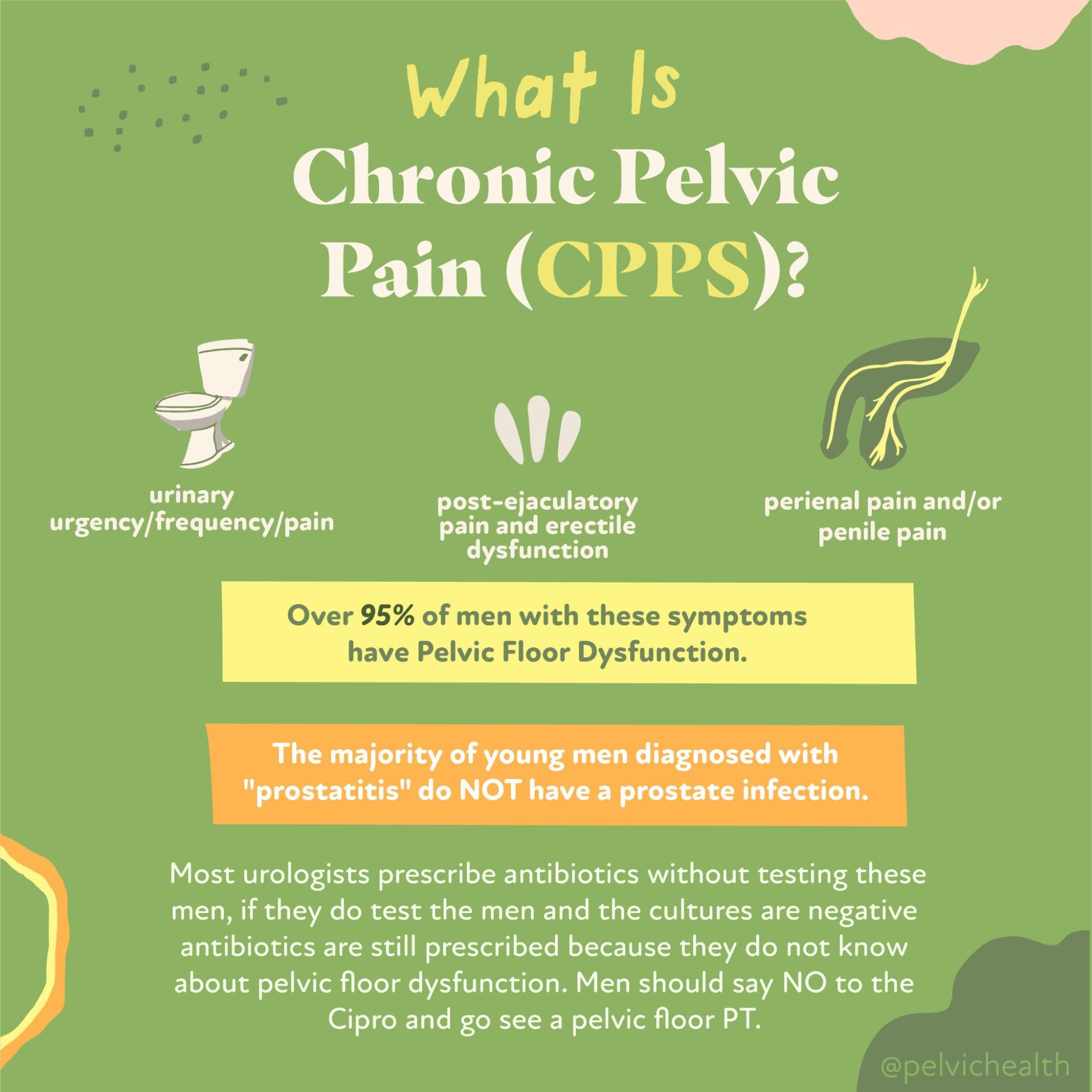
Chronic Pelvic Pain Syndrome/Male Pelvic Pain, Chronic Nonbacterial Prostatitis, Pudendal Neuralgia, Hard Flaccid Syndrome and Interstitial Cystitis/Painful Bladder Syndrome are all pain syndromes that cause pelvic pain due to pelvic floor dysfunction.
Associated Diagnoses
Chronic Pelvic Pain Syndrome/Male Pelvic Pain, Chronic Nonbacterial Prostatitis, Pudendal Neuralgia, Hard Flaccid Syndrome and Interstitial Cystitis/Painful Bladder Syndrome are all pain syndromes that cause pelvic pain due to pelvic floor dysfunction.
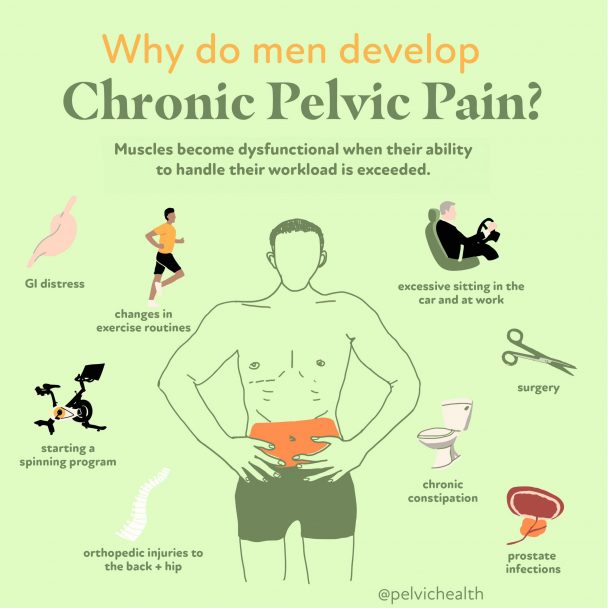
- Surgical trauma (vasectomy, benign prostatic hyperplasia (BPH) interventions, prostatectomy)
- Orthopedic injuries or other traumas (spine, hip, knee, and/or ankle injuries/pathology, accidents)
- Biomechanical or structural dysfunction (hip dysfunction, piriformis syndrome, scoliosis, leg length discrepancy)
- Excessive exercise or changes to exercise routine
- Excessive sitting
- Chronic constipation and straining
- Jelqing and/or attempts at gential enhancement or foreskin regeneration
- In rare cases, bladder, prostate, or sexually transmitted infections after successful resolution of infection
- The majority of men with pelvic pain, with or without urinary or bowel complaints, have pelvic floor dysfunction

Causes of Pelvic Pain
- Surgical trauma (vasectomy, benign prostatic hyperplasia (BPH) interventions, prostatectomy)
- Orthopedic injuries or other traumas (spine, hip, knee, and/or ankle injuries/pathology, accidents)
- Biomechanical or structural dysfunction (hip dysfunction, piriformis syndrome, scoliosis, leg length discrepancy)
- Excessive exercise or changes to exercise routine
- Excessive sitting
- Chronic constipation and straining
- Jelqing and/or attempts at gential enhancement or foreskin regeneration
- In rare cases, bladder, prostate, or sexually transmitted infections after successful resolution of infection
- The majority of men with pelvic pain, with or without urinary or bowel complaints, have pelvic floor dysfunction
Diagnostic Challenges
It is well documented in clinical research that men suffering from pelvic pain often wait up to seven years to finally be diagnosed correctly. This happens because the symptoms look nearly identical to those associated with prostate infections, bladder problems, or sexually transmitted infections. Since diagnostic procedures for prostate infections are laborious and time-intensive, many urologists choose to prescribe antibiotics without confirmation. Compounding the issue is the widespread lack of knowledge among physicians that men can also experience pelvic floor dysfunction. On top of that, many pelvic floor physical therapists and occupational therapists are educated only in treating women, which leaves men without appropriate care. At PHRC, this is not the situation, as we actively provide care to male patients with pelvic floor dysfunction. There are even times when the number of men we see in a single day exceeds the number of women.
Pelvic pain in men is often inaccurately identified as prostatitis, which results in patients being prescribed antibiotics unnecessarily, despite not having a bacterial infection. Studies consistently demonstrate that over ninety percent of men who display pelvic pain and genitourinary symptoms are not suffering from prostate infection. Rather, they fall into the National Institutes of Health classification categories IIIa and IIIb, which together are defined as Chronic Pelvic Pain Syndrome (CPPS).
The National Institutes of Health has classified prostatitis into the following categories:
Category I: Acute bacterial prostatitis, associated with pronounced prostatitis symptoms, systemic signs of infection, and a bacterial urinary tract infection that occurs suddenly.
Category II: Chronic bacterial prostatitis, the result of a long-term bacterial infection in the prostate, which can occur with or without symptoms of prostatitis and is typically connected to recurrent urinary tract infections from the same bacterial type.
Category IIIa: Inflammatory chronic pelvic pain syndrome, recognized by the presence of white blood cells within semen, expressed prostatic secretions, or a third midstream urine collection.
Category IIIb: Noninflammatory chronic pelvic pain syndrome, distinguished by the absence of white blood cells in semen and in expressed prostatic secretions.
Category IV: Asymptomatic inflammatory prostatitis, where inflammation is found in the prostate gland in the absence of urinary or genital symptoms.
Diagnostic Challenges
It is well documented in clinical research that men suffering from pelvic pain often wait up to seven years to finally be diagnosed correctly. This happens because the symptoms look nearly identical to those associated with prostate infections, bladder problems, or sexually transmitted infections. Since diagnostic procedures for prostate infections are laborious and time-intensive, many urologists choose to prescribe antibiotics without confirmation. Compounding the issue is the widespread lack of knowledge among physicians that men can also experience pelvic floor dysfunction. On top of that, many pelvic floor physical therapists and occupational therapists are educated only in treating women, which leaves men without appropriate care. At PHRC, this is not the situation, as we actively provide care to male patients with pelvic floor dysfunction. There are even times when the number of men we see in a single day exceeds the number of women.
Pelvic pain in men is often inaccurately identified as prostatitis, which results in patients being prescribed antibiotics unnecessarily, despite not having a bacterial infection. Studies consistently demonstrate that over ninety percent of men who display pelvic pain and genitourinary symptoms are not suffering from prostate infection. Rather, they fall into the National Institutes of Health classification categories IIIa and IIIb, which together are defined as Chronic Pelvic Pain Syndrome (CPPS).
The National Institutes of Health has classified prostatitis into the following categories:
Category I: Acute bacterial prostatitis, associated with pronounced prostatitis symptoms, systemic signs of infection, and a bacterial urinary tract infection that occurs suddenly.
Category II: Chronic bacterial prostatitis, the result of a long-term bacterial infection in the prostate, which can occur with or without symptoms of prostatitis and is typically connected to recurrent urinary tract infections from the same bacterial type.
Category IIIa: Inflammatory chronic pelvic pain syndrome, recognized by the presence of white blood cells within semen, expressed prostatic secretions, or a third midstream urine collection.
Category IIIb: Noninflammatory chronic pelvic pain syndrome, distinguished by the absence of white blood cells in semen and in expressed prostatic secretions.
Category IV: Asymptomatic inflammatory prostatitis, where inflammation is found in the prostate gland in the absence of urinary or genital symptoms.
Treatment:
How We Can Help You In Redwood City

Men in Redwood City who are experiencing pelvic pain can benefit greatly from receiving an evaluation with pelvic floor physical and occupational therapists who specialize in pelvic pain care. During this evaluation, your therapist will carefully review your symptoms, examine your medical history, consider prior diagnoses, and evaluate the treatments you have already attempted, noting both successes and failures. We know that many men in Redwood City reach our clinic after feeling misunderstood for a long time, and we want you to know that we fully acknowledge the frustration and uncertainty you may be facing.
Your physical examination will involve a detailed assessment of muscles, tissues, joints, nerves, and your overall patterns of movement. After completing the exam, your therapist will explain the results, outline how your pain may have developed, and then create a comprehensive assessment with short-term and long-term goals. On average, men in Redwood City will attend one to two sessions per week over the course of about 12 weeks. A personalized home exercise program will also be given to ensure progress continues outside of therapy. In addition, our therapists will coordinate with other healthcare professionals who are part of your care to provide a full and integrated recovery. Our goal is to help men in Redwood City move past pelvic pain and return to living healthier and more fulfilling lives.

Treatment:
How We Can Help You In Redwood City
Men in Redwood City who are experiencing pelvic pain can benefit greatly from receiving an evaluation with pelvic floor physical and occupational therapists who specialize in pelvic pain care. During this evaluation, your therapist will carefully review your symptoms, examine your medical history, consider prior diagnoses, and evaluate the treatments you have already attempted, noting both successes and failures. We know that many men in Redwood City reach our clinic after feeling misunderstood for a long time, and we want you to know that we fully acknowledge the frustration and uncertainty you may be facing.
Your physical examination will involve a detailed assessment of muscles, tissues, joints, nerves, and your overall patterns of movement. After completing the exam, your therapist will explain the results, outline how your pain may have developed, and then create a comprehensive assessment with short-term and long-term goals. On average, men in Redwood City will attend one to two sessions per week over the course of about 12 weeks. A personalized home exercise program will also be given to ensure progress continues outside of therapy. In addition, our therapists will coordinate with other healthcare professionals who are part of your care to provide a full and integrated recovery. Our goal is to help men in Redwood City move past pelvic pain and return to living healthier and more fulfilling lives.
How Can We Help You?
We encourage you to fill out the form below if you would like to send along your questions or comments. Please remember to include your e-mail address so that we can reply to you directly. You can trust that all of the details you share will be kept fully private and confidential at all times.


Join The Newsletter. Win a copy of our book, “Pelvic Pain Explained!”
We truly value the opportunity to hear from our visitors, and we welcome you to tell us more about yourself. By doing so, you will also have the opportunity to join the PHRC e-newsletter and stay informed with the latest updates and resources.
*Subscribers automatically eligible to win our book, “Pelvic Pain Explained.”

The book Pelvic Pain Explained provides insight into the journey of patients who develop pelvic pain, the difficulties that occur during diagnosis and treatment, and the challenge of navigating the wide range of possible treatment options. It also explores the profound influence that this often invisible condition can have on a person’s sense of self, relationships, and overall life, while delivering much more in terms of understanding and awareness.