

Symptoms:
- Men suffering from pelvic pain often report sensations of burning, itching, aching, or other discomfort in the penis, scrotum, testicles, perineum, and anal area.
- Sitting for long durations, specific workouts, and certain clothing choices are all known to intensify these symptoms.
- Pelvic pain is often accompanied by urinary concerns, including urgency, frequency, hesitancy, painful urination, and slower urinary flow.
- Some men find that ejaculation worsens their condition, leading to pain in the penis, scrotum, or perineum during release.
- Erectile dysfunction, along with a noticeable weakening of ejaculation force, may also develop.
- Additional complaints often include bloating, abdominal pain, and constipation, reflecting gastrointestinal involvement.
- Activities such as exercise or ejaculation may aggravate digestive symptoms, though they can also appear unexpectedly.
- These issues can present sporadically, with flare-ups over time, or remain constant and unrelenting in daily life.
Symptoms:
- Men suffering from pelvic pain often report sensations of burning, itching, aching, or other discomfort in the penis, scrotum, testicles, perineum, and anal area.
- Sitting for long durations, specific workouts, and certain clothing choices are all known to intensify these symptoms.
- Pelvic pain is often accompanied by urinary concerns, including urgency, frequency, hesitancy, painful urination, and slower urinary flow.
- Some men find that ejaculation worsens their condition, leading to pain in the penis, scrotum, or perineum during release.
- Erectile dysfunction, along with a noticeable weakening of ejaculation force, may also develop.
- Additional complaints often include bloating, abdominal pain, and constipation, reflecting gastrointestinal involvement.
- Activities such as exercise or ejaculation may aggravate digestive symptoms, though they can also appear unexpectedly.
- These issues can present sporadically, with flare-ups over time, or remain constant and unrelenting in daily life.
Associated Diagnoses
Chronic Pelvic Pain Syndrome/Male Pelvic Pain, Chronic Nonbacterial Prostatitis, Pudendal Neuralgia, Hard Flaccid Syndrome and Interstitial Cystitis/Painful Bladder Syndrome are all pain syndromes that cause pelvic pain due to pelvic floor dysfunction.
Associated Diagnoses
Chronic Pelvic Pain Syndrome/Male Pelvic Pain, Chronic Nonbacterial Prostatitis, Pudendal Neuralgia, Hard Flaccid Syndrome and Interstitial Cystitis/Painful Bladder Syndrome are all pain syndromes that cause pelvic pain due to pelvic floor dysfunction.
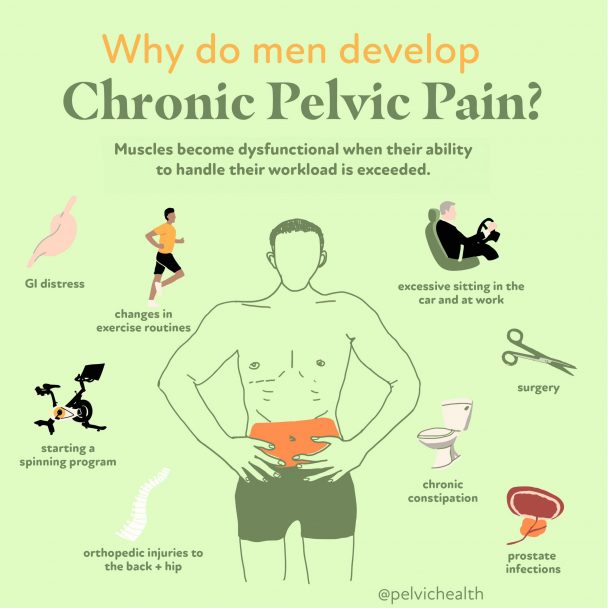
- Surgical trauma (vasectomy, benign prostatic hyperplasia (BPH) interventions, prostatectomy)
- Orthopedic injuries or other traumas (spine, hip, knee, and/or ankle injuries/pathology, accidents)
- Biomechanical or structural dysfunction (hip dysfunction, piriformis syndrome, scoliosis, leg length discrepancy)
- Excessive exercise or changes to exercise routine
- Excessive sitting
- Chronic constipation and straining
- Jelqing and/or attempts at gential enhancement or foreskin regeneration
- In rare cases, bladder, prostate, or sexually transmitted infections after successful resolution of infection
- The majority of men with pelvic pain, with or without urinary or bowel complaints, have pelvic floor dysfunction

Causes of Pelvic Pain
- Surgical trauma (vasectomy, benign prostatic hyperplasia (BPH) interventions, prostatectomy)
- Orthopedic injuries or other traumas (spine, hip, knee, and/or ankle injuries/pathology, accidents)
- Biomechanical or structural dysfunction (hip dysfunction, piriformis syndrome, scoliosis, leg length discrepancy)
- Excessive exercise or changes to exercise routine
- Excessive sitting
- Chronic constipation and straining
- Jelqing and/or attempts at gential enhancement or foreskin regeneration
- In rare cases, bladder, prostate, or sexually transmitted infections after successful resolution of infection
- The majority of men with pelvic pain, with or without urinary or bowel complaints, have pelvic floor dysfunction
Diagnostic Challenges
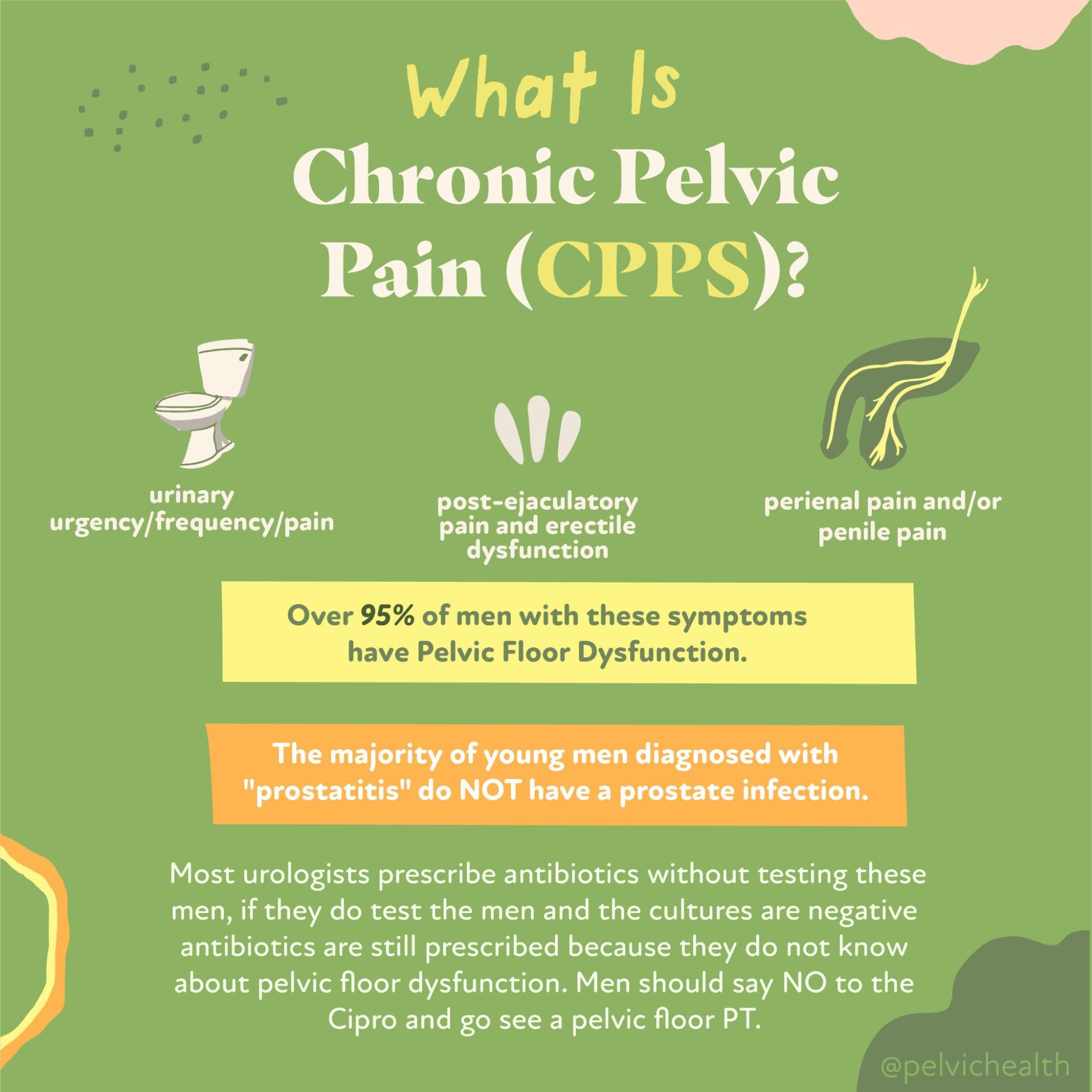
Studies demonstrate that men with pelvic pain may wait as long as seven years before obtaining a clear and accurate diagnosis. The main reason for this extended delay is that the symptoms mimic those seen in cases of prostate infection, bladder infection, or sexually transmitted infections. Because prostate infection testing requires a lengthy and often uncomfortable process, many urologists bypass this altogether and prescribe antibiotics without verification. Furthermore, many physicians lack awareness that men are just as susceptible to pelvic floor dysfunction as women. The situation is complicated further by the fact that many pelvic floor therapists, whether physical or occupational, are only taught to treat female patients. At PHRC, we have bridged this gap. Our clinics treat male patients daily, and there are occasions when the number of men receiving care for pelvic floor dysfunction surpasses the number of women.
In men with pelvic pain, misdiagnosis is extremely common, with many being told they have prostatitis and being given antibiotics that do not address the real problem. Research reveals that over ninety percent of men presenting with pelvic pain in the genitourinary region are not experiencing a prostate infection. Instead, their symptoms are categorized within the National Institutes of Health prostatitis classification, specifically Categories IIIa and IIIb, which represent Chronic Pelvic Pain Syndrome (CPPS).
The categories in the National Institutes of Health prostatitis classification system are as follows:
Category I: Acute bacterial prostatitis, a condition that involves severe symptoms of prostatitis, evidence of systemic infection, and the presence of an acute bacterial urinary tract infection.
Category II: Chronic bacterial prostatitis, caused by a long-standing bacterial infection of the prostate that can manifest with or without symptoms, but is often characterized by repeated urinary tract infections from the same bacterial strain.
Category IIIa: Inflammatory chronic pelvic pain syndrome, in which testing shows white blood cells within semen, expressed prostatic secretions, or the third midstream urine specimen.
Category IIIb: Noninflammatory chronic pelvic pain syndrome, where neither semen nor expressed prostatic secretions reveal white blood cells.
Category IV: Asymptomatic inflammatory prostatitis, identified when inflammation exists in the prostate but the patient does not exhibit genitourinary symptoms.
Diagnostic Challenges
Studies demonstrate that men with pelvic pain may wait as long as seven years before obtaining a clear and accurate diagnosis. The main reason for this extended delay is that the symptoms mimic those seen in cases of prostate infection, bladder infection, or sexually transmitted infections. Because prostate infection testing requires a lengthy and often uncomfortable process, many urologists bypass this altogether and prescribe antibiotics without verification. Furthermore, many physicians lack awareness that men are just as susceptible to pelvic floor dysfunction as women. The situation is complicated further by the fact that many pelvic floor therapists, whether physical or occupational, are only taught to treat female patients. At PHRC, we have bridged this gap. Our clinics treat male patients daily, and there are occasions when the number of men receiving care for pelvic floor dysfunction surpasses the number of women.
In men with pelvic pain, misdiagnosis is extremely common, with many being told they have prostatitis and being given antibiotics that do not address the real problem. Research reveals that over ninety percent of men presenting with pelvic pain in the genitourinary region are not experiencing a prostate infection. Instead, their symptoms are categorized within the National Institutes of Health prostatitis classification, specifically Categories IIIa and IIIb, which represent Chronic Pelvic Pain Syndrome (CPPS).
The categories in the National Institutes of Health prostatitis classification system are as follows:
Category I: Acute bacterial prostatitis, a condition that involves severe symptoms of prostatitis, evidence of systemic infection, and the presence of an acute bacterial urinary tract infection.
Category II: Chronic bacterial prostatitis, caused by a long-standing bacterial infection of the prostate that can manifest with or without symptoms, but is often characterized by repeated urinary tract infections from the same bacterial strain.
Category IIIa: Inflammatory chronic pelvic pain syndrome, in which testing shows white blood cells within semen, expressed prostatic secretions, or the third midstream urine specimen.
Category IIIb: Noninflammatory chronic pelvic pain syndrome, where neither semen nor expressed prostatic secretions reveal white blood cells.
Category IV: Asymptomatic inflammatory prostatitis, identified when inflammation exists in the prostate but the patient does not exhibit genitourinary symptoms.
Treatment:
How We Can Help You In Stanford

Men in Stanford who are affected by pelvic pain can benefit from a comprehensive evaluation with pelvic floor physical and occupational therapists who are trained in this field. During the evaluation, the therapist will go over your medical history, discuss your symptoms, review prior diagnoses, and look into the treatments you may have already pursued, with consideration of whether or not they worked for you. We know that men in Stanford often arrive at our clinic after years of discouragement and misunderstanding, and we want you to know that we recognize the challenges you have faced.
The physical examination involves evaluating your muscles, tissues, joints, nerves, and your movement patterns. Once the exam is complete, your therapist will review the results with you and provide a full assessment that explains how your pain developed. This assessment will then serve as the foundation for short-term and long-term goals in your treatment plan. Generally, therapy is scheduled once or twice weekly for about 12 weeks, and a home exercise program is created to support progress outside of your sessions. Our therapists will also work closely with the rest of your healthcare team to ensure a unified approach to recovery. Men in Stanford can trust that our care is focused on helping them heal, regain strength, and live their lives without the burden of pelvic pain.

Treatment:
How We Can Help You In Stanford
Men in Stanford who are affected by pelvic pain can benefit from a comprehensive evaluation with pelvic floor physical and occupational therapists who are trained in this field. During the evaluation, the therapist will go over your medical history, discuss your symptoms, review prior diagnoses, and look into the treatments you may have already pursued, with consideration of whether or not they worked for you. We know that men in Stanford often arrive at our clinic after years of discouragement and misunderstanding, and we want you to know that we recognize the challenges you have faced.
The physical examination involves evaluating your muscles, tissues, joints, nerves, and your movement patterns. Once the exam is complete, your therapist will review the results with you and provide a full assessment that explains how your pain developed. This assessment will then serve as the foundation for short-term and long-term goals in your treatment plan. Generally, therapy is scheduled once or twice weekly for about 12 weeks, and a home exercise program is created to support progress outside of your sessions. Our therapists will also work closely with the rest of your healthcare team to ensure a unified approach to recovery. Men in Stanford can trust that our care is focused on helping them heal, regain strength, and live their lives without the burden of pelvic pain.
How Can We Help You?
Please complete the form below if you wish to send us your questions or comments. It is necessary to include your e-mail address, as this allows us to respond directly to you. We take confidentiality seriously, and all details you share will be treated with full respect for your privacy.


Join The Newsletter. Win a copy of our book, “Pelvic Pain Explained!”
We always welcome the opportunity to get to know the individuals who visit our site. Share a little about yourself, and while doing so, sign up for the PHRC e-newsletter to receive informative updates and news directly to your inbox.
*Subscribers automatically eligible to win our book, “Pelvic Pain Explained.”

At its foundation, Pelvic Pain Explained tells the patient story of how pelvic pain begins, the significant difficulties of diagnosis, and the wide-ranging treatment options that are often confusing to sort through. It further explores how an unseen condition such as pelvic pain influences relationships, identity, and daily living, while providing much more depth to an often misunderstood issue.