

Menopause encompasses more than just hot flashes, night sweats, and mood swings. Despite being a common phase affecting roughly half of the population, menopause is often misunderstood, both by the public and many healthcare providers. This gap in knowledge can lead to unnecessary suffering, as many individuals are not fully informed about effective treatments.
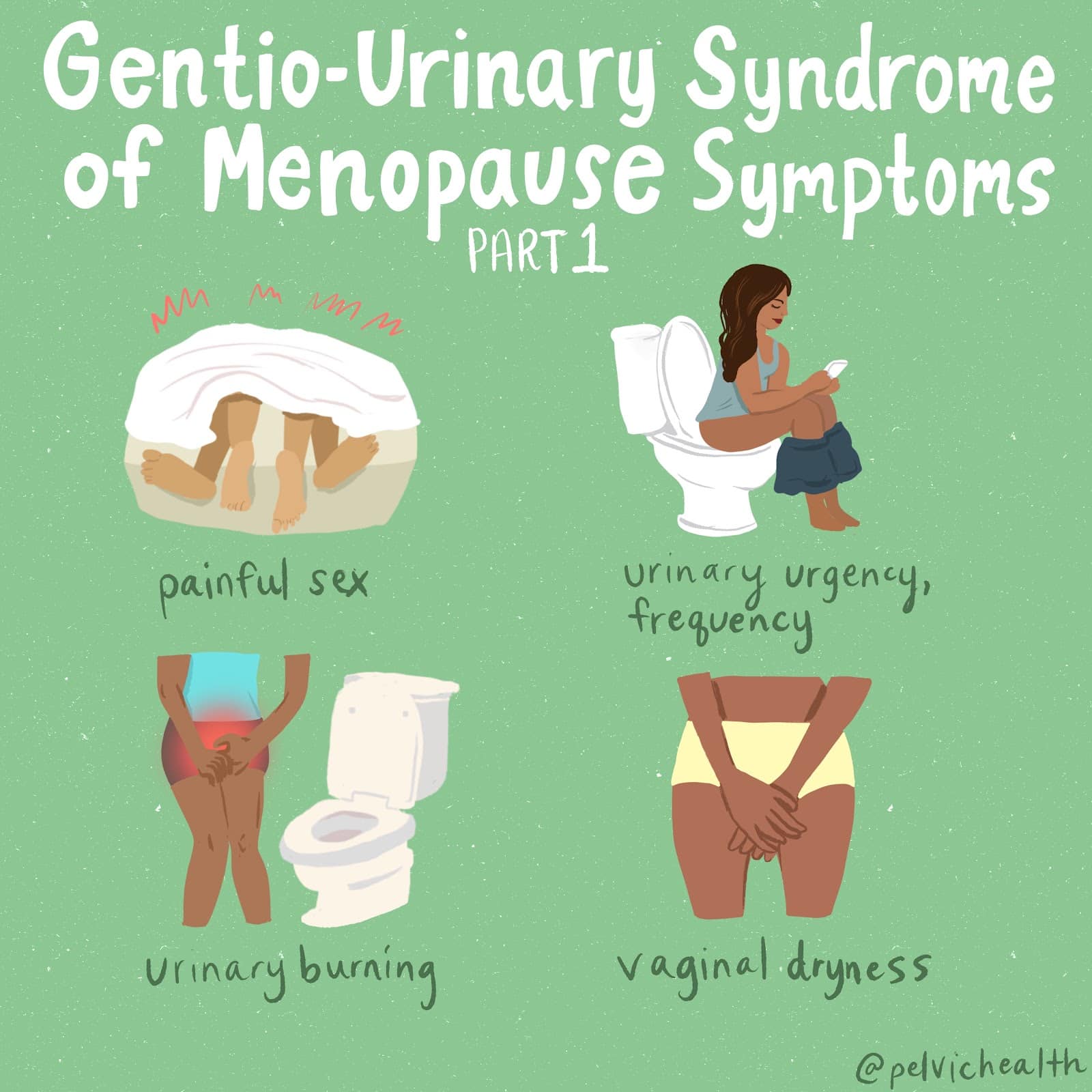
Perimenopause, the transitional phase leading up to menopause, typically begins in a person’s 40s, with menopause itself usually occurring in the early 50s. While systemic symptoms like hot flashes and mood changes are well-known, many people also experience less obvious but equally impactful genitourinary symptoms. These can include painful intercourse, urinary urgency, frequent urination, leakage, burning sensations, recurrent vaginal and urinary tract infections, and vaginal dryness. Collectively, these symptoms are part of the Genitourinary Syndrome of Menopause (GSM). Additionally, many women experience pelvic floor dysfunction, which affects nearly 50% of women by their 50s and can overlap with GSM symptoms.
While systemic hormonal therapy is commonly used to manage menopause symptoms, it may not address the specific needs of those experiencing GSM. The North American Menopause Society recommends the use of vaginal estrogen as an effective treatment for alleviating GSM symptoms and improving quality of life.
Menopause encompasses more than just hot flashes, night sweats, and mood swings. Despite being a common phase affecting roughly half of the population, menopause is often misunderstood, both by the public and many healthcare providers. This gap in knowledge can lead to unnecessary suffering, as many individuals are not fully informed about effective treatments.
Perimenopause, the transitional phase leading up to menopause, typically begins in a person’s 40s, with menopause itself usually occurring in the early 50s. While systemic symptoms like hot flashes and mood changes are well-known, many people also experience less obvious but equally impactful genitourinary symptoms. These can include painful intercourse, urinary urgency, frequent urination, leakage, burning sensations, recurrent vaginal and urinary tract infections, and vaginal dryness. Collectively, these symptoms are part of the Genitourinary Syndrome of Menopause (GSM). Additionally, many women experience pelvic floor dysfunction, which affects nearly 50% of women by their 50s and can overlap with GSM symptoms.
While systemic hormonal therapy is commonly used to manage menopause symptoms, it may not address the specific needs of those experiencing GSM. The North American Menopause Society recommends the use of vaginal estrogen as an effective treatment for alleviating GSM symptoms and improving quality of life.
Differential Diagnosis:
GSM or Pelvic Floor Dysfunction
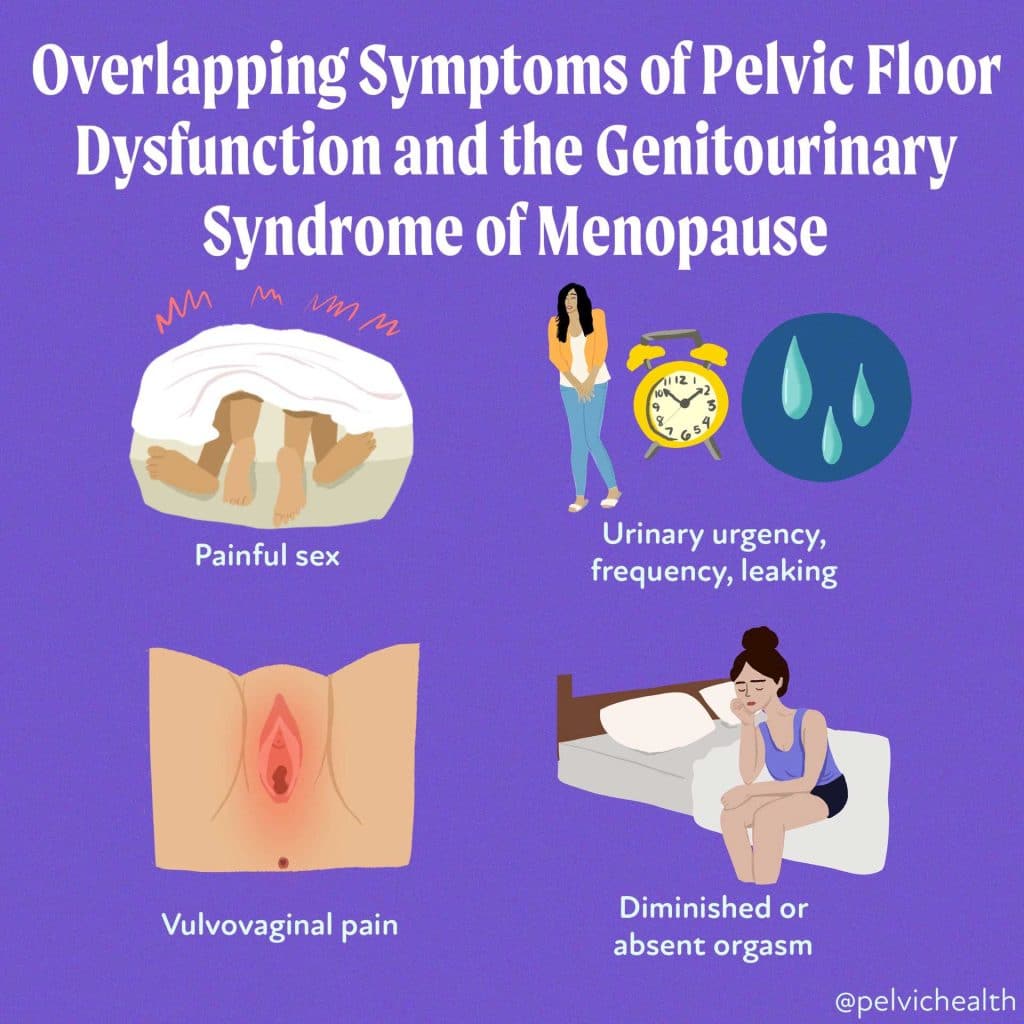
Symptoms of pelvic floor dysfunction and Genitourinary Syndrome of Menopause (GSM) can overlap and include:
- Urinary urgency, frequency, burning, nocturia
- Feelings of bladder or pelvic pressure
- Painful sex
- Diminished or absent orgasm
- Difficulty evacuating stool
- Vulvovaginal pain and burning
- Pain with sitting
An experienced healthcare provider, whether a pelvic floor physical and occupational therapists or a medical doctor, can conduct several assessments to diagnose pelvic floor dysfunction, hormonal deficiencies, and pelvic organ prolapse. These evaluations include a vulvovaginal visual examination, a Q-tip test to pinpoint areas of pain, and a digital manual examination.
Without appropriate medical management, all women may eventually experience symptoms of Genitourinary Syndrome of Menopause (GSM). Many are unaware that a pelvic floor physical and occupational therapy evaluation can be highly beneficial for addressing the musculoskeletal issues contributing to their discomfort. Combining pelvic floor physical and occupational therapy with medical treatments can be crucial for improving sexual enjoyment and resolving urinary and bowel problems.
Virtual pelvic floor therapy for menopause—contact us to get started!
FACTS
From: https://www.letstalkmenopause.org/further-reading
- Every day, approximately 6,000 women reach menopause.
- In the United States, around 50 million women are currently navigating menopause.
- About 84% of women experience genital, sexual, and urinary discomfort related to menopause, which often does not resolve without intervention, yet fewer than 25% seek assistance.
- An estimated 80% of OB-GYN residents acknowledge feeling inadequately prepared to address menopause-related issues.
- Genitourinary Syndrome of Menopause (GSM) is clinically identified in 90% of postmenopausal women, yet only one-third report experiencing symptoms in surveys.
- Barriers to treatment include women needing to initiate discussions about their symptoms, a belief that these issues are simply part of aging, and a failure to connect symptoms with menopause.
- Only 13% of healthcare providers routinely inquire about menopause-related symptoms with their patients.
- Even after a diagnosis of GSM, many women remain untreated. This is partly due to healthcare providers’ reluctance to prescribe treatments and patients’ concerns about the safety of topical vaginal therapies, despite evidence showing that GSM significantly affects quality of life.
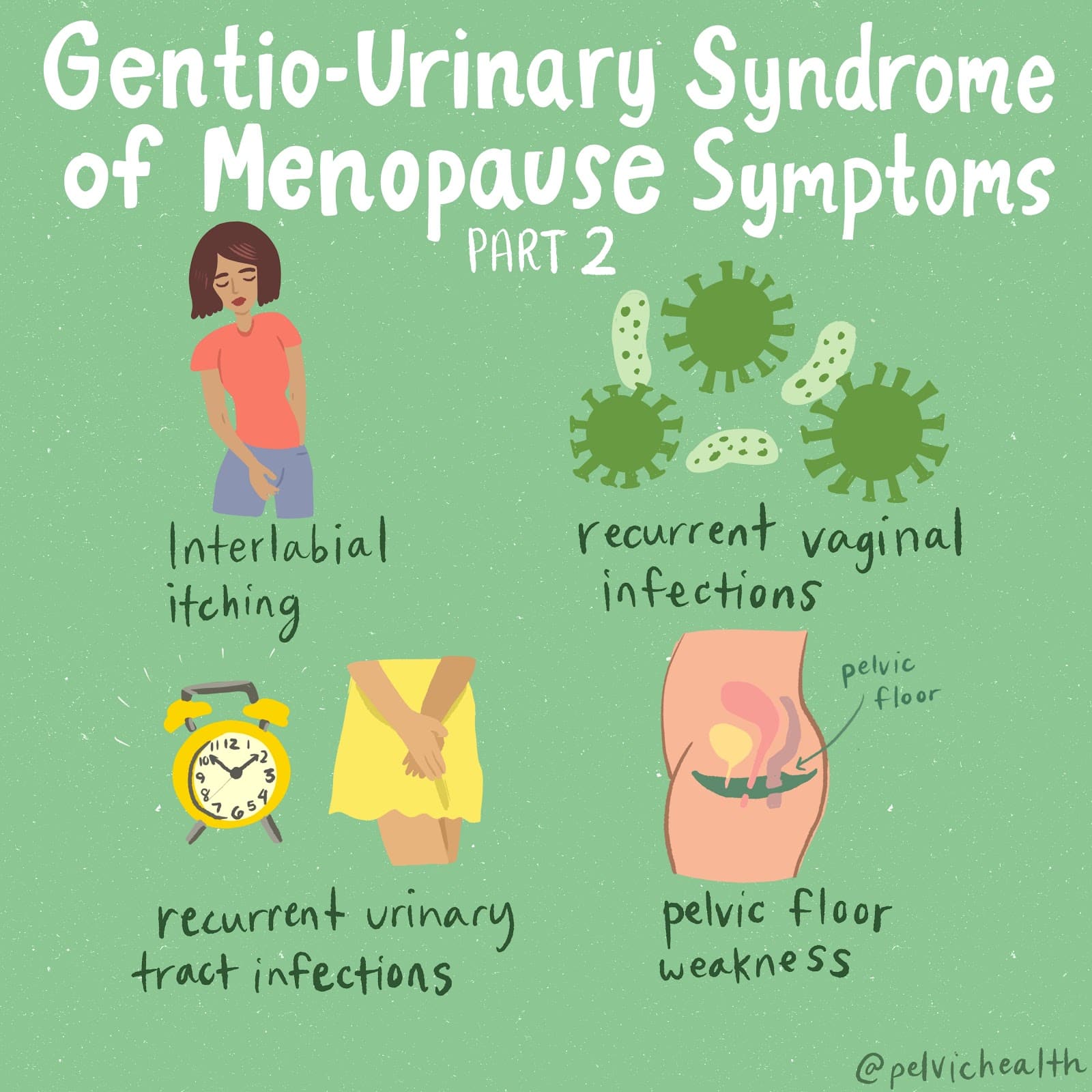
Hormone deficiency can lead to itching in the labial and vaginal areas. Additionally, other dermatological conditions, such as Lichen Sclerosus and cutaneous yeast infections, should also be considered.
During menopause, individuals are particularly susceptible to frequent vaginal and urinary tract infections due to:
- pH and tissue changes
- incomplete bladder emptying
- pelvic organ prolapse compromising urinary function
Recurrent infections are a major contributor to pelvic floor dysfunction. It’s crucial to address these infections promptly, as ongoing visceral-somatic input from untreated infections can lead to increased pain and further dysfunction even after the infection has been resolved. Without appropriate hormone therapy, infections may persist, leading to severe consequences. Untreated infections can cause unprovoked pain, make sexual activity difficult or impossible, and undiagnosed urinary tract infections (UTIs) may progress to kidney issues and other serious complications.
We recommend consulting with a menopause specialist to effectively monitor, prevent, and treat Genitourinary Syndrome of Menopause (GSM) since these issues are both significant and manageable. It’s important to normalize discussions about GSM; there’s no need for embarrassment. With appropriate care, individuals can lead fulfilling lives. Combining virtual pelvic floor physical and occupational therapy with medical management is essential for optimal results.
Treatment:
How We Can Help You
If you’re experiencing sexual dysfunction, it’s beneficial to consult a pelvic floor physical and occupational therapists online. They can assess whether any issues with your pelvic floor are contributing to your symptoms. During your initial virtual evaluation, the therapist will review your medical history, including previous diagnoses, treatments, and their effectiveness. They understand that many patients feel frustrated by the time they seek help.
The therapist will examine your nerves, muscles, joints, tissues, and movement patterns. After the assessment, they will discuss the findings with you and set both short-term and long-term therapy goals. Typically, physical and occupational therapy sessions occur once or twice a week over a period of approximately 12 weeks. Your therapist will also coordinate with other specialists on your treatment team and provide you with a personalized home exercise program. Our goal is to support your recovery and help you achieve the best possible quality of life.
Get virtual pelvic floor therapy for menopause. Book your online consultation today!

Treatment:
How We Can Help You
If you are having issues with your sexual function, it is in your best interest to get evaluated by a therapist for pelvic floor therapy, so they can establish what part, if any, of your pelvic floor may be contributing to the symptoms you are experiencing. During the course of the examination, the physical and occupational therapists will talk to you about your medical history and symptoms, including what you have been previously diagnosed with, the treatments or therapies you have had, and how effective or ineffective these therapies have been for you. It is significant to mention that we fully comprehend what you’ve been dealing with and that the majority of individuals are angry by the time they make it to see us. The physical and occupational therapists will conduct an evaluation of the patient’s nerves, muscles, joints, tissues, and movement patterns while doing the physical examination. After the examination is finished, your therapist will go over the results of the assessment with you. The physical and occupational therapists will conduct an evaluation to determine the cause of your symptoms and will establish both short-term and long-term therapy goals based on the results of the evaluation. Physical therapy treatments are typically administered between once and twice each week for a period of around 12 weeks. Your physical and occupational therapists will assist you in coordinating your recovery with all the other experts on your treatment team. They will provide you with an exercise regimen to complete at home and the sessions you attend in person. We are here to assist you in getting better and living the best life possible.
Get virtual pelvic floor therapy for menopause. Book your online consultation today!

By Stephanie Prendergast, MPT, Cofounder, PHRC Los Angeles
Urinary tract infections hurt. It hurts as your bladder fills, you constantly feel the need to pee and when you do it feels like knives are coming out of your body. You do not experience post-void relief and immediately feel like you need to pee again. Your doctor asks you to urinate urinate in a cup, you are (thankfully!) told you have a UTI, you are given medication and in a few days you are back to normal.
What happens when you have those horrendous symptoms and there is no infection?
November is Bladder Health Awareness Month and November 27th – 30th has been designated Interstitial Cystitis Awareness Week. We are dedicating this week’s blog post to Interstitial Cystitis/Painful Bladder Syndrome (IC/PBS), Chronic Pelvic Pain Syndrome/Nonbacterial Chronic Prostatitis (CPPS) and the role physical and occupational therapy plays in treating these disorders.
These syndromes can cause debilitating pain, the type of pain that leaves patients actually HOPING to have an infection, because that means there is a fast treatment. Unfortunately in most cases of IC/PBS/CPPS cultures return negative and patients and their doctors are left wondering what is going on and what to do about it.
Did you know…..
- Hypertonic pelvic floor muscles cause symptoms that feel like a urinary tract infection?
- Hypertonis and/or myofascial trigger points in pelvic girdle muscles, such as the rectus abdominus muscles and adductors, can also cause urinary urgency, frequency, and burning with urination?
- Hormonal changes during menopause, breastfeeding, and oral contraceptive use can compromise the peri-urethral tissues and contribute to symptoms of urgency and frequency, dysuria, and urethral pain?
- The majority of men diagnosed with ‘Prostatitis’ never had an actual prostate infection?
- Skilled pelvic floor physical and occupational therapy can reduce these impairments and lead to a reduction in symptoms?
The Evidence
Multiple studies have been published on the association between pelvic floor/girdle muscle dysfunction and Interstitial Cystitis/Painful Bladder Syndrome and Chronic Pelvic Pain Syndrome. These studies show that dysfunction in the musculoskeletal system can mimic urologic dysfunction (1,2). This means patients with symptoms of urinary urgency, frequency, and burning in the absence of infection can benefit from a pelvic floor physical and occupational therapy evaluation to determine if pelvic floor dysfunction is a contributing factor to their symptoms. To read more about what this type of evaluation entails please click here.
But how effective is physical and occupational therapy treatment for these symptoms? In 2009 a prospective, randomized, blinded, prospective multi-center study was initiated by Rhonda Kotarinos and Marypat Fitzgerald.3 This high-powered study was the first of its kind to be published on the role of myofascial physical and occupational therapy for the treatment of urologic chronic pelvic pain syndrome. The investigators compared two methods of manual therapy (myofascial physical and occupational therapy and global therapeutic massage) in patients with urologic pelvic pain symptoms.
In the study, 49 men and women enrolled and were divided into two groups. One group received skilled myofascial pelvic floor physical and occupational therapy and the control group received general massage, one hour per week, for 10 weeks. 94% of the participants completed the study, demonstrating that it is feasible to conduct a larger study on myofascial physical and occupational therapy treatment. Importantly, this trial also showed that 57% of the group that received skilled pelvic floor physical and occupational therapy demonstrated improvement, and this group showed statistically significant improvement over the group receiving massage.
These studies are important because they demonstrated the role the musculoskeletal system can play in what seems to be solely a bladder or prostate problem. Furthermore, they demonstrate that manual pelvic floor physical and occupational therapy treatment can play an important part of someone’s treatment plan. The role of a pelvic floor physical and occupational therapists does not stop manual therapy alone, however.
Recent studies have also shown that pain physiology education improves the health status of people recovering from persisting pain syndromes. In a study initiated by J Van Ossterwick in a double-blind randomized controlled trial, 30 patients with fibromyalgia were assigned to receive pain physiology education or pacing self-management education.4 The results showed that the group receiving pain physiology education worried less about their pain, had long-term improvements in physical function, vitality, mental health, and general health perceptions. In addition and importantly, this group reported lower pain scores and showed improved endogenous pain inhibition compared with the control group.4
These quality studies show that physical and occupational therapy can help reduce or eliminate the symptoms of Interstitial Cystitis/Painful Bladder Syndrome and Chronic Pelvic Pain Syndrome as well as have a positive effect on pain, disability, and catastrophization in patients with these debilitating pain disorders. But the role of physical still does not end with manual therapy and pain physiology education.
Assessment, case management, goal setting and quality of life restoration
Physical therapists are often afforded the most one-on-one time with patients. Therefore, we are well-positioned to help the patient figure out how they developed their symptoms and link their history to their physical findings. This is called an assessment and it often includes components such as the differential diagnosis and development of an interdisciplinary treatment plan.
Specialists working with patients with IC/PBS/CPPS will tell you that no two patients are alike and therefore standard one-size-fits-all protocols are not effective. Each individual will have different levels and combinations of musculoskeletal, central and peripheral nervous system, and urologic impairments. Physical therapists can help patients identify why certain treatments have worked and why others have failed, and can use critical reasoning skills to help them set reasonable goals. Patients with these disorders often have multiple doctors and other healthcare providers involved in their care. Physical therapists can help them organize the treatment plan to make sure their goals are being met and they are improving. Individualized treatment plans may include various combinations of medications, medical interventions, physical and occupational therapy, cognitive behavioral therapy, hypnosis, diet management, yoga, etc. It is a lot to understand and manage, however, functional improvement and complete symptom resolution is totally possible. You can read more about this in our previous post “Why a ‘diagnosis’ is not the key to recovery”, and in our book, Pelvic Pain Explained.
As a physical and occupational therapists myself, I value the role we can play in helping patients organize their treatment plans, use education to reduce the understandable anxiety that comes from being diagnosed with IC/PBS/CPPS, reduce or eliminate the terrible symptoms with skilled manual techniques and home exercises, and help people put these problems behind them and move on with their lives. They can stop hoping for positive urine cultures because they understand the true causes of their symptoms and are equipped with the tools to treat them.
In honor of Bladder Awareness Month and Interstitial Cystitis Awareness Week, we ask that everyone reading this share this post with at least one person who may not know about the role pelvic floor physical and occupational therapy can play to help people with IC/PBS/CPPS!
______________________________________________________________________________________________________________________________________
Are you unable to come see us in person? We offer virtual physical and occupational therapy appointments too!
Due to COVID-19, we understand people may prefer to utilize our services from their homes. We also understand that many people do not have access to pelvic floor physical and occupational therapy and we are here to help! The Pelvic Health and Rehabilitation Center is a multi-city company of highly trained and specialized pelvic floor physical and occupational therapistss committed to helping people optimize their pelvic health and eliminate pelvic pain and dysfunction. We are here for you and ready to help, whether it is in-person or online.
Virtual sessions are available with PHRC pelvic floor physical and occupational therapistss via our video platform, Zoom, or via phone. The cost for this service is $85.00 per 30 minutes. For more information and to schedule, please visit our digital healthcare page.
In addition to virtual consultation with our physical and occupational therapistss, we also offer integrative health services with Jandra Mueller, DPT, MS. Jandra is a pelvic floor physical and occupational therapists who also has her Master’s degree in Integrative Health and Nutrition. She offers services such as hormone testing via the DUTCH test, comprehensive stool testing for gastrointestinal health concerns, and integrative health coaching and meal planning. For more information about her services and to schedule, please visit our Integrative Health website page.
References
- Male pelvic pain: beyond urology and chronic prostatitis https://www.ncbi.nlm.nih.gov/m/pubmed/26717951/?i=4&from=pelvic%20floor%20dysfunction%20and%20chronic%20prostatitis#fft
- MRI suggests increased tonicity of the levator ani in women with interstitial cystitis/bladder pain syndrome. https://www.ncbi.nlm.nih.gov/m/pubmed/26231233/?i=5&from=interstitial%20Cystitis%20and%20Pelvic%20Floor%20Dysfunction)
- Multicenter feasibility trial of myofascial physical and occupational therapy for the treatment of urologic chronic pelvic pain syndromes: https://www.ncbi.nlm.nih.gov/pubmed/23234638Randomized
- Pain physiology education improves health status and endogenous pain inhibition in fibromyalgia: a double-blind randomized controlled trial: https://www.ncbi.nlm.nih.gov/pubmed/23370076
FAQ
What are pelvic floor muscles?
The pelvic floor muscles are a group of muscles that run from the coccyx to the pubic bone. They are part of the core, helping to support our entire body as well as providing support for the bowel, bladder and uterus. These muscles help us maintain bowel and bladder control and are involved in sexual pleasure and orgasm. The technical name of the pelvic floor muscles is the Levator Ani muscle group. The pudendal nerve, the levator ani nerve, and branches from the S2 – S4 nerve roots innervate the pelvic floor muscles. They are under voluntary and autonomic control, which is a unique feature only they possess compared to other muscle groups.
What is pelvic floor physical and occupational therapy?
Pelvic floor physical and occupational therapy is a specialized area of physical and occupational therapy. Currently, physical and occupational therapistss need advanced post-graduate education to be able to help people with pelvic floor dysfunction because pelvic floor disorders are not yet being taught in standard physical and occupational therapy curricula. The Pelvic Health and Rehabilitation Center provides extensive training for our staff because we recognize the limitations of physical and occupational therapy education in this unique area.
What happens at pelvic floor therapy?
During an evaluation for pelvic floor dysfunction the physical and occupational therapists will take a detailed history. Following the history the physical and occupational therapists will leave the room to allow the patient to change and drape themselves. The physical and occupational therapists will return to the room and using gloved hands will perform an external and internal manual assessment of the pelvic floor and girdle muscles. The physical and occupational therapists will once again leave the room and allow the patient to dress. Following the manual examination there may also be an examination of strength, motor control, and overall biomechanics and neuromuscular control. The physical and occupational therapists will then communicate the findings to the patient and together with their patient they establish an assessment, short term and long term goals and a treatment plan. Typically people with pelvic floor dysfunction are seen one time per week for one hour for varying amounts of time based on the severity and chronicity of the disease. A home exercise program will be established and the physical and occupational therapists will help coordinate other providers on the treatment team. Typically patients are seen for 3 months to a year.
What is pudendal neuralgia and how is it treated?
Pudendal Neuralgia is a clinical diagnosis that means pain in the sensory distribution of the pudendal nerve. The pudendal nerve is a mixed nerve that exits the S2 – S4 sacral nerve roots, we have a right and left pudendal nerve and each side has three main trunks: the dorsal branch, the perineal branch, and the inferior rectal branch. The branches supply sensation to the clitoris/penis, labia/scrotum, perineum, anus, the distal ⅓ of the urethra and rectum, and the vulva and vestibule. The nerve branches also control the pelvic floor muscles. The pudendal nerve follows a tortuous path through the pelvic floor and girdle, leaving it vulnerable to compression and tension injuries at various points along its path.
Pudendal Neuralgia occurs when the nerve is unable to slide, glide and move normally and as a result, people experience pain in some or all of the above-mentioned areas. Pelvic floor physical and occupational therapy plays a crucial role in identifying the mechanical impairments that are affecting the nerve. The physical and occupational therapy treatment plan is designed to restore normal neural function. Patients with pudendal neuralgia require pelvic floor physical and occupational therapy and may also benefit from medical management that includes pharmaceuticals and procedures such as pudendal nerve blocks or botox injections.
What is interstitial cystitis and how is it treated?
Interstitial Cystitis is a clinical diagnosis characterized by irritative bladder symptoms such as urinary urgency, frequency, and hesitancy in the absence of infection. Research has shown the majority of patients who meet the clinical definition have pelvic floor dysfunction and myalgia. Therefore, the American Urologic Association recommends pelvic floor physical and occupational therapy as first-line treatment for Interstitial Cystitis. Patients will benefit from pelvic floor physical and occupational therapy and may also benefit from pharmacologic management or medical procedures such as bladder instillations.
Who is the Pelvic Health and Rehabilitation Team?
The Pelvic Health and Rehabilitation Center was founded by Elizabeth Akincilar and Stephanie Prendergast in 2006, they have been treating people with pelvic floor disorders since 2001. They were trained and mentored by a medical doctor and quickly became experts in treating pelvic floor disorders. They began creating courses and sharing their knowledge around the world. They expanded to 11 locations in the United States and developed a residency style training program for their employees with ongoing weekly mentoring. The physical and occupational therapistss who work at PHRC have undergone more training than the majority of pelvic floor physical and occupational therapistss and as a result offer efficient and high quality care.
How many years of experience do we have?
Stephanie and Liz have 24 years of experience and help each and every team member become an expert in the field through their training and mentoring program.
Why PHRC versus anyone else?
PHRC is unique because of the specific focus on pelvic floor disorders and the leadership at our company. We are constantly lecturing, teaching, and staying ahead of the curve with our connections to medical experts and emerging experts. As a result, we are able to efficiently and effectively help our patients restore their pelvic health.
Do we treat men for pelvic floor therapy?
The Pelvic Health and Rehabilitation Center is unique in that the Cofounders have always treated people of all genders and therefore have trained the team members and staff the same way. Many pelvic floor physical and occupational therapistss focus solely on people with vulvas, this is not the case here.
Do I need pelvic floor therapy forever?
The majority of people with pelvic floor dysfunction will undergo pelvic floor physical and occupational therapy for a set amount of time based on their goals. Every 6 -8 weeks goals will be re-established based on the physical improvements and remaining physical impairments. Most patients will achieve their goals in 3 – 6 months. If there are complicating medical or untreated comorbidities some patients will be in therapy longer.

By Melinda Fontaine
Peaceful labor? Comfortable delivery? Calm childbirth? Do these sound like oxymorons? It’s true!
Jane was a young woman who saw a segment on TV about HypnoBirthing. She saw pregnant women who looked like they were concentrating really hard on an abdominal workout or a challenging algebra equation. Then a baby would pop out. There was no screaming, no squeezing someone’s hand, no cursing or bargaining with a god-figure. Nothing at all like the births she saw in movies. This image stuck with her. Years later she became pregnant with her first child, and she hoped for a labor like she saw in the HypnoBirthing segment. Jane did not usually turn to alternative and complementary medicine. She was a scientist with an analytical mind, married to another scientist, and they were accustomed to western medicine. However, HypnoBirthing sounded like it could complement western medicine very well. After all, if it didn’t work out, western medicine had a number of options for pain relief during delivery as well.
So Jane went online and signed up for a HypnoBirthing class at her local birth center. She and her partner went to a series of classes and learned “childbirth is a normal, natural and healthy function for women.”1 They learned the secrets of hypnobirthing. (They are not really secrets. I’ll talk more about them below). Jane and her partner went home to digest all the information. They read a book, listened to the recorded meditation, and practiced what they learned in the classes.
One Sunday night, she started having contractions very intermittently. Jane had learned so much about how labor progresses and what to expect that she was not afraid at all. In fact, she went back to sleep after each contraction until it was time to get up in the morning. She followed her plan; she listened to her relaxation recordings, lied on her side, ate a snack, and waited for the time to go to the hospital. When her contractions were sufficiently close together, she went to the hospital. When she arrived, she appeared to the staff to be very calm, rested, and comfortable. They thought, “Surely this woman is not in the throes of labor; she must be just beginning”. After a quick exam, Jane was told that her cervix was fully effaced and dilated (thin and open). There was no screaming and very little discomfort. Two hours later, Jane was holding her baby, and she felt like she was on top of the world.
What are the secrets of HypnoBirthing?
HypnoBirthing teaches the physiology of birth, the power of the mind, releasing fear, breathing, relaxation, visualization, deepening, nutrition, positioning, and so much more. The main theme seems to be that birth is a natural process. The body knows what to do; that is why your uterus contracts without you telling it to. Your body works with you throughout pregnancy, delivery, and postpartum. Do you remember hearing how the pregnancy hormone relaxin makes a woman’s body more flexible? This is preparing the body to stretch and make room to push a baby out. So your body has been working for you the whole time. If we look to other mammals, women in less developed parts of the world, or women in history, their birthing experience is very calm. In her book, Marie Mongan, M.Ed., M.Hy. tells the story of asking a woman to tell her about birthing in her village in Africa. The woman answered “What is there to tell? The women have their babies.” The women go about their day as usual. When they feel the baby move down, they lean against a wall, squat down and receive their own baby. Neither Hippocrates nor Aristotle wrote of pain in their notes on normal uncomplicated births.¹ What has happened in western medicine? Why does birth have to be so scary? Why is it viewed as a medical procedure? Doctors and nurses can be excellent support staff to a birthing mother (provided their values and goals align with the mothers’). They are also responsible for saving moms and babies when they are in trouble, so I don’t want to devalue them at all. However, wouldn’t birth be so much more enjoyable if there was no fear, if we could trust that the body knows what to do, and if we understood the process enough to be able to let go of our anxieties? With no fear, there is no pain. (We know pain is just a warning of perceived threat from the brain because of this masterpiece from Britt) These are the secrets of HypnoBirthing.
How did birth become so fearful and medicalized?
Once upon a time, childbirth was viewed as a natural, beautiful miracle that brought life into this world. Then, we humans messed that up, too. Around the end of the second century AD, men began to feel women were inferior. St. Clement of Alexandria announced, “Every woman should be filled with shame by the thought that she is a woman.”¹ Midwifery disappeared and doctors were legally not permitted to attend to a birthing woman. Women were isolated during pregnancy and childbirth because pregnancy was viewed as the result of a carnal sin. “The Curse of Eve” was written into the Bible explaining why women must experience pain in childbirth. I’m going out on a limb here, but I’m going to say this is when fear and pain entered into the birthing experience… Fast forward to the 1800s; Queen Victoria demanded she be given chloroform, so her royal body did not have to feel the pain of childbirth. Thus, childbirth became a medical procedure. Births occurred in hospitals. Fathers were not needed at the bedside. Women were not in control of their own bodies, and so on and so forth. Today’s view of birth is a result of our combined experiences as a species. What are your beliefs about birth? What are your expectations?
How can a pelvic physical and occupational therapists support the efforts of HypnoBirthing?
Physical therapists also believe that birth is a natural process and that the body helps you before, during, and after birth. I see many pregnant women, and address their concerns to help alleviate fear and thus pain. For example, I may teach a woman and her partner some pain relieving massage techniques or a gentle stretch to use if she feels pain. I can review what positions might be most comfortable for someone with her given impairments, and I can even teach women how to push effectively, so they feel prepared and confident for vaginal delivery. See this blog for how physical and occupational therapistss can help pain management. After delivery, the body naturally recovers and prepares for the next stage of life (caring for baby, breastfeeding, etc.). Just as we wouldn’t expect to run a marathon without some residual soreness, many women come out of childbirth with some temporary discomfort or concerns about changes that have taken place in their bodies. A physical and occupational therapists can help the body recover and function optimally. Some things I address postpartum include tailbone pain, stress urinary incontinence, and diastasis recti (separation of the abdominal muscles). Click for more about postpartum care and postpartum pelvic pain.
Birth can be peaceful and calm with the proper knowledge, tools, and support.
References:
- Mongan M. HypnoBirthing: the Mongan method. Deerfield Beach:Health Communications Inc; 2005
FAQ
What are pelvic floor muscles?
The pelvic floor muscles are a group of muscles that run from the coccyx to the pubic bone. They are part of the core, helping to support our entire body as well as providing support for the bowel, bladder and uterus. These muscles help us maintain bowel and bladder control and are involved in sexual pleasure and orgasm. The technical name of the pelvic floor muscles is the Levator Ani muscle group. The pudendal nerve, the levator ani nerve, and branches from the S2 – S4 nerve roots innervate the pelvic floor muscles. They are under voluntary and autonomic control, which is a unique feature only they possess compared to other muscle groups.
What is pelvic floor physical and occupational therapy?
Pelvic floor physical and occupational therapy is a specialized area of physical and occupational therapy. Currently, physical and occupational therapistss need advanced post-graduate education to be able to help people with pelvic floor dysfunction because pelvic floor disorders are not yet being taught in standard physical and occupational therapy curricula. The Pelvic Health and Rehabilitation Center provides extensive training for our staff because we recognize the limitations of physical and occupational therapy education in this unique area.
What happens at pelvic floor therapy?
During an evaluation for pelvic floor dysfunction the physical and occupational therapists will take a detailed history. Following the history the physical and occupational therapists will leave the room to allow the patient to change and drape themselves. The physical and occupational therapists will return to the room and using gloved hands will perform an external and internal manual assessment of the pelvic floor and girdle muscles. The physical and occupational therapists will once again leave the room and allow the patient to dress. Following the manual examination there may also be an examination of strength, motor control, and overall biomechanics and neuromuscular control. The physical and occupational therapists will then communicate the findings to the patient and together with their patient they establish an assessment, short term and long term goals and a treatment plan. Typically people with pelvic floor dysfunction are seen one time per week for one hour for varying amounts of time based on the severity and chronicity of the disease. A home exercise program will be established and the physical and occupational therapists will help coordinate other providers on the treatment team. Typically patients are seen for 3 months to a year.
What is pudendal neuralgia and how is it treated?
Pudendal Neuralgia is a clinical diagnosis that means pain in the sensory distribution of the pudendal nerve. The pudendal nerve is a mixed nerve that exits the S2 – S4 sacral nerve roots, we have a right and left pudendal nerve and each side has three main trunks: the dorsal branch, the perineal branch, and the inferior rectal branch. The branches supply sensation to the clitoris/penis, labia/scrotum, perineum, anus, the distal ⅓ of the urethra and rectum, and the vulva and vestibule. The nerve branches also control the pelvic floor muscles. The pudendal nerve follows a tortuous path through the pelvic floor and girdle, leaving it vulnerable to compression and tension injuries at various points along its path.
Pudendal Neuralgia occurs when the nerve is unable to slide, glide and move normally and as a result, people experience pain in some or all of the above-mentioned areas. Pelvic floor physical and occupational therapy plays a crucial role in identifying the mechanical impairments that are affecting the nerve. The physical and occupational therapy treatment plan is designed to restore normal neural function. Patients with pudendal neuralgia require pelvic floor physical and occupational therapy and may also benefit from medical management that includes pharmaceuticals and procedures such as pudendal nerve blocks or botox injections.
What is interstitial cystitis and how is it treated?
Interstitial Cystitis is a clinical diagnosis characterized by irritative bladder symptoms such as urinary urgency, frequency, and hesitancy in the absence of infection. Research has shown the majority of patients who meet the clinical definition have pelvic floor dysfunction and myalgia. Therefore, the American Urologic Association recommends pelvic floor physical and occupational therapy as first-line treatment for Interstitial Cystitis. Patients will benefit from pelvic floor physical and occupational therapy and may also benefit from pharmacologic management or medical procedures such as bladder instillations.
Who is the Pelvic Health and Rehabilitation Team?
The Pelvic Health and Rehabilitation Center was founded by Elizabeth Akincilar and Stephanie Prendergast in 2006, they have been treating people with pelvic floor disorders since 2001. They were trained and mentored by a medical doctor and quickly became experts in treating pelvic floor disorders. They began creating courses and sharing their knowledge around the world. They expanded to 11 locations in the United States and developed a residency style training program for their employees with ongoing weekly mentoring. The physical and occupational therapistss who work at PHRC have undergone more training than the majority of pelvic floor physical and occupational therapistss and as a result offer efficient and high quality care.
How many years of experience do we have?
Stephanie and Liz have 24 years of experience and help each and every team member become an expert in the field through their training and mentoring program.
Why PHRC versus anyone else?
PHRC is unique because of the specific focus on pelvic floor disorders and the leadership at our company. We are constantly lecturing, teaching, and staying ahead of the curve with our connections to medical experts and emerging experts. As a result, we are able to efficiently and effectively help our patients restore their pelvic health.
Do we treat men for pelvic floor therapy?
The Pelvic Health and Rehabilitation Center is unique in that the Cofounders have always treated people of all genders and therefore have trained the team members and staff the same way. Many pelvic floor physical and occupational therapistss focus solely on people with vulvas, this is not the case here.
Do I need pelvic floor therapy forever?
The majority of people with pelvic floor dysfunction will undergo pelvic floor physical and occupational therapy for a set amount of time based on their goals. Every 6 -8 weeks goals will be re-established based on the physical improvements and remaining physical impairments. Most patients will achieve their goals in 3 – 6 months. If there are complicating medical or untreated comorbidities some patients will be in therapy longer.
By Elizabeth Akincilar-Rummer
How many times have you heard a journalist say something like, “Researchers report a significant breakthrough…”, “Groundbreaking research shows… “, or “According to a new scientific study…”? The news constantly bombards us with “research” or “studies” to provoke an emotional response, whether it’s fear, excitement, or surprise. The point is, to catch your attention. Here are some of my favs, Interacting with Women Makes Men Stupid, Male Science Nerds are More Likely to be Virgins, and Smelling Farts Can Prevent Cancer. However, occasionally, there is decent research that provokes a huge emotional response. For example, a recent article published in Cosmo detailed some very disturbing stats about postpartum women that really caused some waves in social media. Check out Stephanie’s blog post for more details.
The real question is, how much should we believe in the research that we hear on the news or read on the internet? Unfortunately, much of what we read and hear is not exactly truthful. Often, results are manipulated by researchers who are trying to prove a point or promote a product, or even more often, the results are misinterpreted by those who are reporting on it to get the attention of their listeners or readers.
Press releases are often to blame for misinterpreting the results of recent research. To clarify, press releases are some sort of communication, usually written, that are directed to news media folks for the purpose of announcing something that seems very newsworthy. So, what ends up often happening is a journalist reads research released by an academic institution or a company, and picks up on one component of the study that sounds particularly compelling. They may focus on a subgroup within the study without providing proper explanation, or they may highlight tiny short term studies and miss the big picture. Many times these press releases are accepted without much scrutiny and these exaggerated notices are catapulted into full fledged news stories. As you can imagine, this can be dangerous. Much of the public assumes what is reported in the news is, in fact, true, and may change their behavior or beliefs as a result. This is particularly dangerous when medical research is misinterpreted. For example, in late 2015 the nonprofit Translational Genomics Research Institute (TGen) issued a press release claiming a breakthrough in treatment for glioblastoma multiforme, a rare but often deadly tumor that occurs in the brain and central nervous system. They even stated that this amazing drug had already been FDA approved. As you can imagine, this gave incredible hope to those suffering with this terrible disease. Unfortunately, after further investigation, the drug was approved on dogs, not humans, and while it was experimentally used in patients with Alzheimer’s disease and other illnesses, it had not been tested on people with glioblastoma. Unfortunately, this is one of many examples of medical research that was incorrectly reported in the media. Additionally, many times press releases will prematurely report on medical research before it has been peer-reviewed, published, or even finished! These details are usually in the small print at the end of the press release, therefore often ignored.
Knowing that research is exaggerated or misinterpreted by the media is not all that surprising for many of us. Better judgement tells us to question many things said in the media. However, what about “real” research? I’m talking about the research that one would find on PubMed, a search engine accessing a database of abstracts and references for most medical research. This is research from academic institutions and research organizations, primarily. Can we trust the majority of that research? Sorry to disappoint you, but the consensus is, a big resounding NO. Dr. John Ioannidis has spent his career proving that most published research findings are false. Yes, you heard that right, most research is garbage. In fact, a whopping 80% of nonrandomized studies, which are most studies, turn out to have false results! Even randomized studies, the gold standard, are wrong 25% of the time! He explains that these findings are due to 3 primary causes: researchers were frequently manipulating data analyses, they were utilizing their findings to advance their careers rather than report good science, and lastly, they were using the peer review process, a process in which journals ask researchers to review studies to decide what to publish, to suppress opposing views. This news may be very disturbing for many of us, especially those of us in the medical field. As medical providers, we put a lot of faith in the words, “research shows.” If we can’t trust research, what do we look to for guidance as medical providers? How do we justify what we’re preaching and practicing? Well, prepare to be disappointed.
For nearly 20 years it has been widely known in the field of research that most studies are enormously flawed. In Dr. Ioannidis’s paper, Why Most Published Research Findings Are False, the most downloaded paper in PLOS Medicine, he explains exactly why most studies’ results are not trustworthy. Expecting some backlash from the research community, Dr. Ioannidis took it one step further. In a paper published in the Journal of the American Medical Association, he examined 49 of the most highly regarded research findings in medicine over the previous 13 years. These articles included hormone replacement therapy for menopausal women, vitamin E to reduce the risk of heart disease and a daily dose of aspirin to control blood pressure and prevent heart attacks and strokes. Upon review of these 49 studies, 45 of them claimed to have found effective medical interventions. Of these 45, 34 of them have been retested and 14 of these, or 41%, have been shown to be wrong or significantly exaggerated. These are the cream of the crop studies we’re talking about!
The funny thing is, when Dr. Ioannidis presents his findings at medical meetings all over the world, he is not met with resistance or anger. In fact, most researchers and medical professionals are not surprised at all.
So, do we abandon research? Should we stop believing what we’re told by leading research institutions? Do we stop listening to the recommendations of our medical providers that are basing their recommendations on the latest research? The answer is, no. Medical anarchy is not the solution.
How do we recognize quality research? When should we trust the results of studies? How do we filter all the garbage that is reported in the media? How do we analyze and synthesize research findings we read or are told about?
The short answer is, not easily. As Benjamin Franklin said, “Believe none of what you hear, and only half of what you see.” However, there are some basic components about research that will help you to determine if it’s worth paying attention to. Here’s a cheat sheet.
- Be sure that the study was indeed published. Then, scrutinize where it was published. To even consider the results of a study, it must be published in a peer-reviewed publication.
- Consider the impact ranking of the journal. Basically, the more prestigious the journal, the more you can trust what’s in it.
- Be suspicious of any study that is sponsored by a group that would benefit from the results turning out as they did. The greater the financial and other interests and prejudices, the less likely the findings are true.
- The bigger the claim, the more scrutiny it likely deserves. Groundbreaking results are sexy. They attract more attention, therefore the media is more likely to pick it up and misrepresent it.
- A study with a small sample size (less than 500 subjects) will not be powerful enough to support a claim. In order to get significant results that could actually affect medical diagnostics and/or treatment, you need a large number of subjects.
- If it sounds too good to be true, it likely is. Research that is built on an already existing body of evidence is more trustworthy than results that completely refute it.
- If the effect size is small, the findings are likely not true. Even if a study shows a statistically significant result, if the effect size is very weak, the results are essentially meaningless.
- Look for studies that are replicating the results of previously performed studies, or a systematic review of a number of studies. Basically, studies of studies are more trustworthy.
What does this mean for our community of pelvic health practitioners and people suffering with pelvic floor disorders? Truth be told, we have a long way to go to have a solid base of good research from which to make well informed diagnostic, assessment and intervention decisions. In general, pelvic pain is considered a young field in medicine. Therefore, we are still lacking a lot of research. However, we are gaining speed. If you do a quick literature search on PubMed, searching “pelvic pain” from 1996-2006, it yields approximately 5,200 studies. However if you complete the same search from 2006-2016, over 8,400 studies pop up. There has been a much bigger push for high quality research concerning pelvic pain in the last 10 years. Groups such as the MAPP (Multidisciplinary Approach to the Study of Pelvic Pain) Research Network, formed in 2008, are one of the larger organizations working hard to provide us with this much needed research. Their goal is to better understand the underlying causes of the two most prominent chronic urological pain disorders, interstitial cystitis/painful bladder syndrome and chronic prostatitis/chronic pelvic pain syndrome. The UNC Pelvic Pain Research Center is another organization leading research in pelvic pain conditions in women, such as vulvodynia and endometriosis.
Over the brief 15 years I have been in this field, I have seen enormous positive changes in the diagnosis and treatment of pelvic floor disorders. We’ve made many mistakes, but fortunately, have learned from those mistakes. The current research that exists has helped us recognize our errors and guide us to more effective treatment strategies for this patient population. I eagerly await the research that is yet to come that will again, show me a better way to be a more effective practitioner so I can help my patients live a pain-free, functional life.
FAQ
What are pelvic floor muscles?
The pelvic floor muscles are a group of muscles that run from the coccyx to the pubic bone. They are part of the core, helping to support our entire body as well as providing support for the bowel, bladder and uterus. These muscles help us maintain bowel and bladder control and are involved in sexual pleasure and orgasm. The technical name of the pelvic floor muscles is the Levator Ani muscle group. The pudendal nerve, the levator ani nerve, and branches from the S2 – S4 nerve roots innervate the pelvic floor muscles. They are under voluntary and autonomic control, which is a unique feature only they possess compared to other muscle groups.
What is pelvic floor physical and occupational therapy?
Pelvic floor physical and occupational therapy is a specialized area of physical and occupational therapy. Currently, physical and occupational therapistss need advanced post-graduate education to be able to help people with pelvic floor dysfunction because pelvic floor disorders are not yet being taught in standard physical and occupational therapy curricula. The Pelvic Health and Rehabilitation Center provides extensive training for our staff because we recognize the limitations of physical and occupational therapy education in this unique area.
What happens at pelvic floor therapy?
During an evaluation for pelvic floor dysfunction the physical and occupational therapists will take a detailed history. Following the history the physical and occupational therapists will leave the room to allow the patient to change and drape themselves. The physical and occupational therapists will return to the room and using gloved hands will perform an external and internal manual assessment of the pelvic floor and girdle muscles. The physical and occupational therapists will once again leave the room and allow the patient to dress. Following the manual examination there may also be an examination of strength, motor control, and overall biomechanics and neuromuscular control. The physical and occupational therapists will then communicate the findings to the patient and together with their patient they establish an assessment, short term and long term goals and a treatment plan. Typically people with pelvic floor dysfunction are seen one time per week for one hour for varying amounts of time based on the severity and chronicity of the disease. A home exercise program will be established and the physical and occupational therapists will help coordinate other providers on the treatment team. Typically patients are seen for 3 months to a year.
What is pudendal neuralgia and how is it treated?
Pudendal Neuralgia is a clinical diagnosis that means pain in the sensory distribution of the pudendal nerve. The pudendal nerve is a mixed nerve that exits the S2 – S4 sacral nerve roots, we have a right and left pudendal nerve and each side has three main trunks: the dorsal branch, the perineal branch, and the inferior rectal branch. The branches supply sensation to the clitoris/penis, labia/scrotum, perineum, anus, the distal ⅓ of the urethra and rectum, and the vulva and vestibule. The nerve branches also control the pelvic floor muscles. The pudendal nerve follows a tortuous path through the pelvic floor and girdle, leaving it vulnerable to compression and tension injuries at various points along its path.
Pudendal Neuralgia occurs when the nerve is unable to slide, glide and move normally and as a result, people experience pain in some or all of the above-mentioned areas. Pelvic floor physical and occupational therapy plays a crucial role in identifying the mechanical impairments that are affecting the nerve. The physical and occupational therapy treatment plan is designed to restore normal neural function. Patients with pudendal neuralgia require pelvic floor physical and occupational therapy and may also benefit from medical management that includes pharmaceuticals and procedures such as pudendal nerve blocks or botox injections.
What is interstitial cystitis and how is it treated?
Interstitial Cystitis is a clinical diagnosis characterized by irritative bladder symptoms such as urinary urgency, frequency, and hesitancy in the absence of infection. Research has shown the majority of patients who meet the clinical definition have pelvic floor dysfunction and myalgia. Therefore, the American Urologic Association recommends pelvic floor physical and occupational therapy as first-line treatment for Interstitial Cystitis. Patients will benefit from pelvic floor physical and occupational therapy and may also benefit from pharmacologic management or medical procedures such as bladder instillations.
Who is the Pelvic Health and Rehabilitation Team?
The Pelvic Health and Rehabilitation Center was founded by Elizabeth Akincilar and Stephanie Prendergast in 2006, they have been treating people with pelvic floor disorders since 2001. They were trained and mentored by a medical doctor and quickly became experts in treating pelvic floor disorders. They began creating courses and sharing their knowledge around the world. They expanded to 11 locations in the United States and developed a residency style training program for their employees with ongoing weekly mentoring. The physical and occupational therapistss who work at PHRC have undergone more training than the majority of pelvic floor physical and occupational therapistss and as a result offer efficient and high quality care.
How many years of experience do we have?
Stephanie and Liz have 24 years of experience and help each and every team member become an expert in the field through their training and mentoring program.
Why PHRC versus anyone else?
PHRC is unique because of the specific focus on pelvic floor disorders and the leadership at our company. We are constantly lecturing, teaching, and staying ahead of the curve with our connections to medical experts and emerging experts. As a result, we are able to efficiently and effectively help our patients restore their pelvic health.
Do we treat men for pelvic floor therapy?
The Pelvic Health and Rehabilitation Center is unique in that the Cofounders have always treated people of all genders and therefore have trained the team members and staff the same way. Many pelvic floor physical and occupational therapistss focus solely on people with vulvas, this is not the case here.
Do I need pelvic floor therapy forever?
The majority of people with pelvic floor dysfunction will undergo pelvic floor physical and occupational therapy for a set amount of time based on their goals. Every 6 -8 weeks goals will be re-established based on the physical improvements and remaining physical impairments. Most patients will achieve their goals in 3 – 6 months. If there are complicating medical or untreated comorbidities some patients will be in therapy longer.