

Menopause encompasses more than just hot flashes, night sweats, and mood swings. Despite being a common phase affecting roughly half of the population, menopause is often misunderstood, both by the public and many healthcare providers. This gap in knowledge can lead to unnecessary suffering, as many individuals are not fully informed about effective treatments.
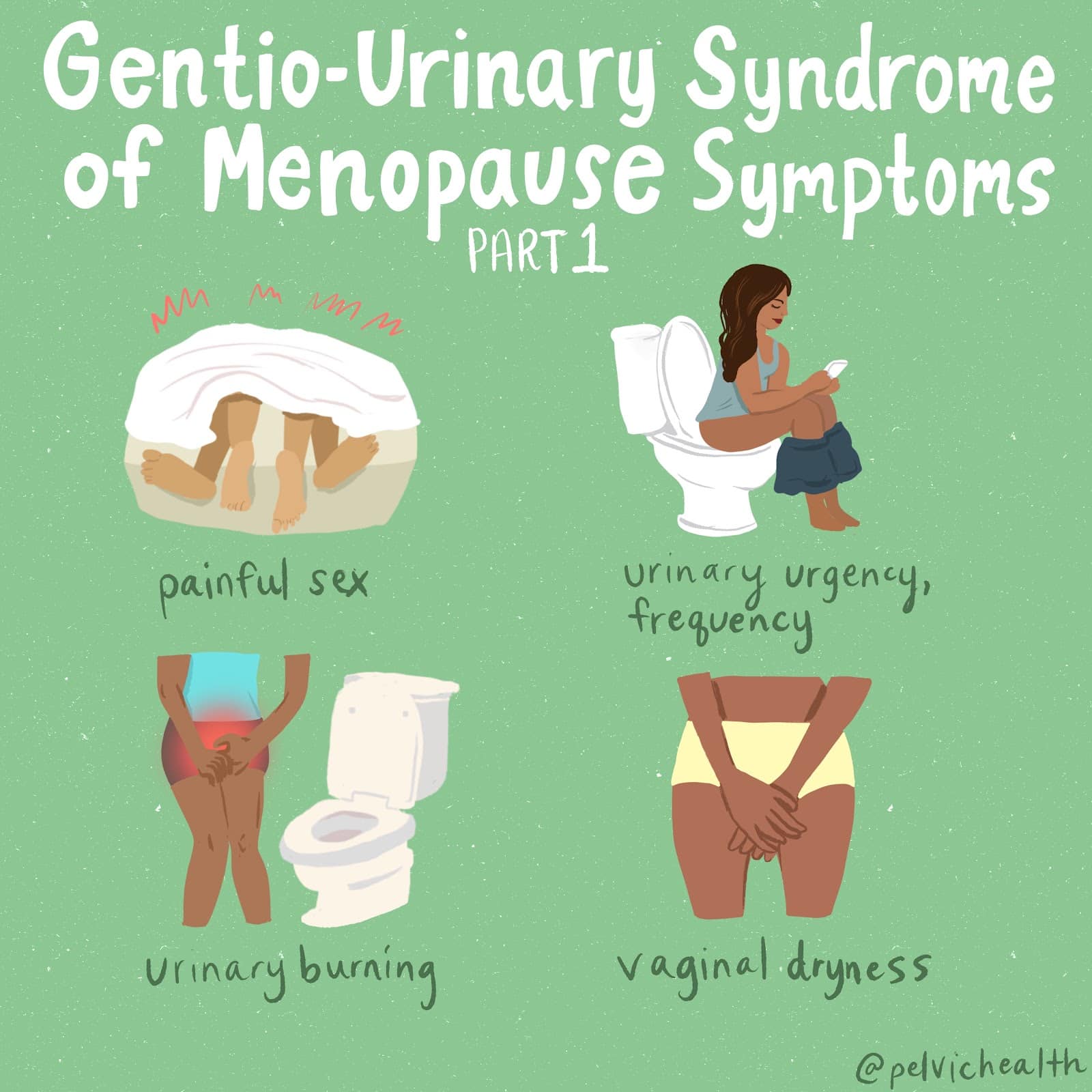
Perimenopause, the transitional phase leading up to menopause, typically begins in a person’s 40s, with menopause itself usually occurring in the early 50s. While systemic symptoms like hot flashes and mood changes are well-known, many people also experience less obvious but equally impactful genitourinary symptoms. These can include painful intercourse, urinary urgency, frequent urination, leakage, burning sensations, recurrent vaginal and urinary tract infections, and vaginal dryness. Collectively, these symptoms are part of the Genitourinary Syndrome of Menopause (GSM). Additionally, many women experience pelvic floor dysfunction, which affects nearly 50% of women by their 50s and can overlap with GSM symptoms.
While systemic hormonal therapy is commonly used to manage menopause symptoms, it may not address the specific needs of those experiencing GSM. The North American Menopause Society recommends the use of vaginal estrogen as an effective treatment for alleviating GSM symptoms and improving quality of life.
Menopause encompasses more than just hot flashes, night sweats, and mood swings. Despite being a common phase affecting roughly half of the population, menopause is often misunderstood, both by the public and many healthcare providers. This gap in knowledge can lead to unnecessary suffering, as many individuals are not fully informed about effective treatments.
Perimenopause, the transitional phase leading up to menopause, typically begins in a person’s 40s, with menopause itself usually occurring in the early 50s. While systemic symptoms like hot flashes and mood changes are well-known, many people also experience less obvious but equally impactful genitourinary symptoms. These can include painful intercourse, urinary urgency, frequent urination, leakage, burning sensations, recurrent vaginal and urinary tract infections, and vaginal dryness. Collectively, these symptoms are part of the Genitourinary Syndrome of Menopause (GSM). Additionally, many women experience pelvic floor dysfunction, which affects nearly 50% of women by their 50s and can overlap with GSM symptoms.
While systemic hormonal therapy is commonly used to manage menopause symptoms, it may not address the specific needs of those experiencing GSM. The North American Menopause Society recommends the use of vaginal estrogen as an effective treatment for alleviating GSM symptoms and improving quality of life.
Differential Diagnosis:
GSM or Pelvic Floor Dysfunction
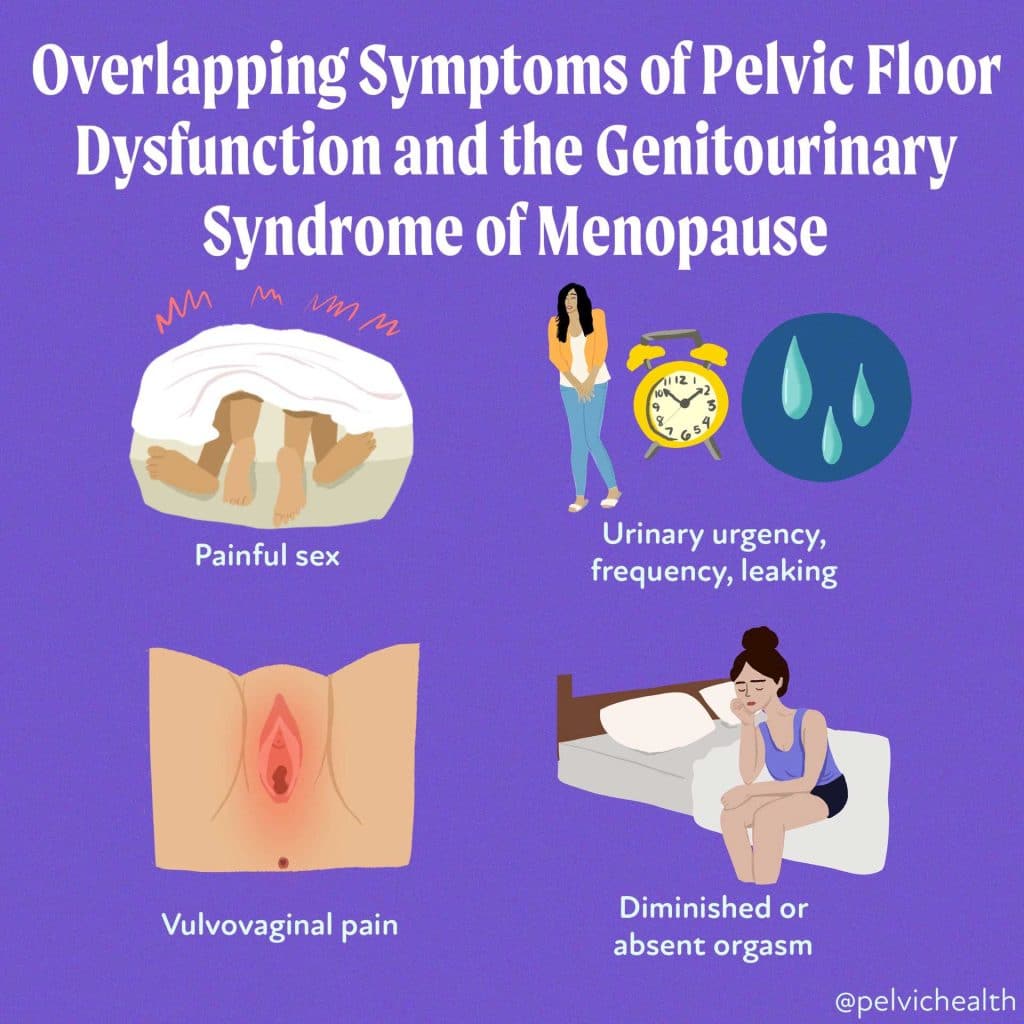
Symptoms of pelvic floor dysfunction and Genitourinary Syndrome of Menopause (GSM) can overlap and include:
- Urinary urgency, frequency, burning, nocturia
- Feelings of bladder or pelvic pressure
- Painful sex
- Diminished or absent orgasm
- Difficulty evacuating stool
- Vulvovaginal pain and burning
- Pain with sitting
An experienced healthcare provider, whether a pelvic floor physical and occupational therapists or a medical doctor, can conduct several assessments to diagnose pelvic floor dysfunction, hormonal deficiencies, and pelvic organ prolapse. These evaluations include a vulvovaginal visual examination, a Q-tip test to pinpoint areas of pain, and a digital manual examination.
Without appropriate medical management, all women may eventually experience symptoms of Genitourinary Syndrome of Menopause (GSM). Many are unaware that a pelvic floor physical and occupational therapy evaluation can be highly beneficial for addressing the musculoskeletal issues contributing to their discomfort. Combining pelvic floor physical and occupational therapy with medical treatments can be crucial for improving sexual enjoyment and resolving urinary and bowel problems.
Virtual pelvic floor therapy for menopause—contact us to get started!
FACTS
From: https://www.letstalkmenopause.org/further-reading
- Every day, approximately 6,000 women reach menopause.
- In the United States, around 50 million women are currently navigating menopause.
- About 84% of women experience genital, sexual, and urinary discomfort related to menopause, which often does not resolve without intervention, yet fewer than 25% seek assistance.
- An estimated 80% of OB-GYN residents acknowledge feeling inadequately prepared to address menopause-related issues.
- Genitourinary Syndrome of Menopause (GSM) is clinically identified in 90% of postmenopausal women, yet only one-third report experiencing symptoms in surveys.
- Barriers to treatment include women needing to initiate discussions about their symptoms, a belief that these issues are simply part of aging, and a failure to connect symptoms with menopause.
- Only 13% of healthcare providers routinely inquire about menopause-related symptoms with their patients.
- Even after a diagnosis of GSM, many women remain untreated. This is partly due to healthcare providers’ reluctance to prescribe treatments and patients’ concerns about the safety of topical vaginal therapies, despite evidence showing that GSM significantly affects quality of life.
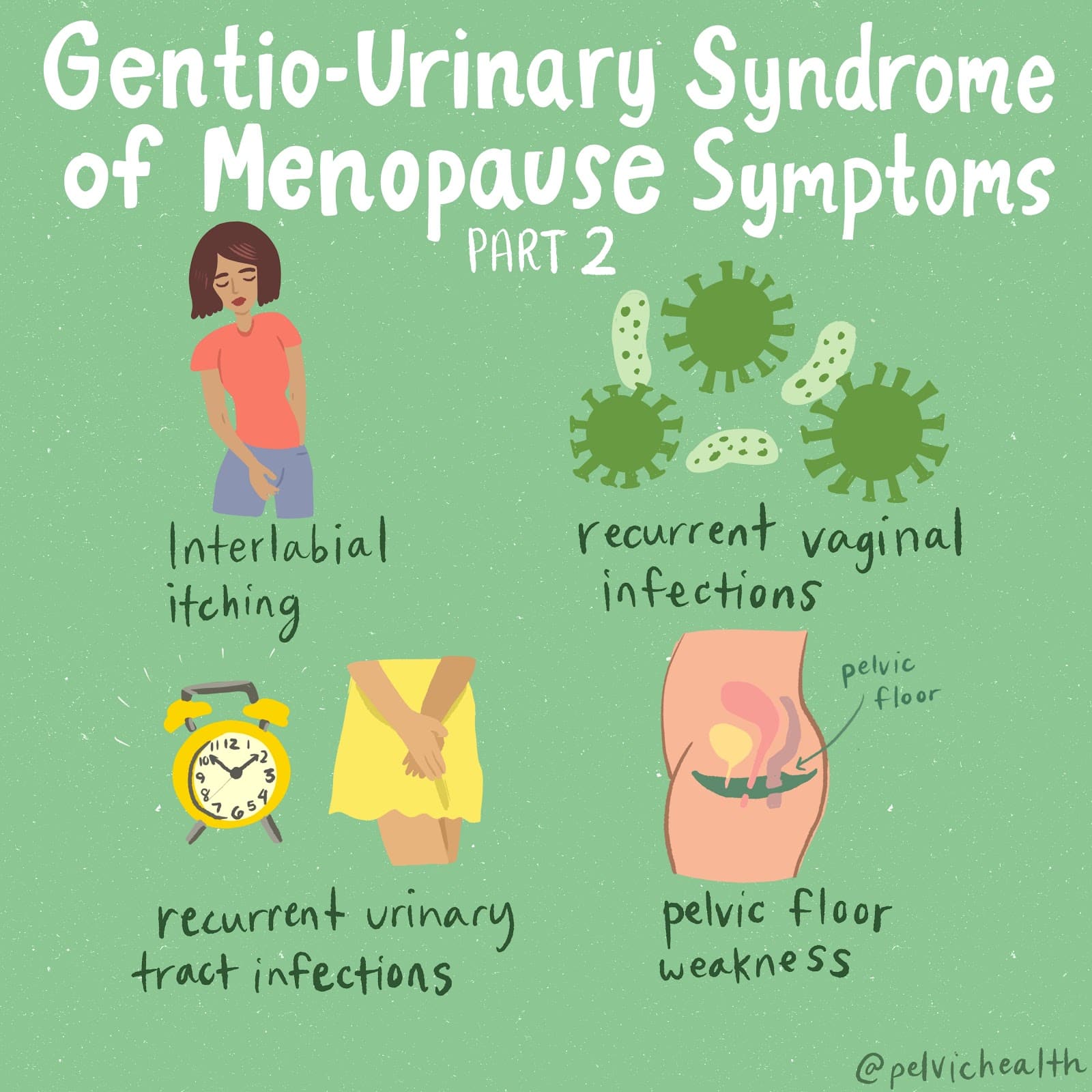
Hormone deficiency can lead to itching in the labial and vaginal areas. Additionally, other dermatological conditions, such as Lichen Sclerosus and cutaneous yeast infections, should also be considered.
During menopause, individuals are particularly susceptible to frequent vaginal and urinary tract infections due to:
- pH and tissue changes
- incomplete bladder emptying
- pelvic organ prolapse compromising urinary function
Recurrent infections are a major contributor to pelvic floor dysfunction. It’s crucial to address these infections promptly, as ongoing visceral-somatic input from untreated infections can lead to increased pain and further dysfunction even after the infection has been resolved. Without appropriate hormone therapy, infections may persist, leading to severe consequences. Untreated infections can cause unprovoked pain, make sexual activity difficult or impossible, and undiagnosed urinary tract infections (UTIs) may progress to kidney issues and other serious complications.
We recommend consulting with a menopause specialist to effectively monitor, prevent, and treat Genitourinary Syndrome of Menopause (GSM) since these issues are both significant and manageable. It’s important to normalize discussions about GSM; there’s no need for embarrassment. With appropriate care, individuals can lead fulfilling lives. Combining virtual pelvic floor physical and occupational therapy with medical management is essential for optimal results.
Treatment:
How We Can Help You

If you’re experiencing sexual dysfunction, it’s beneficial to consult a pelvic floor physical and occupational therapists online. They can assess whether any issues with your pelvic floor are contributing to your symptoms. During your initial virtual evaluation, the therapist will review your medical history, including previous diagnoses, treatments, and their effectiveness. They understand that many patients feel frustrated by the time they seek help.
The therapist will examine your nerves, muscles, joints, tissues, and movement patterns. After the assessment, they will discuss the findings with you and set both short-term and long-term therapy goals. Typically, physical and occupational therapy sessions occur once or twice a week over a period of approximately 12 weeks. Your therapist will also coordinate with other specialists on your treatment team and provide you with a personalized home exercise program. Our goal is to support your recovery and help you achieve the best possible quality of life.
Get virtual pelvic floor therapy for menopause. Book your online consultation today!

Treatment:
How We Can Help You
If you are having issues with your sexual function, it is in your best interest to get evaluated by a therapist for pelvic floor therapy, so they can establish what part, if any, of your pelvic floor may be contributing to the symptoms you are experiencing. During the course of the examination, the physical and occupational therapists will talk to you about your medical history and symptoms, including what you have been previously diagnosed with, the treatments or therapies you have had, and how effective or ineffective these therapies have been for you. It is significant to mention that we fully comprehend what you’ve been dealing with and that the majority of individuals are angry by the time they make it to see us. The physical and occupational therapists will conduct an evaluation of the patient’s nerves, muscles, joints, tissues, and movement patterns while doing the physical examination. After the examination is finished, your therapist will go over the results of the assessment with you. The physical and occupational therapists will conduct an evaluation to determine the cause of your symptoms and will establish both short-term and long-term therapy goals based on the results of the evaluation. Physical therapy treatments are typically administered between once and twice each week for a period of around 12 weeks. Your physical and occupational therapists will assist you in coordinating your recovery with all the other experts on your treatment team. They will provide you with an exercise regimen to complete at home and the sessions you attend in person. We are here to assist you in getting better and living the best life possible.
Get virtual pelvic floor therapy for menopause. Book your online consultation today!


Dr. David Prologo, pioneer of pudendal nerve cryotherapy
People recovering from pudendal neuralgia will tell you there is a lack of understanding about this diagnosis and treatment options in the medical community. Week after week, our blog, How do I know if I have PN or PNE, is one of our most read posts. Recently there has been discussion about cryotherapy treatment for pudendal neuralgia. Sara Saunders, PT, DPT of Sullivan Physical and Occupational Therapy in Austin, TX investigated the topic by interviewing the doctor who is doing this procedure. PHRC thanks Sara for taking the time to interview Dr. Prologo and for sharing her blog post with us.
Meet Dr. Prologo, by Sara K. Sauder, PT, DPT
Have you heard of him? I had not until just a few weeks ago. I heard a rumor that he is doing some great stuff with pudendal neuralgia. He is an interventional radiologist located at Emory in Atlanta, Georgia. He is doing cryoablation to the pudendal nerve with use of CT-guidance.
See, interventional radiologists are the guys that are doing pudendal blocks with CT-guidance in the first place. They are also the vein guys. They treat pelvic congestion. So, how perfect that Dr. Prologo treats both. Makes sense, right? Especially if pelvic congestion created your pudendal neuralgia. (The varicose veins can distend so much that it puts pressure on your pudendal nerve – or other nerves.) If you don’t know much about pelvic congestion, then check out my post on it. Click here.
So I hear about Dr. Prologo, I google him and the first image that pops up is the face of a very cheerful man. I think, “Oh. He is happy. Good. I will email this happy doctor.” And I do. And he writes back. Right away. He allows me to basically interrogate him. Here is a bit of our conversation:
- Sara: Is your technique for treating pudendal neuralgia called cryoablation or is it different from cryoablation?
Dr. Prologo: This technique is indeed cryoablation. The unique thing about what we are doing, though – is the implementation of image guidance. We are using our interventional radiology training and evolving image guidance techniques to access nerves that are deep in the body and otherwise inaccessible for injections or ablations, in this case the pudendal canal.
- Sara: How is your technique different from pulsed radiofrequency ablation?
Dr. Prologo: Radiofrequency ablation is heat mediated tissue destruction. Cryoablation creates shifts in osmotic gradients and intracellular ice crystals that ultimately results in the shutting off of nerve signals, more like turning down the volume of the stereo vs. blowing it up with a bomb.
- Sara: Why do you prefer freezing versus burning?
Dr. Prologo: 1) Cryoablation is great for pain procedures because it is not painful 2) Cryoablation creates an “ice ball” that we can see on CT. Therefore there is no guesswork involved with where we ablated 3) Cryoablation initiates a unique immune response that a) results in longer lasting results and b) stops neuroma formation (vs. radiofrequency ablation or surgery)
- Sara: What are the results you are getting?
Dr. Prologo: Our results have been largely durable and positive. That is, the great majority of our patients experience complete relief from their symptoms. That said, pain can be complicated and outcome depends heavily on patient selection.
- Sara: Have you followed your patients from four years ago?
Dr. Prologo: I am in touch with most of the patients that were done and they are still doing well.
- Sara: What are the side effects?
Dr. Prologo: We have not seen any side effects to date.
- Sara: Any long term issues?
Dr. Prologo: Not that we are aware of at this point.
- Sara: Is it possible that you are inadvertently treating the posterior femoral cutaneous nerve as well?
Dr. Prologo: No. The ablation zone and CT scanning are both exquisitely precise. This is actually the epicenter of the new therapies and innovation. That is, it isn’t really the cryo that is new, it’s the advanced imaging guidance to treat pain. The techniques are so precise that we can literally treat 2mm nerves in the skull base.
- Sara: Who is an appropriate referral?
Dr. Prologo: This is key. Patients who have been diagnosed with pudendal neuralgia are most likely to benefit. That said, many patients come with a wide variety of backgrounds and symptom descriptions. As a result, we can get everyone to the same starting point by performing a diagnostic “test injection.” Again, because we have CT, we can see with 100% certainty where our injection ends up. As a result, there is not guess work. If the patients symptoms improve with the test injection, then they will do well with the cryo. If not, then they don’t have pudendal neuralgia and some other therapy is warranted. That said, interventional radiologists also treat pelvic congestion syndrome, which can be misdiagnosed as pudendal neuralgia.
- Sara: Explain the process. Do patients fly in for an evaluation and receive treatment or do they have to fly back for treatment?
Dr. Prologo: No. We have developed a system in which patients who have stories reflecting underlying pudendal neuralgia – or some close variant – come in for a consultation and injection on the same day. Usually, we also schedule the cryo for the following day so everything can be done in one trip. If the patient fails the injection, we just cancel the cryo.
- Sara: What does treatment consist of?
Dr. Prologo: We place a needle in CT in the pudendal canal. The needle is configured to create a 3cm x 2cm ablation zone about its center. We freeze for 8 minutes, thaw for 4 minutes, freeze for 8 minutes, and thaw for a final 4 minutes – after which we pull the needle/probe.
- Sara: How long do patients stay in town after the treatment for pudendal neuralgia?
Dr. Prologo: I encourage patients to at least stay the night of the procedure. That way, if there happens to be a complication (bleed, for example) we can take care of them here.
- Sara: Do you freeze the whole nerve or different branches of the nerve?
Dr. Prologo: We freeze the portion that runs in Alcocks’s canal (the pudendal canal).
- Sara: Are you doing a pelvic exam to confirm your diagnosis of pudendal neuralgia or are you going by verbal report of symptoms alone?
Dr. Prologo: No. It is all about the injection. We have the luxury of being able to make the diagnosis based on the injection because of precision imaging. We shut down the nerve with 100% certainty in order to make or exclude the diagnosis of pudendal neuralgia.
- Sara: Are you familiar with Interstitial Cystitis?
Dr. Prologo: Yes.
- Sara: Are you seeing your patients’ Interstitial Cystitis symptoms resolve?
Dr. Prologo: We usually don’t treat this condition with this procedure. I think it may be helpful for folks to understand the larger picture. We have been lucky enough to be able to treat many conditions by accessing nerves with image guidance (phantom limb pain, occipital neuralgia, cancer pain, and more). Pudendal neuralgia is one of these subsets.
- Sara: Does insurance cover treatment?
Dr. Prologo: So far >90% of cases have been covered without incident. Sometimes we need to call or write a letter if the patient is out of network.
- Sara: Will you be presenting your treatment at any pelvic pain conferences?
Dr. Prologo: I have thought about this, but have not pursued it. I presented a few years back at our conference (Society of Interventional Radiology) but I think more interested parties may be at the pelvic pain conferences.
I would like to add that 1) I didn’t invent this. I was trying to help patients with cancer pain using cryoablation and God put these patients with nerve pain in my path (pudendal, greater occipital, phantom limb, etc) so I feel like it is my responsibility to do the best I can to help them. I have been so fortunate and blessed to have met so many beautiful people because of the way this thing has worked out. In the end, my only motivation for continuing to do this is to help folks. 2) as I mentioned earlier, the therapy is one application in a much larger picture – the use of image guidance for the treatment of pain. As data emerges regarding the safety and efficacy of these procedures, we will continue to grow and hopefully help even more patients. We appreciate the privilege to participate in each and everyone of these patients’ lives, hopefully toward the better.
Thank you Dr. Prologo for metaphorically sitting down with me, letting me shine a super bright light in your eyes and continuing to answer my questions despite my Cheetoh breath and complete lack of etiquette. You are patient. I am a salivating, rabid dog hungry for some answers.
………
Patients and providers are constantly on the lookout for effective treatment options. Research has shown that interdisciplinary treatment plans that include physical and occupational therapy, pain physiology education, medical management and self care are the most effective for managing any pain syndrome, including pudendal neuralgia. We are cautiously optimistic that cryotherapy may have a place in pudendal neuralgia treatment plans. Thank-you Sara and Dr. Prologo for this informative post!
For more information on and to reach Dr. Prologo, please visit: https://www.catchingpoint.com/dr-prologo
Please your comments and questions below, we look forward to hearing from you!
FAQ
What are pelvic floor muscles?
The pelvic floor muscles are a group of muscles that run from the coccyx to the pubic bone. They are part of the core, helping to support our entire body as well as providing support for the bowel, bladder and uterus. These muscles help us maintain bowel and bladder control and are involved in sexual pleasure and orgasm. The technical name of the pelvic floor muscles is the Levator Ani muscle group. The pudendal nerve, the levator ani nerve, and branches from the S2 – S4 nerve roots innervate the pelvic floor muscles. They are under voluntary and autonomic control, which is a unique feature only they possess compared to other muscle groups.
What is pelvic floor physical and occupational therapy?
Pelvic floor physical and occupational therapy is a specialized area of physical and occupational therapy. Currently, physical and occupational therapistss need advanced post-graduate education to be able to help people with pelvic floor dysfunction because pelvic floor disorders are not yet being taught in standard physical and occupational therapy curricula. The Pelvic Health and Rehabilitation Center provides extensive training for our staff because we recognize the limitations of physical and occupational therapy education in this unique area.
What happens at pelvic floor therapy?
During an evaluation for pelvic floor dysfunction the physical and occupational therapists will take a detailed history. Following the history the physical and occupational therapists will leave the room to allow the patient to change and drape themselves. The physical and occupational therapists will return to the room and using gloved hands will perform an external and internal manual assessment of the pelvic floor and girdle muscles. The physical and occupational therapists will once again leave the room and allow the patient to dress. Following the manual examination there may also be an examination of strength, motor control, and overall biomechanics and neuromuscular control. The physical and occupational therapists will then communicate the findings to the patient and together with their patient they establish an assessment, short term and long term goals and a treatment plan. Typically people with pelvic floor dysfunction are seen one time per week for one hour for varying amounts of time based on the severity and chronicity of the disease. A home exercise program will be established and the physical and occupational therapists will help coordinate other providers on the treatment team. Typically patients are seen for 3 months to a year.
What is pudendal neuralgia and how is it treated?
Pudendal Neuralgia is a clinical diagnosis that means pain in the sensory distribution of the pudendal nerve. The pudendal nerve is a mixed nerve that exits the S2 – S4 sacral nerve roots, we have a right and left pudendal nerve and each side has three main trunks: the dorsal branch, the perineal branch, and the inferior rectal branch. The branches supply sensation to the clitoris/penis, labia/scrotum, perineum, anus, the distal ⅓ of the urethra and rectum, and the vulva and vestibule. The nerve branches also control the pelvic floor muscles. The pudendal nerve follows a tortuous path through the pelvic floor and girdle, leaving it vulnerable to compression and tension injuries at various points along its path.
Pudendal Neuralgia occurs when the nerve is unable to slide, glide and move normally and as a result, people experience pain in some or all of the above-mentioned areas. Pelvic floor physical and occupational therapy plays a crucial role in identifying the mechanical impairments that are affecting the nerve. The physical and occupational therapy treatment plan is designed to restore normal neural function. Patients with pudendal neuralgia require pelvic floor physical and occupational therapy and may also benefit from medical management that includes pharmaceuticals and procedures such as pudendal nerve blocks or botox injections.
What is interstitial cystitis and how is it treated?
Interstitial Cystitis is a clinical diagnosis characterized by irritative bladder symptoms such as urinary urgency, frequency, and hesitancy in the absence of infection. Research has shown the majority of patients who meet the clinical definition have pelvic floor dysfunction and myalgia. Therefore, the American Urologic Association recommends pelvic floor physical and occupational therapy as first-line treatment for Interstitial Cystitis. Patients will benefit from pelvic floor physical and occupational therapy and may also benefit from pharmacologic management or medical procedures such as bladder instillations.
Who is the Pelvic Health and Rehabilitation Team?
The Pelvic Health and Rehabilitation Center was founded by Elizabeth Akincilar and Stephanie Prendergast in 2006, they have been treating people with pelvic floor disorders since 2001. They were trained and mentored by a medical doctor and quickly became experts in treating pelvic floor disorders. They began creating courses and sharing their knowledge around the world. They expanded to 11 locations in the United States and developed a residency style training program for their employees with ongoing weekly mentoring. The physical and occupational therapistss who work at PHRC have undergone more training than the majority of pelvic floor physical and occupational therapistss and as a result offer efficient and high quality care.
How many years of experience do we have?
Stephanie and Liz have 24 years of experience and help each and every team member become an expert in the field through their training and mentoring program.
Why PHRC versus anyone else?
PHRC is unique because of the specific focus on pelvic floor disorders and the leadership at our company. We are constantly lecturing, teaching, and staying ahead of the curve with our connections to medical experts and emerging experts. As a result, we are able to efficiently and effectively help our patients restore their pelvic health.
Do we treat men for pelvic floor therapy?
The Pelvic Health and Rehabilitation Center is unique in that the Cofounders have always treated people of all genders and therefore have trained the team members and staff the same way. Many pelvic floor physical and occupational therapistss focus solely on people with vulvas, this is not the case here.
Do I need pelvic floor therapy forever?
The majority of people with pelvic floor dysfunction will undergo pelvic floor physical and occupational therapy for a set amount of time based on their goals. Every 6 -8 weeks goals will be re-established based on the physical improvements and remaining physical impairments. Most patients will achieve their goals in 3 – 6 months. If there are complicating medical or untreated comorbidities some patients will be in therapy longer.
 Image permission via Cosmopolitan
By Stephanie Prendergast
The Facts
21% of women undergoing vaginal delivery had levator ani avulsion1
29% of women undergoing vaginal deliveries had pubic bone fractures2
60% of postpartum women reported Stress Urinary Incontinence (SUI)3
64.3% of women reported sexual dysfunction in the first year following childbirth4
77% of women had low back pain that interfered with daily tasks5
Last month, Cosmo published an article titled “Millions of women are injured during childbirth, why aren’t doctors diagnosing them?”. The article had over 50,000 shares on Facebook and thousands of comments from suffering postpartum women grateful to hear that they were not alone. The article was unique and truthful, featuring mom and baby in diapers. The article refreshingly and openly discussed the staggering high prevalence of embarrassing problems that women silently deal with following childbirth.
As a pelvic floor physical and occupational therapists I am well aware of the musculoskeletal consequences of pregnancy and delivery. It is mind blowing to pelvic floor PTs that pelvic floor care for new moms is erroneously and ineffectively compartmentalized to ‘do your kegels’. I was interviewed for the Cosmo article and it was no surprise to me that there was confusion about the lack of postpartum medical care and why so many women were suffering.
Cosmo asked the question, WHY aren’t doctors diagnosing these problems? The short answer is musculoskeletal health is not technically the OBGYN’s responsibility. The standard of insurance-covered medical care in the United States includes one postpartum checkup at 6 weeks. This examination includes a depression screening, discussion around contraception and breast feeding, and checking the health of the cervix and uterus. This visit does not routinely include evaluation of musculoskeletal structures. Urinary, bowel and sexual function spans many medical disciplines, but a primary owner lies in the hands of a pelvic floor physical and occupational therapists who has undergone specific training to evaluate pelvic floor and girdle function and biomechanics. Since pelvic floor physical and occupational therapy is not automatically part of a women’s medical care in the US, treatable impairments are often left unidentified and treated. As a result women suffer unnecessarily with incontinence, sexual dysfunction, and pain. The symptoms are not life-threatening. However, one look at the comments on the recent media articles reflect the significant impact the symptoms have on the mother’s quality of life, relationships, and ability to care for her baby.
There is no need for women to suffer. A University of Michigan study described childbirth as event more traumatic than the most aggressive combat sports. I do not think any sane person would disagree with this. Therefore, it should be no surprise that postpartum rehabilitation is a hell of a lot more sophisticated than doing a few kegels, and that every new mom needs it.
Since the current standard of maternal care does not automatically include a referral to a pelvic floor physical and occupational therapists, many women find us on their own. Once they do, they’re understandably upset that this type of service exists and that they were not told about it. We understand this frustration, but it is often misplaced on the physician. The insurance company and our broken healthcare system is the true problem. It is impossible for doctors to address all postpartum concerns in the limited time they have with their patients and this is as frustrating for them as it is for the patient. With that said, we want to share some information and tips to help you work with your OBGYN to get the postpartum care you need, and have it covered by your insurance.
- At your 6-week postpartum visit or anytime thereafter, ask your OBGYN if he or she works with a pelvic floor physical and occupational therapists and if they can recommend someone for you. They may already be working with someone they trust that they can recommend.
- Many states have direct access policies to physical and occupational therapy, which includes pelvic floor physical and occupational therapy. This means women can legally go to a pelvic floor physical and occupational therapists without a referral from a physician. If your OBGYN cannot recommend someone for you, women can use the ‘find a provider’ section on our blog homepage to find a qualified person in their local area.
- While it is legal to see a physical and occupational therapists without a prescription, your insurance company may require a prescription to cover services to the physical and occupational therapists or to reimburse you for your expenses. In many cases, the physical and occupational therapy office you choose to go to will have systems in place to help you navigate the process of getting your care covered.
- You may choose to ask your OBGYN or your primary care physician for a prescription for physical and occupational therapy to be evaluated and treated for pelvic floor dysfunction.
Once you find a pelvic floor physical and occupational therapists, you can expect that your unanswered questions and concerns will be addressed. Many women are embarrassed and worried about their symptoms, don’t be. As pelvic floor physical and occupational therapistss we have seen and heard it all and are here and ready to help!
For more information on what a postpartum physical and occupational therapy evaluation entails, please click here.
References
- Van Delft et al. Levator ani muscle avulsion during childbirth: a risk prediction model. BJOG 2014 August; 121(9):1155-63.
- Miller et al. Evaluating maternal recovery from labor and delivery: bone and levator ani injuries. AJOG 2015 August; 213:188e.1-11).
- Mannion et al. The influence of back pain and urinary incontinence on daily tasks of mothers at 12 months postpartum. PLoS One 10(6):e0129615.
- Kajehi M et al. Prevalence and risk factors of postpartum sexual dysfunction in Australian women. J Sex Med. 2015 Jun;12(6):1415-26. doi: 10.1111/jsm.12901. Epub 2015 May 11.
- Mannion et al. The influence of back pain and urinary incontinence on daily tasks of mothers at 12 months postpartum. PLoS One 10(6):e0129615.
FAQ
What are pelvic floor muscles?
The pelvic floor muscles are a group of muscles that run from the coccyx to the pubic bone. They are part of the core, helping to support our entire body as well as providing support for the bowel, bladder and uterus. These muscles help us maintain bowel and bladder control and are involved in sexual pleasure and orgasm. The technical name of the pelvic floor muscles is the Levator Ani muscle group. The pudendal nerve, the levator ani nerve, and branches from the S2 – S4 nerve roots innervate the pelvic floor muscles. They are under voluntary and autonomic control, which is a unique feature only they possess compared to other muscle groups.
What is pelvic floor physical and occupational therapy?
Pelvic floor physical and occupational therapy is a specialized area of physical and occupational therapy. Currently, physical and occupational therapistss need advanced post-graduate education to be able to help people with pelvic floor dysfunction because pelvic floor disorders are not yet being taught in standard physical and occupational therapy curricula. The Pelvic Health and Rehabilitation Center provides extensive training for our staff because we recognize the limitations of physical and occupational therapy education in this unique area.
What happens at pelvic floor therapy?
During an evaluation for pelvic floor dysfunction the physical and occupational therapists will take a detailed history. Following the history the physical and occupational therapists will leave the room to allow the patient to change and drape themselves. The physical and occupational therapists will return to the room and using gloved hands will perform an external and internal manual assessment of the pelvic floor and girdle muscles. The physical and occupational therapists will once again leave the room and allow the patient to dress. Following the manual examination there may also be an examination of strength, motor control, and overall biomechanics and neuromuscular control. The physical and occupational therapists will then communicate the findings to the patient and together with their patient they establish an assessment, short term and long term goals and a treatment plan. Typically people with pelvic floor dysfunction are seen one time per week for one hour for varying amounts of time based on the severity and chronicity of the disease. A home exercise program will be established and the physical and occupational therapists will help coordinate other providers on the treatment team. Typically patients are seen for 3 months to a year.
What is pudendal neuralgia and how is it treated?
Pudendal Neuralgia is a clinical diagnosis that means pain in the sensory distribution of the pudendal nerve. The pudendal nerve is a mixed nerve that exits the S2 – S4 sacral nerve roots, we have a right and left pudendal nerve and each side has three main trunks: the dorsal branch, the perineal branch, and the inferior rectal branch. The branches supply sensation to the clitoris/penis, labia/scrotum, perineum, anus, the distal ⅓ of the urethra and rectum, and the vulva and vestibule. The nerve branches also control the pelvic floor muscles. The pudendal nerve follows a tortuous path through the pelvic floor and girdle, leaving it vulnerable to compression and tension injuries at various points along its path.
Pudendal Neuralgia occurs when the nerve is unable to slide, glide and move normally and as a result, people experience pain in some or all of the above-mentioned areas. Pelvic floor physical and occupational therapy plays a crucial role in identifying the mechanical impairments that are affecting the nerve. The physical and occupational therapy treatment plan is designed to restore normal neural function. Patients with pudendal neuralgia require pelvic floor physical and occupational therapy and may also benefit from medical management that includes pharmaceuticals and procedures such as pudendal nerve blocks or botox injections.
What is interstitial cystitis and how is it treated?
Interstitial Cystitis is a clinical diagnosis characterized by irritative bladder symptoms such as urinary urgency, frequency, and hesitancy in the absence of infection. Research has shown the majority of patients who meet the clinical definition have pelvic floor dysfunction and myalgia. Therefore, the American Urologic Association recommends pelvic floor physical and occupational therapy as first-line treatment for Interstitial Cystitis. Patients will benefit from pelvic floor physical and occupational therapy and may also benefit from pharmacologic management or medical procedures such as bladder instillations.
Who is the Pelvic Health and Rehabilitation Team?
The Pelvic Health and Rehabilitation Center was founded by Elizabeth Akincilar and Stephanie Prendergast in 2006, they have been treating people with pelvic floor disorders since 2001. They were trained and mentored by a medical doctor and quickly became experts in treating pelvic floor disorders. They began creating courses and sharing their knowledge around the world. They expanded to 11 locations in the United States and developed a residency style training program for their employees with ongoing weekly mentoring. The physical and occupational therapistss who work at PHRC have undergone more training than the majority of pelvic floor physical and occupational therapistss and as a result offer efficient and high quality care.
How many years of experience do we have?
Stephanie and Liz have 24 years of experience and help each and every team member become an expert in the field through their training and mentoring program.
Why PHRC versus anyone else?
PHRC is unique because of the specific focus on pelvic floor disorders and the leadership at our company. We are constantly lecturing, teaching, and staying ahead of the curve with our connections to medical experts and emerging experts. As a result, we are able to efficiently and effectively help our patients restore their pelvic health.
Do we treat men for pelvic floor therapy?
The Pelvic Health and Rehabilitation Center is unique in that the Cofounders have always treated people of all genders and therefore have trained the team members and staff the same way. Many pelvic floor physical and occupational therapistss focus solely on people with vulvas, this is not the case here.
Do I need pelvic floor therapy forever?
The majority of people with pelvic floor dysfunction will undergo pelvic floor physical and occupational therapy for a set amount of time based on their goals. Every 6 -8 weeks goals will be re-established based on the physical improvements and remaining physical impairments. Most patients will achieve their goals in 3 – 6 months. If there are complicating medical or untreated comorbidities some patients will be in therapy longer.
By Allison Wells, MD
Chronic pelvic pain is at a difficult intersection of anatomical pain generators and mood disorders like depression and anxiety that are coincident with or caused by the pain itself. To effectively relieve chronic pelvic pain you need a treatment that addresses the pain and the mood disorder issues. Ketamine infusions do both.
Ketamine has been used safely for anesthesia since the 1960s when it was first created. It has been a first choice for battlefield medicine and for the most critically ill patients in the operating room. Since the 1980s ketamine’s effect on chronic pain and on depression and other mood disorders has been studied and thousands of patients have obtained relief around the world through programs at academic medical centers and private ketamine infusion clinics alike. Ketamine possibly works on chronic pain through down regulating GABA-A or NMDA receptors that have been up regulated and become self-sustaining in the pain syndrome. This is in contrast to the opioid narcotics, like Oxycontin, which work on the mu receptors.
Ketamine works to calm the overexcited pathways that cause neuropathic pain. It stops the feedback loop from the revved up peripheral neurons and allows the peripheral pain nerves to return to a normal resting state. Ketamine is good for acute pain, but it really shines with chronic pain. It doesn’t just cover the pain, like opioids. It actually changes the neural pathways to get them to stop sending faulty signals.
Europe and Australia have ketamine as a standardized part of their chronic pain and depression guidelines that are written by the national health systems of both countries. In America, ketamine is not FDA approved for the treatment of pain and depression because there have been no large randomized controlled trials, although there have been many small trials with positive results. Since ketamine is an old, generic drug with FDA approval already for other uses, specific indications for depression and pain have not been sought.
It is really hard to randomize patients in a ketamine trial – they know immediately whether they were given the control or the active medication. Also, who is going to pay for such a trial when there is no readily apparent way to profit off a generic drug that can’t be patented? For this reason ketamine is considered “off-label”. However, some reports indicate that in America more than 80% of all doctors prescribe off-label medications and more than 21% of adult medications and up to 78.9% of children discharged from hospitals were on at least one off-label medication. We are beginning to see insurance companies recognize the depth and breadth of positive studies and they are beginning to cover ketamine treatments. BCBS and UHC are the insurers that we have begun to see routinely cover this care and Aetna and Humana have been slower to provide coverage, but each patient’s plan may be different.
Ketamine is typically used as an infusion in most treatment protocols. There are a few programs that administer the infusion as a continuous drip over up to 10 days in the ICU at levels that render the patient comatose. This is not a standard practice because of the huge cost and also because of the risks and side effects of being in an immobile, general anesthesia, intubated state for 10 days, namely: pneumonia, blood clots, and muscle wasting. The majority of ketamine infusion programs perform the infusion as an outpatient procedure over the course of a few hours each day of treatment and as deep sedation, where the patient is still able to talk and breathe on their own.
Other delivery methods, such as oral delivery, are generally less favorable for ketamine pain treatments. Ketamine is unpredictable when taken by mouth as it is first metabolized and broken down by the liver after absorption from the intestinal tract before it can have its effect on the nerves it’s meant to treat. Only about 16% of the active compound is available after oral administration to have an effect with the rest being metabolized into inactive or underactive metabolites. Also, most studies appear to indicate that ketamine concentrations need to reach a certain threshold and stay steadily above that threshold for a few hours to accomplish the resetting of the pain receptors.
I practice at Lone Star Infusion in Houston, Tx. A patient here receives a low-dose infusion of ketamine for up to 4 hours at a time in a quiet, relaxed setting. The patient then recovers for up to 2 hours before being released to go home. Infusions are administered by a board-certified anesthesiologist experienced with using ketamine and adjusting medications for safety and patient comfort, including the use of adjunct medicines as appropriate.
Most side effects of the ketamine are well-tolerated and last only as long as the infusion. Hallucinations and feelings of dissociation are generally mild and may be treated. Sleepiness is common. Nausea is common without pretreatment but rare if patients are given oral ondansetron first.
The beneficial effects of ketamine can last for weeks or months depending on the severity and chronicity of the pain and follow-up treatments with single infusions of ketamine can help maintain the effects over many years. Clinics around the world have now been working with pain and depression patients and have 10 years’ worth of data on ketamine’s safety and long-term efficacy.
In short, ketamine infusions may be an excellent option for patients with severe, intractable neuropathic pain. There are websites like Ketamine Advocacy Network (http://www.ketamineadvocacynetwork.org) that list ketamine providers by state and also by talking with local medical schools and pain fellowship programs patients can find information on a ketamine infusion center near them. Treatments can cost anywhere from just a co-pay to $1,450 per 4 hour infusion depending on insurance coverage.
Allison Wells, MD
Board Certified Anesthesiologist
Trained at Harvard and Baylor College Of Medicine
I practice at Wells Medicine in Houston Tx
References
Ketamine Advocacy Network
http://www.ketamineadvocacynetwork.org
Pain Physician. 2013 Jul-Aug;16(4):291-308.
Central sensitization in urogynecological chronic pelvic pain: a systematic literature review.
Kaya S1, Hermans L, Willems T, RousselN, Meeus M.
Clin Obstet Gynecol. 2003 Dec;46(4):797-803.
Chronic pelvic pain as a form of complex regional pain syndrome.
Janicki TI1.
Zacharoff, Kevin. Introduction to Complex Regional Pain Syndrome, PainEDU, Painedu.org, accessed 8/9/2016
Complex Regional Pain Syndrome in Adults, UK Guidelines for Diagnosis, Referral and Management in Primary and Secondary Care, May 2012
Royal Cornwall Hospitals, NHS Trust, Clinical Guidelines for Nursing Care of Patient with Intravenous Ketamine Infusion, rcht.nhs.uk, accessed 3/10/2016
Scottish Palliative Care Guidelines, NHS Scotland, palliativecareguidelines.scot.nhs.uk, accessed 8/9/2016
Wittich, Christopher, Burkle, Christopher, Lanier, William. Mayo Clinic Proceedings, Ten Common Questions (and Their Answers) About Off-label Drug Use, P.11, ncbi.nlm.nih.gov, accessed 3/10/2016
Off-Label Drug Use, American Cancer Society, cancer.org, accessed 8/10/2016
Psychosom Med. 1998 May-Jun;60(3):309-18.
Abuse-related posttraumatic stress disorder and alterations of the hypothalamic-pituitary-adrenal axis in women with chronic pelvic pain.
Heim C1, Ehlert U, Hanker JP, Hellhammer DH.
T.E. Nolan, W.P. Metheny, R.P. Smith. Unrecognized association of sleep disorders and depression with chronic pelvic pain. South Med J. 1992;85:1181-1183
EAU Guidelines on Chronic Pelvic Pain
Pain Physician. 2005 Apr;8(2):175-9.
Multi-day low dose ketamine infusion for the treatment of complex regional pain syndrome.
Goldberg ME1, Domsky R, Scaringe D, Hirsh R, Dotson J, Sharaf I, TorjmanMC, Schwartzman RJ.: M. Falla * , A.P. Baranowskib, C.J. Fowlerb, V. Lepinardc, J.G. Malone-Leed, E.J. Messelinke, F. Oberpenningf, J.L. Osborneg and S. Schumacherh
European Urology, January 2014
Pain Physician. 2005 Apr;8(2):175-9.
Multi-day low dose ketamine infusion for the treatment of complex regional pain syndrome.
Goldberg ME1, Domsky R, Scaringe D, Hirsh R, Dotson J, Sharaf I, TorjmanMC, Schwartzman RJ.
Pain Med. 2008 Nov;9(8):1173-201. doi: 10.1111/j.1526-4637.2007.00402.x. Epub 2008 Feb 5.
Efficacy of ketamine in anesthetic dosage for the treatment of refractory complex regional pain syndrome: an open-label phase II study.
Kiefer RT1, Rohr P, Ploppa A, DieterichHJ, Grothusen J, Koffler S, AltemeyerKH, Unertl K, Schwartzman RJ.
CNS Drugs. 2012 Mar 1;26(3):215-28. doi: 10.2165/11595200-000000000-00000.
Efficacy and safety of ketamine in patients with complex regional pain syndrome: a systematic review.
Azari P1, Lindsay DR, Briones D, Clarke C, Buchheit T, Pyati S.
JAMA Psychiatry. 2014 Jun;71(6):681-8. doi: 10.1001/jamapsychiatry.2014.62.
Efficacy of intravenous ketamine for treatment of chronic posttraumatic stress disorder: a randomized clinical trial.
Feder A1, Parides MK2, Murrough JW3, Perez AM4, Morgan JE1, Saxena S5, Kirkwood K2, AanHet Rot M6, Lapidus KA3, Wan LB1, IosifescuD3, Charney DS7.
Front Neurosci. 2015 Jul 21;9:249. doi: 10.3389/fnins.2015.00249. eCollection 2015.
Antidepressant mechanism of ketamine: perspective from preclinical studies.
Scheuing L1, Chiu CT1, Liao HM1, Chuang DM1.
FAQ
What are pelvic floor muscles?
The pelvic floor muscles are a group of muscles that run from the coccyx to the pubic bone. They are part of the core, helping to support our entire body as well as providing support for the bowel, bladder and uterus. These muscles help us maintain bowel and bladder control and are involved in sexual pleasure and orgasm. The technical name of the pelvic floor muscles is the Levator Ani muscle group. The pudendal nerve, the levator ani nerve, and branches from the S2 – S4 nerve roots innervate the pelvic floor muscles. They are under voluntary and autonomic control, which is a unique feature only they possess compared to other muscle groups.
What is pelvic floor physical and occupational therapy?
Pelvic floor physical and occupational therapy is a specialized area of physical and occupational therapy. Currently, physical and occupational therapistss need advanced post-graduate education to be able to help people with pelvic floor dysfunction because pelvic floor disorders are not yet being taught in standard physical and occupational therapy curricula. The Pelvic Health and Rehabilitation Center provides extensive training for our staff because we recognize the limitations of physical and occupational therapy education in this unique area.
What happens at pelvic floor therapy?
During an evaluation for pelvic floor dysfunction the physical and occupational therapists will take a detailed history. Following the history the physical and occupational therapists will leave the room to allow the patient to change and drape themselves. The physical and occupational therapists will return to the room and using gloved hands will perform an external and internal manual assessment of the pelvic floor and girdle muscles. The physical and occupational therapists will once again leave the room and allow the patient to dress. Following the manual examination there may also be an examination of strength, motor control, and overall biomechanics and neuromuscular control. The physical and occupational therapists will then communicate the findings to the patient and together with their patient they establish an assessment, short term and long term goals and a treatment plan. Typically people with pelvic floor dysfunction are seen one time per week for one hour for varying amounts of time based on the severity and chronicity of the disease. A home exercise program will be established and the physical and occupational therapists will help coordinate other providers on the treatment team. Typically patients are seen for 3 months to a year.
What is pudendal neuralgia and how is it treated?
Pudendal Neuralgia is a clinical diagnosis that means pain in the sensory distribution of the pudendal nerve. The pudendal nerve is a mixed nerve that exits the S2 – S4 sacral nerve roots, we have a right and left pudendal nerve and each side has three main trunks: the dorsal branch, the perineal branch, and the inferior rectal branch. The branches supply sensation to the clitoris/penis, labia/scrotum, perineum, anus, the distal ⅓ of the urethra and rectum, and the vulva and vestibule. The nerve branches also control the pelvic floor muscles. The pudendal nerve follows a tortuous path through the pelvic floor and girdle, leaving it vulnerable to compression and tension injuries at various points along its path.
Pudendal Neuralgia occurs when the nerve is unable to slide, glide and move normally and as a result, people experience pain in some or all of the above-mentioned areas. Pelvic floor physical and occupational therapy plays a crucial role in identifying the mechanical impairments that are affecting the nerve. The physical and occupational therapy treatment plan is designed to restore normal neural function. Patients with pudendal neuralgia require pelvic floor physical and occupational therapy and may also benefit from medical management that includes pharmaceuticals and procedures such as pudendal nerve blocks or botox injections.
What is interstitial cystitis and how is it treated?
Interstitial Cystitis is a clinical diagnosis characterized by irritative bladder symptoms such as urinary urgency, frequency, and hesitancy in the absence of infection. Research has shown the majority of patients who meet the clinical definition have pelvic floor dysfunction and myalgia. Therefore, the American Urologic Association recommends pelvic floor physical and occupational therapy as first-line treatment for Interstitial Cystitis. Patients will benefit from pelvic floor physical and occupational therapy and may also benefit from pharmacologic management or medical procedures such as bladder instillations.
Who is the Pelvic Health and Rehabilitation Team?
The Pelvic Health and Rehabilitation Center was founded by Elizabeth Akincilar and Stephanie Prendergast in 2006, they have been treating people with pelvic floor disorders since 2001. They were trained and mentored by a medical doctor and quickly became experts in treating pelvic floor disorders. They began creating courses and sharing their knowledge around the world. They expanded to 11 locations in the United States and developed a residency style training program for their employees with ongoing weekly mentoring. The physical and occupational therapistss who work at PHRC have undergone more training than the majority of pelvic floor physical and occupational therapistss and as a result offer efficient and high quality care.
How many years of experience do we have?
Stephanie and Liz have 24 years of experience and help each and every team member become an expert in the field through their training and mentoring program.
Why PHRC versus anyone else?
PHRC is unique because of the specific focus on pelvic floor disorders and the leadership at our company. We are constantly lecturing, teaching, and staying ahead of the curve with our connections to medical experts and emerging experts. As a result, we are able to efficiently and effectively help our patients restore their pelvic health.
Do we treat men for pelvic floor therapy?
The Pelvic Health and Rehabilitation Center is unique in that the Cofounders have always treated people of all genders and therefore have trained the team members and staff the same way. Many pelvic floor physical and occupational therapistss focus solely on people with vulvas, this is not the case here.
Do I need pelvic floor therapy forever?
The majority of people with pelvic floor dysfunction will undergo pelvic floor physical and occupational therapy for a set amount of time based on their goals. Every 6 -8 weeks goals will be re-established based on the physical improvements and remaining physical impairments. Most patients will achieve their goals in 3 – 6 months. If there are complicating medical or untreated comorbidities some patients will be in therapy longer.