

Menopause encompasses more than just hot flashes, night sweats, and mood swings. Despite being a common phase affecting roughly half of the population, menopause is often misunderstood, both by the public and many healthcare providers. This gap in knowledge can lead to unnecessary suffering, as many individuals are not fully informed about effective treatments.
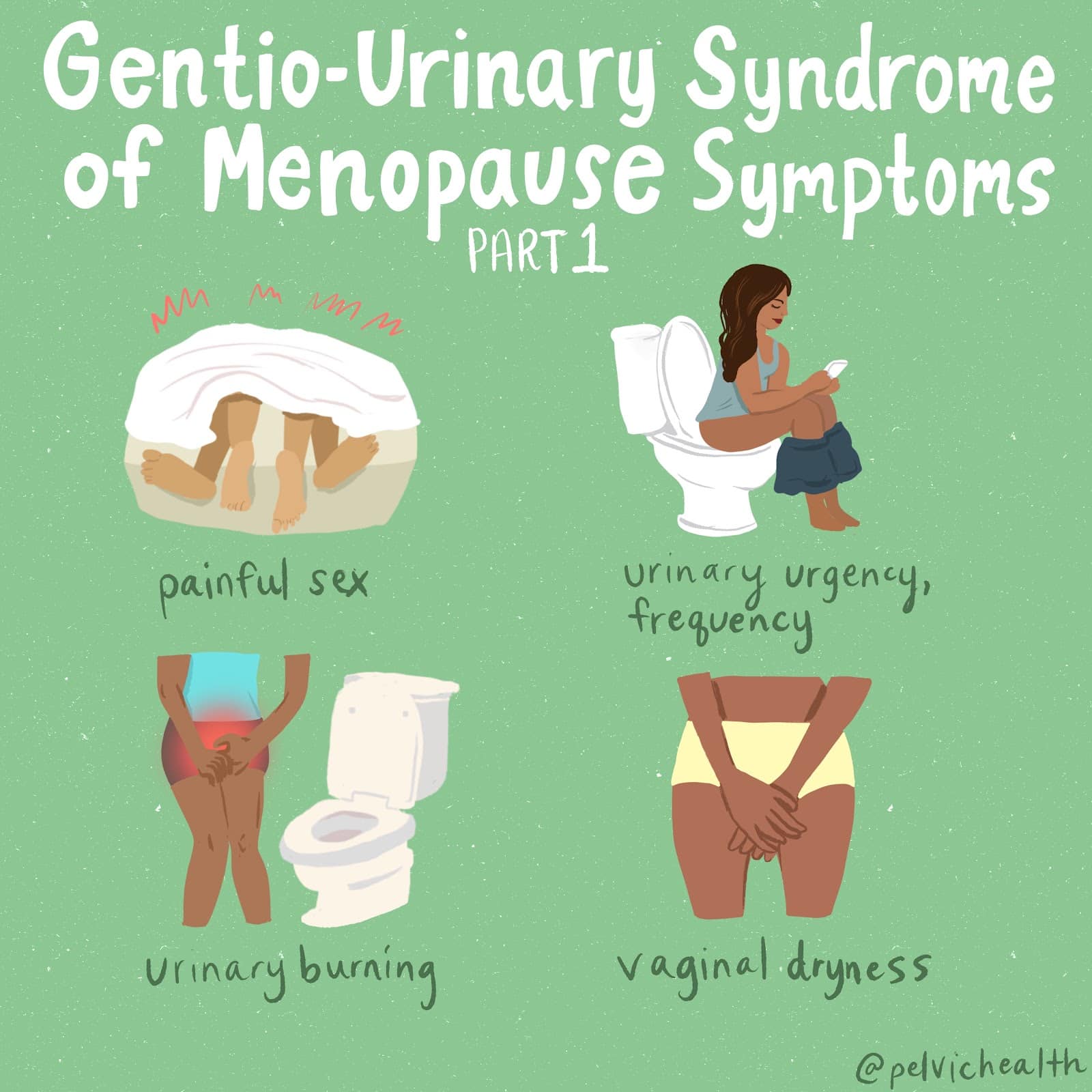
Perimenopause, the transitional phase leading up to menopause, typically begins in a person’s 40s, with menopause itself usually occurring in the early 50s. While systemic symptoms like hot flashes and mood changes are well-known, many people also experience less obvious but equally impactful genitourinary symptoms. These can include painful intercourse, urinary urgency, frequent urination, leakage, burning sensations, recurrent vaginal and urinary tract infections, and vaginal dryness. Collectively, these symptoms are part of the Genitourinary Syndrome of Menopause (GSM). Additionally, many women experience pelvic floor dysfunction, which affects nearly 50% of women by their 50s and can overlap with GSM symptoms.
While systemic hormonal therapy is commonly used to manage menopause symptoms, it may not address the specific needs of those experiencing GSM. The North American Menopause Society recommends the use of vaginal estrogen as an effective treatment for alleviating GSM symptoms and improving quality of life.
Menopause encompasses more than just hot flashes, night sweats, and mood swings. Despite being a common phase affecting roughly half of the population, menopause is often misunderstood, both by the public and many healthcare providers. This gap in knowledge can lead to unnecessary suffering, as many individuals are not fully informed about effective treatments.
Perimenopause, the transitional phase leading up to menopause, typically begins in a person’s 40s, with menopause itself usually occurring in the early 50s. While systemic symptoms like hot flashes and mood changes are well-known, many people also experience less obvious but equally impactful genitourinary symptoms. These can include painful intercourse, urinary urgency, frequent urination, leakage, burning sensations, recurrent vaginal and urinary tract infections, and vaginal dryness. Collectively, these symptoms are part of the Genitourinary Syndrome of Menopause (GSM). Additionally, many women experience pelvic floor dysfunction, which affects nearly 50% of women by their 50s and can overlap with GSM symptoms.
While systemic hormonal therapy is commonly used to manage menopause symptoms, it may not address the specific needs of those experiencing GSM. The North American Menopause Society recommends the use of vaginal estrogen as an effective treatment for alleviating GSM symptoms and improving quality of life.
Differential Diagnosis:
GSM or Pelvic Floor Dysfunction
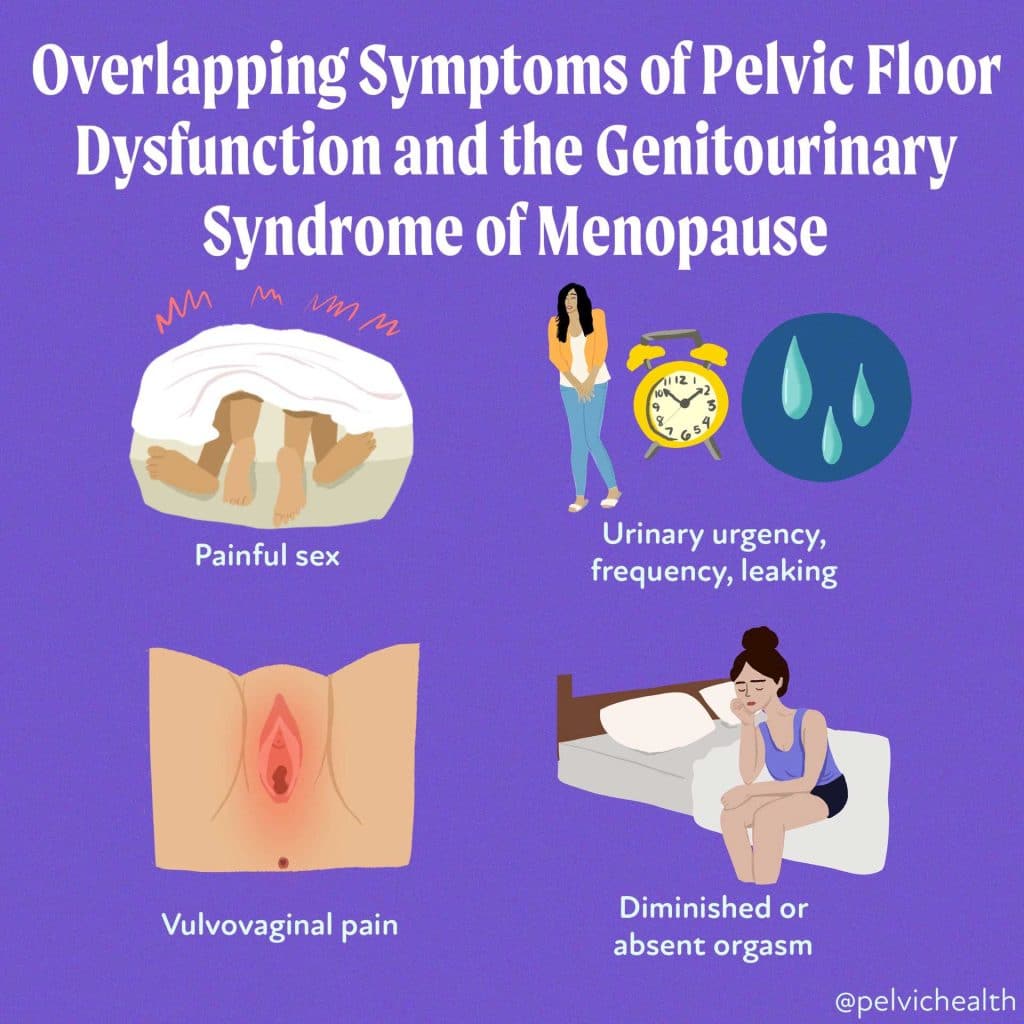
Symptoms of pelvic floor dysfunction and Genitourinary Syndrome of Menopause (GSM) can overlap and include:
- Urinary urgency, frequency, burning, nocturia
- Feelings of bladder or pelvic pressure
- Painful sex
- Diminished or absent orgasm
- Difficulty evacuating stool
- Vulvovaginal pain and burning
- Pain with sitting
An experienced healthcare provider, whether a pelvic floor physical and occupational therapists or a medical doctor, can conduct several assessments to diagnose pelvic floor dysfunction, hormonal deficiencies, and pelvic organ prolapse. These evaluations include a vulvovaginal visual examination, a Q-tip test to pinpoint areas of pain, and a digital manual examination.
Without appropriate medical management, all women may eventually experience symptoms of Genitourinary Syndrome of Menopause (GSM). Many are unaware that a pelvic floor physical and occupational therapy evaluation can be highly beneficial for addressing the musculoskeletal issues contributing to their discomfort. Combining pelvic floor physical and occupational therapy with medical treatments can be crucial for improving sexual enjoyment and resolving urinary and bowel problems.
Virtual pelvic floor therapy for menopause—contact us to get started!
FACTS
From: https://www.letstalkmenopause.org/further-reading
- Every day, approximately 6,000 women reach menopause.
- In the United States, around 50 million women are currently navigating menopause.
- About 84% of women experience genital, sexual, and urinary discomfort related to menopause, which often does not resolve without intervention, yet fewer than 25% seek assistance.
- An estimated 80% of OB-GYN residents acknowledge feeling inadequately prepared to address menopause-related issues.
- Genitourinary Syndrome of Menopause (GSM) is clinically identified in 90% of postmenopausal women, yet only one-third report experiencing symptoms in surveys.
- Barriers to treatment include women needing to initiate discussions about their symptoms, a belief that these issues are simply part of aging, and a failure to connect symptoms with menopause.
- Only 13% of healthcare providers routinely inquire about menopause-related symptoms with their patients.
- Even after a diagnosis of GSM, many women remain untreated. This is partly due to healthcare providers’ reluctance to prescribe treatments and patients’ concerns about the safety of topical vaginal therapies, despite evidence showing that GSM significantly affects quality of life.
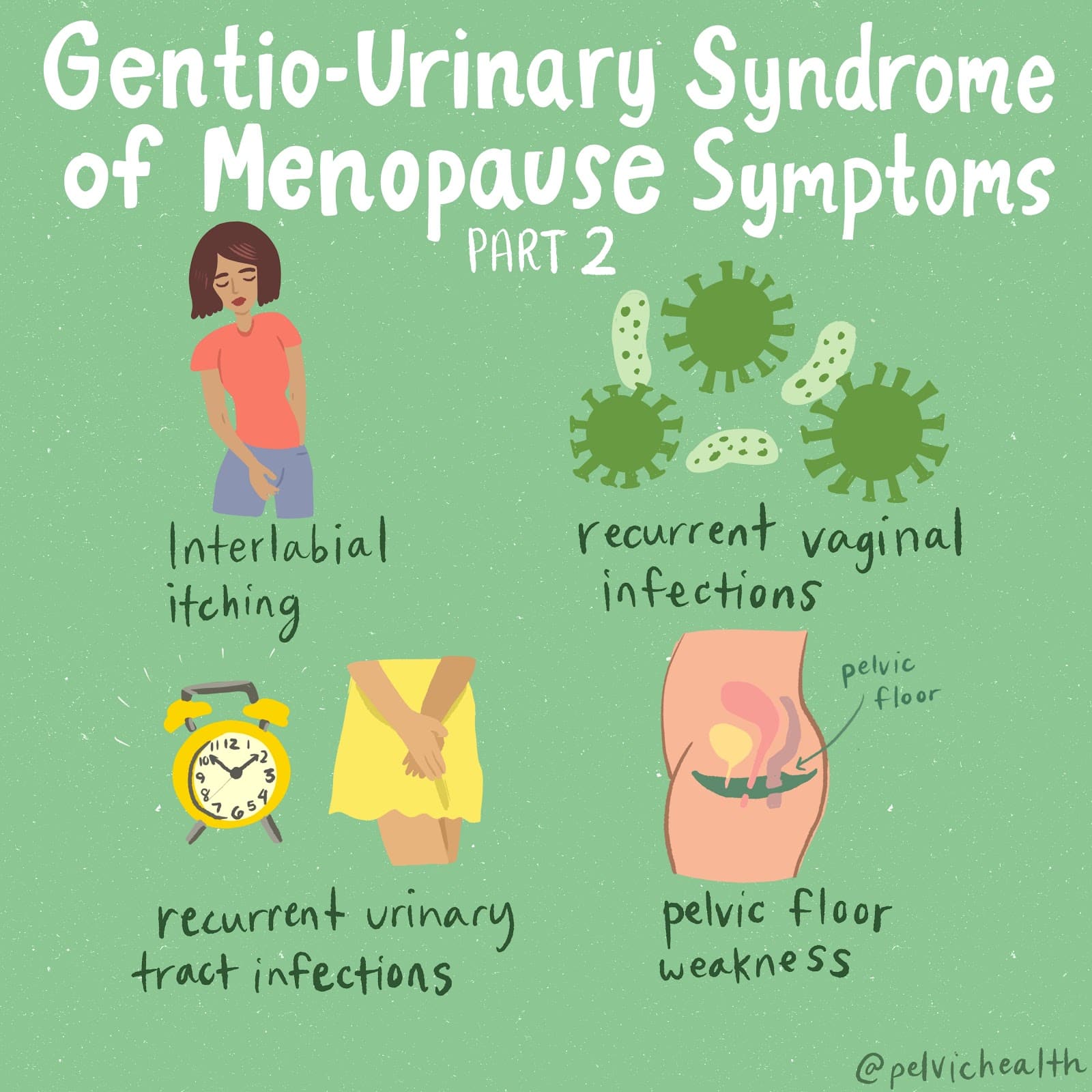
Hormone deficiency can lead to itching in the labial and vaginal areas. Additionally, other dermatological conditions, such as Lichen Sclerosus and cutaneous yeast infections, should also be considered.
During menopause, individuals are particularly susceptible to frequent vaginal and urinary tract infections due to:
- pH and tissue changes
- incomplete bladder emptying
- pelvic organ prolapse compromising urinary function
Recurrent infections are a major contributor to pelvic floor dysfunction. It’s crucial to address these infections promptly, as ongoing visceral-somatic input from untreated infections can lead to increased pain and further dysfunction even after the infection has been resolved. Without appropriate hormone therapy, infections may persist, leading to severe consequences. Untreated infections can cause unprovoked pain, make sexual activity difficult or impossible, and undiagnosed urinary tract infections (UTIs) may progress to kidney issues and other serious complications.
We recommend consulting with a menopause specialist to effectively monitor, prevent, and treat Genitourinary Syndrome of Menopause (GSM) since these issues are both significant and manageable. It’s important to normalize discussions about GSM; there’s no need for embarrassment. With appropriate care, individuals can lead fulfilling lives. Combining virtual pelvic floor physical and occupational therapy with medical management is essential for optimal results.
Treatment:
How We Can Help You

If you’re experiencing sexual dysfunction, it’s beneficial to consult a pelvic floor physical and occupational therapists online. They can assess whether any issues with your pelvic floor are contributing to your symptoms. During your initial virtual evaluation, the therapist will review your medical history, including previous diagnoses, treatments, and their effectiveness. They understand that many patients feel frustrated by the time they seek help.
The therapist will examine your nerves, muscles, joints, tissues, and movement patterns. After the assessment, they will discuss the findings with you and set both short-term and long-term therapy goals. Typically, physical and occupational therapy sessions occur once or twice a week over a period of approximately 12 weeks. Your therapist will also coordinate with other specialists on your treatment team and provide you with a personalized home exercise program. Our goal is to support your recovery and help you achieve the best possible quality of life.
Get virtual pelvic floor therapy for menopause. Book your online consultation today!

Treatment:
How We Can Help You
If you are having issues with your sexual function, it is in your best interest to get evaluated by a therapist for pelvic floor therapy, so they can establish what part, if any, of your pelvic floor may be contributing to the symptoms you are experiencing. During the course of the examination, the physical and occupational therapists will talk to you about your medical history and symptoms, including what you have been previously diagnosed with, the treatments or therapies you have had, and how effective or ineffective these therapies have been for you. It is significant to mention that we fully comprehend what you’ve been dealing with and that the majority of individuals are angry by the time they make it to see us. The physical and occupational therapists will conduct an evaluation of the patient’s nerves, muscles, joints, tissues, and movement patterns while doing the physical examination. After the examination is finished, your therapist will go over the results of the assessment with you. The physical and occupational therapists will conduct an evaluation to determine the cause of your symptoms and will establish both short-term and long-term therapy goals based on the results of the evaluation. Physical therapy treatments are typically administered between once and twice each week for a period of around 12 weeks. Your physical and occupational therapists will assist you in coordinating your recovery with all the other experts on your treatment team. They will provide you with an exercise regimen to complete at home and the sessions you attend in person. We are here to assist you in getting better and living the best life possible.
Get virtual pelvic floor therapy for menopause. Book your online consultation today!

Help!!! My pants are on FIRE!! Wait, what? Well, at least that’s what it feels like to a lot of people with pelvic pain. Because nerve pain can feel just like that – burning, tingling, like fire ants in your pants. In this post we are going to talk about how mediation can help.
Why is this sensation so common in people with pelvic pain? Let’s circle back to our old friend, the pudendal nerve. The pudendal nerve is special. It has nerve fibers that control how the muscles move, it regulates incoming skin sensations AND it has fibers that are linked to the fight or flight nervous system, a.k.a. the sympathetic nervous system.1
Heart pounding, breath racing and blood pressure spiking are all signs of an activated sympathetic nervous system.
Fight or flight mode is on. It’s not always a bad thing to be in fight or flight mode. It has helped us survive over the centuries,but sometimes it gets turned on and stays on,that’s when it becomes a problem. And the pudendal nerve can get triggered via a mechanical problem, such as an overuse injury, surgery, compression, etc.,2 but it can also get triggered when we are in constant fight or flight mode. (For more information on the pudendal nerve, please click here for our collection of archives on the topic).
Luckily we have an “antidote” to the sympathetic nervous system, its calming counterpart,the parasympathetic nervous system. It is the lesser known but equally as important,rest and digest part of the nervous system. Deep breathing, decreased heart rate and increased digestion are all signs the parasympathetic nervous system is in control.3 One way to activate the parasympathetic nervous system is through meditation.
Whether you are chanting the same word over and over again or being guided through a body relaxation, most styles of meditation have the same central focus – being present and deep breathing. Across gender, race and age, meditation is a research proven way to decrease the dominance of your fight or flight nervous system. One study showed that mindful meditation significantly reduced blood pressure, sympathetic nerve activity and heart rate, compared to the control group, in African-American males with kidney disease.5 Another study demonstrated that guided meditation significantly reduced heart rate, sympathetic reactivity and cortisol levels, compared to the control groups, in healthy adult males who were brand new to meditation.6 Even people that have never practiced meditation before can benefit from its positive effects. Meditation is a real, studied and effective way to reduce stress.
The verdict is still out on exactly HOW meditation really taps into the rest and digest nervous system, but one factor that contributes to the relaxation response of meditation is slow, deep breathing. Research shows that when we inhale AND when we breathe slowly, the fight or flight nervous system is inhibited.7 Slow, deep breathing is under the control of the rest and digest nervous system. Just ten minutes of slow, deep breathing significantly lowered blood pressure, heart rate and respiratory rate in people with hypertension.8 Breathing slowly will make you relax. So simple!
Let’s put this all together now. The pudendal nerve has branches of the fight or flight nervous system. Meditation decreases stress and sympathetic activation. Deep breathing inhibits the fight or flight system AND kicks in the rest and digest nervous system. When your pelvic floor is acting up, it will literally help to take a deep breath and meditate. Even though it might be the last thing you want to do when you’re in pain,you can help put out the fire in your pants by slowing down, breathing deeply and taking some time to meditate. It’s not “just in your head,” it’s in your nervous system.
Stop. Don’t Panic. Breathe. Meditate. Not sure how? There’s an app for that (insert eye roll). But seriously, there are several that we recommend here at PHRC, but our top FREE choices are Calm and Headspace. Give it a try and let us know what you think!
- Pelvic Pain Explained by Stephanie A. Prendergast & Elizabeth H. Rummer
- Cortisol as a Marker of Stress by A. I. Kozlov and M.A. Kozlova
- The Pelvic Floor by Beate Carriere and Cynthia Markel Feldt
- http://medical-dictionary.thefreedictionary.com/parasympathetic
- Mindfulness meditation lowers muscle sympathetic nerve activity and blood pressure in African-American males with chronic kidney disease by Jeanie Park, Robert H. Lyles, and Susan Bauer-Wu
- Effect of Meditation on Stress-Induced Changes in Cognitive Functions by Amit Mohan, MD, Ratna Sharma, PhD, and Ramesh L. Bijlani, MD, SM
- Self-Regulation of Breathing as a Primary Treatment for Anxiety by Ravinder Jerath, Vernon A. Barnes, Kyler Harden
- Effects of mental relaxation and slow breathing in essential hypertension by Rajeev M. Kaushik, Reshma Kaushik, Sukhdev K. Mahajan, and Vemreddi Rajesh
FAQ
What are pelvic floor muscles?
The pelvic floor muscles are a group of muscles that run from the coccyx to the pubic bone. They are part of the core, helping to support our entire body as well as providing support for the bowel, bladder and uterus. These muscles help us maintain bowel and bladder control and are involved in sexual pleasure and orgasm. The technical name of the pelvic floor muscles is the Levator Ani muscle group. The pudendal nerve, the levator ani nerve, and branches from the S2 – S4 nerve roots innervate the pelvic floor muscles. They are under voluntary and autonomic control, which is a unique feature only they possess compared to other muscle groups.
What is pelvic floor physical and occupational therapy?
Pelvic floor physical and occupational therapy is a specialized area of physical and occupational therapy. Currently, physical and occupational therapistss need advanced post-graduate education to be able to help people with pelvic floor dysfunction because pelvic floor disorders are not yet being taught in standard physical and occupational therapy curricula. The Pelvic Health and Rehabilitation Center provides extensive training for our staff because we recognize the limitations of physical and occupational therapy education in this unique area.
What happens at pelvic floor therapy?
During an evaluation for pelvic floor dysfunction the physical and occupational therapists will take a detailed history. Following the history the physical and occupational therapists will leave the room to allow the patient to change and drape themselves. The physical and occupational therapists will return to the room and using gloved hands will perform an external and internal manual assessment of the pelvic floor and girdle muscles. The physical and occupational therapists will once again leave the room and allow the patient to dress. Following the manual examination there may also be an examination of strength, motor control, and overall biomechanics and neuromuscular control. The physical and occupational therapists will then communicate the findings to the patient and together with their patient they establish an assessment, short term and long term goals and a treatment plan. Typically people with pelvic floor dysfunction are seen one time per week for one hour for varying amounts of time based on the severity and chronicity of the disease. A home exercise program will be established and the physical and occupational therapists will help coordinate other providers on the treatment team. Typically patients are seen for 3 months to a year.
What is pudendal neuralgia and how is it treated?
Pudendal Neuralgia is a clinical diagnosis that means pain in the sensory distribution of the pudendal nerve. The pudendal nerve is a mixed nerve that exits the S2 – S4 sacral nerve roots, we have a right and left pudendal nerve and each side has three main trunks: the dorsal branch, the perineal branch, and the inferior rectal branch. The branches supply sensation to the clitoris/penis, labia/scrotum, perineum, anus, the distal ⅓ of the urethra and rectum, and the vulva and vestibule. The nerve branches also control the pelvic floor muscles. The pudendal nerve follows a tortuous path through the pelvic floor and girdle, leaving it vulnerable to compression and tension injuries at various points along its path.
Pudendal Neuralgia occurs when the nerve is unable to slide, glide and move normally and as a result, people experience pain in some or all of the above-mentioned areas. Pelvic floor physical and occupational therapy plays a crucial role in identifying the mechanical impairments that are affecting the nerve. The physical and occupational therapy treatment plan is designed to restore normal neural function. Patients with pudendal neuralgia require pelvic floor physical and occupational therapy and may also benefit from medical management that includes pharmaceuticals and procedures such as pudendal nerve blocks or botox injections.
What is interstitial cystitis and how is it treated?
Interstitial Cystitis is a clinical diagnosis characterized by irritative bladder symptoms such as urinary urgency, frequency, and hesitancy in the absence of infection. Research has shown the majority of patients who meet the clinical definition have pelvic floor dysfunction and myalgia. Therefore, the American Urologic Association recommends pelvic floor physical and occupational therapy as first-line treatment for Interstitial Cystitis. Patients will benefit from pelvic floor physical and occupational therapy and may also benefit from pharmacologic management or medical procedures such as bladder instillations.
Who is the Pelvic Health and Rehabilitation Team?
The Pelvic Health and Rehabilitation Center was founded by Elizabeth Akincilar and Stephanie Prendergast in 2006, they have been treating people with pelvic floor disorders since 2001. They were trained and mentored by a medical doctor and quickly became experts in treating pelvic floor disorders. They began creating courses and sharing their knowledge around the world. They expanded to 11 locations in the United States and developed a residency style training program for their employees with ongoing weekly mentoring. The physical and occupational therapistss who work at PHRC have undergone more training than the majority of pelvic floor physical and occupational therapistss and as a result offer efficient and high quality care.
How many years of experience do we have?
Stephanie and Liz have 24 years of experience and help each and every team member become an expert in the field through their training and mentoring program.
Why PHRC versus anyone else?
PHRC is unique because of the specific focus on pelvic floor disorders and the leadership at our company. We are constantly lecturing, teaching, and staying ahead of the curve with our connections to medical experts and emerging experts. As a result, we are able to efficiently and effectively help our patients restore their pelvic health.
Do we treat men for pelvic floor therapy?
The Pelvic Health and Rehabilitation Center is unique in that the Cofounders have always treated people of all genders and therefore have trained the team members and staff the same way. Many pelvic floor physical and occupational therapistss focus solely on people with vulvas, this is not the case here.
Do I need pelvic floor therapy forever?
The majority of people with pelvic floor dysfunction will undergo pelvic floor physical and occupational therapy for a set amount of time based on their goals. Every 6 -8 weeks goals will be re-established based on the physical improvements and remaining physical impairments. Most patients will achieve their goals in 3 – 6 months. If there are complicating medical or untreated comorbidities some patients will be in therapy longer.

In mid-April, Fox News Health wrote an article on why postpartum moms need physical and occupational therapy. (To see the article click here.) As pointed out in the article, France, Netherlands, and Australia automatically provide postpartum moms with 6-12 pelvic physical and occupational therapy treatments. Meanwhile, here in the US postpartum moms are rarely told by their OB/GYNs to attend physical and occupational therapy. When a postpartum-related issue is brought up by a new American mom, it’s not uncommon for her doctor to respond with, “Well, you just had a baby.” This statement implies something like “You need to deal with it and eventually it might go away.” To illustrate the importance of pelvic physical and occupational therapy for postpartum moms, I would like to discuss Sarah’s case study. You’ll remember Sarah from the blog Coached Pushing vs. Maternal Pushing.
When I initially saw Sarah she was a first-time mom who was 8 ½ months postpartum. Her main concern for attending physical and occupational therapy was pain with sex, medically known as dyspareunia. Sarah reported she delivered her baby vaginally. She stated she was in lithotomy position (on her back with her feet in the stirrups, like in the movies) and ready to deliver her baby when she felt a strong urge to push. She started pushing and the nurse had her stop. The nurse would not let her push until the doctor arrived, which was not until 20 minutes later. Sarah reported she pushed once and the baby arrived “fast.” She sustained a 3rd degree tear along the perineum, meaning that she tore from the perineal muscles down to her anal sphincter. Sarah stated she attempted intercourse once, sometime later, but stopped due to severe pain. During her evaluation with me, she described her pain as “like having razors” along the entrance of her vagina. She reported a “hard nodule” right at the entrance, which was painful during sex. Sarah had been unable to participate in sex due to this pain, and had felt discouraged about her plan to have multiple children. She had confided in her friend about her pain and her friend had encouraged her to seek pelvic physical and occupational therapy. That’s when she came to see me.
Pelvic Physical and Occupational Therapy Examination and Assessment
- I checked her abdominal wall for a diastasis recti (separation of the abdominal muscles), because all postpartum women should be evaluated for this no matter what;
- I looked for connective tissue restrictions throughout the abdomen, suprapubic, bony pelvis, and medial and posterior thighs;
- I observed her vulvar tissues for any abnormalities, such as de-estrogenized tissue and hypertrophic scar;
- I palpated her perineum scar, checking for mobility and hypersensitivity;
- I palpated the muscles in her abdomen, medial thighs, buttocks, and pelvic floor for tightness and myofascial trigger points;
- I assessed her motor control of her pelvic floor muscles.
The reason why I assessed these particular components was because I wanted to know whether Sarah’s pain with sex was caused by muscle tightness, trigger points, and/or scar sensitivity. I also wanted to know whether any abdominal wall instability was contributing towards her pelvic floor dysfunction. The pelvic floor can compensate due to transversus abdominis (TrA) muscle weakness and a diastasis recti. Fortunately, Sarah did not have a diastasis recti, and her TrA muscle strength was normal. Her connective tissue was also normal, as was the muscle tone throughout her hips and buttocks.
What I did find with Sarah was scar tissue restrictions along the perineum where the tearing had taken place. The scar tissue was hypertrophic (raised), hypersensitive, and hypomobile (lacking movement). The “hard nodule” she was feeling during sex was this hypertrophic scar. Hypersensitivity to touch along the scar was contributing towards her pain. Guarding from this pain was contributing towards her pelvic floor muscle tightness, eliciting myofascial trigger points, which were then in turn creating more pain and feeding into the pain cycle.
Physical and Occupational Therapy Treatment Plan
My initial treatment plan with Sarah was for her to come in once a week for 4-6 weeks for a session consisting of scar mobilization (breaking up scar tissue), myofascial trigger point release, Thieles massage, and neuromuscular re-education with emphasis on pelvic floor voluntary relaxation, combined with a home program. This home program initially consisted of perineal massage with scar mobilization and pelvic floor drops. We also discussed proper positioning for bowel movements (because I tell everyone about that), and why kegels were not appropriate for her.
On Sarah’s 3rd visit, I showed her husband how to do scar mobilization, since she expressed a preference for having her husband help. I also educated her husband on perineum massage prior to sex, in order to help decrease the discomfort Sarah was feeling with penetration.
On Sarah’s 4th visit, she reported that she had not been consistently having her husband help with scar mobilizations, and that she was having a hard time reaching the scar herself. We introduced a small dilator to help her with releasing the transverse perineal muscles and softening the scar tissue. In later visits, she reported being very consistent with the dilator.
Sarah completed a total of 11 pelvic physical and occupational therapy treatments. I saw her weekly for 6 visits, after which I re-evaluated her and came up with a new treatment plan. She reported a significant decrease in the pain intensity, from 9/10 to 1/10 on the pain scale. I spaced out her treatment to once every 2 weeks, as a result of the improvement in her symptoms, and her compliance with her home program.
On Sarah’s 10th visit, she reported having had sex regularly, however she had felt pain with initial penetration for the first 30 seconds each time. We continued with her treatment plan, and on her 11th visit, Sarah reported having had no pain with sex that week.
Sarah’s symptoms are all too common with postpartum moms, but as you’ve seen in this case study, physical and occupational therapy can help resolve these issues, and have a huge impact on a new mom’s quality of life. In my opinion, France, Netherlands, and Australia are doing it right: it’s time we in America caught up.
FAQ
What are pelvic floor muscles?
The pelvic floor muscles are a group of muscles that run from the coccyx to the pubic bone. They are part of the core, helping to support our entire body as well as providing support for the bowel, bladder and uterus. These muscles help us maintain bowel and bladder control and are involved in sexual pleasure and orgasm. The technical name of the pelvic floor muscles is the Levator Ani muscle group. The pudendal nerve, the levator ani nerve, and branches from the S2 – S4 nerve roots innervate the pelvic floor muscles. They are under voluntary and autonomic control, which is a unique feature only they possess compared to other muscle groups.
What is pelvic floor physical and occupational therapy?
Pelvic floor physical and occupational therapy is a specialized area of physical and occupational therapy. Currently, physical and occupational therapistss need advanced post-graduate education to be able to help people with pelvic floor dysfunction because pelvic floor disorders are not yet being taught in standard physical and occupational therapy curricula. The Pelvic Health and Rehabilitation Center provides extensive training for our staff because we recognize the limitations of physical and occupational therapy education in this unique area.
What happens at pelvic floor therapy?
During an evaluation for pelvic floor dysfunction the physical and occupational therapists will take a detailed history. Following the history the physical and occupational therapists will leave the room to allow the patient to change and drape themselves. The physical and occupational therapists will return to the room and using gloved hands will perform an external and internal manual assessment of the pelvic floor and girdle muscles. The physical and occupational therapists will once again leave the room and allow the patient to dress. Following the manual examination there may also be an examination of strength, motor control, and overall biomechanics and neuromuscular control. The physical and occupational therapists will then communicate the findings to the patient and together with their patient they establish an assessment, short term and long term goals and a treatment plan. Typically people with pelvic floor dysfunction are seen one time per week for one hour for varying amounts of time based on the severity and chronicity of the disease. A home exercise program will be established and the physical and occupational therapists will help coordinate other providers on the treatment team. Typically patients are seen for 3 months to a year.
What is pudendal neuralgia and how is it treated?
Pudendal Neuralgia is a clinical diagnosis that means pain in the sensory distribution of the pudendal nerve. The pudendal nerve is a mixed nerve that exits the S2 – S4 sacral nerve roots, we have a right and left pudendal nerve and each side has three main trunks: the dorsal branch, the perineal branch, and the inferior rectal branch. The branches supply sensation to the clitoris/penis, labia/scrotum, perineum, anus, the distal ⅓ of the urethra and rectum, and the vulva and vestibule. The nerve branches also control the pelvic floor muscles. The pudendal nerve follows a tortuous path through the pelvic floor and girdle, leaving it vulnerable to compression and tension injuries at various points along its path.
Pudendal Neuralgia occurs when the nerve is unable to slide, glide and move normally and as a result, people experience pain in some or all of the above-mentioned areas. Pelvic floor physical and occupational therapy plays a crucial role in identifying the mechanical impairments that are affecting the nerve. The physical and occupational therapy treatment plan is designed to restore normal neural function. Patients with pudendal neuralgia require pelvic floor physical and occupational therapy and may also benefit from medical management that includes pharmaceuticals and procedures such as pudendal nerve blocks or botox injections.
What is interstitial cystitis and how is it treated?
Interstitial Cystitis is a clinical diagnosis characterized by irritative bladder symptoms such as urinary urgency, frequency, and hesitancy in the absence of infection. Research has shown the majority of patients who meet the clinical definition have pelvic floor dysfunction and myalgia. Therefore, the American Urologic Association recommends pelvic floor physical and occupational therapy as first-line treatment for Interstitial Cystitis. Patients will benefit from pelvic floor physical and occupational therapy and may also benefit from pharmacologic management or medical procedures such as bladder instillations.
Who is the Pelvic Health and Rehabilitation Team?
The Pelvic Health and Rehabilitation Center was founded by Elizabeth Akincilar and Stephanie Prendergast in 2006, they have been treating people with pelvic floor disorders since 2001. They were trained and mentored by a medical doctor and quickly became experts in treating pelvic floor disorders. They began creating courses and sharing their knowledge around the world. They expanded to 11 locations in the United States and developed a residency style training program for their employees with ongoing weekly mentoring. The physical and occupational therapistss who work at PHRC have undergone more training than the majority of pelvic floor physical and occupational therapistss and as a result offer efficient and high quality care.
How many years of experience do we have?
Stephanie and Liz have 24 years of experience and help each and every team member become an expert in the field through their training and mentoring program.
Why PHRC versus anyone else?
PHRC is unique because of the specific focus on pelvic floor disorders and the leadership at our company. We are constantly lecturing, teaching, and staying ahead of the curve with our connections to medical experts and emerging experts. As a result, we are able to efficiently and effectively help our patients restore their pelvic health.
Do we treat men for pelvic floor therapy?
The Pelvic Health and Rehabilitation Center is unique in that the Cofounders have always treated people of all genders and therefore have trained the team members and staff the same way. Many pelvic floor physical and occupational therapistss focus solely on people with vulvas, this is not the case here.
Do I need pelvic floor therapy forever?
The majority of people with pelvic floor dysfunction will undergo pelvic floor physical and occupational therapy for a set amount of time based on their goals. Every 6 -8 weeks goals will be re-established based on the physical improvements and remaining physical impairments. Most patients will achieve their goals in 3 – 6 months. If there are complicating medical or untreated comorbidities some patients will be in therapy longer.
By: Stephanie Prendergast
Physical and Occupational Therapists Wanted for PHRC Los Angeles!
Do you want to become a leader in the field of pelvic floor physical and occupational therapy? Do you enjoy working with this patient population but are having a hard time finding mentorship? Do you want a collaborative supportive work environment vs being ‘alone on an island’? If so, PHRC is the place for you!
PHRC Mission
Liz and I created the Pelvic Health and Rehabilitation in 2006 with the intention of becoming the gold-standard for pelvic health physical and occupational therapy for men, women, and children. We are committed to improving the quality of life of our patients and the dynamic growth of our employees and students. We boldly tackle educating the community and medical professionals with our innovative and evidence-based practice. We compete by providing outstanding customer service and attracting, motivating, and retaining talented people.
Over the past ten years we have:
- grown from one office to five
- created our popular blog, As the Pelvis Turns
- published our book Pelvic Pain Explained
- we developed Demystifying Pudendal Neuralgia and taught it 38 times
- we have lectured around the world for multiple organizations
- Stephanie was the first physical and occupational therapists to serve as President of the International Pelvic Pain Society
We owe our successes to the strength of our team, which is why you should consider working with us. Liz and I wanted to create an environment unlike any other that we worked in, an environment committed to ongoing learning and clinical success. In this post we want to share a few things that make us unique and that help us achieve our goals.
Professional development.
- TRAINING PROGRAM
We know from experience that committed professionals, whether they are new graduates or veterans, add value to our company. As a team, we work together to continuously learn and improve our own skills. As a company, we have a diverse range of skills and experience, allowing us to create and provide a unique training program. We individualize each training program to meet the needs of our new team member. Our structured training program consists of weekly clinical and didactic goals. Our entire staff works together to get our new team member prepared for a successful clinical experience at PHRC.
- ONGOING MENTORSHIP
Mentorship and collaboration does not end when the training program does. In order to remain on the cutting edge we must stay current with literature and advances in the field. Therefore, we offer the following:
- Weekly company-wide staff meetings that include the following:
- Weekly journal article presentation by a PHRC therapist
- Weekly case study presentation from a PHRC therapist
- Case presentations of all new patients of the week from all PHRC therapists
- Discussion of challenging cases with entire PHRC staff
- Discussion of ongoing company-wide projects
- Scheduled weekly meeting of the staff member and their supervisor
- Review of complex patients
- Opportunity to discuss personal and professional concerns and ideas
- Professional development and leadership modules
- Quarterly Inservices
- We select one medical expert per quarter to present a one-hour in-service to our staff
- Advanced Skills Discussions
- Each quarter, staff physical and occupational therapistss will review a complex case prepared by Stephanie or Liz for an hour-long discussion
- Additionally, new staff members will meet with each of our physical and occupational therapistss. The staff physical and occupational therapistss at PHRC will prepare a case discussion for the new employee. This is an ongoing process and allows staff members in different offices to get to know each other.
- COMPANY CULTURE
We pride ourselves on the company culture at PHRC. All of our team members work hard to support our patients and each other. While the nature of of work is serious, laughter is often heard in our offices. Our company is set up to support a healthy work/life balance, a positive and cheerful atmosphere is part of this balance and very important to us.
We asked our therapists to comment on what it is like at PHRC. Here is what they had to say:
Training Program
“The hands on training was great because it’s rare to get that much personalized training in a new job, but I became very confident in my skills. And I love that it continues throughout the years because I can always check in with Steph and Liz or the other therapists in my office to try a new technique or tool or see if there is a better way to do something.”
“The number of research articles provided to give me a solid base for how to treat and tackle pelvic pain. The hands on training was also essential and unlike any other place I have interned at.”
“The training program offers a safe environment to learn and practice with your mentor. I do not know of any other companies that offer a training program. This was important for me when I first started treating pelvic pain”
“That I got a lot of personal time with different PTs and was able to observe how different people treat patients.”
Staff meetings
“Staying up to date because we are reviewing new literature, talking about what we learn, and problem solving with real cases.”
“Both sharing and listening to the new cases. It is a great space to get feedback about how best to approach each patient. It is also a great space to learn about new conditions and how to treat them.”
“The staff meetings help keep communication open and flowing between all 5 clinics. There is a sense of camaraderie even though we are all in different cities. The staff meetings are a great place to ask questions and for support, especially with difficult cases. The staff meetings encourage communication, support, and a sense of belonging to a great company.”
“Being able to hear about what is going on in the office and about other people’s patients, bounce ideas etc.”
PHRC in general
“It’s a small company, so I know I am being heard. If I have a need, changes can be put in place quickly to meet it. I also get the chance to work with a very dedicated group of people. Everyone is here because they want to help patients. Who goes into pelvic PT for the glamour and fame? That being said, PHRC also gave me the connections to all the who’s who in the world of pelvic PT.”
“The techniques are more effective, the approach is both patient and research based and new research is always being discussed. Also, the team approach and support from other therapists is incredible.”
“Communication, support, camaraderie, journal club, staff meetings, weekly one-on-one meetings with your manager, holiday party, summer retreat, quarterly lunches, health benefits, vacation benefits, 401K, opportunity for bonuses, etc.”
“The company culture is positive and everyone works together to be better both as clinicians and professionals”.
Why should a physical and occupational therapists consider working at PHRC?
“For the glamour and fame and the sweet uniform shirts! OR If you want to help people pee, poo, have sex, have babies, wear underwear, and sit and if you want to break the stigma associated with pelvic issues, then PHRC will give you the training and tools to do so.”
“If you want to treat pelvic pain, this is the place to work. You will learn an immense amount about pelvic pain and get the support you need to tackle tough cases.”
“ PHRC is a great company! The minute I interviewed with Liz and Steph, I knew I wanted to work for them. I appreciate all the support I receive from everyone. We have a great team!”
“You get a lot of support treating a difficult but rewarding patient population.”
This is PHRC in a nutshell. We are a growing company and are constantly on the lookout for talented and motivated professionals to join our team. We encourage interested people to reach out to us, while our immediate opening is in Los Angeles we will be hiring in all locations over the next year.
If you would like more information please visit https://pelvicpainrehab.com/employment-opportunities/. If you would like to interview with us please email your resume to [email protected].
FAQ
What are pelvic floor muscles?
The pelvic floor muscles are a group of muscles that run from the coccyx to the pubic bone. They are part of the core, helping to support our entire body as well as providing support for the bowel, bladder and uterus. These muscles help us maintain bowel and bladder control and are involved in sexual pleasure and orgasm. The technical name of the pelvic floor muscles is the Levator Ani muscle group. The pudendal nerve, the levator ani nerve, and branches from the S2 – S4 nerve roots innervate the pelvic floor muscles. They are under voluntary and autonomic control, which is a unique feature only they possess compared to other muscle groups.
What is pelvic floor physical and occupational therapy?
Pelvic floor physical and occupational therapy is a specialized area of physical and occupational therapy. Currently, physical and occupational therapistss need advanced post-graduate education to be able to help people with pelvic floor dysfunction because pelvic floor disorders are not yet being taught in standard physical and occupational therapy curricula. The Pelvic Health and Rehabilitation Center provides extensive training for our staff because we recognize the limitations of physical and occupational therapy education in this unique area.
What happens at pelvic floor therapy?
During an evaluation for pelvic floor dysfunction the physical and occupational therapists will take a detailed history. Following the history the physical and occupational therapists will leave the room to allow the patient to change and drape themselves. The physical and occupational therapists will return to the room and using gloved hands will perform an external and internal manual assessment of the pelvic floor and girdle muscles. The physical and occupational therapists will once again leave the room and allow the patient to dress. Following the manual examination there may also be an examination of strength, motor control, and overall biomechanics and neuromuscular control. The physical and occupational therapists will then communicate the findings to the patient and together with their patient they establish an assessment, short term and long term goals and a treatment plan. Typically people with pelvic floor dysfunction are seen one time per week for one hour for varying amounts of time based on the severity and chronicity of the disease. A home exercise program will be established and the physical and occupational therapists will help coordinate other providers on the treatment team. Typically patients are seen for 3 months to a year.
What is pudendal neuralgia and how is it treated?
Pudendal Neuralgia is a clinical diagnosis that means pain in the sensory distribution of the pudendal nerve. The pudendal nerve is a mixed nerve that exits the S2 – S4 sacral nerve roots, we have a right and left pudendal nerve and each side has three main trunks: the dorsal branch, the perineal branch, and the inferior rectal branch. The branches supply sensation to the clitoris/penis, labia/scrotum, perineum, anus, the distal ⅓ of the urethra and rectum, and the vulva and vestibule. The nerve branches also control the pelvic floor muscles. The pudendal nerve follows a tortuous path through the pelvic floor and girdle, leaving it vulnerable to compression and tension injuries at various points along its path.
Pudendal Neuralgia occurs when the nerve is unable to slide, glide and move normally and as a result, people experience pain in some or all of the above-mentioned areas. Pelvic floor physical and occupational therapy plays a crucial role in identifying the mechanical impairments that are affecting the nerve. The physical and occupational therapy treatment plan is designed to restore normal neural function. Patients with pudendal neuralgia require pelvic floor physical and occupational therapy and may also benefit from medical management that includes pharmaceuticals and procedures such as pudendal nerve blocks or botox injections.
What is interstitial cystitis and how is it treated?
Interstitial Cystitis is a clinical diagnosis characterized by irritative bladder symptoms such as urinary urgency, frequency, and hesitancy in the absence of infection. Research has shown the majority of patients who meet the clinical definition have pelvic floor dysfunction and myalgia. Therefore, the American Urologic Association recommends pelvic floor physical and occupational therapy as first-line treatment for Interstitial Cystitis. Patients will benefit from pelvic floor physical and occupational therapy and may also benefit from pharmacologic management or medical procedures such as bladder instillations.
Who is the Pelvic Health and Rehabilitation Team?
The Pelvic Health and Rehabilitation Center was founded by Elizabeth Akincilar and Stephanie Prendergast in 2006, they have been treating people with pelvic floor disorders since 2001. They were trained and mentored by a medical doctor and quickly became experts in treating pelvic floor disorders. They began creating courses and sharing their knowledge around the world. They expanded to 11 locations in the United States and developed a residency style training program for their employees with ongoing weekly mentoring. The physical and occupational therapistss who work at PHRC have undergone more training than the majority of pelvic floor physical and occupational therapistss and as a result offer efficient and high quality care.
How many years of experience do we have?
Stephanie and Liz have 24 years of experience and help each and every team member become an expert in the field through their training and mentoring program.
Why PHRC versus anyone else?
PHRC is unique because of the specific focus on pelvic floor disorders and the leadership at our company. We are constantly lecturing, teaching, and staying ahead of the curve with our connections to medical experts and emerging experts. As a result, we are able to efficiently and effectively help our patients restore their pelvic health.
Do we treat men for pelvic floor therapy?
The Pelvic Health and Rehabilitation Center is unique in that the Cofounders have always treated people of all genders and therefore have trained the team members and staff the same way. Many pelvic floor physical and occupational therapistss focus solely on people with vulvas, this is not the case here.
Do I need pelvic floor therapy forever?
The majority of people with pelvic floor dysfunction will undergo pelvic floor physical and occupational therapy for a set amount of time based on their goals. Every 6 -8 weeks goals will be re-established based on the physical improvements and remaining physical impairments. Most patients will achieve their goals in 3 – 6 months. If there are complicating medical or untreated comorbidities some patients will be in therapy longer.