

Menopause encompasses more than just hot flashes, night sweats, and mood swings. Despite being a common phase affecting roughly half of the population, menopause is often misunderstood, both by the public and many healthcare providers. This gap in knowledge can lead to unnecessary suffering, as many individuals are not fully informed about effective treatments.
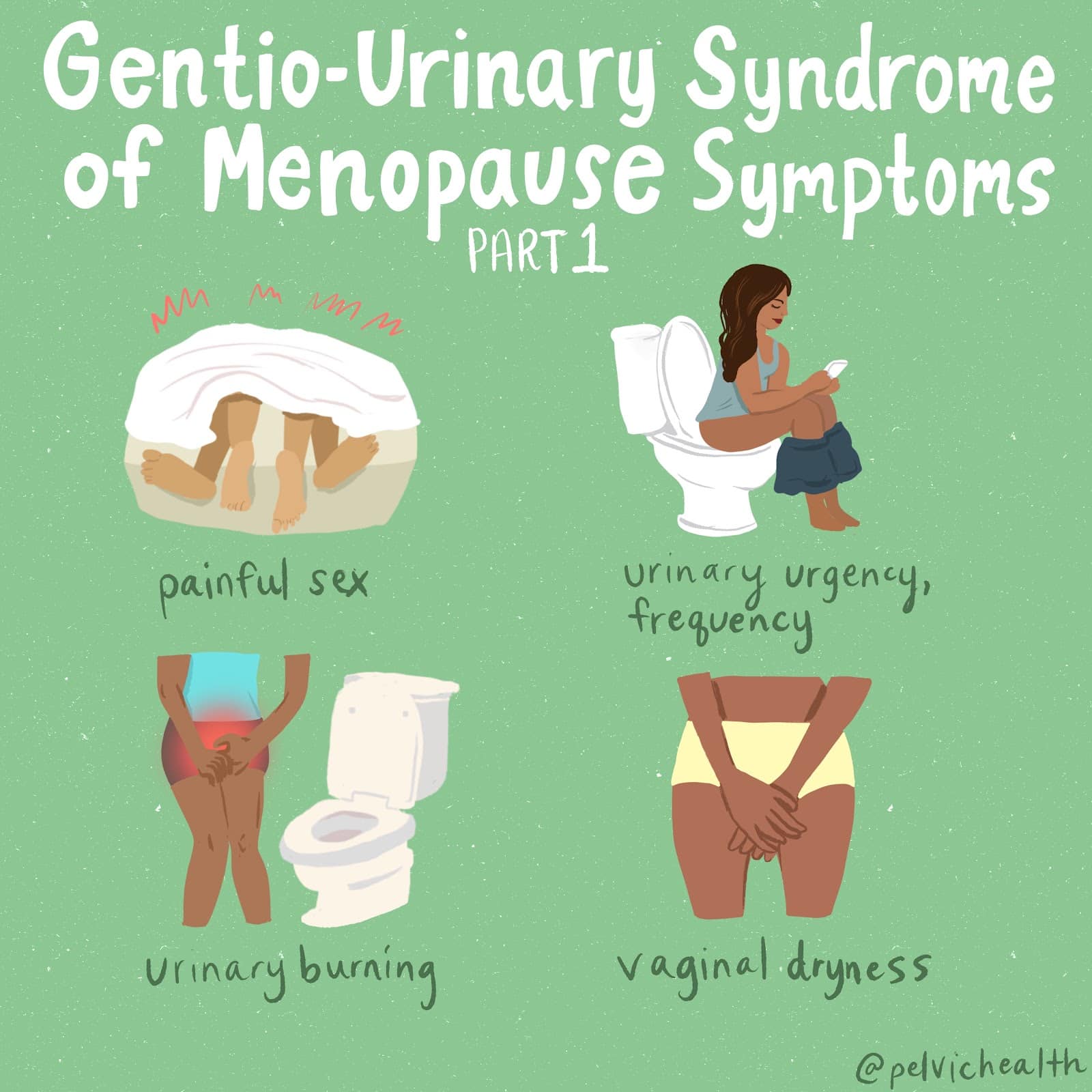
Perimenopause, the transitional phase leading up to menopause, typically begins in a person’s 40s, with menopause itself usually occurring in the early 50s. While systemic symptoms like hot flashes and mood changes are well-known, many people also experience less obvious but equally impactful genitourinary symptoms. These can include painful intercourse, urinary urgency, frequent urination, leakage, burning sensations, recurrent vaginal and urinary tract infections, and vaginal dryness. Collectively, these symptoms are part of the Genitourinary Syndrome of Menopause (GSM). Additionally, many women experience pelvic floor dysfunction, which affects nearly 50% of women by their 50s and can overlap with GSM symptoms.
While systemic hormonal therapy is commonly used to manage menopause symptoms, it may not address the specific needs of those experiencing GSM. The North American Menopause Society recommends the use of vaginal estrogen as an effective treatment for alleviating GSM symptoms and improving quality of life.
Menopause encompasses more than just hot flashes, night sweats, and mood swings. Despite being a common phase affecting roughly half of the population, menopause is often misunderstood, both by the public and many healthcare providers. This gap in knowledge can lead to unnecessary suffering, as many individuals are not fully informed about effective treatments.
Perimenopause, the transitional phase leading up to menopause, typically begins in a person’s 40s, with menopause itself usually occurring in the early 50s. While systemic symptoms like hot flashes and mood changes are well-known, many people also experience less obvious but equally impactful genitourinary symptoms. These can include painful intercourse, urinary urgency, frequent urination, leakage, burning sensations, recurrent vaginal and urinary tract infections, and vaginal dryness. Collectively, these symptoms are part of the Genitourinary Syndrome of Menopause (GSM). Additionally, many women experience pelvic floor dysfunction, which affects nearly 50% of women by their 50s and can overlap with GSM symptoms.
While systemic hormonal therapy is commonly used to manage menopause symptoms, it may not address the specific needs of those experiencing GSM. The North American Menopause Society recommends the use of vaginal estrogen as an effective treatment for alleviating GSM symptoms and improving quality of life.
Differential Diagnosis:
GSM or Pelvic Floor Dysfunction
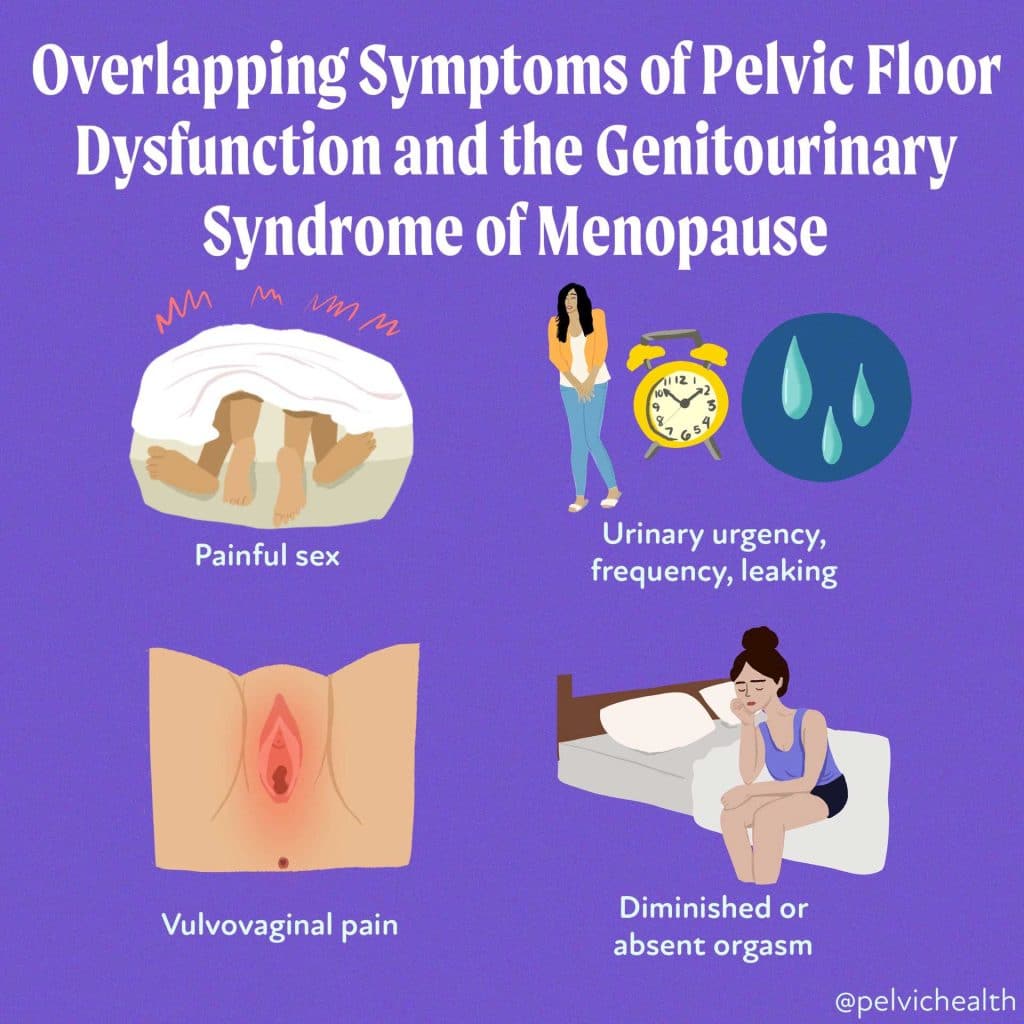
Symptoms of pelvic floor dysfunction and Genitourinary Syndrome of Menopause (GSM) can overlap and include:
- Urinary urgency, frequency, burning, nocturia
- Feelings of bladder or pelvic pressure
- Painful sex
- Diminished or absent orgasm
- Difficulty evacuating stool
- Vulvovaginal pain and burning
- Pain with sitting
An experienced healthcare provider, whether a pelvic floor physical and occupational therapists or a medical doctor, can conduct several assessments to diagnose pelvic floor dysfunction, hormonal deficiencies, and pelvic organ prolapse. These evaluations include a vulvovaginal visual examination, a Q-tip test to pinpoint areas of pain, and a digital manual examination.
Without appropriate medical management, all women may eventually experience symptoms of Genitourinary Syndrome of Menopause (GSM). Many are unaware that a pelvic floor physical and occupational therapy evaluation can be highly beneficial for addressing the musculoskeletal issues contributing to their discomfort. Combining pelvic floor physical and occupational therapy with medical treatments can be crucial for improving sexual enjoyment and resolving urinary and bowel problems.
Virtual pelvic floor therapy for menopause—contact us to get started!
FACTS
From: https://www.letstalkmenopause.org/further-reading
- Every day, approximately 6,000 women reach menopause.
- In the United States, around 50 million women are currently navigating menopause.
- About 84% of women experience genital, sexual, and urinary discomfort related to menopause, which often does not resolve without intervention, yet fewer than 25% seek assistance.
- An estimated 80% of OB-GYN residents acknowledge feeling inadequately prepared to address menopause-related issues.
- Genitourinary Syndrome of Menopause (GSM) is clinically identified in 90% of postmenopausal women, yet only one-third report experiencing symptoms in surveys.
- Barriers to treatment include women needing to initiate discussions about their symptoms, a belief that these issues are simply part of aging, and a failure to connect symptoms with menopause.
- Only 13% of healthcare providers routinely inquire about menopause-related symptoms with their patients.
- Even after a diagnosis of GSM, many women remain untreated. This is partly due to healthcare providers’ reluctance to prescribe treatments and patients’ concerns about the safety of topical vaginal therapies, despite evidence showing that GSM significantly affects quality of life.
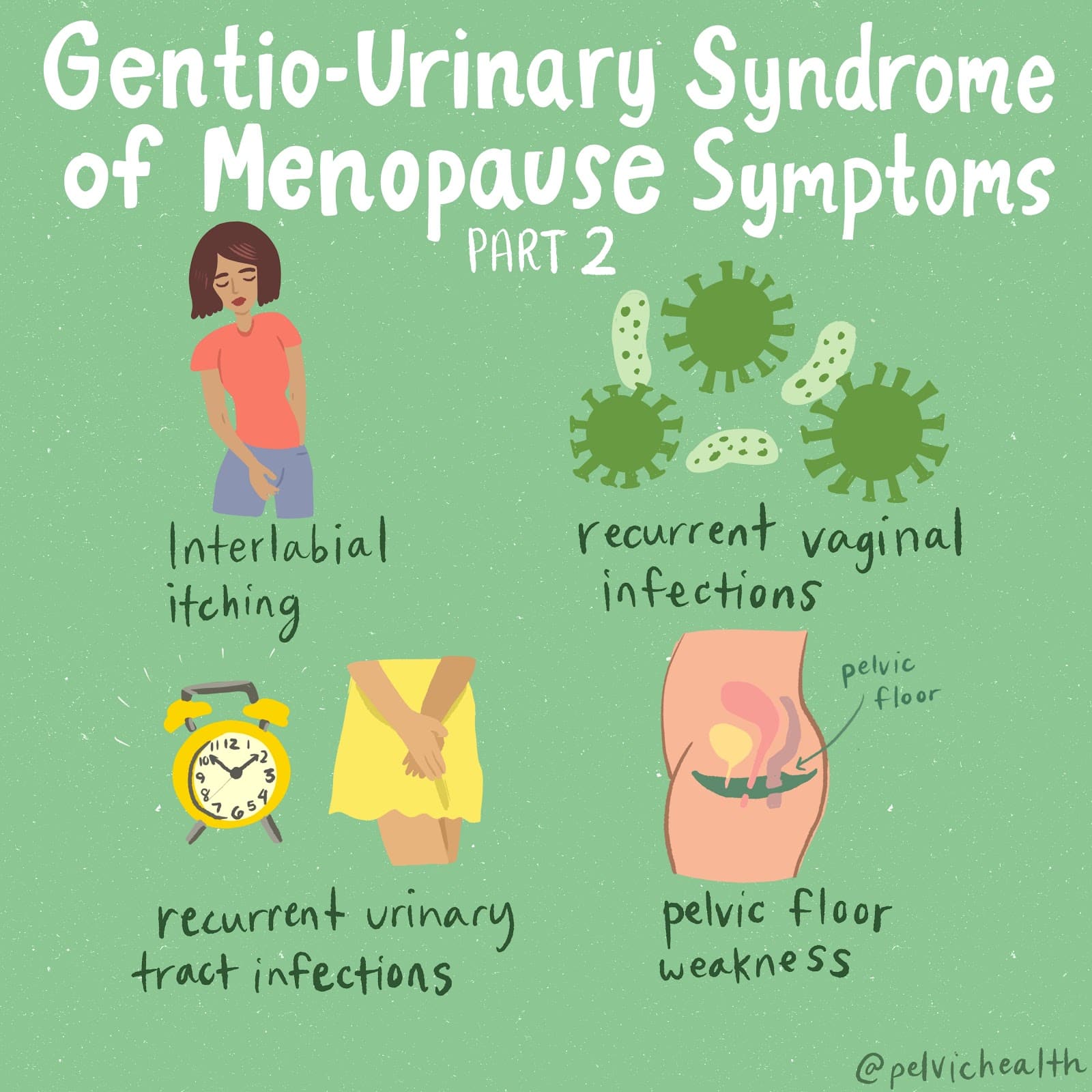
Hormone deficiency can lead to itching in the labial and vaginal areas. Additionally, other dermatological conditions, such as Lichen Sclerosus and cutaneous yeast infections, should also be considered.
During menopause, individuals are particularly susceptible to frequent vaginal and urinary tract infections due to:
- pH and tissue changes
- incomplete bladder emptying
- pelvic organ prolapse compromising urinary function
Recurrent infections are a major contributor to pelvic floor dysfunction. It’s crucial to address these infections promptly, as ongoing visceral-somatic input from untreated infections can lead to increased pain and further dysfunction even after the infection has been resolved. Without appropriate hormone therapy, infections may persist, leading to severe consequences. Untreated infections can cause unprovoked pain, make sexual activity difficult or impossible, and undiagnosed urinary tract infections (UTIs) may progress to kidney issues and other serious complications.
We recommend consulting with a menopause specialist to effectively monitor, prevent, and treat Genitourinary Syndrome of Menopause (GSM) since these issues are both significant and manageable. It’s important to normalize discussions about GSM; there’s no need for embarrassment. With appropriate care, individuals can lead fulfilling lives. Combining virtual pelvic floor physical and occupational therapy with medical management is essential for optimal results.
Treatment:
How We Can Help You
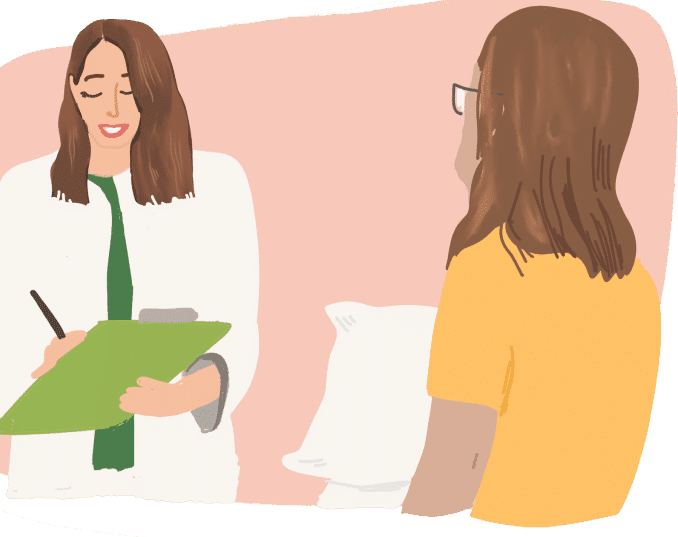
If you’re experiencing sexual dysfunction, it’s beneficial to consult a pelvic floor physical and occupational therapists online. They can assess whether any issues with your pelvic floor are contributing to your symptoms. During your initial virtual evaluation, the therapist will review your medical history, including previous diagnoses, treatments, and their effectiveness. They understand that many patients feel frustrated by the time they seek help.
The therapist will examine your nerves, muscles, joints, tissues, and movement patterns. After the assessment, they will discuss the findings with you and set both short-term and long-term therapy goals. Typically, physical and occupational therapy sessions occur once or twice a week over a period of approximately 12 weeks. Your therapist will also coordinate with other specialists on your treatment team and provide you with a personalized home exercise program. Our goal is to support your recovery and help you achieve the best possible quality of life.
Get virtual pelvic floor therapy for menopause. Book your online consultation today!

Treatment:
How We Can Help You
If you are having issues with your sexual function, it is in your best interest to get evaluated by a therapist for pelvic floor therapy, so they can establish what part, if any, of your pelvic floor may be contributing to the symptoms you are experiencing. During the course of the examination, the physical and occupational therapists will talk to you about your medical history and symptoms, including what you have been previously diagnosed with, the treatments or therapies you have had, and how effective or ineffective these therapies have been for you. It is significant to mention that we fully comprehend what you’ve been dealing with and that the majority of individuals are angry by the time they make it to see us. The physical and occupational therapists will conduct an evaluation of the patient’s nerves, muscles, joints, tissues, and movement patterns while doing the physical examination. After the examination is finished, your therapist will go over the results of the assessment with you. The physical and occupational therapists will conduct an evaluation to determine the cause of your symptoms and will establish both short-term and long-term therapy goals based on the results of the evaluation. Physical therapy treatments are typically administered between once and twice each week for a period of around 12 weeks. Your physical and occupational therapists will assist you in coordinating your recovery with all the other experts on your treatment team. They will provide you with an exercise regimen to complete at home and the sessions you attend in person. We are here to assist you in getting better and living the best life possible.
Get virtual pelvic floor therapy for menopause. Book your online consultation today!
Related Blogs:


By Stephanie Prendergast, MPT, Cofounder, PHRC Los Angeles
Did you know that severe menstrual pain is not normal?
If you experience severe pain during your period it is possible you are suffering from a very underdiagnosed disease called Endometriosis.
Endometrial tissue lines the uterus. In response to hormonal influences, the endometrium of a healthy uterus thickens and then sheds through the cervix, into the vagnina and out of your body. This is your normal period and it should not hurt.
When endometrial tissue implants outside of the uterus, it also thickens and needs to shed, but there is no outlet. These implants can adhere to other organs such as the bowel and bladder; they can cause cyclical urinary and bowel dysfunction, severe pain, pain with intercourse, bloating, and nausea. One in ten women have endometriosis; it is the leading cause of pain in women, and it is responsible for more than half of all female infertility.
What makes matters worse is that it takes women an average of 11.4 years in the United States to get diagnosed. This is not acceptable. March is Endometriosis Awareness Month and we here at PHRC want to help raise awareness about this disease and the role physical and occupational therapy can play in treatment. Many people do not realize that pelvic floor dysfunction is common in women with endometriosis and can be causing some of their symptoms. Pelvic floor physical and occupational therapy can help!
While diagnosing and treating endometriosis has been a challenge, the treatment landscape is improving for women. In this post we will examine some of the current management controversies and discuss the range of available treatment options. .
PROBLEM: Endometriosis is hard to diagnose.
- Endometriosis cannot be detected through diagnostic tests such as ultrasound, MRIs, blood work, or physical examination.
- The symptoms of endometriosis mimic other syndromes and women with endometriosis often also have comorbid conditions, such as Irritable Bowel Syndrome, Interstitial Cystitis, Vulvodynia, and pelvic floor disorders, leading to further diagnostic confusion.
- The diagnosis is only truly confirmed from surgical extraction and (+) histological findings.
- Not enough physicians are adequately trained to surgically diagnosis and treat endometriosis.
Generally speaking, people prefer conservative therapies over surgical options. People rarely rush to the operating room to get relief from back pain, knee issues, etc., and they do not want to rush to the operating room for endometriosis treatment either. As a result, women are often treated with medications empirically without diagnostic confirmation. These treatments can be effective for some people but they can also have significant physiological consequences.
THE PROBLEMS: Oral Contraceptive Pills and Progesterone Treatments
- These medications do not cure the disease; they work by suppressing menstruation and therefore also the painful endometrial implants.
- This may act as a temporary ‘band-aid’ in some cases but can also be less effective in others based on the severity of the disease.
- The majority of women have their symptoms return when they stop taking the medication.
- Oral contraceptives may lead to the development of vulvar pain in certain women, adding a second pain condition into the picture.
- Oral contraceptives have a negative effect on libido and can be associated with mood disorders, both of which have a significant impact on a woman’s quality of life.
THE PROBLEMS: Intrauterine Devices (IUDs)
- The insertion of a small device into the uterus can also help the symptoms by suppressing menstruation. However, the insertion process and adjustment to the IUD is more painful in women who have not yet had children.
- Certain women experience significant ongoing side effects such as headaches and nausea from the hormones.
- Possibly uncomfortable for several months as the body gets use to it.
THE PROBLEMS: Gonadotropin-Releasing Analogs Treatments
- These medications stop the production of estrogen which in turn ‘starves’ the endometrial implants.
- This also ‘starves’ other tissues of the estrogen they need, such as the vulva and peri-urethral tissues, which can lead to vulvar pain and urinary urgency and frequency.
- Estrogen is necessary for health bone density and these medications therefore have side effects of bone density loss.
- Endometriosis symptoms can begin when a woman first gets her period. The average age of menarche in the United States is 13. These medications create ‘chemical menopause’ in the bodies of teenagers and the end result can be teenage women with osteoporosis.
- The symptoms return when the medication is stopped in most woman and may not be completely controlled while on this medication.
THE PROBLEM: Hysterectomy or Prengnancy
- The glaring problem with the hysterectomy suggestion is many of the women who need help are in their childbearing years and have not yet had children.
- Due to a lack of comprehensive interdisciplinary care, young women are often told a having a baby may be their solution if they do not want a hysterectomy. This information is understandably shocking to teenage women with endometriosis and their families.
THE SOLUTIONS: Differential Diagnosis and Interdisciplinary Treatment Options
In the last decade there has been an exponential increase in the amount of evidence-based information on pelvic pain, including endometriosis. We know that endometriosis itself can be a source of pain. We also know endometriosis is associated with other treatable pelvic pain syndromes and impairments, such as Interstitial Cystitis, Vulvodynia, and Pelvic Floor Dysfunction. The key to successful treatment is to identify which impairments are causing the most bothersome symptoms and start to treat them with the appropriate therapies. This needs to be individualized per patient, each woman with endometriosis will present with different sources of pain despite having the same disease.
Earlier this month I was able to participate in a program called Tendo (Link:http://thepelvicexpert.leadpages.co/tendo2016/), organized by Heba Shaheed of The Pelvic Expert. Heba organized 20 experts from around the world to participate in a series of video lectures on Endometriosis management. There is no charge for this service, please sign up and join the discussion!
During my lecture, I discuss the following therapeutic options. We recognize that many of things may be new concepts for people, giving them the opportunity to explore conservative therapies that may dramatically improve their quality of life.
- Physical and Occupational Therapy
- pain physiology education
- manual therapy
- case management
- restore function
- temporary lifestyle modifications
- Home Exercise Programs: therapeutic and general fitness
- dry needling
- Behavior Health Strategies
- CBT
- mindfulness training
- sex therapy
- hypnosis
- pain psychology education
- Complimentary Integrative Medicine
- yoga
- acupuncture
- nutrition education/diet modifications
- rolfing/massage/bodywork
- Pharmacologic
- Simple analgesics
- Neuropathic analgesics
- NMDA antagonists
- Cannabis
- Antidepressants/antianxiety
- Benzodiazepines
- Female Pelvic Pain: Hormonal
- topical estradiol/testosterone
- systemic hormonal therapy
- Interventional Pain Management
- Trigger Point Injections
- Peripheral Nerve Blocks
- Ganglion Impar Blocks
- Caudal Epidural
- Pulsed RF/ Ablation/ Cryoablation
- Botulinum Toxin
- Neuromodulation
- Transcranial Magnetic Stimulation
- Ketamine Infusions
- Surgical Intervention
- Skilled extraction of endometrial implants
- Home program/self care
It is important to understand that most women with pelvic pain may not tolerate or may not respond to certain therapies or treatments and often more than once. Hopefully knowing this will make women feel less ‘broken’ as they work through the process of finding the treatment that is right for them. Women can and do get better with persistence and a solid medical team!
Finally, a documentary titled Endo What? will be released around the world. If you are suffering from Endometriosis or know someone who is this movie is a must-see. You can view the movie trailer here: https://www.youtube.com/watch?v=dq03TyziL58.
All my best,
Stephanie Prendergast, MPT

Stephanie grew up in South Jersey, and currently sees patients in our Los Angeles office. She received her bachelor’s degree in exercise physiology from Rutgers University, and her master’s in physical and occupational therapy at the Medical College of Pennsylvania and Hahnemann University in Philadelphia. For balance, Steph turns to yoga, music, and her calm and loving King Charles Cavalier Spaniel, Abbie. For adventure, she gets her fix from scuba diving and global travel.
FAQ
What are pelvic floor muscles?
The pelvic floor muscles are a group of muscles that run from the coccyx to the pubic bone. They are part of the core, helping to support our entire body as well as providing support for the bowel, bladder and uterus. These muscles help us maintain bowel and bladder control and are involved in sexual pleasure and orgasm. The technical name of the pelvic floor muscles is the Levator Ani muscle group. The pudendal nerve, the levator ani nerve, and branches from the S2 – S4 nerve roots innervate the pelvic floor muscles. They are under voluntary and autonomic control, which is a unique feature only they possess compared to other muscle groups.
What is pelvic floor physical and occupational therapy?
Pelvic floor physical and occupational therapy is a specialized area of physical and occupational therapy. Currently, physical and occupational therapistss need advanced post-graduate education to be able to help people with pelvic floor dysfunction because pelvic floor disorders are not yet being taught in standard physical and occupational therapy curricula. The Pelvic Health and Rehabilitation Center provides extensive training for our staff because we recognize the limitations of physical and occupational therapy education in this unique area.
What happens at pelvic floor therapy?
During an evaluation for pelvic floor dysfunction the physical and occupational therapists will take a detailed history. Following the history the physical and occupational therapists will leave the room to allow the patient to change and drape themselves. The physical and occupational therapists will return to the room and using gloved hands will perform an external and internal manual assessment of the pelvic floor and girdle muscles. The physical and occupational therapists will once again leave the room and allow the patient to dress. Following the manual examination there may also be an examination of strength, motor control, and overall biomechanics and neuromuscular control. The physical and occupational therapists will then communicate the findings to the patient and together with their patient they establish an assessment, short term and long term goals and a treatment plan. Typically people with pelvic floor dysfunction are seen one time per week for one hour for varying amounts of time based on the severity and chronicity of the disease. A home exercise program will be established and the physical and occupational therapists will help coordinate other providers on the treatment team. Typically patients are seen for 3 months to a year.
What is pudendal neuralgia and how is it treated?
Pudendal Neuralgia is a clinical diagnosis that means pain in the sensory distribution of the pudendal nerve. The pudendal nerve is a mixed nerve that exits the S2 – S4 sacral nerve roots, we have a right and left pudendal nerve and each side has three main trunks: the dorsal branch, the perineal branch, and the inferior rectal branch. The branches supply sensation to the clitoris/penis, labia/scrotum, perineum, anus, the distal ⅓ of the urethra and rectum, and the vulva and vestibule. The nerve branches also control the pelvic floor muscles. The pudendal nerve follows a tortuous path through the pelvic floor and girdle, leaving it vulnerable to compression and tension injuries at various points along its path.
Pudendal Neuralgia occurs when the nerve is unable to slide, glide and move normally and as a result, people experience pain in some or all of the above-mentioned areas. Pelvic floor physical and occupational therapy plays a crucial role in identifying the mechanical impairments that are affecting the nerve. The physical and occupational therapy treatment plan is designed to restore normal neural function. Patients with pudendal neuralgia require pelvic floor physical and occupational therapy and may also benefit from medical management that includes pharmaceuticals and procedures such as pudendal nerve blocks or botox injections.
What is interstitial cystitis and how is it treated?
Interstitial Cystitis is a clinical diagnosis characterized by irritative bladder symptoms such as urinary urgency, frequency, and hesitancy in the absence of infection. Research has shown the majority of patients who meet the clinical definition have pelvic floor dysfunction and myalgia. Therefore, the American Urologic Association recommends pelvic floor physical and occupational therapy as first-line treatment for Interstitial Cystitis. Patients will benefit from pelvic floor physical and occupational therapy and may also benefit from pharmacologic management or medical procedures such as bladder instillations.
Who is the Pelvic Health and Rehabilitation Team?
The Pelvic Health and Rehabilitation Center was founded by Elizabeth Akincilar and Stephanie Prendergast in 2006, they have been treating people with pelvic floor disorders since 2001. They were trained and mentored by a medical doctor and quickly became experts in treating pelvic floor disorders. They began creating courses and sharing their knowledge around the world. They expanded to 11 locations in the United States and developed a residency style training program for their employees with ongoing weekly mentoring. The physical and occupational therapistss who work at PHRC have undergone more training than the majority of pelvic floor physical and occupational therapistss and as a result offer efficient and high quality care.
How many years of experience do we have?
Stephanie and Liz have 24 years of experience and help each and every team member become an expert in the field through their training and mentoring program.
Why PHRC versus anyone else?
PHRC is unique because of the specific focus on pelvic floor disorders and the leadership at our company. We are constantly lecturing, teaching, and staying ahead of the curve with our connections to medical experts and emerging experts. As a result, we are able to efficiently and effectively help our patients restore their pelvic health.
Do we treat men for pelvic floor therapy?
The Pelvic Health and Rehabilitation Center is unique in that the Cofounders have always treated people of all genders and therefore have trained the team members and staff the same way. Many pelvic floor physical and occupational therapistss focus solely on people with vulvas, this is not the case here.
Do I need pelvic floor therapy forever?
The majority of people with pelvic floor dysfunction will undergo pelvic floor physical and occupational therapy for a set amount of time based on their goals. Every 6 -8 weeks goals will be re-established based on the physical improvements and remaining physical impairments. Most patients will achieve their goals in 3 – 6 months. If there are complicating medical or untreated comorbidities some patients will be in therapy longer.

Some things about childbirth are easy to plan: where to deliver, at a hospital or at home; who to have by our side, an obstetrician or a midwife; what to call the new baby once he or she is born. However, there are plenty of complications that we can’t predict, such as perineal tears, pelvic organ prolapse, onset of urinary and/or fecal incontinence, delivering with forceps or vacuum assistance, and emergency c-section, to name a few – and it’s these unpredictabilities that make us anxious. I am often asked by patients and doulas if one birthing position is better than another to help reduce the chances of these unpleasant complications. It’s a good question!
Most women in the USA who give birth in hospitals do so lying on their backs, in what is called the “dorsal position.” Why is this? Are there alternative positions that could be somehow better, either for mother or child? I found a Cochrane Review, from 2012, to help us find the answer.
A quick aside: a Cochrane Review is the highest standard in evidence-based research within the medical community.1 It is a systematic review on the primary research given for a specific topic. A team of authors comes together to answer a specific question: in our case, what is the best position to give birth in? The authors comb through published journal articles, including international ones, excluding any articles that are biased, and come up with a conclusion. This conclusion helps practitioners provide consistent treatment. Cochrane Reviews are even regularly updated in order to maintain this standard.
So, what does the Cochrane Review have to say about birthing positions? In Position in the second stage of labour for women without epidural anaesthesia (Review), authors Gupta, Hofmeyr, and Shehmar assessed 22 studies involving a total of 7,280 women.2 They initially compared any upright position (squatting, kneeling, sitting, using a birthing stool or a chair) to “dorsal” position: lying on your back (“supine”), being in a semi-reclined position, or in “lithotomy” position (which means lying on your back, your legs up and open, and your feet in stirrups, like in the movies). They also compared specific upright positions (birthing or squatting stool, birth cushion, and birthing chair) to supine position.
The authors looked at how the position used during birth affected the chances of various complications. When comparing any upright position to supine position, the authors found that, women giving birth in an upright position had about a 20% lower chance of needing an assisted delivery, a 20% lower risk of episiotomy, and about 50% lower probability of their fetus having an abnormal heart rate.
They also found that while some studies seemed to show that giving birth in an upright position could lead to higher risk of blood loss and 2nd degree perineal tearing, they did not find these studies convincing.
The chances of needing a C-section was about the same between the two positions. They also found there was no significant reduction in the duration of the second stage of labor when the upright position was used. Being upright doesn’t necessarily mean you’ll deliver quickly!
At least, not very quickly: many of the studies’ conclusions are in terms of the differences between positions being “not significant,” which means that the data they had wasn’t good enough to detect small effects. If the birthing position was going to make a big difference in the chances of a complication, perhaps they would have seen it. Weighing all of this up, the review’s authors concluded that upright positioning seems to lead to no harmful effects to either the mother or the baby.
So, why is a dorsal position so often recommended? The Cochrane Reviewers put it this way: “It is claimed that the dorsal position enables the midwife/obstetrician to monitor the fetus better and thus to ensure a safe birth, but it may be more convenient and give better control for the caregiver.” Lying on your back makes it easier for the medical staff to make sure everything is alright with your baby.
The research featured in this review came from a study where the mother had not had an epidural painkiller. I’m not sure what impact this will have on the pros and cons of upright positioning, but there’s a 2013 follow-up Cochrane Review on this very topic. I’ll make that the subject of a future post!
Please feel free to share your comments or questions in the reply box below. Also, please feel free to check out our prior blogs on Labor and Delivery, Coached vs. Maternal Pushing, and Understanding Breech Babies.
- The Cochrane Collaboration. Cochrane Community (beta). http://community.cochrane.org/cochrane-reviews 2015.
- Gupta, J.K., et al. Position in the second stage of labour for women without epidural anaesthesia (Review). The Cochrane Library 2012; Issue 5.
FAQ
What are pelvic floor muscles?
The pelvic floor muscles are a group of muscles that run from the coccyx to the pubic bone. They are part of the core, helping to support our entire body as well as providing support for the bowel, bladder and uterus. These muscles help us maintain bowel and bladder control and are involved in sexual pleasure and orgasm. The technical name of the pelvic floor muscles is the Levator Ani muscle group. The pudendal nerve, the levator ani nerve, and branches from the S2 – S4 nerve roots innervate the pelvic floor muscles. They are under voluntary and autonomic control, which is a unique feature only they possess compared to other muscle groups.
What is pelvic floor physical and occupational therapy?
Pelvic floor physical and occupational therapy is a specialized area of physical and occupational therapy. Currently, physical and occupational therapistss need advanced post-graduate education to be able to help people with pelvic floor dysfunction because pelvic floor disorders are not yet being taught in standard physical and occupational therapy curricula. The Pelvic Health and Rehabilitation Center provides extensive training for our staff because we recognize the limitations of physical and occupational therapy education in this unique area.
What happens at pelvic floor therapy?
During an evaluation for pelvic floor dysfunction the physical and occupational therapists will take a detailed history. Following the history the physical and occupational therapists will leave the room to allow the patient to change and drape themselves. The physical and occupational therapists will return to the room and using gloved hands will perform an external and internal manual assessment of the pelvic floor and girdle muscles. The physical and occupational therapists will once again leave the room and allow the patient to dress. Following the manual examination there may also be an examination of strength, motor control, and overall biomechanics and neuromuscular control. The physical and occupational therapists will then communicate the findings to the patient and together with their patient they establish an assessment, short term and long term goals and a treatment plan. Typically people with pelvic floor dysfunction are seen one time per week for one hour for varying amounts of time based on the severity and chronicity of the disease. A home exercise program will be established and the physical and occupational therapists will help coordinate other providers on the treatment team. Typically patients are seen for 3 months to a year.
What is pudendal neuralgia and how is it treated?
Pudendal Neuralgia is a clinical diagnosis that means pain in the sensory distribution of the pudendal nerve. The pudendal nerve is a mixed nerve that exits the S2 – S4 sacral nerve roots, we have a right and left pudendal nerve and each side has three main trunks: the dorsal branch, the perineal branch, and the inferior rectal branch. The branches supply sensation to the clitoris/penis, labia/scrotum, perineum, anus, the distal ⅓ of the urethra and rectum, and the vulva and vestibule. The nerve branches also control the pelvic floor muscles. The pudendal nerve follows a tortuous path through the pelvic floor and girdle, leaving it vulnerable to compression and tension injuries at various points along its path.
Pudendal Neuralgia occurs when the nerve is unable to slide, glide and move normally and as a result, people experience pain in some or all of the above-mentioned areas. Pelvic floor physical and occupational therapy plays a crucial role in identifying the mechanical impairments that are affecting the nerve. The physical and occupational therapy treatment plan is designed to restore normal neural function. Patients with pudendal neuralgia require pelvic floor physical and occupational therapy and may also benefit from medical management that includes pharmaceuticals and procedures such as pudendal nerve blocks or botox injections.
What is interstitial cystitis and how is it treated?
Interstitial Cystitis is a clinical diagnosis characterized by irritative bladder symptoms such as urinary urgency, frequency, and hesitancy in the absence of infection. Research has shown the majority of patients who meet the clinical definition have pelvic floor dysfunction and myalgia. Therefore, the American Urologic Association recommends pelvic floor physical and occupational therapy as first-line treatment for Interstitial Cystitis. Patients will benefit from pelvic floor physical and occupational therapy and may also benefit from pharmacologic management or medical procedures such as bladder instillations.
Who is the Pelvic Health and Rehabilitation Team?
The Pelvic Health and Rehabilitation Center was founded by Elizabeth Akincilar and Stephanie Prendergast in 2006, they have been treating people with pelvic floor disorders since 2001. They were trained and mentored by a medical doctor and quickly became experts in treating pelvic floor disorders. They began creating courses and sharing their knowledge around the world. They expanded to 11 locations in the United States and developed a residency style training program for their employees with ongoing weekly mentoring. The physical and occupational therapistss who work at PHRC have undergone more training than the majority of pelvic floor physical and occupational therapistss and as a result offer efficient and high quality care.
How many years of experience do we have?
Stephanie and Liz have 24 years of experience and help each and every team member become an expert in the field through their training and mentoring program.
Why PHRC versus anyone else?
PHRC is unique because of the specific focus on pelvic floor disorders and the leadership at our company. We are constantly lecturing, teaching, and staying ahead of the curve with our connections to medical experts and emerging experts. As a result, we are able to efficiently and effectively help our patients restore their pelvic health.
Do we treat men for pelvic floor therapy?
The Pelvic Health and Rehabilitation Center is unique in that the Cofounders have always treated people of all genders and therefore have trained the team members and staff the same way. Many pelvic floor physical and occupational therapistss focus solely on people with vulvas, this is not the case here.
Do I need pelvic floor therapy forever?
The majority of people with pelvic floor dysfunction will undergo pelvic floor physical and occupational therapy for a set amount of time based on their goals. Every 6 -8 weeks goals will be re-established based on the physical improvements and remaining physical impairments. Most patients will achieve their goals in 3 – 6 months. If there are complicating medical or untreated comorbidities some patients will be in therapy longer.

By Stephanie Prendergast
Last fall, I began seeing the logo you see above, appear in my Twitter feed and on Facebook. As a physical and occupational therapists, I was happy to see an organization committing to improving awareness about our field. It’s safe to say that most of the world has no idea what a pelvic floor physical and occupational therapists is or what we do. This includes the suffering people who need us the most AND their physicians. This is very important because most people go to a physical and occupational therapists because their doctors tell them to. If their physician doesn’t know about pelvic floor dysfunction the patient who needs it doesn’t get sent to physical and occupational therapy. This is a HUGE problem and one of the many reasons we at PHRC support the GetPT1st Movement.
GetPT1st is a non-profit educational organization whose mission is to increase awareness in the general public, as well as in the medical community, about the benefits of Physical and Occupational Therapy. Here is what the founders have to say:
“GetPT1st is a website just for YOU, the healthcare consumer. We promise to bring the best information possible to help you, whatever your journey. And don’t worry, you won’t have to have a medical dictionary handy or know all the latest research to follow along. This is 100% for you.
Physical therapy is so much more than the pictures you see in a Google search! We take care of every step of the lifespan, from pediatrics to geriatrics, from babies with torticollis to 90 year-olds with balance problems. We work with clients from the ICU, to the pool, to the sports field, to your very own home. Physical therapists truly are movement specialists, but that’s not all. For many people, their first thought may be sports and orthopedics, but we also play a huge part in men’s and women’s health, chronic pain, progressive disorders like Parkinson’s and Alzheimer’s Disease, stroke and cardiac rehab, and hospice care.”
On March 1, 2016, GetPt1st is organizing a social media event as part of their physical and occupational therapy awareness campaign. PHRC wants to contribute by talking about the role physical and occupational therapy plays in pelvic floor disorders and informing people that they can GetPT1st. Many people are unaware they can go to a pelvic floor physical and occupational therapists without a physician referral. We created this blog to help people identify the signs and symptoms of pelvic floor disorders. If you answer yes to any of the questions below you will benefit from a physical and occupational therapy evaluation.
So, what do you need to know about pelvic pt?
Here are the basics:
Your pelvic floor muscles are responsible for urinary, bowel, and sexual functioning:
- they keep you from leaking urine
- they are responsible for orgasm
- they allow you to pee and poop
- they help women deliver babies
- they keep your organs in your pelvis
When they are not functioning properly:
- you leak urine or feces
- you have trouble or cannot orgasm
- you may have to urinate more often than you want to or have trouble starting your stream
- you have trouble or can’t poop
- your organs descend into your pelvis
- sex hurts, sitting hurts, exercise can cause genital pain, clothing may be uncomfortable, normal day to day things are just not possible or painful
Pelvic floor disorders are prevalent and the range of symptoms can range from bothersome to disabling. (For more information on the stats, read our December GetPT1st Blog: https://pelvicpainrehab.com/female-pelvic-pain/3448/get-pt-1st-facts/).
Do these symptoms sound familiar to you? If you answer yes to any of the following questions you will benefit from an evaluation with a pelvic floor physical and occupational therapists.
Men:
Urinary function:
- Do you void more than 6-8 times in a 24-hour period or wake more than one time per night to void?
- Do you have trouble starting your stream and is it interrupted?
- Do you leak urine when you cough, sneeze, or laugh?
- Have you had more than 3 urinary tract infections in the last year?
- Do you feel like you have an infection and your cultures are negative?
Bowel function:
- Do you experience constipation?
- Do you have difficulty with bowel movements, or pain during a bowel movement?
Male Pain/Sexual function:
- Do you have trouble achieving or maintaining an erection?
- Do you experience penile, scrotal, perineal, or anal pain with sitting, after exercise, or after ejaculating?
Women:
Bowel function:
- Do you experience constipation?
- Do you have difficulty with bowel movements, or pain during a bowel movement?
Female Pain/Sexual function:
- Do you experience pain with intercourse?
- Has your quality or ability to orgasm changed?
- Do you ever experience pain/itching/burning in the clitoris, labia, vulva, vagina, perineum, or rectum?
- Have you had more than 3 yeast infections in the last year?
Prepartum/postpartum women:
- Do you have low back, hip or pelvic pain?
- Do you have pain radiating down one or both of your legs?
- Do you leak urine?
- Do you have vaginal, anal, or perineal pain?
- Do you experience pain with intercourse?
- Has your bladder function changed since pregnancy/delivery?
- Do you have a hard time controlling gas?
- Do you leak urine when your cough or sneeze?
These symptoms commonly drive people to a urologist, gynecologist, or colorectal physician. These physicians can help rule out infections, disease, and other pathology. If the tests return negative the pelvic floor muscles may be involved and physical and occupational therapy can help!
How to find a pelvic floor physical and occupational therapists near you:
Resources are available through the American Physical and Occupational Therapy Association’s section on Women’s Health (http://www.womenshealthapta.org/pt-locator/) and the International Pelvic Pain Society (http://pelvicpain.org/patients/find-a-medical-provider.aspx).
Best,
Stephanie Prendergast, MPT
Stephanie grew up in South Jersey, and currently sees patients in our Los Angeles office. She received her bachelor’s degree in exercise physiology from Rutgers University, and her master’s in physical and occupational therapy at the Medical College of Pennsylvania and Hahnemann University in Philadelphia. For balance, Steph turns to yoga, music, and her calm and loving King Charles Cavalier Spaniel, Abbie. For adventure, she gets her fix from scuba diving and global travel.
FAQ
What are pelvic floor muscles?
The pelvic floor muscles are a group of muscles that run from the coccyx to the pubic bone. They are part of the core, helping to support our entire body as well as providing support for the bowel, bladder and uterus. These muscles help us maintain bowel and bladder control and are involved in sexual pleasure and orgasm. The technical name of the pelvic floor muscles is the Levator Ani muscle group. The pudendal nerve, the levator ani nerve, and branches from the S2 – S4 nerve roots innervate the pelvic floor muscles. They are under voluntary and autonomic control, which is a unique feature only they possess compared to other muscle groups.
What is pelvic floor physical and occupational therapy?
Pelvic floor physical and occupational therapy is a specialized area of physical and occupational therapy. Currently, physical and occupational therapistss need advanced post-graduate education to be able to help people with pelvic floor dysfunction because pelvic floor disorders are not yet being taught in standard physical and occupational therapy curricula. The Pelvic Health and Rehabilitation Center provides extensive training for our staff because we recognize the limitations of physical and occupational therapy education in this unique area.
What happens at pelvic floor therapy?
During an evaluation for pelvic floor dysfunction the physical and occupational therapists will take a detailed history. Following the history the physical and occupational therapists will leave the room to allow the patient to change and drape themselves. The physical and occupational therapists will return to the room and using gloved hands will perform an external and internal manual assessment of the pelvic floor and girdle muscles. The physical and occupational therapists will once again leave the room and allow the patient to dress. Following the manual examination there may also be an examination of strength, motor control, and overall biomechanics and neuromuscular control. The physical and occupational therapists will then communicate the findings to the patient and together with their patient they establish an assessment, short term and long term goals and a treatment plan. Typically people with pelvic floor dysfunction are seen one time per week for one hour for varying amounts of time based on the severity and chronicity of the disease. A home exercise program will be established and the physical and occupational therapists will help coordinate other providers on the treatment team. Typically patients are seen for 3 months to a year.
What is pudendal neuralgia and how is it treated?
Pudendal Neuralgia is a clinical diagnosis that means pain in the sensory distribution of the pudendal nerve. The pudendal nerve is a mixed nerve that exits the S2 – S4 sacral nerve roots, we have a right and left pudendal nerve and each side has three main trunks: the dorsal branch, the perineal branch, and the inferior rectal branch. The branches supply sensation to the clitoris/penis, labia/scrotum, perineum, anus, the distal ⅓ of the urethra and rectum, and the vulva and vestibule. The nerve branches also control the pelvic floor muscles. The pudendal nerve follows a tortuous path through the pelvic floor and girdle, leaving it vulnerable to compression and tension injuries at various points along its path.
Pudendal Neuralgia occurs when the nerve is unable to slide, glide and move normally and as a result, people experience pain in some or all of the above-mentioned areas. Pelvic floor physical and occupational therapy plays a crucial role in identifying the mechanical impairments that are affecting the nerve. The physical and occupational therapy treatment plan is designed to restore normal neural function. Patients with pudendal neuralgia require pelvic floor physical and occupational therapy and may also benefit from medical management that includes pharmaceuticals and procedures such as pudendal nerve blocks or botox injections.
What is interstitial cystitis and how is it treated?
Interstitial Cystitis is a clinical diagnosis characterized by irritative bladder symptoms such as urinary urgency, frequency, and hesitancy in the absence of infection. Research has shown the majority of patients who meet the clinical definition have pelvic floor dysfunction and myalgia. Therefore, the American Urologic Association recommends pelvic floor physical and occupational therapy as first-line treatment for Interstitial Cystitis. Patients will benefit from pelvic floor physical and occupational therapy and may also benefit from pharmacologic management or medical procedures such as bladder instillations.
Who is the Pelvic Health and Rehabilitation Team?
The Pelvic Health and Rehabilitation Center was founded by Elizabeth Akincilar and Stephanie Prendergast in 2006, they have been treating people with pelvic floor disorders since 2001. They were trained and mentored by a medical doctor and quickly became experts in treating pelvic floor disorders. They began creating courses and sharing their knowledge around the world. They expanded to 11 locations in the United States and developed a residency style training program for their employees with ongoing weekly mentoring. The physical and occupational therapistss who work at PHRC have undergone more training than the majority of pelvic floor physical and occupational therapistss and as a result offer efficient and high quality care.
How many years of experience do we have?
Stephanie and Liz have 24 years of experience and help each and every team member become an expert in the field through their training and mentoring program.
Why PHRC versus anyone else?
PHRC is unique because of the specific focus on pelvic floor disorders and the leadership at our company. We are constantly lecturing, teaching, and staying ahead of the curve with our connections to medical experts and emerging experts. As a result, we are able to efficiently and effectively help our patients restore their pelvic health.
Do we treat men for pelvic floor therapy?
The Pelvic Health and Rehabilitation Center is unique in that the Cofounders have always treated people of all genders and therefore have trained the team members and staff the same way. Many pelvic floor physical and occupational therapistss focus solely on people with vulvas, this is not the case here.
Do I need pelvic floor therapy forever?
The majority of people with pelvic floor dysfunction will undergo pelvic floor physical and occupational therapy for a set amount of time based on their goals. Every 6 -8 weeks goals will be re-established based on the physical improvements and remaining physical impairments. Most patients will achieve their goals in 3 – 6 months. If there are complicating medical or untreated comorbidities some patients will be in therapy longer.