

Menopause encompasses more than just hot flashes, night sweats, and mood swings. Despite being a common phase affecting roughly half of the population, menopause is often misunderstood, both by the public and many healthcare providers. This gap in knowledge can lead to unnecessary suffering, as many individuals are not fully informed about effective treatments.
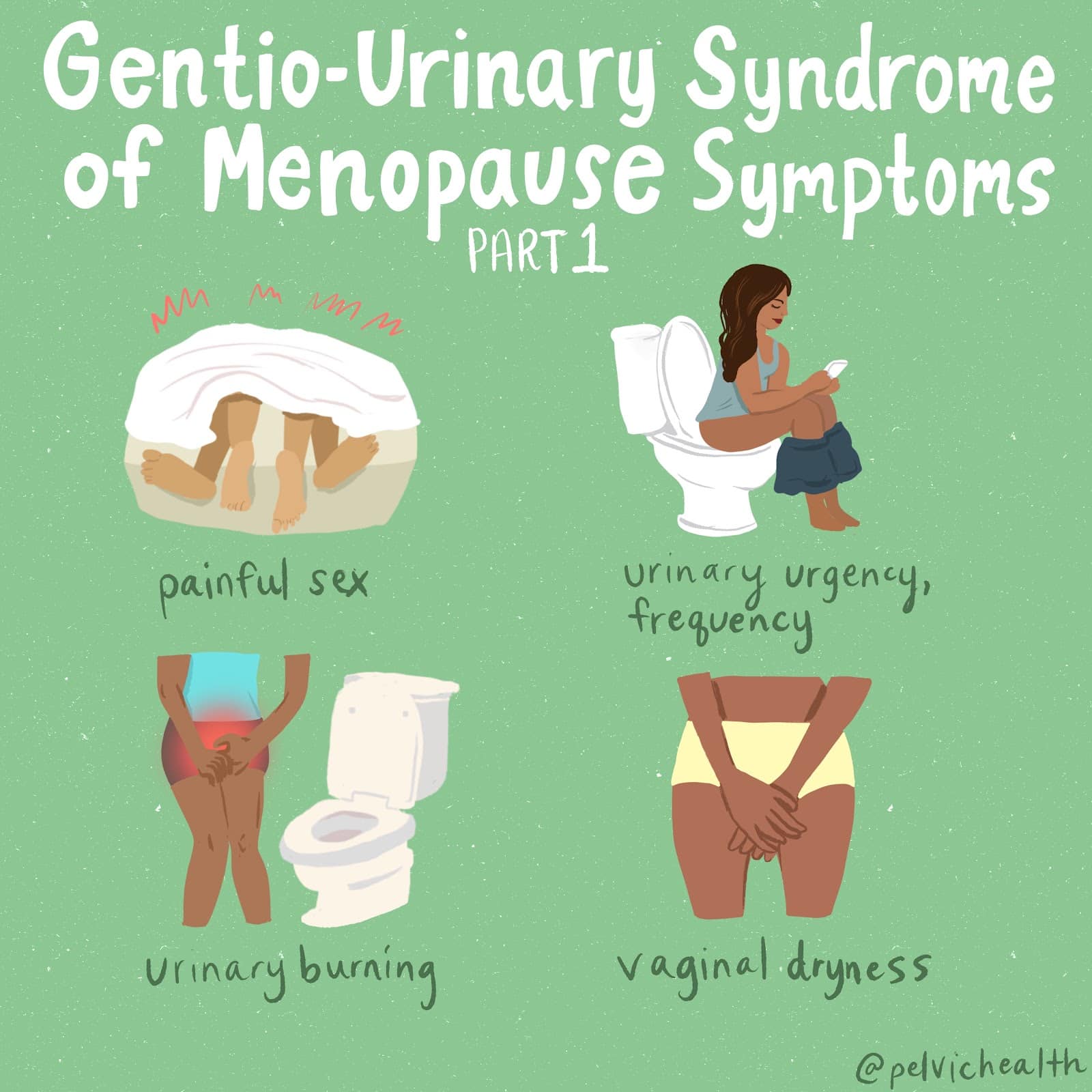
Perimenopause, the transitional phase leading up to menopause, typically begins in a person’s 40s, with menopause itself usually occurring in the early 50s. While systemic symptoms like hot flashes and mood changes are well-known, many people also experience less obvious but equally impactful genitourinary symptoms. These can include painful intercourse, urinary urgency, frequent urination, leakage, burning sensations, recurrent vaginal and urinary tract infections, and vaginal dryness. Collectively, these symptoms are part of the Genitourinary Syndrome of Menopause (GSM). Additionally, many women experience pelvic floor dysfunction, which affects nearly 50% of women by their 50s and can overlap with GSM symptoms.
While systemic hormonal therapy is commonly used to manage menopause symptoms, it may not address the specific needs of those experiencing GSM. The North American Menopause Society recommends the use of vaginal estrogen as an effective treatment for alleviating GSM symptoms and improving quality of life.
Menopause encompasses more than just hot flashes, night sweats, and mood swings. Despite being a common phase affecting roughly half of the population, menopause is often misunderstood, both by the public and many healthcare providers. This gap in knowledge can lead to unnecessary suffering, as many individuals are not fully informed about effective treatments.
Perimenopause, the transitional phase leading up to menopause, typically begins in a person’s 40s, with menopause itself usually occurring in the early 50s. While systemic symptoms like hot flashes and mood changes are well-known, many people also experience less obvious but equally impactful genitourinary symptoms. These can include painful intercourse, urinary urgency, frequent urination, leakage, burning sensations, recurrent vaginal and urinary tract infections, and vaginal dryness. Collectively, these symptoms are part of the Genitourinary Syndrome of Menopause (GSM). Additionally, many women experience pelvic floor dysfunction, which affects nearly 50% of women by their 50s and can overlap with GSM symptoms.
While systemic hormonal therapy is commonly used to manage menopause symptoms, it may not address the specific needs of those experiencing GSM. The North American Menopause Society recommends the use of vaginal estrogen as an effective treatment for alleviating GSM symptoms and improving quality of life.
Differential Diagnosis:
GSM or Pelvic Floor Dysfunction
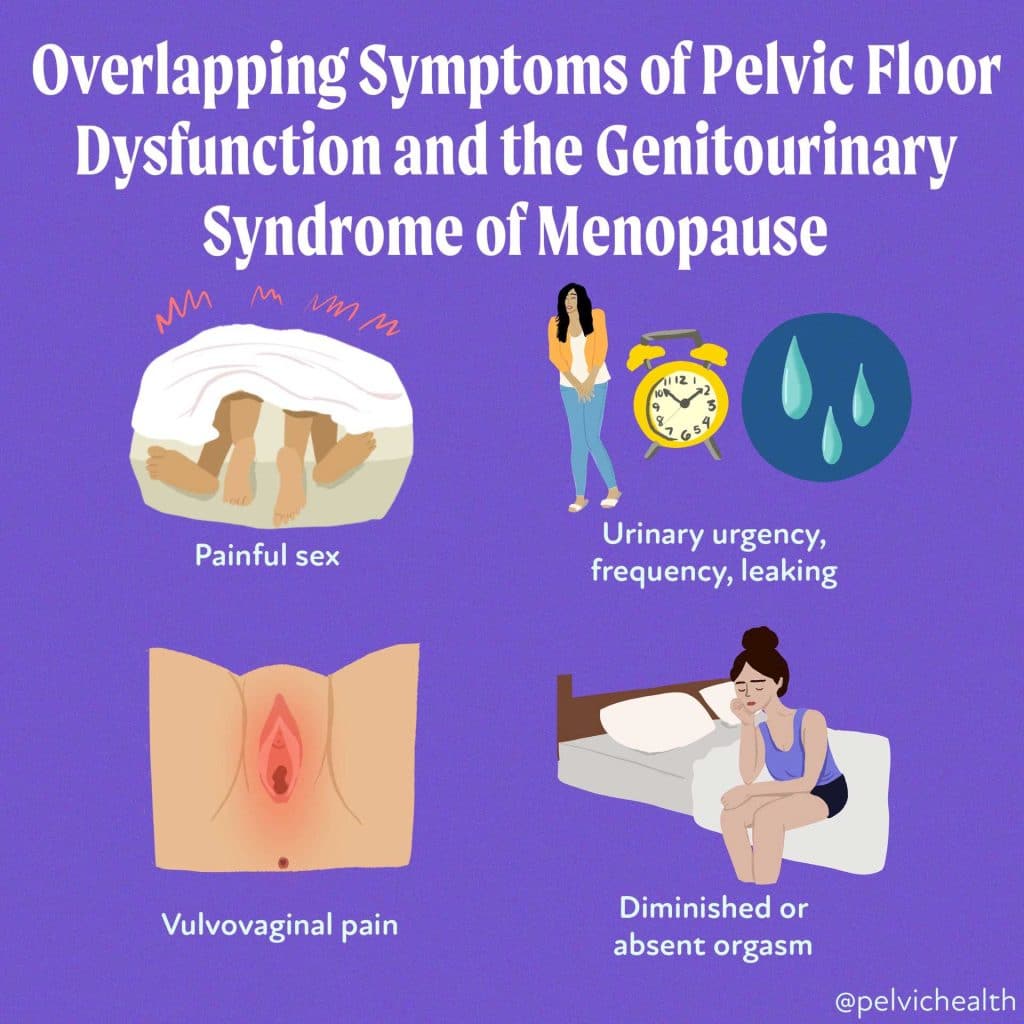
Symptoms of pelvic floor dysfunction and Genitourinary Syndrome of Menopause (GSM) can overlap and include:
- Urinary urgency, frequency, burning, nocturia
- Feelings of bladder or pelvic pressure
- Painful sex
- Diminished or absent orgasm
- Difficulty evacuating stool
- Vulvovaginal pain and burning
- Pain with sitting
An experienced healthcare provider, whether a pelvic floor physical and occupational therapists or a medical doctor, can conduct several assessments to diagnose pelvic floor dysfunction, hormonal deficiencies, and pelvic organ prolapse. These evaluations include a vulvovaginal visual examination, a Q-tip test to pinpoint areas of pain, and a digital manual examination.
Without appropriate medical management, all women may eventually experience symptoms of Genitourinary Syndrome of Menopause (GSM). Many are unaware that a pelvic floor physical and occupational therapy evaluation can be highly beneficial for addressing the musculoskeletal issues contributing to their discomfort. Combining pelvic floor physical and occupational therapy with medical treatments can be crucial for improving sexual enjoyment and resolving urinary and bowel problems.
Virtual pelvic floor therapy for menopause—contact us to get started!
FACTS
From: https://www.letstalkmenopause.org/further-reading
- Every day, approximately 6,000 women reach menopause.
- In the United States, around 50 million women are currently navigating menopause.
- About 84% of women experience genital, sexual, and urinary discomfort related to menopause, which often does not resolve without intervention, yet fewer than 25% seek assistance.
- An estimated 80% of OB-GYN residents acknowledge feeling inadequately prepared to address menopause-related issues.
- Genitourinary Syndrome of Menopause (GSM) is clinically identified in 90% of postmenopausal women, yet only one-third report experiencing symptoms in surveys.
- Barriers to treatment include women needing to initiate discussions about their symptoms, a belief that these issues are simply part of aging, and a failure to connect symptoms with menopause.
- Only 13% of healthcare providers routinely inquire about menopause-related symptoms with their patients.
- Even after a diagnosis of GSM, many women remain untreated. This is partly due to healthcare providers’ reluctance to prescribe treatments and patients’ concerns about the safety of topical vaginal therapies, despite evidence showing that GSM significantly affects quality of life.
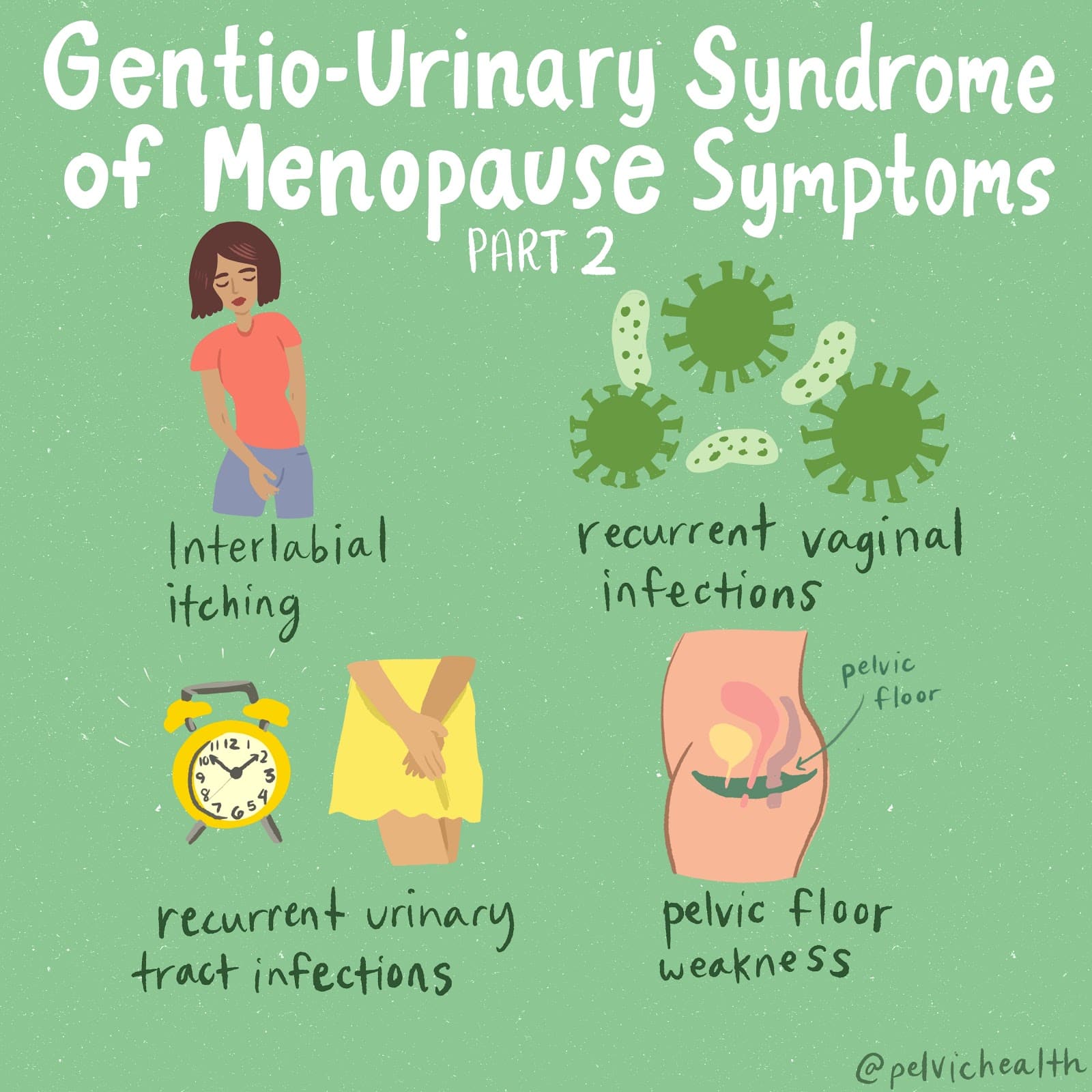
Hormone deficiency can lead to itching in the labial and vaginal areas. Additionally, other dermatological conditions, such as Lichen Sclerosus and cutaneous yeast infections, should also be considered.
During menopause, individuals are particularly susceptible to frequent vaginal and urinary tract infections due to:
- pH and tissue changes
- incomplete bladder emptying
- pelvic organ prolapse compromising urinary function
Recurrent infections are a major contributor to pelvic floor dysfunction. It’s crucial to address these infections promptly, as ongoing visceral-somatic input from untreated infections can lead to increased pain and further dysfunction even after the infection has been resolved. Without appropriate hormone therapy, infections may persist, leading to severe consequences. Untreated infections can cause unprovoked pain, make sexual activity difficult or impossible, and undiagnosed urinary tract infections (UTIs) may progress to kidney issues and other serious complications.
We recommend consulting with a menopause specialist to effectively monitor, prevent, and treat Genitourinary Syndrome of Menopause (GSM) since these issues are both significant and manageable. It’s important to normalize discussions about GSM; there’s no need for embarrassment. With appropriate care, individuals can lead fulfilling lives. Combining virtual pelvic floor physical and occupational therapy with medical management is essential for optimal results.
Treatment:
How We Can Help You

If you’re experiencing sexual dysfunction, it’s beneficial to consult a pelvic floor physical and occupational therapists online. They can assess whether any issues with your pelvic floor are contributing to your symptoms. During your initial virtual evaluation, the therapist will review your medical history, including previous diagnoses, treatments, and their effectiveness. They understand that many patients feel frustrated by the time they seek help.
The therapist will examine your nerves, muscles, joints, tissues, and movement patterns. After the assessment, they will discuss the findings with you and set both short-term and long-term therapy goals. Typically, physical and occupational therapy sessions occur once or twice a week over a period of approximately 12 weeks. Your therapist will also coordinate with other specialists on your treatment team and provide you with a personalized home exercise program. Our goal is to support your recovery and help you achieve the best possible quality of life.
Get virtual pelvic floor therapy for menopause. Book your online consultation today!

Treatment:
How We Can Help You
If you are having issues with your sexual function, it is in your best interest to get evaluated by a therapist for pelvic floor therapy, so they can establish what part, if any, of your pelvic floor may be contributing to the symptoms you are experiencing. During the course of the examination, the physical and occupational therapists will talk to you about your medical history and symptoms, including what you have been previously diagnosed with, the treatments or therapies you have had, and how effective or ineffective these therapies have been for you. It is significant to mention that we fully comprehend what you’ve been dealing with and that the majority of individuals are angry by the time they make it to see us. The physical and occupational therapists will conduct an evaluation of the patient’s nerves, muscles, joints, tissues, and movement patterns while doing the physical examination. After the examination is finished, your therapist will go over the results of the assessment with you. The physical and occupational therapists will conduct an evaluation to determine the cause of your symptoms and will establish both short-term and long-term therapy goals based on the results of the evaluation. Physical therapy treatments are typically administered between once and twice each week for a period of around 12 weeks. Your physical and occupational therapists will assist you in coordinating your recovery with all the other experts on your treatment team. They will provide you with an exercise regimen to complete at home and the sessions you attend in person. We are here to assist you in getting better and living the best life possible.
Get virtual pelvic floor therapy for menopause. Book your online consultation today!
Related Blogs:


By Stephanie Prendergast
Last fall, I began seeing the logo you see above, appear in my Twitter feed and on Facebook. As a physical and occupational therapists, I was happy to see an organization committing to improving awareness about our field. It’s safe to say that most of the world has no idea what a pelvic floor physical and occupational therapists is or what we do. This includes the suffering people who need us the most AND their physicians. This is very important because most people go to a physical and occupational therapists because their doctors tell them to. If their physician doesn’t know about pelvic floor dysfunction the patient who needs it doesn’t get sent to physical and occupational therapy. This is a HUGE problem and one of the many reasons we at PHRC support the GetPT1st Movement.
GetPT1st is a non-profit educational organization whose mission is to increase awareness in the general public, as well as in the medical community, about the benefits of Physical and Occupational Therapy. Here is what the founders have to say:
“GetPT1st is a website just for YOU, the healthcare consumer. We promise to bring the best information possible to help you, whatever your journey. And don’t worry, you won’t have to have a medical dictionary handy or know all the latest research to follow along. This is 100% for you.
Physical therapy is so much more than the pictures you see in a Google search! We take care of every step of the lifespan, from pediatrics to geriatrics, from babies with torticollis to 90 year-olds with balance problems. We work with clients from the ICU, to the pool, to the sports field, to your very own home. Physical therapists truly are movement specialists, but that’s not all. For many people, their first thought may be sports and orthopedics, but we also play a huge part in men’s and women’s health, chronic pain, progressive disorders like Parkinson’s and Alzheimer’s Disease, stroke and cardiac rehab, and hospice care.”
On March 1, 2016, GetPt1st is organizing a social media event as part of their physical and occupational therapy awareness campaign. PHRC wants to contribute by talking about the role physical and occupational therapy plays in pelvic floor disorders and informing people that they can GetPT1st. Many people are unaware they can go to a pelvic floor physical and occupational therapists without a physician referral. We created this blog to help people identify the signs and symptoms of pelvic floor disorders. If you answer yes to any of the questions below you will benefit from a physical and occupational therapy evaluation.
So, what do you need to know about pelvic pt?
Here are the basics:
Your pelvic floor muscles are responsible for urinary, bowel, and sexual functioning:
- they keep you from leaking urine
- they are responsible for orgasm
- they allow you to pee and poop
- they help women deliver babies
- they keep your organs in your pelvis
When they are not functioning properly:
- you leak urine or feces
- you have trouble or cannot orgasm
- you may have to urinate more often than you want to or have trouble starting your stream
- you have trouble or can’t poop
- your organs descend into your pelvis
- sex hurts, sitting hurts, exercise can cause genital pain, clothing may be uncomfortable, normal day to day things are just not possible or painful
Pelvic floor disorders are prevalent and the range of symptoms can range from bothersome to disabling. (For more information on the stats, read our December GetPT1st Blog: https://pelvicpainrehab.com/female-pelvic-pain/3448/get-pt-1st-facts/).
Do these symptoms sound familiar to you? If you answer yes to any of the following questions you will benefit from an evaluation with a pelvic floor physical and occupational therapists.
Men:
Urinary function:
- Do you void more than 6-8 times in a 24-hour period or wake more than one time per night to void?
- Do you have trouble starting your stream and is it interrupted?
- Do you leak urine when you cough, sneeze, or laugh?
- Have you had more than 3 urinary tract infections in the last year?
- Do you feel like you have an infection and your cultures are negative?
Bowel function:
- Do you experience constipation?
- Do you have difficulty with bowel movements, or pain during a bowel movement?
Male Pain/Sexual function:
- Do you have trouble achieving or maintaining an erection?
- Do you experience penile, scrotal, perineal, or anal pain with sitting, after exercise, or after ejaculating?
Women:
Bowel function:
- Do you experience constipation?
- Do you have difficulty with bowel movements, or pain during a bowel movement?
Female Pain/Sexual function:
- Do you experience pain with intercourse?
- Has your quality or ability to orgasm changed?
- Do you ever experience pain/itching/burning in the clitoris, labia, vulva, vagina, perineum, or rectum?
- Have you had more than 3 yeast infections in the last year?
Prepartum/postpartum women:
- Do you have low back, hip or pelvic pain?
- Do you have pain radiating down one or both of your legs?
- Do you leak urine?
- Do you have vaginal, anal, or perineal pain?
- Do you experience pain with intercourse?
- Has your bladder function changed since pregnancy/delivery?
- Do you have a hard time controlling gas?
- Do you leak urine when your cough or sneeze?
These symptoms commonly drive people to a urologist, gynecologist, or colorectal physician. These physicians can help rule out infections, disease, and other pathology. If the tests return negative the pelvic floor muscles may be involved and physical and occupational therapy can help!
How to find a pelvic floor physical and occupational therapists near you:
Resources are available through the American Physical and Occupational Therapy Association’s section on Women’s Health (http://www.womenshealthapta.org/pt-locator/) and the International Pelvic Pain Society (http://pelvicpain.org/patients/find-a-medical-provider.aspx).
Best,
Stephanie Prendergast, MPT

Stephanie grew up in South Jersey, and currently sees patients in our Los Angeles office. She received her bachelor’s degree in exercise physiology from Rutgers University, and her master’s in physical and occupational therapy at the Medical College of Pennsylvania and Hahnemann University in Philadelphia. For balance, Steph turns to yoga, music, and her calm and loving King Charles Cavalier Spaniel, Abbie. For adventure, she gets her fix from scuba diving and global travel.
FAQ
What are pelvic floor muscles?
The pelvic floor muscles are a group of muscles that run from the coccyx to the pubic bone. They are part of the core, helping to support our entire body as well as providing support for the bowel, bladder and uterus. These muscles help us maintain bowel and bladder control and are involved in sexual pleasure and orgasm. The technical name of the pelvic floor muscles is the Levator Ani muscle group. The pudendal nerve, the levator ani nerve, and branches from the S2 – S4 nerve roots innervate the pelvic floor muscles. They are under voluntary and autonomic control, which is a unique feature only they possess compared to other muscle groups.
What is pelvic floor physical and occupational therapy?
Pelvic floor physical and occupational therapy is a specialized area of physical and occupational therapy. Currently, physical and occupational therapistss need advanced post-graduate education to be able to help people with pelvic floor dysfunction because pelvic floor disorders are not yet being taught in standard physical and occupational therapy curricula. The Pelvic Health and Rehabilitation Center provides extensive training for our staff because we recognize the limitations of physical and occupational therapy education in this unique area.
What happens at pelvic floor therapy?
During an evaluation for pelvic floor dysfunction the physical and occupational therapists will take a detailed history. Following the history the physical and occupational therapists will leave the room to allow the patient to change and drape themselves. The physical and occupational therapists will return to the room and using gloved hands will perform an external and internal manual assessment of the pelvic floor and girdle muscles. The physical and occupational therapists will once again leave the room and allow the patient to dress. Following the manual examination there may also be an examination of strength, motor control, and overall biomechanics and neuromuscular control. The physical and occupational therapists will then communicate the findings to the patient and together with their patient they establish an assessment, short term and long term goals and a treatment plan. Typically people with pelvic floor dysfunction are seen one time per week for one hour for varying amounts of time based on the severity and chronicity of the disease. A home exercise program will be established and the physical and occupational therapists will help coordinate other providers on the treatment team. Typically patients are seen for 3 months to a year.
What is pudendal neuralgia and how is it treated?
Pudendal Neuralgia is a clinical diagnosis that means pain in the sensory distribution of the pudendal nerve. The pudendal nerve is a mixed nerve that exits the S2 – S4 sacral nerve roots, we have a right and left pudendal nerve and each side has three main trunks: the dorsal branch, the perineal branch, and the inferior rectal branch. The branches supply sensation to the clitoris/penis, labia/scrotum, perineum, anus, the distal ⅓ of the urethra and rectum, and the vulva and vestibule. The nerve branches also control the pelvic floor muscles. The pudendal nerve follows a tortuous path through the pelvic floor and girdle, leaving it vulnerable to compression and tension injuries at various points along its path.
Pudendal Neuralgia occurs when the nerve is unable to slide, glide and move normally and as a result, people experience pain in some or all of the above-mentioned areas. Pelvic floor physical and occupational therapy plays a crucial role in identifying the mechanical impairments that are affecting the nerve. The physical and occupational therapy treatment plan is designed to restore normal neural function. Patients with pudendal neuralgia require pelvic floor physical and occupational therapy and may also benefit from medical management that includes pharmaceuticals and procedures such as pudendal nerve blocks or botox injections.
What is interstitial cystitis and how is it treated?
Interstitial Cystitis is a clinical diagnosis characterized by irritative bladder symptoms such as urinary urgency, frequency, and hesitancy in the absence of infection. Research has shown the majority of patients who meet the clinical definition have pelvic floor dysfunction and myalgia. Therefore, the American Urologic Association recommends pelvic floor physical and occupational therapy as first-line treatment for Interstitial Cystitis. Patients will benefit from pelvic floor physical and occupational therapy and may also benefit from pharmacologic management or medical procedures such as bladder instillations.
Who is the Pelvic Health and Rehabilitation Team?
The Pelvic Health and Rehabilitation Center was founded by Elizabeth Akincilar and Stephanie Prendergast in 2006, they have been treating people with pelvic floor disorders since 2001. They were trained and mentored by a medical doctor and quickly became experts in treating pelvic floor disorders. They began creating courses and sharing their knowledge around the world. They expanded to 11 locations in the United States and developed a residency style training program for their employees with ongoing weekly mentoring. The physical and occupational therapistss who work at PHRC have undergone more training than the majority of pelvic floor physical and occupational therapistss and as a result offer efficient and high quality care.
How many years of experience do we have?
Stephanie and Liz have 24 years of experience and help each and every team member become an expert in the field through their training and mentoring program.
Why PHRC versus anyone else?
PHRC is unique because of the specific focus on pelvic floor disorders and the leadership at our company. We are constantly lecturing, teaching, and staying ahead of the curve with our connections to medical experts and emerging experts. As a result, we are able to efficiently and effectively help our patients restore their pelvic health.
Do we treat men for pelvic floor therapy?
The Pelvic Health and Rehabilitation Center is unique in that the Cofounders have always treated people of all genders and therefore have trained the team members and staff the same way. Many pelvic floor physical and occupational therapistss focus solely on people with vulvas, this is not the case here.
Do I need pelvic floor therapy forever?
The majority of people with pelvic floor dysfunction will undergo pelvic floor physical and occupational therapy for a set amount of time based on their goals. Every 6 -8 weeks goals will be re-established based on the physical improvements and remaining physical impairments. Most patients will achieve their goals in 3 – 6 months. If there are complicating medical or untreated comorbidities some patients will be in therapy longer.

This week, our guest writer and award winning prenatal chiropractor Dr. Elliot Berlin, takes us through a hot button topic: breeched babies.
By Elliot Berlin | DC
Early in pregnancy, your baby has plenty of room to move, as you’re probably well aware. My patients often share that it’s not unusual for them to feel a sharp elbow jabbing into their ribs, some swift kicks to their belly, and even complete somersaults going on in there!
Usually, by week 34, the combined forces of gravity and the decreased “room to move” in your uterus leads your baby to settle head-down (in a vertex presentation) in preparation for birth. At term, around 3-5% of babies are not vertex, and those babies are said to be in a breech presentation. There are three common breech presentations: frank breech, complete breech, and footling breech.
If you ask a midwife, you are likely to hear that a breech presentation is just another variation of normal; ask most OBs, and you’ll hear that a breech presentation is abnormal. You’re also likely to hear that if your baby doesn’t turn before your “guess date,” you’ll be delivering via cesarean – and you have no other choice.
It wasn’t always this way.
Breech babies are a little more difficult to deliver vaginally than babies in a vertex position; as Jennifer Block writes in her book Pushed: The Painful Truth about Childbirth and Modern Maternity Care: “The breech baby demands patience; she rejects active management; she demands normal, physiological birth.” Many midwives talk about a “hands off the breech” approach for delivering breech babies vaginally. From years of observation and sharing their collective wisdom, midwives know that the more a woman and her baby are free to do their own thing, the more successful the outcome is likely to be.
The perceived ‘dangers’ of vaginal breech delivery had their roots in the first half of the 20th century; the ‘assisted breech’ techniques of the day, which often combined heavy anesthesia, manual pressure on the uterus, and the routine use of forceps to force the delivery of the baby’s head, could not be further away from the normal, physiological birth that Block describes. One 1953 study found that “the more manipulation is performed and the earlier this manipulation is instituted, the greater is the fetal mortality and morbidity, to say nothing of maternal injuries.” But even in 1953, Europe was already far ahead of the US in their understanding of breech birthing – a full fifteen years earlier. In 1938, the German obstetrician Erich Bracht presented an analysis of 206 successful vaginal breech deliveries, without one fetal injury or death. Interest in the “Bracht maneuver,” essentially another version of “hands off the breech,” led to more than 30 trials in Europe and South America, all resulting in dramatically better outcomes for babies and mothers.
Not one of those studies was translated into English.
The result? In Europe, breech birthing techniques continued to improve, while in the US, doctors increasingly turned to surgery. By 1978, 60% of breech babies were born via cesarean in the US, and by 1990, that number was 85%. Andrew Kotaska, MD, a strong critic of the “breech = automatic cesarean” attitude of most American OBs, had to travel to Germany to gain experience in vaginal breech delivery; not one North American program existed to accommodate him.
As Dr. Paul Crane, one of the few doctors in the greater Los Angeles area who will (very rarely) attend a planned breech delivery within a hospital, explains, “The problem is,there’s nobody who’s going to get enough training to do vaginal breech deliveries in the modern world. Ask people who are my vintage and perhaps ten years younger, they’ve all stopped practice. There won’t be anybody really willing to do vaginal breeches.” Dr. Ronald Wu, another LA-area doctor who still attends planned breech births vaginally within a hospital, concurs: “There’s no more knowledge, the skill level is being lost. Not too many people will do a vaginal birth any longer, so the experience of seeing one is not available. And if it’s not available, how can you train anyone? It [vaginal breech delivery] is a dying art.”
It’s a dying art for one particular reason: the Term Breech Trial. Mary Hannah,MD, a well-respected obstetric researcher, led a randomized controlled trial involving more than 2,000 women carrying in breech presentation in 121 hospitals and birthing facilities around the world. The study, published in 2000 in the medical journal The Lancet, seemed to show a significantly higher chance of “serious neonatal morbidity” in breech babies who were born vaginally. In the wake of the study, The American College of Obstetricians and Gynecologists (ACOG) recommended that planned vaginal delivery of a breech baby at term was no longer appropriate.
The standard of care changed practically overnight.
Hospitals, insurance companies, and collective practices would no longer allow OBs to deliver a breech baby vaginally unless a woman arrived at the hospital with her baby already virtually out of the birth canal. Universities and teaching hospitals stopped training students in vaginal breech delivery altogether. As Dr. Crane explains, “In 2001, [ACOG] came out with a position paper, and that paper said that unless the baby just was falling out upon arrival, we should section all breeches.”
The problems with the Term Breech Trial became apparent almost immediately. Professor Marek Glazerman, a researcher from Israel, re-analyzed all of the data from the Term Breech Trial, and he was the first to say ‘we made a mistake here.’ As Dr. Stuart Fischbein explains, “they took a critical look at that study and found that they included a lot of things in there that shouldn’t be included, like unplanned breech deliveries, preemie breech deliveries, breeches with congenital abnormalities, and once they had corrected for those things they found that this isn’t the way it should be.”
In 2006, ACOG renounced their original opinion and declared that vaginal breech delivery was safe in the care of an experienced physician. “But by then the damage was done,” Fischbein says. “I don’t think anyone coming out of a residency program now has certainly done or necessarily even seen a breech.”
Only ‘renegade’ doctors and midwives were left to attend planned vaginal breech deliveries, which today almost always occur at home.
As Jennifer Block puts it, “it is independent home-birth midwives, some of whom practice illegally, who are left attending these higher-risk vaginal births. And they are surpassing physicians in experience and expertise in the delicate matter of vaginal breech delivery. What has become a lost art in the delivery room is kept alive in women’s homes by care providers who are largely unrecognized by the obstetric profession and even criminalized in several states.”
Dr. Fischbein gave up his privileges to attend hospital births and quickly became a leading force in the underground movement to keep options available for women. “All things being equal,” he says, “breeches should be born in a hospital setting because you have the ability to have general anesthesia should you have an emergency. The problem is all things aren’t equal.” He acknowledges that “there are risks to breech delivery, but the risks are minimal if you follow tight protocols. We all know that planes fly safely most of the time, but we only talk about planes that crash. It’s the same thing here. When there’s a tragedy in any birth it’s sad, but they can happen just as easily from a cesarean section in the hospital or a breech birth in the hospital, or at home for that matter.”
Dr. Fischbein is clear in his mission: “Ultimately whatever a doctor feels, or whatever a hospital committee or administration feels, the decision really doesn’t belong to them. It belongs to the individual patient, and [in the future] people in labor are going to be coming into the hospital breech and not knowing it, and no one is going to know what to do, and that’s going to be a real tragedy.”
If you are late in pregnancy and your baby is in a breech presentation, you do have options. You can seek chiropractic care, acupuncture or moxibustion (offered at Berlin Wellness, of course!) to try to gently turn your baby. You can attempt “spinning babies.” You can ask for an external cephalic version (ECV), which should only ever be attempted by a highly trained doctor and assistants in a hospital setting; it is often painful, but the commonly referenced success rate is around 50%.
If your baby will not turn, you can also seek out care from doctors willing to attend a vaginal breech delivery. Dr. Wu and Dr. Fischbein are your best options in Los Angeles. Homeland star Morena Baccarin hired Dr. Wu 39 weeks into her pregnancy, and she delivered her healthy, breech baby vaginally with his assistance. You do have choices. They are not always easy or cheap, and nothing is guaranteed – but at least for now, you still have some choices.
I hope that the demand for vaginal breech deliveries will lead more care providers to offer them to women. There are a lot of benefits and reasons why the birth process is the way it is, and when we bypass them, we lose a lot of the benefits. I’ve been busy recently creating a documentary film about what went awry with vaginal breech delivery in the US, and I consider that film part of my contribution to keeping the choice alive. But here’s the real truth: I’m a man. I have worked with many, many women who are carrying breech, but I will never be in that position myself (actually, that’s not entirely true – I was a breech baby, and my mother delivered me vaginally!)
It is up to you to stand up for choice.
It is up to you to demand more, and better, if you discover your baby is breech late in pregnancy. I hope that if you find yourself in that situation, you will speak up and make yourself heard – you want options. You demand options. Only a united chorus of women will bring the option of vaginal breech back, and I ask you to join that chorus – even if you do not want to birth your breech baby vaginally, or you are not carrying breech, stand up for choice. Be heard. Make it just a little easier for the next mother who finds herself with a breech baby in late pregnancy… you can do that! You, mothers and mothers-to-be, can do anything. In all my years working with pregnant women, I am inspired over and over by what my clients achieve. You humble me every day. So stand up for choices. Stand up for heads up!
Best,
Elliot Berlin | DC

Dr. Elliot Berlin is an award winning prenatal chiropractor, childbirth educator and labor doula. His Informed Pregnancy® Project aims to utilize multiple forms of media to compile and deliver unbiased information about pregnancy and childbirth to empower new and expectant parents to make informed choices regarding their pregnancy and parenting journey.
Find more informative media at InformedPregnancy.com and learn about Dr. Berlin’s unique wellness care at DoctorBerlin.com
FAQ
What are pelvic floor muscles?
The pelvic floor muscles are a group of muscles that run from the coccyx to the pubic bone. They are part of the core, helping to support our entire body as well as providing support for the bowel, bladder and uterus. These muscles help us maintain bowel and bladder control and are involved in sexual pleasure and orgasm. The technical name of the pelvic floor muscles is the Levator Ani muscle group. The pudendal nerve, the levator ani nerve, and branches from the S2 – S4 nerve roots innervate the pelvic floor muscles. They are under voluntary and autonomic control, which is a unique feature only they possess compared to other muscle groups.
What is pelvic floor physical and occupational therapy?
Pelvic floor physical and occupational therapy is a specialized area of physical and occupational therapy. Currently, physical and occupational therapistss need advanced post-graduate education to be able to help people with pelvic floor dysfunction because pelvic floor disorders are not yet being taught in standard physical and occupational therapy curricula. The Pelvic Health and Rehabilitation Center provides extensive training for our staff because we recognize the limitations of physical and occupational therapy education in this unique area.
What happens at pelvic floor therapy?
During an evaluation for pelvic floor dysfunction the physical and occupational therapists will take a detailed history. Following the history the physical and occupational therapists will leave the room to allow the patient to change and drape themselves. The physical and occupational therapists will return to the room and using gloved hands will perform an external and internal manual assessment of the pelvic floor and girdle muscles. The physical and occupational therapists will once again leave the room and allow the patient to dress. Following the manual examination there may also be an examination of strength, motor control, and overall biomechanics and neuromuscular control. The physical and occupational therapists will then communicate the findings to the patient and together with their patient they establish an assessment, short term and long term goals and a treatment plan. Typically people with pelvic floor dysfunction are seen one time per week for one hour for varying amounts of time based on the severity and chronicity of the disease. A home exercise program will be established and the physical and occupational therapists will help coordinate other providers on the treatment team. Typically patients are seen for 3 months to a year.
What is pudendal neuralgia and how is it treated?
Pudendal Neuralgia is a clinical diagnosis that means pain in the sensory distribution of the pudendal nerve. The pudendal nerve is a mixed nerve that exits the S2 – S4 sacral nerve roots, we have a right and left pudendal nerve and each side has three main trunks: the dorsal branch, the perineal branch, and the inferior rectal branch. The branches supply sensation to the clitoris/penis, labia/scrotum, perineum, anus, the distal ⅓ of the urethra and rectum, and the vulva and vestibule. The nerve branches also control the pelvic floor muscles. The pudendal nerve follows a tortuous path through the pelvic floor and girdle, leaving it vulnerable to compression and tension injuries at various points along its path.
Pudendal Neuralgia occurs when the nerve is unable to slide, glide and move normally and as a result, people experience pain in some or all of the above-mentioned areas. Pelvic floor physical and occupational therapy plays a crucial role in identifying the mechanical impairments that are affecting the nerve. The physical and occupational therapy treatment plan is designed to restore normal neural function. Patients with pudendal neuralgia require pelvic floor physical and occupational therapy and may also benefit from medical management that includes pharmaceuticals and procedures such as pudendal nerve blocks or botox injections.
What is interstitial cystitis and how is it treated?
Interstitial Cystitis is a clinical diagnosis characterized by irritative bladder symptoms such as urinary urgency, frequency, and hesitancy in the absence of infection. Research has shown the majority of patients who meet the clinical definition have pelvic floor dysfunction and myalgia. Therefore, the American Urologic Association recommends pelvic floor physical and occupational therapy as first-line treatment for Interstitial Cystitis. Patients will benefit from pelvic floor physical and occupational therapy and may also benefit from pharmacologic management or medical procedures such as bladder instillations.
Who is the Pelvic Health and Rehabilitation Team?
The Pelvic Health and Rehabilitation Center was founded by Elizabeth Akincilar and Stephanie Prendergast in 2006, they have been treating people with pelvic floor disorders since 2001. They were trained and mentored by a medical doctor and quickly became experts in treating pelvic floor disorders. They began creating courses and sharing their knowledge around the world. They expanded to 11 locations in the United States and developed a residency style training program for their employees with ongoing weekly mentoring. The physical and occupational therapistss who work at PHRC have undergone more training than the majority of pelvic floor physical and occupational therapistss and as a result offer efficient and high quality care.
How many years of experience do we have?
Stephanie and Liz have 24 years of experience and help each and every team member become an expert in the field through their training and mentoring program.
Why PHRC versus anyone else?
PHRC is unique because of the specific focus on pelvic floor disorders and the leadership at our company. We are constantly lecturing, teaching, and staying ahead of the curve with our connections to medical experts and emerging experts. As a result, we are able to efficiently and effectively help our patients restore their pelvic health.
Do we treat men for pelvic floor therapy?
The Pelvic Health and Rehabilitation Center is unique in that the Cofounders have always treated people of all genders and therefore have trained the team members and staff the same way. Many pelvic floor physical and occupational therapistss focus solely on people with vulvas, this is not the case here.
Do I need pelvic floor therapy forever?
The majority of people with pelvic floor dysfunction will undergo pelvic floor physical and occupational therapy for a set amount of time based on their goals. Every 6 -8 weeks goals will be re-established based on the physical improvements and remaining physical impairments. Most patients will achieve their goals in 3 – 6 months. If there are complicating medical or untreated comorbidities some patients will be in therapy longer.
This week, our guest writer Dr. Shirin Towfigh will discuss Inguinal Hernia’s and how they may be related to pelvic pain.
Hi all. This is Dr. Shirin Towfigh. I am a Board Certified General Surgeon who specializes exclusively in all things hernia, with specialty in hernias among women and complications related to hernia repair. Inguinal hernias are a common and under diagnosed cause of pelvic pain. Here, I’ll share my secrets, tips, and tricks on how to accurately diagnose inguinal hernias. Early and accurate diagnosis can lead to reduction in cost and suffering!
SIGNS & SYMPTOMS OF AN INGUINAL HERNIA
What is an inguinal hernia?
A hernia is a hole, usually through a muscle or fascia defect. Most hernias occur through natural weaknesses or natural holes. This is true of the inguinal region, where the inguinal canal is a natural tunnel through multiple muscle and fascial layers. In men, this allows for the spermatic cord contents to travel through. In women, it is much smaller and only fits the thin round ligament. Any hernias in this region are called indirect inguinal hernias. They are the most common among both men and women. Other hernias in the groin region include direct inguinal hernias (weakness through the transversus abdominis muscle), femoral hernia (medial to the femoral vessels, through the femoral space), and obturator hernia (through the obturator canal).
What is an occult inguinal hernia and how can it cause pelvic pain?
As the topic of inguinal hernias evolves, my practice has been at the forefront of studying and promoting the entity of occult inguinal hernias. These are hernias that do not present with a palpable bulge, and yet they are quite symptomatic. We see these mostly among women. In my practice, women comprise of 82% of those with occult hernias, whereas 88% of males present with the more typical hernia with a palpable or visible bulge. Many believe that a small hernia that can barely even be palpable cannot possibly cause any pain. Au contraire mon frère. The smaller the hernia, the more the associated pain. Imaging can help diagnose the majority of these hernias if there is a clinical suspicion. Hernia repair is a cure. In my series, 87% of those with occult hernias are pain-free within weeks of their hernia repair, and 93% had resolution of their preoperative pain by undergoing hernia repair.
How do you get inguinal hernias?
Inguinal hernias are common and can occur in a person of any age, with any lifestyle. In fact, we feel that most of the hernias that we treat have an underlying genetic component to them. If you have a relative with a hernia then you are likely slightly more likely to have a hernia. In my practice, we have noted that specifically having a female relative with a hernia confers an even stronger genetic link to hernia formation.
In some cases, patients may report a physical activity, such as lifting or moving a heavy object, associated with their hernia. They may have felt a tear or burning sensation in the groin at the time of this activity. Did that activity actually cause the hernia? We don’t know. Most likely, the patient always had a hernia, though occult or asymptomatic, and the strenuous activity resulted in further opening of the hole, or more content pushed through the hole.
Most inguinal hernias are asymptomatic, that is, there is no pain or discomfort associated with them. There may be a bulge in the area of the groin. Also, most of the time, the bulge is reducible.
What are risk factors for hernia formation?
Activities that are thought to increase hernia formation include those that increase your abdominal pressure. These include straining to have a bowel movement, straining to urinate, long or multiple labors, repetitive heavy lifting of objects, chronic cough. This is why treating of constipation, cystocele, rectocele, asthma, bronchitis are important prior to any hernia operation.
Obesity has not been validated as a risk for hernia formation, but it has been shown to increase abdominal pressure. It is possible that there is an overall underdiagnosis of hernias among the obese, as they are asymptomatic and a bulge is poorly discernable on examination.
Nicotine use has not been associated with development of a primary hernia, however, it confers a higher risk of an incisional hernia or hernia recurrence after hernia surgery. This is because nicotine directly affects the quality of collagen deposition during the healing process. In my practice, the patient must be nicotine-free (no smoking, gum, or patches) for 6 weeks prior to their hernia repair and is encouraged to be nicotine-free afterward.
What activities should be restricted with a hernia?
Fortunately, most activities, including almost all exercises, have not been shown to increase abdominal pressure. These include sit-ups, bench press, weight lifting, dead lifts, and other exercises which one may think would “hurt” a hernia. Only two exercises—jumping and leg squats—have been associated with increase in abdominal pressure, and thus may increase the risk of hernia formation.
Patients who exercise regularly are less likely to have hernias. This is especially true among women. I regularly encourage patients to exercise both before and after their hernia operation. Yoga and Pilates are especially great for abdominal core and pelvic floor strengthening. Cycling and most gym exercises are also helpful. Golfing is safe. I tend to discourage crossfit-type exercises, as they tend to involve a lot of jumping, leg squats, and rapid movements with weights. Anecdotally, I have seen a disproportionate number of patients with groin pain after P90X and Insanity –type workouts.
Exercise is protective of hernias and in many cases can strengthen the pelvic floor and help reduce symptoms of hernias. Most of us hernia specialists do not recommend restriction of activity once a hernia is diagnosed.
What are key questions to ask to diagnose an inguinal hernia?
A detailed history is indispensible. By the time I finish my history taking, I can reliably predict if my patient has a hernia as the cause of his/her pelvic pain.
Most men will first complain of a bulge in their groin. Of course, that will most likely be from a groin hernia. There are very few other causes of bulge in that area, especially if it is a reducible mass. A physical examination will help confirm this.
Women with inguinal hernias more commonly present with groin pain than with a bulge. These are sometimes referred to as “occult” or “hidden” hernias. The pain is felt at or above the level of the groin. Half of the patients will have pain that may radiate up to the hip area, around to the lower back, into the testicle or vagina, to the scrotum or labia, down the front of the leg, and/or to the upper inner thigh region. Hernia-related pain never extends below the knee and is never at the buttock or down the back of the leg.
Symptoms can range from a dull discomfort to a disabling searing pain. The size of the hernia does not correlate with the severity of the pain. In fact, the reverse may be true: the smaller the hernia, the more pain associated with it. This may be due to increased pressure within the smaller defect.
Most patients with inguinal hernias have activity-related symptoms. Any activity that places extra pressure onto the inguinal canal and pelvic floor can theoretically cause pain at the hernia. This includes prolonged standing, prolonged sitting, bending, getting in and out of bed, getting in and out of the car, coughing, laughing. Sexual intercourse and/or orgasm may be painful. In women, ¼ of my patients report worsening pain during their menses.
Nausea and/or bloating are common complaints associated with hernias. I see this more often among my patients with pain. It seems that the nausea and bloating are the patient’s manifestation of groin or pelvic pain. Contrary to fears, most hernias contain fat only. It is uncommon for inguinal hernias to contain intestine, unless they are large. Even most scrotal hernias contain fat as their primary content.
What are tips to performing an accurate exam for inguinal hernia?
The patient should be examined in standing position. This allows for gravity to accentuate any small hernia.
I approach the inguinal hernia exam in a very anatomic way. First, I identify the anterior superior iliac spine (ASIS) and the pubic tubercle. The line from the ASIS to the tubercle delineates the inguinal ligament. A typical inguinal hernia will be felt along this line, usually at the 60:40 mark (i.e., 40% of the way up from the tubercle, 60% away from the ASIS). Remember that the inguinal canal is typically oblique.
If there is a mass felt anatomically lateral to this 60:40 mark, which is thereby lateral to the femoral pulse, then this is not a hernia. More likely causes of masses felt lateral to the femoral pulse include abscess, lymphadenopathy, femoral artery aneurysm, or AV fistula.
What are examination findings for an inguinal hernia?
Large inguinal hernias of the indirect type, will have a scrotal (or labial) extension. If of the direct type, the hernia will jut out perpendicular to the lower abdominal wall skin. These are usually reducible and non-tender.
Moderate-sized hernias typically present with a bulge. While the patient is standing, you should be able to see this bulge. I compare the left and right sides and check for disparity in the groin area. Based on anatomic landmarks, you should be able to feel a soft mass, often reducible, rarely tender. Alternatively, a more invasive digital examination may be performed if you are unsure if there is a hernia. In men, use your index finger and start at the mid-scrotal skin; use this as your entry. Follow the spermatic cord cephalad and up to the inguinal canal. Feel the pelvic bone and slide your finger over the bone. Slowly and gently feel the lower abdominal muscles. Feel to feel for a weakness in the direct space. In women, an examination via the labia minora or alternatively through the vaginal wall may rarely be necessary. If you are unsure if there is any hernia, ask the patient to slowly bear down or cough.
For small hernias, an obvious mass or bulge may not be easily seen or palpated even after the maneuvers described above. In my experience, tenderness alone at the internal ring (the 60:40 mark) is diagnostic of an occult inguinal hernia and demands further workup, such as imaging, to confirm the suggested diagnosis. We found that point tenderness at the internal ring is 88% specific for an occult inguinal hernia.
DIFFERENTIAL DIAGNOSIS OF INGUINAL HERNIA VS OTHER SOURCES OF PELVIC PAIN
What are the various causes of pelvic pain?
Pelvic pain can arise from the abdominal wall, pelvic floor, intestines, uterus, ovaries, hip, and spine.
How can you determine if an inguinal hernia is causing or contributing to a person’s pain?
There are two very specific findings you can elicit from the history of the person that will raise inguinal hernia high on your definition
1. Activity-related pain
The symptoms of a hernia are often made worse with activities, similar to the symptoms of myofascial pelvic pain and unlike the symptoms of other pelvic pain (gynecologic, urologic, etc). Hernias are typically worse with activities that cause an increase in abdominal wall pressure. This includes pain with prolonged sitting, prolonged standing, bending, coughing, and laughing. This also includes pain with activities that involve engagement of the abdominal wall, such as getting in and out of a car or bed, pulling open a heavy door, lifting a heavy object/pet/child, and sexual orgasm. Not all patients have every single activity-related pain, but they usually have a series of them. It is uncommon to have constant unrelenting pain alone without exacerbation with activities. In these situations, the patient may have an incarcerated hernia or femoral hernia.
2. Pain to the touch
Aside from myofascial pelvic pain, very few other causes of pelvic pain are reproducible to the touch. Patients with pelvic pain due to inguinal hernia will be able to point to you exactly where the pain is felt. If you know your anatomy, you will notice that their pain is at the inguinal canal. They will point at or above their groin crease in an area between their anterior superior iliac spine and their pubic tubercle. They may also have sensitivity to touch. They will report pain when leaning over a sink, such as to shave their face, wash dishes, or brush their teeth. They may be unable to wear belts, jeans, or constrictive underwear. Some patients come to my office wearing baggy sweatpants; the women tend to wear soft leggings or skirts. When examined, they may hunch over in pain and be hypersensitive to touch.
Can it be the Gastrointestinal?
It is not uncommon for patients with inguinal hernias to also be constipated, which likely contributed to the hernia in the first place. Also, they may have pain when their colon is full, just before a bowel movement. When straining, they may have lingering pain after a bowel movement. Some present with nausea and bloating. This is a manifestation of their pelvic pain and there is no actual intestinal involvement with their hernia. I have seen a lot of patients with hernias that had colonoscopies and full gastrointestinal testing as part of their workup, which was normal.
Can it be Gynecologic?
The female patient’s pain may increase during her menses. I see this in ¼ of my female patients. This has to do with the hormonal changes during that period. Unlike endometriosis, however, symptomatic hernias have no pain-free episode in between the menses. Also, with endometriosis, there should not be pain felt at the inguinal canal. In rare instances, there may be an endometrioma in the abdominal wall or endometriosis implant along the round ligament that may mimic symptoms of a hernia.
Inguinal hernias may cause pelvic pain during sexual intercourse. This is true among both men and women.
Pelvic floor disorders are related to inguinal hernias. In essence, all are some form of pelvic floor dysfunction, weakness, defect, and they share the same genetic and other risk factors. It is not uncommon to have an inguinal hernia among women who already have known cystocele, rectocele, or other pelvic floor weakness. The reverse is also true.
Can it be Orthopedic?
Patients with orthopedic issues, such as disorders of the hip, tend to limp, shift their weight to the other leg, and have pain with certain activities involving the hip, such as running and yoga. Hernias do not cause a limp and patients in general bear weight equally, though in extreme pain, they may wish to favor the contralateral side. In such situations, a hip exam can be diagnostic. This is done by placing the patient in supine position and passively flexing and then rotating the hip internally and externally to assess for pain and restriction in range of motion. Patients with hernias should not have pain or any restriction in motion.
Can it be Neurologic?
This is a tricky one. Hernias, especially the occult ones that present without a bulge, may have a neuropathic component as their primary complaint. This is typically pain in the genitofemoral distribution (upper inner thigh, scrotum, labia) as this nerve can travel through the inguinal canal and be impinged by the herniating content. Ilioinguinal neuralgia-type symptoms may also be experienced, especially in larger hernias, due to the anatomic proximity of the nerve overlying the internal ring with impingement by its contents. Sometimes patients undergo direct nerve blocks in the groin region to address this problem. In my experience, we see an increase in their pain if they have an inguinal hernia, and a decrease in their pain if there is a true neuropathic injury as the cause of their pain. I believe the reason for the increase in pain is that the addition of local anesthetic results in volume and added pressure to an area that is already under pressure from the herniated content. In this case, further nerve blocks and even nerve ablations, etc., will not help and may cause further damage to the patient. I see a large number of patients that are initially sent to a pain management to undergo medical and percutaneous ablative techniques to address neuralgia, whereas the cause of their pain was an occult inguinal hernia. Almost all of these patients also had tenderness on examination and activity-related pain. It is important to note that ilioinguinal and genitofemoral neuralgia do not occur spontaneously or de novo. That would be extremely rare. They usually occur due to direct injury either surgically or from a traumatic penetration. Without this history, an inguinal hernia is the most likely cause of ilioinguinal or genitofemoral neuralgia.
You are now armed with all of my secrets on how to diagnose inguinal hernias! If the inguinal hernia is symptomatic or increasing in size, address all risk factors for hernia formation and consider surgical repair as an option.
For more extensive details about this specific topic, I invite you to read my book, The SAGES Manual of Groin Pain.
If you have questions about hernias and their related issues, go to www.HerniaTalk.com. This is a free discussion board with surgeons who contribute to answer your questions.
Finally, if you would like to have a consultation with me, either online or in person, go to for contact information.
Best,
Shirin Towfigh, MD
 Renowned hernia specialist Dr. Shirin Towfigh is the only surgeon in the Western United States whose work is entirely dedicated to treating all types of abdominal wall hernias and their complications. Her rare focus on using all technologies and surgical modalities available in treating this particular area has made her possibly the nation’s single most respected hernia doctor.
Dr. Towfigh’s received her Bachelor’s degree with College Honors from UCLA and her Medical Doctorate from UC San Diego. She completed her surgical training and research at UCLA in 2002 (ranked “Best in the West” for 24 straight years byUS News and World Report), and is board certified in General Surgery by the American Board of Surgery. As a respected medical professor, she has trained medical students, residents, and fellows in Minimally Invasive Surgery at the USC Keck School of Medicine, LA County + USC Hospital, and the Norris Cancer Center.
______________________________________________________________________________________________________________________________________
Are you unable to come see us in person? We offer virtual appointments!
Due to COVID-19, we understand people may prefer to utilize our services from their homes. We also understand that many people do not have access to pelvic floor physical and occupational therapy and we are here to help! The Pelvic Health and Rehabilitation Center is a multi-city company of highly trained and specialized pelvic floor physical and occupational therapistss committed to helping people optimize their pelvic health and eliminate pelvic pain and dysfunction. We are here for you and ready to help, whether it is in-person or online.
Virtual sessions are available with PHRC pelvic floor physical and occupational therapistss via our video platform, Zoom, or via phone. The cost for this service is $75.00 per 30 minutes. For more information and to schedule, please visit our digital healthcare page.
In addition to virtual consultation with our physical and occupational therapistss, we also offer integrative health services with Jandra Mueller, DPT, MS. Jandra is a pelvic floor physical and occupational therapists who also has her Master’s degree in Integrative Health and Nutrition. She offers services such as hormone testing via the DUTCH test, comprehensive stool testing for gastrointestinal health concerns, and integrative health coaching and meal planning. For more information about her services and to schedule, please visit our Integrative Health website page.
FAQ
What are pelvic floor muscles?
The pelvic floor muscles are a group of muscles that run from the coccyx to the pubic bone. They are part of the core, helping to support our entire body as well as providing support for the bowel, bladder and uterus. These muscles help us maintain bowel and bladder control and are involved in sexual pleasure and orgasm. The technical name of the pelvic floor muscles is the Levator Ani muscle group. The pudendal nerve, the levator ani nerve, and branches from the S2 – S4 nerve roots innervate the pelvic floor muscles. They are under voluntary and autonomic control, which is a unique feature only they possess compared to other muscle groups.
What is pelvic floor physical and occupational therapy?
Pelvic floor physical and occupational therapy is a specialized area of physical and occupational therapy. Currently, physical and occupational therapistss need advanced post-graduate education to be able to help people with pelvic floor dysfunction because pelvic floor disorders are not yet being taught in standard physical and occupational therapy curricula. The Pelvic Health and Rehabilitation Center provides extensive training for our staff because we recognize the limitations of physical and occupational therapy education in this unique area.
What happens at pelvic floor therapy?
During an evaluation for pelvic floor dysfunction the physical and occupational therapists will take a detailed history. Following the history the physical and occupational therapists will leave the room to allow the patient to change and drape themselves. The physical and occupational therapists will return to the room and using gloved hands will perform an external and internal manual assessment of the pelvic floor and girdle muscles. The physical and occupational therapists will once again leave the room and allow the patient to dress. Following the manual examination there may also be an examination of strength, motor control, and overall biomechanics and neuromuscular control. The physical and occupational therapists will then communicate the findings to the patient and together with their patient they establish an assessment, short term and long term goals and a treatment plan. Typically people with pelvic floor dysfunction are seen one time per week for one hour for varying amounts of time based on the severity and chronicity of the disease. A home exercise program will be established and the physical and occupational therapists will help coordinate other providers on the treatment team. Typically patients are seen for 3 months to a year.
What is pudendal neuralgia and how is it treated?
Pudendal Neuralgia is a clinical diagnosis that means pain in the sensory distribution of the pudendal nerve. The pudendal nerve is a mixed nerve that exits the S2 – S4 sacral nerve roots, we have a right and left pudendal nerve and each side has three main trunks: the dorsal branch, the perineal branch, and the inferior rectal branch. The branches supply sensation to the clitoris/penis, labia/scrotum, perineum, anus, the distal ⅓ of the urethra and rectum, and the vulva and vestibule. The nerve branches also control the pelvic floor muscles. The pudendal nerve follows a tortuous path through the pelvic floor and girdle, leaving it vulnerable to compression and tension injuries at various points along its path.
Pudendal Neuralgia occurs when the nerve is unable to slide, glide and move normally and as a result, people experience pain in some or all of the above-mentioned areas. Pelvic floor physical and occupational therapy plays a crucial role in identifying the mechanical impairments that are affecting the nerve. The physical and occupational therapy treatment plan is designed to restore normal neural function. Patients with pudendal neuralgia require pelvic floor physical and occupational therapy and may also benefit from medical management that includes pharmaceuticals and procedures such as pudendal nerve blocks or botox injections.
What is interstitial cystitis and how is it treated?
Interstitial Cystitis is a clinical diagnosis characterized by irritative bladder symptoms such as urinary urgency, frequency, and hesitancy in the absence of infection. Research has shown the majority of patients who meet the clinical definition have pelvic floor dysfunction and myalgia. Therefore, the American Urologic Association recommends pelvic floor physical and occupational therapy as first-line treatment for Interstitial Cystitis. Patients will benefit from pelvic floor physical and occupational therapy and may also benefit from pharmacologic management or medical procedures such as bladder instillations.
Who is the Pelvic Health and Rehabilitation Team?
The Pelvic Health and Rehabilitation Center was founded by Elizabeth Akincilar and Stephanie Prendergast in 2006, they have been treating people with pelvic floor disorders since 2001. They were trained and mentored by a medical doctor and quickly became experts in treating pelvic floor disorders. They began creating courses and sharing their knowledge around the world. They expanded to 11 locations in the United States and developed a residency style training program for their employees with ongoing weekly mentoring. The physical and occupational therapistss who work at PHRC have undergone more training than the majority of pelvic floor physical and occupational therapistss and as a result offer efficient and high quality care.
How many years of experience do we have?
Stephanie and Liz have 24 years of experience and help each and every team member become an expert in the field through their training and mentoring program.
Why PHRC versus anyone else?
PHRC is unique because of the specific focus on pelvic floor disorders and the leadership at our company. We are constantly lecturing, teaching, and staying ahead of the curve with our connections to medical experts and emerging experts. As a result, we are able to efficiently and effectively help our patients restore their pelvic health.
Do we treat men for pelvic floor therapy?
The Pelvic Health and Rehabilitation Center is unique in that the Cofounders have always treated people of all genders and therefore have trained the team members and staff the same way. Many pelvic floor physical and occupational therapistss focus solely on people with vulvas, this is not the case here.
Do I need pelvic floor therapy forever?
The majority of people with pelvic floor dysfunction will undergo pelvic floor physical and occupational therapy for a set amount of time based on their goals. Every 6 -8 weeks goals will be re-established based on the physical improvements and remaining physical impairments. Most patients will achieve their goals in 3 – 6 months. If there are complicating medical or untreated comorbidities some patients will be in therapy longer.