

Menopause encompasses more than just hot flashes, night sweats, and mood swings. Despite being a common phase affecting roughly half of the population, menopause is often misunderstood, both by the public and many healthcare providers. This gap in knowledge can lead to unnecessary suffering, as many individuals are not fully informed about effective treatments.
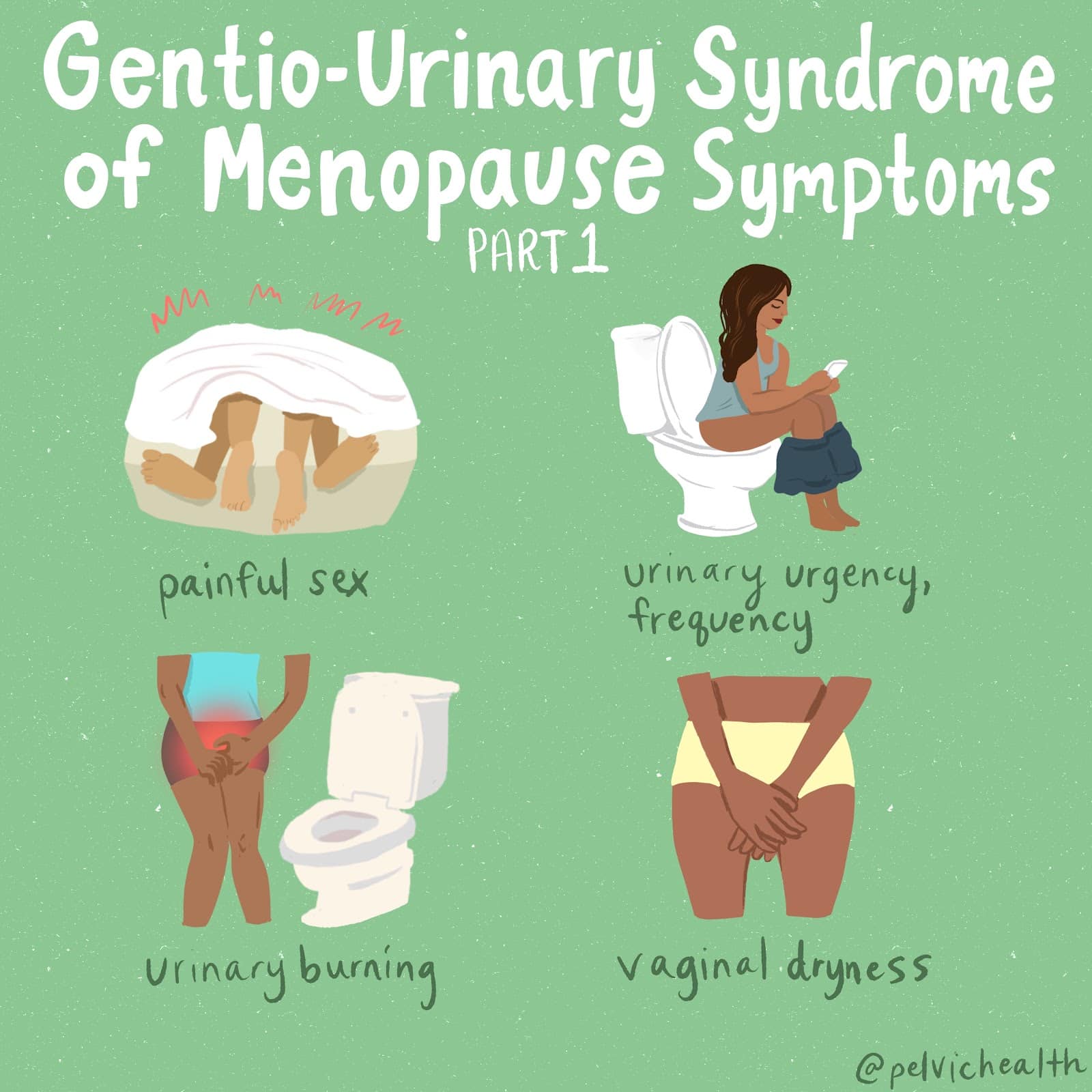
Perimenopause, the transitional phase leading up to menopause, typically begins in a person’s 40s, with menopause itself usually occurring in the early 50s. While systemic symptoms like hot flashes and mood changes are well-known, many people also experience less obvious but equally impactful genitourinary symptoms. These can include painful intercourse, urinary urgency, frequent urination, leakage, burning sensations, recurrent vaginal and urinary tract infections, and vaginal dryness. Collectively, these symptoms are part of the Genitourinary Syndrome of Menopause (GSM). Additionally, many women experience pelvic floor dysfunction, which affects nearly 50% of women by their 50s and can overlap with GSM symptoms.
While systemic hormonal therapy is commonly used to manage menopause symptoms, it may not address the specific needs of those experiencing GSM. The North American Menopause Society recommends the use of vaginal estrogen as an effective treatment for alleviating GSM symptoms and improving quality of life.
Menopause encompasses more than just hot flashes, night sweats, and mood swings. Despite being a common phase affecting roughly half of the population, menopause is often misunderstood, both by the public and many healthcare providers. This gap in knowledge can lead to unnecessary suffering, as many individuals are not fully informed about effective treatments.
Perimenopause, the transitional phase leading up to menopause, typically begins in a person’s 40s, with menopause itself usually occurring in the early 50s. While systemic symptoms like hot flashes and mood changes are well-known, many people also experience less obvious but equally impactful genitourinary symptoms. These can include painful intercourse, urinary urgency, frequent urination, leakage, burning sensations, recurrent vaginal and urinary tract infections, and vaginal dryness. Collectively, these symptoms are part of the Genitourinary Syndrome of Menopause (GSM). Additionally, many women experience pelvic floor dysfunction, which affects nearly 50% of women by their 50s and can overlap with GSM symptoms.
While systemic hormonal therapy is commonly used to manage menopause symptoms, it may not address the specific needs of those experiencing GSM. The North American Menopause Society recommends the use of vaginal estrogen as an effective treatment for alleviating GSM symptoms and improving quality of life.
Differential Diagnosis:
GSM or Pelvic Floor Dysfunction
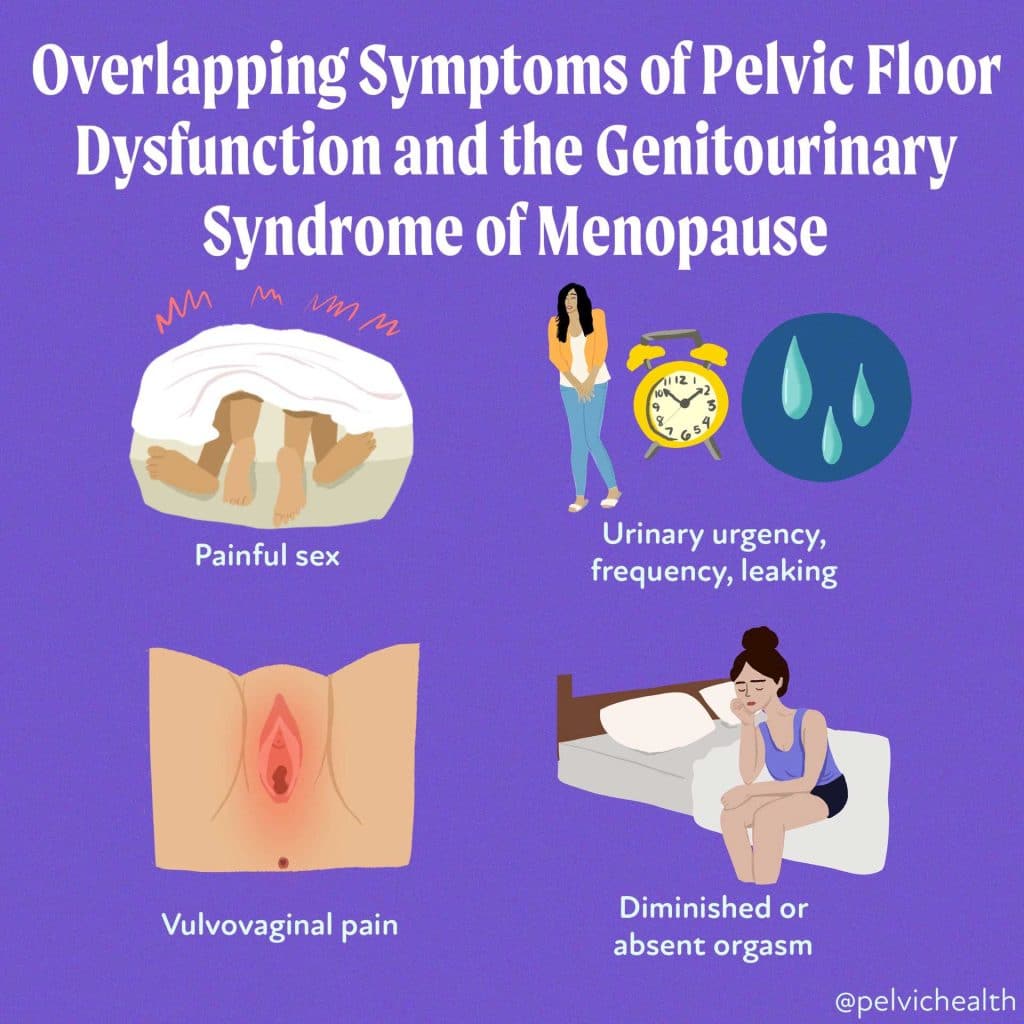
Symptoms of pelvic floor dysfunction and Genitourinary Syndrome of Menopause (GSM) can overlap and include:
- Urinary urgency, frequency, burning, nocturia
- Feelings of bladder or pelvic pressure
- Painful sex
- Diminished or absent orgasm
- Difficulty evacuating stool
- Vulvovaginal pain and burning
- Pain with sitting
An experienced healthcare provider, whether a pelvic floor physical and occupational therapists or a medical doctor, can conduct several assessments to diagnose pelvic floor dysfunction, hormonal deficiencies, and pelvic organ prolapse. These evaluations include a vulvovaginal visual examination, a Q-tip test to pinpoint areas of pain, and a digital manual examination.
Without appropriate medical management, all women may eventually experience symptoms of Genitourinary Syndrome of Menopause (GSM). Many are unaware that a pelvic floor physical and occupational therapy evaluation can be highly beneficial for addressing the musculoskeletal issues contributing to their discomfort. Combining pelvic floor physical and occupational therapy with medical treatments can be crucial for improving sexual enjoyment and resolving urinary and bowel problems.
Virtual pelvic floor therapy for menopause—contact us to get started!
FACTS
From: https://www.letstalkmenopause.org/further-reading
- Every day, approximately 6,000 women reach menopause.
- In the United States, around 50 million women are currently navigating menopause.
- About 84% of women experience genital, sexual, and urinary discomfort related to menopause, which often does not resolve without intervention, yet fewer than 25% seek assistance.
- An estimated 80% of OB-GYN residents acknowledge feeling inadequately prepared to address menopause-related issues.
- Genitourinary Syndrome of Menopause (GSM) is clinically identified in 90% of postmenopausal women, yet only one-third report experiencing symptoms in surveys.
- Barriers to treatment include women needing to initiate discussions about their symptoms, a belief that these issues are simply part of aging, and a failure to connect symptoms with menopause.
- Only 13% of healthcare providers routinely inquire about menopause-related symptoms with their patients.
- Even after a diagnosis of GSM, many women remain untreated. This is partly due to healthcare providers’ reluctance to prescribe treatments and patients’ concerns about the safety of topical vaginal therapies, despite evidence showing that GSM significantly affects quality of life.
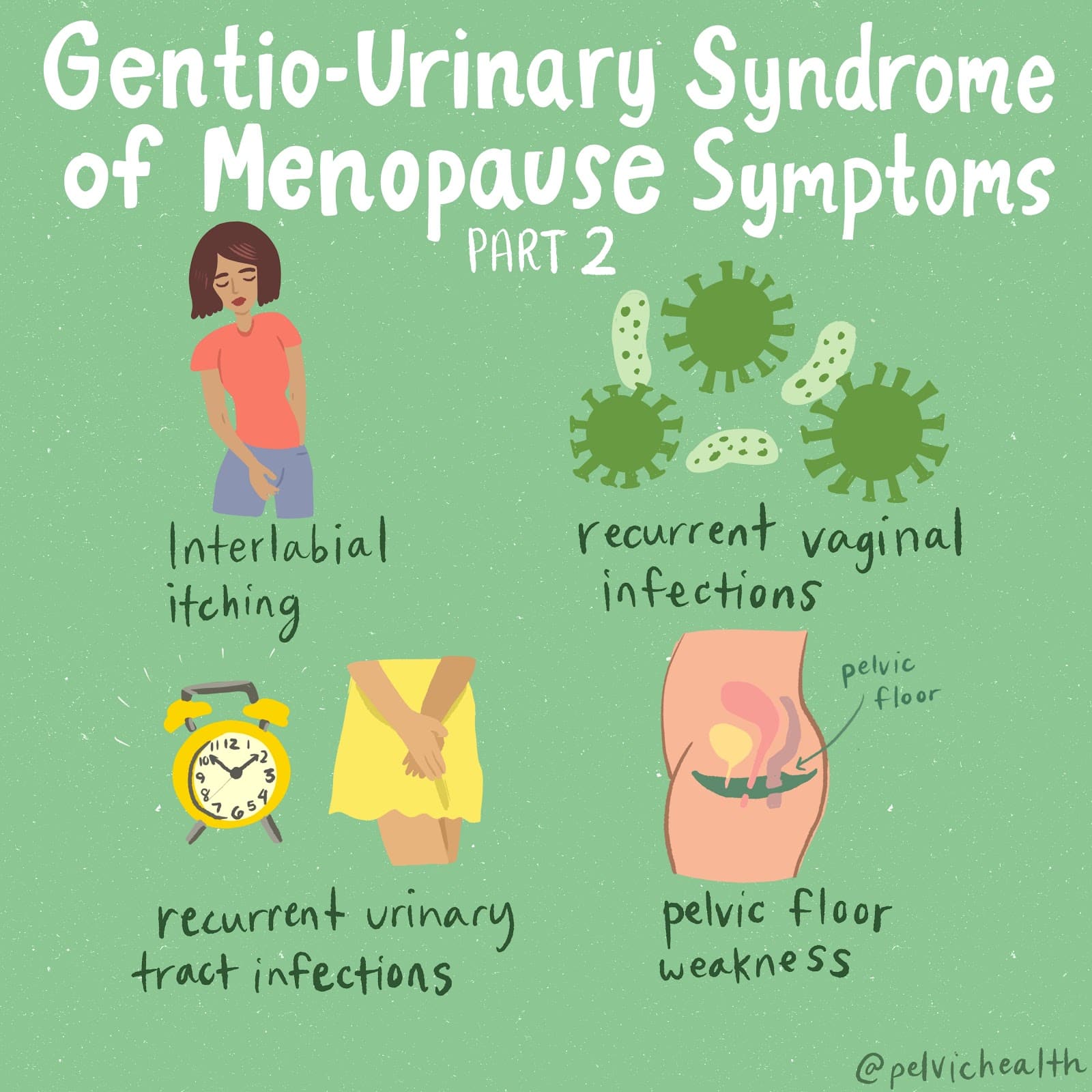
Hormone deficiency can lead to itching in the labial and vaginal areas. Additionally, other dermatological conditions, such as Lichen Sclerosus and cutaneous yeast infections, should also be considered.
During menopause, individuals are particularly susceptible to frequent vaginal and urinary tract infections due to:
- pH and tissue changes
- incomplete bladder emptying
- pelvic organ prolapse compromising urinary function
Recurrent infections are a major contributor to pelvic floor dysfunction. It’s crucial to address these infections promptly, as ongoing visceral-somatic input from untreated infections can lead to increased pain and further dysfunction even after the infection has been resolved. Without appropriate hormone therapy, infections may persist, leading to severe consequences. Untreated infections can cause unprovoked pain, make sexual activity difficult or impossible, and undiagnosed urinary tract infections (UTIs) may progress to kidney issues and other serious complications.
We recommend consulting with a menopause specialist to effectively monitor, prevent, and treat Genitourinary Syndrome of Menopause (GSM) since these issues are both significant and manageable. It’s important to normalize discussions about GSM; there’s no need for embarrassment. With appropriate care, individuals can lead fulfilling lives. Combining virtual pelvic floor physical and occupational therapy with medical management is essential for optimal results.
Treatment:
How We Can Help You
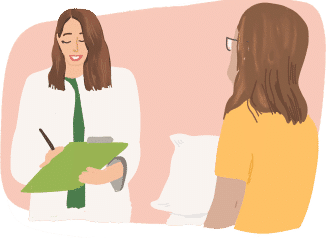
If you’re experiencing sexual dysfunction, it’s beneficial to consult a pelvic floor physical and occupational therapists online. They can assess whether any issues with your pelvic floor are contributing to your symptoms. During your initial virtual evaluation, the therapist will review your medical history, including previous diagnoses, treatments, and their effectiveness. They understand that many patients feel frustrated by the time they seek help.
The therapist will examine your nerves, muscles, joints, tissues, and movement patterns. After the assessment, they will discuss the findings with you and set both short-term and long-term therapy goals. Typically, physical and occupational therapy sessions occur once or twice a week over a period of approximately 12 weeks. Your therapist will also coordinate with other specialists on your treatment team and provide you with a personalized home exercise program. Our goal is to support your recovery and help you achieve the best possible quality of life.
Get virtual pelvic floor therapy for menopause. Book your online consultation today!
Treatment:
How We Can Help You
If you are having issues with your sexual function, it is in your best interest to get evaluated by a therapist for pelvic floor therapy, so they can establish what part, if any, of your pelvic floor may be contributing to the symptoms you are experiencing. During the course of the examination, the physical and occupational therapists will talk to you about your medical history and symptoms, including what you have been previously diagnosed with, the treatments or therapies you have had, and how effective or ineffective these therapies have been for you. It is significant to mention that we fully comprehend what you’ve been dealing with and that the majority of individuals are angry by the time they make it to see us. The physical and occupational therapists will conduct an evaluation of the patient’s nerves, muscles, joints, tissues, and movement patterns while doing the physical examination. After the examination is finished, your therapist will go over the results of the assessment with you. The physical and occupational therapists will conduct an evaluation to determine the cause of your symptoms and will establish both short-term and long-term therapy goals based on the results of the evaluation. Physical therapy treatments are typically administered between once and twice each week for a period of around 12 weeks. Your physical and occupational therapists will assist you in coordinating your recovery with all the other experts on your treatment team. They will provide you with an exercise regimen to complete at home and the sessions you attend in person. We are here to assist you in getting better and living the best life possible.
Get virtual pelvic floor therapy for menopause. Book your online consultation today!



By: Stephanie Prendergast
The Pelvic Health and Rehabilitation Center is excited to announce that Pelvic Pain Explained was released on January 13th! In honor of the book and the New Year, we are sharing stories from our patients that were kind enough to be interviewed for this book. Last week we spoke about Tommy’s recovery from pelvic pain. When Liz and I were working on the book, patients were kind enough to be interviewed by our ghost writer, listed below as ‘BB’. (Without our writer, this book would not be possible. Liz and I are PTs, NOT writers!). I reread the transcribed interview from one of our patients, Megan (MB), and decided to post the interview, uncut, in this week’s blog. Her story will likely resonate with many patients who have been through similar struggles. Spoiler alert: it ends well and anyone else in her early situation can have hope that they do will recover!
This interview was taped and transcribed in the summer of 2014.
BB: First question: How did pelvic pain start?
MB: I first noticed it to the level that something was wrong when I would try to have sex with my boyfriend, (now husband) for the first time and we were unable to- well intercourse is extremely painful for me, and I originally thought it was just because I was abstaining about a year before meeting him- you know if you don’t use it you lose it? After a month I started to realize I had a problem.
BB: Was it just pain with sex? Or any other time?
MB: Would be pain with sex which is attributed to my perineum that would tear every time we would have sex. It was kind of an unwanted episiotomy, but not as severe. I would get these fissures in the area to varying degrees. It’s a long journey but it does relate to muscle structure, it would take years to connect those dots. And that made intercourse difficult. I would suffer for a few days as the area healed and then I would have emotional scarring from intercourse, so it was a snowball effect.
BB: What challenges did you face in seeking a diagnosis and treatment?
MB: Oh goodness. Well I had a GYN at that point that I loved. Throughout seeing her my insurance dropped her. And I would go pay to see her because I was so thrilled with her services. So I went to her first. Her diagnosis was that I was having sex wrong. So all of my love and joy for her faded in about 30 seconds and I decided that I would be leaving her practice and there was no need to be paying her for that type of advice.
I went to a new doctor who, when I went into her office- I had literally taken pictures of the area, when it would tear, I’m, it’s just my personality, I’m an ‘anal’ person as it is. I wanted to go to a doctor and give them as much information as possible. I had a feeling it wasn’t a typical thing. I really would try to prepare and do as much as I could as a patient to get what I needed back from the doctor. So I went to the second doctor and she allowed me to talk for 30/40 seconds and she looked at one of the pictures and said that I had lichen sclerosis. I had actually looked up, I had done my fair share of internet searching, so I knew I didn’t have all the symptoms of it. She said I did have it and that she was going to do a biopsy to prove it. Ok fine. She did a biopsy of the tissue. I went back and later she told me she didn’t get enough tissue to make a diagnosis but that I did not have cancer. She prescribed me steroids anyway. I started taking the steroids, the prescription medicine, and I went on the sclerosis online board thing and it just, deep down in my heart I knew I didn’t have it but I didn’t have any other answer so I didn’t have anything else to go on. I did this for 9 months until my boyfriend and I moved and I switched physicians. The pain started in February of 2009 and we moved in the spring of 2010. I was also suffering from regular yeast infections and urinary infections. I was a hot mess.
BB: Did the steroids cause the yeast and urinary tract infections?
MB: I don’t know- I had my first UTI in the summer of 2010, I’m not sure what brought it on. I had it for two weeks before I knew what was going on. By the time I went to a doctor it was bad. Up until that point I thought it was more of my vaginal area going to hell. She was surprised at how bad the infection actually was. Now it’s about spring of 2011. I switch doctors again and this doctor suggested surgically removing the painful tissue. She says “OK well let’s cut out the tissue in the offending area and let it grow back and maybe it will grow back and heal itself back into regular tissue”. I looked at her and said “you know the tissue is my freaking vulva?” She said “I did it once before and it didn’t work but I am not sure what else to do”.
BB: And this is in Los Angeles!
MB: Yup. I tell her “thank you for your time “and in my mind you will never see me again in your life. So I have to find a new doctor, again. The next doctor I found was just focused on gynecology. And she dealt with hormonal balances and I thought maybe that’s what I have a hormonal imbalance. I was with her, probably two years, and she agreed with me that I probably don’t have Lichen Sclerosis but she didn’t have another answer. At some point she did a biopsy on me, because the other doctor never got a complete answer. That was hell on earth. Well part of it was that my skin wouldn’t numb. So she had to poke me with the numbing needle like seven times in order to get tissue, meaning my vulva. And then she did the biopsy. And she was totally fine but then she did no aftercare for the biopsy. I was screaming in pain on the car ride home.
The sample comes back and I don’t have LS. In the two years I was going to her I was also going to a naturopath, throwing hundreds of dollars at the time. I just thought they might know something I don’t. My GYN suggested I go off of birth control and onto an IUD- a non hormonal IUD, I’m taking the a supplement, I’m doing all of these things and none of it really- I think all of it maybe did a little something here and there- I stopped getting yeast infections, I stopped getting UTIs but as a whole I’m Still having a problem, the problem is still a problem. I the IUD had to be removed because of horrendous pain. So that was that year. So after this I’m beyond frustrated.
My marriage plans are on hold because what’s the point of getting married if you can barely consummate it. My boyfriend’s still there, still present but he’s getting tired, I’m getting tired, all of this money, all of these doctors. Nothing happening. So I start looking into outrageous ideas. Like specialists in other states, I will go anywhere, I need to figure this out.
The next physician I went to did an internal check and he goes “wow, you’re very tight”. But basically your muscles are so tight that they are pulling all of your skin- but he kind of compared it to a rubber band, you’re so tight that that’s why you’re tearing. So tight that the penis when it gets to the area there’s no in, there’s no bend. With the motion everything is so taught so it all tears. SO I Was like, Oh OK! This is an answer I haven’t heard before. So he says I need to go to a biofeedback therapy.
I go for biofeedback but I’m also having a skin issue at the same time. A dermatologist then diagnosed me with vulvar eczema, so I’m in about August-September of 2012. So I’ve now been on a 3.5 year journey. So 3.5 years and I’m finally getting diagnoses, answers and solutions. When both of those doctors gave me the news I cried both times, like “oh my god I’m finally getting answers”.
So I look online to find a physical and occupational therapists that does biofeedback and specialized in pelvic area. She does physical and occupational therapy with me and she was really weird and strange. I already didn’t know what to expect with physical and occupational therapy for my vagina. I was laughing like “what the fuck do they do”? So we’re there and she’s having me do all these exercises and it felt really weird, strange. I went to her for about 8 months I felt like the therapy was ridiculous. We never actually did biofeedback.
I take a break for a month or two. I find another doctor’s office by my house- and I start actual biofeedback that summer, and I do actually note some improvement against all beliefs. I did that course and then I finished that about the end of 2012 and at that point my boyfriend and I got engaged.
Things are looking up, I’m feeling better, the tearing has pretty much gone away at this point. That was huge. Throughout all of this there has been incremental progress. One of the biggest things was the tearing, the pain with sex diminished because obviously the tearing diminished. I’m in therapy so my mental health started to improve, feeling like things are good. The next year I was basically just been finding my way.
I went back to the biofeedback spring of 2013 and just kind of stayed on that course, got married and kind of got complacent to what it is- it got much better- well this is where it will just be. Sex wasn’t every 3 months anymore, when I could do other things, I didn’t have to fake orgasms anymore. Everytime he touched me I didn’t flinch. My first reaction to him touching me wasn’t no. It’s not great, but it’s good. He’s dealing with it, I’m dealing with it, we can manage this.
While I was happy I could have sex and orgasm it still hurt and I was also upset I had no sex drive. I felt dead inside. My husband and I would be fooling around and he’d be doing everything right and I wouldn’t feel a thing. I never had real desire I was just going through the motions a lot. I would search online women’s libido, going through all these products, homeopathic. And I didn’t share that with anyone- I never shared it with my husband, nobody, I’m just tired of not being normal.
And then, so then May of this year, 2014, I’m watching TV and watching a preacher and his whole thing is don’t settle where you are, don’t give in so easily. So I’m online looking around, And somehow, someway the Pelvic Rehabilitation Center comes up. I started looking at it, reading it, holding my breath where are they located? So I see they’re in SF. I’m actually from SF so I’m like that’s great they’re home but I’m not home so I’m looking and I see the new office in LA open May 5th. I made an appointment.
So I went to Stephanie and talked to her and told her all of this and she said, muscles, tissues, nerves, and blood flow, inside and outside of my vagina, were involved. It wasn’t just my vulva that was the problem. After she did an exam she said she said not enough blood is getting through to areas of arousal because everything is so tight. It’s a blood flow problem. And I didn’t cry but that was another moment of nirvana. In all my research and everything I went through it would have never occurred to me because you know your tissues are alive. The funny thing is throughout my life I have had plenty of people tell me my body is tight, and my husband all the time we’ve been together always told me that I’m uptight and tense and of course I am when you put your penis in me and my vagina tears!
Stephanie said I am one of the tightest people she has worked with, everywhere she touched inside and out was tight. So she told me what my husband has been telling me for years- you need to do yoga, so basically that has been the therapy, I also do colonics every month to monitor my yeast infections. In all my research I’ve found it’s in your gut and overgrowth in your gut and flows the other route. My infections have disappeared which makes me wonder if it was really just a result of the steroids. Do I still have the passion sex with my husband? No but can I have sex and still no pain? Yes. Can I orgasam on a regular basis? Yes. There’s still mental blocks, absolutely, and Stephanie gave me the name of a sex therapist they work with.
But I’m just so tired. So I haven’t gotten to my “great” yet but I am much closer. My dead body has woken up. Like I said there is no tearing, there has been a lot, a lot of progress. Stephanie promised me that she’ll be my last doc.
Stephanie’s Comments
As mentioned earlier, Megan gave her interview in 2014. Now that is 2016 and the book is published we can finish her story in our blog.
When I evaluated Megan, she presented with external and internal connective tissue restrictions as well as muscle hypertonus. She was working out aggressively with weights and not really stretching. Despite her vulvar pain at the time, her pelvic floor muscles were not as tight as some of the other muscles of the pelvic girdle. This was likely because she was committed and compliant with pelvic floor muscle relaxation exercises, or ‘downtraining’ with biofeedback in the PT office at home. These exercises, in combination with cessation of unnecessary steroids and resolution of the yeast infections, resulted in improvement but not enough improvement.
It was my initial belief that the impaired external muscles and internal/external connective tissues were contributing to her remaining discomfort. I suspected the lack of libido was from years of emotional distress and pain, understandably.
I treated Megan for 15 visits, between her initial evaluation in May 2014 and the time of the interview. Our appointments were one hour in length and consisted of manual therapy and neuromuscular re-education. Her home program consisted of holding off on weight training and focusing on foam rolling, yoga, massage, and continuing pelvic floor muscle downtraining exercises.
Her pain with intercourse resolved. Her libdo, as you read, was still an issue. My initial suggestion was for Megan to speak with a sex therapist to help her transition from years of painful sex to feeling pleasurable sex again. I completely understand her lack of desire to do this after years of providers. Around the same time we were discussing this, in the fall of 2014, I heard Andrew Goldstein speak about vulvar pain secondary to oral contraceptive use and the fact that a high number of women on birth control pills struggle with a their libido.
I returned from the conference and spoke with Megan about switching to the IUD. Based on her past negative experience with the IUD she did not want to pursue this route. We revisited where she was at the time of her last IUD: she had severe unmanaged vulvar pain, was using a steroid that was likely making it worst, and had unresolved infections. I suspected now that she is healthy this trial will be more successful.
It was, the IUD was implanted with no complications or subsequent pain.
I emailed her this week for an update for this blog, here is what she had to say:
“After the work with PHRC I felt that my structure had improved greatly but I was still missing something as my libido was low and my body still rather unresponsive to sexual stimulation. Thanks to a referral I found an acupuncturist who helped me in that area and combined with all the progress I had made – I finally feel like I have my body back and it is functioning and responding like it’s supposed to!! PHRC was literally that place that put me on the path to my absolute healing and I’m forever grateful.”
People can and do get better from pelvic pain. We hope our book and posts help people streamline their own treatment process and get on the path to success!
Follow @pelvicpainexp on Twitter and like pelvicpainexplained on Facebook!
To read more about the content of Pelvic Pain Explained and to order a copy click here.
And if you haven’t already, subscribe and follow us on Facebook and Twitter where the conversation on pelvic health is ongoing!
FAQ
What are pelvic floor muscles?
The pelvic floor muscles are a group of muscles that run from the coccyx to the pubic bone. They are part of the core, helping to support our entire body as well as providing support for the bowel, bladder and uterus. These muscles help us maintain bowel and bladder control and are involved in sexual pleasure and orgasm. The technical name of the pelvic floor muscles is the Levator Ani muscle group. The pudendal nerve, the levator ani nerve, and branches from the S2 – S4 nerve roots innervate the pelvic floor muscles. They are under voluntary and autonomic control, which is a unique feature only they possess compared to other muscle groups.
What is pelvic floor physical and occupational therapy?
Pelvic floor physical and occupational therapy is a specialized area of physical and occupational therapy. Currently, physical and occupational therapistss need advanced post-graduate education to be able to help people with pelvic floor dysfunction because pelvic floor disorders are not yet being taught in standard physical and occupational therapy curricula. The Pelvic Health and Rehabilitation Center provides extensive training for our staff because we recognize the limitations of physical and occupational therapy education in this unique area.
What happens at pelvic floor therapy?
During an evaluation for pelvic floor dysfunction the physical and occupational therapists will take a detailed history. Following the history the physical and occupational therapists will leave the room to allow the patient to change and drape themselves. The physical and occupational therapists will return to the room and using gloved hands will perform an external and internal manual assessment of the pelvic floor and girdle muscles. The physical and occupational therapists will once again leave the room and allow the patient to dress. Following the manual examination there may also be an examination of strength, motor control, and overall biomechanics and neuromuscular control. The physical and occupational therapists will then communicate the findings to the patient and together with their patient they establish an assessment, short term and long term goals and a treatment plan. Typically people with pelvic floor dysfunction are seen one time per week for one hour for varying amounts of time based on the severity and chronicity of the disease. A home exercise program will be established and the physical and occupational therapists will help coordinate other providers on the treatment team. Typically patients are seen for 3 months to a year.
What is pudendal neuralgia and how is it treated?
Pudendal Neuralgia is a clinical diagnosis that means pain in the sensory distribution of the pudendal nerve. The pudendal nerve is a mixed nerve that exits the S2 – S4 sacral nerve roots, we have a right and left pudendal nerve and each side has three main trunks: the dorsal branch, the perineal branch, and the inferior rectal branch. The branches supply sensation to the clitoris/penis, labia/scrotum, perineum, anus, the distal ⅓ of the urethra and rectum, and the vulva and vestibule. The nerve branches also control the pelvic floor muscles. The pudendal nerve follows a tortuous path through the pelvic floor and girdle, leaving it vulnerable to compression and tension injuries at various points along its path.
Pudendal Neuralgia occurs when the nerve is unable to slide, glide and move normally and as a result, people experience pain in some or all of the above-mentioned areas. Pelvic floor physical and occupational therapy plays a crucial role in identifying the mechanical impairments that are affecting the nerve. The physical and occupational therapy treatment plan is designed to restore normal neural function. Patients with pudendal neuralgia require pelvic floor physical and occupational therapy and may also benefit from medical management that includes pharmaceuticals and procedures such as pudendal nerve blocks or botox injections.
What is interstitial cystitis and how is it treated?
Interstitial Cystitis is a clinical diagnosis characterized by irritative bladder symptoms such as urinary urgency, frequency, and hesitancy in the absence of infection. Research has shown the majority of patients who meet the clinical definition have pelvic floor dysfunction and myalgia. Therefore, the American Urologic Association recommends pelvic floor physical and occupational therapy as first-line treatment for Interstitial Cystitis. Patients will benefit from pelvic floor physical and occupational therapy and may also benefit from pharmacologic management or medical procedures such as bladder instillations.
Who is the Pelvic Health and Rehabilitation Team?
The Pelvic Health and Rehabilitation Center was founded by Elizabeth Akincilar and Stephanie Prendergast in 2006, they have been treating people with pelvic floor disorders since 2001. They were trained and mentored by a medical doctor and quickly became experts in treating pelvic floor disorders. They began creating courses and sharing their knowledge around the world. They expanded to 11 locations in the United States and developed a residency style training program for their employees with ongoing weekly mentoring. The physical and occupational therapistss who work at PHRC have undergone more training than the majority of pelvic floor physical and occupational therapistss and as a result offer efficient and high quality care.
How many years of experience do we have?
Stephanie and Liz have 24 years of experience and help each and every team member become an expert in the field through their training and mentoring program.
Why PHRC versus anyone else?
PHRC is unique because of the specific focus on pelvic floor disorders and the leadership at our company. We are constantly lecturing, teaching, and staying ahead of the curve with our connections to medical experts and emerging experts. As a result, we are able to efficiently and effectively help our patients restore their pelvic health.
Do we treat men for pelvic floor therapy?
The Pelvic Health and Rehabilitation Center is unique in that the Cofounders have always treated people of all genders and therefore have trained the team members and staff the same way. Many pelvic floor physical and occupational therapistss focus solely on people with vulvas, this is not the case here.
Do I need pelvic floor therapy forever?
The majority of people with pelvic floor dysfunction will undergo pelvic floor physical and occupational therapy for a set amount of time based on their goals. Every 6 -8 weeks goals will be re-established based on the physical improvements and remaining physical impairments. Most patients will achieve their goals in 3 – 6 months. If there are complicating medical or untreated comorbidities some patients will be in therapy longer.
Happy New Year everyone! We are excited to announce that Liz and Stephanie’s book, Pelvic Pain Explained, is on sale here!
If you are on the road to recovery from pelvic pain, or know someone who is, you need to read Pelvic Pain Explained. We wrote this book to help people with pelvic pain navigate the treatment process and restore their quality of life. We wrote this book to help pelvic floor physical and occupational therapistss, doctors, and psychologists streamline their approach to diagnosing and treating pelvic pain to help medical providers help their patients, faster. In honor of the New Year, we are dedicating this week’s blog to one patient’s success story featured in Pelvic Pain Explained.
Tommy’s Story
When I was 26, I woke up one day with urinary symptoms. Basically, I had a weak stream, and felt as if I wasn’t voiding completely. I also had a sensation in my urethra that’s hard to describe. It wasn’t pain, just a feeling of something being not quite right. Because the issue was urinary, I visited a urologist. The first doctor suspected either a prostate infection or a sexually transmitted disease. But all tests and cultures for either of those diagnoses came back negative. Nonetheless, the doctor diagnosed me as having “prostatitis,” which is an infection of the prostate, and prescribed a course of antibiotics.
When the medication didn’t clear up my symptoms, I made an appointment with a second urologist, with the same outcome. In the course of a year, I saw about ten urologists, each of whom gave me a different course of antibiotics for “prostatitis” despite the fact that test after test came back negative for infection. After a year of urinary symptoms, the severity of which would wax and wane, I woke up one morning in the most pain I had ever been in in my life. It felt as if someone was stabbing me in the testicle with a knife. On top of that, I was having shooting pains in my anus and abdomen. The shooting pain was so severe it literally sent me to my knees. I called two of the urologists that I had the most faith in, and both said I was having “complications of prostatitis.” At that point, I lost faith in these doctors’ opinions as well as in the diagnosis of “prostatitis”.
Desperate for relief, I began searching online for answers. I focused my search on the prostate because I had never heard of pelvic pain or the pelvic floor for that matter. In my search, I found an out-of-state doctor who was treating symptoms like mine by removing the prostate. Despite the possible side effects that come with that surgery—impotence, incontinence—I was in so much pain that I was seriously considering going that route. Eventually, the shooting pains disappeared, but I was left with constant testicular pain. Not knowing what was wrong was terrifying. Also, I had always been a very active person; very exercise conscious, but because of the pain and my fear of doing something to make it worse, I stopped working out completely. In fact, I stopped doing anything active and began to spend a lot of time either on the sofa or in bed.
Thankfully, in the course of my research, I happened upon a pelvic pain online support group, and that’s where I first learned about pelvic pain as well as pelvic floor PT. So I made an appointment with a PT on the East Coast where I lived at the time, and began treatment. PT didn’t help right away. Even though I was a super-compliant patient, it took about a year of regular PT and me being diligent with a home program for me to begin getting my life back. During that first year of PT, I lugged around a cushion everywhere I went for sitting and spent a lot of my time either on my sofa or in bed. I stopped drinking alcohol and caffeine and I wasn’t eating spicy foods because I was afraid all of these things were contributing to my pain. And because of my pain and my anxiety surrounding it, I barely did anything social or that I enjoyed. My every waking moment became completely dictated by my pain. A big turning point came when I decided that I needed to stop focusing on my symptoms and stop worrying that this would be something that I would have for the rest of my life. That realization was life changing for me. That very week I went out with friends and had a couple of drinks, and thought, “Okay, I can have a normal life here.” My mentality changed from that time forward. I found immediately that the less time I spent focusing on my pelvic pain, the better it got, and in turn the less I thought about it. I even began exercising again. I started swimming. It was an activity that allowed me to be active without flaring my symptoms.
Then about a year into my pelvic pain, I moved to Los Angeles and began treatment with Stephanie at PHRC. By that time I was about 85% better, but I still had the testicular pain. It was improved, but was still there. What Stephanie found was that I lacked the motor control to relax my pelvic floor. Without the ability to do this, pelvic floor muscles will remain tight, and become even tighter with exercise thus continuing to produce pain. The first thing she taught me to do was how to relax my pelvic floor. Also, she found unresolved trigger points in several muscles that can cause testicular pain. So that’s what we focused on in treatment. So why did my symptoms start to begin with? Stephanie’s theory is that it was a combination of factors that set off my pain. For one thing, I’m a super-active guy who’s worked out hard with various trainers over the years. Add to that a history of low back pain, and voila! Pelvic pain! After a few months of weekly PT with Stephanie, I am now pain-free. It was quite a journey! I learned a lot about myself along the way that I’ll carry with me for the rest of my life. The most beneficial lesson I learned are the benefits of relaxation and meditation. I’m not really a spiritual person, but I now get how the mind-body connection works. I now have the tools to get stress out of my life, even if it’s just for a few minutes a day. I know how to relax and be quiet, and I now understand that my mind has a huge impact on what happens with my body, and that I can work to control it. And another of the more interesting things that came out of my pelvic pain journey was learning just how common a problem it is. As soon as I began talking to others about what was happening with me, people that I knew with pelvic pain issues or knew someone who had pelvic pain issues began coming out of the woodwork, giving me a chance to share what I learned on my own journey. And basically that’s number one, you need to see a qualified pelvic floor PT, and number two; recovery isn’t going to be immediate, so you need to try your best to do whatever it takes to continue to live your life.
Stephanie’s Comments
It is not uncommon for us to see patients that have made significant progress in physical and occupational therapy but still feel like they have that “last 20% or so” to go. This was the case with Tommy. By the time he arrived in LA, he had gone through the diagnosis process and was in the rehabilitation process: physical and occupational therapy, self treatment at home, and making temporary lifestyle modifications such as using a cushion and avoiding exercises that provoked his particular symptoms. We needed to help him get the last 20%.
It was helpful for me to know what his previously physical and occupational therapy consisted of, what his current symptoms were and what made these symptoms better and what made these symptoms worse. Tommy no longer had daily pain but he could not work out at the level he wanted to without provoking testicular pain. I knew from talking to his physical and occupational therapists back east that many of his musculoskeletal impairments had been normalized, which explained his improvement. However, something was still off and preventing him from working out without pain. I knew his preferred workouts caused pelvic floor muscle tightening and suspected that if working out causes pain it could be because he cannot relax his pelvic floor muscles after the workout. People without pelvic pain have trouble telling if their pelvic floor muscles are relaxed or tense and have trouble controlling these muscles themselves. Once someone develops pain this is even more challenging. Upon examination, my suspicion turned out to be true. He was ready for the next phase of rehabilitation so we began a program to help Tommy with motor control and we also identified a few other persisting impairments that were limiting his sitting. Our treatment plan focused on specific in office and at home treatments and after several months, Tommy was gradually able to do everything he wanted to do at the gym and he could sit comfortably without pain.
As I prepared the blog, I remembered Tommy gave us his story in late 2014. I contacted him today to see how he is doing and I am thrilled to report he is still pain free and enjoying life back in NYC. I am glad to hear it and we thank him for his contribution to the book!
To read more about the content of Pelvic Pain Explained and to order a copy click here.
Follow @pelvicpainexp on Twitter and like pelvicpainexplained on Facebook!
FAQ
What are pelvic floor muscles?
The pelvic floor muscles are a group of muscles that run from the coccyx to the pubic bone. They are part of the core, helping to support our entire body as well as providing support for the bowel, bladder and uterus. These muscles help us maintain bowel and bladder control and are involved in sexual pleasure and orgasm. The technical name of the pelvic floor muscles is the Levator Ani muscle group. The pudendal nerve, the levator ani nerve, and branches from the S2 – S4 nerve roots innervate the pelvic floor muscles. They are under voluntary and autonomic control, which is a unique feature only they possess compared to other muscle groups.
What is pelvic floor physical and occupational therapy?
Pelvic floor physical and occupational therapy is a specialized area of physical and occupational therapy. Currently, physical and occupational therapistss need advanced post-graduate education to be able to help people with pelvic floor dysfunction because pelvic floor disorders are not yet being taught in standard physical and occupational therapy curricula. The Pelvic Health and Rehabilitation Center provides extensive training for our staff because we recognize the limitations of physical and occupational therapy education in this unique area.
What happens at pelvic floor therapy?
During an evaluation for pelvic floor dysfunction the physical and occupational therapists will take a detailed history. Following the history the physical and occupational therapists will leave the room to allow the patient to change and drape themselves. The physical and occupational therapists will return to the room and using gloved hands will perform an external and internal manual assessment of the pelvic floor and girdle muscles. The physical and occupational therapists will once again leave the room and allow the patient to dress. Following the manual examination there may also be an examination of strength, motor control, and overall biomechanics and neuromuscular control. The physical and occupational therapists will then communicate the findings to the patient and together with their patient they establish an assessment, short term and long term goals and a treatment plan. Typically people with pelvic floor dysfunction are seen one time per week for one hour for varying amounts of time based on the severity and chronicity of the disease. A home exercise program will be established and the physical and occupational therapists will help coordinate other providers on the treatment team. Typically patients are seen for 3 months to a year.
What is pudendal neuralgia and how is it treated?
Pudendal Neuralgia is a clinical diagnosis that means pain in the sensory distribution of the pudendal nerve. The pudendal nerve is a mixed nerve that exits the S2 – S4 sacral nerve roots, we have a right and left pudendal nerve and each side has three main trunks: the dorsal branch, the perineal branch, and the inferior rectal branch. The branches supply sensation to the clitoris/penis, labia/scrotum, perineum, anus, the distal ⅓ of the urethra and rectum, and the vulva and vestibule. The nerve branches also control the pelvic floor muscles. The pudendal nerve follows a tortuous path through the pelvic floor and girdle, leaving it vulnerable to compression and tension injuries at various points along its path.
Pudendal Neuralgia occurs when the nerve is unable to slide, glide and move normally and as a result, people experience pain in some or all of the above-mentioned areas. Pelvic floor physical and occupational therapy plays a crucial role in identifying the mechanical impairments that are affecting the nerve. The physical and occupational therapy treatment plan is designed to restore normal neural function. Patients with pudendal neuralgia require pelvic floor physical and occupational therapy and may also benefit from medical management that includes pharmaceuticals and procedures such as pudendal nerve blocks or botox injections.
What is interstitial cystitis and how is it treated?
Interstitial Cystitis is a clinical diagnosis characterized by irritative bladder symptoms such as urinary urgency, frequency, and hesitancy in the absence of infection. Research has shown the majority of patients who meet the clinical definition have pelvic floor dysfunction and myalgia. Therefore, the American Urologic Association recommends pelvic floor physical and occupational therapy as first-line treatment for Interstitial Cystitis. Patients will benefit from pelvic floor physical and occupational therapy and may also benefit from pharmacologic management or medical procedures such as bladder instillations.
Who is the Pelvic Health and Rehabilitation Team?
The Pelvic Health and Rehabilitation Center was founded by Elizabeth Akincilar and Stephanie Prendergast in 2006, they have been treating people with pelvic floor disorders since 2001. They were trained and mentored by a medical doctor and quickly became experts in treating pelvic floor disorders. They began creating courses and sharing their knowledge around the world. They expanded to 11 locations in the United States and developed a residency style training program for their employees with ongoing weekly mentoring. The physical and occupational therapistss who work at PHRC have undergone more training than the majority of pelvic floor physical and occupational therapistss and as a result offer efficient and high quality care.
How many years of experience do we have?
Stephanie and Liz have 24 years of experience and help each and every team member become an expert in the field through their training and mentoring program.
Why PHRC versus anyone else?
PHRC is unique because of the specific focus on pelvic floor disorders and the leadership at our company. We are constantly lecturing, teaching, and staying ahead of the curve with our connections to medical experts and emerging experts. As a result, we are able to efficiently and effectively help our patients restore their pelvic health.
Do we treat men for pelvic floor therapy?
The Pelvic Health and Rehabilitation Center is unique in that the Cofounders have always treated people of all genders and therefore have trained the team members and staff the same way. Many pelvic floor physical and occupational therapistss focus solely on people with vulvas, this is not the case here.
Do I need pelvic floor therapy forever?
The majority of people with pelvic floor dysfunction will undergo pelvic floor physical and occupational therapy for a set amount of time based on their goals. Every 6 -8 weeks goals will be re-established based on the physical improvements and remaining physical impairments. Most patients will achieve their goals in 3 – 6 months. If there are complicating medical or untreated comorbidities some patients will be in therapy longer.
Last winter a patient of mine, who we’ll call Sarah, shared her birth story with me. She was in the hospital laboring with her first child and everything was progressing as planned. Sarah started to develop strong urges to push and instinctively started to bear-down. The nurse in the room noticed what she was doing and told her to stop. She wanted the doctor to be present for the delivery. Unfortunately, the doctor was not close by and Sarah ended up suppressing her urge to push and waiting almost 20 minutes for the doctor to arrive. When the doctor arrived, he then coached her on when to push. Happily, Sarah delivered a healthy baby.
The thought of Sarah not being allowed to push when she had a strong instinct to sounded peculiar to me. I decided to do some research and look into the literature to find out what the best practices are with regards to coached pushing and uncoached maternal pushing.
As mentioned in Melinda Fontaine’s blog on labor and delivery, the second stage of labor is the time between complete cervical dilation and the birth of the baby. It is accompanied by frequent and regular contractions with an urge to push. There are two approaches the medical team can take at this point, coached pushing or maternal pushing.
1) Coached pushing is when the medical team “coaches” the mother on both when to push and how to push. Commonly in the USA, once full cervical dilation is reached, the woman is instructed to lie on her back and to immediately begin pushing. She is coached to take a deep breath at the onset of a contraction and to hold it while bearing down as strongly as she can for approximately 10 seconds.1 This is repeated with each contraction until the baby is born.
2) Maternal pushing, also known as “uncoached pushing,” is when the woman is encouraged to wait until she feels an urge to push before initiating bearing-down efforts. This urge may not be immediate after full cervical dilation is reached as it can take up to 1-2 hours before the woman feels an urge.1 Only when she does feel an urge to push is she encouraged to bear down. She is not instructed to take a deep breath and hold it while bearing down. Maternal pushing promotes the woman’s spontaneous urge to push; the medical team is there for support rather than direction.
To understand the relative merits of these two approaches, it is important to understand what is actually happening in the second stage of labor. It turns out that there are two phases in this stage. The first phase is called the “latent” phase and it lasts from complete cervical dilation until the woman begins active pushing.1 During the latent phase the fetus passively descends the birth canal. Women may not feel an urge to push during this phase and in the maternal pushing approach they are encouraged to rest and conserve their energy instead. Pushing right away, which is what happens in the coached pushing approach, does not allow the fetus to passively descend, nor does it give the woman time to rest and conserve energy. The second phase is called the “active” phase. As the baby’s head reaches the pelvic floor muscles, a reflex is triggered and the woman starts to feel an urge to bear down, actively pushing the baby out.1 However, not all women will feel this urge, and so the beginning of the active phase can also be recognized from when the baby’s head becomes visible at the vaginal entrance.1
From this, it seems as though the latent phase could be an important part of the birthing process. Research on what happens during “spontaneous” delivery provides more information about the physiology of natural childbirth. For example, in spontaneous deliveries, women tend to choose up-right positions for giving birth, instead of lying on their backs.1 When these women have an urge to push, they tend to wait for the contraction to build to a threshold of uterine pressure ≥ 30 mmHg before initiating pushing.2 They then tend to push approximately 3-4 times during a contraction for an average of 5 seconds, followed by several breaths for approximately 2 seconds each. The women in the study did not choose to hold their breath while pushing.1 It was also found that women do not always bear down with each contraction and the intensity of bearing-down varied. As the second stage of labor progressed, the intensity of bearing-down increased.2 This is very different from routine coached pushing, which includes breath-holding and bearing-down as hard as the woman can for 10 seconds.
So, coached pushing involves encouraging the woman to behave differently from how they would have in a spontaneous delivery – but is this a bad thing? The research mentioned above goes on to suggest that holding the breath and bearing-down for 10 seconds can contribute towards short- and long-term pelvic floor and urogynecological impairments.1 Delaying pushing efforts until the active phase begins (as in maternal pushing) results in optimal use of the woman’s energy, has no detrimental effects towards the woman, results in improved fetal oxygenation, and can reduce the incidence of C-section births.1 Lying flat on the back and hold the breath while pushing can cause a decrease in the baby’s heart rate, resulting in decreased oxygenation.1
They conclude that while coached pushing may result in a shorter second stage of labor, the benefits of maternal pushing may outweigh this time saving.
Given this research, why do women continue to be coached in the USA? There are multiple barriers with instituting maternal pushing throughout the country. The main obstacles include nurses’ lack of trust in the evidence presented, resorting to old habits by the medical team, and physician resistance to new protocols – but also the patients’ desire to deliver the same way as they did with previous births.1
Sarah plans to have more children, however after discussing the literature findings with her, I doubt she will deliver the same as she did the first time.
Please feel free to share your birth story or delivery tips in the comment section below.
- Osborne, Kathryn, and Lisa Hanson. “Labor Down Or Bear Down.” The Journal of Perinatal & Neonatal Nursing 28.2 (2014): 117–126.
- Roberts, J, and L Hanson. “Best Practices In Second Stage Labor Care: Maternal Bearing Down and Positioning.” Journal of Midwifery & Women’s Health 52.3 (2007): 238–245.
FAQ
What are pelvic floor muscles?
The pelvic floor muscles are a group of muscles that run from the coccyx to the pubic bone. They are part of the core, helping to support our entire body as well as providing support for the bowel, bladder and uterus. These muscles help us maintain bowel and bladder control and are involved in sexual pleasure and orgasm. The technical name of the pelvic floor muscles is the Levator Ani muscle group. The pudendal nerve, the levator ani nerve, and branches from the S2 – S4 nerve roots innervate the pelvic floor muscles. They are under voluntary and autonomic control, which is a unique feature only they possess compared to other muscle groups.
What is pelvic floor physical and occupational therapy?
Pelvic floor physical and occupational therapy is a specialized area of physical and occupational therapy. Currently, physical and occupational therapistss need advanced post-graduate education to be able to help people with pelvic floor dysfunction because pelvic floor disorders are not yet being taught in standard physical and occupational therapy curricula. The Pelvic Health and Rehabilitation Center provides extensive training for our staff because we recognize the limitations of physical and occupational therapy education in this unique area.
What happens at pelvic floor therapy?
During an evaluation for pelvic floor dysfunction the physical and occupational therapists will take a detailed history. Following the history the physical and occupational therapists will leave the room to allow the patient to change and drape themselves. The physical and occupational therapists will return to the room and using gloved hands will perform an external and internal manual assessment of the pelvic floor and girdle muscles. The physical and occupational therapists will once again leave the room and allow the patient to dress. Following the manual examination there may also be an examination of strength, motor control, and overall biomechanics and neuromuscular control. The physical and occupational therapists will then communicate the findings to the patient and together with their patient they establish an assessment, short term and long term goals and a treatment plan. Typically people with pelvic floor dysfunction are seen one time per week for one hour for varying amounts of time based on the severity and chronicity of the disease. A home exercise program will be established and the physical and occupational therapists will help coordinate other providers on the treatment team. Typically patients are seen for 3 months to a year.
What is pudendal neuralgia and how is it treated?
Pudendal Neuralgia is a clinical diagnosis that means pain in the sensory distribution of the pudendal nerve. The pudendal nerve is a mixed nerve that exits the S2 – S4 sacral nerve roots, we have a right and left pudendal nerve and each side has three main trunks: the dorsal branch, the perineal branch, and the inferior rectal branch. The branches supply sensation to the clitoris/penis, labia/scrotum, perineum, anus, the distal ⅓ of the urethra and rectum, and the vulva and vestibule. The nerve branches also control the pelvic floor muscles. The pudendal nerve follows a tortuous path through the pelvic floor and girdle, leaving it vulnerable to compression and tension injuries at various points along its path.
Pudendal Neuralgia occurs when the nerve is unable to slide, glide and move normally and as a result, people experience pain in some or all of the above-mentioned areas. Pelvic floor physical and occupational therapy plays a crucial role in identifying the mechanical impairments that are affecting the nerve. The physical and occupational therapy treatment plan is designed to restore normal neural function. Patients with pudendal neuralgia require pelvic floor physical and occupational therapy and may also benefit from medical management that includes pharmaceuticals and procedures such as pudendal nerve blocks or botox injections.
What is interstitial cystitis and how is it treated?
Interstitial Cystitis is a clinical diagnosis characterized by irritative bladder symptoms such as urinary urgency, frequency, and hesitancy in the absence of infection. Research has shown the majority of patients who meet the clinical definition have pelvic floor dysfunction and myalgia. Therefore, the American Urologic Association recommends pelvic floor physical and occupational therapy as first-line treatment for Interstitial Cystitis. Patients will benefit from pelvic floor physical and occupational therapy and may also benefit from pharmacologic management or medical procedures such as bladder instillations.
Who is the Pelvic Health and Rehabilitation Team?
The Pelvic Health and Rehabilitation Center was founded by Elizabeth Akincilar and Stephanie Prendergast in 2006, they have been treating people with pelvic floor disorders since 2001. They were trained and mentored by a medical doctor and quickly became experts in treating pelvic floor disorders. They began creating courses and sharing their knowledge around the world. They expanded to 11 locations in the United States and developed a residency style training program for their employees with ongoing weekly mentoring. The physical and occupational therapistss who work at PHRC have undergone more training than the majority of pelvic floor physical and occupational therapistss and as a result offer efficient and high quality care.
How many years of experience do we have?
Stephanie and Liz have 24 years of experience and help each and every team member become an expert in the field through their training and mentoring program.
Why PHRC versus anyone else?
PHRC is unique because of the specific focus on pelvic floor disorders and the leadership at our company. We are constantly lecturing, teaching, and staying ahead of the curve with our connections to medical experts and emerging experts. As a result, we are able to efficiently and effectively help our patients restore their pelvic health.
Do we treat men for pelvic floor therapy?
The Pelvic Health and Rehabilitation Center is unique in that the Cofounders have always treated people of all genders and therefore have trained the team members and staff the same way. Many pelvic floor physical and occupational therapistss focus solely on people with vulvas, this is not the case here.
Do I need pelvic floor therapy forever?
The majority of people with pelvic floor dysfunction will undergo pelvic floor physical and occupational therapy for a set amount of time based on their goals. Every 6 -8 weeks goals will be re-established based on the physical improvements and remaining physical impairments. Most patients will achieve their goals in 3 – 6 months. If there are complicating medical or untreated comorbidities some patients will be in therapy longer.