

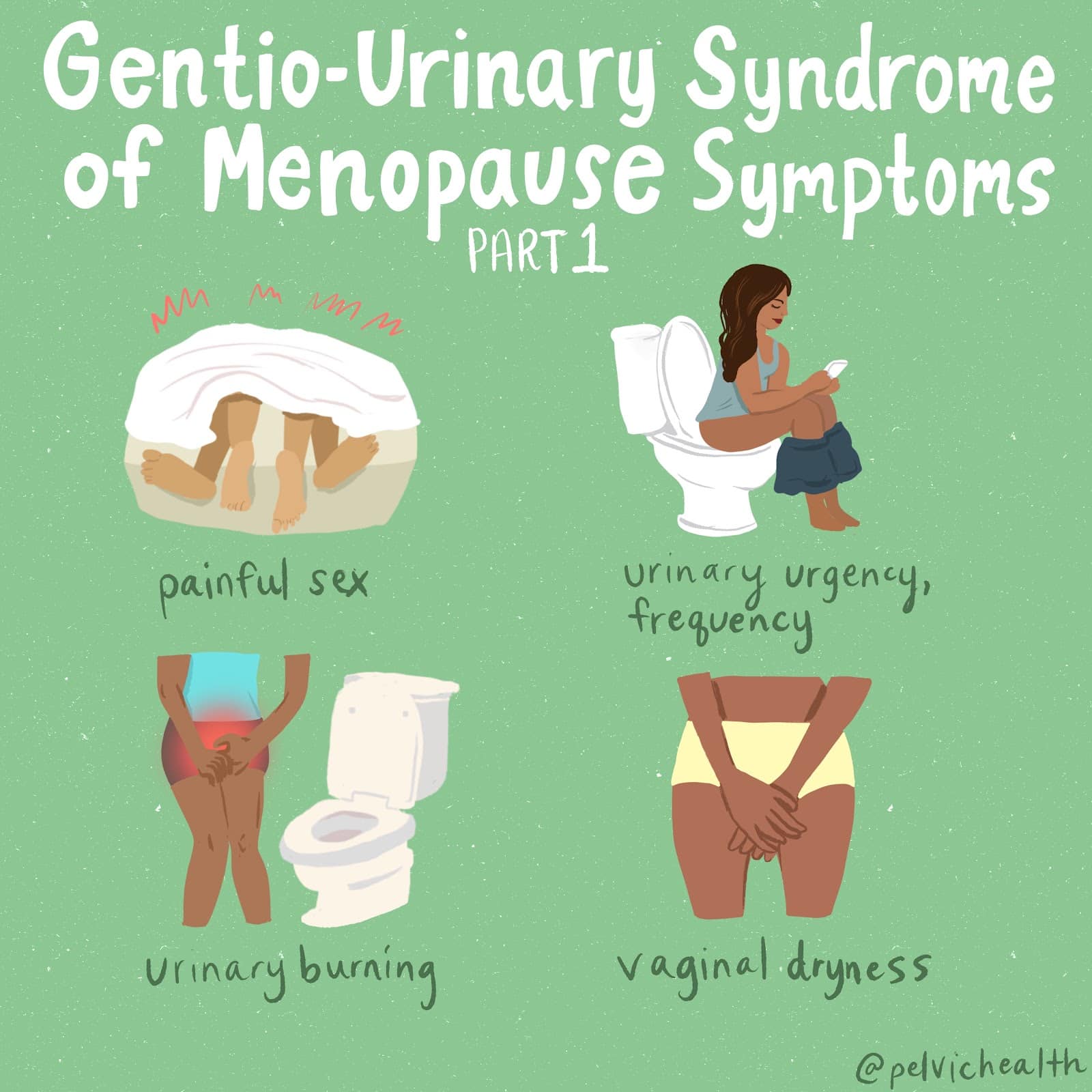
Menopause is more than just hot flushes, night sweats and mood changes! Even though 50% of the population goes through menopause the majority of people and healthcare providers are under-informed about menopause and safe and effective treatments. Too many people are suffering unnecessarily. Perimenopause, the precursor to menopause begins in the 40’s for most people and most women will be in menopause by their early 50’s. Beyond the systemic symptoms of menopause people will start to experience more subtle genitourinary symptoms that will continue to worsen over time if untreated. Painful sex, urinary urgency, frequency, leaking and burning, recurrent vaginal and urinary tract infections and vaginal dryness are symptoms of the Genitourinary Syndrome of Menopause (GSM). The symptoms of GSM are also symptoms of pelvic floor dysfunction, which almost 50% of women suffer by the time they are in their 50s.
Systemic menopause symptoms are often treated with systemic hormonal therapy. This may not be sufficient for people developing GSM symptoms. The North American Menopause Society recommends vaginal estrogen for women in menopause to help counter GSM symptoms.
Menopause is more than just hot flushes, night sweats and mood changes! Even though 50% of the population goes through menopause the majority of people and healthcare providers are under-informed about menopause and safe and effective treatments. Too many people are suffering unnecessarily. Perimenopause, the precursor to menopause begins in the 40’s for most people and most women will be in menopause by their early 50’s. Beyond the systemic symptoms of menopause people will start to experience more subtle genitourinary symptoms that will continue to worsen over time if untreated. Painful sex, urinary urgency, frequency, leaking and burning, recurrent vaginal and urinary tract infections and vaginal dryness are symptoms of the Genitourinary Syndrome of Menopause (GSM). The symptoms of GSM are also symptoms of pelvic floor dysfunction, which almost 50% of women suffer by the time they are in their 50s.
Systemic menopause symptoms are often treated with systemic hormonal therapy. This may not be sufficient for people developing GSM symptoms. The North American Menopause Society recommends vaginal estrogen for women in menopause to help counter GSM symptoms.
Differential Diagnosis:
GSM or Pelvic Floor Dysfunction
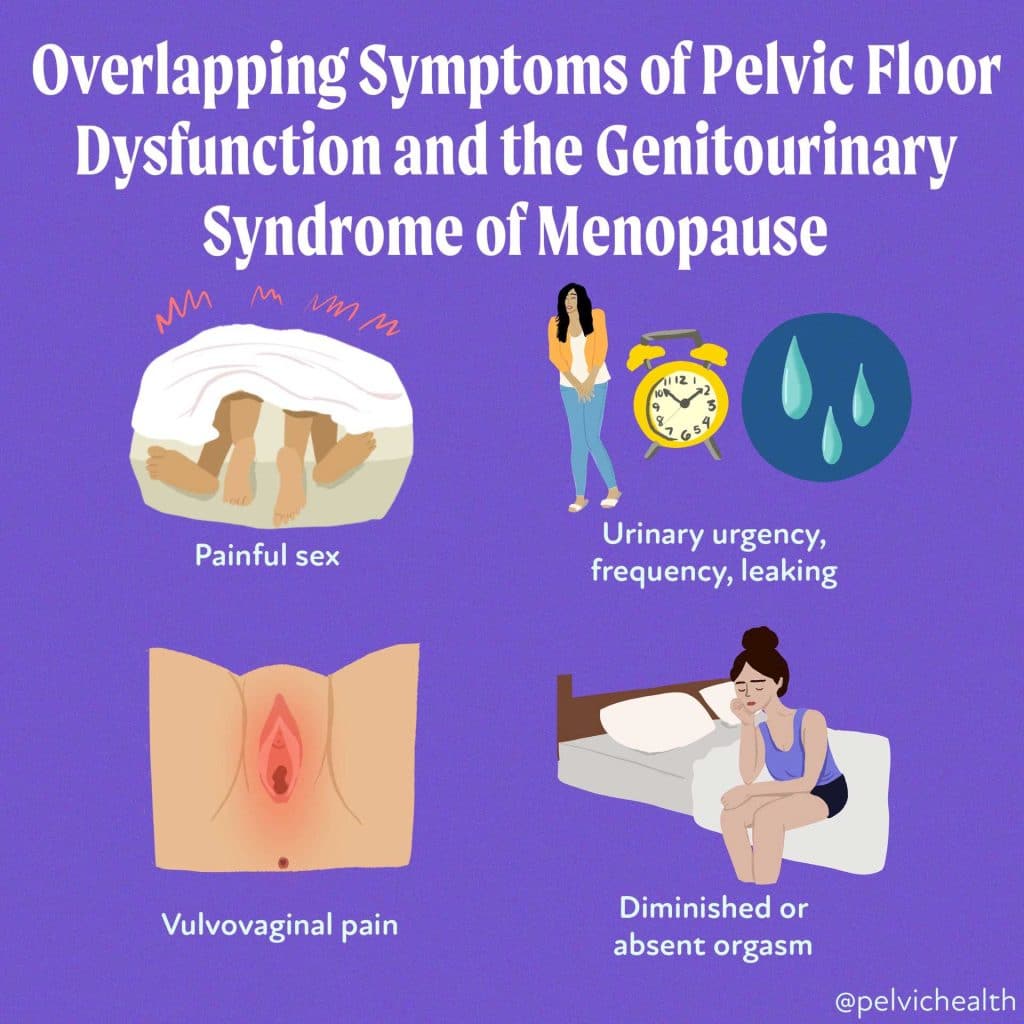
Symptoms of pelvic floor dysfunction and GSM include:
- Urinary urgency, frequency, burning, nocturia
- Feelings of bladder or pelvic pressure
- Painful sex
- Diminished or absent orgasm
- Difficulty evacuating stool
- Vulvovaginal pain and burning
- Pain with sitting
An informed healthcare provider – whether a pelvic floor physical and occupational therapists or medical doctor – can do a vulvovaginal visual examination, a q-tip test to establish pain areas, and a digital manual examination to identify pelvic floor dysfunction, hormonal deficiencies, and pelvic organ prolapse. All women will experience GSM if enough time passes without appropriate medical management. The majority of people do not realize that menopausal women can benefit from a pelvic floor physical and occupational therapy examination to address the musculoskeletal factors that are also making them uncomfortable. The combination of pelvic floor physical and occupational therapy and medical management is key to help restore pleasurable sex and eliminate urinary and bowel concerns!
FACTS
From: https://www.letstalkmenopause.org/further-reading
- 6000 women enter menopause everyday
- 50 million women are currently menopausal in the US
- 84% of women struggle with genital, sexual and urinary discomfort that will not resolve on its own, and less than 25% seek help
- 80% of OBGYN residents admit to being ill-prepared to discuss menopause
- GSM is clinically detected in 90% of postmenopausal women, only ⅓ report symptoms when surveyed.
- Barriers to treatment: women often have to initiate the conversation, believe that the symptoms are just part of aging, women fail to link their symptoms with menopause.
- Only 13% of providers asked their patients about menopause symptoms.
- Even after diagnosis, the majority of women with GSM go untreated despite studies demonstrating a negative impact on quality of life. Hesitation to prescribe treatment by providers as well as patient-perceived concerns over safety profiles limit the use of topical vaginal therapies.
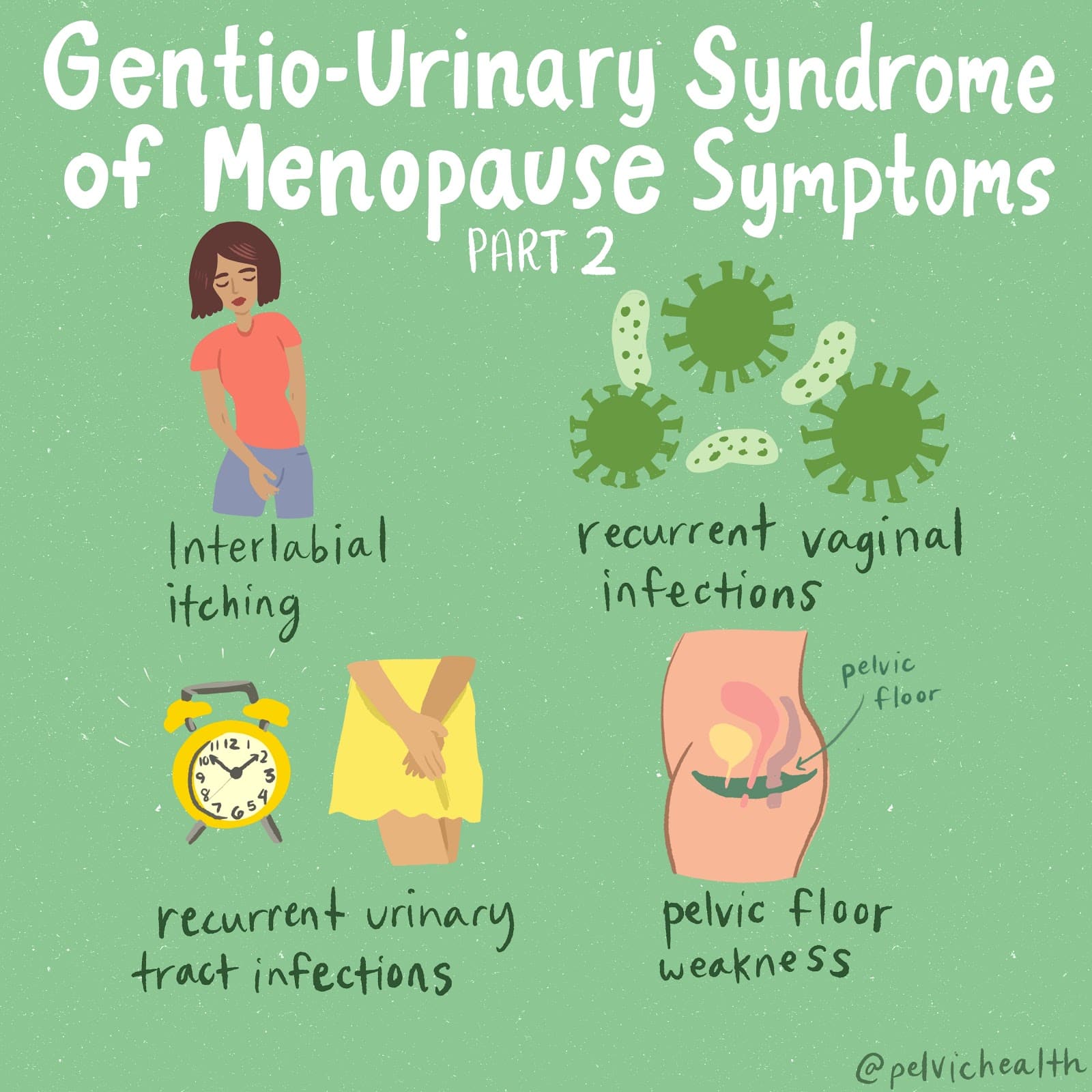
Hormone insufficiency can result in interlabial and vaginal itching. Other dermatologic issues such as Lichen Sclerosus and cutaneous yeast infections are just two of the many factors to also be considered.
Unfortunately people are vulnerable to recurrent vaginal and urinary tract infections in menopause due to:
- pH and tissue changes
- incomplete bladder emptying
- pelvic organ prolapse compromising urinary function
Recurrent infections are a leading cause of pelvic floor dysfunction! They must be stopped or the noxious visceral-somatic input can cause further pain and dysfunction after the infection is cleared. Furthermore, if the infections are left untreated without hormone therapy infections continue to occur and the consequences can be severe. Women can develop unprovoked pain, sex may be impossible, and undetected UTIs can lead to kidney problems and more sinister issues.
We encourage people to work with a menopause expert to monitor, prevent, and treat these issues as they are serious and treatable! We need to normalize the conversation about what happens during GSM, it is nothing to be embarrassed about and with the right care vulva owners can live their best lives! Pelvic floor physical and occupational therapy and medical management go hand in hand.
Treatment:
How We Can Help You
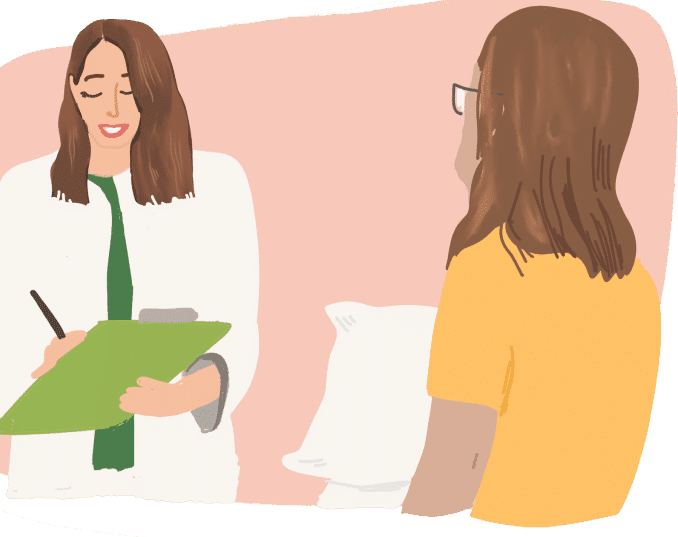
If you are having issues with your sexual function, it is in your best interest to get evaluated by a therapist for pelvic floor therapy, so they can establish what part, if any, of your pelvic floor may be contributing to the symptoms you are experiencing. During the course of the examination, the physical and occupational therapists will talk to you about your medical history and symptoms, including what you have been previously diagnosed with, the treatments or therapies you have had, and how effective or ineffective these therapies have been for you. It is significant to mention that we fully comprehend what you’ve been dealing with and that the majority of individuals are angry by the time they make it to see us. The physical and occupational therapists will conduct an evaluation of the patient’s nerves, muscles, joints, tissues, and movement patterns while doing the physical examination. After the examination is finished, your therapist will go over the results of the assessment with you. The physical and occupational therapists will conduct an evaluation to determine the cause of your symptoms and will establish both short-term and long-term therapy goals based on the results of the evaluation. Physical therapy treatments are typically administered between once and twice each week for a period of around 12 weeks. Your physical and occupational therapists will assist you in coordinating your recovery with all the other experts on your treatment team. They will provide you with an exercise regimen to complete at home and the sessions you attend in person. We are here to assist you in getting better and living the best life possible.
For more information about IC/PBS please check out our IC/PBS Resource List.

Treatment:
How We Can Help You
If you are having issues with your sexual function, it is in your best interest to get evaluated by a therapist for pelvic floor therapy, so they can establish what part, if any, of your pelvic floor may be contributing to the symptoms you are experiencing. During the course of the examination, the physical and occupational therapists will talk to you about your medical history and symptoms, including what you have been previously diagnosed with, the treatments or therapies you have had, and how effective or ineffective these therapies have been for you. It is significant to mention that we fully comprehend what you’ve been dealing with and that the majority of individuals are angry by the time they make it to see us. The physical and occupational therapists will conduct an evaluation of the patient’s nerves, muscles, joints, tissues, and movement patterns while doing the physical examination. After the examination is finished, your therapist will go over the results of the assessment with you. The physical and occupational therapists will conduct an evaluation to determine the cause of your symptoms and will establish both short-term and long-term therapy goals based on the results of the evaluation. Physical therapy treatments are typically administered between once and twice each week for a period of around 12 weeks. Your physical and occupational therapists will assist you in coordinating your recovery with all the other experts on your treatment team. They will provide you with an exercise regimen to complete at home and the sessions you attend in person. We are here to assist you in getting better and living the best life possible.
For more information about IC/PBS please check out our IC/PBS Resource List.



Lorem Ipsum is simply dummy text of the printing and typesetting industry. Lorem Ipsum has been the industry’s standard dummy text ever since the 1500s, when an unknown printer took a galley of type and scrambled it to make a type specimen book. It has survived not only five centuries, but also the leap into electronic typesetting, remaining essentially unchanged. It was popularised in the 1960s with the release of Letraset sheets containing Lorem Ipsum passages, and more recently with desktop publishing software like Aldus PageMaker including versions of Lorem Ipsum.
Lorem Ipsum is simply dummy text of the printing and typesetting industry. Lorem Ipsum has been the industry’s standard dummy text ever since the 1500s, when an unknown printer took a galley of type and scrambled it to make a type specimen book. It has survived not only five centuries, but also the leap into electronic typesetting, remaining essentially unchanged. It was popularised in the 1960s with the release of Letraset sheets containing Lorem Ipsum passages, and more recently with desktop publishing software like Aldus PageMaker including versions of Lorem Ipsum.
Lorem Ipsum is simply dummy text of the printing and typesetting industry. Lorem Ipsum has been the industry’s standard dummy text ever since the 1500s, when an unknown printer took a galley of type and scrambled it to make a type specimen book. It has survived not only five centuries, but also the leap into electronic typesetting, remaining essentially unchanged. It was popularised in the 1960s with the release of Letraset sheets containing Lorem Ipsum passages, and more recently with desktop publishing software like Aldus PageMaker including versions of Lorem Ipsum.
Here at PHRC we are not Medicare providers, for good reasons; you may remember that PHRC published a blog post about them. Still, we receive calls almost daily from Medicare patients enquiring about treatment from us, and unfortunately we have to turn them down: the law says, oddly, that we cannot provide treatment to Medicare patients even if they are willing and able to pay for it. This can be very frustrating, and can even feel discriminatory. Jarod Carter, PT, DPT has written many blogs on Medicare laws with regards to physical and occupational therapy. If you are a Medicare patient and would like to know more about the laws and your rights, please check out Jarod’s blog. Recently I wrote a letter to my Senator about the unfairness of these laws: you can read it below. If, after reading it, you feel inspired to take action as well, you can sign the American Physical and Occupational Therapy Association’s advocacy letter here.
The Honorable Dianne Feinstein Date: July 18th, 2016
United States Senate
331 Hart Senate Office Building
Washington, D.C. 20510
Dear Senator Feinstein,
Allow me to introduce myself. My name is Malinda Wright and I am a physical and occupational therapists in Los Gatos, CA. I am writing to ask you to please support the Medicare Patient Empowerment Act (H.R.1650/S. 1849), which will allow physical and occupational therapistss to opt out of Medicare. According to the Medicare Benefit Policy Manual, and also outlined in the Balanced Budget Act of 1997 and Medicare Prescription Drug Improvement and Modernization Act of 2003, physical and occupational therapistss are not allowed to opt out of Medicare. Other healthcare professionals, such as physicians, nurses, midwives, psychologists, clinical social workers, dietitians, and nutritionists are designated as “providers” and are allowed to opt out.1 Physical therapy is considered a “service,” a distinction that does not sit well with me. We see patients all the time for whom physical and occupational therapy is in fact the appropriate course of treatment. They come to us for healthcare provision, not to take advantage of a service. Because of the distinction the current law makes, however, we are not allowed to treat Medicare patients no matter how much they need it.
The non-Medicare practice that I work for specializes in pelvic floor disorders. We treat men and women who have musculoskeletal impairments causing urinary, sexual, and bowel dysfunction, including pudendal neuralgia. It is common for our patients to have seen multiple medical providers (sometimes more than ten) before coming in to see us. Many medical providers are unaware of their conditions and/or do not know how to treat them. This can leave the patients feeling hopeless and abandoned. Many patients turn to the internet for guidance, and find us through our website. Unfortunately, due to Medicare laws, I am unable to treat those patients who have Medicare. It is heartbreaking to have to tell Medicare patients who cannot sit, drive, or work because of their pain that I cannot treat them because the law forbids me to.
We recently had a pair of cases that prompted me to write this letter to you. A woman called our office and reported that she has Medicare insurance. As we often have to do, we politely explained to her that we are not Medicare providers, and referred her to a Medicare provider in her area. A few months later, the same woman called again, and this time she reported she did not have Medicare and wished to schedule an appointment with us. Our receptionist recognized her from the previous phone call, and again went over the rules and regulations surrounding Medicare. She was very angry: she could not understand why we were not allowed to treat her, and said that she felt discriminated against because of her age. Later that same day, I evaluated a 72 year old man from India, and was able to treat him for his tailbone pain at his own expense: as an international visitor, the Medicare laws did not apply to him.
You see the problem: I am permitted to treat a senior patient visiting from India, but legally I am not allowed to treat a senior US citizen of equal means who has the same medical condition. Because Medicare does not allow physical and occupational therapistss to opt out of the system, I cannot provide treatment to the men and women in my community who are 65 years old or older. I have to say I agree with the woman who called us: this seems like age discrimination.
As well as being saddened that I could not treat her, it bothered me that our caller had felt the need to resort to lying about her insurance in order to qualify for treatment. If the Medicare laws are encouraging patients to lie like this, something is not right and we need to fix it.
Please support the Medicare Patient Empowerment Act (H.R.1650/S. 1849) and allow Medicare patients the right to choose an out of network physical and occupational therapists for the treatment they need.
- CMS.gov. Medicare Benefit Policy Manual. Chapter 15, Covered Medical and Other Health Services, Section 40.4 (pg 25). https://www.cms.gov/Regulations-and-Guidance/Guidance/Manuals/downloads/bp102c15.pdf
- CMS.gov. Medicare Benefit Policy Manual. Chapter 15, Covered Medical and Other Health Services, Section 40. (pg 23). https://www.cms.gov/Regulations-and-Guidance/Guidance/Manuals/downloads/bp102c15.pdf
- Carter, J. PT, DPT, Medicare and Cash-Pay Physical and Occupational Therapy A Quick Start Guide to the Regulations on Taking Private Payment from Medicare Beneficiaries. 2015 Carter Physiotherapy PLLC.
FAQ
What are pelvic floor muscles?
The pelvic floor muscles are a group of muscles that run from the coccyx to the pubic bone. They are part of the core, helping to support our entire body as well as providing support for the bowel, bladder and uterus. These muscles help us maintain bowel and bladder control and are involved in sexual pleasure and orgasm. The technical name of the pelvic floor muscles is the Levator Ani muscle group. The pudendal nerve, the levator ani nerve, and branches from the S2 – S4 nerve roots innervate the pelvic floor muscles. They are under voluntary and autonomic control, which is a unique feature only they possess compared to other muscle groups.
What is pelvic floor physical and occupational therapy?
Pelvic floor physical and occupational therapy is a specialized area of physical and occupational therapy. Currently, physical and occupational therapistss need advanced post-graduate education to be able to help people with pelvic floor dysfunction because pelvic floor disorders are not yet being taught in standard physical and occupational therapy curricula. The Pelvic Health and Rehabilitation Center provides extensive training for our staff because we recognize the limitations of physical and occupational therapy education in this unique area.
What happens at pelvic floor therapy?
During an evaluation for pelvic floor dysfunction the physical and occupational therapists will take a detailed history. Following the history the physical and occupational therapists will leave the room to allow the patient to change and drape themselves. The physical and occupational therapists will return to the room and using gloved hands will perform an external and internal manual assessment of the pelvic floor and girdle muscles. The physical and occupational therapists will once again leave the room and allow the patient to dress. Following the manual examination there may also be an examination of strength, motor control, and overall biomechanics and neuromuscular control. The physical and occupational therapists will then communicate the findings to the patient and together with their patient they establish an assessment, short term and long term goals and a treatment plan. Typically people with pelvic floor dysfunction are seen one time per week for one hour for varying amounts of time based on the severity and chronicity of the disease. A home exercise program will be established and the physical and occupational therapists will help coordinate other providers on the treatment team. Typically patients are seen for 3 months to a year.
What is pudendal neuralgia and how is it treated?
Pudendal Neuralgia is a clinical diagnosis that means pain in the sensory distribution of the pudendal nerve. The pudendal nerve is a mixed nerve that exits the S2 – S4 sacral nerve roots, we have a right and left pudendal nerve and each side has three main trunks: the dorsal branch, the perineal branch, and the inferior rectal branch. The branches supply sensation to the clitoris/penis, labia/scrotum, perineum, anus, the distal ⅓ of the urethra and rectum, and the vulva and vestibule. The nerve branches also control the pelvic floor muscles. The pudendal nerve follows a tortuous path through the pelvic floor and girdle, leaving it vulnerable to compression and tension injuries at various points along its path.
Pudendal Neuralgia occurs when the nerve is unable to slide, glide and move normally and as a result, people experience pain in some or all of the above-mentioned areas. Pelvic floor physical and occupational therapy plays a crucial role in identifying the mechanical impairments that are affecting the nerve. The physical and occupational therapy treatment plan is designed to restore normal neural function. Patients with pudendal neuralgia require pelvic floor physical and occupational therapy and may also benefit from medical management that includes pharmaceuticals and procedures such as pudendal nerve blocks or botox injections.
What is interstitial cystitis and how is it treated?
Interstitial Cystitis is a clinical diagnosis characterized by irritative bladder symptoms such as urinary urgency, frequency, and hesitancy in the absence of infection. Research has shown the majority of patients who meet the clinical definition have pelvic floor dysfunction and myalgia. Therefore, the American Urologic Association recommends pelvic floor physical and occupational therapy as first-line treatment for Interstitial Cystitis. Patients will benefit from pelvic floor physical and occupational therapy and may also benefit from pharmacologic management or medical procedures such as bladder instillations.
Who is the Pelvic Health and Rehabilitation Team?
The Pelvic Health and Rehabilitation Center was founded by Elizabeth Akincilar and Stephanie Prendergast in 2006, they have been treating people with pelvic floor disorders since 2001. They were trained and mentored by a medical doctor and quickly became experts in treating pelvic floor disorders. They began creating courses and sharing their knowledge around the world. They expanded to 11 locations in the United States and developed a residency style training program for their employees with ongoing weekly mentoring. The physical and occupational therapistss who work at PHRC have undergone more training than the majority of pelvic floor physical and occupational therapistss and as a result offer efficient and high quality care.
How many years of experience do we have?
Stephanie and Liz have 24 years of experience and help each and every team member become an expert in the field through their training and mentoring program.
Why PHRC versus anyone else?
PHRC is unique because of the specific focus on pelvic floor disorders and the leadership at our company. We are constantly lecturing, teaching, and staying ahead of the curve with our connections to medical experts and emerging experts. As a result, we are able to efficiently and effectively help our patients restore their pelvic health.
Do we treat men for pelvic floor therapy?
The Pelvic Health and Rehabilitation Center is unique in that the Cofounders have always treated people of all genders and therefore have trained the team members and staff the same way. Many pelvic floor physical and occupational therapistss focus solely on people with vulvas, this is not the case here.
Do I need pelvic floor therapy forever?
The majority of people with pelvic floor dysfunction will undergo pelvic floor physical and occupational therapy for a set amount of time based on their goals. Every 6 -8 weeks goals will be re-established based on the physical improvements and remaining physical impairments. Most patients will achieve their goals in 3 – 6 months. If there are complicating medical or untreated comorbidities some patients will be in therapy longer.
By Melinda Fontaine
Julia called me yesterday to ask some questions about pelvic pain and pregnancy. She was 38 weeks pregnant and getting ready to give birth. She had a history of some pain with intercourse prior to getting pregnant and was surprised to feel some vaginal pain at her last OB appointment as well. Julia wanted to know if her pain meant she was going to have trouble giving birth in a few weeks or difficulty recovering. Her doctor was unable to answer her questions.
Julia is not alone. Vaginismus and provoked vestibulodynia (two diagnoses that create vulvovaginal pain) are present in 5% and 12% of women respectively. Women with vulvar or vaginal pain get pregnant and have babies and don’t know what to expect. While we never truly know what to expect during a pregnancy or delivery, let’s discuss some possibilities.
How will clinician’s treat me?
Obstetricians, midwives, and ultrasound technicians should be familiar with pelvic pain conditions. However, since taking a sexual history is not commonly part of the intake for these clinicians, women will need to disclose this information and have a discussion about their pain. Pelvic pain is often linked with anxiety about different parts of the pelvic exams as well as delivery. Good communication with your providers can reduce anxiety about pregnancy and delivery and help them provide the care you need.
How to talk to your clinician:
- Ask about your biggest fears – how will your provider reduce risks and handle complications?
- Confirm that you have control over the situation and that the provider will stop a pelvic exam if you say so
- Ask the provider to go extra slow
- Ask the provider to explain exactly what they will do before they do it
- Request that you insert the vaginal ultrasound transducer yourself if needed
- Ask if you can keep some of your own clothes on during exams or delivery
- Request a position that makes you most comfortable
- Ask your practitioner to utilize maternal directed pushing during delivery
- Ask what to expect during your recovery from childbirth
Will my baby be affected?
Babies born to women with vulvar pain have the same Apgar scores and perinatal mortality as those born to women without pain. Babies of women with vulvar pain also showed no difference in the rate of miscarriages, stillborns, and preterm births. These babies are more likely to be born by cesarean section, induced labor, or vacuum assisted delivery.¹
How will I be affected physically?
Women with vulvar pain prior to delivery are more likely to have vulvar pain after delivery.² Vaginal delivery is safe even after vestibulectomy and is not associated with more perineal tears.¹
Can I prevent a perineal injury?
Tears in the perineum are a fear of every child bearing woman, but especially those with a history of vulvar or vaginal pain. There is no data that says these women are at higher risk for perineal injury, but there are a few things women can do to help their perineum during childbirth.
- Perineal massage is stretching of the muscles around the vaginal opening during the last few weeks of pregnancy. It reduces the risk for an episiotomy, and may decrease the risk for large tears, especially in first time mothers.
- A warm compress on the perineum, massaging the vaginal opening during labor, and “hands on” support on the perineum during delivery of the head each decrease the risk for significant tears. “Hands on” support means that the practitioner assisting the delivery puts pressure on the perineum with their hand as the baby’s head is delivered.
- A mother’s position during delivery can have an effect on how easily she gives birth. If you think about it, most of the world squats to give birth (or to have a bowel movement for that matter) because it makes the pelvis want to open and takes advantage of gravity.
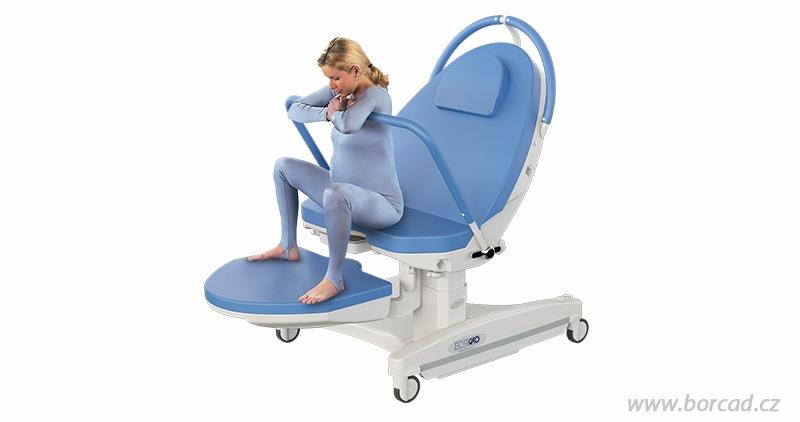
http://www.borcad.cz/birthing-bed-ave-birthing-positions/
Squatting, for example with a squat bar, has been associated with greater comfort, fewer episiotomies, and shorter second stage of labor.¹ Side lying or hands and knees provide similar advantages.⁴
- Maternal pushing is letting the mother decide when to push based on her urges. This type of pushing is better than coached pushing for protecting the pelvic floor.
How can I manage my vulvovaginal pain during pregnancy?
The medications that patients take for vulvar pain may be risky for the unborn baby, so patients and doctors need to reevaluate the risks and benefits to each medication when a woman becomes pregnant. Discuss if pain relieving medications, topicals, or herbs can safely be used during pregnancy. Using a specifically placed warm or cool compress can reduce pain. Mindful meditation, acupuncture, and pelvic physical and occupational therapy also help control pain.
Can I go to pelvic physical and occupational therapy during and after pregnancy?
Many women with vulvar or vaginal pain go to physical and occupational therapy. Physical therapy treatment can be very helpful and safe with a few modifications for pregnancy. Internal therapy is also safe and effective when the pregnancy is low-risk. If sexual intercourse is safe, then physical and occupational therapy is considered safe. Physical therapy for women with vulvovaginal pain very rarely includes kegels, instead it is often aimed at releasing tension and regaining muscle length. Physical therapy also helps discomfort during the postpartum period. Internal work is usually resumed at least 6 weeks postpartum after the obstetrician or midwife has cleared the mother for intercourse. Here is how pelvic PT helps women who are pregnant or postpartum.
Conclusions
- Pregnancy and delivery with vulvar or vaginal pain is safe for babies
- Women with vulvovaginal pain are more likely to have a Cesarean section, but are not more likely to have complications during a vaginal birth
- There are ways to manage vulvar pain during pregnancy and delivery
- Physical therapy can be safe and effective during and after pregnancy
I told Julia the same thing I would tell other women with vulvovaginal pain who are pregnant or considering pregnancy: It is possible to have a normal pregnancy and delivery with no ill effects for you and your baby. Your pain does not mean that you will have increased difficulty birthing the baby. There are ways to manage the discomfort you may feel with vaginal exams or other parts of the pregnancy, delivery, and recovery. A physical and occupational therapists is a valuable part of your pain management team while trying to conceive, during pregnancy, and postpartum.
References
- Rosenbaum T and Padoa A (2012) Managing pregnancy and delivery in women with sexual pain disorders. J Sex Med 9:1726-1735
- Nguyen RH (2012) A population-based study of pregnancy and delivery characteristics among women with vulvodynia. Pain Ther 1:2
- Van Kampen M, et al. (2015) The efficacy of physiotherapy for the prevention and treatment of prenatal symptoms: a systematic review. Int Urogynecol J 26: 1575-1586
- Bazi T, et al. (2016) Prevention of pelvic floor disorders: international urogynecological association research and development committee opinion. Int Urogynecol J doi 10.1007/s00192-016-2993-9
- Osborne K and Hanson L (2014) Labor Down or Bear Down: A strategy to translate second-stage labor evidence to perinatal practice. J Perinat Neonat Nurs 28.2:117-126
FAQ
What are pelvic floor muscles?
The pelvic floor muscles are a group of muscles that run from the coccyx to the pubic bone. They are part of the core, helping to support our entire body as well as providing support for the bowel, bladder and uterus. These muscles help us maintain bowel and bladder control and are involved in sexual pleasure and orgasm. The technical name of the pelvic floor muscles is the Levator Ani muscle group. The pudendal nerve, the levator ani nerve, and branches from the S2 – S4 nerve roots innervate the pelvic floor muscles. They are under voluntary and autonomic control, which is a unique feature only they possess compared to other muscle groups.
What is pelvic floor physical and occupational therapy?
Pelvic floor physical and occupational therapy is a specialized area of physical and occupational therapy. Currently, physical and occupational therapistss need advanced post-graduate education to be able to help people with pelvic floor dysfunction because pelvic floor disorders are not yet being taught in standard physical and occupational therapy curricula. The Pelvic Health and Rehabilitation Center provides extensive training for our staff because we recognize the limitations of physical and occupational therapy education in this unique area.
What happens at pelvic floor therapy?
During an evaluation for pelvic floor dysfunction the physical and occupational therapists will take a detailed history. Following the history the physical and occupational therapists will leave the room to allow the patient to change and drape themselves. The physical and occupational therapists will return to the room and using gloved hands will perform an external and internal manual assessment of the pelvic floor and girdle muscles. The physical and occupational therapists will once again leave the room and allow the patient to dress. Following the manual examination there may also be an examination of strength, motor control, and overall biomechanics and neuromuscular control. The physical and occupational therapists will then communicate the findings to the patient and together with their patient they establish an assessment, short term and long term goals and a treatment plan. Typically people with pelvic floor dysfunction are seen one time per week for one hour for varying amounts of time based on the severity and chronicity of the disease. A home exercise program will be established and the physical and occupational therapists will help coordinate other providers on the treatment team. Typically patients are seen for 3 months to a year.
What is pudendal neuralgia and how is it treated?
Pudendal Neuralgia is a clinical diagnosis that means pain in the sensory distribution of the pudendal nerve. The pudendal nerve is a mixed nerve that exits the S2 – S4 sacral nerve roots, we have a right and left pudendal nerve and each side has three main trunks: the dorsal branch, the perineal branch, and the inferior rectal branch. The branches supply sensation to the clitoris/penis, labia/scrotum, perineum, anus, the distal ⅓ of the urethra and rectum, and the vulva and vestibule. The nerve branches also control the pelvic floor muscles. The pudendal nerve follows a tortuous path through the pelvic floor and girdle, leaving it vulnerable to compression and tension injuries at various points along its path.
Pudendal Neuralgia occurs when the nerve is unable to slide, glide and move normally and as a result, people experience pain in some or all of the above-mentioned areas. Pelvic floor physical and occupational therapy plays a crucial role in identifying the mechanical impairments that are affecting the nerve. The physical and occupational therapy treatment plan is designed to restore normal neural function. Patients with pudendal neuralgia require pelvic floor physical and occupational therapy and may also benefit from medical management that includes pharmaceuticals and procedures such as pudendal nerve blocks or botox injections.
What is interstitial cystitis and how is it treated?
Interstitial Cystitis is a clinical diagnosis characterized by irritative bladder symptoms such as urinary urgency, frequency, and hesitancy in the absence of infection. Research has shown the majority of patients who meet the clinical definition have pelvic floor dysfunction and myalgia. Therefore, the American Urologic Association recommends pelvic floor physical and occupational therapy as first-line treatment for Interstitial Cystitis. Patients will benefit from pelvic floor physical and occupational therapy and may also benefit from pharmacologic management or medical procedures such as bladder instillations.
Who is the Pelvic Health and Rehabilitation Team?
The Pelvic Health and Rehabilitation Center was founded by Elizabeth Akincilar and Stephanie Prendergast in 2006, they have been treating people with pelvic floor disorders since 2001. They were trained and mentored by a medical doctor and quickly became experts in treating pelvic floor disorders. They began creating courses and sharing their knowledge around the world. They expanded to 11 locations in the United States and developed a residency style training program for their employees with ongoing weekly mentoring. The physical and occupational therapistss who work at PHRC have undergone more training than the majority of pelvic floor physical and occupational therapistss and as a result offer efficient and high quality care.
How many years of experience do we have?
Stephanie and Liz have 24 years of experience and help each and every team member become an expert in the field through their training and mentoring program.
Why PHRC versus anyone else?
PHRC is unique because of the specific focus on pelvic floor disorders and the leadership at our company. We are constantly lecturing, teaching, and staying ahead of the curve with our connections to medical experts and emerging experts. As a result, we are able to efficiently and effectively help our patients restore their pelvic health.
Do we treat men for pelvic floor therapy?
The Pelvic Health and Rehabilitation Center is unique in that the Cofounders have always treated people of all genders and therefore have trained the team members and staff the same way. Many pelvic floor physical and occupational therapistss focus solely on people with vulvas, this is not the case here.
Do I need pelvic floor therapy forever?
The majority of people with pelvic floor dysfunction will undergo pelvic floor physical and occupational therapy for a set amount of time based on their goals. Every 6 -8 weeks goals will be re-established based on the physical improvements and remaining physical impairments. Most patients will achieve their goals in 3 – 6 months. If there are complicating medical or untreated comorbidities some patients will be in therapy longer.