

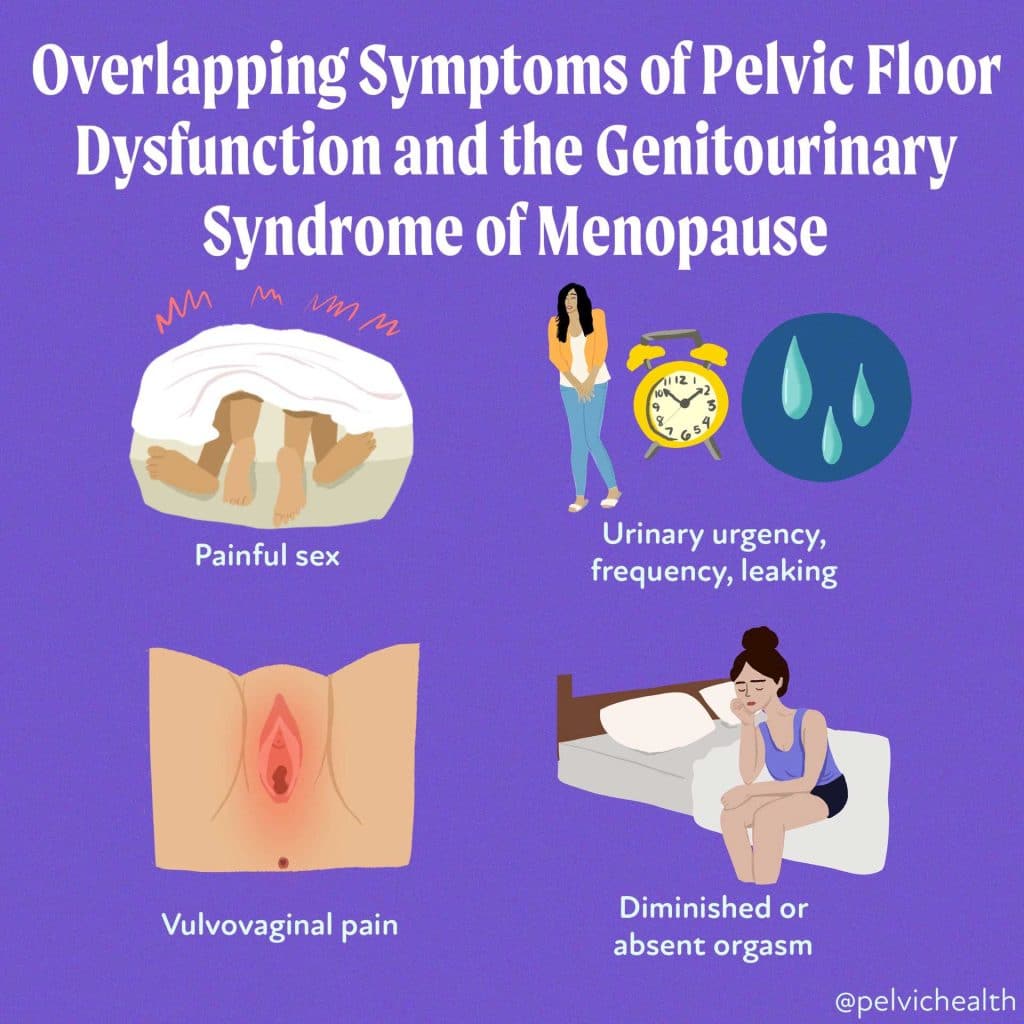
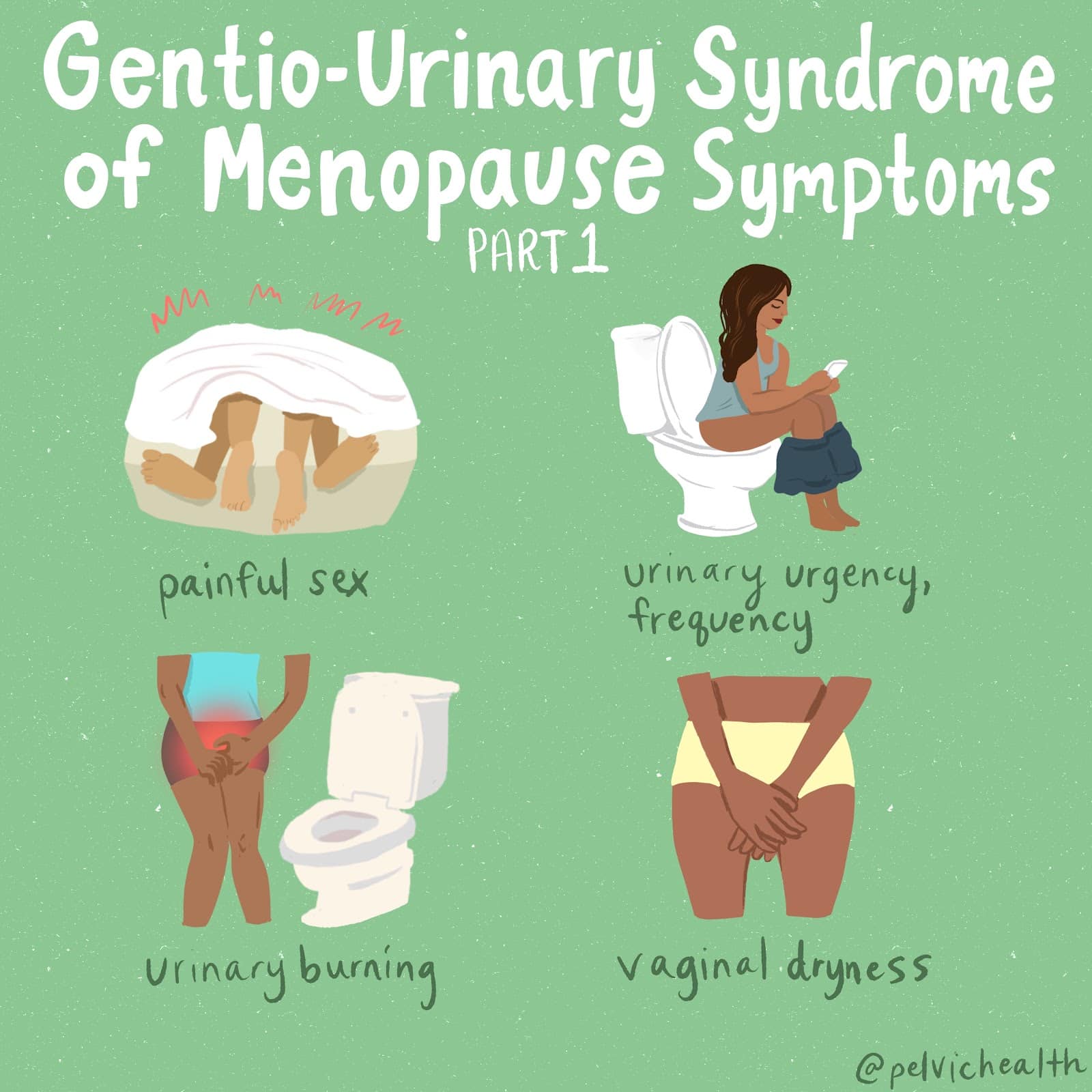
Menopause is more than just hot flushes, night sweats and mood changes! Even though 50% of the population goes through menopause the majority of people and healthcare providers are under-informed about menopause and safe and effective treatments. Too many people are suffering unnecessarily. Perimenopause, the precursor to menopause begins in the 40’s for most people and most women will be in menopause by their early 50’s. Beyond the systemic symptoms of menopause people will start to experience more subtle genitourinary symptoms that will continue to worsen over time if untreated. Painful sex, urinary urgency, frequency, leaking and burning, recurrent vaginal and urinary tract infections and vaginal dryness are symptoms of the Genitourinary Syndrome of Menopause (GSM). The symptoms of GSM are also symptoms of pelvic floor dysfunction, which almost 50% of women suffer by the time they are in their 50s.
Systemic menopause symptoms are often treated with systemic hormonal therapy. This may not be sufficient for people developing GSM symptoms. The North American Menopause Society recommends vaginal estrogen for women in menopause to help counter GSM symptoms.
Menopause is more than just hot flushes, night sweats and mood changes! Even though 50% of the population goes through menopause the majority of people and healthcare providers are under-informed about menopause and safe and effective treatments. Too many people are suffering unnecessarily. Perimenopause, the precursor to menopause begins in the 40’s for most people and most women will be in menopause by their early 50’s. Beyond the systemic symptoms of menopause people will start to experience more subtle genitourinary symptoms that will continue to worsen over time if untreated. Painful sex, urinary urgency, frequency, leaking and burning, recurrent vaginal and urinary tract infections and vaginal dryness are symptoms of the Genitourinary Syndrome of Menopause (GSM). The symptoms of GSM are also symptoms of pelvic floor dysfunction, which almost 50% of women suffer by the time they are in their 50s.
Systemic menopause symptoms are often treated with systemic hormonal therapy. This may not be sufficient for people developing GSM symptoms. The North American Menopause Society recommends vaginal estrogen for women in menopause to help counter GSM symptoms.
Differential Diagnosis:
GSM or Pelvic Floor Dysfunction
Symptoms of pelvic floor dysfunction and GSM include:
- Urinary urgency, frequency, burning, nocturia
- Feelings of bladder or pelvic pressure
- Painful sex
- Diminished or absent orgasm
- Difficulty evacuating stool
- Vulvovaginal pain and burning
- Pain with sitting
An informed healthcare provider – whether a pelvic floor physical and occupational therapists or medical doctor – can do a vulvovaginal visual examination, a q-tip test to establish pain areas, and a digital manual examination to identify pelvic floor dysfunction, hormonal deficiencies, and pelvic organ prolapse. All women will experience GSM if enough time passes without appropriate medical management. The majority of people do not realize that menopausal women can benefit from a pelvic floor physical and occupational therapy examination to address the musculoskeletal factors that are also making them uncomfortable. The combination of pelvic floor physical and occupational therapy and medical management is key to help restore pleasurable sex and eliminate urinary and bowel concerns!
FACTS
From: https://www.letstalkmenopause.org/further-reading
- 6000 women enter menopause everyday
- 50 million women are currently menopausal in the US
- 84% of women struggle with genital, sexual and urinary discomfort that will not resolve on its own, and less than 25% seek help
- 80% of OBGYN residents admit to being ill-prepared to discuss menopause
- GSM is clinically detected in 90% of postmenopausal women, only ⅓ report symptoms when surveyed.
- Barriers to treatment: women often have to initiate the conversation, believe that the symptoms are just part of aging, women fail to link their symptoms with menopause.
- Only 13% of providers asked their patients about menopause symptoms.
- Even after diagnosis, the majority of women with GSM go untreated despite studies demonstrating a negative impact on quality of life. Hesitation to prescribe treatment by providers as well as patient-perceived concerns over safety profiles limit the use of topical vaginal therapies.
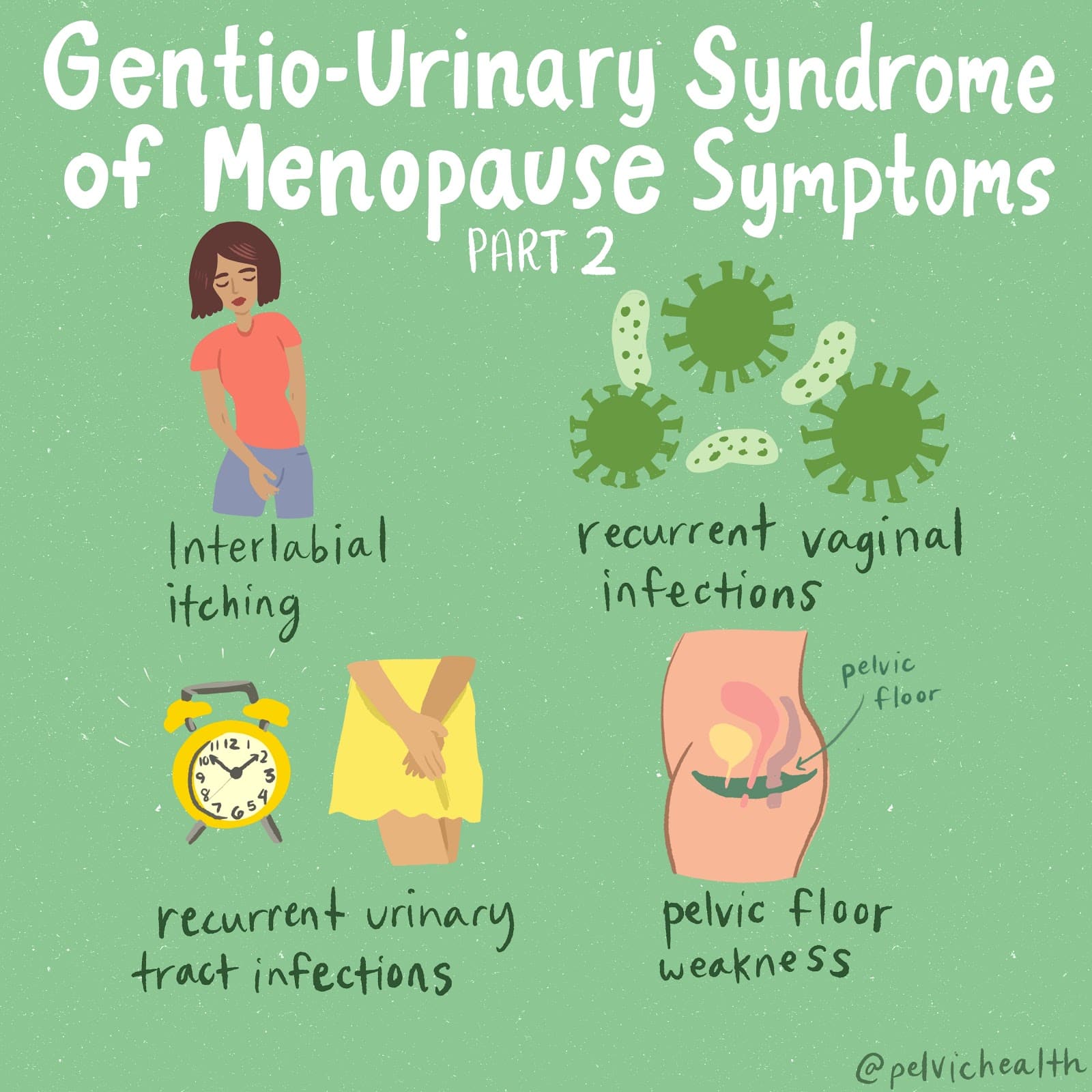
Hormone insufficiency can result in interlabial and vaginal itching. Other dermatologic issues such as Lichen Sclerosus and cutaneous yeast infections are just two of the many factors to also be considered.
Unfortunately people are vulnerable to recurrent vaginal and urinary tract infections in menopause due to:
- pH and tissue changes
- incomplete bladder emptying
- pelvic organ prolapse compromising urinary function
Recurrent infections are a leading cause of pelvic floor dysfunction! They must be stopped or the noxious visceral-somatic input can cause further pain and dysfunction after the infection is cleared. Furthermore, if the infections are left untreated without hormone therapy infections continue to occur and the consequences can be severe. Women can develop unprovoked pain, sex may be impossible, and undetected UTIs can lead to kidney problems and more sinister issues.
We encourage people to work with a menopause expert to monitor, prevent, and treat these issues as they are serious and treatable! We need to normalize the conversation about what happens during GSM, it is nothing to be embarrassed about and with the right care vulva owners can live their best lives! Pelvic floor physical and occupational therapy and medical management go hand in hand.
Treatment:
How We Can Help You
If you are having issues with your sexual function, it is in your best interest to get evaluated by a therapist for pelvic floor therapy, so they can establish what part, if any, of your pelvic floor may be contributing to the symptoms you are experiencing. During the course of the examination, the physical and occupational therapists will talk to you about your medical history and symptoms, including what you have been previously diagnosed with, the treatments or therapies you have had, and how effective or ineffective these therapies have been for you. It is significant to mention that we fully comprehend what you’ve been dealing with and that the majority of individuals are angry by the time they make it to see us. The physical and occupational therapists will conduct an evaluation of the patient’s nerves, muscles, joints, tissues, and movement patterns while doing the physical examination. After the examination is finished, your therapist will go over the results of the assessment with you. The physical and occupational therapists will conduct an evaluation to determine the cause of your symptoms and will establish both short-term and long-term therapy goals based on the results of the evaluation. Physical therapy treatments are typically administered between once and twice each week for a period of around 12 weeks. Your physical and occupational therapists will assist you in coordinating your recovery with all the other experts on your treatment team. They will provide you with an exercise regimen to complete at home and the sessions you attend in person. We are here to assist you in getting better and living the best life possible.
For more information about IC/PBS please check out our IC/PBS Resource List.

Treatment:
How We Can Help You
If you are having issues with your sexual function, it is in your best interest to get evaluated by a therapist for pelvic floor therapy, so they can establish what part, if any, of your pelvic floor may be contributing to the symptoms you are experiencing. During the course of the examination, the physical and occupational therapists will talk to you about your medical history and symptoms, including what you have been previously diagnosed with, the treatments or therapies you have had, and how effective or ineffective these therapies have been for you. It is significant to mention that we fully comprehend what you’ve been dealing with and that the majority of individuals are angry by the time they make it to see us. The physical and occupational therapists will conduct an evaluation of the patient’s nerves, muscles, joints, tissues, and movement patterns while doing the physical examination. After the examination is finished, your therapist will go over the results of the assessment with you. The physical and occupational therapists will conduct an evaluation to determine the cause of your symptoms and will establish both short-term and long-term therapy goals based on the results of the evaluation. Physical therapy treatments are typically administered between once and twice each week for a period of around 12 weeks. Your physical and occupational therapists will assist you in coordinating your recovery with all the other experts on your treatment team. They will provide you with an exercise regimen to complete at home and the sessions you attend in person. We are here to assist you in getting better and living the best life possible.
For more information about IC/PBS please check out our IC/PBS Resource List.


By Elizabeth Akincilar-Rummer
I am happy to say that in March we celebrated our one year anniversary in our Boston area office!! It has been a crazy year, but I’ve truly enjoyed getting to know new colleagues and being another resource for the many people suffering from pelvic pain in New England.
During the past year there has been one glaring difference between my practice in San Francisco and here in the Boston area. Men! I have a larger percentage of male patients in this office than I ever had in San Francisco. So, I thought it would only be fitting to share a recent success story about one of my male patients, Steve (his name has been changed for anonymity). His journey with pelvic pain is unfortunately not an uncommon one, but fortunately has a happy ending!
“I suffered with great pain and restricted activities for more than five years, and no doctor ever mentioned the possibility of physical and occupational therapy. I found out about it online. What the doctors and specialists said was incurable was entirely curable! Before consenting to surgeries (I had two) and all sorts of pills, you really owe it to yourself check out physical and occupational therapy.” Steve, age 40
Steve is a 40 year old man that drove 1 ½ hours in desperation of finding some help for his 6 year history of pelvic pain. Here’s his story: In 2007 he noticed blood when he ejaculated. He was prescribed antibiotics and his symptoms resolved. In 2009 the same thing happened, noticeable blood when he ejaculated, but in addition, this time he also experienced pelvic pain. Again, he was prescribed antibiotics and the blood in his ejaculate resolved, but the the pain did not. Since 2009, his pain has been consistently sharp pain in his right lower abdomen, and radiating pain to the right side of his penis and perineum. He noted that any friction to the right side of his lower abdomen (i.e. when wearing a belt) would increase his pain. He reported that his pain was the most severe after ejaculating, lasting up to 36 hours. He had basically given up on even trying to ejaculate because the resulting pain was so intense and debilitating. He also noted that he was unable to walk fast because the friction caused by swinging his arms would flare up his pain.
During these 6 years he attempted several treatment interventions. He saw several urologists and pain management specialists. At no point did any medical provider recommend physical and occupational therapy. In 2012 he was diagnosed with a right inguinal hernia which was surgically corrected. He reported one month of relief and then the pain returned as before. In 2013 he underwent a partial orchiectomy during which his right spermatic cord and right testicle were surgically removed. Again, he reported one month of relief only. Later in 2013 he had a series of 3 right ilioinguinal nerve blocks. He reported the first nerve block gave him approximately 20% pain relief, but the latter two had no effect. Virtually coming to the conclusion that this was just something he was going to have to live with, he found PHRC during extensive online research.
When I evaluated him in early 2015 he reported the same pain symptoms: sharp right lower abdominal pain and hypersensitivity, radiating sharp pain to his perineum and right side of his penis, inability to ejaculate without 1-2 days of severe pain, and an inability to walk fast without causing an increase in pain. He reported urinary frequency only if his pain was very severe and denied any bowel dysfunction. He was currently taking 3600 mg/day of gabapentin (neurontin) which he thought was helpful. He was able to work from home as a musician and composer.
During his initial evaluation I noted the following:
-
- moderate connective tissue dysfunction in his abdomen, lower abdomen and along his bony pelvis on the right side
- Hypertonus (tightness) in his right psoas, adductors, and abdominal musculature
- inguinal hernia scar restriction
- right bulbospongiosus, ischiocavernosus, and transverse perineum hypertonus
My assessment was that the infection in 2009 caused changes in the surrounding somatic tissues via the visceral-somatic reflex. In other words, the infection initiated dysfunction in the muscles, nerves and connective tissue in the pelvis. The initial infection in 2007 likely caused some of these same changes, but at that time the changes in the muscles, tissue, and nerves weren’t significant enough to cause pain. When the second infection occurred, the dysfunctional changes were then enough to cause symptoms of pain. Another possible factor was that the inguinal hernia that was later diagnosed was also contributing by irritating the ilioinguinal nerve, which would be consistent with his symptoms of lower abdominal and penile pain. The partial relief of pain with the ilioinguinal nerve block also supports this theory.
Steve’s goals were the following:
- No pain during or after sexual activity
- Able to walk at desired speed
- Stop taking gabapentin
I recommended treatment 1x/week for 8 visits. My treatment plan included scar mobilization, connective tissue manipulation, myofascial release, myofascial trigger point release, pain physiology education, and home exercise program development. During his initial evaluation, we began discussing pain physiology and the impact chronic pain can have on one’s nervous system. I gave him the book, Explain Pain, to read prior to his next appointment.
At his first follow-up visit he reported that he thought many of the concepts in Explain Pain applied to him and his history of chronic pelvic pain. We continued our discussion about these concepts and how he could apply them in his life. I continued the manual therapy on the myofascial impairments, including the inguinal scar, the abdominal and adductor trigger points, connective tissue restrictions and the pelvic floor hypertonus.
At his second visit, he reported that clothes were now less irritating and he had less pain with walking. He was now able to walk slightly faster and swing his arms more without aggravating his pain. At this point he also started to decrease his gabapentin. Upon exam, I noted that the scar mobility was improved, he had less skin hypersensitivity, and the connective tissue mobility was improved. He continued to have urogenital diaphragm hypertonus.
At his third visit, he reported that he was now able to wear a belt without pain. During the last week he ejaculated one time and had minimal discomfort, but then tried to ejaculate a second time that week and had significant pain afterward. He also decreased his gabapentin again. I noted the connective tissue restrictions continued to decrease and the urogenital diaphragm muscles had less hypertonus. I taught him self myofascial release techniques to utilize after ejaculation.
At his fourth visit, he reported that he was able to walk even faster without pain and was able to ejaculate without any pain or limitations in activity the following day. I noted minimal connective tissue restrictions and minimal scar restrictions. The primary remaining impairments were hypertonus in his right ischiocavernosus, bulbospongiosus, proximal adductors, and right lower abdominal muscles.
By his sixth visit, he reported he had no limitations in walking and was able to have sex in the evening multiple times during the week without pain or any limitations the following day. He had also completely stopped taking gabapentin by this point. I noted minimal hypertonus in his ischiocavernosus, bulbospongiosus, and lower abdominals. I decreased the frequency of treatments to 1x/2 weeks.
By his eighth visit, he reported that he felt 90% better. I noted minimal myofascial impairments. At this point I recommended we decrease the frequency of treatment to 1x/month.
After 2 additional visits, once per month, he reported no restrictions or pain with exercise/walking or sexual activity. After a total of 11 visits over 5 months, I discharged him with his home exercise program of self myofascial release as needed.
As you can see, with the correct treatment interventions, Steve’s symptoms resolved relatively quickly given the amount of time he had been suffering. He underwent at least one major surgical procedure that was completely unnecessary and possibly two. This is an excellent example of the importance to educate the medical community about pelvic pain and the role physical and occupational therapy can play in recovery. Had his medical providers been better educated about treatment options for pelvic pain, Steve’s pain could have been resolved years earlier. Those of us who treat pelvic pain need to take on the challenge of educating our colleagues to prevent situations like Steve’s from happening.
All my best,
Elizabeth Akincilar-Rummer, MSPT
FAQ
What are pelvic floor muscles?
The pelvic floor muscles are a group of muscles that run from the coccyx to the pubic bone. They are part of the core, helping to support our entire body as well as providing support for the bowel, bladder and uterus. These muscles help us maintain bowel and bladder control and are involved in sexual pleasure and orgasm. The technical name of the pelvic floor muscles is the Levator Ani muscle group. The pudendal nerve, the levator ani nerve, and branches from the S2 – S4 nerve roots innervate the pelvic floor muscles. They are under voluntary and autonomic control, which is a unique feature only they possess compared to other muscle groups.
What is pelvic floor physical and occupational therapy?
Pelvic floor physical and occupational therapy is a specialized area of physical and occupational therapy. Currently, physical and occupational therapistss need advanced post-graduate education to be able to help people with pelvic floor dysfunction because pelvic floor disorders are not yet being taught in standard physical and occupational therapy curricula. The Pelvic Health and Rehabilitation Center provides extensive training for our staff because we recognize the limitations of physical and occupational therapy education in this unique area.
What happens at pelvic floor therapy?
During an evaluation for pelvic floor dysfunction the physical and occupational therapists will take a detailed history. Following the history the physical and occupational therapists will leave the room to allow the patient to change and drape themselves. The physical and occupational therapists will return to the room and using gloved hands will perform an external and internal manual assessment of the pelvic floor and girdle muscles. The physical and occupational therapists will once again leave the room and allow the patient to dress. Following the manual examination there may also be an examination of strength, motor control, and overall biomechanics and neuromuscular control. The physical and occupational therapists will then communicate the findings to the patient and together with their patient they establish an assessment, short term and long term goals and a treatment plan. Typically people with pelvic floor dysfunction are seen one time per week for one hour for varying amounts of time based on the severity and chronicity of the disease. A home exercise program will be established and the physical and occupational therapists will help coordinate other providers on the treatment team. Typically patients are seen for 3 months to a year.
What is pudendal neuralgia and how is it treated?
Pudendal Neuralgia is a clinical diagnosis that means pain in the sensory distribution of the pudendal nerve. The pudendal nerve is a mixed nerve that exits the S2 – S4 sacral nerve roots, we have a right and left pudendal nerve and each side has three main trunks: the dorsal branch, the perineal branch, and the inferior rectal branch. The branches supply sensation to the clitoris/penis, labia/scrotum, perineum, anus, the distal ⅓ of the urethra and rectum, and the vulva and vestibule. The nerve branches also control the pelvic floor muscles. The pudendal nerve follows a tortuous path through the pelvic floor and girdle, leaving it vulnerable to compression and tension injuries at various points along its path.
Pudendal Neuralgia occurs when the nerve is unable to slide, glide and move normally and as a result, people experience pain in some or all of the above-mentioned areas. Pelvic floor physical and occupational therapy plays a crucial role in identifying the mechanical impairments that are affecting the nerve. The physical and occupational therapy treatment plan is designed to restore normal neural function. Patients with pudendal neuralgia require pelvic floor physical and occupational therapy and may also benefit from medical management that includes pharmaceuticals and procedures such as pudendal nerve blocks or botox injections.
What is interstitial cystitis and how is it treated?
Interstitial Cystitis is a clinical diagnosis characterized by irritative bladder symptoms such as urinary urgency, frequency, and hesitancy in the absence of infection. Research has shown the majority of patients who meet the clinical definition have pelvic floor dysfunction and myalgia. Therefore, the American Urologic Association recommends pelvic floor physical and occupational therapy as first-line treatment for Interstitial Cystitis. Patients will benefit from pelvic floor physical and occupational therapy and may also benefit from pharmacologic management or medical procedures such as bladder instillations.
Who is the Pelvic Health and Rehabilitation Team?
The Pelvic Health and Rehabilitation Center was founded by Elizabeth Akincilar and Stephanie Prendergast in 2006, they have been treating people with pelvic floor disorders since 2001. They were trained and mentored by a medical doctor and quickly became experts in treating pelvic floor disorders. They began creating courses and sharing their knowledge around the world. They expanded to 11 locations in the United States and developed a residency style training program for their employees with ongoing weekly mentoring. The physical and occupational therapistss who work at PHRC have undergone more training than the majority of pelvic floor physical and occupational therapistss and as a result offer efficient and high quality care.
How many years of experience do we have?
Stephanie and Liz have 24 years of experience and help each and every team member become an expert in the field through their training and mentoring program.
Why PHRC versus anyone else?
PHRC is unique because of the specific focus on pelvic floor disorders and the leadership at our company. We are constantly lecturing, teaching, and staying ahead of the curve with our connections to medical experts and emerging experts. As a result, we are able to efficiently and effectively help our patients restore their pelvic health.
Do we treat men for pelvic floor therapy?
The Pelvic Health and Rehabilitation Center is unique in that the Cofounders have always treated people of all genders and therefore have trained the team members and staff the same way. Many pelvic floor physical and occupational therapistss focus solely on people with vulvas, this is not the case here.
Do I need pelvic floor therapy forever?
The majority of people with pelvic floor dysfunction will undergo pelvic floor physical and occupational therapy for a set amount of time based on their goals. Every 6 -8 weeks goals will be re-established based on the physical improvements and remaining physical impairments. Most patients will achieve their goals in 3 – 6 months. If there are complicating medical or untreated comorbidities some patients will be in therapy longer.
Sitting on the toilet!! Actually sitting, skin to porcelain. No more hovering! Even in public restrooms. I know, it’s going to be a tough paradigm shift since this issue is ubiquitous; one study, done in the UK, surveyed 528 women at a gynecology clinic and found that 85% reported that they crouched over public toilets while urinating. 12% said that they used a paper toilet seat cover and 2% reported that they sat all the way down1. Only 2%! So, I decided to make a point to ask every woman that I’ve seen recently in my office what their preference is regarding toilet seats.The answer: overwhelmingly in favor of squatting over the pot (especially when in public).
This week, my goal is to try to dispel some of the myths about public toilet seats and try to convince you, the readers, that sitting on the toilet is more important to urinary/bowel function and health than the germs you might find hanging out on the john.
First, let me back up and explain how our urinary and bowel systems work from a musculoskeletal standpoint. A typical urinary system works like this: liquid waste (urine) that has already been filtered by the kidneys, empties into the bladder. As the bladder fills, it stretches to accommodate the extra volume. Once it starts getting somewhat close to full, (about 300 cc or about 1 ¼ cup) it sends a message to the brain, which then sends a message to the pelvic floor muscles to say “Hey, we need to pee, let’s get to an appropriate place (in this case we are going to call ‘that place’ the toilet).” We get to the toilet, we sit, our brain tells our pelvic floor muscles and the urinary sphincters to relax and we empty our bladder. In an adult with typical or “normal” urinary function, we expect close to full emptying of the urine in the bladder.
The bowel system works similarly: The colon fills with solid waste, it moves by peristalsis through the ascending, transverse, and descending colon. Once it arrives in the rectum, a signal is sent to the brain, that says it’s time to go. We get to a toilet, we sit, the sphincters relax, we empty. Voila.
Hovering over a toilet seat can become seriously problematic, especially if it is a habit that you have been practicing for many years. Even if all of the events leading up to voiding may be normal,when we hover, we are engaging so many muscle groups to support us in that position! Think about doing a squat and holding it for 45 seconds. Better yet-try it. If you do, you can feel the core engage, as well as the quadriceps, hamstrings, gluteals, and pelvic floor muscles. They are all on! So the mechanisms to empty the bladder/bowel engage, but the sphincters CANNOT fully relax here. It becomes an uphill battle.
The sphincters cannot fully relax, which means that the bladder and/or rectum could not fully empty, meaning that now we are getting a backup of residual waste left in the body. If this becomes a regular occurrence we can begin to see issues arise within the bowel/bladder systems. We can begin to see increased risk for bladder stones, infections, hesitancy, urgency and frequency, constipation, prolapse, and incontinence.
In the same study that I mentioned above, the researchers found that there was a 21% decrease in average urine flow rate and a 149% increase in residual urine volume in women that voided in a crouching position. They went on to conclude that women found with any abnormal bladder voiding/retention symptoms may benefit from being encouraged to sit comfortably on the toilet whenever possible1.
Still not convinced? Ok let me try a different route. In 2014, an article came out in the journal of Applied and Environmental Microbiology. In this study researchers found that “while enteric bacteria would be dispersed rapidly due to toilet flushing, they would not survive long, as most are not good competitors in cold, dry, oxygen-rich environments.”2 In other words, although germs are present in and on all toilets, they don’t last long. In an interview for The Huffington Post, Dr. William Schaffner, a professor of preventive medicine at Vanderbilt University Medical Center commented, “toilet seats are not a vehicle for the transmission of any infectious agents — you won’t catch anything.”3
Intact skin is generally thought of as an effective germ barrier, and the skin of the buttocks and legs is relatively thick. If you have very thin or cracked skin on the buttock or thigh, or have any open wounds in that area consider wiping the seat down. The American Society for Microbiology (ASM) published a study which found that after a porcelain surface had been wiped one time with either water, liquid soap, or an antibacterial wipe,* the amount of germs was decreased 10,000 times. A second wipe further reduced any remaining germs 1,000 times.4
A study published by the Public Library of Science swabbed flushers, door latches, faucet handles, and towel dispensers and found they are as dirty as, or dirtier, than the toilet seats themselves.5 In fact, many other places far from toilets are colonized by microbes. The main culprits include kitchen sponges, playground equipment, gym mats, and computer keyboards.5 And don’t get me started on your cell phone; cell phones carry 10 times more bacteria than most toilet seats, according to Charles Gerba, a microbiologist at the University of Arizona.6
Have I totally freaked you out? Don’t worry! Germs ARE everywhere. But if your immune system is healthy, and if you adopt simple hygienic measures like hand washing, you should have no problem kicking those pathogens to the curb. So let’s do it! Let’s all just start wiping the toilet seat off with a preliminary toilet paper wipe and sit yourself right down. And enjoy the full pee/poop that comes to follow**. Get the word out-let’s make 2016 the year we start sitting down on those seats and put our “germ-phobia” to rest!
*Remember not to flush antiseptic wipes because they are detrimental to our oceans. Instead, throw them in the trash.
**That being said, we have found that it is also important to increase the hip flexion angle for best pee/poop success. See this blog for more info.
References:
- Moore KH, Richmond DH, et al. Crouching over the toilet seat: prevalence among British gynaecological outpatients and its effect upon micturition. Br J Obstet Gynaecol. 1991 Jun;98(6):569-72.
- Gibbons S. M., Schwartz T., et al. Ecological succession and viability of human-associated microbiota on restroom surfaces. Appl. Environ. Microbiol. Online. Ahead of print 14 November 2014; doi:10.1128/AEM.03117-14 .
- “Why Using Toilet Seat Liners Is Basically Pointless.” Interview by Amanda L. Chan. Huffington Post 17 June 2014: n. pag. Web.
- Tuladhar, E, Hazeleger, W, et al. Residual Viral and Bacterial Contamination of Surfaces after Cleaning and Disinfection. Appl. Environ. Microbiol. November 2012 vol. 78 no. 217769-7775.
- Flores GE, Bates ST, Knights D, Lauber CL, Stombaugh J, Knight R, et al. (2011) Microbial Biogeography of Public Restroom Surfaces. PLoS ONE 6(11): e28132. doi:10.1371/journal.pone.0028132
- Gerba, Charles. “Why Your Cellphone Has More Germs than a Toilet.” Interview. Https://cals.arizona.edu/spotlight/why-your-cellphone-has-more-germs-toilet. The University of Arizona, College of Agriculture and Life Sciences, 15 Sept. 2012. Web. 29 Mar. 2016.
FAQ
What are pelvic floor muscles?
The pelvic floor muscles are a group of muscles that run from the coccyx to the pubic bone. They are part of the core, helping to support our entire body as well as providing support for the bowel, bladder and uterus. These muscles help us maintain bowel and bladder control and are involved in sexual pleasure and orgasm. The technical name of the pelvic floor muscles is the Levator Ani muscle group. The pudendal nerve, the levator ani nerve, and branches from the S2 – S4 nerve roots innervate the pelvic floor muscles. They are under voluntary and autonomic control, which is a unique feature only they possess compared to other muscle groups.
What is pelvic floor physical and occupational therapy?
Pelvic floor physical and occupational therapy is a specialized area of physical and occupational therapy. Currently, physical and occupational therapistss need advanced post-graduate education to be able to help people with pelvic floor dysfunction because pelvic floor disorders are not yet being taught in standard physical and occupational therapy curricula. The Pelvic Health and Rehabilitation Center provides extensive training for our staff because we recognize the limitations of physical and occupational therapy education in this unique area.
What happens at pelvic floor therapy?
During an evaluation for pelvic floor dysfunction the physical and occupational therapists will take a detailed history. Following the history the physical and occupational therapists will leave the room to allow the patient to change and drape themselves. The physical and occupational therapists will return to the room and using gloved hands will perform an external and internal manual assessment of the pelvic floor and girdle muscles. The physical and occupational therapists will once again leave the room and allow the patient to dress. Following the manual examination there may also be an examination of strength, motor control, and overall biomechanics and neuromuscular control. The physical and occupational therapists will then communicate the findings to the patient and together with their patient they establish an assessment, short term and long term goals and a treatment plan. Typically people with pelvic floor dysfunction are seen one time per week for one hour for varying amounts of time based on the severity and chronicity of the disease. A home exercise program will be established and the physical and occupational therapists will help coordinate other providers on the treatment team. Typically patients are seen for 3 months to a year.
What is pudendal neuralgia and how is it treated?
Pudendal Neuralgia is a clinical diagnosis that means pain in the sensory distribution of the pudendal nerve. The pudendal nerve is a mixed nerve that exits the S2 – S4 sacral nerve roots, we have a right and left pudendal nerve and each side has three main trunks: the dorsal branch, the perineal branch, and the inferior rectal branch. The branches supply sensation to the clitoris/penis, labia/scrotum, perineum, anus, the distal ⅓ of the urethra and rectum, and the vulva and vestibule. The nerve branches also control the pelvic floor muscles. The pudendal nerve follows a tortuous path through the pelvic floor and girdle, leaving it vulnerable to compression and tension injuries at various points along its path.
Pudendal Neuralgia occurs when the nerve is unable to slide, glide and move normally and as a result, people experience pain in some or all of the above-mentioned areas. Pelvic floor physical and occupational therapy plays a crucial role in identifying the mechanical impairments that are affecting the nerve. The physical and occupational therapy treatment plan is designed to restore normal neural function. Patients with pudendal neuralgia require pelvic floor physical and occupational therapy and may also benefit from medical management that includes pharmaceuticals and procedures such as pudendal nerve blocks or botox injections.
What is interstitial cystitis and how is it treated?
Interstitial Cystitis is a clinical diagnosis characterized by irritative bladder symptoms such as urinary urgency, frequency, and hesitancy in the absence of infection. Research has shown the majority of patients who meet the clinical definition have pelvic floor dysfunction and myalgia. Therefore, the American Urologic Association recommends pelvic floor physical and occupational therapy as first-line treatment for Interstitial Cystitis. Patients will benefit from pelvic floor physical and occupational therapy and may also benefit from pharmacologic management or medical procedures such as bladder instillations.
Who is the Pelvic Health and Rehabilitation Team?
The Pelvic Health and Rehabilitation Center was founded by Elizabeth Akincilar and Stephanie Prendergast in 2006, they have been treating people with pelvic floor disorders since 2001. They were trained and mentored by a medical doctor and quickly became experts in treating pelvic floor disorders. They began creating courses and sharing their knowledge around the world. They expanded to 11 locations in the United States and developed a residency style training program for their employees with ongoing weekly mentoring. The physical and occupational therapistss who work at PHRC have undergone more training than the majority of pelvic floor physical and occupational therapistss and as a result offer efficient and high quality care.
How many years of experience do we have?
Stephanie and Liz have 24 years of experience and help each and every team member become an expert in the field through their training and mentoring program.
Why PHRC versus anyone else?
PHRC is unique because of the specific focus on pelvic floor disorders and the leadership at our company. We are constantly lecturing, teaching, and staying ahead of the curve with our connections to medical experts and emerging experts. As a result, we are able to efficiently and effectively help our patients restore their pelvic health.
Do we treat men for pelvic floor therapy?
The Pelvic Health and Rehabilitation Center is unique in that the Cofounders have always treated people of all genders and therefore have trained the team members and staff the same way. Many pelvic floor physical and occupational therapistss focus solely on people with vulvas, this is not the case here.
Do I need pelvic floor therapy forever?
The majority of people with pelvic floor dysfunction will undergo pelvic floor physical and occupational therapy for a set amount of time based on their goals. Every 6 -8 weeks goals will be re-established based on the physical improvements and remaining physical impairments. Most patients will achieve their goals in 3 – 6 months. If there are complicating medical or untreated comorbidities some patients will be in therapy longer.
By Admin
Disclaimer: I’m a PT and a Pilates instructor. Often, patients ask if Pilates is the answer for their pelvic floor dysfunction. You know that old saying, “Kegel-ing all day, keeps the urine at bay.” Well, unfortunately, this is not always true. At times Kegel-ing can make actually make your symptoms worse, be it urinary urgency, frequency, incontinence or pain! Sometimes these type of symptoms are due to the pelvic floor muscles being too contracted. Since a Kegel is a contraction of your pelvic floor muscles, you can see how contracting muscles that are already too contracted may exacerbate symptoms. Take a look at Liz’s post to get a little more info.
So, since that’s a bit more settled let’s get to the purpose of this post: Pilates exercises for the short/tight, or in other words, too contracted pelvic floor. Pilates provides a breadth of repertoire that focuses primarily on contracting or “up-training” pelvic floor muscles along with the rest of the “core” to do certain movements. However, even though all of pilates repertoire may not be appropriate for all people, there are some helpful themes and sequences that can be beneficial when performed safely and precisely.
Since most of pilates is uptraining, i.e. tightening your pelvic floor muscles, I’m going to first introduce some downtraining exercises, i.e. lengthening/relaxing your pelvic floor, as a baseline for movement. I found in teaching that starting from this baseline actually improves students understanding of the pelvic floor and success in the practice. Also, it challenges the assumption that most of us have loose/weak pelvic floors that we need to strengthen, when the actual problem is lack of awareness (*more on this later blogs).
Please note: Although these exercises are primarily directed towards those with tight or hypertonic pelvic floor musculature they can provide awareness training for any pelvic floor, big or small, tight or loose, weak or strong.
Disclaimer: None of these exercises should increase pain or symptoms. Feel free to limit the range of motion/movement to what is tolerable and outside of pain. If you are unsure please seek advice from your physical and occupational therapists or a rehabilitation pilates professional who has experience with pelvic pain.
Since most of us don’t have pilates studio in our house I’ll be going through some exercises that can be done at home on a yoga mat and with small props as necessary. Considering setting aside ~ 10 minutes to give yourself the time to focus and experience the exercises.
Breathing
Purpose: improve awareness of breath and mobility of the body when breathing
Start lying on your back with your knees bent feet flat on the floor with shoulders broad and palms turned up.
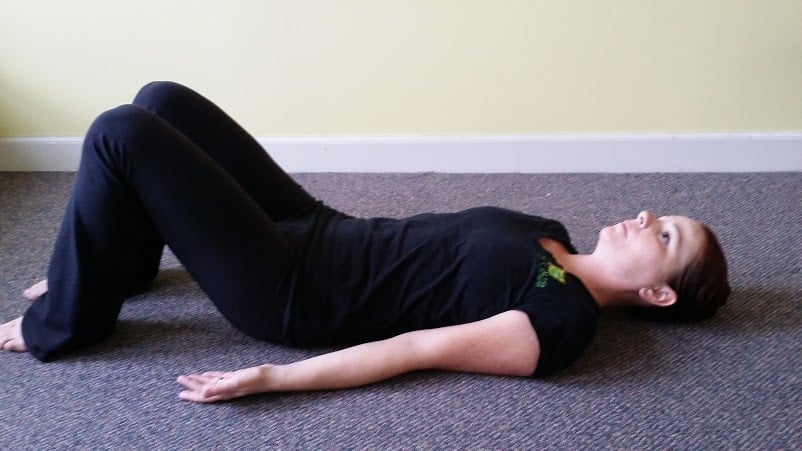
Feel the weight of your body on the floor and sense your breath moving in your body. As you inhale feel the rise and as you exhale feel the fall. Where does the breath go? Just observe this for a few moments…for many people this movement happens at the collar bone and upper chest, for others it’s softly in the belly or sometimes even shared between both areas. Now we are going to send the breath into other areas.
Do you know how big your lungs are? Do you know they are not only in the front but in the back too? They are actually longer on the sides and in the back then they are in the front.
See if you can breathe wide, try putting your hands on the sides of your rib cage and feel the movement, wide and down into your fingers. Try this for a bit…
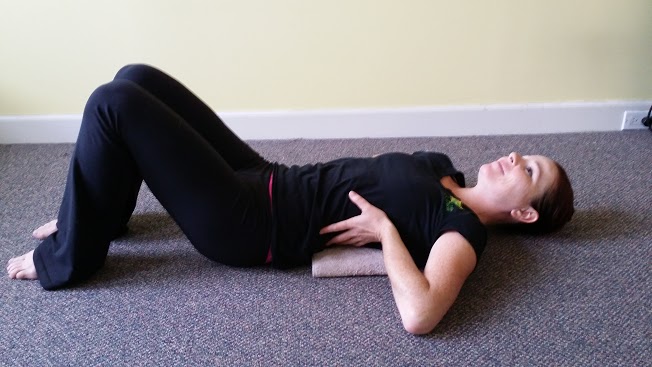
Now see if you can breathe back, try putting your hands or a small folded towel behind your midback to feel the movement of your back ribcage. Some imagery that can be helpful here: Imagine you are creating deep groves in the sand with the expansion of your rib cage and it washes away as you exhale…or the imagine your back ribs are like the wings of a lady bug that are lifting and lowering.
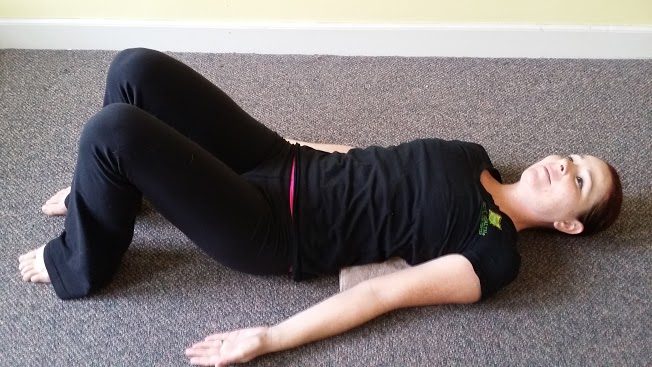
Get the idea, there is so much movement in the rib cage that we barely even use.
Now we are going to try some belly breathing. Same start position. But place your hands on belly.

Inhale wide and easy. Just follow where the breath goes. Which hand moves more?… See if you can allow the bottom hand to fill up a little more, like a big Buddah belly. Try this for a couple breaths…as you feel like you can fill up your belly, can you send the breath a little lower, just down to your pubic bone. Allow the breath to flow all the way down to your belly and pelvis then back up again. Easy inhale, easy exhale. Now you may feel some movement in your low pelvis. With your inhale, feel an easy stretch of your pelvic bowl (i.e. your anus, or vagina or scrotal area), and with you exhale, feel an easy recession. No problem if you don’t sense anything right away, just keep breathing. If you do feel this easy stretch then see if you can start sending you breath down and wide towards your perineum between your sit bones. You can try sending it more towards the front- vagina/ base of the penis, or towards the back- anus. Just allow it to be easy. Continue for 5 minutes or so.
Take a moment just to feel if the ease or tension has changed in your body and specifically in your hips and pelvic floor area.
Pelvic Clocks
Purpose- to improve awareness and mobility of the pelvis, hips, lower back and related muscles, i.e. pelvic floor muscles.
Pelvic clocks are used in many exercise regimens, whether you know it or not. You can do this exercise on your back with your feet flat on the ground, broad shoulders, palms on your hips.
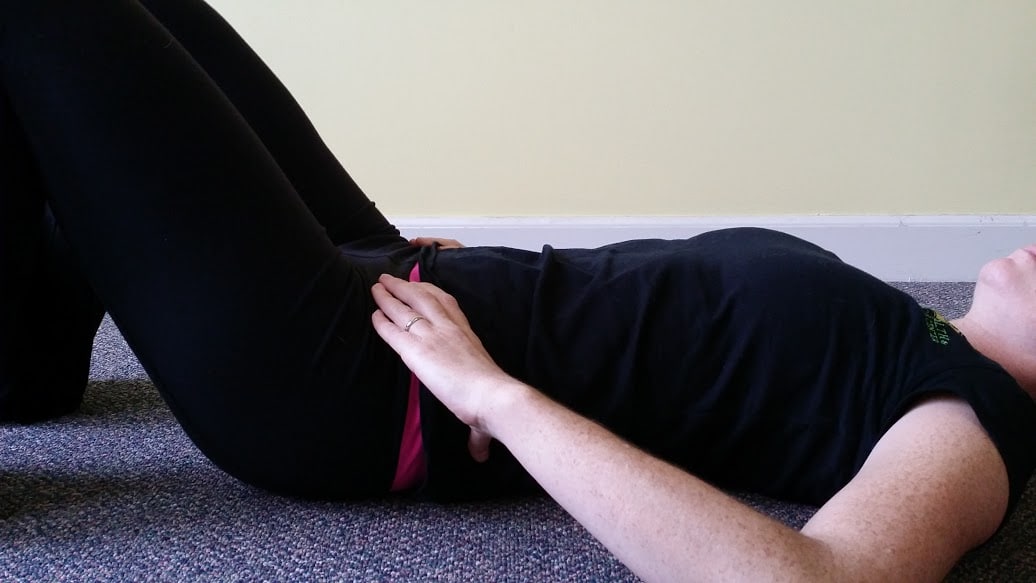
NEUTRAL
Essentially the idea is to move you pelvis in a full circle, or through all the numbers of the clock. Let’s get started. Feel your pelvis resting on the ground beneath you. Feel the heaviness of the right back pelvis and the left back pelvis. Feel where you pelvis starts to make contact at the base of your sacrum, and where it curves away, at your tailbone. Generally you want to be in your “neutral” or “neutral zone” where you are evenly balanced right to left and forward to back.
Now see if you can start rocking your pelvis easily forward and backward. Slowly rock your tail under, feel your low spine press into the ground and your tail lift a little. This position in Pilates is called an “imprint” or “flat back.”

EASY ROCK BACKWARDS, “IMPRINT”
DON’T SQUEEZE BOTTOM, KEEP IT EASY AND SOFT
Slowly start to rock you pelvis the other direction, past your start position, you may feel your low back pull off the floor even more. Go slow and easy.
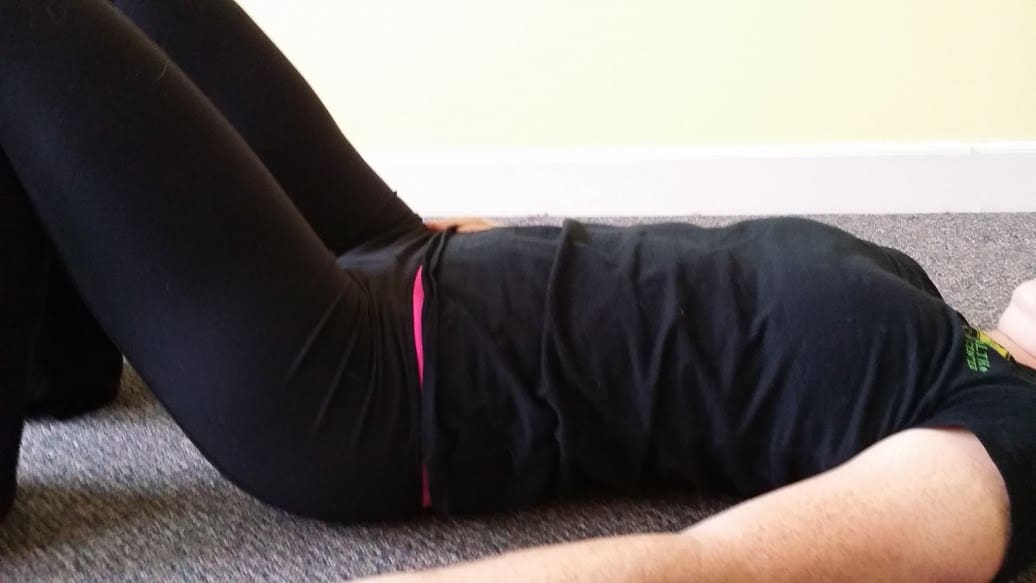
STICK BOOTY OUT A LITTLE, PELVIS WILL TIP FORWARD, LOW BACK WILL COME OFF FLOOR
Continue to go slowly and easily between these two positions, ideally your legs, feet and buttocks are relaxed and you feel as if your bones are just rocking back and forward. Let’s call the “imprinted” spine 12 o’clock, and the booty out position 6 o’clock. So now you’re rolling easy between 12 and 6 slowly and comfortably. Start with only doing about 5 or so.
Now pause in the middle of 12 and 6, so you’re back to your start position, or perhaps at the center dial of your clock.
Slowly tip your pelvis over to the left, your 3 o’clock. You should feel weight come off of the back right pelvis, and become heavy on the back left pelvis.
Then slowly come back to the center. Now, tip your pelvis slowly over to the right, to your 9 o’clock. You should feel weight come off of the back left pelvis, and become heavy on the back right pelvis.
Now you’ve got your clock 12, 6, 9, 3. Try going slowly and easily up and down and side to side, don’t be too forceful with it, just imagine your bones are moving and your muscles are easy and quiet. See if you can let your legs and feet relax so you’re only moving your pelvis.
If your still not sure take a look at this video.
Once you try this 4-5 times you can now try doing a full circle, or going around the clock. Start at 12, tip over to 3, then 6, then 9, then 12 again. Return back to neutral, then go the other direction or “counterclockwise”, from 12 to 9 to 6 to 3 to 12. Try this 4-5 times keeping your legs relaxed and muscles relaxed. You can take a look at this video if you are completely lost. When in doubt keep it easy and smooth.
Bridging on Wall
Purpose- To integrate your legs and back into pelvic movement to move and massage the pelvic floor muscles.
Start with your feet on the wall, legs bent to ~ 90 degrees. Feel how heavy your pelvis is on the ground and how you can allow your pelvis can sink deeper into the ground and settle.
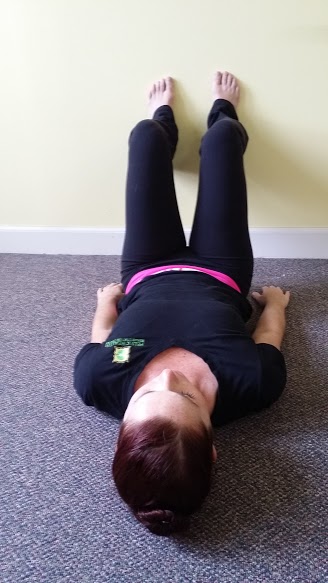
Now slowly start to tip your pelvis backwards, as if just the bones were moving. Press firmly but softly into your feet and start to roll your pelvis and low back off the ground so your pelvis can hover just off the ground. Let your pelvic floor and hips feel loose, relaxed and easy.

Take a breath there at your top of the movment and slowly start to roll down one vertebra at a time towards the ground. Once one vertebra presses into the ground see if you can lengthen your hips away towards the wall and drop the next one down, and so on and so on. Keep it easy. Try this ~5 times.
Take a look at the video with some additional cueing. Remember, only go as high as is easy and comfortable.
Mermaid
Purpose- To stretch the side body, hips and pelvis and improve expansion of the rib cage and pelvic floor muscles with breathing.
Sitting with your legs in a mermaid position- one leg turned out in front one leg turned in behind.

Or, if this is not comfortable at your hips or your knees you can sit cross legged or on a blanket so your pelvis is above your legs.


Settle into this position for one or two breaths just allowing your jaw, shoulders and pelvic floor muscles to let go. Slowly reach your right arm up to the ceiling, keeping the shoulder easy. Let your left hand provide some support on the ground as you reach up and over to the left. Think about creating more length in the spine then just compressing the left side of your spine. Take a breath intoour right side body and rib cage.

Happy Side Bend (Correct form)

Sad Side Bend (incorrect form)
You can play with going to either side, left and right.

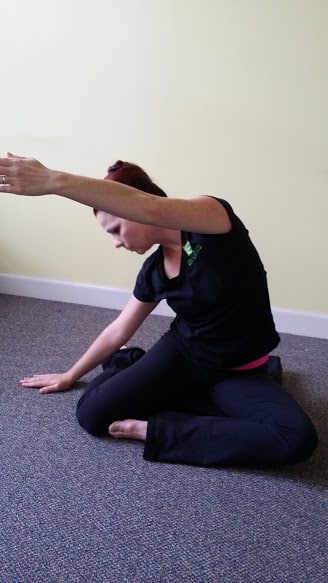
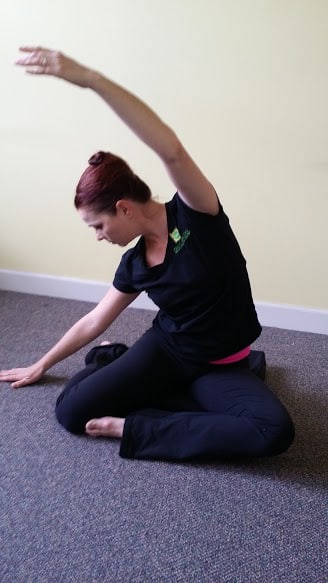
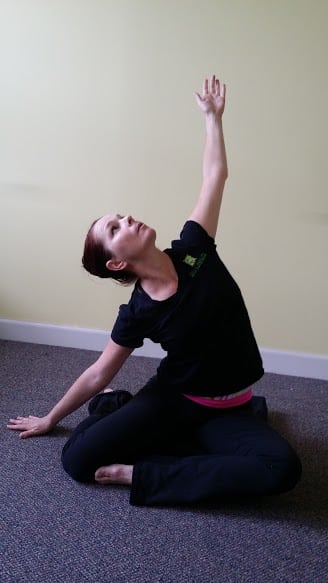
You can also try rotating your trunk slightly towards the ceiling or towards the ground to move the stretch and find more ease. As long as it feels good.
Slow return to your start postion. Once you have completely on side, switch your legs and repeat right to left. If you are in sitting in a criss-crossed position you can switch which leg is on top and repeat the stretch again either side if you’d like.
*You can try these poses daily. You should always feel better or no change in your symptoms. Though you may feel some stretching these exercises should never create more pain. When in doubt talk to your Pilates rehabiliatation professional or physical and occupational therapists. For more great exercises to improve pelvic floor mobility check out Casie’s blog on Yoga Poses for Pelvic Pain!
______________________________________________________________________________________________________________________________________
Are you unable to come see us in person? We offer virtual physical and occupational therapy appointments too!
Due to COVID-19, we understand people may prefer to utilize our services from their homes. We also understand that many people do not have access to pelvic floor physical and occupational therapy and we are here to help! The Pelvic Health and Rehabilitation Center is a multi-city company of highly trained and specialized pelvic floor physical and occupational therapistss committed to helping people optimize their pelvic health and eliminate pelvic pain and dysfunction. We are here for you and ready to help, whether it is in-person or online.
Virtual sessions are available with PHRC pelvic floor physical and occupational therapistss via our video platform, Zoom, or via phone. The cost for this service is $75.00 per 30 minutes. For more information and to schedule, please visit our digital healthcare page.
In addition to virtual consultation with our physical and occupational therapistss, we also offer integrative health services with Jandra Mueller, DPT, MS. Jandra is a pelvic floor physical and occupational therapists who also has her Master’s degree in Integrative Health and Nutrition. She offers services such as hormone testing via the DUTCH test, comprehensive stool testing for gastrointestinal health concerns, and integrative health coaching and meal planning. For more information about her services and to schedule, please visit our Integrative Health website page.
PHRC is also offering individualized movement sessions, hosted by Karah Charette, DPT. Karah is a pelvic floor physical and occupational therapists at the Berkeley and San Francisco locations. She is certified in classical mat and reformer Pilates, as well as a registered 200 hour Ashtanga Vinyasa yoga teacher. There are 30 min and 60 min sessions options where you can: (1) Consult on what type of Pilates or yoga class would be appropriate to participate in (2) Review ways to modify poses to fit your individual needs and (3) Create a synthesis of your home exercise program into a movement flow. To schedule a 1-on-1 appointment call us at (510) 922-9836
FAQ
What are pelvic floor muscles?
The pelvic floor muscles are a group of muscles that run from the coccyx to the pubic bone. They are part of the core, helping to support our entire body as well as providing support for the bowel, bladder and uterus. These muscles help us maintain bowel and bladder control and are involved in sexual pleasure and orgasm. The technical name of the pelvic floor muscles is the Levator Ani muscle group. The pudendal nerve, the levator ani nerve, and branches from the S2 – S4 nerve roots innervate the pelvic floor muscles. They are under voluntary and autonomic control, which is a unique feature only they possess compared to other muscle groups.
What is pelvic floor physical and occupational therapy?
Pelvic floor physical and occupational therapy is a specialized area of physical and occupational therapy. Currently, physical and occupational therapistss need advanced post-graduate education to be able to help people with pelvic floor dysfunction because pelvic floor disorders are not yet being taught in standard physical and occupational therapy curricula. The Pelvic Health and Rehabilitation Center provides extensive training for our staff because we recognize the limitations of physical and occupational therapy education in this unique area.
What happens at pelvic floor therapy?
During an evaluation for pelvic floor dysfunction the physical and occupational therapists will take a detailed history. Following the history the physical and occupational therapists will leave the room to allow the patient to change and drape themselves. The physical and occupational therapists will return to the room and using gloved hands will perform an external and internal manual assessment of the pelvic floor and girdle muscles. The physical and occupational therapists will once again leave the room and allow the patient to dress. Following the manual examination there may also be an examination of strength, motor control, and overall biomechanics and neuromuscular control. The physical and occupational therapists will then communicate the findings to the patient and together with their patient they establish an assessment, short term and long term goals and a treatment plan. Typically people with pelvic floor dysfunction are seen one time per week for one hour for varying amounts of time based on the severity and chronicity of the disease. A home exercise program will be established and the physical and occupational therapists will help coordinate other providers on the treatment team. Typically patients are seen for 3 months to a year.
What is pudendal neuralgia and how is it treated?
Pudendal Neuralgia is a clinical diagnosis that means pain in the sensory distribution of the pudendal nerve. The pudendal nerve is a mixed nerve that exits the S2 – S4 sacral nerve roots, we have a right and left pudendal nerve and each side has three main trunks: the dorsal branch, the perineal branch, and the inferior rectal branch. The branches supply sensation to the clitoris/penis, labia/scrotum, perineum, anus, the distal ⅓ of the urethra and rectum, and the vulva and vestibule. The nerve branches also control the pelvic floor muscles. The pudendal nerve follows a tortuous path through the pelvic floor and girdle, leaving it vulnerable to compression and tension injuries at various points along its path.
Pudendal Neuralgia occurs when the nerve is unable to slide, glide and move normally and as a result, people experience pain in some or all of the above-mentioned areas. Pelvic floor physical and occupational therapy plays a crucial role in identifying the mechanical impairments that are affecting the nerve. The physical and occupational therapy treatment plan is designed to restore normal neural function. Patients with pudendal neuralgia require pelvic floor physical and occupational therapy and may also benefit from medical management that includes pharmaceuticals and procedures such as pudendal nerve blocks or botox injections.
What is interstitial cystitis and how is it treated?
Interstitial Cystitis is a clinical diagnosis characterized by irritative bladder symptoms such as urinary urgency, frequency, and hesitancy in the absence of infection. Research has shown the majority of patients who meet the clinical definition have pelvic floor dysfunction and myalgia. Therefore, the American Urologic Association recommends pelvic floor physical and occupational therapy as first-line treatment for Interstitial Cystitis. Patients will benefit from pelvic floor physical and occupational therapy and may also benefit from pharmacologic management or medical procedures such as bladder instillations.
Who is the Pelvic Health and Rehabilitation Team?
The Pelvic Health and Rehabilitation Center was founded by Elizabeth Akincilar and Stephanie Prendergast in 2006, they have been treating people with pelvic floor disorders since 2001. They were trained and mentored by a medical doctor and quickly became experts in treating pelvic floor disorders. They began creating courses and sharing their knowledge around the world. They expanded to 11 locations in the United States and developed a residency style training program for their employees with ongoing weekly mentoring. The physical and occupational therapistss who work at PHRC have undergone more training than the majority of pelvic floor physical and occupational therapistss and as a result offer efficient and high quality care.
How many years of experience do we have?
Stephanie and Liz have 24 years of experience and help each and every team member become an expert in the field through their training and mentoring program.
Why PHRC versus anyone else?
PHRC is unique because of the specific focus on pelvic floor disorders and the leadership at our company. We are constantly lecturing, teaching, and staying ahead of the curve with our connections to medical experts and emerging experts. As a result, we are able to efficiently and effectively help our patients restore their pelvic health.
Do we treat men for pelvic floor therapy?
The Pelvic Health and Rehabilitation Center is unique in that the Cofounders have always treated people of all genders and therefore have trained the team members and staff the same way. Many pelvic floor physical and occupational therapistss focus solely on people with vulvas, this is not the case here.
Do I need pelvic floor therapy forever?
The majority of people with pelvic floor dysfunction will undergo pelvic floor physical and occupational therapy for a set amount of time based on their goals. Every 6 -8 weeks goals will be re-established based on the physical improvements and remaining physical impairments. Most patients will achieve their goals in 3 – 6 months. If there are complicating medical or untreated comorbidities some patients will be in therapy longer.