

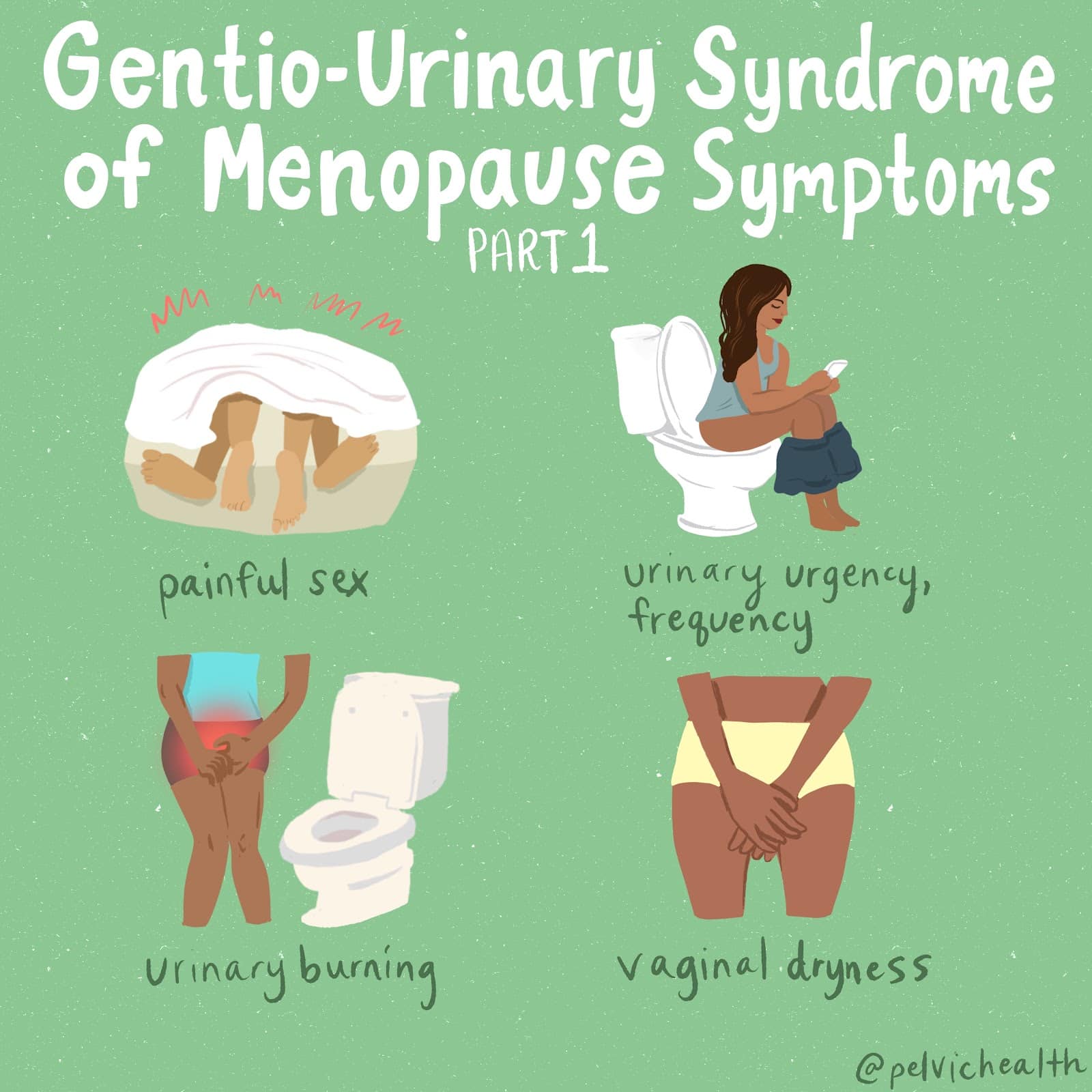
Menopause is more than just hot flushes, night sweats and mood changes! Even though 50% of the population goes through menopause the majority of people and healthcare providers are under-informed about menopause and safe and effective treatments. Too many people are suffering unnecessarily. Perimenopause, the precursor to menopause begins in the 40’s for most people and most women will be in menopause by their early 50’s. Beyond the systemic symptoms of menopause people will start to experience more subtle genitourinary symptoms that will continue to worsen over time if untreated. Painful sex, urinary urgency, frequency, leaking and burning, recurrent vaginal and urinary tract infections and vaginal dryness are symptoms of the Genitourinary Syndrome of Menopause (GSM). The symptoms of GSM are also symptoms of pelvic floor dysfunction, which almost 50% of women suffer by the time they are in their 50s.
Systemic menopause symptoms are often treated with systemic hormonal therapy. This may not be sufficient for people developing GSM symptoms. The North American Menopause Society recommends vaginal estrogen for women in menopause to help counter GSM symptoms.
Menopause is more than just hot flushes, night sweats and mood changes! Even though 50% of the population goes through menopause the majority of people and healthcare providers are under-informed about menopause and safe and effective treatments. Too many people are suffering unnecessarily. Perimenopause, the precursor to menopause begins in the 40’s for most people and most women will be in menopause by their early 50’s. Beyond the systemic symptoms of menopause people will start to experience more subtle genitourinary symptoms that will continue to worsen over time if untreated. Painful sex, urinary urgency, frequency, leaking and burning, recurrent vaginal and urinary tract infections and vaginal dryness are symptoms of the Genitourinary Syndrome of Menopause (GSM). The symptoms of GSM are also symptoms of pelvic floor dysfunction, which almost 50% of women suffer by the time they are in their 50s.
Systemic menopause symptoms are often treated with systemic hormonal therapy. This may not be sufficient for people developing GSM symptoms. The North American Menopause Society recommends vaginal estrogen for women in menopause to help counter GSM symptoms.
Differential Diagnosis:
GSM or Pelvic Floor Dysfunction
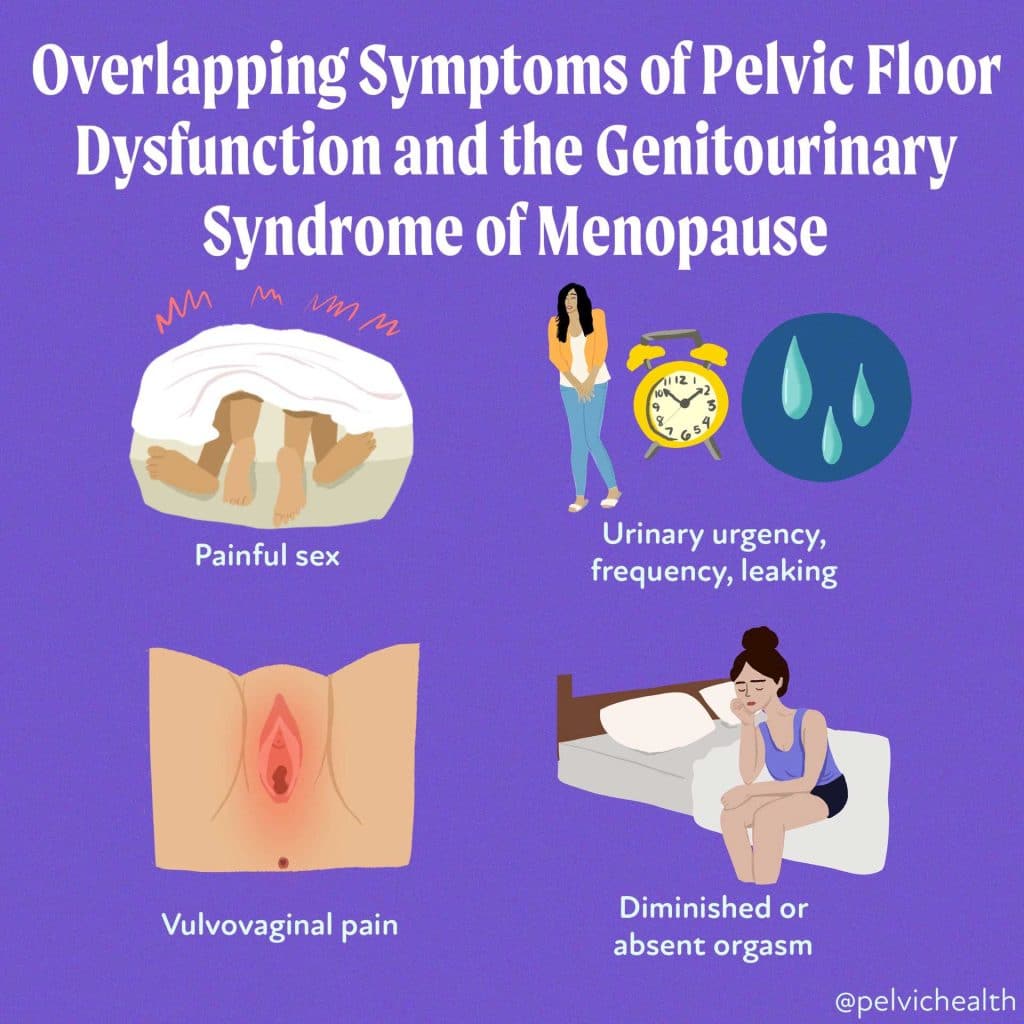
Symptoms of pelvic floor dysfunction and GSM include:
- Urinary urgency, frequency, burning, nocturia
- Feelings of bladder or pelvic pressure
- Painful sex
- Diminished or absent orgasm
- Difficulty evacuating stool
- Vulvovaginal pain and burning
- Pain with sitting
An informed healthcare provider – whether a pelvic floor physical and occupational therapists or medical doctor – can do a vulvovaginal visual examination, a q-tip test to establish pain areas, and a digital manual examination to identify pelvic floor dysfunction, hormonal deficiencies, and pelvic organ prolapse. All women will experience GSM if enough time passes without appropriate medical management. The majority of people do not realize that menopausal women can benefit from a pelvic floor physical and occupational therapy examination to address the musculoskeletal factors that are also making them uncomfortable. The combination of pelvic floor physical and occupational therapy and medical management is key to help restore pleasurable sex and eliminate urinary and bowel concerns!
FACTS
From: https://www.letstalkmenopause.org/further-reading
- 6000 women enter menopause everyday
- 50 million women are currently menopausal in the US
- 84% of women struggle with genital, sexual and urinary discomfort that will not resolve on its own, and less than 25% seek help
- 80% of OBGYN residents admit to being ill-prepared to discuss menopause
- GSM is clinically detected in 90% of postmenopausal women, only ⅓ report symptoms when surveyed.
- Barriers to treatment: women often have to initiate the conversation, believe that the symptoms are just part of aging, women fail to link their symptoms with menopause.
- Only 13% of providers asked their patients about menopause symptoms.
- Even after diagnosis, the majority of women with GSM go untreated despite studies demonstrating a negative impact on quality of life. Hesitation to prescribe treatment by providers as well as patient-perceived concerns over safety profiles limit the use of topical vaginal therapies.
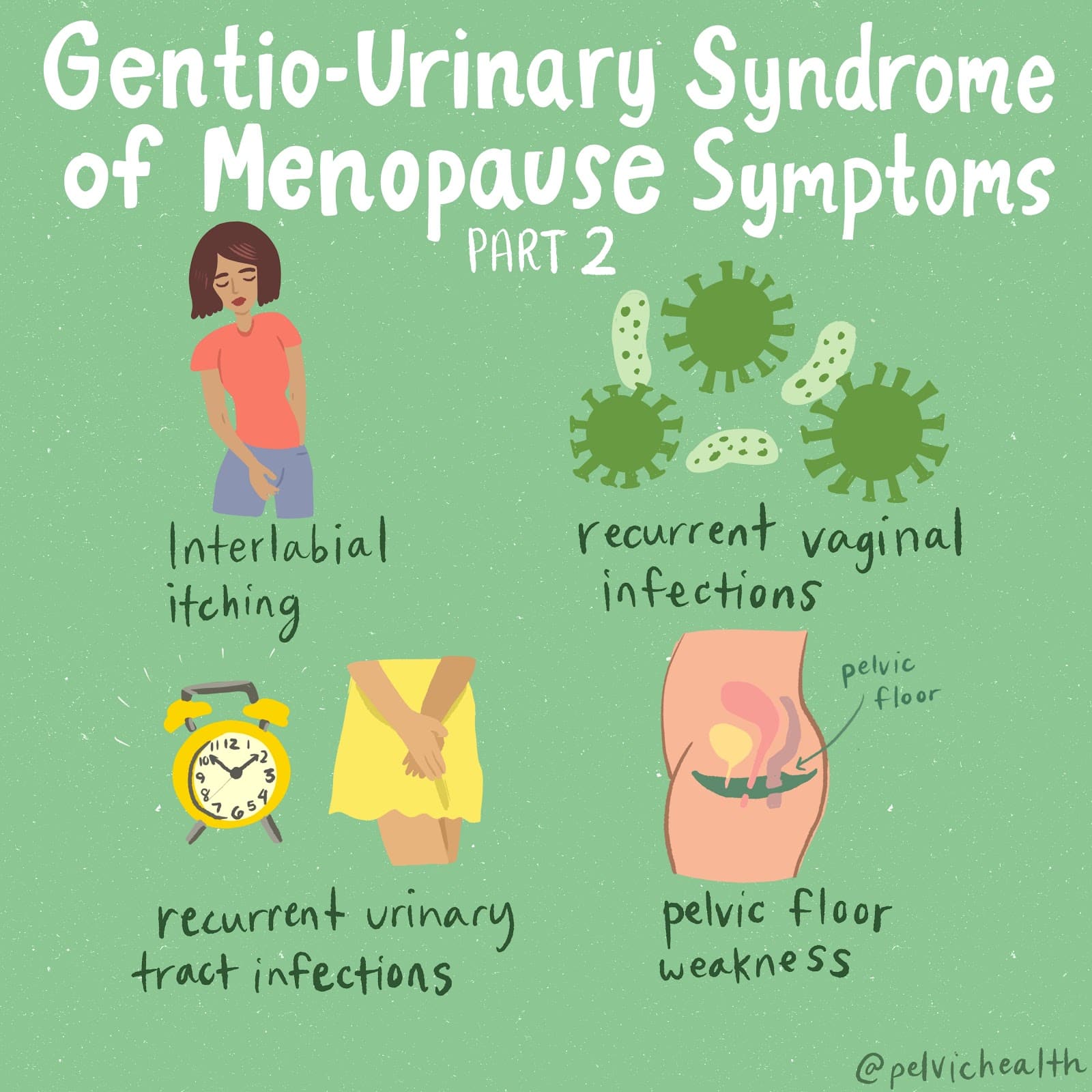
Hormone insufficiency can result in interlabial and vaginal itching. Other dermatologic issues such as Lichen Sclerosus and cutaneous yeast infections are just two of the many factors to also be considered.
Unfortunately people are vulnerable to recurrent vaginal and urinary tract infections in menopause due to:
- pH and tissue changes
- incomplete bladder emptying
- pelvic organ prolapse compromising urinary function
Recurrent infections are a leading cause of pelvic floor dysfunction! They must be stopped or the noxious visceral-somatic input can cause further pain and dysfunction after the infection is cleared. Furthermore, if the infections are left untreated without hormone therapy infections continue to occur and the consequences can be severe. Women can develop unprovoked pain, sex may be impossible, and undetected UTIs can lead to kidney problems and more sinister issues.
We encourage people to work with a menopause expert to monitor, prevent, and treat these issues as they are serious and treatable! We need to normalize the conversation about what happens during GSM, it is nothing to be embarrassed about and with the right care vulva owners can live their best lives! Pelvic floor physical and occupational therapy and medical management go hand in hand.
Treatment:
How We Can Help You

If you are having issues with your sexual function, it is in your best interest to get evaluated by a therapist for pelvic floor therapy, so they can establish what part, if any, of your pelvic floor may be contributing to the symptoms you are experiencing. During the course of the examination, the physical and occupational therapists will talk to you about your medical history and symptoms, including what you have been previously diagnosed with, the treatments or therapies you have had, and how effective or ineffective these therapies have been for you. It is significant to mention that we fully comprehend what you’ve been dealing with and that the majority of individuals are angry by the time they make it to see us. The physical and occupational therapists will conduct an evaluation of the patient’s nerves, muscles, joints, tissues, and movement patterns while doing the physical examination. After the examination is finished, your therapist will go over the results of the assessment with you. The physical and occupational therapists will conduct an evaluation to determine the cause of your symptoms and will establish both short-term and long-term therapy goals based on the results of the evaluation. Physical therapy treatments are typically administered between once and twice each week for a period of around 12 weeks. Your physical and occupational therapists will assist you in coordinating your recovery with all the other experts on your treatment team. They will provide you with an exercise regimen to complete at home and the sessions you attend in person. We are here to assist you in getting better and living the best life possible.
For more information about IC/PBS please check out our IC/PBS Resource List.

Treatment:
How We Can Help You
If you are having issues with your sexual function, it is in your best interest to get evaluated by a therapist for pelvic floor therapy, so they can establish what part, if any, of your pelvic floor may be contributing to the symptoms you are experiencing. During the course of the examination, the physical and occupational therapists will talk to you about your medical history and symptoms, including what you have been previously diagnosed with, the treatments or therapies you have had, and how effective or ineffective these therapies have been for you. It is significant to mention that we fully comprehend what you’ve been dealing with and that the majority of individuals are angry by the time they make it to see us. The physical and occupational therapists will conduct an evaluation of the patient’s nerves, muscles, joints, tissues, and movement patterns while doing the physical examination. After the examination is finished, your therapist will go over the results of the assessment with you. The physical and occupational therapists will conduct an evaluation to determine the cause of your symptoms and will establish both short-term and long-term therapy goals based on the results of the evaluation. Physical therapy treatments are typically administered between once and twice each week for a period of around 12 weeks. Your physical and occupational therapists will assist you in coordinating your recovery with all the other experts on your treatment team. They will provide you with an exercise regimen to complete at home and the sessions you attend in person. We are here to assist you in getting better and living the best life possible.
For more information about IC/PBS please check out our IC/PBS Resource List.


By Sara K. Sauder
In preparing the curriculum for my class on vestibulodynia (yes I will start talking about this class over and over because I am discovering so much and learning a lot while in the process of creating and teaching the curriculum and this is a blog that I write using real life experiences so why wouldn’t I write about something that I’m doing and learning from in my real life experience)…what was I saying?
Oh yes.
In preparing the curriculum for my class on vestibulodynia, I think made some pretty refreshing connections between pain at the vestibule and clitoral pain. I’d like to share some of this information because, while it doesn’t exactly completely challenge the thought that the dorsal branch of the pudendal nerve could be the culprit for this pain, it certainly does give some options for a different approach in tackling clitoral pain. I said “tackling” clitoral pain. I guess we just need to “resolve” clitoral pain. No need for aggression or sport references, I guess.
So there is the classic hypothesis that it is the dorsal branch of the pudendal nerve that is responsible for clitoral sensation. I’m sure that it is indeed responsible for clitoral sensation, but I am not positive that the dorsal branch is the only nerve responsible for clitoral sensation.
The ilioinguinal nerve could refer painful sensations to the clitoris. The ilioinguinal comes from L1 spinal level. Do you have back pain? Had a hernia repair or abdominal surgery? Maybe, just maybe your clitoral pain is coming from or contributed to by the ilioinguinal nerve.
Could the genitofemoral nerve from the L1,L2 spinal level possibly extend down the padded area above the clitoris (the mons pubis) to the clitoris on some patients? I think so. Think about this too if you had a hernia repair or abdominal surgery.
So, I’m basically asking…did you have a hernia or abdominal surgery before you started having clitoral pain? Well, if so…think ilioinguinal or genitofemoral nerve.
Think “WHAT?” though? Good question.
Consider these three options…the dorsal branch of the pudendal nerve, the ilioinguinal nerve and the genitofemoral nerve…you could block one of these nerves to see if it eliminates your clitoral pain. Then, you know what nerve is problematic. You can then, or instead, have your physical and occupational therapists do several things to attempt to improve the mobility and the health of that specific nerve.
Your pelvic floor physical and occupational therapists could:
1. Do skin rolling or connective tissue manipulation or trigger point work along where the nerve runs. This will attempt to improve the mobility and health of the nerve by bringing more blood and oxygen to it. Nerves require 20% of the body’s oxygen, but only make up 2% of the body.
2. Correct your pelvic alignment. This will improve the function of the muscles and nerves in your pelvis. The bones of the pelvis are the foundation that the nerves and muscles in the pelvis lie on. If the foundation is asymmetrical, how can you expect the muscles and nerves to operate correctly? Potentially, tight muscles can pinch around a nerve and cause that nerve to basically “choke”. Being out of pelvic alignment can be a quiet thing, it’s trying to get your attention, but it sometimes can’t get your attention until shit hits the fan and it’s blue in the face waving its arms around and throwing things trying to get anyone to help. It isn’t getting oxygen, it’s not getting enough blood supply…so the output is pain along where the rest of that nerve runs. Consider pelvic alignment corrections a way of performing the Heimlich on your nerves. They will thank you for it once they can breathe again. And then they’ll go sky diving and travel the world and finally write that memoir they have been putting off. They will title it “Too Nervous to Try: One Nerve’s Journey to the Hood and Back” <— Please acknowledge “hood”, just please.
3. Go to your spine. Do you have back pain? Do you have hip pain? Something really cool about our bodies is that when we have pain in location A, it is sometimes stemming from a problem in location B. So, you could have hip pain or pelvic pain or specifically clitoral pain that is actually stemming from an issue at one or several levels of the spine. It’s like humans are a computer. Or, it’s like computers are human. Whatever helps you sleep better at night. The entire lumbar and sacral spine could be contributing to clitoral pain by effecting the performance of firing, mobility and health of nerves that exit the spine and can give your brain information about sensations at the clitoris. If the sacrum is tilted to a side, flexed forward or extended backward or rotated, or any combination of these movements, it can also effect the lumbar spine (which sits on top of the sacrum) because ligaments do attach the two last segments of the lumbar spine to the sacrum. (Yet another reason to always check and correct pelvic alignment.)
But, your physical and occupational therapists could also…
- Look at your clitoris. Is there a dermatological issue here? Do you need a referral to a dermatologist for a specific medication to clear up a skin condition that could be creating clitoral pain?
2. Look at your clitoris…again. Is the skin really fragile? Is it no longer supple healthy? Is the clitoris really small? Is the hood over the clitoris really stuck? These could be signs that your therapist needs to actually start moving the hood of the clitoris gently so that it is not adhered to the clitoris itself. You can also do this yourself gently at home, like while in the shower or on the toilet. If the clitoris is really small, this could be one of many signs that you need some estrogen placed on your clitoris, your vulva and your vagina.
3. Check out your vagina. Are the vaginal muscles really tight? Do you need to focus on relaxing the pelvic floor? Have you just gone through a stressful experience and now you don’t know how to calm down the pelvic floor? Have you always been high stress or high anxiety and you’ve never been able to calm the pelvic floor? This can cause clitoral pain too.
There are so many ideas, so many doors to open and close, so many ways to develop clitoral pain…and therefore different ways to treat pelvic pain. There is no one cure for clitoral pain because there is no one cause for clitoral pain.
If you have any questions or comments, please leave them anonymously in the comment section below or email me atSara@
www.blogaboutpelvicpain.com
www.sullivanphysicaltherapy.com
Best,
Sara K. Sauder PT, DPT
 Sara is a pelvic floor physical and occupational therapists from Sullivan Physical and Occupational Therapy in Austin, Texas. Sara’s primary interest is pelvic pain. She is consistently learning about new treatment techniques, reading about complex pain treatment approaches and pursues opportunities to learn from pelvic pain specialists across the country. Her goal is to help people living with chronic pain learn how to manage, improve and abolish their symptoms. She feels patient education is vital to recovery and she works to have open communication with each patient’s medical team. Sara believes that the mind and the body work together to both create and eliminate pelvic pain.
FAQ
What are pelvic floor muscles?
The pelvic floor muscles are a group of muscles that run from the coccyx to the pubic bone. They are part of the core, helping to support our entire body as well as providing support for the bowel, bladder and uterus. These muscles help us maintain bowel and bladder control and are involved in sexual pleasure and orgasm. The technical name of the pelvic floor muscles is the Levator Ani muscle group. The pudendal nerve, the levator ani nerve, and branches from the S2 – S4 nerve roots innervate the pelvic floor muscles. They are under voluntary and autonomic control, which is a unique feature only they possess compared to other muscle groups.
What is pelvic floor physical and occupational therapy?
Pelvic floor physical and occupational therapy is a specialized area of physical and occupational therapy. Currently, physical and occupational therapistss need advanced post-graduate education to be able to help people with pelvic floor dysfunction because pelvic floor disorders are not yet being taught in standard physical and occupational therapy curricula. The Pelvic Health and Rehabilitation Center provides extensive training for our staff because we recognize the limitations of physical and occupational therapy education in this unique area.
What happens at pelvic floor therapy?
During an evaluation for pelvic floor dysfunction the physical and occupational therapists will take a detailed history. Following the history the physical and occupational therapists will leave the room to allow the patient to change and drape themselves. The physical and occupational therapists will return to the room and using gloved hands will perform an external and internal manual assessment of the pelvic floor and girdle muscles. The physical and occupational therapists will once again leave the room and allow the patient to dress. Following the manual examination there may also be an examination of strength, motor control, and overall biomechanics and neuromuscular control. The physical and occupational therapists will then communicate the findings to the patient and together with their patient they establish an assessment, short term and long term goals and a treatment plan. Typically people with pelvic floor dysfunction are seen one time per week for one hour for varying amounts of time based on the severity and chronicity of the disease. A home exercise program will be established and the physical and occupational therapists will help coordinate other providers on the treatment team. Typically patients are seen for 3 months to a year.
What is pudendal neuralgia and how is it treated?
Pudendal Neuralgia is a clinical diagnosis that means pain in the sensory distribution of the pudendal nerve. The pudendal nerve is a mixed nerve that exits the S2 – S4 sacral nerve roots, we have a right and left pudendal nerve and each side has three main trunks: the dorsal branch, the perineal branch, and the inferior rectal branch. The branches supply sensation to the clitoris/penis, labia/scrotum, perineum, anus, the distal ⅓ of the urethra and rectum, and the vulva and vestibule. The nerve branches also control the pelvic floor muscles. The pudendal nerve follows a tortuous path through the pelvic floor and girdle, leaving it vulnerable to compression and tension injuries at various points along its path.
Pudendal Neuralgia occurs when the nerve is unable to slide, glide and move normally and as a result, people experience pain in some or all of the above-mentioned areas. Pelvic floor physical and occupational therapy plays a crucial role in identifying the mechanical impairments that are affecting the nerve. The physical and occupational therapy treatment plan is designed to restore normal neural function. Patients with pudendal neuralgia require pelvic floor physical and occupational therapy and may also benefit from medical management that includes pharmaceuticals and procedures such as pudendal nerve blocks or botox injections.
What is interstitial cystitis and how is it treated?
Interstitial Cystitis is a clinical diagnosis characterized by irritative bladder symptoms such as urinary urgency, frequency, and hesitancy in the absence of infection. Research has shown the majority of patients who meet the clinical definition have pelvic floor dysfunction and myalgia. Therefore, the American Urologic Association recommends pelvic floor physical and occupational therapy as first-line treatment for Interstitial Cystitis. Patients will benefit from pelvic floor physical and occupational therapy and may also benefit from pharmacologic management or medical procedures such as bladder instillations.
Who is the Pelvic Health and Rehabilitation Team?
The Pelvic Health and Rehabilitation Center was founded by Elizabeth Akincilar and Stephanie Prendergast in 2006, they have been treating people with pelvic floor disorders since 2001. They were trained and mentored by a medical doctor and quickly became experts in treating pelvic floor disorders. They began creating courses and sharing their knowledge around the world. They expanded to 11 locations in the United States and developed a residency style training program for their employees with ongoing weekly mentoring. The physical and occupational therapistss who work at PHRC have undergone more training than the majority of pelvic floor physical and occupational therapistss and as a result offer efficient and high quality care.
How many years of experience do we have?
Stephanie and Liz have 24 years of experience and help each and every team member become an expert in the field through their training and mentoring program.
Why PHRC versus anyone else?
PHRC is unique because of the specific focus on pelvic floor disorders and the leadership at our company. We are constantly lecturing, teaching, and staying ahead of the curve with our connections to medical experts and emerging experts. As a result, we are able to efficiently and effectively help our patients restore their pelvic health.
Do we treat men for pelvic floor therapy?
The Pelvic Health and Rehabilitation Center is unique in that the Cofounders have always treated people of all genders and therefore have trained the team members and staff the same way. Many pelvic floor physical and occupational therapistss focus solely on people with vulvas, this is not the case here.
Do I need pelvic floor therapy forever?
The majority of people with pelvic floor dysfunction will undergo pelvic floor physical and occupational therapy for a set amount of time based on their goals. Every 6 -8 weeks goals will be re-established based on the physical improvements and remaining physical impairments. Most patients will achieve their goals in 3 – 6 months. If there are complicating medical or untreated comorbidities some patients will be in therapy longer.


By Stephanie Prendergast
In a previous blog post I described my experience while participating in an International Nomenclature Consensus Conference. As you may recall, the motivation for a consensus meeting originated because there was “an unmet medical need for a comprehensive, evidence-based set of vulvovaginal pain diagnoses that can be easily utilized by both expert and non-expert healthcare providers to establish diagnoses in their patients and to guide treatment.” Now, the organizers and participants of the conference are pleased to announce new consensus guidelines on the terminology of vulvar pain!
After numerous discussions and lectures from leading experts, a consensus terminology proposal was unanimously reached on April 8-9, 2015. It was decided by the three societies that the consensus terminology proposal would be brought to discussion and voted on by each Society. On August 19th, the Board of Directors of IPPS was the final society to vote on and unanimously approve the new terminology.
At this time, we would like to present you with the new terminology. For more information please follow the link to a brief explanatory from the consensus committee. The new guidelines will be published in their entirety in several peer-review journals.
2015 Consensus terminology and classification of persistent vulvar pain
Jacob Bornstein MD, MPA, Andrew Goldstein MD, and Deborah Coady MD for the consensus vulvar pain terminology committee
From the International Society for the Study of Vulvovaginal Disease (ISSVD), the International Society for the Study of Women’s Sexual Health (ISSWSH), and the International Pelvic Pain Society (IPPS)
The consensus vulvar pain terminology committee:
For the ISSVD – Jacob Bornstein (co-chair), Gloria A. Bachmann, Ione Bissonnette, Sophie Bergeron, Nina Bohm Starke, David Foster, Hope Katharine Haefner, Micheline Moyal Barracco, Barbara Reed, Colleen Stockdale1. For the ISSWSH – Andrew Goldstein (co-chair), , Laura Burrows, Irwin Goldstein, Susan Kellogg-Spadt, Sharon Parish, Caroline Pukall. For the IPPS – Denniz Zolnoun (co-chair), Deborah Coady, A. Lee Dellon, Sarah Fox, Richard Gracely, Richard Marvel, Pam Morrison2, Stephanie Prendergast. Observers: Lori Boardman (ACOG), Lisa Goldstein (NVA), Phyllis Mate (NVA)
1 Representing also the American Society of Colposcopy and Cervical Pathology (ASCCP)
2 Representing also the National Vulvodynia Association (NVA)
Table 1: 2015 Consensus terminology and classification of persistent vulvar pain
A. Vulvar pain caused by a specific disorder*
- Infectious (e.g. recurrent candidiasis, herpes)
- Inflammatory (e.g. lichen sclerosus, lichen planus, immunobullous disorders)
- Neoplastic (e.g. Paget disease, squamous cell carcinoma)
- Neurologic (e.g. post-herpetic neuralgia, nerve compression or injury, neuroma)
- Trauma (e.g. female genital cutting, obstetrical)
- Iatrogenic (e.g. post-operative, chemotherapy, radiation)
- Hormonal deficiencies (e.g. genito-urinary syndrome of menopause [vulvo-vaginal atrophy], lactational amenorrhea)
B. Vulvodynia – Vulvar pain of at least 3 months duration, without clear identifiable cause, which may have potential associated factors Descriptors:
- Localized (e.g. vestibulodynia, clitorodynia) or Generalized or Mixed (Localized and Generalized)
- Provoked (e.g. insertional, contact) or Spontaneous or Mixed (Provoked and Spontaneous)
- Onset (primary or secondary)
- Temporal pattern (intermittent, persistent, constant, immediate, delayed) —————
*Women may have both a specific disorder (e.g. lichen sclerosus) and vulvodynia
Table 2: 2015 Consensus terminology and classification of persistent vulvar pain – Appendix: Potential factors associated with Vulvodynia*
- Co-morbidities and other pain syndromes (e.g. painful bladder syndrome, fibromyalgia, irritable bowel syndrome, temporomandibular disorder) [Level of evidence 2a]
- Genetics [Level of evidence 2b]
- Hormonal factors (e.g. pharmacologically induced) [Level of evidence 2b]
- Inflammation [Level of evidence 2b]
- Musculoskeletal (e.g. pelvic muscle overactivity, myofascial, biomechanical) [Level of evidence 2b]
- Neurologic mechanisms:
– Central (spine, brain) [Level of evidence 2b]
-Peripheral [Level of evidence 2b]
- Neuroproliferation [Level of evidence 2b]
- Psychosocial factors (e.g. mood, interpersonal, coping, role, sexual function) [Level of evidence 2b]
- Structural defects (e.g. perineal descent) [Level of evidence 2b]
—*The factors are ranked by alphabetical order
Comment to the 2015 Consensus terminology and classification of persistent vulvar pain
Since the previous terminology of Vulvodynia was accepted by the ISSVD in 2003, studies have been carried out to explore possible causative factors and treatment options.
Several studies and treatments have been introduced, based on putative etiologies of Vulvodynia, for example: tricyclic antidepressants for a neuropathic etiology; nerve surgery for excision of neuroma or removal of compression from branches of the pudendal nerve.
In addition, over the years, several descriptors of Vulvodynia and terms that were not in use at the time of the 2003 terminology have been introduced. For example: Primary and Secondary Vulvodynia, intermittent and persistent pattern.
Therefore, the International Society for the Study of Vulvovaginal Disease (ISSVD), the International Society for the Study of Women’s Sexual Health (ISSWSH), and the International Pelvic Pain Society (IPPS) discussed a possible revision to the 2003 terminology, and organized an international meeting in order to reach a consensus on the terminology of vulvar pain, on April 8-9, 2015 in Annapolis, Maryland. In addition, the American College of Obstetricians and Gynecologists (ACOG) and the National Vulvodynia Association (NVA) were represented in that meeting. After discussions, a consensus terminology proposal was unanimously reached at that meeting. It was decided by the three societies that the consensus terminology proposal would be brought to discussion and voted by each Society. Comments regarding the terminology proposal were sent by email to Professor Jacob Bornstein, presented and discussed at the ISSVD world congress. Minor amendments were made in response to these discussions. The final terminology was accepted by all three societies during July and August, 2015.
Compared to the 2003 terminology, the following has stayed the same:
- The division to sections – with the first being: “Vulvar pain caused by a specific disorder”. This section contains vulvar pain conditions for which a cause has been clearly identified.
- The descriptors of Vulvodynia regarding location (Generalized or Localized) and provocation.
The following has been revised in the new terminology:
- “Unprovoked” has been replaced with – “spontaneous”, a more appropriate term.
- The title of the terminology has been changed to “Terminology and Classification of Persistent Vulvar Pain…” rather than the 2003 “Terminology and Classification of Vulvodynia…”, because it does not pertain to acute vulvar pain or only to Vulvodynia.
- The 2003 definition of Vulvodynia: “Chronic vulvar discomfort, mainly described as burning, occurring in the absence of visible relevant findings”, has been changed in 2015 to: “Vulvar pain of at least 3 months duration, without clear identifiable cause, which may have potential associated factors”.
The following is new in the terminology:
-
- The main addition is an appendix to the terminology named: “Potential factors associated with Vulvodynia”. In the continued search for causation and new treatments for Vulvodynia, some factors have been discussed. The current data were reviewed and the committee concluded that some factors have stronger association with Vulvodynia, while some have weaker associations.
- Please note that once a factor is considered to have a definite causative role of vulvar pain, it will be mentioned in the first part of the Table (“A. Vulvar pain caused by a specific disorder”). For example: Herpes Genitalis or genital cutting. Other factors have not reached that level of causal certainty, but have a significant association and may be used to choose treatment of Vulvodynia. For example – if a musculoskeletal factor is considered to be present, the patient may be referred to undergo physical and occupational therapy.
Why do we add “potential associated factors” to the terminology, although they are not terminology terms?
Vulvodynia may not be a specific entity, but a multifactorial condition. The inclusion of the associated factors emphasizes that treatment should be chosen according to the characteristics of the individual case and the possible associated factors, rather than be uniform (like surgery for all, physical and occupational therapy for all, etc (. Instead – choose physical and occupational therapy if musculoskeletal factors are present, and prefer specific neural medication or surgery if neuroproliferation exists. The associated factors show that a multidisciplinary approach to vulvar pain is needed and help direct future research.
Indeed, over the years, factors that were claimed to have a causative role in Vulvodynia have been later found to be only coincidental. This may also happen with the associated factors of the current terminology. Therefore, a level of evidence was assigned to each factor, based on a review of the literature. The associated factors were grouped in an appendix, and not in the main table, because they are not terminology terms, and also to allow future amendment, when research yields further knowledge, without revising the whole terminology.
Conclusion
This 2015 terminology of vulvar pain was reached by a consensus between societies. It is expected to replace the previous terminology and to improve the diagnosis and management of women with vulvar pain, as well as research in the field.
All my best,
Stephanie Prendergast, MPT
 Stephanie grew up in South Jersey, and currently sees patients in our Los Angeles office. She received her bachelor’s degree in exercise physiology from Rutgers University, and her master’s in physical and occupational therapy at the Medical College of Pennsylvania and Hahnemann University in Philadelphia. For balance, Steph turns to yoga, music, and her calm and loving King Charles Cavalier Spaniel, Abbie (Abbie is a daily fixture at PHRC Los Angeles). For adventure, she gets her fix from scuba diving and global travel.
FAQ
What are pelvic floor muscles?
The pelvic floor muscles are a group of muscles that run from the coccyx to the pubic bone. They are part of the core, helping to support our entire body as well as providing support for the bowel, bladder and uterus. These muscles help us maintain bowel and bladder control and are involved in sexual pleasure and orgasm. The technical name of the pelvic floor muscles is the Levator Ani muscle group. The pudendal nerve, the levator ani nerve, and branches from the S2 – S4 nerve roots innervate the pelvic floor muscles. They are under voluntary and autonomic control, which is a unique feature only they possess compared to other muscle groups.
What is pelvic floor physical and occupational therapy?
Pelvic floor physical and occupational therapy is a specialized area of physical and occupational therapy. Currently, physical and occupational therapistss need advanced post-graduate education to be able to help people with pelvic floor dysfunction because pelvic floor disorders are not yet being taught in standard physical and occupational therapy curricula. The Pelvic Health and Rehabilitation Center provides extensive training for our staff because we recognize the limitations of physical and occupational therapy education in this unique area.
What happens at pelvic floor therapy?
During an evaluation for pelvic floor dysfunction the physical and occupational therapists will take a detailed history. Following the history the physical and occupational therapists will leave the room to allow the patient to change and drape themselves. The physical and occupational therapists will return to the room and using gloved hands will perform an external and internal manual assessment of the pelvic floor and girdle muscles. The physical and occupational therapists will once again leave the room and allow the patient to dress. Following the manual examination there may also be an examination of strength, motor control, and overall biomechanics and neuromuscular control. The physical and occupational therapists will then communicate the findings to the patient and together with their patient they establish an assessment, short term and long term goals and a treatment plan. Typically people with pelvic floor dysfunction are seen one time per week for one hour for varying amounts of time based on the severity and chronicity of the disease. A home exercise program will be established and the physical and occupational therapists will help coordinate other providers on the treatment team. Typically patients are seen for 3 months to a year.
What is pudendal neuralgia and how is it treated?
Pudendal Neuralgia is a clinical diagnosis that means pain in the sensory distribution of the pudendal nerve. The pudendal nerve is a mixed nerve that exits the S2 – S4 sacral nerve roots, we have a right and left pudendal nerve and each side has three main trunks: the dorsal branch, the perineal branch, and the inferior rectal branch. The branches supply sensation to the clitoris/penis, labia/scrotum, perineum, anus, the distal ⅓ of the urethra and rectum, and the vulva and vestibule. The nerve branches also control the pelvic floor muscles. The pudendal nerve follows a tortuous path through the pelvic floor and girdle, leaving it vulnerable to compression and tension injuries at various points along its path.
Pudendal Neuralgia occurs when the nerve is unable to slide, glide and move normally and as a result, people experience pain in some or all of the above-mentioned areas. Pelvic floor physical and occupational therapy plays a crucial role in identifying the mechanical impairments that are affecting the nerve. The physical and occupational therapy treatment plan is designed to restore normal neural function. Patients with pudendal neuralgia require pelvic floor physical and occupational therapy and may also benefit from medical management that includes pharmaceuticals and procedures such as pudendal nerve blocks or botox injections.
What is interstitial cystitis and how is it treated?
Interstitial Cystitis is a clinical diagnosis characterized by irritative bladder symptoms such as urinary urgency, frequency, and hesitancy in the absence of infection. Research has shown the majority of patients who meet the clinical definition have pelvic floor dysfunction and myalgia. Therefore, the American Urologic Association recommends pelvic floor physical and occupational therapy as first-line treatment for Interstitial Cystitis. Patients will benefit from pelvic floor physical and occupational therapy and may also benefit from pharmacologic management or medical procedures such as bladder instillations.
Who is the Pelvic Health and Rehabilitation Team?
The Pelvic Health and Rehabilitation Center was founded by Elizabeth Akincilar and Stephanie Prendergast in 2006, they have been treating people with pelvic floor disorders since 2001. They were trained and mentored by a medical doctor and quickly became experts in treating pelvic floor disorders. They began creating courses and sharing their knowledge around the world. They expanded to 11 locations in the United States and developed a residency style training program for their employees with ongoing weekly mentoring. The physical and occupational therapistss who work at PHRC have undergone more training than the majority of pelvic floor physical and occupational therapistss and as a result offer efficient and high quality care.
How many years of experience do we have?
Stephanie and Liz have 24 years of experience and help each and every team member become an expert in the field through their training and mentoring program.
Why PHRC versus anyone else?
PHRC is unique because of the specific focus on pelvic floor disorders and the leadership at our company. We are constantly lecturing, teaching, and staying ahead of the curve with our connections to medical experts and emerging experts. As a result, we are able to efficiently and effectively help our patients restore their pelvic health.
Do we treat men for pelvic floor therapy?
The Pelvic Health and Rehabilitation Center is unique in that the Cofounders have always treated people of all genders and therefore have trained the team members and staff the same way. Many pelvic floor physical and occupational therapistss focus solely on people with vulvas, this is not the case here.
Do I need pelvic floor therapy forever?
The majority of people with pelvic floor dysfunction will undergo pelvic floor physical and occupational therapy for a set amount of time based on their goals. Every 6 -8 weeks goals will be re-established based on the physical improvements and remaining physical impairments. Most patients will achieve their goals in 3 – 6 months. If there are complicating medical or untreated comorbidities some patients will be in therapy longer.
By Rachel Gelman
In my previous post I talked about the anatomy of the male pelvic floor. The blog stirred up a lot of conversation among readers, with many requesting a part two. So here we are! This time, we’ll take a look at a small part of the male anatomy that comes with a large amount of controversy: The foreskin.
This little piece of skin has inspired a coalition of activists to form called the Intactivists. Known for opposing circumcision, their goal is to educate the world about the benefits of foreskin. They sport T-shirts with witty catchphrases including “Take the whole baby home!” or “His Body, His Choice!” (Feel free to check out all the options and maybe do some early holiday shopping here). All this fuss over an area of the body made me wonder, what’s the big deal over something so small? Why did doctors even decide to remove it in the first place? Why are people fighting so hard to get parents to keep their sons intact? So, I put on my detective hat and went searching for the answers!
First, let’s start with a basic anatomy lesson. Foreskin is a sheath of skin that covers the tip or glans of the penis. It is also called the male prepuce and is homologous to the clitoral hood, which covers and protects the clitoris in women. Foreskin is comprised of an inner and outer layer, with the outer layer being continuous with the skin of the shaft of the penis, while the inner layer is mucosal tissue, much like the inside of your mouth. In uncircumcised boys, the foreskin and glans are fused together at birth, and slowly separates as a boy ages. Once he hits puberty, the foreskin should easily retract (this is also the recommended strategy to keep the glans and area under the foreskin clean). The foreskin attaches to the base of the penis at the frenulum which is an elastic band and helps retract the foreskin during an erection. When the penis is flaccid, foreskin may completely or partially cover the glans. However, when the penis is erect the foreskin will fully retract and look the same as a circumcised penis. So if in the end they both look identical, why should we even care about it?

Well as it turns out, other than covering the glans of the penis the foreskin has several beneficial functions (keeping the glans warm for the winter is still debatable) that you may not be aware of. The foreskin keep the glans moist and well lubricated due to the mucosal nature of the inner layer of skin. When dry skin combines with the skin oils it produces smegma, which is what helps lubricate the glans and some report this added lubrication can help during sexual activity. Some argue that the foreskin is like a little suit of armor for the head of the penis because when circumcised, the penis is exposed to more external stimuli such as clothing, which may cause discomfort or chaffing.
Enter the Intactivists, they believe that this increase in exposure to the glans may lead to decreased sensitivity and sexual pleasure. Furthermore, they also argue that the foreskin is important for sexual function and is considered an important erogenous zone in men. Many believe the foreskin creates a gliding action that aids in masturbation and intercourse to allow for increased sexual satisfaction. Some research has reported increased nerve endings, which are also found in the fingertips and the lips, at the frenulum and in the foreskin itself. However, research continues to be inconclusive. Now you may be thinking what I’m thinking; foreskin sounds great! Why would physicians ever remove it? The answer may lie in tradition.
Circumcision is actually one of the oldest planned medical procedures performed. Mostly associated with the Jewish faith, circumcision is part of a ritual performed shortly after a boy is born. However, many other cultures perform circumcisions for religious reasons or as a rite of passage to signify a boy has become a man, or as a sign of bravery. Circumcisions in America became more prevalent in the Victorian Era as a means to prevent males from maturbating. Doctors also recommended removing foreskin to prevent a variety of conditions including: clubfoot, epilepsy, mental illness, convulsions, tuberculosis and hydrocephalus. I even found records that the military recommended circumcisions in the event soldiers needed to fight in the desert to avoid infections due to sand accumulating under the foreskin.
Some research indicates that circumcision helps reduce STDs and HIV infection rates. However, many of the research was performed in regions of Africa so the data may be skewed. The World Health Organization does continue to recommend circumcision for populations at high-risk for contracting HIV to help prevent the spread of the disease. Finally, many people have their son’s circumcised to prevent certain complications that can occur if the foreskin becomes too tight/can no longer retract and restricts the glans (phimosis) or inflammation and infection of the glans, usually due to poor hygiene (balanitis). As you may have caught on, the Intactivists disagree with this too, and argue that these conditions are rare and can be easily prevented with proper hygiene
Perhaps, the biggest, and what I found to be the most compelling argument from the Intactivists as to why one should not circumcise their son, is because one would not circumcise their daughter. Again, the clitoral hood is the same as the male foreskin. So why is it ok to remove something from one gender, but not the other? The cultural and religious ceremonies that make male circumcision a rite of passage rather than a medical procedure make answering this question more complex, hence the controversy around it. Still, Intactivists argue that a man should be in charge of deciding if he wants to be circumcised, and males should be left intact so that they can decide when an adult.
It is definitely easier to keep a foreskin and decide to have it removed later in life; than to remove it only to have the male want it back. With that said, I found a lot of wild D.I.Y foreskin restoration methods online. I doubt these are on many Pinterest boards, but they made it onto ours! Check them out here: However, I highly advise that one DOES NOT attempt to restore his own foreskin with any of these “at-home” methods. They can easily cause damage to your penis or can result in pelvic floor dysfunction because of the consequences of the suggested strategies (trust me, I’ve seen it happen)!
If getting your foreskin back is something you are really interested in, consult with a doctor to see what options may work best for you. More often than not, men seek out foreskin restoration in hopes of improving their sexual function, but other physiological or psychosocial factors may be the cause of their sexual dysfunction. For some men, it may be more beneficial to work with a sex therapist or a doctor who specializes in sexual medicine. On the flip side, some men may wish to undergo circumcision as an adult due to concerns over the appearance of their penis. However like my pal the vulva, each penis is unique so I recommend embracing what you’ve got, foreskin or not! Besides in the end they all look the same when erect, some just get to sport a nifty turtleneck afterwards.
If you are still super bummed your foreskin is no more, at least know that it most likely went to a good cause. Often the foreskin removed during a circumcision is used for research, to help graft new skin for medical procedures or burn victims or some are used to produce anti-wrinkle skin cream! Man, I love science! So what do you think? Foreskin or no skin? Any guys out there who wish they had or hadn’t been circumcised? I’d love to hear from you!
______________________________________________________________________________________________________________________________________
Are you unable to come see us in person? We offer virtual appointments!
Due to COVID-19, we understand people may prefer to utilize our services from their homes. We also understand that many people do not have access to pelvic floor physical and occupational therapy and we are here to help! The Pelvic Health and Rehabilitation Center is a multi-city company of highly trained and specialized pelvic floor physical and occupational therapistss committed to helping people optimize their pelvic health and eliminate pelvic pain and dysfunction. We are here for you and ready to help, whether it is in-person or online.
Virtual sessions are available with PHRC pelvic floor physical and occupational therapistss via our video platform, Zoom, or via phone. The cost for this service is $75.00 per 30 minutes. For more information and to schedule, please visit our digital healthcare page.
In addition to virtual consultation with our physical and occupational therapistss, we also offer integrative health services with Jandra Mueller, DPT, MS. Jandra is a pelvic floor physical and occupational therapists who also has her Master’s degree in Integrative Health and Nutrition. She offers services such as hormone testing via the DUTCH test, comprehensive stool testing for gastrointestinal health concerns, and integrative health coaching and meal planning. For more information about her services and to schedule, please visit our Integrative Health website page.
Regards,
Rachel Gelman, DPT

Rachel is a Bay Area native, and currently practices in our San Francisco office. She received her bachelor’s degree in Biology from the University of Washington in Seattle and her Doctorate in Physical and Occupational Therapy from Samuel Merritt University. Rachel grew up dancing and is excited to have recently returned to the dance studio. Outside of dance, Rachel enjoys going to the gym, discovering new brunch spots and spoiling her adorable niece and nephew.
FAQ
What are pelvic floor muscles?
The pelvic floor muscles are a group of muscles that run from the coccyx to the pubic bone. They are part of the core, helping to support our entire body as well as providing support for the bowel, bladder and uterus. These muscles help us maintain bowel and bladder control and are involved in sexual pleasure and orgasm. The technical name of the pelvic floor muscles is the Levator Ani muscle group. The pudendal nerve, the levator ani nerve, and branches from the S2 – S4 nerve roots innervate the pelvic floor muscles. They are under voluntary and autonomic control, which is a unique feature only they possess compared to other muscle groups.
What is pelvic floor physical and occupational therapy?
Pelvic floor physical and occupational therapy is a specialized area of physical and occupational therapy. Currently, physical and occupational therapistss need advanced post-graduate education to be able to help people with pelvic floor dysfunction because pelvic floor disorders are not yet being taught in standard physical and occupational therapy curricula. The Pelvic Health and Rehabilitation Center provides extensive training for our staff because we recognize the limitations of physical and occupational therapy education in this unique area.
What happens at pelvic floor therapy?
During an evaluation for pelvic floor dysfunction the physical and occupational therapists will take a detailed history. Following the history the physical and occupational therapists will leave the room to allow the patient to change and drape themselves. The physical and occupational therapists will return to the room and using gloved hands will perform an external and internal manual assessment of the pelvic floor and girdle muscles. The physical and occupational therapists will once again leave the room and allow the patient to dress. Following the manual examination there may also be an examination of strength, motor control, and overall biomechanics and neuromuscular control. The physical and occupational therapists will then communicate the findings to the patient and together with their patient they establish an assessment, short term and long term goals and a treatment plan. Typically people with pelvic floor dysfunction are seen one time per week for one hour for varying amounts of time based on the severity and chronicity of the disease. A home exercise program will be established and the physical and occupational therapists will help coordinate other providers on the treatment team. Typically patients are seen for 3 months to a year.
What is pudendal neuralgia and how is it treated?
Pudendal Neuralgia is a clinical diagnosis that means pain in the sensory distribution of the pudendal nerve. The pudendal nerve is a mixed nerve that exits the S2 – S4 sacral nerve roots, we have a right and left pudendal nerve and each side has three main trunks: the dorsal branch, the perineal branch, and the inferior rectal branch. The branches supply sensation to the clitoris/penis, labia/scrotum, perineum, anus, the distal ⅓ of the urethra and rectum, and the vulva and vestibule. The nerve branches also control the pelvic floor muscles. The pudendal nerve follows a tortuous path through the pelvic floor and girdle, leaving it vulnerable to compression and tension injuries at various points along its path.
Pudendal Neuralgia occurs when the nerve is unable to slide, glide and move normally and as a result, people experience pain in some or all of the above-mentioned areas. Pelvic floor physical and occupational therapy plays a crucial role in identifying the mechanical impairments that are affecting the nerve. The physical and occupational therapy treatment plan is designed to restore normal neural function. Patients with pudendal neuralgia require pelvic floor physical and occupational therapy and may also benefit from medical management that includes pharmaceuticals and procedures such as pudendal nerve blocks or botox injections.
What is interstitial cystitis and how is it treated?
Interstitial Cystitis is a clinical diagnosis characterized by irritative bladder symptoms such as urinary urgency, frequency, and hesitancy in the absence of infection. Research has shown the majority of patients who meet the clinical definition have pelvic floor dysfunction and myalgia. Therefore, the American Urologic Association recommends pelvic floor physical and occupational therapy as first-line treatment for Interstitial Cystitis. Patients will benefit from pelvic floor physical and occupational therapy and may also benefit from pharmacologic management or medical procedures such as bladder instillations.
Who is the Pelvic Health and Rehabilitation Team?
The Pelvic Health and Rehabilitation Center was founded by Elizabeth Akincilar and Stephanie Prendergast in 2006, they have been treating people with pelvic floor disorders since 2001. They were trained and mentored by a medical doctor and quickly became experts in treating pelvic floor disorders. They began creating courses and sharing their knowledge around the world. They expanded to 11 locations in the United States and developed a residency style training program for their employees with ongoing weekly mentoring. The physical and occupational therapistss who work at PHRC have undergone more training than the majority of pelvic floor physical and occupational therapistss and as a result offer efficient and high quality care.
How many years of experience do we have?
Stephanie and Liz have 24 years of experience and help each and every team member become an expert in the field through their training and mentoring program.
Why PHRC versus anyone else?
PHRC is unique because of the specific focus on pelvic floor disorders and the leadership at our company. We are constantly lecturing, teaching, and staying ahead of the curve with our connections to medical experts and emerging experts. As a result, we are able to efficiently and effectively help our patients restore their pelvic health.
Do we treat men for pelvic floor therapy?
The Pelvic Health and Rehabilitation Center is unique in that the Cofounders have always treated people of all genders and therefore have trained the team members and staff the same way. Many pelvic floor physical and occupational therapistss focus solely on people with vulvas, this is not the case here.
Do I need pelvic floor therapy forever?
The majority of people with pelvic floor dysfunction will undergo pelvic floor physical and occupational therapy for a set amount of time based on their goals. Every 6 -8 weeks goals will be re-established based on the physical improvements and remaining physical impairments. Most patients will achieve their goals in 3 – 6 months. If there are complicating medical or untreated comorbidities some patients will be in therapy longer.