

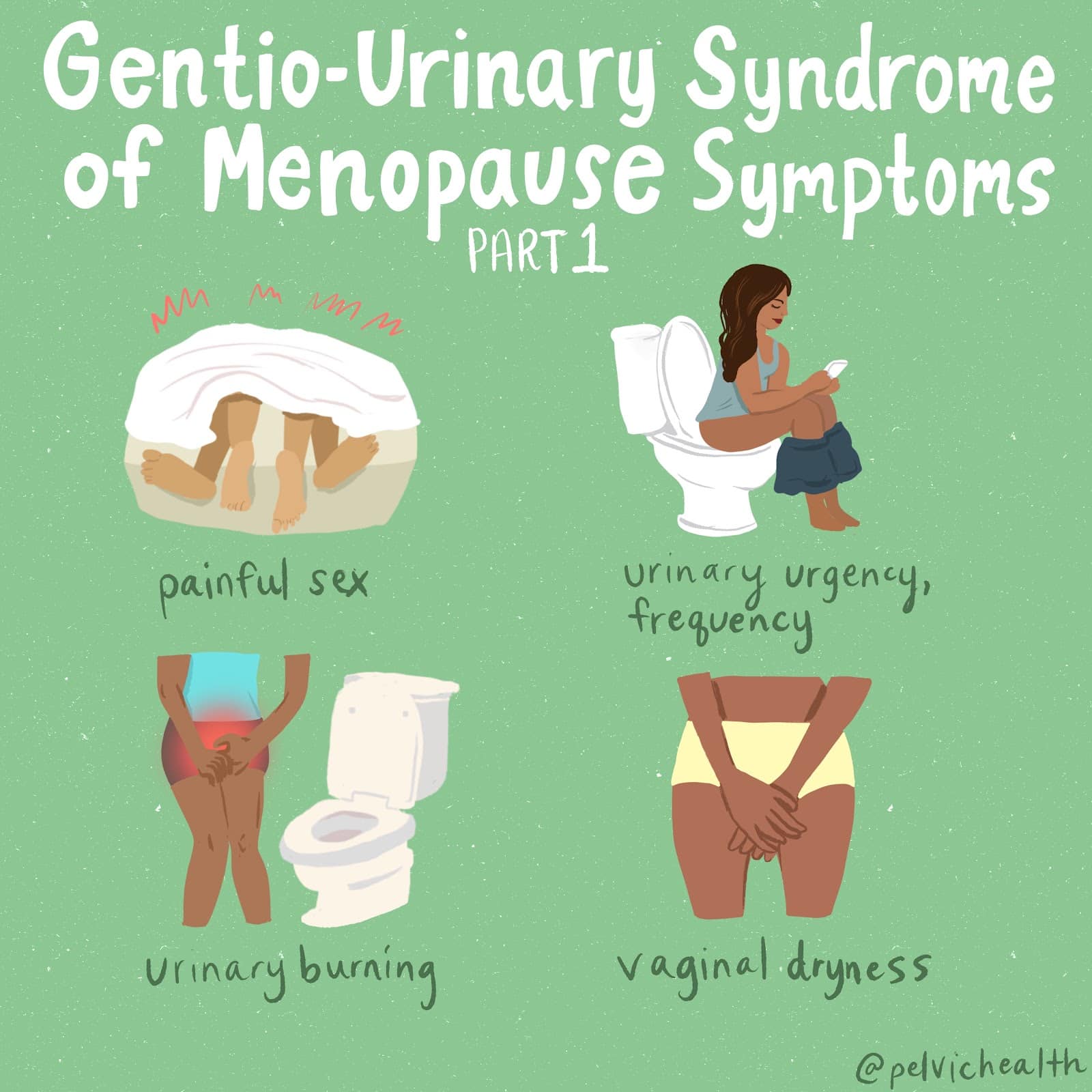
Menopause is more than just hot flushes, night sweats and mood changes! Even though 50% of the population goes through menopause the majority of people and healthcare providers are under-informed about menopause and safe and effective treatments. Too many people are suffering unnecessarily. Perimenopause, the precursor to menopause begins in the 40’s for most people and most women will be in menopause by their early 50’s. Beyond the systemic symptoms of menopause people will start to experience more subtle genitourinary symptoms that will continue to worsen over time if untreated. Painful sex, urinary urgency, frequency, leaking and burning, recurrent vaginal and urinary tract infections and vaginal dryness are symptoms of the Genitourinary Syndrome of Menopause (GSM). The symptoms of GSM are also symptoms of pelvic floor dysfunction, which almost 50% of women suffer by the time they are in their 50s.
Systemic menopause symptoms are often treated with systemic hormonal therapy. This may not be sufficient for people developing GSM symptoms. The North American Menopause Society recommends vaginal estrogen for women in menopause to help counter GSM symptoms.
Menopause is more than just hot flushes, night sweats and mood changes! Even though 50% of the population goes through menopause the majority of people and healthcare providers are under-informed about menopause and safe and effective treatments. Too many people are suffering unnecessarily. Perimenopause, the precursor to menopause begins in the 40’s for most people and most women will be in menopause by their early 50’s. Beyond the systemic symptoms of menopause people will start to experience more subtle genitourinary symptoms that will continue to worsen over time if untreated. Painful sex, urinary urgency, frequency, leaking and burning, recurrent vaginal and urinary tract infections and vaginal dryness are symptoms of the Genitourinary Syndrome of Menopause (GSM). The symptoms of GSM are also symptoms of pelvic floor dysfunction, which almost 50% of women suffer by the time they are in their 50s.
Systemic menopause symptoms are often treated with systemic hormonal therapy. This may not be sufficient for people developing GSM symptoms. The North American Menopause Society recommends vaginal estrogen for women in menopause to help counter GSM symptoms.
Differential Diagnosis:
GSM or Pelvic Floor Dysfunction
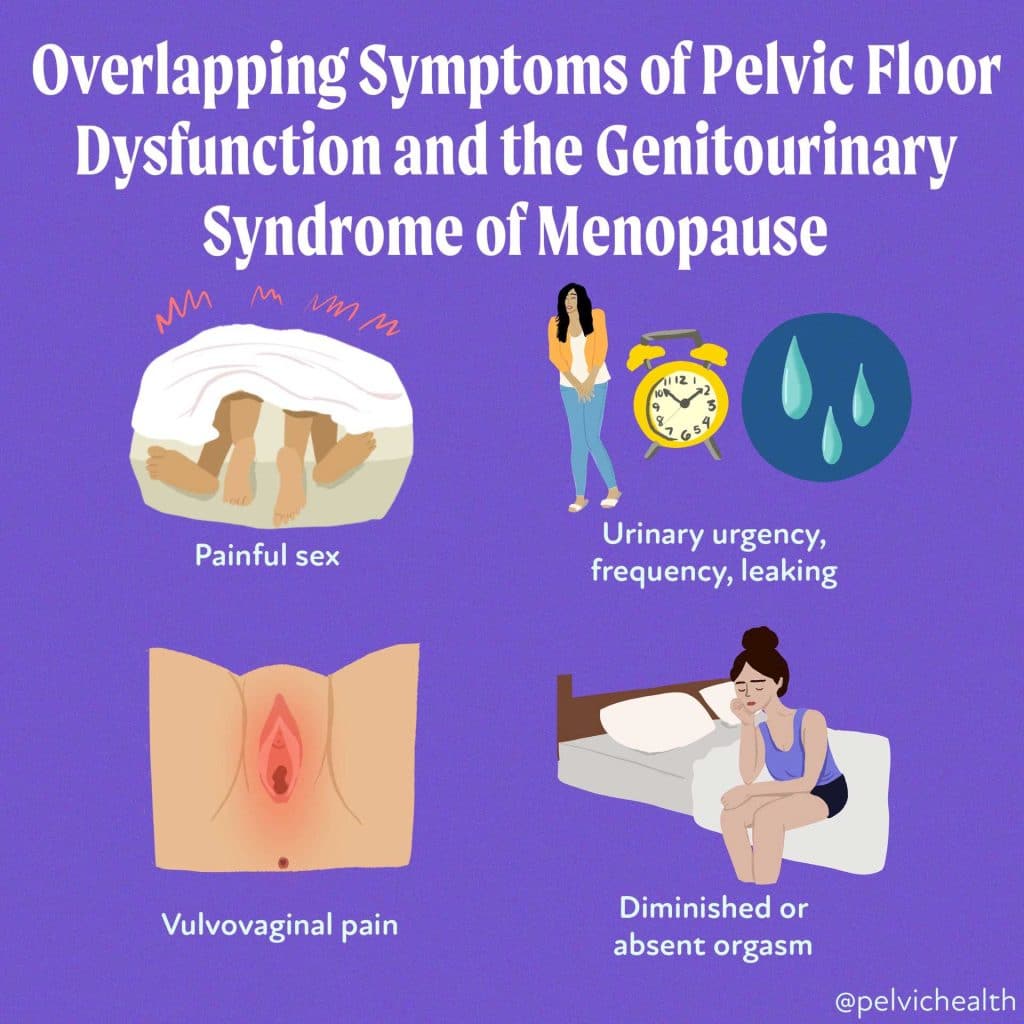
Symptoms of pelvic floor dysfunction and GSM include:
- Urinary urgency, frequency, burning, nocturia
- Feelings of bladder or pelvic pressure
- Painful sex
- Diminished or absent orgasm
- Difficulty evacuating stool
- Vulvovaginal pain and burning
- Pain with sitting
An informed healthcare provider – whether a pelvic floor physical and occupational therapists or medical doctor – can do a vulvovaginal visual examination, a q-tip test to establish pain areas, and a digital manual examination to identify pelvic floor dysfunction, hormonal deficiencies, and pelvic organ prolapse. All women will experience GSM if enough time passes without appropriate medical management. The majority of people do not realize that menopausal women can benefit from a pelvic floor physical and occupational therapy examination to address the musculoskeletal factors that are also making them uncomfortable. The combination of pelvic floor physical and occupational therapy and medical management is key to help restore pleasurable sex and eliminate urinary and bowel concerns!
FACTS
From: https://www.letstalkmenopause.org/further-reading
- 6000 women enter menopause everyday
- 50 million women are currently menopausal in the US
- 84% of women struggle with genital, sexual and urinary discomfort that will not resolve on its own, and less than 25% seek help
- 80% of OBGYN residents admit to being ill-prepared to discuss menopause
- GSM is clinically detected in 90% of postmenopausal women, only ⅓ report symptoms when surveyed.
- Barriers to treatment: women often have to initiate the conversation, believe that the symptoms are just part of aging, women fail to link their symptoms with menopause.
- Only 13% of providers asked their patients about menopause symptoms.
- Even after diagnosis, the majority of women with GSM go untreated despite studies demonstrating a negative impact on quality of life. Hesitation to prescribe treatment by providers as well as patient-perceived concerns over safety profiles limit the use of topical vaginal therapies.
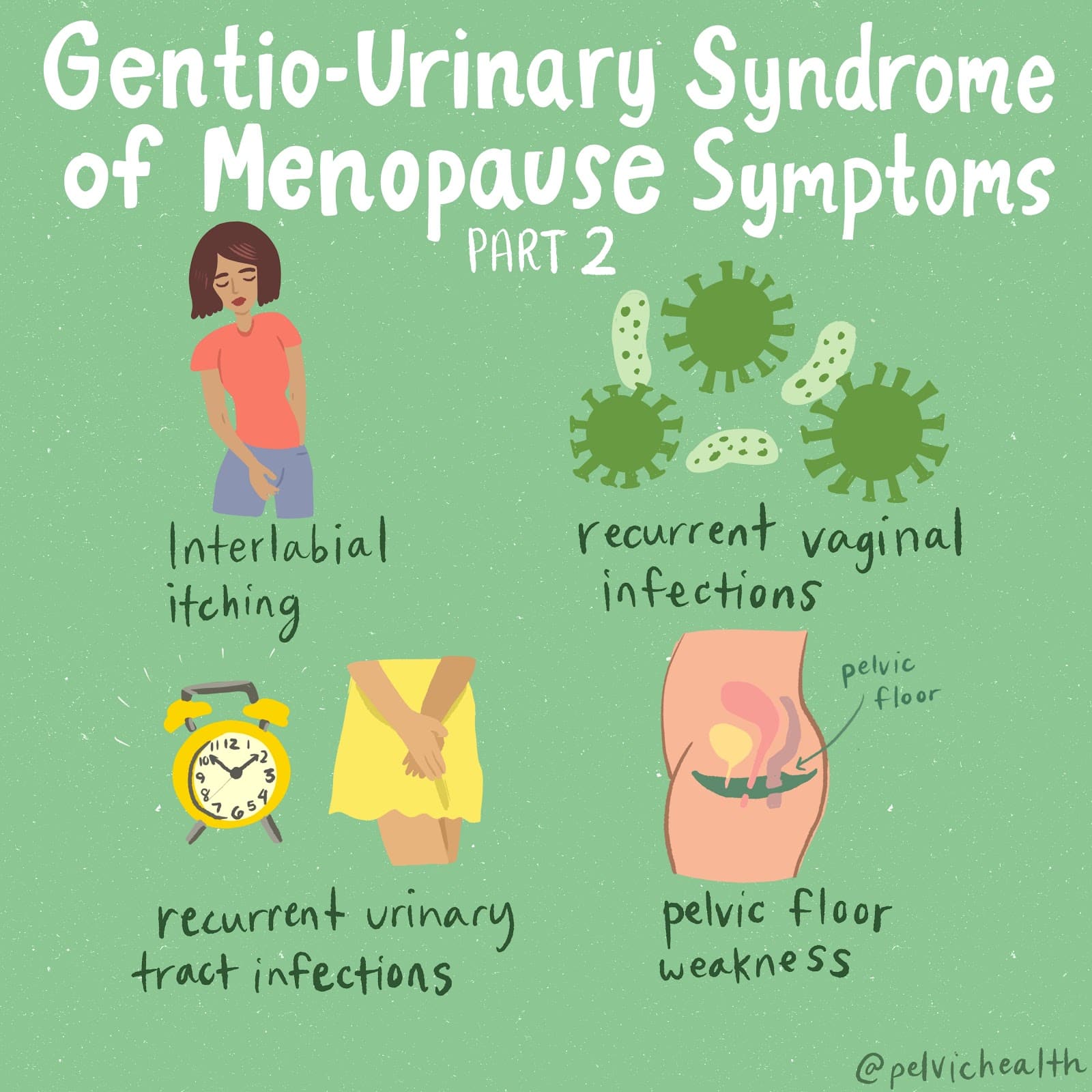
Hormone insufficiency can result in interlabial and vaginal itching. Other dermatologic issues such as Lichen Sclerosus and cutaneous yeast infections are just two of the many factors to also be considered.
Unfortunately people are vulnerable to recurrent vaginal and urinary tract infections in menopause due to:
- pH and tissue changes
- incomplete bladder emptying
- pelvic organ prolapse compromising urinary function
Recurrent infections are a leading cause of pelvic floor dysfunction! They must be stopped or the noxious visceral-somatic input can cause further pain and dysfunction after the infection is cleared. Furthermore, if the infections are left untreated without hormone therapy infections continue to occur and the consequences can be severe. Women can develop unprovoked pain, sex may be impossible, and undetected UTIs can lead to kidney problems and more sinister issues.
We encourage people to work with a menopause expert to monitor, prevent, and treat these issues as they are serious and treatable! We need to normalize the conversation about what happens during GSM, it is nothing to be embarrassed about and with the right care vulva owners can live their best lives! Pelvic floor physical and occupational therapy and medical management go hand in hand.
Treatment:
How We Can Help You

If you are having issues with your sexual function, it is in your best interest to get evaluated by a therapist for pelvic floor therapy, so they can establish what part, if any, of your pelvic floor may be contributing to the symptoms you are experiencing. During the course of the examination, the physical and occupational therapists will talk to you about your medical history and symptoms, including what you have been previously diagnosed with, the treatments or therapies you have had, and how effective or ineffective these therapies have been for you. It is significant to mention that we fully comprehend what you’ve been dealing with and that the majority of individuals are angry by the time they make it to see us. The physical and occupational therapists will conduct an evaluation of the patient’s nerves, muscles, joints, tissues, and movement patterns while doing the physical examination. After the examination is finished, your therapist will go over the results of the assessment with you. The physical and occupational therapists will conduct an evaluation to determine the cause of your symptoms and will establish both short-term and long-term therapy goals based on the results of the evaluation. Physical therapy treatments are typically administered between once and twice each week for a period of around 12 weeks. Your physical and occupational therapists will assist you in coordinating your recovery with all the other experts on your treatment team. They will provide you with an exercise regimen to complete at home and the sessions you attend in person. We are here to assist you in getting better and living the best life possible.
For more information about IC/PBS please check out our IC/PBS Resource List.

Treatment:
How We Can Help You
If you are having issues with your sexual function, it is in your best interest to get evaluated by a therapist for pelvic floor therapy, so they can establish what part, if any, of your pelvic floor may be contributing to the symptoms you are experiencing. During the course of the examination, the physical and occupational therapists will talk to you about your medical history and symptoms, including what you have been previously diagnosed with, the treatments or therapies you have had, and how effective or ineffective these therapies have been for you. It is significant to mention that we fully comprehend what you’ve been dealing with and that the majority of individuals are angry by the time they make it to see us. The physical and occupational therapists will conduct an evaluation of the patient’s nerves, muscles, joints, tissues, and movement patterns while doing the physical examination. After the examination is finished, your therapist will go over the results of the assessment with you. The physical and occupational therapists will conduct an evaluation to determine the cause of your symptoms and will establish both short-term and long-term therapy goals based on the results of the evaluation. Physical therapy treatments are typically administered between once and twice each week for a period of around 12 weeks. Your physical and occupational therapists will assist you in coordinating your recovery with all the other experts on your treatment team. They will provide you with an exercise regimen to complete at home and the sessions you attend in person. We are here to assist you in getting better and living the best life possible.
For more information about IC/PBS please check out our IC/PBS Resource List.


Patient History
Ted is a 67-year-old male with a primary concern of stress urinary incontinence (SUI) and secondary concerns of erectile dysfunction. Ted reports he was diagnosed with prostate cancer in September 2013 and underwent a “bilateral nerve-sparing radical suprapubic prostatectomy”, a procedure in which the nerves must be cut in order to remove the cancerous tissue, later that fall. He said he did not require radiation or chemotherapy treatment.
Ted complained of an onset of SUI after his surgery, and was referred by his urologist to pelvic floor PT. During his evaluation, Ted said he was wearing two to three pads a day with moderate saturation when changing them. He said he was “fairly” dry at night and was waking once a night to urinate.
Ted’s symptoms of SUI were aggravated with walking, standing, and an increase in intra-abdominal pressure with coughing, laughing, and sneezing. His symptoms interfered with prolonged standing and flying. He said he was “always looking for the nearest restroom”. In addition, he was unable to achieve an erection, but had a moderate erection with medication. His goal for physical and occupational therapy was to improve his incontinence.
Assessment
Based on Ted’s history, I chose to evaluate the following:
- Abdominal wall assessment for a diastasis recti, which is a separation of the abdominal muscles.
- Scar tissue assessment for mobility and hypersensitivity.
- Assessment of the transversus abdominis (TrA), the deepest layer of the abdominal muscles.
- Assessment of muscle tone in the pelvic floor musculature.
- Assessment of pelvic floor motor control.
The reason why I chose to assess these specific details was because I wanted to know if Ted’s incontinence was caused by poor integrity of the abdominal wall, scar tissue impairments, and/or pelvic floor dysfunction. These three components can often lead to SUI.
Objective Findings
Here’s what I found upon examination:
Ted had pelvic floor muscle weakness, poor endurance, as well as transverse abdominis (TrA) weakness. He could not contract his pelvic floor with an increase in abdominal pressure. Ted also presented with minimal to moderate scar tissue restrictions over his incision site and a posterior pelvic tilt of the pelvis in standing. A posterior tilt is when the front of the pelvis rises and the back of the pelvis drops due to shortened/tight muscles.
His symptoms of SUI developed due to his weak pelvic floor musculature and TrA. Low tone, or weakness of the pelvic floor muscles, can contribute to SUI with coughing, laughing, and sneezing as well as with dynamic activities such as walking. TrA weakness can also contribute to SUI because the abdominals are poorly supported. Ted’s standing urinary incontinence was due to his poor standing posture, which inhibited the pelvic floor from working properly. Ted did not have a diastasis recti.
Initial Treatment Plan
Ted’s initial treatment plan consisted of scar mobilization, pelvic floor strengthening, postural education, core strengthening, and dynamic strengthening exercises.
I worked on mobilizing the scar to increase the flexibility of Ted’s lower abdomen, and thus allow for proper contraction of TrA. This would then improve the integrity of the abdominal wall.
I gave Ted pelvic floor strengthening and endurance exercises in supine, sitting, and standing in order to increase his pelvic floor strength, and decrease his urinary incontinence. Specifically, I gave Ted the “knack” exercise which taught Ted how to contract his pelvic floor muscles in order to help prevent SUI with a cough, laugh, or sneeze.
I also educated Ted about his posture when sitting and standing in order to help place the pelvis in a neutral position, and allow for good motor control of the pelvic floor muscles. The core stabilization exercises were to help strengthen his TrA, and the dynamic strengthening exercises with pelvic floor contraction were to help decrease any SUI with walking.
Ted’s home program included self-scar mobilization, pelvic floor and TrA strengthening exercises. Lifestyle modifications included bladder retraining in order to allow the bladder to fill instead of frequently voiding to prevent SUI.
Goals
Ted’s goal to “improve incontinence” was within reason and realistic. He understood that he might not achieve complete continence, however he wanted to improve his quality of life. I felt there was room for improvement due to the low tone of his pelvic floor musculature. An increase in strength would help decrease his incontinence and improve his quality of life.
My goals for him were the following:
Short Term Goals (two to three weeks):
- For Ted to demonstrate the “knack” exercise correctly.
- To achieve an increase in his pelvic floor muscle strength and endurance.
- To decrease pad usage, and to have minimal saturation.
Long Term Goals (four to eight weeks):
- For patient to wear only one pad per day.
- To eliminate all SUI with standing and walking.
- No longer avoid prolonged standing and flying.
- No longer look for the nearest restroom and to void within normal limits.
Summary of Treatment
As Ted’s pelvic floor and TrA became stronger, I progressed his exercises to a more advanced level with exercises, such as core stabilization on a foam roller. After seven months of treatment, Ted said he felt like he had plateaued, but did have significant changes.
At the time of his last visit, Ted only wore one pad per day, and was no longer incontinent at night. Ted now voided three to four times per day instead of voiding frequently, and was able to identify the difference between feeling the urge to void, versus not having an urge but still voiding due to a fear of being incontinent. Ted was no longer looking for the nearest restroom, and he was no longer anxious about flying. He also stated that he felt better overall.
However, Ted continued to have urinary incontinence with prolonged standing. We discussed other treatment options, such as a penis clamp. I also referred him back to his doctor to discuss surgical options, i.e. artificial sphincter or sling.
Ted did well with PT. Despite his continued incontinence with prolonged standing, which I believe continued to be caused by poor posture, he reported an overall improvement in his quality of life.
If you have any questions about this case study, please do not hesitate to leave them in the comments section below!
Also, And if you haven’t already, SUBSCRIBE to this blog (up top, to the right, under Stephanie’s photo!), so you can get the weekly blog update in your email inbox, and follow us on Facebook and Twitter where the conversation on pelvic health is ongoing!
FAQ
What are pelvic floor muscles?
The pelvic floor muscles are a group of muscles that run from the coccyx to the pubic bone. They are part of the core, helping to support our entire body as well as providing support for the bowel, bladder and uterus. These muscles help us maintain bowel and bladder control and are involved in sexual pleasure and orgasm. The technical name of the pelvic floor muscles is the Levator Ani muscle group. The pudendal nerve, the levator ani nerve, and branches from the S2 – S4 nerve roots innervate the pelvic floor muscles. They are under voluntary and autonomic control, which is a unique feature only they possess compared to other muscle groups.
What is pelvic floor physical and occupational therapy?
Pelvic floor physical and occupational therapy is a specialized area of physical and occupational therapy. Currently, physical and occupational therapistss need advanced post-graduate education to be able to help people with pelvic floor dysfunction because pelvic floor disorders are not yet being taught in standard physical and occupational therapy curricula. The Pelvic Health and Rehabilitation Center provides extensive training for our staff because we recognize the limitations of physical and occupational therapy education in this unique area.
What happens at pelvic floor therapy?
During an evaluation for pelvic floor dysfunction the physical and occupational therapists will take a detailed history. Following the history the physical and occupational therapists will leave the room to allow the patient to change and drape themselves. The physical and occupational therapists will return to the room and using gloved hands will perform an external and internal manual assessment of the pelvic floor and girdle muscles. The physical and occupational therapists will once again leave the room and allow the patient to dress. Following the manual examination there may also be an examination of strength, motor control, and overall biomechanics and neuromuscular control. The physical and occupational therapists will then communicate the findings to the patient and together with their patient they establish an assessment, short term and long term goals and a treatment plan. Typically people with pelvic floor dysfunction are seen one time per week for one hour for varying amounts of time based on the severity and chronicity of the disease. A home exercise program will be established and the physical and occupational therapists will help coordinate other providers on the treatment team. Typically patients are seen for 3 months to a year.
What is pudendal neuralgia and how is it treated?
Pudendal Neuralgia is a clinical diagnosis that means pain in the sensory distribution of the pudendal nerve. The pudendal nerve is a mixed nerve that exits the S2 – S4 sacral nerve roots, we have a right and left pudendal nerve and each side has three main trunks: the dorsal branch, the perineal branch, and the inferior rectal branch. The branches supply sensation to the clitoris/penis, labia/scrotum, perineum, anus, the distal ⅓ of the urethra and rectum, and the vulva and vestibule. The nerve branches also control the pelvic floor muscles. The pudendal nerve follows a tortuous path through the pelvic floor and girdle, leaving it vulnerable to compression and tension injuries at various points along its path.
Pudendal Neuralgia occurs when the nerve is unable to slide, glide and move normally and as a result, people experience pain in some or all of the above-mentioned areas. Pelvic floor physical and occupational therapy plays a crucial role in identifying the mechanical impairments that are affecting the nerve. The physical and occupational therapy treatment plan is designed to restore normal neural function. Patients with pudendal neuralgia require pelvic floor physical and occupational therapy and may also benefit from medical management that includes pharmaceuticals and procedures such as pudendal nerve blocks or botox injections.
What is interstitial cystitis and how is it treated?
Interstitial Cystitis is a clinical diagnosis characterized by irritative bladder symptoms such as urinary urgency, frequency, and hesitancy in the absence of infection. Research has shown the majority of patients who meet the clinical definition have pelvic floor dysfunction and myalgia. Therefore, the American Urologic Association recommends pelvic floor physical and occupational therapy as first-line treatment for Interstitial Cystitis. Patients will benefit from pelvic floor physical and occupational therapy and may also benefit from pharmacologic management or medical procedures such as bladder instillations.
Who is the Pelvic Health and Rehabilitation Team?
The Pelvic Health and Rehabilitation Center was founded by Elizabeth Akincilar and Stephanie Prendergast in 2006, they have been treating people with pelvic floor disorders since 2001. They were trained and mentored by a medical doctor and quickly became experts in treating pelvic floor disorders. They began creating courses and sharing their knowledge around the world. They expanded to 11 locations in the United States and developed a residency style training program for their employees with ongoing weekly mentoring. The physical and occupational therapistss who work at PHRC have undergone more training than the majority of pelvic floor physical and occupational therapistss and as a result offer efficient and high quality care.
How many years of experience do we have?
Stephanie and Liz have 24 years of experience and help each and every team member become an expert in the field through their training and mentoring program.
Why PHRC versus anyone else?
PHRC is unique because of the specific focus on pelvic floor disorders and the leadership at our company. We are constantly lecturing, teaching, and staying ahead of the curve with our connections to medical experts and emerging experts. As a result, we are able to efficiently and effectively help our patients restore their pelvic health.
Do we treat men for pelvic floor therapy?
The Pelvic Health and Rehabilitation Center is unique in that the Cofounders have always treated people of all genders and therefore have trained the team members and staff the same way. Many pelvic floor physical and occupational therapistss focus solely on people with vulvas, this is not the case here.
Do I need pelvic floor therapy forever?
The majority of people with pelvic floor dysfunction will undergo pelvic floor physical and occupational therapy for a set amount of time based on their goals. Every 6 -8 weeks goals will be re-established based on the physical improvements and remaining physical impairments. Most patients will achieve their goals in 3 – 6 months. If there are complicating medical or untreated comorbidities some patients will be in therapy longer.

We’re thrilled to announce that PHRC is opening its Boston-area clinic next month with patient care starting March 16th!
Liz, who will be re-relocating to the East Coast, will be spearheading the running of the clinic, the exact location of which is 303 Wyman St., Ste. 369, Waltham, Massachusetts.
The clinic is in the greater Boston area, west and slightly north. It’s easily accessible to the city of Boston (20 minutes west), central Mass. and southern New Hampshire. In addition, the office is about 20 minutes from Logan International Airport, which will be convenient for our out-of-town patients.
For a number of reasons, we’re excited to extend our practice to the East Coast. For the past eight years, we’ve been focused on growing our practice in California, but opening a Boston location has always been part of our 10-year-plan. It’s our desire to be a “go to” clinic practice for pelvic floor PT, which means it was time to provide our services to a larger area.
In addition, our new location will be more easily accessible to our out-of-town patients who travel from Europe to see us.
Adds Liz: “It’s just exciting to grow as a company, feel confident in ourselves and our staff that we can succeed in doing this. Plus it’s a huge challenge as a provider, but mostly as a business person and I love a challenge.”
In addition to the professional benefits and challenges of moving to the East Coast, Liz says she’s looking forward to “a new adventure, being closer to some of my family and childhood friends, having four seasons, living in more than a 1,000-sq. ft. apartment, having a big closet, and enjoying a lower cost of living.”
“But I admit I’m not excited about WINTER, having to drive/own a car, not having my ‘corner store’ steps from my apartment, the delicious food in San Francisco, and most of all, not living close to my sister.”
What makes PHRC Unique?
We are excited to bring our unique treatment approach to the greater Boston area. One of the things that make our clinic unique is that as physical and occupational therapistss we focus solely on the pelvic floor and pelvic girdle muscles. The benefit of our focus is that it has allowed us to establish a deep well of experience that we are able to draw from when treating this complex part of the anatomy.
In addition, we embrace a multidisciplinary treatment approach to patient care. Gynecologists, urologists, gastroenterologists, orthopedists, pain management specialists, psychologists, acupuncturists, among others, are all specialists that have a role to play in treating the pelvic floor. So when developing a treatment plan for a patient, our therapists draw from all appropriate medical disciplines.
Through the years we have worked hard at PHRC to foster relationships with providers throughout the country who treat pelvic floor dysfunction. As a result, when developing a treatment plan for our patients, we are able to include these providers.
Once a patient’s treatment team is in place, we embrace the role of “CEO” of the team. In this role, we communicate and coordinate with the other members of the team. The reason we take on this role is that we believe that in order for a multidisciplinary treatment plan to be successful, there must be one provider at the helm of the ship. And since we are the provider who will spend the most time with the patient, it makes sense for us to tackle the job.
If you’re a patient interested in making an appointment at our new Boston office, please call (415) 440-7600.
And if you haven’t already, SUBSCRIBE to this blog (up top, to the right, under Stephanie’s photo!), so you can get the weekly blog update in your email inbox, and follow us on Facebook and Twitter where the conversation on pelvic health is ongoing!
All our best,
The PHRC Team
FAQ
What are pelvic floor muscles?
The pelvic floor muscles are a group of muscles that run from the coccyx to the pubic bone. They are part of the core, helping to support our entire body as well as providing support for the bowel, bladder and uterus. These muscles help us maintain bowel and bladder control and are involved in sexual pleasure and orgasm. The technical name of the pelvic floor muscles is the Levator Ani muscle group. The pudendal nerve, the levator ani nerve, and branches from the S2 – S4 nerve roots innervate the pelvic floor muscles. They are under voluntary and autonomic control, which is a unique feature only they possess compared to other muscle groups.
What is pelvic floor physical and occupational therapy?
Pelvic floor physical and occupational therapy is a specialized area of physical and occupational therapy. Currently, physical and occupational therapistss need advanced post-graduate education to be able to help people with pelvic floor dysfunction because pelvic floor disorders are not yet being taught in standard physical and occupational therapy curricula. The Pelvic Health and Rehabilitation Center provides extensive training for our staff because we recognize the limitations of physical and occupational therapy education in this unique area.
What happens at pelvic floor therapy?
During an evaluation for pelvic floor dysfunction the physical and occupational therapists will take a detailed history. Following the history the physical and occupational therapists will leave the room to allow the patient to change and drape themselves. The physical and occupational therapists will return to the room and using gloved hands will perform an external and internal manual assessment of the pelvic floor and girdle muscles. The physical and occupational therapists will once again leave the room and allow the patient to dress. Following the manual examination there may also be an examination of strength, motor control, and overall biomechanics and neuromuscular control. The physical and occupational therapists will then communicate the findings to the patient and together with their patient they establish an assessment, short term and long term goals and a treatment plan. Typically people with pelvic floor dysfunction are seen one time per week for one hour for varying amounts of time based on the severity and chronicity of the disease. A home exercise program will be established and the physical and occupational therapists will help coordinate other providers on the treatment team. Typically patients are seen for 3 months to a year.
What is pudendal neuralgia and how is it treated?
Pudendal Neuralgia is a clinical diagnosis that means pain in the sensory distribution of the pudendal nerve. The pudendal nerve is a mixed nerve that exits the S2 – S4 sacral nerve roots, we have a right and left pudendal nerve and each side has three main trunks: the dorsal branch, the perineal branch, and the inferior rectal branch. The branches supply sensation to the clitoris/penis, labia/scrotum, perineum, anus, the distal ⅓ of the urethra and rectum, and the vulva and vestibule. The nerve branches also control the pelvic floor muscles. The pudendal nerve follows a tortuous path through the pelvic floor and girdle, leaving it vulnerable to compression and tension injuries at various points along its path.
Pudendal Neuralgia occurs when the nerve is unable to slide, glide and move normally and as a result, people experience pain in some or all of the above-mentioned areas. Pelvic floor physical and occupational therapy plays a crucial role in identifying the mechanical impairments that are affecting the nerve. The physical and occupational therapy treatment plan is designed to restore normal neural function. Patients with pudendal neuralgia require pelvic floor physical and occupational therapy and may also benefit from medical management that includes pharmaceuticals and procedures such as pudendal nerve blocks or botox injections.
What is interstitial cystitis and how is it treated?
Interstitial Cystitis is a clinical diagnosis characterized by irritative bladder symptoms such as urinary urgency, frequency, and hesitancy in the absence of infection. Research has shown the majority of patients who meet the clinical definition have pelvic floor dysfunction and myalgia. Therefore, the American Urologic Association recommends pelvic floor physical and occupational therapy as first-line treatment for Interstitial Cystitis. Patients will benefit from pelvic floor physical and occupational therapy and may also benefit from pharmacologic management or medical procedures such as bladder instillations.
Who is the Pelvic Health and Rehabilitation Team?
The Pelvic Health and Rehabilitation Center was founded by Elizabeth Akincilar and Stephanie Prendergast in 2006, they have been treating people with pelvic floor disorders since 2001. They were trained and mentored by a medical doctor and quickly became experts in treating pelvic floor disorders. They began creating courses and sharing their knowledge around the world. They expanded to 11 locations in the United States and developed a residency style training program for their employees with ongoing weekly mentoring. The physical and occupational therapistss who work at PHRC have undergone more training than the majority of pelvic floor physical and occupational therapistss and as a result offer efficient and high quality care.
How many years of experience do we have?
Stephanie and Liz have 24 years of experience and help each and every team member become an expert in the field through their training and mentoring program.
Why PHRC versus anyone else?
PHRC is unique because of the specific focus on pelvic floor disorders and the leadership at our company. We are constantly lecturing, teaching, and staying ahead of the curve with our connections to medical experts and emerging experts. As a result, we are able to efficiently and effectively help our patients restore their pelvic health.
Do we treat men for pelvic floor therapy?
The Pelvic Health and Rehabilitation Center is unique in that the Cofounders have always treated people of all genders and therefore have trained the team members and staff the same way. Many pelvic floor physical and occupational therapistss focus solely on people with vulvas, this is not the case here.
Do I need pelvic floor therapy forever?
The majority of people with pelvic floor dysfunction will undergo pelvic floor physical and occupational therapy for a set amount of time based on their goals. Every 6 -8 weeks goals will be re-established based on the physical improvements and remaining physical impairments. Most patients will achieve their goals in 3 – 6 months. If there are complicating medical or untreated comorbidities some patients will be in therapy longer.
When symptoms of pelvic pain strike, it’s natural to want to know: What’s my diagnosis?
Every patient just beginning his/her journey to recovery from pelvic pain grapples with this question. But more often than not the quest to get that diagnosis leads to frustration and disappointment. On top of that, it can actually cause roadblocks to getting on the right treatment path.
For instance, so often patients come into our clinics either terrified of a “diagnosis” they’ve been labeled with (or given themselves) or so married to one diagnosis or another that it’s hard for them to think outside of that diagnosis box when it comes to putting together a treatment plan.
For the past few months we’ve been working to write a book about pelvic pain titled, Pelvic Pain Explained, and this is a topic that’s been on our minds a lot this week as we’ve worked to explain this concept in the book. In this blog post, I’m going to share the explanation that we composed for the book because I think it’s also a very blog-worthy topic!
Let me start the post by saying that I completely understand the desire for written in stone diagnosis. Not only does it validate a patient’s pain, especially if he/she has run up against a provider who’s dismissed his/her complaints or intimated that it’s “all in your head.”
But the fact is the treatment of pelvic pain widely diverges from the treatment of most other medical conditions.
Let me explain. Typically, when you have a medical problem, you go to the doctor, who perhaps runs a few tests, and then from there you get a diagnosis and treatment, usually some sort of medication.
Well, the diagnosis and treatment of pelvic pain simply does not work this way. When it comes to pelvic pain, a “diagnosis” does not dictate treatment.
For its part, pelvic pain ends up being a diagnosis of exclusion whereby other pathologies, such as an infection, must first be ruled out, and when symptoms persist, the patient is then given a descriptor diagnoses, such as “vulvodynia,” which simply means “pain in the vulva.” Indeed, oftentimes, the “diagnosis” simply is “pelvic pain.”
A second example is “interstitial cystitis/painful bladder syndrome” or “pudendal neuralgia,” meaning pain in the bladder or the pudendal nerve distribution respectively .
When a patient is given any one of these descriptor diagnoses they are often confused and frustrated mainly because there are no specific, one-size-fits-all treatment protocols for any one of them.
Understanding how a pelvic pain syndrome, whether it’s been tagged as “vulvodynia” or “pudendal neuralgia” is treated can restore hope.
So if a diagnosis does not dictate treatment, what does?
What does dictate treatment when it comes to pelvic pain are the specific neurological, musculoskeletal, and psychological impairments that are uncovered and determined to be involved in a patient’s symptoms.
As already mentioned, pelvic pain is rarely caused by just one issue, more often than not, it’s caused by a combination of factors, including impairments of the pelvic floor muscles, the central and peripheral nervous systems, and even behavioral issues, like poor posture or “holding in” one’s urine.
Therefore, a successful treatment approach involves identifying and treating all of the different impairments contributing to a patient’s symptoms.
These impairments might be found in the muscles, joints, nerves or connective tissue of the pelvic floor and/or the pelvic organs and the derma of the genitals. So we’re not just talking about that hammock of 14 muscles described above.
Therefore, the best course of action is to identify all of the impairments that contribute to a patient’s pelvic pain, and then treat each and every one of them individually while collectively treating the patient as a whole.
Is this an issue that you’ve faced in your recovery from pelvic pain? If so, please share your experiences in the comment section below.
And if you haven’t already, SUBSCRIBE to this blog (up top, to the right, under Stephanie’s photo!), so you can get the weekly blog update in your email inbox, and follow us on Facebook and Twitter where the conversation on pelvic health is ongoing!
All my best,
Stephanie
FAQ
What are pelvic floor muscles?
The pelvic floor muscles are a group of muscles that run from the coccyx to the pubic bone. They are part of the core, helping to support our entire body as well as providing support for the bowel, bladder and uterus. These muscles help us maintain bowel and bladder control and are involved in sexual pleasure and orgasm. The technical name of the pelvic floor muscles is the Levator Ani muscle group. The pudendal nerve, the levator ani nerve, and branches from the S2 – S4 nerve roots innervate the pelvic floor muscles. They are under voluntary and autonomic control, which is a unique feature only they possess compared to other muscle groups.
What is pelvic floor physical and occupational therapy?
Pelvic floor physical and occupational therapy is a specialized area of physical and occupational therapy. Currently, physical and occupational therapistss need advanced post-graduate education to be able to help people with pelvic floor dysfunction because pelvic floor disorders are not yet being taught in standard physical and occupational therapy curricula. The Pelvic Health and Rehabilitation Center provides extensive training for our staff because we recognize the limitations of physical and occupational therapy education in this unique area.
What happens at pelvic floor therapy?
During an evaluation for pelvic floor dysfunction the physical and occupational therapists will take a detailed history. Following the history the physical and occupational therapists will leave the room to allow the patient to change and drape themselves. The physical and occupational therapists will return to the room and using gloved hands will perform an external and internal manual assessment of the pelvic floor and girdle muscles. The physical and occupational therapists will once again leave the room and allow the patient to dress. Following the manual examination there may also be an examination of strength, motor control, and overall biomechanics and neuromuscular control. The physical and occupational therapists will then communicate the findings to the patient and together with their patient they establish an assessment, short term and long term goals and a treatment plan. Typically people with pelvic floor dysfunction are seen one time per week for one hour for varying amounts of time based on the severity and chronicity of the disease. A home exercise program will be established and the physical and occupational therapists will help coordinate other providers on the treatment team. Typically patients are seen for 3 months to a year.
What is pudendal neuralgia and how is it treated?
Pudendal Neuralgia is a clinical diagnosis that means pain in the sensory distribution of the pudendal nerve. The pudendal nerve is a mixed nerve that exits the S2 – S4 sacral nerve roots, we have a right and left pudendal nerve and each side has three main trunks: the dorsal branch, the perineal branch, and the inferior rectal branch. The branches supply sensation to the clitoris/penis, labia/scrotum, perineum, anus, the distal ⅓ of the urethra and rectum, and the vulva and vestibule. The nerve branches also control the pelvic floor muscles. The pudendal nerve follows a tortuous path through the pelvic floor and girdle, leaving it vulnerable to compression and tension injuries at various points along its path.
Pudendal Neuralgia occurs when the nerve is unable to slide, glide and move normally and as a result, people experience pain in some or all of the above-mentioned areas. Pelvic floor physical and occupational therapy plays a crucial role in identifying the mechanical impairments that are affecting the nerve. The physical and occupational therapy treatment plan is designed to restore normal neural function. Patients with pudendal neuralgia require pelvic floor physical and occupational therapy and may also benefit from medical management that includes pharmaceuticals and procedures such as pudendal nerve blocks or botox injections.
What is interstitial cystitis and how is it treated?
Interstitial Cystitis is a clinical diagnosis characterized by irritative bladder symptoms such as urinary urgency, frequency, and hesitancy in the absence of infection. Research has shown the majority of patients who meet the clinical definition have pelvic floor dysfunction and myalgia. Therefore, the American Urologic Association recommends pelvic floor physical and occupational therapy as first-line treatment for Interstitial Cystitis. Patients will benefit from pelvic floor physical and occupational therapy and may also benefit from pharmacologic management or medical procedures such as bladder instillations.
Who is the Pelvic Health and Rehabilitation Team?
The Pelvic Health and Rehabilitation Center was founded by Elizabeth Akincilar and Stephanie Prendergast in 2006, they have been treating people with pelvic floor disorders since 2001. They were trained and mentored by a medical doctor and quickly became experts in treating pelvic floor disorders. They began creating courses and sharing their knowledge around the world. They expanded to 11 locations in the United States and developed a residency style training program for their employees with ongoing weekly mentoring. The physical and occupational therapistss who work at PHRC have undergone more training than the majority of pelvic floor physical and occupational therapistss and as a result offer efficient and high quality care.
How many years of experience do we have?
Stephanie and Liz have 24 years of experience and help each and every team member become an expert in the field through their training and mentoring program.
Why PHRC versus anyone else?
PHRC is unique because of the specific focus on pelvic floor disorders and the leadership at our company. We are constantly lecturing, teaching, and staying ahead of the curve with our connections to medical experts and emerging experts. As a result, we are able to efficiently and effectively help our patients restore their pelvic health.
Do we treat men for pelvic floor therapy?
The Pelvic Health and Rehabilitation Center is unique in that the Cofounders have always treated people of all genders and therefore have trained the team members and staff the same way. Many pelvic floor physical and occupational therapistss focus solely on people with vulvas, this is not the case here.
Do I need pelvic floor therapy forever?
The majority of people with pelvic floor dysfunction will undergo pelvic floor physical and occupational therapy for a set amount of time based on their goals. Every 6 -8 weeks goals will be re-established based on the physical improvements and remaining physical impairments. Most patients will achieve their goals in 3 – 6 months. If there are complicating medical or untreated comorbidities some patients will be in therapy longer.