

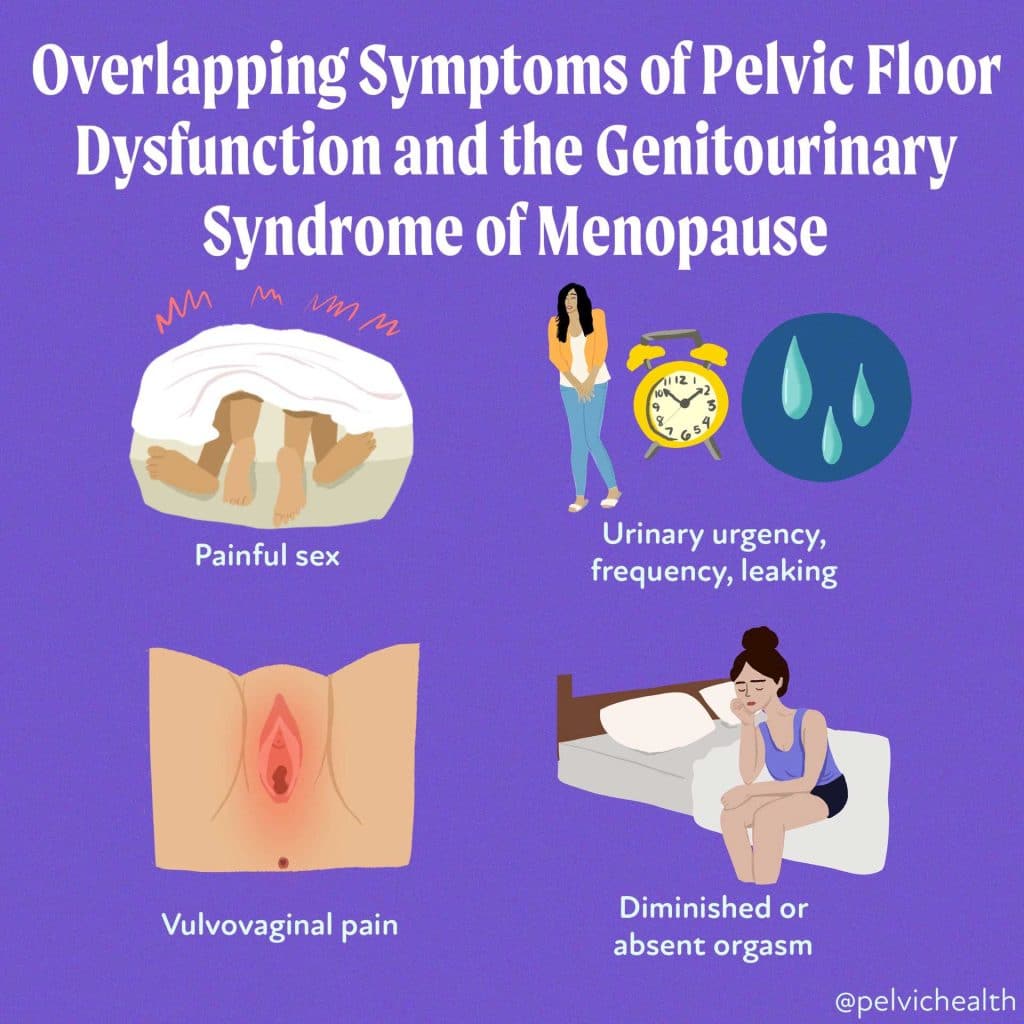
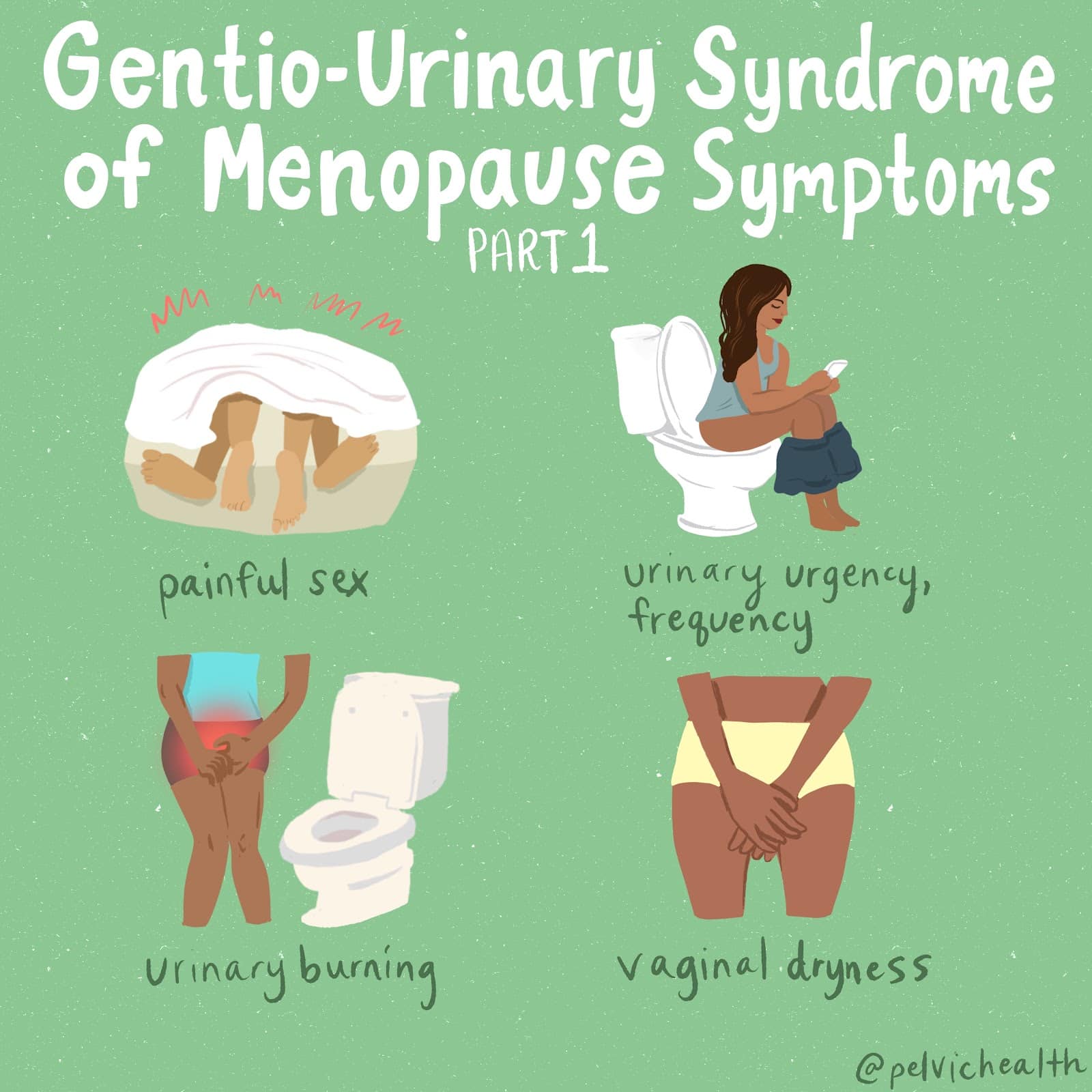
Menopause is more than just hot flushes, night sweats and mood changes! Even though 50% of the population goes through menopause the majority of people and healthcare providers are under-informed about menopause and safe and effective treatments. Too many people are suffering unnecessarily. Perimenopause, the precursor to menopause begins in the 40’s for most people and most women will be in menopause by their early 50’s. Beyond the systemic symptoms of menopause people will start to experience more subtle genitourinary symptoms that will continue to worsen over time if untreated. Painful sex, urinary urgency, frequency, leaking and burning, recurrent vaginal and urinary tract infections and vaginal dryness are symptoms of the Genitourinary Syndrome of Menopause (GSM). The symptoms of GSM are also symptoms of pelvic floor dysfunction, which almost 50% of women suffer by the time they are in their 50s.
Systemic menopause symptoms are often treated with systemic hormonal therapy. This may not be sufficient for people developing GSM symptoms. The North American Menopause Society recommends vaginal estrogen for women in menopause to help counter GSM symptoms.
Menopause is more than just hot flushes, night sweats and mood changes! Even though 50% of the population goes through menopause the majority of people and healthcare providers are under-informed about menopause and safe and effective treatments. Too many people are suffering unnecessarily. Perimenopause, the precursor to menopause begins in the 40’s for most people and most women will be in menopause by their early 50’s. Beyond the systemic symptoms of menopause people will start to experience more subtle genitourinary symptoms that will continue to worsen over time if untreated. Painful sex, urinary urgency, frequency, leaking and burning, recurrent vaginal and urinary tract infections and vaginal dryness are symptoms of the Genitourinary Syndrome of Menopause (GSM). The symptoms of GSM are also symptoms of pelvic floor dysfunction, which almost 50% of women suffer by the time they are in their 50s.
Systemic menopause symptoms are often treated with systemic hormonal therapy. This may not be sufficient for people developing GSM symptoms. The North American Menopause Society recommends vaginal estrogen for women in menopause to help counter GSM symptoms.
Differential Diagnosis:
GSM or Pelvic Floor Dysfunction
Symptoms of pelvic floor dysfunction and GSM include:
- Urinary urgency, frequency, burning, nocturia
- Feelings of bladder or pelvic pressure
- Painful sex
- Diminished or absent orgasm
- Difficulty evacuating stool
- Vulvovaginal pain and burning
- Pain with sitting
An informed healthcare provider – whether a pelvic floor physical and occupational therapists or medical doctor – can do a vulvovaginal visual examination, a q-tip test to establish pain areas, and a digital manual examination to identify pelvic floor dysfunction, hormonal deficiencies, and pelvic organ prolapse. All women will experience GSM if enough time passes without appropriate medical management. The majority of people do not realize that menopausal women can benefit from a pelvic floor physical and occupational therapy examination to address the musculoskeletal factors that are also making them uncomfortable. The combination of pelvic floor physical and occupational therapy and medical management is key to help restore pleasurable sex and eliminate urinary and bowel concerns!
FACTS
From: https://www.letstalkmenopause.org/further-reading
- 6000 women enter menopause everyday
- 50 million women are currently menopausal in the US
- 84% of women struggle with genital, sexual and urinary discomfort that will not resolve on its own, and less than 25% seek help
- 80% of OBGYN residents admit to being ill-prepared to discuss menopause
- GSM is clinically detected in 90% of postmenopausal women, only ⅓ report symptoms when surveyed.
- Barriers to treatment: women often have to initiate the conversation, believe that the symptoms are just part of aging, women fail to link their symptoms with menopause.
- Only 13% of providers asked their patients about menopause symptoms.
- Even after diagnosis, the majority of women with GSM go untreated despite studies demonstrating a negative impact on quality of life. Hesitation to prescribe treatment by providers as well as patient-perceived concerns over safety profiles limit the use of topical vaginal therapies.
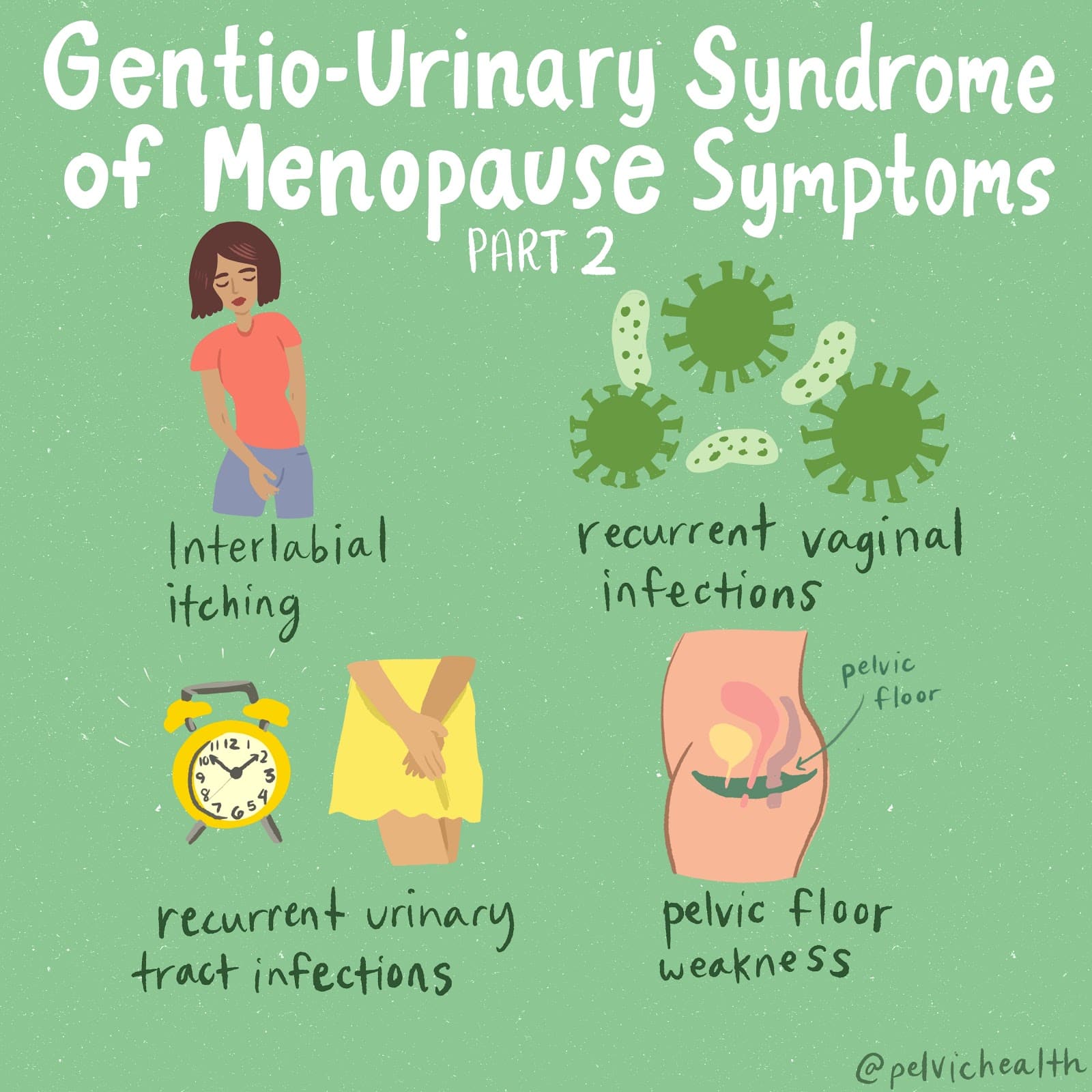
Hormone insufficiency can result in interlabial and vaginal itching. Other dermatologic issues such as Lichen Sclerosus and cutaneous yeast infections are just two of the many factors to also be considered.
Unfortunately people are vulnerable to recurrent vaginal and urinary tract infections in menopause due to:
- pH and tissue changes
- incomplete bladder emptying
- pelvic organ prolapse compromising urinary function
Recurrent infections are a leading cause of pelvic floor dysfunction! They must be stopped or the noxious visceral-somatic input can cause further pain and dysfunction after the infection is cleared. Furthermore, if the infections are left untreated without hormone therapy infections continue to occur and the consequences can be severe. Women can develop unprovoked pain, sex may be impossible, and undetected UTIs can lead to kidney problems and more sinister issues.
We encourage people to work with a menopause expert to monitor, prevent, and treat these issues as they are serious and treatable! We need to normalize the conversation about what happens during GSM, it is nothing to be embarrassed about and with the right care vulva owners can live their best lives! Pelvic floor physical and occupational therapy and medical management go hand in hand.
Treatment:
How We Can Help You
If you are having issues with your sexual function, it is in your best interest to get evaluated by a therapist for pelvic floor therapy, so they can establish what part, if any, of your pelvic floor may be contributing to the symptoms you are experiencing. During the course of the examination, the physical and occupational therapists will talk to you about your medical history and symptoms, including what you have been previously diagnosed with, the treatments or therapies you have had, and how effective or ineffective these therapies have been for you. It is significant to mention that we fully comprehend what you’ve been dealing with and that the majority of individuals are angry by the time they make it to see us. The physical and occupational therapists will conduct an evaluation of the patient’s nerves, muscles, joints, tissues, and movement patterns while doing the physical examination. After the examination is finished, your therapist will go over the results of the assessment with you. The physical and occupational therapists will conduct an evaluation to determine the cause of your symptoms and will establish both short-term and long-term therapy goals based on the results of the evaluation. Physical therapy treatments are typically administered between once and twice each week for a period of around 12 weeks. Your physical and occupational therapists will assist you in coordinating your recovery with all the other experts on your treatment team. They will provide you with an exercise regimen to complete at home and the sessions you attend in person. We are here to assist you in getting better and living the best life possible.
For more information about IC/PBS please check out our IC/PBS Resource List.

Treatment:
How We Can Help You
If you are having issues with your sexual function, it is in your best interest to get evaluated by a therapist for pelvic floor therapy, so they can establish what part, if any, of your pelvic floor may be contributing to the symptoms you are experiencing. During the course of the examination, the physical and occupational therapists will talk to you about your medical history and symptoms, including what you have been previously diagnosed with, the treatments or therapies you have had, and how effective or ineffective these therapies have been for you. It is significant to mention that we fully comprehend what you’ve been dealing with and that the majority of individuals are angry by the time they make it to see us. The physical and occupational therapists will conduct an evaluation of the patient’s nerves, muscles, joints, tissues, and movement patterns while doing the physical examination. After the examination is finished, your therapist will go over the results of the assessment with you. The physical and occupational therapists will conduct an evaluation to determine the cause of your symptoms and will establish both short-term and long-term therapy goals based on the results of the evaluation. Physical therapy treatments are typically administered between once and twice each week for a period of around 12 weeks. Your physical and occupational therapists will assist you in coordinating your recovery with all the other experts on your treatment team. They will provide you with an exercise regimen to complete at home and the sessions you attend in person. We are here to assist you in getting better and living the best life possible.
For more information about IC/PBS please check out our IC/PBS Resource List.


By Guest Blogger Michael Yang
If you haven’t tried acupuncture/dry needling for your pain, you may be missing out on a safe and often effective treatment.
In this blog post, guest blogger, acupuncturist Michael Yang, answers some common questions about this alternative treatment approach to pelvic pain. Take it away Michael!
Where’d this whole needling thing start anyhow?
Well, we thought it was China. Thousands of years ago. And then archeologists got some new evidence that threw that theory up in the air. In 1991 they discovered Otzi the Copper Age frozen man in Austria, who is dated back to 5,300 years ago. Some scientists believed tattoos found on Otzi’s body marked acupuncture points, suggesting that the practice was around about 2,000 years earlier than was originally thought.
Nevertheless, the needle therapy that eventually became acupuncture was certainly best codified in China.
Let’s take a whirlwind tour through 3,000 years of medical history for a snapshot of how acupuncture as we know it today came to be:
Before needles existed, sharp rocks may have been the first tools used to treat patients back when evil spirits were likely considered the root cause of disease. It was around 200 BC that we see metal replace stone and bone needles, likely very much to the satisfaction of sore patients. Acupuncture caught the eye of Westerners in the 1600s and made it to the United States in the early 1800s, and has been around ever since.
What does research tell us about how acupuncture works?
As modern science matured, so did the research on acupuncture. As we started to understand pain better, we started to see where acupuncture fit into the picture. The body produces natural opioids and endorphins. For its part, acupuncture seems to affect endorphin response. According to the National Institutes of Health, evidence shows that acupuncture releases opioid peptides, and that the analgesic effects of acupuncture are at least partially explained by their actions. The finding that opioid antagonists, such as naloxone, actually reverse the analgesic effects of acupuncture has further strengthened this hypothesis.
In addition, stimulation by acupuncture may also activate the hypothalamus and the pituitary gland, resulting in a range of positive systemic effects. There is also evidence that there are alterations in immune functions produced by acupuncture.
What about safety?
The answer to this question is simple, and one of the great selling points of acupuncture. It won’t cause damage and make symptoms worse. When we look at the risks associated with medications and more so, surgery, conservative therapy starts to look like a good option. This is why patients are generally encouraged to go through conservative care first before looking to more invasive and potentially side effect ridden options.
Acupuncture is like pizza. There’s great pizza and there’s decent pizza, but rarely is it terrible. In fact, the big warning I give patients regarding side effects is “don’t be surprised if you sleep very deeply tonight.”
Which brings us to efficacy, does it work?
This is the question I always wish I had a more clear cut answer for, but like all interventions, it’s a question of percentages. That said, I have seen some remarkable improvements in patients that I honestly thought were real long shots. That is always a very happy day. Especially after all other options have been exhausted.
Some of the big benefits stem from the chance to treat multiple areas and issues simultaneously. For instance, I have yet to see a pelvic pain patient that was not also suffering from at least one of the following: neck pain, back pain, insomnia, anxiety, depression, headaches, digestive issues. Usually it’s a couple of these and then some. Being able to address multiple concerns during the same visit is a boon to patients, and as the saying goes, a rising tide raises all ships. If we can make progress in an area that may not even be the chief complaint, we can see a general improvement in other seemingly unrelated areas.
How much does it cost?
Of course there is a range of pricing based on region and experience, but the good news is that many more insurance plans are covering some or all of the treatment.
How about some pelvic floor specifics?
This is where a specialty level of understanding is helpful. Because of the precision needed to target the relatively thin muscles of the pelvic floor, finding a practitioner who is familiar with this are of the body is important. That way, targeting the trigger points in the muscles involved in a patient’s symptoms can be achieved with pinpoint accuracy (pun intended).
In addition, in my experience treating pelvic pain patients, I have found that using points that are not just at the point of discomfort, but in other parts of the body, adds to the efficacy of the treatment.
This amalgam style of therapy, which blends classic point selection with contemporary biomechanical understanding, is a strategy that yields the most bang for the buck and can be the difference in success or failure. Part of this stems from being able to tap into some of the more central effects that acupuncture has on the nervous system. In the realm of chronic pain, more and more attention is being given to what happens in the brain, as opposed to just what is happening at the site of pain.
So should you give acupuncture a try? Patients and doctors familiar with the benefits of well-performed acupuncture as part of interdisciplinary treatment plan will certainly tell you: “It’s worth a shot.” (Terrible almost pun intended).
If you have any further questions after reading this post, feel free to leave them in the comments section below!
All my best,
Michael
 About the Author: Michael Yang DOM, L.Ac., has been practicing Integrative and Chinese Medicine since 2000. He studied at the University of California as Santa Cruz, Emperor’s College, and the PanAmerican School in Nevis.
He has been featured in various publications and on national television. He is the director of the Pacific Medical Group and past vice president of Vitality Healthcare. He is the author of The Lean Gene, due to published in 2015 and is the editor in chief for HealthInspiring.com.
FAQ
What are pelvic floor muscles?
The pelvic floor muscles are a group of muscles that run from the coccyx to the pubic bone. They are part of the core, helping to support our entire body as well as providing support for the bowel, bladder and uterus. These muscles help us maintain bowel and bladder control and are involved in sexual pleasure and orgasm. The technical name of the pelvic floor muscles is the Levator Ani muscle group. The pudendal nerve, the levator ani nerve, and branches from the S2 – S4 nerve roots innervate the pelvic floor muscles. They are under voluntary and autonomic control, which is a unique feature only they possess compared to other muscle groups.
What is pelvic floor physical and occupational therapy?
Pelvic floor physical and occupational therapy is a specialized area of physical and occupational therapy. Currently, physical and occupational therapistss need advanced post-graduate education to be able to help people with pelvic floor dysfunction because pelvic floor disorders are not yet being taught in standard physical and occupational therapy curricula. The Pelvic Health and Rehabilitation Center provides extensive training for our staff because we recognize the limitations of physical and occupational therapy education in this unique area.
What happens at pelvic floor therapy?
During an evaluation for pelvic floor dysfunction the physical and occupational therapists will take a detailed history. Following the history the physical and occupational therapists will leave the room to allow the patient to change and drape themselves. The physical and occupational therapists will return to the room and using gloved hands will perform an external and internal manual assessment of the pelvic floor and girdle muscles. The physical and occupational therapists will once again leave the room and allow the patient to dress. Following the manual examination there may also be an examination of strength, motor control, and overall biomechanics and neuromuscular control. The physical and occupational therapists will then communicate the findings to the patient and together with their patient they establish an assessment, short term and long term goals and a treatment plan. Typically people with pelvic floor dysfunction are seen one time per week for one hour for varying amounts of time based on the severity and chronicity of the disease. A home exercise program will be established and the physical and occupational therapists will help coordinate other providers on the treatment team. Typically patients are seen for 3 months to a year.
What is pudendal neuralgia and how is it treated?
Pudendal Neuralgia is a clinical diagnosis that means pain in the sensory distribution of the pudendal nerve. The pudendal nerve is a mixed nerve that exits the S2 – S4 sacral nerve roots, we have a right and left pudendal nerve and each side has three main trunks: the dorsal branch, the perineal branch, and the inferior rectal branch. The branches supply sensation to the clitoris/penis, labia/scrotum, perineum, anus, the distal ⅓ of the urethra and rectum, and the vulva and vestibule. The nerve branches also control the pelvic floor muscles. The pudendal nerve follows a tortuous path through the pelvic floor and girdle, leaving it vulnerable to compression and tension injuries at various points along its path.
Pudendal Neuralgia occurs when the nerve is unable to slide, glide and move normally and as a result, people experience pain in some or all of the above-mentioned areas. Pelvic floor physical and occupational therapy plays a crucial role in identifying the mechanical impairments that are affecting the nerve. The physical and occupational therapy treatment plan is designed to restore normal neural function. Patients with pudendal neuralgia require pelvic floor physical and occupational therapy and may also benefit from medical management that includes pharmaceuticals and procedures such as pudendal nerve blocks or botox injections.
What is interstitial cystitis and how is it treated?
Interstitial Cystitis is a clinical diagnosis characterized by irritative bladder symptoms such as urinary urgency, frequency, and hesitancy in the absence of infection. Research has shown the majority of patients who meet the clinical definition have pelvic floor dysfunction and myalgia. Therefore, the American Urologic Association recommends pelvic floor physical and occupational therapy as first-line treatment for Interstitial Cystitis. Patients will benefit from pelvic floor physical and occupational therapy and may also benefit from pharmacologic management or medical procedures such as bladder instillations.
Who is the Pelvic Health and Rehabilitation Team?
The Pelvic Health and Rehabilitation Center was founded by Elizabeth Akincilar and Stephanie Prendergast in 2006, they have been treating people with pelvic floor disorders since 2001. They were trained and mentored by a medical doctor and quickly became experts in treating pelvic floor disorders. They began creating courses and sharing their knowledge around the world. They expanded to 11 locations in the United States and developed a residency style training program for their employees with ongoing weekly mentoring. The physical and occupational therapistss who work at PHRC have undergone more training than the majority of pelvic floor physical and occupational therapistss and as a result offer efficient and high quality care.
How many years of experience do we have?
Stephanie and Liz have 24 years of experience and help each and every team member become an expert in the field through their training and mentoring program.
Why PHRC versus anyone else?
PHRC is unique because of the specific focus on pelvic floor disorders and the leadership at our company. We are constantly lecturing, teaching, and staying ahead of the curve with our connections to medical experts and emerging experts. As a result, we are able to efficiently and effectively help our patients restore their pelvic health.
Do we treat men for pelvic floor therapy?
The Pelvic Health and Rehabilitation Center is unique in that the Cofounders have always treated people of all genders and therefore have trained the team members and staff the same way. Many pelvic floor physical and occupational therapistss focus solely on people with vulvas, this is not the case here.
Do I need pelvic floor therapy forever?
The majority of people with pelvic floor dysfunction will undergo pelvic floor physical and occupational therapy for a set amount of time based on their goals. Every 6 -8 weeks goals will be re-established based on the physical improvements and remaining physical impairments. Most patients will achieve their goals in 3 – 6 months. If there are complicating medical or untreated comorbidities some patients will be in therapy longer.
Like so many of you, my new year’s resolutions include exercising more and eating healthy. As I embarked on my plan for doing both, I got to wondering where my pelvic floor health fell into the mix.
“Shouldn’t my exercise plan take my pelvic floor issues into consideration?” I wondered. I certainly didn’t want to start a fitness routine that would jeopardize all of the progress I’ve made in rehabbing my floor. “And was it possible to add some changes to my diet that would also benefit my pelvic floor health?”
To answer this questions, I decided to turn to, well, this blog! Turns out we’ve written posts on just these topics. In this blog post we’re going to rerun that advice. Because it’s advice worth repeating, and because reruns are awesome. I mean, there’s nothing better than catching one of your favorite episodes of Golden Girls as you’re drifting off to sleep after a long day, am I right?!
So here goes.
Pelvic Pain: Some General Exercise Tips
By Stephanie Prendergast
Exercising for fitness often poses a problem for those in the middle of the healing process for a pelvic pain issue. That’s because it can potentially cause their symptoms to flare. Often this occurs after patients have taken a break from their fitness routine because of their pelvic pain and/or fear of making themselves worse. After they return to exercise they oftentimes will start to become symptomatic again as a result.
Understandably this is very frustrating and people think they may never be able to exercise again.
It’s important for people to get daily exercise, so we work hard with patients to figure out the balance between staying fit and healthy and not exacerbating their symptoms. Therefore, exercise routines may need temporary modifications at first, with the goal being progression towards the patient’s desired activities.
So after years of conversations with my patients and a knowledge of exercise anatomy and physiology, we compiled a list of exercises that are reasonable starting places for people beginning to work out again as well as a list of activities that are often more provocative for pelvic pain patients.
The advice below is by no means and end-all be-all of “do’s and ‘don’ts”. I created it because I want people to know that they can exercise, and certain choices may be better than others when learning to manage pelvic pain.
A-List of Exercises for Pelvic Pain Patients
Slower, isometric, double-limb, lower impact exercises:
People that have been through any pain experience may have altered neuromuscular recruitment patterns. What this means is that they may use muscles other than the ones intended for the movement in question, which can result in injury and symptoms. Therefore, in general, slower, isometric, double-limb, lower impact exercises are a good place to start. With these types of exercises, the patient has a higher chance of performing the necessary motions with proper muscle recruitment as compared to faster moving, higher impact, and single-leg stance activities. Below is a list of examples of these types of exercises.
Shallow squats
Shallow squats are better because the deeper the squat, the greater the chance that hypertonic (too tight) muscles will change the motion and that the external rotators and hamstring muscles instead of the gluteal muscles will get involved, which are the muscles you want to be working in this type of exercise.
Progression: shallow squats on a foam pad
This movement creates an unstable surface and co-contraction of muscles, and is a safe and effective way to strengthen the gluteus muscles, thighs, and hips.
Balancing on the Bosu ball or foam roller
If using the Bosu Ball, first use the flat side down, then progress to flat side up for 30 seconds to two minutes.
Abdominal Exercises that are appropriate for pelvic pain patients
Abdominal muscles are often associated with pelvic pain; therefore, some abdominal exercise can exacerbate symptoms. Below are the abdominal exercises that we recommend for patients with pelvic pain. For a variety of reasons, these exercises do not negatively impact the pelvic floor.
Plank: these are great because they are a good way to recruitment trunk muscles.
Standing Triceps Extensions: these create a way to recruit the core without over-activating the rectus abdominus muscles.
Supine leg-lifts on a physio ball: again, these create a way to recruit the core without over-activating the rectus abdominus muscles.
Walking backwards on a treadmill at 5% incline, 2.0 miles per hour.
This will help to strengthen the lower extremities while also providing an aerobic activity, but it will do so in a way that doesn’t engage those muscles that are a problem like the pelvic floor and the rectus abdominus muscles.
The StepMill cardiovascular machine that most gyms have.
This machine is great because at slower speeds (less than level five), people can get great gluteal muscle recruitment while also getting cardiovascular benefits.
Exercises that are more provocative and may flare symptoms:
Activities that involve impact, such as single leg or double leg jumping
Squatting in single leg stance
Hamstring and quadriceps machines: I recommend free weights over gym machines. Many of my female patients report that these machines simply feel uncomfortable and exacerbate their symptoms.
Deep squats and lunges
When folks who have pelvic pain do squats or lunges, their hamstrings oftentimes fire instead of their gluteal muscles, which can be detrimental to a tight pelvic floor. Also, pelvic pain patients often have hip rotators that are too tight to be able to do the exercise properly.
Biking or spinning
Most people with pelvic pain have problems and pain in the muscles that are compressed on a bike seat, i.e. nearly the entire pelvic floor. So the pressure will aggravate the pelvic floor. In fact, some of our patients’ pain started as a result of biking in the first place. I’m not saying that if you’re a passionate cyclist and develop pelvic pain that you’ll never be able to ride again, but for those who are in treatment these exercises are not the best choices.
Sitting abduction/adduction machine (inner/outer thigh)
The sitting adduction and abduction machine is not a functional exercise, meaning that we do not use these muscles in our daily lives in the positions required on these machines, so unless you’re a competitive weightlifter, there really is no functional reason to do these exercises. On top of that, these machines can actually cause pelvic pain and, therefore, should be avoided.
Calf raises
Unless you are a professional body builder, most people do not need to strengthen their calf muscles. The general population tends to have tight calf muscles, which can change how a person walks and the muscles that they use daily. These muscles should be stretched versus strengthened, and daily.
Situps or crunches
Sit-ups directly involve the rectus abdominus muscles, one of the abdominal muscles, which have a high correlation with pelvic pain or a high tone pelvic floor as well as urinary urgency and frequency. In addition, this muscle is not a trunk stabilizer and does not need to be individually strengthened for musculoskeletal health.
Deep squats with heavy weights
Deep squats with heavy resistance are not a good choice due to a higher risk of injury and incorrect muscle recruitment. This position also causes a lengthening of the pudendal nerve and a tightening of the pelvic floor muscles. This combination can cause pudendal neuralgia.
May or May not be Appropriate for Pelvic Pain Patients
Running
Patients who have trigger points in their hips or if their gluteal muscles aren’t strong enough, running is going to bother their pelvic floor symptoms, but if they are clear in those areas they can usually slowly start to get back into running.
Swimming
Swimming is a great form of exercise. Certain strokes may be problematic for patients with trigger points. For example, the breaststroke activates the obturator internus muscle, patients with trigger points here should choose a different stroke, such as freestyle. Conversely, patients with psoas or hip flexor trigger points may get aggravated by the freestyle motion, but feel comfortable using the breaststroke.
But walking in water can be a fantastic cardiovascular exercise because it gets your heart rate up but because we’re practically weightless in water, muscles and joints are free of pressure.
Pilates and yoga
These exercises have a range of motions that can be therapeutic for pelvic pain, good for general fitness, and occasionally problematic. Therefore, pilates or yoga programs really need to be individualized per patient. To read more about yoga and pelvic pain, check out our blog on the topic here.
When it comes to exercise and pelvic pain it’s important for me as a PT to help my patients find that happy medium between continuing to exercise and stay fit and not exacerbating their pelvic pain symptoms. Not only because it adds to their quality of life and overall health, but because any exercise, and especially cardiovascular exercise will encourage blood flow and release endorphins, which is beneficial for patients in pain.
Eating to Manage your Pelvic Pain
By Melinda Fontaine
Can we eat to relieve our pain?
Actually, the answer is a resounding “Yes!” More and more research is finding a connection between what we eat and how our bodies experience pain.
That’s why I was so thrilled to attend a lecture on how nutrition can help us manage our pain at the IPPS Conference in Chicago last month. The lecture titled “Nutritional Considerations in Treating Patients with Pain,” was delivered by the brilliant Dr. Geeta Maker-Clark.
The nutrition advice that Dr. Maker-Clark gave focused mainly on tackling the body’s inflammatory responses. For many chronic pain patients, inflammation plays a major role in their pain.
Inflammation is the body’s natural response to acute injury, and chronic inflammation significantly contributes to persistent pain. At the cellular level, pro-inflammatory cytokines produced at the site of injury increase the sensitivity to pain. (“Cytokines” are proteins that interact with cells of the immune system to regulate the body’s response to disease and infection.)
The good news is that these pro-inflammatory cytokines can be reduced by proper diet. In fact, Dr. Maker-Clark is adamant that proper nutrition must be a part of our treatment for pain and is also an important part of the healing process.
So what sort of diet can help us manage our pain?
Well, the guidelines and rules of eating to help manage pain and promote healing or what I like to call an “anti-inflammatory diet” are not all complicated. In fact, there are only two basic rules of thumb to follow.
The first rule has to do with how quickly our bodies process sugar. You see, the slower your body processes sugar, the better it can tackle inflammation.
In fact, one important study found that inflammation markers were higher in women who ate foods with a high glycemic index. (The glycemic index is a measurement of how quickly your body can process the glucose or sugars in a food.) The study showed that pain tends to follow the glycemic index, meaning that foods that are higher on the index are associated with more inflammation and more pain.
Examples of foods that are high on the glycemic index include: white bread, potatoes, beer, cereal, and rice, white flour, and processed foods.
So foods that are lower on the glycemic index are a better choice for folks dealing with pain. And conversely, foods that are higher on the index are not a good choice for pain management.
A little tip: foods that are higher in fiber are going to be lower on the glycemic index, so better for anti-inflammatory purposes.
Rule number two focuses on essential fatty acids–specifically how we balance our intake of omega-3 fatty acids and omega-6 fatty acids.
Essential fatty acids are called “essential” because we can’t make them on our own, but must get them from our diet. It turns out that when it comes to essential fatty acids, it’s not a matter of more is better, but a matter of balance is the key.
Let me explain: Nutritionists believe that in the past, humans ate just as much omega-3s as omega-6s, but since the advent of the modern diet, there has been a huge shift in the ratio. And for optimal health, it’s important for us to get a balanced amount of omega-3s to omega-6s.
In our modern diet there are actually not many sources of omega-3s. The main source is the fat of cold-water fish, other sources include walnuts and flaxseeds, olive oil, avocado, and enriched eggs.
On the flip side, our modern diet is full to overflowing with omega-6s. Omega-6s are found in seeds and nuts as well as the oils extracted from them. Most processed foods contain refined oils. On top of that, the majority of the protein we eat–even farmed fish–are fed grains. And not only are you what you eat, you are what you eat eats.
So because omega-3s are so hard to come by and omega-6s are all too easy to come by on the modern menu, there’s a huge imbalance between the omega-3s and omega-6s we eat.
Many researchers believe that it is this dietary imbalance that is behind the rise of such diseases as asthma, coronary heart disease, many forms of cancer, and the slew of autoimmunity and neurodegenerative diseases, all of which are believed to stem from inflammation in the body.
For our purposes, it is this imbalance that can cause problems when it comes to inflammation. That’s because, in general when it comes to inflammation, omega-6s and omega-3 have different effects. Omega-6s tend to increase inflammation (which isn’t necessarily a bad thing because inflammation plays an important role in the body’s immune response), while omega-3s decrease inflammation.
For the purposes of following an anti-inflammatory diet, what you’re striving to do is to get a healthy ratio of omega-3s and omega-6s. The best way to do that in today’s Western diet is to make it a point to eat more foods with omega-3 fatty acids and less with omega-6 fatty acids. One tip that Dr. Maker-Clark gave for upping your intake of omega-3s is to buy eggs that are fortified with omega-3.
In addition to the two hard and fast rules Dr. Maker-Clark gave she also listed a handful of specific foods that, according to research, have anti-inflammatory properties.
Here are a few:
Tart Cherry juice:
Mushrooms
Soy
Green Tea
Red Wine
Turmeric
So to summarize, a solid anti-inflammatory diet consists of:
Low glycemic index foods
Limited amount of processed foods
A reduction of hydrogenated fats
Plenty of omega 3-rich foods
Other tips include:
Less meat and dairy
More fresh fruits and vegetables
Fewer chemical additives
Not only will I be recommending Dr. Maker-Clark’s dietary tips to my patients, I’m going to be implementing a few of them into my own diet. If you would like more info on Dr. Maker-Clark’s pain management diet advice, just click here.
Do you have any pelvic floor-related new year’s resolutions? If so, share in the comments section below!
All our best,
Stephanie, and Melinda
FAQ
What are pelvic floor muscles?
The pelvic floor muscles are a group of muscles that run from the coccyx to the pubic bone. They are part of the core, helping to support our entire body as well as providing support for the bowel, bladder and uterus. These muscles help us maintain bowel and bladder control and are involved in sexual pleasure and orgasm. The technical name of the pelvic floor muscles is the Levator Ani muscle group. The pudendal nerve, the levator ani nerve, and branches from the S2 – S4 nerve roots innervate the pelvic floor muscles. They are under voluntary and autonomic control, which is a unique feature only they possess compared to other muscle groups.
What is pelvic floor physical and occupational therapy?
Pelvic floor physical and occupational therapy is a specialized area of physical and occupational therapy. Currently, physical and occupational therapistss need advanced post-graduate education to be able to help people with pelvic floor dysfunction because pelvic floor disorders are not yet being taught in standard physical and occupational therapy curricula. The Pelvic Health and Rehabilitation Center provides extensive training for our staff because we recognize the limitations of physical and occupational therapy education in this unique area.
What happens at pelvic floor therapy?
During an evaluation for pelvic floor dysfunction the physical and occupational therapists will take a detailed history. Following the history the physical and occupational therapists will leave the room to allow the patient to change and drape themselves. The physical and occupational therapists will return to the room and using gloved hands will perform an external and internal manual assessment of the pelvic floor and girdle muscles. The physical and occupational therapists will once again leave the room and allow the patient to dress. Following the manual examination there may also be an examination of strength, motor control, and overall biomechanics and neuromuscular control. The physical and occupational therapists will then communicate the findings to the patient and together with their patient they establish an assessment, short term and long term goals and a treatment plan. Typically people with pelvic floor dysfunction are seen one time per week for one hour for varying amounts of time based on the severity and chronicity of the disease. A home exercise program will be established and the physical and occupational therapists will help coordinate other providers on the treatment team. Typically patients are seen for 3 months to a year.
What is pudendal neuralgia and how is it treated?
Pudendal Neuralgia is a clinical diagnosis that means pain in the sensory distribution of the pudendal nerve. The pudendal nerve is a mixed nerve that exits the S2 – S4 sacral nerve roots, we have a right and left pudendal nerve and each side has three main trunks: the dorsal branch, the perineal branch, and the inferior rectal branch. The branches supply sensation to the clitoris/penis, labia/scrotum, perineum, anus, the distal ⅓ of the urethra and rectum, and the vulva and vestibule. The nerve branches also control the pelvic floor muscles. The pudendal nerve follows a tortuous path through the pelvic floor and girdle, leaving it vulnerable to compression and tension injuries at various points along its path.
Pudendal Neuralgia occurs when the nerve is unable to slide, glide and move normally and as a result, people experience pain in some or all of the above-mentioned areas. Pelvic floor physical and occupational therapy plays a crucial role in identifying the mechanical impairments that are affecting the nerve. The physical and occupational therapy treatment plan is designed to restore normal neural function. Patients with pudendal neuralgia require pelvic floor physical and occupational therapy and may also benefit from medical management that includes pharmaceuticals and procedures such as pudendal nerve blocks or botox injections.
What is interstitial cystitis and how is it treated?
Interstitial Cystitis is a clinical diagnosis characterized by irritative bladder symptoms such as urinary urgency, frequency, and hesitancy in the absence of infection. Research has shown the majority of patients who meet the clinical definition have pelvic floor dysfunction and myalgia. Therefore, the American Urologic Association recommends pelvic floor physical and occupational therapy as first-line treatment for Interstitial Cystitis. Patients will benefit from pelvic floor physical and occupational therapy and may also benefit from pharmacologic management or medical procedures such as bladder instillations.
Who is the Pelvic Health and Rehabilitation Team?
The Pelvic Health and Rehabilitation Center was founded by Elizabeth Akincilar and Stephanie Prendergast in 2006, they have been treating people with pelvic floor disorders since 2001. They were trained and mentored by a medical doctor and quickly became experts in treating pelvic floor disorders. They began creating courses and sharing their knowledge around the world. They expanded to 11 locations in the United States and developed a residency style training program for their employees with ongoing weekly mentoring. The physical and occupational therapistss who work at PHRC have undergone more training than the majority of pelvic floor physical and occupational therapistss and as a result offer efficient and high quality care.
How many years of experience do we have?
Stephanie and Liz have 24 years of experience and help each and every team member become an expert in the field through their training and mentoring program.
Why PHRC versus anyone else?
PHRC is unique because of the specific focus on pelvic floor disorders and the leadership at our company. We are constantly lecturing, teaching, and staying ahead of the curve with our connections to medical experts and emerging experts. As a result, we are able to efficiently and effectively help our patients restore their pelvic health.
Do we treat men for pelvic floor therapy?
The Pelvic Health and Rehabilitation Center is unique in that the Cofounders have always treated people of all genders and therefore have trained the team members and staff the same way. Many pelvic floor physical and occupational therapistss focus solely on people with vulvas, this is not the case here.
Do I need pelvic floor therapy forever?
The majority of people with pelvic floor dysfunction will undergo pelvic floor physical and occupational therapy for a set amount of time based on their goals. Every 6 -8 weeks goals will be re-established based on the physical improvements and remaining physical impairments. Most patients will achieve their goals in 3 – 6 months. If there are complicating medical or untreated comorbidities some patients will be in therapy longer.
If you’ve read any of my past blog contributions, you know I’m someone who has managed pelvic pain for the past decade, (if you haven’t read them, feel free to check them out here, here, and here) and while I was confident that in that time I had gamely faced and overcome all of the issues, big and small, that come with that, turns out I was wrong. Enter cold and cough season.
This year I got struck early on in the season by a nasty case of bronchitis (basically a fancy word for chest cold). A hacking cough ensued. After a couple of days of heavy coughing where I was sure any minute a lung would come flying out, something…er…interesting happened. During a fit of coughing, I completely lost my bladder. At first I thought it was just the result of a particularly wracking coughing spell, but for the next few days, every time I coughed, bam! I peed my pants.
I panicked. “So is this a new symptom that I’ll have to figure out?!” I wondered. “Are my ‘tight’ pelvic floor muscles now also ‘weak’ pelvic floor muscles?!” “And if so, wouldn’t any efforts to strengthen my tightish pelvic floor be a bad idea?!”
To put my fears to rest I did what I always do when my pelvic floor stumps me: I called Stephanie, my PT.
In this blog post, I’m going to share what I learned from Stephanie because turns out what happened to me is very common for folks with a pelvic floor that runs a little on the tight side or who have pelvic pain.
What I was experiencing is known as “stress urinary incontinence,” something that can happen when the pelvic floor muscles don’t work properly.
You see, when you urinate, urine flows from the bladder through the urethra to the outside, and the pelvic floor muscles are among the structures that support the bladder and urethra. And when the pelvic floor muscles are compromised, urine can escape when pressure is placed on the bladder.
And that’s exactly what was happening to me. When I would let out a real wallop of a cough it put a ton of pressure on my abdominal muscles, which then put pressure on my bladder.
But it wasn’t happening because my muscles were weak, which is what I assumed at the time.
“Your pelvic floor muscles are not necessarily weak, but they are tight. ” Stephanie explained. “Muscles function optimally–meaning they generate maximum force–at a certain length. When muscles are too tight they generate less force. In your case, because your muscles are too tight, the amount of force they were able to generate was not enough to keep your urethra closed against a powerful cough.”
So because my issue was tightness, not weakness, which is what I originally assumed when the leakage began, I didn’t have to strengthen, but needed to continue on the track of lengthening my too tight pelvic floor muscles. Which was a relief because I knew that efforts to strengthen pelvic floor muscles, such as doing Kegels, could have an adverse effect on too tight muscles, making them even tighter and causing pelvic pain.
“Lastly,” Stephanie said, “while leaking urine is a sign that something is not working properly, it’s important NOT to panic and to know that the problem is likely going to be transient. If anything, it’s indicative that you still have tight pelvic floor muscles.
Coughing is similar to doing repetitive Kegels. My patients with pelvic pain may feel an increase in their symptoms after being sick because their muscles could not relax after the forceful pelvic floor contractions that come with coughing. The good news is you can work on improving your pelvic floor muscle function through your continued PT and home exercises. ”
Stephanie advised that I manage the symptoms for as long as they lasted, which turned out to be about a week, which for me meant wearing pads and/or hanging out on the throne when I felt a particularly bad coughing spell coming on. And to counter the muscle tightness, she suggested that I get back into the habit of doing my pelvic floor drops.
However, there was one lingering question that my cough induced leakage brought up that I wanted to run past Stephanie: What happens in situations where someone has both a tight and a weak pelvic floor? Because if there’s one thing I’ve learned in the years I’ve dealt with pelvic floor issues, it’s that the pelvic floor is fixable; if it’s too tight, you can work to loosen it up, and if it’s weak you can strengthen it. But what if you are someone who has both a weak and a tight pelvic floor? What then?
Here’s what Stephanie had to say about this: “While tight pelvic floor muscles result in what appears to be weakness, the fact is that once they’re lengthened to a normal position, they are able to generate more force. So if a tight muscle is returned to its normal resting length, and is still unable to generate adequate force, it is in fact also a weak muscle and it’s time to strengthen it.
Generally speaking, however, women with a history of pelvic pain that are still menstruating and have not given birth likely have tight muscles. On the other hand, peri-menopausal, menopausal and/or women who have given birth may have muscles that are weak. Both groups may leak urine in situations where the abdominal pressure exceeds the capacity of their pelvic floor muscles. My suggestions are different for each group.
Women with weak muscles will benefit from an uptraining program to strengthen their pelvic floor and girdle muscles and improve their motor control. Additionally, this group may reduce episodes of stress urinary incontinence by performing a technique referred to as “the knack” prior to coughing or lifting. The knack is a learned motor skill that involves contracting your pelvic floor muscles when urine is likely to leak.
Conversely, women with tight muscles need to focus on lengthening their pelvic floor muscles, taking the steps mentioned above. The knack technique will not help them because contracting their muscles further just leads to more shortening, which generates even less force.
I hope this post has been helpful to anyone who, like me, thought they had seen it all when it comes to pelvic floor maintenance. If you have any questions about the issues covered in this post, or about incontinence in general, please leave them in the comment section below, and I’ll be sure to pass them along to Stephanie!
Take care,
______________________________________________________________________________________________________________________________________
Are you unable to come see us in person? We offer virtual physical and occupational therapy appointments too!
Due to COVID-19, we understand people may prefer to utilize our services from their homes. We also understand that many people do not have access to pelvic floor physical and occupational therapy and we are here to help! The Pelvic Health and Rehabilitation Center is a multi-city company of highly trained and specialized pelvic floor physical and occupational therapistss committed to helping people optimize their pelvic health and eliminate pelvic pain and dysfunction. We are here for you and ready to help, whether it is in-person or online.
Virtual sessions are available with PHRC pelvic floor physical and occupational therapistss via our video platform, Zoom, or via phone. The cost for this service is $75.00 per 30 minutes. For more information and to schedule, please visit our digital healthcare page.
In addition to virtual consultation with our physical and occupational therapistss, we also offer integrative health services with Jandra Mueller, DPT, MS. Jandra is a pelvic floor physical and occupational therapists who also has her Master’s degree in Integrative Health and Nutrition. She offers services such as hormone testing via the DUTCH test, comprehensive stool testing for gastrointestinal health concerns, and integrative health coaching and meal planning. For more information about her services and to schedule, please visit our Integrative Health website page.
FAQ
What are pelvic floor muscles?
The pelvic floor muscles are a group of muscles that run from the coccyx to the pubic bone. They are part of the core, helping to support our entire body as well as providing support for the bowel, bladder and uterus. These muscles help us maintain bowel and bladder control and are involved in sexual pleasure and orgasm. The technical name of the pelvic floor muscles is the Levator Ani muscle group. The pudendal nerve, the levator ani nerve, and branches from the S2 – S4 nerve roots innervate the pelvic floor muscles. They are under voluntary and autonomic control, which is a unique feature only they possess compared to other muscle groups.
What is pelvic floor physical and occupational therapy?
Pelvic floor physical and occupational therapy is a specialized area of physical and occupational therapy. Currently, physical and occupational therapistss need advanced post-graduate education to be able to help people with pelvic floor dysfunction because pelvic floor disorders are not yet being taught in standard physical and occupational therapy curricula. The Pelvic Health and Rehabilitation Center provides extensive training for our staff because we recognize the limitations of physical and occupational therapy education in this unique area.
What happens at pelvic floor therapy?
During an evaluation for pelvic floor dysfunction the physical and occupational therapists will take a detailed history. Following the history the physical and occupational therapists will leave the room to allow the patient to change and drape themselves. The physical and occupational therapists will return to the room and using gloved hands will perform an external and internal manual assessment of the pelvic floor and girdle muscles. The physical and occupational therapists will once again leave the room and allow the patient to dress. Following the manual examination there may also be an examination of strength, motor control, and overall biomechanics and neuromuscular control. The physical and occupational therapists will then communicate the findings to the patient and together with their patient they establish an assessment, short term and long term goals and a treatment plan. Typically people with pelvic floor dysfunction are seen one time per week for one hour for varying amounts of time based on the severity and chronicity of the disease. A home exercise program will be established and the physical and occupational therapists will help coordinate other providers on the treatment team. Typically patients are seen for 3 months to a year.
What is pudendal neuralgia and how is it treated?
Pudendal Neuralgia is a clinical diagnosis that means pain in the sensory distribution of the pudendal nerve. The pudendal nerve is a mixed nerve that exits the S2 – S4 sacral nerve roots, we have a right and left pudendal nerve and each side has three main trunks: the dorsal branch, the perineal branch, and the inferior rectal branch. The branches supply sensation to the clitoris/penis, labia/scrotum, perineum, anus, the distal ⅓ of the urethra and rectum, and the vulva and vestibule. The nerve branches also control the pelvic floor muscles. The pudendal nerve follows a tortuous path through the pelvic floor and girdle, leaving it vulnerable to compression and tension injuries at various points along its path.
Pudendal Neuralgia occurs when the nerve is unable to slide, glide and move normally and as a result, people experience pain in some or all of the above-mentioned areas. Pelvic floor physical and occupational therapy plays a crucial role in identifying the mechanical impairments that are affecting the nerve. The physical and occupational therapy treatment plan is designed to restore normal neural function. Patients with pudendal neuralgia require pelvic floor physical and occupational therapy and may also benefit from medical management that includes pharmaceuticals and procedures such as pudendal nerve blocks or botox injections.
What is interstitial cystitis and how is it treated?
Interstitial Cystitis is a clinical diagnosis characterized by irritative bladder symptoms such as urinary urgency, frequency, and hesitancy in the absence of infection. Research has shown the majority of patients who meet the clinical definition have pelvic floor dysfunction and myalgia. Therefore, the American Urologic Association recommends pelvic floor physical and occupational therapy as first-line treatment for Interstitial Cystitis. Patients will benefit from pelvic floor physical and occupational therapy and may also benefit from pharmacologic management or medical procedures such as bladder instillations.
Who is the Pelvic Health and Rehabilitation Team?
The Pelvic Health and Rehabilitation Center was founded by Elizabeth Akincilar and Stephanie Prendergast in 2006, they have been treating people with pelvic floor disorders since 2001. They were trained and mentored by a medical doctor and quickly became experts in treating pelvic floor disorders. They began creating courses and sharing their knowledge around the world. They expanded to 11 locations in the United States and developed a residency style training program for their employees with ongoing weekly mentoring. The physical and occupational therapistss who work at PHRC have undergone more training than the majority of pelvic floor physical and occupational therapistss and as a result offer efficient and high quality care.
How many years of experience do we have?
Stephanie and Liz have 24 years of experience and help each and every team member become an expert in the field through their training and mentoring program.
Why PHRC versus anyone else?
PHRC is unique because of the specific focus on pelvic floor disorders and the leadership at our company. We are constantly lecturing, teaching, and staying ahead of the curve with our connections to medical experts and emerging experts. As a result, we are able to efficiently and effectively help our patients restore their pelvic health.
Do we treat men for pelvic floor therapy?
The Pelvic Health and Rehabilitation Center is unique in that the Cofounders have always treated people of all genders and therefore have trained the team members and staff the same way. Many pelvic floor physical and occupational therapistss focus solely on people with vulvas, this is not the case here.
Do I need pelvic floor therapy forever?
The majority of people with pelvic floor dysfunction will undergo pelvic floor physical and occupational therapy for a set amount of time based on their goals. Every 6 -8 weeks goals will be re-established based on the physical improvements and remaining physical impairments. Most patients will achieve their goals in 3 – 6 months. If there are complicating medical or untreated comorbidities some patients will be in therapy longer.