

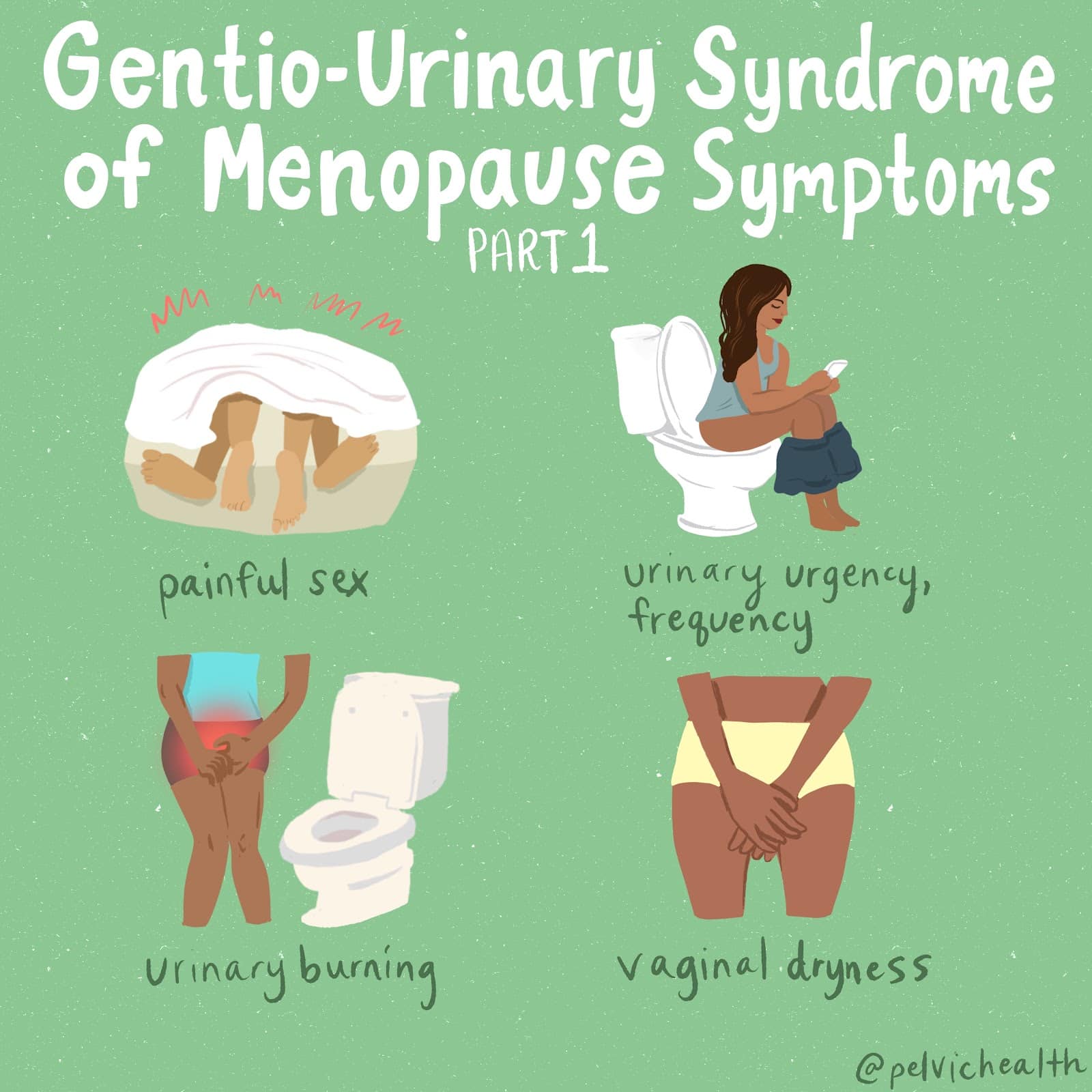
Menopause is more than just hot flushes, night sweats and mood changes! Even though 50% of the population goes through menopause the majority of people and healthcare providers are under-informed about menopause and safe and effective treatments. Too many people are suffering unnecessarily. Perimenopause, the precursor to menopause begins in the 40’s for most people and most women will be in menopause by their early 50’s. Beyond the systemic symptoms of menopause people will start to experience more subtle genitourinary symptoms that will continue to worsen over time if untreated. Painful sex, urinary urgency, frequency, leaking and burning, recurrent vaginal and urinary tract infections and vaginal dryness are symptoms of the Genitourinary Syndrome of Menopause (GSM). The symptoms of GSM are also symptoms of pelvic floor dysfunction, which almost 50% of women suffer by the time they are in their 50s.
Systemic menopause symptoms are often treated with systemic hormonal therapy. This may not be sufficient for people developing GSM symptoms. The North American Menopause Society recommends vaginal estrogen for women in menopause to help counter GSM symptoms.
Menopause is more than just hot flushes, night sweats and mood changes! Even though 50% of the population goes through menopause the majority of people and healthcare providers are under-informed about menopause and safe and effective treatments. Too many people are suffering unnecessarily. Perimenopause, the precursor to menopause begins in the 40’s for most people and most women will be in menopause by their early 50’s. Beyond the systemic symptoms of menopause people will start to experience more subtle genitourinary symptoms that will continue to worsen over time if untreated. Painful sex, urinary urgency, frequency, leaking and burning, recurrent vaginal and urinary tract infections and vaginal dryness are symptoms of the Genitourinary Syndrome of Menopause (GSM). The symptoms of GSM are also symptoms of pelvic floor dysfunction, which almost 50% of women suffer by the time they are in their 50s.
Systemic menopause symptoms are often treated with systemic hormonal therapy. This may not be sufficient for people developing GSM symptoms. The North American Menopause Society recommends vaginal estrogen for women in menopause to help counter GSM symptoms.
Differential Diagnosis:
GSM or Pelvic Floor Dysfunction
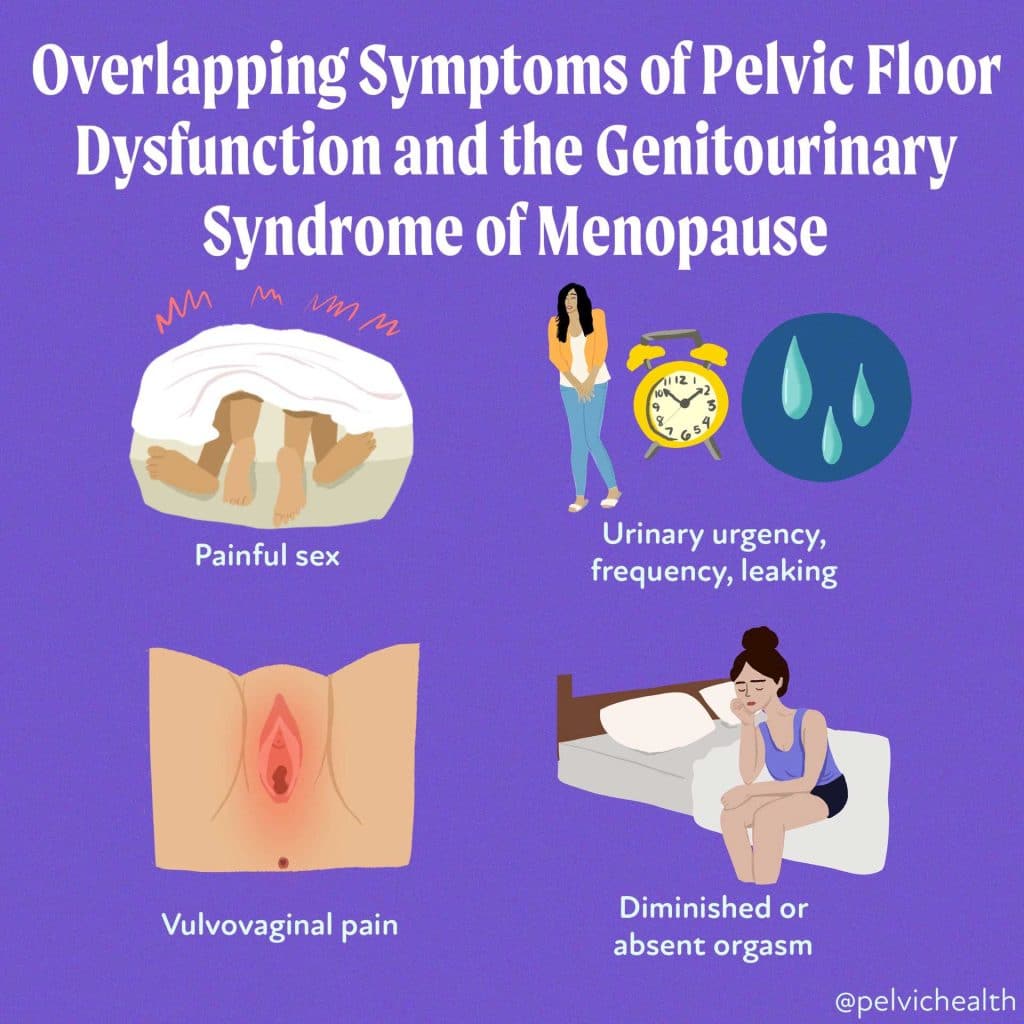
Symptoms of pelvic floor dysfunction and GSM include:
- Urinary urgency, frequency, burning, nocturia
- Feelings of bladder or pelvic pressure
- Painful sex
- Diminished or absent orgasm
- Difficulty evacuating stool
- Vulvovaginal pain and burning
- Pain with sitting
An informed healthcare provider – whether a pelvic floor physical and occupational therapists or medical doctor – can do a vulvovaginal visual examination, a q-tip test to establish pain areas, and a digital manual examination to identify pelvic floor dysfunction, hormonal deficiencies, and pelvic organ prolapse. All women will experience GSM if enough time passes without appropriate medical management. The majority of people do not realize that menopausal women can benefit from a pelvic floor physical and occupational therapy examination to address the musculoskeletal factors that are also making them uncomfortable. The combination of pelvic floor physical and occupational therapy and medical management is key to help restore pleasurable sex and eliminate urinary and bowel concerns!
FACTS
From: https://www.letstalkmenopause.org/further-reading
- 6000 women enter menopause everyday
- 50 million women are currently menopausal in the US
- 84% of women struggle with genital, sexual and urinary discomfort that will not resolve on its own, and less than 25% seek help
- 80% of OBGYN residents admit to being ill-prepared to discuss menopause
- GSM is clinically detected in 90% of postmenopausal women, only ⅓ report symptoms when surveyed.
- Barriers to treatment: women often have to initiate the conversation, believe that the symptoms are just part of aging, women fail to link their symptoms with menopause.
- Only 13% of providers asked their patients about menopause symptoms.
- Even after diagnosis, the majority of women with GSM go untreated despite studies demonstrating a negative impact on quality of life. Hesitation to prescribe treatment by providers as well as patient-perceived concerns over safety profiles limit the use of topical vaginal therapies.
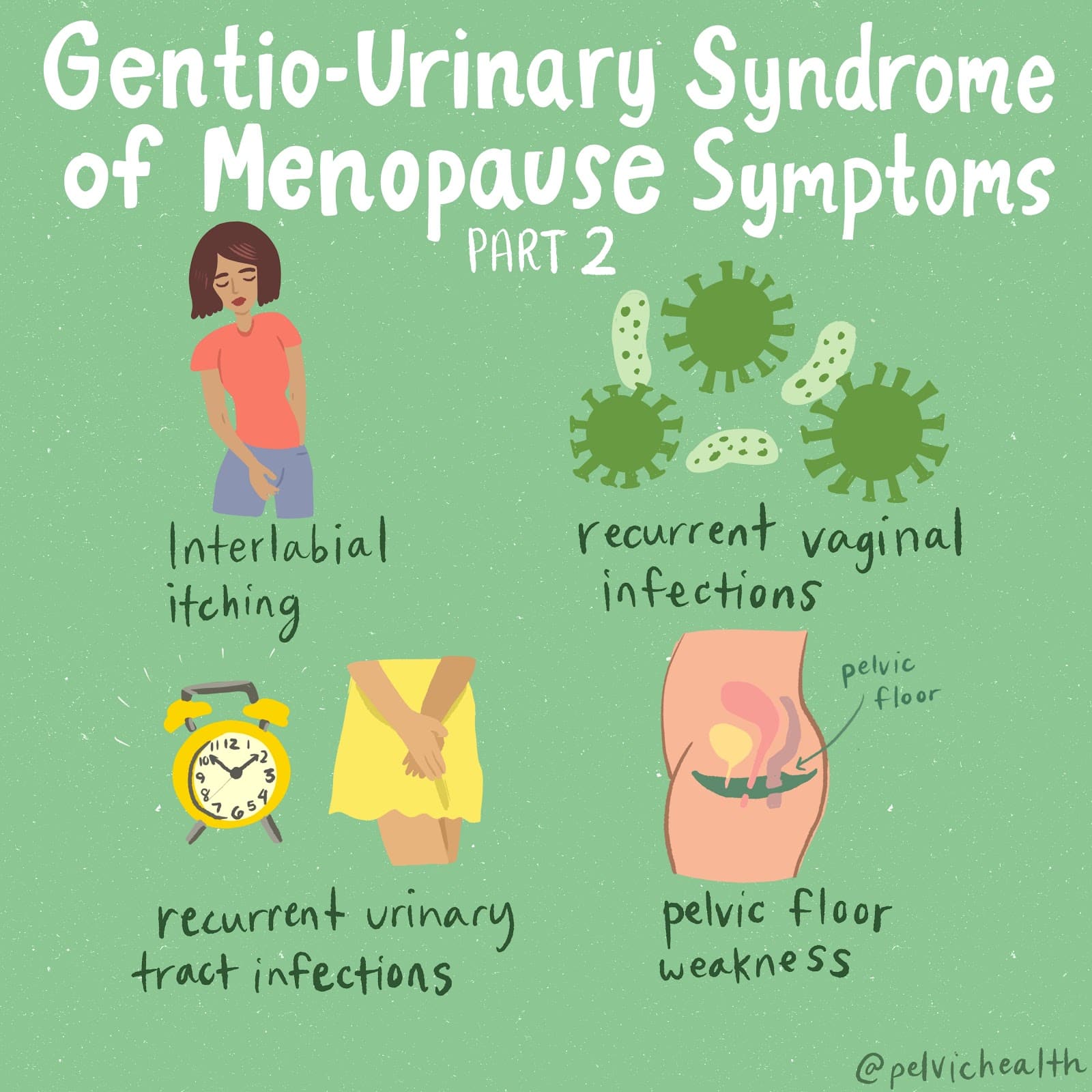
Hormone insufficiency can result in interlabial and vaginal itching. Other dermatologic issues such as Lichen Sclerosus and cutaneous yeast infections are just two of the many factors to also be considered.
Unfortunately people are vulnerable to recurrent vaginal and urinary tract infections in menopause due to:
- pH and tissue changes
- incomplete bladder emptying
- pelvic organ prolapse compromising urinary function
Recurrent infections are a leading cause of pelvic floor dysfunction! They must be stopped or the noxious visceral-somatic input can cause further pain and dysfunction after the infection is cleared. Furthermore, if the infections are left untreated without hormone therapy infections continue to occur and the consequences can be severe. Women can develop unprovoked pain, sex may be impossible, and undetected UTIs can lead to kidney problems and more sinister issues.
We encourage people to work with a menopause expert to monitor, prevent, and treat these issues as they are serious and treatable! We need to normalize the conversation about what happens during GSM, it is nothing to be embarrassed about and with the right care vulva owners can live their best lives! Pelvic floor physical and occupational therapy and medical management go hand in hand.
Treatment:
How We Can Help You

If you are having issues with your sexual function, it is in your best interest to get evaluated by a therapist for pelvic floor therapy, so they can establish what part, if any, of your pelvic floor may be contributing to the symptoms you are experiencing. During the course of the examination, the physical and occupational therapists will talk to you about your medical history and symptoms, including what you have been previously diagnosed with, the treatments or therapies you have had, and how effective or ineffective these therapies have been for you. It is significant to mention that we fully comprehend what you’ve been dealing with and that the majority of individuals are angry by the time they make it to see us. The physical and occupational therapists will conduct an evaluation of the patient’s nerves, muscles, joints, tissues, and movement patterns while doing the physical examination. After the examination is finished, your therapist will go over the results of the assessment with you. The physical and occupational therapists will conduct an evaluation to determine the cause of your symptoms and will establish both short-term and long-term therapy goals based on the results of the evaluation. Physical therapy treatments are typically administered between once and twice each week for a period of around 12 weeks. Your physical and occupational therapists will assist you in coordinating your recovery with all the other experts on your treatment team. They will provide you with an exercise regimen to complete at home and the sessions you attend in person. We are here to assist you in getting better and living the best life possible.
For more information about IC/PBS please check out our IC/PBS Resource List.

Treatment:
How We Can Help You
If you are having issues with your sexual function, it is in your best interest to get evaluated by a therapist for pelvic floor therapy, so they can establish what part, if any, of your pelvic floor may be contributing to the symptoms you are experiencing. During the course of the examination, the physical and occupational therapists will talk to you about your medical history and symptoms, including what you have been previously diagnosed with, the treatments or therapies you have had, and how effective or ineffective these therapies have been for you. It is significant to mention that we fully comprehend what you’ve been dealing with and that the majority of individuals are angry by the time they make it to see us. The physical and occupational therapists will conduct an evaluation of the patient’s nerves, muscles, joints, tissues, and movement patterns while doing the physical examination. After the examination is finished, your therapist will go over the results of the assessment with you. The physical and occupational therapists will conduct an evaluation to determine the cause of your symptoms and will establish both short-term and long-term therapy goals based on the results of the evaluation. Physical therapy treatments are typically administered between once and twice each week for a period of around 12 weeks. Your physical and occupational therapists will assist you in coordinating your recovery with all the other experts on your treatment team. They will provide you with an exercise regimen to complete at home and the sessions you attend in person. We are here to assist you in getting better and living the best life possible.
For more information about IC/PBS please check out our IC/PBS Resource List.


Pride Month and Pelvic Floor Physical and Occupational Therapy Part 2!
By Danae Narvaza PT, DPT, PHRC Encinitas
Cis-gendered people who have sought help for pelvic floor dysfunction will tell you accessibility and awareness makes finding the right help harder than it should be. June marks Pride Month and to celebrate we want to shed light on another underserved population seeking help: the transgender and non-binary population. If you have not seen my blog post Pride Month and Pelvic Floor physical Therapy Part 1: What is Binding? Please check it out! We want to help to be a part of the solution of this pelvic healthcare disparity. In this post we will be breaking down different practices that are used within gender affirming care and how this impacts safety and health, and what we can do about it from a PT, referring healthcare provider, peer, and/or patient perspective. In this specific blog, we will be discussing the practice of tucking and how physical and occupational therapy can be implemented into patient care
What is Tucking and Why Is It Used?
WHAT
- Genital tucking is the practice of reducing the appearance of one’s genitals or gonads.
HOW
- This is often done by pushing one’s gonads into the inguinal canal and/or pulling up the shaft of the penis and moving it in between the legs.
WHY
- Transfeminine, gender diverse, intersex, and non-binary people may practice tucking to affirm their gender identity, alleviate dysphoria, feel a better sense of safety, reduce discrimination, and/or feel more comfortable in certain clothing. Gender affirming practices (with tucking being one example) was reported to be a crucial contributor to mental health and safety – with positive outcomes including improvements in mood and reduced suicidality, anxiety, and depression. This gives individuals the sense of safety to leave their homes to do basic activities of daily living and participate in social, work, and familial activities without being subject to violence or discrimination for their physical appearance.
Safety Considerations of Tucking?
NEGATIVE SIDE EFFECTS
With the above positive outcomes in consideration, it is important then to provide informed consent of the negative and harmful impacts of tucking. In a research article from The Annals of Family Medicine in March/April 2024 (Kidd et. al 2024), a survey was conducted where patients reported the following symptoms that they attributed to tucking:
- Pain in gonads
- Genital pain
- Itching and/or rash
- Urinary tract infections
- Twisting of gonads
- Skin infection, and
- Infertility
65% of the respondents had at least one side effect from tucking with only 10% of the respondents seeking medical care for their side effects. This gap demonstrates an apparent disconnect and need for improving access, competency, and awareness of gender affirming care.
SAFETY CONSIDERATIONS
- It should not be painful
- You should take regular breaks
- It should not be done while sleeping or playing sport
- It should be done with an appropriately fitted gaff
- It should be done with medical grade tape and not duct/packing tape
- It should be gradually introduced (starting off slow and carefully), and
- You should be gentle with adjustment of gonads and penis
- An alternative tucking method that some may use is wearing multiple layers of fitted underwear. If this method is being used, make sure the underwear is not too restricting and tight, as this can cause pelvic pain and/or injury.
Why Should Healthcare Providers Know and Care About Tucking?
As a healthcare provider, parent, friend, and human being coexisting with the gender diverse community, it is vital to recognize how gender affirming techniques are most dangerous when driven underground due to judgment of peers, family members, colleagues and healthcare providers. A survey was conducted where it was revealed that: “While 70% of respondents felt they would be comfortable or very comfortable discussing tucking with their healthcare provider, only 23% reported having discussed tucking. A majority of participants felt that it would be helpful for clinicians to openly discuss the potential risks and benefits of tucking. Suggestions for clinicians included: asking permission, using inclusive and empathic language, explaining the reasoning behind broaching the topic, and being knowledgeable about methods and potential risks of tucking.” (Kidd et. al 2024).
Relevance to Pelvic Floor Physical and Occupational Therapy
With considerations of potential tension and compression forces put on the pelvic myofascial tissues with tucking, this may put users at risk for pelvic and/or genital pain related to nerve and/or muscle contributions. Seeing a pelvic floor physical and occupational therapists could be helpful to balance the use of tucking by managing residual pain secondary to tucking. A pelvic floor physical and occupational therapists is advisable to better assess the current state of your tissues involved with tucking such as: the tone pelvic floor muscles, gluteal muscles, adductors, core, and more!
Reasons you should be advised to see a pelvic floor PT include the following:
- Pelvic Pain
- Abdominal Pain
- Genital Pain
- Painful Sex
- Sexual Dysfunction
- Urinary Urgency and/or Increased Frequency of Urination
- Urinary Incontinence
- Constipation
- Gluteal, Pelvic Floor, and/or Lower Extremity Weakness/Pain
Would you like more information? Check out our Tucking Series on Instagram!
Frequently Asked Questions
Q: Why is pelvic health important for the LGBTQ+ community?
A: Pelvic health is vital for everyone, but the LGBTQ+ community may face unique challenges and stigmas that can impact their overall well-being. Understanding and addressing these specific needs ensures better healthcare outcomes and fosters a more inclusive healthcare environment.
Q: Are there specific pelvic health issues that affect the LGBTQ+ community?
A: Yes, certain pelvic health issues may be more prevalent or present differently within the LGBTQ+ community. For example, transgender individuals may experience unique pelvic health concerns related to hormone therapy or surgical procedures. It’s essential to address these issues with specialized knowledge and care.
Q: How can healthcare providers create a welcoming environment for LGBTQ+ patients?
A: They can create a welcoming environment by using inclusive language, displaying LGBTQ+ affirming symbols, offering training on LGBTQ+ health issues, and ensuring privacy and respect during consultations. Building trust through culturally competent care is crucial.
Q: Where can LGBTQ+ individuals find resources about pelvic health?
A: There are various resources available, including LGBTQ+ health organizations, online forums, and specialized healthcare providers who focus on LGBTQ+ pelvic health. Reputable websites like the American Psychological Association and the World Professional Association for Transgender Health also offer valuable information.
Q: Is there any other information you can give us in regards to pride month physical and occupational therapy?
A: We have a section on our site about Transgender PFPT services.
Resources
Physical and Occupational Therapy Rehab After Gender Affirming Surgeries
Gender-Affirming Surgery + Pelvic Floor PT: IG Live w/ Dr. Jun
Sources:
______________________________________________________________________________________________________________________________________
Check out our recently published e-book titled “Vulvodynia, Vestibulodynia, and Vaginismus,” designed to empower and inform individuals on their journey towards healing and understanding.
Did you know we opened our 11th location in Columbus, OH? Now scheduling new patients- call (510) 922-9836 to book!
Are you unable to come see us in person in the Bay Area, Southern California or New England? We offer virtual physical and occupational therapy appointments too!
Virtual sessions are available with PHRC pelvic floor physical and occupational therapistss via our video platform, Zoom, or via phone. For more information and to schedule, please visit our digital healthcare page.
Do you enjoy or blog and want more content from PHRC? Please head over to social media!
Facebook, YouTube Channel, Twitter, Instagram, Tik Tok
FAQ
What are pelvic floor muscles?
The pelvic floor muscles are a group of muscles that run from the coccyx to the pubic bone. They are part of the core, helping to support our entire body as well as providing support for the bowel, bladder and uterus. These muscles help us maintain bowel and bladder control and are involved in sexual pleasure and orgasm. The technical name of the pelvic floor muscles is the Levator Ani muscle group. The pudendal nerve, the levator ani nerve, and branches from the S2 – S4 nerve roots innervate the pelvic floor muscles. They are under voluntary and autonomic control, which is a unique feature only they possess compared to other muscle groups.
What is pelvic floor physical and occupational therapy?
Pelvic floor physical and occupational therapy is a specialized area of physical and occupational therapy. Currently, physical and occupational therapistss need advanced post-graduate education to be able to help people with pelvic floor dysfunction because pelvic floor disorders are not yet being taught in standard physical and occupational therapy curricula. The Pelvic Health and Rehabilitation Center provides extensive training for our staff because we recognize the limitations of physical and occupational therapy education in this unique area.
What happens at pelvic floor therapy?
During an evaluation for pelvic floor dysfunction the physical and occupational therapists will take a detailed history. Following the history the physical and occupational therapists will leave the room to allow the patient to change and drape themselves. The physical and occupational therapists will return to the room and using gloved hands will perform an external and internal manual assessment of the pelvic floor and girdle muscles. The physical and occupational therapists will once again leave the room and allow the patient to dress. Following the manual examination there may also be an examination of strength, motor control, and overall biomechanics and neuromuscular control. The physical and occupational therapists will then communicate the findings to the patient and together with their patient they establish an assessment, short term and long term goals and a treatment plan. Typically people with pelvic floor dysfunction are seen one time per week for one hour for varying amounts of time based on the severity and chronicity of the disease. A home exercise program will be established and the physical and occupational therapists will help coordinate other providers on the treatment team. Typically patients are seen for 3 months to a year.
What is pudendal neuralgia and how is it treated?
Pudendal Neuralgia is a clinical diagnosis that means pain in the sensory distribution of the pudendal nerve. The pudendal nerve is a mixed nerve that exits the S2 – S4 sacral nerve roots, we have a right and left pudendal nerve and each side has three main trunks: the dorsal branch, the perineal branch, and the inferior rectal branch. The branches supply sensation to the clitoris/penis, labia/scrotum, perineum, anus, the distal ⅓ of the urethra and rectum, and the vulva and vestibule. The nerve branches also control the pelvic floor muscles. The pudendal nerve follows a tortuous path through the pelvic floor and girdle, leaving it vulnerable to compression and tension injuries at various points along its path.
Pudendal Neuralgia occurs when the nerve is unable to slide, glide and move normally and as a result, people experience pain in some or all of the above-mentioned areas. Pelvic floor physical and occupational therapy plays a crucial role in identifying the mechanical impairments that are affecting the nerve. The physical and occupational therapy treatment plan is designed to restore normal neural function. Patients with pudendal neuralgia require pelvic floor physical and occupational therapy and may also benefit from medical management that includes pharmaceuticals and procedures such as pudendal nerve blocks or botox injections.
What is interstitial cystitis and how is it treated?
Interstitial Cystitis is a clinical diagnosis characterized by irritative bladder symptoms such as urinary urgency, frequency, and hesitancy in the absence of infection. Research has shown the majority of patients who meet the clinical definition have pelvic floor dysfunction and myalgia. Therefore, the American Urologic Association recommends pelvic floor physical and occupational therapy as first-line treatment for Interstitial Cystitis. Patients will benefit from pelvic floor physical and occupational therapy and may also benefit from pharmacologic management or medical procedures such as bladder instillations.
Who is the Pelvic Health and Rehabilitation Team?
The Pelvic Health and Rehabilitation Center was founded by Elizabeth Akincilar and Stephanie Prendergast in 2006, they have been treating people with pelvic floor disorders since 2001. They were trained and mentored by a medical doctor and quickly became experts in treating pelvic floor disorders. They began creating courses and sharing their knowledge around the world. They expanded to 11 locations in the United States and developed a residency style training program for their employees with ongoing weekly mentoring. The physical and occupational therapistss who work at PHRC have undergone more training than the majority of pelvic floor physical and occupational therapistss and as a result offer efficient and high quality care.
How many years of experience do we have?
Stephanie and Liz have 24 years of experience and help each and every team member become an expert in the field through their training and mentoring program.
Why PHRC versus anyone else?
PHRC is unique because of the specific focus on pelvic floor disorders and the leadership at our company. We are constantly lecturing, teaching, and staying ahead of the curve with our connections to medical experts and emerging experts. As a result, we are able to efficiently and effectively help our patients restore their pelvic health.
Do we treat men for pelvic floor therapy?
The Pelvic Health and Rehabilitation Center is unique in that the Cofounders have always treated people of all genders and therefore have trained the team members and staff the same way. Many pelvic floor physical and occupational therapistss focus solely on people with vulvas, this is not the case here.
Do I need pelvic floor therapy forever?
The majority of people with pelvic floor dysfunction will undergo pelvic floor physical and occupational therapy for a set amount of time based on their goals. Every 6 -8 weeks goals will be re-established based on the physical improvements and remaining physical impairments. Most patients will achieve their goals in 3 – 6 months. If there are complicating medical or untreated comorbidities some patients will be in therapy longer.
Pride Month and Pelvic Floor Physical and Occupational Therapy!
By Danae Narvaza PT, DPT, PHRC Encinitas
Cis-gendered people who have sought help for pelvic floor dysfunction will tell you accessibility and awareness makes finding the right help harder than it should be. June marks Pride Month and to celebrate we want to shed light on another underserved population seeking help: the transgender and non-binary population. We want to help to be a part of the solution of this pelvic healthcare disparity. In this post we will be breaking down different practices that are used within gender affirming care and how this impacts safety and health, and what we can do about it from a physical and occupational therapists, referring healthcare provider, peer, and/or patient perspective. In this specific blog, we will be discussing the practice of binding.
What is Binding and Why Is It Used?
WHAT
- Binding is the act of using special undergarments to tightly wrap around the breast tissue in order to achieve a flatter chest contour.
WHY
- Some may do this with or without the intention of having gender-affirming chest surgery. The purpose of binding is to help individuals feel more aligned with their gender identity or expression, and to help with gender dysphoria.
- Gives individuals the sense of safety to participate in basic activities of daily living (ex: the ability to leave their homes confidently to work, socialize, run errands, etc) without being subject to violence or discrimination for their physical appearance.
BENEFITS FOR PEOPLE WHO BIND
- It is a crucial contributor to mental health and safety – having positive outcomes including improvements in mood and reduced suicidality, anxiety, and depression (Hughto et. al 2020)
What are Safety Considerations of Binding?
RECOMMENDATIONS
- Do not wear a binder for over eight hours
- Schedule binding breaks if you need to go longer than eight hours
- Do not sleep with the binder on
- Do not exercise with your binder on (unless advertised as exercise-safe binder)
- Get appropriately sized for a binder
- Take one or more days off of binding throughout the week
DANGERS OF STIGMAS
- If an individual lives in an environment where binders are not accessible (ex: living in an unsupportive household or being in an environment with caregivers/parents/family members who disapprove of or do not understand your needs for gender affirmation), many turn to elastic binding – which is not advised. This informal way of binding is not recommended, because it is linked with negative health outcomes (seen in the following paragraph). In other cases, some may get access to a binder, but have to hide it due to the home environment, hindering them from regularly washing it and puts them at risk for skin irritation and infections. Another obstacle of consideration may be an inaccurately sized binder, which is also problematic, where too tight or too loose binders could affect someone’s trunk mobility and/or function.
NEGATIVE HEALTH OUTCOMES
- Binding may affect your skin, muscles, and movement, while excessively tight binders can damage nerves and muscles, and restrict breathing leading to gastrointestinal and/or pelvic issues. A cross sectional study in 2020 covered negative physical health outcomes involving pain, musculoskeletal, neurological, gastrointestinal, general, respiratory, and skin/soft tissue systems in 97% of the 1800 participants with 18 of 27 symptoms observed having an average time of onset of under 1 year, assuming average intensity of binding to 10 hours per day. Meanwhile, more rare and serious symptoms took longer to emerge, such as rib fractures, muscle wasting, respiratory infection, scarring, swelling, and skin infections (Peitzmeier et. al 2021). Additionally, in rare occasions, incorrect binding can lead to rib fractures.
Why Should We Care About Binding?
It is crucial to recognize how gender affirming techniques are most dangerous when driven underground due to judgment of peers, family members, colleagues and healthcare providers. In a national cross sectional study in 2020, more than half of the nonbinding cohort participants reported that their parent was a barrier to them binding their chest, which was also consistent with the past of those participants who were currently binding. The study highlighted the resourcefulness of the youth who do not have access to commercial grade binders, due to the barrier of finances and/or parental support, leading to participants using miscellaneous items for binding to mitigate the distress they were experiencing (ex: tarps, pantyhose, girdles, etc.). While resourceful, the potential harm of these items supports the argument that medical providers should be asking more questions when patients present with chest dysphoria or discomfort. The authors recommended that medical providers then learn how to size and fit a patient for a binder, advocate for insurance companies to provide coverage for this medical device, and work with trans affirming binder companies to provide in-clinic binders.
Relevance of Binding to Physical and Occupational Therapy
Binding may result in back, chest, and/or shoulder pain, numbness, or scarring. In addition, with the chest, ribs, and posture potentially impacted, this may affect myofascial tissue extensibility – which we would want to be at an adequate state prior to surgery in order to prevent post op complications. Seeing a physical and occupational therapists would be helpful to determine if you need manual work done for your myofascial mobility and/or exercises to correct muscle length, posture, and biomechanics related to presentations secondary to binding.
Check out our Binding Series on Instagram!
Stay tuned for more in our Tucking Series!
Frequently Asked Questions
Q: Why is pelvic health important for the LGBTQ+ community?
A: Pelvic health is vital for everyone, but the LGBTQ+ community may face unique challenges and stigmas that can impact their overall well-being. Understanding and addressing these specific needs ensures better healthcare outcomes and fosters a more inclusive healthcare environment.
Q: Are there specific pelvic health issues that affect the LGBTQ+ community?
A: Yes, certain pelvic health issues may be more prevalent or present differently within the LGBTQ+ community. For example, transgender individuals may experience unique pelvic health concerns related to hormone therapy or surgical procedures. It’s essential to address these issues with specialized knowledge and care.
Q: How can healthcare providers create a welcoming environment for LGBTQ+ patients?
A: Providers can create a welcoming environment by using inclusive language, displaying LGBTQ+ affirming symbols, offering training on LGBTQ+ health issues, and ensuring privacy and respect during consultations. Building trust through culturally competent care is crucial.
Q: Where can LGBTQ+ individuals find resources about pelvic health?
A: There are various resources available, including LGBTQ+ health organizations, online forums, and specialized healthcare providers who focus on LGBTQ+ pelvic health. Reputable websites like the American Psychological Association and the World Professional Association for Transgender Health also offer valuable information.
Resources
Physical and Occupational Therapy Rehab After Gender Affirming Surgeries
Gender-Affirming Surgery + Pelvic Floor PT: IG Live w/ Dr. Jun
______________________________________________________________________________________________________________________________________
Check out our recently published e-book titled “Vulvodynia, Vestibulodynia, and Vaginismus,” designed to empower and inform individuals on their journey towards healing and understanding.
Did you know we opened our 11th location in Columbus, OH? Now scheduling new patients- call (510) 922-9836 to book!
Are you unable to come see us in person in the Bay Area, Southern California or New England? We offer virtual physical and occupational therapy appointments too!
Virtual sessions are available with PHRC pelvic floor physical and occupational therapistss via our video platform, Zoom, or via phone. For more information and to schedule, please visit our digital healthcare page.
Do you enjoy or blog and want more content from PHRC? Please head over to social media!
Facebook, YouTube Channel, Twitter, Instagram, Tik Tok
FAQ
What are pelvic floor muscles?
The pelvic floor muscles are a group of muscles that run from the coccyx to the pubic bone. They are part of the core, helping to support our entire body as well as providing support for the bowel, bladder and uterus. These muscles help us maintain bowel and bladder control and are involved in sexual pleasure and orgasm. The technical name of the pelvic floor muscles is the Levator Ani muscle group. The pudendal nerve, the levator ani nerve, and branches from the S2 – S4 nerve roots innervate the pelvic floor muscles. They are under voluntary and autonomic control, which is a unique feature only they possess compared to other muscle groups.
What is pelvic floor physical and occupational therapy?
Pelvic floor physical and occupational therapy is a specialized area of physical and occupational therapy. Currently, physical and occupational therapistss need advanced post-graduate education to be able to help people with pelvic floor dysfunction because pelvic floor disorders are not yet being taught in standard physical and occupational therapy curricula. The Pelvic Health and Rehabilitation Center provides extensive training for our staff because we recognize the limitations of physical and occupational therapy education in this unique area.
What happens at pelvic floor therapy?
During an evaluation for pelvic floor dysfunction the physical and occupational therapists will take a detailed history. Following the history the physical and occupational therapists will leave the room to allow the patient to change and drape themselves. The physical and occupational therapists will return to the room and using gloved hands will perform an external and internal manual assessment of the pelvic floor and girdle muscles. The physical and occupational therapists will once again leave the room and allow the patient to dress. Following the manual examination there may also be an examination of strength, motor control, and overall biomechanics and neuromuscular control. The physical and occupational therapists will then communicate the findings to the patient and together with their patient they establish an assessment, short term and long term goals and a treatment plan. Typically people with pelvic floor dysfunction are seen one time per week for one hour for varying amounts of time based on the severity and chronicity of the disease. A home exercise program will be established and the physical and occupational therapists will help coordinate other providers on the treatment team. Typically patients are seen for 3 months to a year.
What is pudendal neuralgia and how is it treated?
Pudendal Neuralgia is a clinical diagnosis that means pain in the sensory distribution of the pudendal nerve. The pudendal nerve is a mixed nerve that exits the S2 – S4 sacral nerve roots, we have a right and left pudendal nerve and each side has three main trunks: the dorsal branch, the perineal branch, and the inferior rectal branch. The branches supply sensation to the clitoris/penis, labia/scrotum, perineum, anus, the distal ⅓ of the urethra and rectum, and the vulva and vestibule. The nerve branches also control the pelvic floor muscles. The pudendal nerve follows a tortuous path through the pelvic floor and girdle, leaving it vulnerable to compression and tension injuries at various points along its path.
Pudendal Neuralgia occurs when the nerve is unable to slide, glide and move normally and as a result, people experience pain in some or all of the above-mentioned areas. Pelvic floor physical and occupational therapy plays a crucial role in identifying the mechanical impairments that are affecting the nerve. The physical and occupational therapy treatment plan is designed to restore normal neural function. Patients with pudendal neuralgia require pelvic floor physical and occupational therapy and may also benefit from medical management that includes pharmaceuticals and procedures such as pudendal nerve blocks or botox injections.
What is interstitial cystitis and how is it treated?
Interstitial Cystitis is a clinical diagnosis characterized by irritative bladder symptoms such as urinary urgency, frequency, and hesitancy in the absence of infection. Research has shown the majority of patients who meet the clinical definition have pelvic floor dysfunction and myalgia. Therefore, the American Urologic Association recommends pelvic floor physical and occupational therapy as first-line treatment for Interstitial Cystitis. Patients will benefit from pelvic floor physical and occupational therapy and may also benefit from pharmacologic management or medical procedures such as bladder instillations.
Who is the Pelvic Health and Rehabilitation Team?
The Pelvic Health and Rehabilitation Center was founded by Elizabeth Akincilar and Stephanie Prendergast in 2006, they have been treating people with pelvic floor disorders since 2001. They were trained and mentored by a medical doctor and quickly became experts in treating pelvic floor disorders. They began creating courses and sharing their knowledge around the world. They expanded to 11 locations in the United States and developed a residency style training program for their employees with ongoing weekly mentoring. The physical and occupational therapistss who work at PHRC have undergone more training than the majority of pelvic floor physical and occupational therapistss and as a result offer efficient and high quality care.
How many years of experience do we have?
Stephanie and Liz have 24 years of experience and help each and every team member become an expert in the field through their training and mentoring program.
Why PHRC versus anyone else?
PHRC is unique because of the specific focus on pelvic floor disorders and the leadership at our company. We are constantly lecturing, teaching, and staying ahead of the curve with our connections to medical experts and emerging experts. As a result, we are able to efficiently and effectively help our patients restore their pelvic health.
Do we treat men for pelvic floor therapy?
The Pelvic Health and Rehabilitation Center is unique in that the Cofounders have always treated people of all genders and therefore have trained the team members and staff the same way. Many pelvic floor physical and occupational therapistss focus solely on people with vulvas, this is not the case here.
Do I need pelvic floor therapy forever?
The majority of people with pelvic floor dysfunction will undergo pelvic floor physical and occupational therapy for a set amount of time based on their goals. Every 6 -8 weeks goals will be re-established based on the physical improvements and remaining physical impairments. Most patients will achieve their goals in 3 – 6 months. If there are complicating medical or untreated comorbidities some patients will be in therapy longer.
Recognizing Pelvic Pain Awareness Month
By PHRC TEAM
May is recognized worldwide as Pelvic Pain Awareness Month, an observance that aims to raise awareness about pelvic pain and encourage education, research, and advocacy. Despite the prevalence of this condition, it often remains underdiagnosed and undertreated due to lack of awareness and understanding. The entire team at the Pelvic Health and Rehabilitation Center is committed first and foremost to using evidence-based evaluation and treatments. Beyond our desire to help our patients we help the community in other ways.
Did You Know?
- Less than 60% of OBGYNs feel comfortable diagnosing and treating vulvodynia? Most do not receive ANY specialized training in medical school regarding sexual health and pain (1).
- Urologists do not receive training about pelvic pain in medical school.
- Pelvic floor physical and occupational therapy is first line treatment for people with pelvic pain and those of us at PHRC will continue to improve awareness and training for those who are interested!
Awareness and Education
We understand all too well the barrier people face trying to get help for their symptoms. We promise, it is getting better but we have a long way to go so here is what we are doing this year to help. We actively engage in education via community outreach, educational workshops, and seminars for patients and providers. PHRC cofounder Elizabeth Akincilar is co-director of an organization, the Jackson Clinics Foundation, bringing formalized pelvic floor physical and occupational therapy education to Kenya! Many members of the PHRC clinical team donated their time to help develop the curricula and to travel to teach the students. PHRC cofounder Stephanie Prendergast and PHRC director of education Jandra Mueller teach via the International Pelvic Pain Society (IPPS) and The International Society for the Study of Women’s Sexual Health
Over the next 2 years students will experience a robust online curriculum and 6 in person segments with expert teachers from the US. But the goal is to have this program independently run by Kenyans. Please visit their GoFundMe directly for more information about the program and/or donating. This gofundme will raise money to support our volunteer TAs and also go to purchase a few teaching supplies (books, models) that we would like to provide to the students to enhance their learning.

Understanding Pelvic Pain
A number of diagnoses are associated with the general term ‘pelvic pain’ but here are the most common:
- Vulvodynia/Vestibulodynia/Vaginismus
- Interstitial Cystitis/Painful bladder syndrome (IC/PBS)
- CPPS/Non-bacterial Chronic Prostatitis (CP/CPPS)
- Pudendal Neuralgia
- Endometriosis
- Lichen Sclerosus and Planus
- PolyCystic Ovarian Syndrome (PCOS)
- Pelvic Venous Disorders (PeVD)
While all of the diagnoses have different etiologic factors, most patients with these diagnoses have pelvic floor dysfunction and this dysfunction contributes to their pain or symptoms. The good news is that pelvic pain is treatable! Pelvic floor physical and occupational therapy is recommended as the first-line treatment (Torosis, et. al, 2024).
PHRC and Pelvic Pain Awareness Month
In honor of pelvic pain awareness month this year, the Pelvic Health and Rehabilitation Center hosted a fundraiser for two important nonprofit organizations: Tight Lipped, a grassroots patient-led advocacy group raising awareness to medical providers about the importance of pelvic pain; and Riley Hooper, a documentarian film-maker who is raising awareness about a specific condition called ‘neuroproliferative Vestibulodynia’ with her film, Vestibule, sharing her story. We also published our first e-book Vulvodynia, Vestibulodynia and Vaginismus!! All registrants received a copy of our book which is full of resources. Vulvar experts Drs. Jill Krapf, Rachel Rubin, and Sarah Cigna joined for a Q&A, all proceeds go to Tight Lipped and Vestibule. If you are interested in donating please visit: Tight Lipped Donations, Vestibule Donations.
In addition to fundraising and volunteer work we also help commercial and academic institutions recruit for their projects. Check out a cool project regarding the effects of surfing on pelvic pain, led by Jason Kutch, PhD at USC! If you experience pelvic pain, this blog is for you!
Research Opportunity

Overall Aims for this project: “In this project, we will use a randomized controlled trial to test the hypothesis that repetitive transcranial magnetic stimulation (rTMS) directed at a cortical site that controls pelvic floor muscles can reduce pain, and improve brain and muscle activity in women with IC/BPS.” (USC 2024).

Do you experience unwanted and/or persistent feelings of genital arousal (Persistent Genital Arousal Disorder/Genito-Pelvic Dysesthesia)? You might be eligible to participate in the Sexual Health Implications of PGAD Study (SHIPS)! To participate, or to find out more, please contact us directly at [email protected].

The Goal: To learn about the role of the group in pelvic pain patients’ experience of their condition, treatment, and social identities. Interested in participating? Please contact [email protected]. This research has been approved by the NYU Institutional Review Board (IRB-FY2024-8482).
At PHRC, we will continue to do all we can to help, not just in May but all year. If you have a project you need help (chronic pelvic pain or pelvic health related) with or want to suggest more avenues for us to help out please share your comments! Thank you for reading and we hope this post inspired you to help out too!
Our Educational Resources for Pelvic Pain
Additional resources we recommend
Just a few podcasts of so many…
- iCareBetter: Endometriosis Unplugged
References:
- Karpel, H. C., MS. (2024, May 29). Are Ob-Gyns Comfortable Discussing Sexual Trauma With Patients? Contemporary OB/GYN. Retrieved from https://www.contemporaryobgyn.net/view/are-ob-gyns-comfortable-discussing-sexual-trauma-with-patients-
- Torosis, M., Carey, E., Christensen, K., Kaufman, M. R., Kenton, K., Kotarinos, R., Lai, H. H., Lee, U., Lowder, J. L., Meister, M., Spitznagle, T., Wright, K., & Ackerman, A. L. (2024). A Treatment Algorithm for High-Tone Pelvic Floor Dysfunction. Obstet Gynecol, 143(4), 595-602. https://doi.org/10.1097/AOG.0000000000005536
- University of Southern California. (2024). Projects. USC Ampl. Retrieved May 29, 2024, from https://sites.usc.edu/ampl/projects/
______________________________________________________________________________________________________________________________________
Are you unable to come see us in person in the Bay Area, Southern California or New England? We offer virtual physical and occupational therapy appointments too!
Virtual sessions are available with PHRC pelvic floor physical and occupational therapistss via our video platform, Zoom, or via phone. For more information and to schedule, please visit our digital healthcare page.
Do you enjoy or blog and want more content from PHRC? Please head over to social media!
FAQ
What are pelvic floor muscles?
The pelvic floor muscles are a group of muscles that run from the coccyx to the pubic bone. They are part of the core, helping to support our entire body as well as providing support for the bowel, bladder and uterus. These muscles help us maintain bowel and bladder control and are involved in sexual pleasure and orgasm. The technical name of the pelvic floor muscles is the Levator Ani muscle group. The pudendal nerve, the levator ani nerve, and branches from the S2 – S4 nerve roots innervate the pelvic floor muscles. They are under voluntary and autonomic control, which is a unique feature only they possess compared to other muscle groups.
What is pelvic floor physical and occupational therapy?
Pelvic floor physical and occupational therapy is a specialized area of physical and occupational therapy. Currently, physical and occupational therapistss need advanced post-graduate education to be able to help people with pelvic floor dysfunction because pelvic floor disorders are not yet being taught in standard physical and occupational therapy curricula. The Pelvic Health and Rehabilitation Center provides extensive training for our staff because we recognize the limitations of physical and occupational therapy education in this unique area.
What happens at pelvic floor therapy?
During an evaluation for pelvic floor dysfunction the physical and occupational therapists will take a detailed history. Following the history the physical and occupational therapists will leave the room to allow the patient to change and drape themselves. The physical and occupational therapists will return to the room and using gloved hands will perform an external and internal manual assessment of the pelvic floor and girdle muscles. The physical and occupational therapists will once again leave the room and allow the patient to dress. Following the manual examination there may also be an examination of strength, motor control, and overall biomechanics and neuromuscular control. The physical and occupational therapists will then communicate the findings to the patient and together with their patient they establish an assessment, short term and long term goals and a treatment plan. Typically people with pelvic floor dysfunction are seen one time per week for one hour for varying amounts of time based on the severity and chronicity of the disease. A home exercise program will be established and the physical and occupational therapists will help coordinate other providers on the treatment team. Typically patients are seen for 3 months to a year.
What is pudendal neuralgia and how is it treated?
Pudendal Neuralgia is a clinical diagnosis that means pain in the sensory distribution of the pudendal nerve. The pudendal nerve is a mixed nerve that exits the S2 – S4 sacral nerve roots, we have a right and left pudendal nerve and each side has three main trunks: the dorsal branch, the perineal branch, and the inferior rectal branch. The branches supply sensation to the clitoris/penis, labia/scrotum, perineum, anus, the distal ⅓ of the urethra and rectum, and the vulva and vestibule. The nerve branches also control the pelvic floor muscles. The pudendal nerve follows a tortuous path through the pelvic floor and girdle, leaving it vulnerable to compression and tension injuries at various points along its path.
Pudendal Neuralgia occurs when the nerve is unable to slide, glide and move normally and as a result, people experience pain in some or all of the above-mentioned areas. Pelvic floor physical and occupational therapy plays a crucial role in identifying the mechanical impairments that are affecting the nerve. The physical and occupational therapy treatment plan is designed to restore normal neural function. Patients with pudendal neuralgia require pelvic floor physical and occupational therapy and may also benefit from medical management that includes pharmaceuticals and procedures such as pudendal nerve blocks or botox injections.
What is interstitial cystitis and how is it treated?
Interstitial Cystitis is a clinical diagnosis characterized by irritative bladder symptoms such as urinary urgency, frequency, and hesitancy in the absence of infection. Research has shown the majority of patients who meet the clinical definition have pelvic floor dysfunction and myalgia. Therefore, the American Urologic Association recommends pelvic floor physical and occupational therapy as first-line treatment for Interstitial Cystitis. Patients will benefit from pelvic floor physical and occupational therapy and may also benefit from pharmacologic management or medical procedures such as bladder instillations.
Who is the Pelvic Health and Rehabilitation Team?
The Pelvic Health and Rehabilitation Center was founded by Elizabeth Akincilar and Stephanie Prendergast in 2006, they have been treating people with pelvic floor disorders since 2001. They were trained and mentored by a medical doctor and quickly became experts in treating pelvic floor disorders. They began creating courses and sharing their knowledge around the world. They expanded to 11 locations in the United States and developed a residency style training program for their employees with ongoing weekly mentoring. The physical and occupational therapistss who work at PHRC have undergone more training than the majority of pelvic floor physical and occupational therapistss and as a result offer efficient and high quality care.
How many years of experience do we have?
Stephanie and Liz have 24 years of experience and help each and every team member become an expert in the field through their training and mentoring program.
Why PHRC versus anyone else?
PHRC is unique because of the specific focus on pelvic floor disorders and the leadership at our company. We are constantly lecturing, teaching, and staying ahead of the curve with our connections to medical experts and emerging experts. As a result, we are able to efficiently and effectively help our patients restore their pelvic health.
Do we treat men for pelvic floor therapy?
The Pelvic Health and Rehabilitation Center is unique in that the Cofounders have always treated people of all genders and therefore have trained the team members and staff the same way. Many pelvic floor physical and occupational therapistss focus solely on people with vulvas, this is not the case here.
Do I need pelvic floor therapy forever?
The majority of people with pelvic floor dysfunction will undergo pelvic floor physical and occupational therapy for a set amount of time based on their goals. Every 6 -8 weeks goals will be re-established based on the physical improvements and remaining physical impairments. Most patients will achieve their goals in 3 – 6 months. If there are complicating medical or untreated comorbidities some patients will be in therapy longer.