

Menopause encompasses more than just hot flashes, night sweats, and mood swings. Despite being a common phase affecting roughly half of the population, menopause is often misunderstood, both by the public and many healthcare providers. This gap in knowledge can lead to unnecessary suffering, as many individuals are not fully informed about effective treatments.
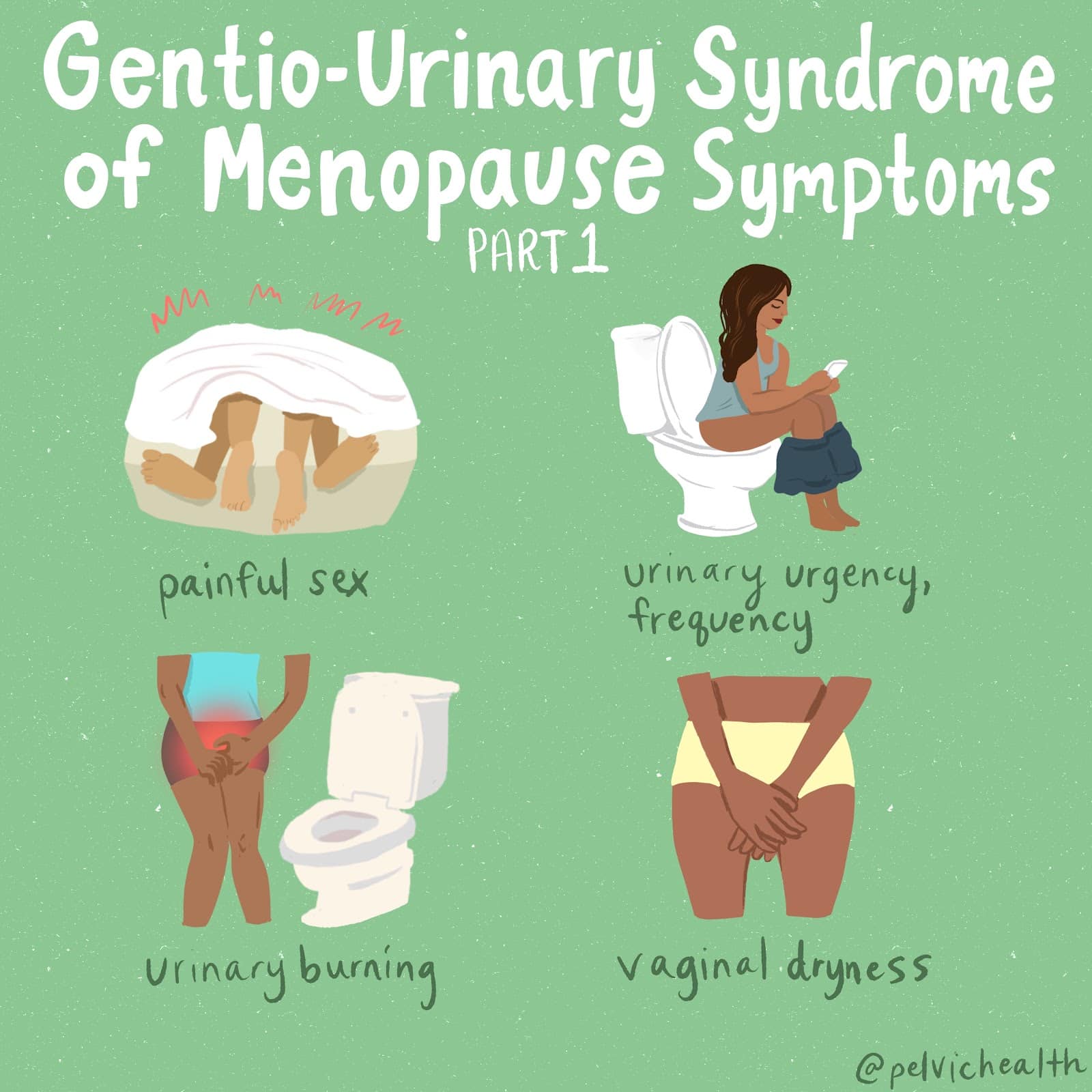
Perimenopause, the transitional phase leading up to menopause, typically begins in a person’s 40s, with menopause itself usually occurring in the early 50s. While systemic symptoms like hot flashes and mood changes are well-known, many people also experience less obvious but equally impactful genitourinary symptoms. These can include painful intercourse, urinary urgency, frequent urination, leakage, burning sensations, recurrent vaginal and urinary tract infections, and vaginal dryness. Collectively, these symptoms are part of the Genitourinary Syndrome of Menopause (GSM). Additionally, many women experience pelvic floor dysfunction, which affects nearly 50% of women by their 50s and can overlap with GSM symptoms.
While systemic hormonal therapy is commonly used to manage menopause symptoms, it may not address the specific needs of those experiencing GSM. The North American Menopause Society recommends the use of vaginal estrogen as an effective treatment for alleviating GSM symptoms and improving quality of life.
Menopause encompasses more than just hot flashes, night sweats, and mood swings. Despite being a common phase affecting roughly half of the population, menopause is often misunderstood, both by the public and many healthcare providers. This gap in knowledge can lead to unnecessary suffering, as many individuals are not fully informed about effective treatments.
Perimenopause, the transitional phase leading up to menopause, typically begins in a person’s 40s, with menopause itself usually occurring in the early 50s. While systemic symptoms like hot flashes and mood changes are well-known, many people also experience less obvious but equally impactful genitourinary symptoms. These can include painful intercourse, urinary urgency, frequent urination, leakage, burning sensations, recurrent vaginal and urinary tract infections, and vaginal dryness. Collectively, these symptoms are part of the Genitourinary Syndrome of Menopause (GSM). Additionally, many women experience pelvic floor dysfunction, which affects nearly 50% of women by their 50s and can overlap with GSM symptoms.
While systemic hormonal therapy is commonly used to manage menopause symptoms, it may not address the specific needs of those experiencing GSM. The North American Menopause Society recommends the use of vaginal estrogen as an effective treatment for alleviating GSM symptoms and improving quality of life.
Differential Diagnosis:
GSM or Pelvic Floor Dysfunction
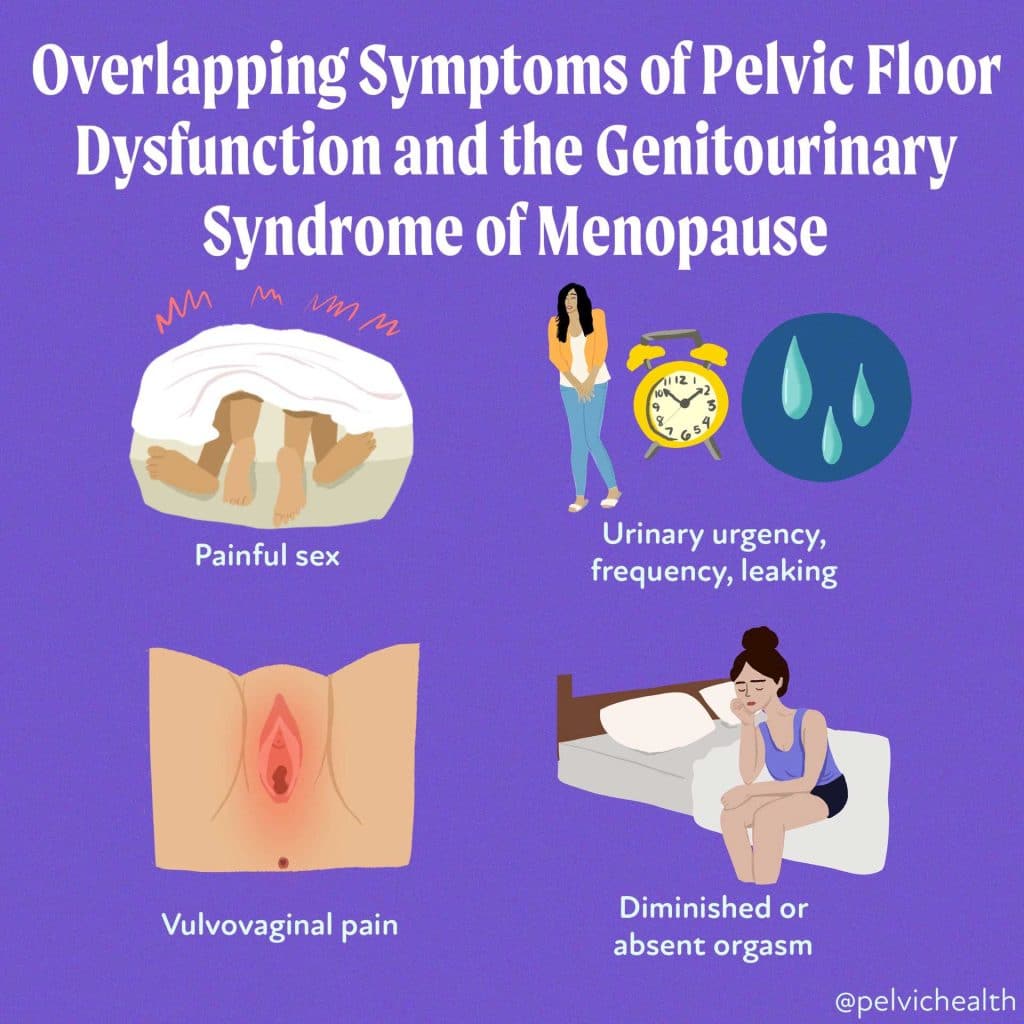
Symptoms of pelvic floor dysfunction and Genitourinary Syndrome of Menopause (GSM) can overlap and include:
- Urinary urgency, frequency, burning, nocturia
- Feelings of bladder or pelvic pressure
- Painful sex
- Diminished or absent orgasm
- Difficulty evacuating stool
- Vulvovaginal pain and burning
- Pain with sitting
An experienced healthcare provider, whether a pelvic floor physical and occupational therapists or a medical doctor, can conduct several assessments to diagnose pelvic floor dysfunction, hormonal deficiencies, and pelvic organ prolapse. These evaluations include a vulvovaginal visual examination, a Q-tip test to pinpoint areas of pain, and a digital manual examination.
Without appropriate medical management, all women may eventually experience symptoms of Genitourinary Syndrome of Menopause (GSM). Many are unaware that a pelvic floor physical and occupational therapy evaluation can be highly beneficial for addressing the musculoskeletal issues contributing to their discomfort. Combining pelvic floor physical and occupational therapy with medical treatments can be crucial for improving sexual enjoyment and resolving urinary and bowel problems.
Virtual pelvic floor therapy for menopause—contact us to get started!
FACTS
From: https://www.letstalkmenopause.org/further-reading
- Every day, approximately 6,000 women reach menopause.
- In the United States, around 50 million women are currently navigating menopause.
- About 84% of women experience genital, sexual, and urinary discomfort related to menopause, which often does not resolve without intervention, yet fewer than 25% seek assistance.
- An estimated 80% of OB-GYN residents acknowledge feeling inadequately prepared to address menopause-related issues.
- Genitourinary Syndrome of Menopause (GSM) is clinically identified in 90% of postmenopausal women, yet only one-third report experiencing symptoms in surveys.
- Barriers to treatment include women needing to initiate discussions about their symptoms, a belief that these issues are simply part of aging, and a failure to connect symptoms with menopause.
- Only 13% of healthcare providers routinely inquire about menopause-related symptoms with their patients.
- Even after a diagnosis of GSM, many women remain untreated. This is partly due to healthcare providers’ reluctance to prescribe treatments and patients’ concerns about the safety of topical vaginal therapies, despite evidence showing that GSM significantly affects quality of life.
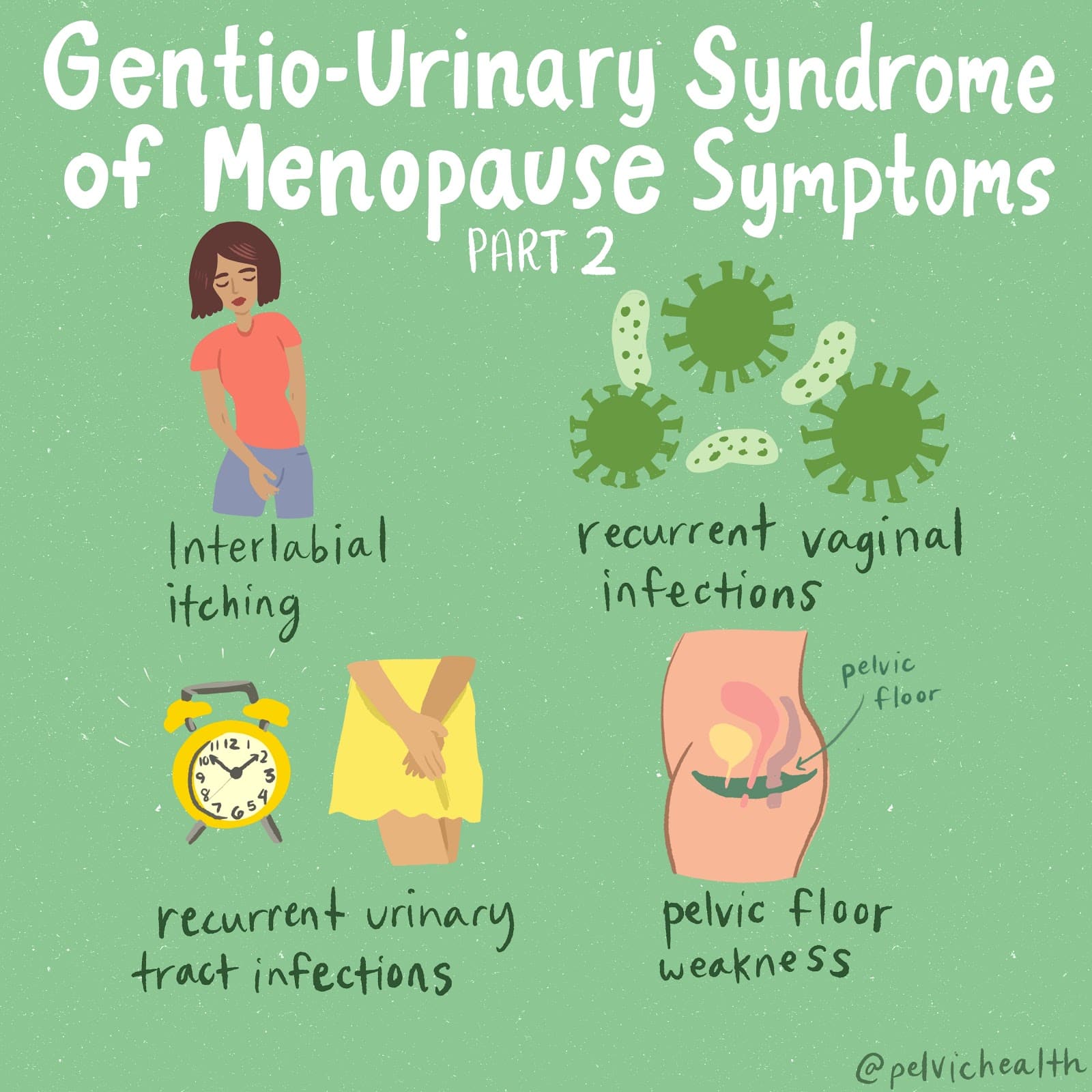
Hormone deficiency can lead to itching in the labial and vaginal areas. Additionally, other dermatological conditions, such as Lichen Sclerosus and cutaneous yeast infections, should also be considered.
During menopause, individuals are particularly susceptible to frequent vaginal and urinary tract infections due to:
- pH and tissue changes
- incomplete bladder emptying
- pelvic organ prolapse compromising urinary function
Recurrent infections are a major contributor to pelvic floor dysfunction. It’s crucial to address these infections promptly, as ongoing visceral-somatic input from untreated infections can lead to increased pain and further dysfunction even after the infection has been resolved. Without appropriate hormone therapy, infections may persist, leading to severe consequences. Untreated infections can cause unprovoked pain, make sexual activity difficult or impossible, and undiagnosed urinary tract infections (UTIs) may progress to kidney issues and other serious complications.
We recommend consulting with a menopause specialist to effectively monitor, prevent, and treat Genitourinary Syndrome of Menopause (GSM) since these issues are both significant and manageable. It’s important to normalize discussions about GSM; there’s no need for embarrassment. With appropriate care, individuals can lead fulfilling lives. Combining virtual pelvic floor physical and occupational therapy with medical management is essential for optimal results.
Treatment:
How We Can Help You
If you’re experiencing sexual dysfunction, it’s beneficial to consult a pelvic floor physical and occupational therapists online. They can assess whether any issues with your pelvic floor are contributing to your symptoms. During your initial virtual evaluation, the therapist will review your medical history, including previous diagnoses, treatments, and their effectiveness. They understand that many patients feel frustrated by the time they seek help.
The therapist will examine your nerves, muscles, joints, tissues, and movement patterns. After the assessment, they will discuss the findings with you and set both short-term and long-term therapy goals. Typically, physical and occupational therapy sessions occur once or twice a week over a period of approximately 12 weeks. Your therapist will also coordinate with other specialists on your treatment team and provide you with a personalized home exercise program. Our goal is to support your recovery and help you achieve the best possible quality of life.
Get virtual pelvic floor therapy for menopause. Book your online consultation today!

Treatment:
How We Can Help You
If you are having issues with your sexual function, it is in your best interest to get evaluated by a therapist for pelvic floor therapy, so they can establish what part, if any, of your pelvic floor may be contributing to the symptoms you are experiencing. During the course of the examination, the physical and occupational therapists will talk to you about your medical history and symptoms, including what you have been previously diagnosed with, the treatments or therapies you have had, and how effective or ineffective these therapies have been for you. It is significant to mention that we fully comprehend what you’ve been dealing with and that the majority of individuals are angry by the time they make it to see us. The physical and occupational therapists will conduct an evaluation of the patient’s nerves, muscles, joints, tissues, and movement patterns while doing the physical examination. After the examination is finished, your therapist will go over the results of the assessment with you. The physical and occupational therapists will conduct an evaluation to determine the cause of your symptoms and will establish both short-term and long-term therapy goals based on the results of the evaluation. Physical therapy treatments are typically administered between once and twice each week for a period of around 12 weeks. Your physical and occupational therapists will assist you in coordinating your recovery with all the other experts on your treatment team. They will provide you with an exercise regimen to complete at home and the sessions you attend in person. We are here to assist you in getting better and living the best life possible.
Get virtual pelvic floor therapy for menopause. Book your online consultation today!

By Sara Stuart
Pelvic pain can present itself in a number of ways. For Amanda* (name has been changed for anonymity), her symptoms began with her first menses. “I remember being on a cruise to Mexico with my mom and trying to learn how to put a tampon in for the first time. I spent the time either crying or laughing in 5 minute intervals until after an hour I gave up altogether.” Despite the frustration she felt, Amanda was able to successfully insert a tampon three years later, a huge milestone for her. Unfortunately, as is the case for a large amount of people suffering from pelvic pain, Amanda’s symptoms changed over time- and for the worse. “However, it wasn’t until I was a senior in high school that I developed chronic pelvic pain that wasn’t associated with my cycle. I had developed a very specific hot, bloated, localized, shaped like a ball, pain in my lower right abdomen. The pain was constant and things like stretching, coughing, and sneezing made it worse. Then I noticed that the pain started showing up on the other side of my abdomen and the cramps that accompanied my menstrual cycle were now present 3 out of the 4 weeks of my cycle.“ Amanda’s new onset of symptoms stayed with her for quite some time and she began to seek treatment to alleviate her symptoms.
As can often be the case, Amanda had difficulty getting onto the right care plan. “It unfortunately took me several years, several doctors, and several misdiagnoses before I was accurately diagnosed.” Amanda wasn’t put on the right track until one of her friends pointed her in the right direction, to a gynecologist with knowledge of pelvic pain and treatment options. Within the first minute of Amanda’s gynecological exam, she received a diagnosis and options to help her pain! Amanda was ecstatic that she had finally found someone who understood her pain and, more importantly, had a plan to help her alleviate her pain. it wasn’t until Amanda relocated to the San Francisco bay area that she found PHRC. Amanda’s doctor referred her to a colleague who knew that Amanda’s symptoms could be alleviated through pelvic floor physical and occupational therapy; the colleague quickly referred Amanda to PHRC.
Amanda knew that PHRC was the right place to help her from the beginning. “I loved my first phone call with PHRC. I was really excited that I was speaking with an agency who knew what I needed, because I sure as hell didn’t. The woman I spoke with was really helpful and super friendly. I had a lot of silly questions that she answered without judgment. “ Often, new patients to PHRC are confused, hurt, and misguided from navigating the healthcare industry themselves. These prospective patients often have a wide variety of questions, mostly aimed at making sure that they have found somewhere that can help them to find the treatment best for their pelvic pain or dysfunction. The path to recovery for pelvic pain and pelvic dysfunction patients is hardly ever easy to find. To help those suffering from pelvic pain and dysfunction, Stephanie and Liz have written a book about treatment options for pelvic pain and dysfunction to help others find the care that they need (click here for a sneak peak at the book, “Pelvic Pain Explained”, which will be released early 2016). Before her first appointment, Amanda’s treating therapist, Malinda Wright, MPT, emailed Amanda to introduce herself and to invite her to ask any questions that she might have. When the day came for Amanda’s first appointment, she recalls that, “… (Malinda) was very warm and inviting”, Amanda recalls of Malinda during her first appointment. Peace of mind came almost immediately as Amanda quickly realized that “… Malinda knew exactly what the cause of my pain was and it’s such a relief that after so many years of trying without success to figure out my problem that Malinda knew how to help me from day one.”
With a stressful full-time job and a full calendar as a graduate student, Amanda has high stress levels in her life. “I’ve learned that, like most people, when I’m stressed I tense up my muscles and I find that by the time I get home and I’ve processed my day my pain can be pretty bad.” Using the tools and techniques that she has learned from Malinda Wright, MPT at PHRC, Amanda is able to take time out of her day to relax and de-stress before going back to work.
As with any journey, recovery from pelvic pain often isn’t a straight line, flare-ups can occur (read here to learn about what to do during a flare). “I definitely have flare-ups”, Amanda recalls. Despite the occasional set back from a flare, Amanda’s quality of life has vastly improved“That being said, my life is actually functional now! Before my weekly visits with Malinda I would never have been able to physically sustain this level of stress at my job so I am happy to have the occasional flare up instead of the constant debilitating pain.” Amanda has some wise words for anyone suffering from pelvic pain or pelvic dysfunction: manage stress wisely. Amanda advises, “…that you take care of yourself by eliminating as much as stress as you can. Hopefully you’ll notice a difference in your pain level.“
Thanks Amanda! Wishing you the best on your journey to recovery from your pelvic pain.
Kind Regards,
Sara
 Sara Stuart graduated from UCLA in June 2013. With a life-long passion for helping others, she assists the Los Angeles office with all of their administrative needs. Sara is also an avid writer and reader and contributes to various online publications in her free time.

FAQ
What are pelvic floor muscles?
The pelvic floor muscles are a group of muscles that run from the coccyx to the pubic bone. They are part of the core, helping to support our entire body as well as providing support for the bowel, bladder and uterus. These muscles help us maintain bowel and bladder control and are involved in sexual pleasure and orgasm. The technical name of the pelvic floor muscles is the Levator Ani muscle group. The pudendal nerve, the levator ani nerve, and branches from the S2 – S4 nerve roots innervate the pelvic floor muscles. They are under voluntary and autonomic control, which is a unique feature only they possess compared to other muscle groups.
What is pelvic floor physical and occupational therapy?
Pelvic floor physical and occupational therapy is a specialized area of physical and occupational therapy. Currently, physical and occupational therapistss need advanced post-graduate education to be able to help people with pelvic floor dysfunction because pelvic floor disorders are not yet being taught in standard physical and occupational therapy curricula. The Pelvic Health and Rehabilitation Center provides extensive training for our staff because we recognize the limitations of physical and occupational therapy education in this unique area.
What happens at pelvic floor therapy?
During an evaluation for pelvic floor dysfunction the physical and occupational therapists will take a detailed history. Following the history the physical and occupational therapists will leave the room to allow the patient to change and drape themselves. The physical and occupational therapists will return to the room and using gloved hands will perform an external and internal manual assessment of the pelvic floor and girdle muscles. The physical and occupational therapists will once again leave the room and allow the patient to dress. Following the manual examination there may also be an examination of strength, motor control, and overall biomechanics and neuromuscular control. The physical and occupational therapists will then communicate the findings to the patient and together with their patient they establish an assessment, short term and long term goals and a treatment plan. Typically people with pelvic floor dysfunction are seen one time per week for one hour for varying amounts of time based on the severity and chronicity of the disease. A home exercise program will be established and the physical and occupational therapists will help coordinate other providers on the treatment team. Typically patients are seen for 3 months to a year.
What is pudendal neuralgia and how is it treated?
Pudendal Neuralgia is a clinical diagnosis that means pain in the sensory distribution of the pudendal nerve. The pudendal nerve is a mixed nerve that exits the S2 – S4 sacral nerve roots, we have a right and left pudendal nerve and each side has three main trunks: the dorsal branch, the perineal branch, and the inferior rectal branch. The branches supply sensation to the clitoris/penis, labia/scrotum, perineum, anus, the distal ⅓ of the urethra and rectum, and the vulva and vestibule. The nerve branches also control the pelvic floor muscles. The pudendal nerve follows a tortuous path through the pelvic floor and girdle, leaving it vulnerable to compression and tension injuries at various points along its path.
Pudendal Neuralgia occurs when the nerve is unable to slide, glide and move normally and as a result, people experience pain in some or all of the above-mentioned areas. Pelvic floor physical and occupational therapy plays a crucial role in identifying the mechanical impairments that are affecting the nerve. The physical and occupational therapy treatment plan is designed to restore normal neural function. Patients with pudendal neuralgia require pelvic floor physical and occupational therapy and may also benefit from medical management that includes pharmaceuticals and procedures such as pudendal nerve blocks or botox injections.
What is interstitial cystitis and how is it treated?
Interstitial Cystitis is a clinical diagnosis characterized by irritative bladder symptoms such as urinary urgency, frequency, and hesitancy in the absence of infection. Research has shown the majority of patients who meet the clinical definition have pelvic floor dysfunction and myalgia. Therefore, the American Urologic Association recommends pelvic floor physical and occupational therapy as first-line treatment for Interstitial Cystitis. Patients will benefit from pelvic floor physical and occupational therapy and may also benefit from pharmacologic management or medical procedures such as bladder instillations.
Who is the Pelvic Health and Rehabilitation Team?
The Pelvic Health and Rehabilitation Center was founded by Elizabeth Akincilar and Stephanie Prendergast in 2006, they have been treating people with pelvic floor disorders since 2001. They were trained and mentored by a medical doctor and quickly became experts in treating pelvic floor disorders. They began creating courses and sharing their knowledge around the world. They expanded to 11 locations in the United States and developed a residency style training program for their employees with ongoing weekly mentoring. The physical and occupational therapistss who work at PHRC have undergone more training than the majority of pelvic floor physical and occupational therapistss and as a result offer efficient and high quality care.
How many years of experience do we have?
Stephanie and Liz have 24 years of experience and help each and every team member become an expert in the field through their training and mentoring program.
Why PHRC versus anyone else?
PHRC is unique because of the specific focus on pelvic floor disorders and the leadership at our company. We are constantly lecturing, teaching, and staying ahead of the curve with our connections to medical experts and emerging experts. As a result, we are able to efficiently and effectively help our patients restore their pelvic health.
Do we treat men for pelvic floor therapy?
The Pelvic Health and Rehabilitation Center is unique in that the Cofounders have always treated people of all genders and therefore have trained the team members and staff the same way. Many pelvic floor physical and occupational therapistss focus solely on people with vulvas, this is not the case here.
Do I need pelvic floor therapy forever?
The majority of people with pelvic floor dysfunction will undergo pelvic floor physical and occupational therapy for a set amount of time based on their goals. Every 6 -8 weeks goals will be re-established based on the physical improvements and remaining physical impairments. Most patients will achieve their goals in 3 – 6 months. If there are complicating medical or untreated comorbidities some patients will be in therapy longer.

Earlier this year Liz and I completed our manuscript for our book, Pelvic Pain Explained. Writing it was a challenging process, to say the least. We are hopeful that this book will raise awareness about and help to demystify pelvic pain. By sharing our combined clinical experience we want to help people with pelvic pain and their providers develop the skills to better understand each individual case. After treating thousands of patients, we know thorough clinical reasoning, ongoing communication, and persistence works. In this week’s blog, we are excited to share the introduction to Pelvic Pain Explained. The book is scheduled to be released in January 2016. Stay tuned to PHRC’s social media for pre-sale information!
INTRODUCTION
Anyone with persistent pelvic pain knows that getting on the right treatment path is often half the battle. The main reason for this is that persistent pain in general is a poorly understood medical condition compared to other diagnoses. So at the end of the day, many people with pelvic pain—while in the throes of dealing with symptoms that often wreak havoc on their daily lives—are struggling to find answers. They’re not alone in their frustration. Medical providers are often equally at a loss as they find themselves up against a lack of available research and education. The good news is that in recent years, a growing group of physicians, pelvic floor physical and occupational therapistss, and psychologists are becoming actively involved in the research and management of pelvic pain syndromes. But while the landscape for treatment is improving, for many people dealing with pelvic pain getting a correct diagnosis and the appropriate treatment continues to be an uphill battle. We wrote this book to address that challenge. The purpose of this book is to act as a guide for patients and providers as they navigate the many complexities associated with the pelvic pain treatment process. As clinicians, we have a combined 30 years of experience both treating patients and educating providers. Over the years we’ve treated thousands of patients from one end of the pelvic pain spectrum to the other. As a result, we’ve learned what works (and what doesn’t) when it comes to successfully treating pelvic pain. In the pages of this book we share that knowledge.
What is this book about?
At its heart, Pelvic Pain Explained is an exploration of pelvic pain from how patients get it to the challenges both patients and providers face throughout the treatment process to a discussion of the impact that an “invisible” condition has on a patient’s life and relationships, and much more. Patients will walk away from this book with a complete understanding of pelvic pain, from how it occurs to the variety of symptoms associated with it to how the impairments and contributing factors that are causing their symptoms are uncovered and treated.
In addition, the book will provide patients with an understanding of all of the current treatment options available to them. Those who develop pelvic pain can find the path to treatment frustrating and unsuccessful, oftentimes because they’re attempting to work within the framework of recovery that they’re used to; one in which they go to the doctor, maybe have some diagnostic testing done, then get a very specific diagnosis that dictates a very specific mode of treatment. This simply is not the path to recovery from pelvic pain. Pelvic pain is a health issue that often crosses the borders between medical disciplines because of the many different systems that can be involved. Gynecologists, urologists, gastroenterologists, orthopedists, pain management specialists, psychologists, acupuncturists, among others, all have a role to play in treating the pelvic floor. In addition, for recovery to occur, the patient must be an active participant in the treatment process. This book provides patients with the guidance they need to navigate this unfamiliar treatment framework thus placing them on the right path to recovery. For providers, the book demystifies pelvic pain. In addition, it contains information that will help them troubleshoot in situations where patients either cannot tolerate or are unresponsive to a particular treatment approach. As the information in these pages will prove, when a particular treatment doesn’t work, another option exists.
The book is organized into three parts. The goal of the first part of the book is to give readers an overview of pelvic pain. Toward that end, the chapters in this section discuss the symptoms, causes, and factors that contribute to pelvic pain as well as explain the role of the neuromusculoskeletal system in the condition. Part two of the book lays out the path to recovery from pelvic pain. This part of the book provides guidance on how patients can assemble the best team of providers, takes readers through the pelvic pain PT process, and provides a complete overview of the many different treatment options available for the condition. In addition, part two covers pelvic pain related issues concerning pregnancy and sexual health. Part three places patients in the driver seat of their recovery by giving them actionable information. At-home self-treatment strategies, tips on communicating with providers and staying fit while in recovery as well as practical tips for day-to-day living are among the topics covered in this section.
How will this book help me through treatment?
This book aims to provide a stepping off point for those with pelvic pain to begin to navigate the treatment process. Toward that end, it provides answers to the many questions they have as they stand on the threshold of their treatment journey, such as: How did I get pelvic pain? What is the best way to treat pelvic pain? What are my treatment options? How do I find qualified and knowledgeable providers? How do I navigate day-to-day life with pelvic pain? In addition, it guides patients through the many complexities that arise during the treatment and recovery process such as what to do when treatments don’t work; how to improve communication with medical providers; how to remain calm during a flare; and how to cope with the many emotional issues that crop up during the recovery process, among many others.
Our main intention in writing this book is to streamline the treatment process for both patients and providers. Oftentimes, patients fall into treatment traps, such as wasting time and money on unnecessary procedures that may make their condition worse. Just as often, they don’t fully understand the treatment modalities they sign up for, so they’re not compliant, and for that reason, they don’t get better. For all of these reasons, in this book we don’t just present information about pelvic pain; we combine it with the comprehensive assessment skills we’ve gained from our own experience as clinicians and educators. So by reading it, both patients and providers are not just informing themselves about pelvic pain, they’re also beginning to think critically about the issues that surround the treatment process thus better arming themselves for decision-making along the way.
Can reading this book help me get better?
Yes. For one thing, research shows that educating patients about the physiology behind their symptoms reduces stress and in return that reduces pain.The information in this book will demystify pelvic pain for readers allowing for reduced stress and anxiety surrounding their pain. Also, the book will help patients get better by helping them to navigate the pelvic pain treatment process. It will help direct them to the right providers, allow them to make educated treatment choices, alert them to the right questions to ask, and in general, enable them to be unintimidated by the treatment process. At the end of the day, all of this will help patients get better.
Why did PTs write this book?
Physical therapy, specifically, is becoming the standout of the new interdisciplinary treatment approach to persistent pain in general. In fact, in her best-selling book on persistent pain, The Pain Chronicles, author, Melanie Thernstrom advises readers to commit to giving PT a try. “Truly, if you take any advice from this book, take this one,” she writes. And New York Times author, Barry Meier, in his controversial article “The Problem with Pain Pills,” passes along similar advice. PT, along with an interdisciplinary treatment plan, is the way to go, he writes. And to further validate the central role that PT now plays in the treatment of persistent pain, lawmakers in all 50 states and the District of Columbia, have some form of “direct access” law in place allowing patients to have direct access to PTs without a physician referral or prescription. This emphasis on PT is especially relevant when it comes to the treatment of pelvic pain. That’s because PT is a main line of treatment for the majority of pelvic pain patients. Therefore, it makes sense for THE definitive book on navigating pelvic pain to be written by PTs…
When Liz and I met each other a decade ago we instantly bonded over our shared passion for helping people dealing with pelvic pain. Spurred on by our desire to improve the standard of care for this patient population, we ultimately partnered up and opened our physical and occupational therapy practice, the Pelvic Health and Rehabilitation Center (PHRC). From the outset, our goal with PHRC was to improve the standard of care for pelvic pain treatment. At this point, we believe we have developed a successful treatment model, one that stresses an interdisciplinary approach to treatment, and we’re looking forward to sharing it in these pages.
All our best,
Liz and Stephanie

FAQ
What are pelvic floor muscles?
The pelvic floor muscles are a group of muscles that run from the coccyx to the pubic bone. They are part of the core, helping to support our entire body as well as providing support for the bowel, bladder and uterus. These muscles help us maintain bowel and bladder control and are involved in sexual pleasure and orgasm. The technical name of the pelvic floor muscles is the Levator Ani muscle group. The pudendal nerve, the levator ani nerve, and branches from the S2 – S4 nerve roots innervate the pelvic floor muscles. They are under voluntary and autonomic control, which is a unique feature only they possess compared to other muscle groups.
What is pelvic floor physical and occupational therapy?
Pelvic floor physical and occupational therapy is a specialized area of physical and occupational therapy. Currently, physical and occupational therapistss need advanced post-graduate education to be able to help people with pelvic floor dysfunction because pelvic floor disorders are not yet being taught in standard physical and occupational therapy curricula. The Pelvic Health and Rehabilitation Center provides extensive training for our staff because we recognize the limitations of physical and occupational therapy education in this unique area.
What happens at pelvic floor therapy?
During an evaluation for pelvic floor dysfunction the physical and occupational therapists will take a detailed history. Following the history the physical and occupational therapists will leave the room to allow the patient to change and drape themselves. The physical and occupational therapists will return to the room and using gloved hands will perform an external and internal manual assessment of the pelvic floor and girdle muscles. The physical and occupational therapists will once again leave the room and allow the patient to dress. Following the manual examination there may also be an examination of strength, motor control, and overall biomechanics and neuromuscular control. The physical and occupational therapists will then communicate the findings to the patient and together with their patient they establish an assessment, short term and long term goals and a treatment plan. Typically people with pelvic floor dysfunction are seen one time per week for one hour for varying amounts of time based on the severity and chronicity of the disease. A home exercise program will be established and the physical and occupational therapists will help coordinate other providers on the treatment team. Typically patients are seen for 3 months to a year.
What is pudendal neuralgia and how is it treated?
Pudendal Neuralgia is a clinical diagnosis that means pain in the sensory distribution of the pudendal nerve. The pudendal nerve is a mixed nerve that exits the S2 – S4 sacral nerve roots, we have a right and left pudendal nerve and each side has three main trunks: the dorsal branch, the perineal branch, and the inferior rectal branch. The branches supply sensation to the clitoris/penis, labia/scrotum, perineum, anus, the distal ⅓ of the urethra and rectum, and the vulva and vestibule. The nerve branches also control the pelvic floor muscles. The pudendal nerve follows a tortuous path through the pelvic floor and girdle, leaving it vulnerable to compression and tension injuries at various points along its path.
Pudendal Neuralgia occurs when the nerve is unable to slide, glide and move normally and as a result, people experience pain in some or all of the above-mentioned areas. Pelvic floor physical and occupational therapy plays a crucial role in identifying the mechanical impairments that are affecting the nerve. The physical and occupational therapy treatment plan is designed to restore normal neural function. Patients with pudendal neuralgia require pelvic floor physical and occupational therapy and may also benefit from medical management that includes pharmaceuticals and procedures such as pudendal nerve blocks or botox injections.
What is interstitial cystitis and how is it treated?
Interstitial Cystitis is a clinical diagnosis characterized by irritative bladder symptoms such as urinary urgency, frequency, and hesitancy in the absence of infection. Research has shown the majority of patients who meet the clinical definition have pelvic floor dysfunction and myalgia. Therefore, the American Urologic Association recommends pelvic floor physical and occupational therapy as first-line treatment for Interstitial Cystitis. Patients will benefit from pelvic floor physical and occupational therapy and may also benefit from pharmacologic management or medical procedures such as bladder instillations.
Who is the Pelvic Health and Rehabilitation Team?
The Pelvic Health and Rehabilitation Center was founded by Elizabeth Akincilar and Stephanie Prendergast in 2006, they have been treating people with pelvic floor disorders since 2001. They were trained and mentored by a medical doctor and quickly became experts in treating pelvic floor disorders. They began creating courses and sharing their knowledge around the world. They expanded to 11 locations in the United States and developed a residency style training program for their employees with ongoing weekly mentoring. The physical and occupational therapistss who work at PHRC have undergone more training than the majority of pelvic floor physical and occupational therapistss and as a result offer efficient and high quality care.
How many years of experience do we have?
Stephanie and Liz have 24 years of experience and help each and every team member become an expert in the field through their training and mentoring program.
Why PHRC versus anyone else?
PHRC is unique because of the specific focus on pelvic floor disorders and the leadership at our company. We are constantly lecturing, teaching, and staying ahead of the curve with our connections to medical experts and emerging experts. As a result, we are able to efficiently and effectively help our patients restore their pelvic health.
Do we treat men for pelvic floor therapy?
The Pelvic Health and Rehabilitation Center is unique in that the Cofounders have always treated people of all genders and therefore have trained the team members and staff the same way. Many pelvic floor physical and occupational therapistss focus solely on people with vulvas, this is not the case here.
Do I need pelvic floor therapy forever?
The majority of people with pelvic floor dysfunction will undergo pelvic floor physical and occupational therapy for a set amount of time based on their goals. Every 6 -8 weeks goals will be re-established based on the physical improvements and remaining physical impairments. Most patients will achieve their goals in 3 – 6 months. If there are complicating medical or untreated comorbidities some patients will be in therapy longer.

By Melinda Fontaine, DPT, PHRC Walnut Creek
I recall being eight months pregnant treating other pregnant women or new moms. I would always hear, “How are you still working full time on your feet?” I still think the most honest answer is, “Pure luck”. Every pregnancy is different, and there are a lot of things that are out of your control. We all do the best we can to take care of ourselves, which means staying informed and making healthy choices. The other common response I gave to people was, “I work with a great group of women who specialize in caring for pregnant women, so I am very well taken care of.” I wouldn’t undervalue the importance of having a support group during pregnancy. My colleagues were there to listen to my musings and complaints about pregnancy, give me advice, and treat my aches and pains. I am very lucky to have such vast experience with pregnancy professionally because I knew what to expect and how to prepare myself physically and mentally. I am also very unlucky to have such vast experience with pregnancy professionally because I know about all the worst case scenarios! The possibilities of what can happen during pregnancy are endless, but I’d like to share some of the knowledge that helped get me through my pregnancy with minimal freak-outs and discomfort.
Build Core Strength
When I first found out I was pregnant, I did two things for myself: I signed up for prenatal Pilates and I bought compression stockings. The Pilates classes were to strengthen my core in a safe, effective, and fun way. I knew that a strong core would support me while I carry a baby. The deep core muscle, transverse abdominus, wraps around one’s midsection like a corset. It is responsible for supporting the low back and hips, which becomes increasingly important as the hormone relaxin starts to make joints looser and the belly starts to pull forward. Pelvic girdle pain or low back pain affects 72% of all pregnant women1, and a strong transverse abdominus is the first defense. There are many exercises to strengthen this muscle, but I chose Pilates because I thought it would be fun and safe. My instructor was very knowledgeable about the special needs of a pregnant body and knew how to modify exercises and teach perfect form. My biggest fear about starting a new exercise regimen, especially when pregnant, was trying to keep up with the group, doing something wrong, not being corrected, and ending up injured. I also kept up my old exercise routine at the same intensity as before I was pregnant until my body started to tell me to take it easy. In healthy women with uncomplicated pregnancies, it is generally safe to do so2, but always listen to your body and your doctor. The American College of Obstetrics and Gynecology recommend moderately intense exercise for 30 minutes a day on most or all days of the week. Exercise during pregnancy has been associated with lower risk for diabetes, depression, hypertension and preterm birth3. In some cases, the increasing weight of the pregnant belly, the hormone relaxin, and underlying pathology will overpower the core muscles, and external support may be needed to alleviate pregnancy related low back pain. A sacroiliac joint belt hugs the bones of the pelvis and supports the pelvic girdle and sacroiliac joints. A maternity support belt lifts and hugs the belly to reduce abdominal and back discomfort.
Wear Compression Stockings
The compression stockings help minimize swelling and circulate blood from the feet back to the heart. During pregnancy, the volume of blood increases and the walls of the veins soften and expand. This leads to fluid collecting in the feet and legs, especially in women who spend a lot of time on their feet. For all people, pregnant or not, who spend a lot of time standing during the day, such as myself, compression stockings with light to moderate compression can help to counteract the effects of gravity and help legs feel more energized. Maternity compression stockings exert about 15 mmHg of pressure and are comfortable (although sometimes hot in California in the summer). Try different brands of knee highs or full length stockings to see what you find comfortable. I wore Juzo.
Avoid Constipation and Hemorrhoids
As pregnancy progresses, different signs will appear such as morning sickness or that dark line in the middle of your abdomen. So many changes could possibly happen that I can’t list them all. One guarantee is that the pregnant body produces more progesterone. Progesterone is the hormone responsible for relaxation of smooth muscle, such as that in your digestive system, and decreased motility in your stomach and intestines. This means that food travels through your system slower and can lead to constipation. Too much straining with constipation can lead to hemorrhoids. I recommend drinking plenty of water and eating a high fiber diet. I put my feet up on a stool when I sit on the toilet to have a bowel movement because this is the most natural way to poop. After all, most of the world poops and has babies in the squatting position to put the pelvic muscles on slack and allow the pelvis to open. I can’t tell you how many people are in love with their poop stools after they try it. Put one in your house, and everyone, young and old, male and female, will benefit. Here is a link to the one we have in our clinic in Berkeley. I also avoid holding my breath and bearing down to poop. All that pushing puts a lot of downward pressure on the pelvis and can lead to hemorrhoids, prolapse, or nerve injuries. This is such a common problem that some prenatal vitamins even have stool softeners in them. If you still struggle with constipation and/or hemorrhoids, talk to your physical and occupational therapists or doctor about other ideas.
Beware of Incontinence
Instead of, or in addition to, struggling to get waste out, some pregnant women struggle to keep waste in. I’m referring to incontinence (or leaking) of urine, feces, or gas. In pregnancy, this is most common due to the pelvic floor being asked to do too much work. (There are other possible causes as well, so talk to your physical and occupational therapists.) Besides doing its usual tasks of supporting the pelvic organs and pelvic girdle and maintaining sexual function and continence, the pelvic floor is asked to hold up an extra 7 lbs of baby, 1 ½ lbs of placenta, 2 lbs of enlarged uterus, and 2 lbs of amniotic fluid. Something’s gotta give, and when it’s your pelvic floor, you end up leaking. Often this improves after delivery, but it is not a normal part of pregnancy or being a mom. It is an indication that something is not working right, and it should be evaluated. The pelvic floor may be too weak or too strong, which brings me to my next point…
To kegel or not to kegel
Another guarantee while you are pregnant is that you will undoubtedly hear from someone, “Do your kegels”. To be honest, this kind of makes my skin crawl because you can’t blindly prescribe any one exercise to every woman. Kegels are a strengthening exercise. I wouldn’t tell a person with a strong pelvic floor to do kegels any more than I would tell a competitive weight lifter to run a marathon. Not only is it not necessary, but it may also be harmful. A pelvic floor that is too tight could lead to incontinence, retention, urgency, frequency, or pain. Doing kegels could make these symptoms worse, your pelvic floor may need to be lengthened before it is strengthened. On the other hand, a weak pelvic floor could really benefit from kegels to decrease incontinence and prolapse and improve ease of delivery. It is impossible to tell which kind of pelvic floor someone has without a manual exam from a physical and occupational therapists, so take the advice to “do your kegels” with a grain of salt.
Expect Changes
Another common pregnancy tip for the 2nd and 3rd trimesters is to avoid lying on your back. This is sound advice, especially as the baby gets larger. The weight of the baby can press on the vena cava (a large vein in your abdomen responsible for returning blood to your heart). This can make mom start to feel lightheaded and can be serious if it is not corrected quickly by changing positions. The increasing size of a pregnant belly also stretches the muscles of the abdomen. Sometimes, the recti abdominis (or 6-pack muscles) can separate creating a soft part in the middle of your belly above or below your belly button called a diastasis. I avoid doing sit-up type exercises that would further stress and pull apart these muscles. Diastasis is very common during pregnancy and is more likely if your belly grows quickly or if you have had multiple pregnancies. It can go away on its own after delivery, or you may need a physical and occupational therapists to teach you how to correct it. Lastly, carrying around extra weight in the front of your body means that the muscles in the back of the body have to work overtime to keep you standing upright. The gluteals (buttocks) are one such group of muscles. If these muscles feel tight, painful, or uncomfortable, getting a massage or rolling them out on a foam roller can feel really good. Wearing sneakers with good arch support will also support muscles further up the leg by creating good alignment, and they give added compression at the foot, in addition to the compression stockings discussed above.
Take a Class
At the end of about 40 weeks, the baby will be born. Sometime before then, I recommend taking some sort of childbirth class. There is no one right way to birth a baby. As a mom, you have many choices to make. It is hard to make decisions during delivery because you are physically and emotionally exhausted. Learn as much as you can about what to expect before, during, and after delivery, and think about your preferences. That being said, you cannot control what is going to happen and you may make changes to your preferences in the moment. Some things to think about include: where will you deliver, vaginal or cesarean, who will be with you, what are your pain management options, who will cut the umbilical cord, will you vaccinate, who will be your Baby’s pediatrician, will you circumcise, will you try to breastfeed. I also find it comforting to know a little about labor and delivery including how to know when you are in labor, what does labor consist of, when will you start pushing, what will happen after the birth, what tests will be provided to the baby after birth, etc. If you are birthing at a facility, take a tour.
Practice
Something that might not be covered in a typical birth class is practicing pushing and finding good positions for you during labor. I do this with all of my patients who are preparing for delivery. A large number of women don’t know how to push a baby out on their first attempt. Good pushing involves a soft relaxed pelvic floor to allow for easy passage of the baby and a strong abdominal contraction to increase the pressure in the abdomen above the baby and help push baby down and out. The most effective pushing position for each woman is different and some positions will not be possible after an epidural. Curling up as if doing a sit- up could help increase abdominal pressure to bear down. Being in an upright position such as squatting uses gravity to help the baby come out. Hands and knees can also be a nice way to labor without the weight of the baby on your back. Use a chair, bed, or partner to lean on as well. Try multiple positions ahead of time and see which ones feel comfortable to you, so you will have some ideas to try during labor. For more information on labor and delivery, stay tuned for future blog posts.
Veteran Moms: Do you have any other tips you would like to add to this list?
Warmly,
Melinda Fontaine, DPT
 Melinda is a native of Concord, California and is part of our Berkeley team. Melinda earned her bachelor’s degree in exercise biology from UC Davis and her doctorate in physical and occupational therapy from Simmons College in Boston. When she’s not at PHRC, you’ll find her either dashing around in her running shoes or cooking up delectable meals in her kitchen. She’s famous for her killer baked chimichangas and her inability to stick to a recipe.
______________________________________________________________________________________________________________________________________
Are you unable to come see us in person? We offer virtual appointments!
Due to COVID-19, we understand people may prefer to utilize our services from their homes. We also understand that many people do not have access to pelvic floor physical and occupational therapy and we are here to help! The Pelvic Health and Rehabilitation Center is a multi-city company of highly trained and specialized pelvic floor physical and occupational therapistss committed to helping people optimize their pelvic health and eliminate pelvic pain and dysfunction. We are here for you and ready to help, whether it is in-person or online.
Virtual sessions are available with PHRC pelvic floor physical and occupational therapistss via our video platform, Zoom, or via phone. The cost for this service is $75.00 per 30 minutes. For more information and to schedule, please visit our digital healthcare page.
In addition to virtual consultation with our physical and occupational therapistss, we also offer integrative health services with Jandra Mueller, DPT, MS. Jandra is a pelvic floor physical and occupational therapists who also has her Master’s degree in Integrative Health and Nutrition. She offers services such as hormone testing via the DUTCH test, comprehensive stool testing for gastrointestinal health concerns, and integrative health coaching and meal planning. For more information about her services and to schedule, please visit our Integrative Health website page.
References:
Bergström C et al. (2014). Pregnancy-related low back pain and pelvic girdle pain approximately 14 months after pregnancy – pain status, self-rated health and family situation. BMC Pregnancy and Childbirth,14, 48. doi:10.1186/1471-2393-14-48
American College of Obstetrics and Gynecology (ACOG). (2002, reaffirmed 2009). ACOG Committee opinion number 267: Exercise during pregnancy and the postpartum period. Accessed July 2015 via the web at: http://www.acog.org/Resources-And-Publications/Committee-Opinions/Committee-on-Obstetric-Practice/Exercise-During-Pregnancy-and-the-Postpartum-Period
Domingues M R, et al. (2015). Physical activity during pregnancy and maternal-child health (PAMELA): study protocol for a randomized controlled trial. Trials, 16, 227. doi:10.1186/s13063-015-0749-3
Pregnancy weight gain: What’s healthy? Mayo Clinic. Accessed July 2015 via the web at http://www.mayoclinic.org/healthy-lifestyle/pregnancy-week-by-week/in-depth/pregnancy-weight-gain/art-20044360?pg=2
FAQ
What are pelvic floor muscles?
The pelvic floor muscles are a group of muscles that run from the coccyx to the pubic bone. They are part of the core, helping to support our entire body as well as providing support for the bowel, bladder and uterus. These muscles help us maintain bowel and bladder control and are involved in sexual pleasure and orgasm. The technical name of the pelvic floor muscles is the Levator Ani muscle group. The pudendal nerve, the levator ani nerve, and branches from the S2 – S4 nerve roots innervate the pelvic floor muscles. They are under voluntary and autonomic control, which is a unique feature only they possess compared to other muscle groups.
What is pelvic floor physical and occupational therapy?
Pelvic floor physical and occupational therapy is a specialized area of physical and occupational therapy. Currently, physical and occupational therapistss need advanced post-graduate education to be able to help people with pelvic floor dysfunction because pelvic floor disorders are not yet being taught in standard physical and occupational therapy curricula. The Pelvic Health and Rehabilitation Center provides extensive training for our staff because we recognize the limitations of physical and occupational therapy education in this unique area.
What happens at pelvic floor therapy?
During an evaluation for pelvic floor dysfunction the physical and occupational therapists will take a detailed history. Following the history the physical and occupational therapists will leave the room to allow the patient to change and drape themselves. The physical and occupational therapists will return to the room and using gloved hands will perform an external and internal manual assessment of the pelvic floor and girdle muscles. The physical and occupational therapists will once again leave the room and allow the patient to dress. Following the manual examination there may also be an examination of strength, motor control, and overall biomechanics and neuromuscular control. The physical and occupational therapists will then communicate the findings to the patient and together with their patient they establish an assessment, short term and long term goals and a treatment plan. Typically people with pelvic floor dysfunction are seen one time per week for one hour for varying amounts of time based on the severity and chronicity of the disease. A home exercise program will be established and the physical and occupational therapists will help coordinate other providers on the treatment team. Typically patients are seen for 3 months to a year.
What is pudendal neuralgia and how is it treated?
Pudendal Neuralgia is a clinical diagnosis that means pain in the sensory distribution of the pudendal nerve. The pudendal nerve is a mixed nerve that exits the S2 – S4 sacral nerve roots, we have a right and left pudendal nerve and each side has three main trunks: the dorsal branch, the perineal branch, and the inferior rectal branch. The branches supply sensation to the clitoris/penis, labia/scrotum, perineum, anus, the distal ⅓ of the urethra and rectum, and the vulva and vestibule. The nerve branches also control the pelvic floor muscles. The pudendal nerve follows a tortuous path through the pelvic floor and girdle, leaving it vulnerable to compression and tension injuries at various points along its path.
Pudendal Neuralgia occurs when the nerve is unable to slide, glide and move normally and as a result, people experience pain in some or all of the above-mentioned areas. Pelvic floor physical and occupational therapy plays a crucial role in identifying the mechanical impairments that are affecting the nerve. The physical and occupational therapy treatment plan is designed to restore normal neural function. Patients with pudendal neuralgia require pelvic floor physical and occupational therapy and may also benefit from medical management that includes pharmaceuticals and procedures such as pudendal nerve blocks or botox injections.
What is interstitial cystitis and how is it treated?
Interstitial Cystitis is a clinical diagnosis characterized by irritative bladder symptoms such as urinary urgency, frequency, and hesitancy in the absence of infection. Research has shown the majority of patients who meet the clinical definition have pelvic floor dysfunction and myalgia. Therefore, the American Urologic Association recommends pelvic floor physical and occupational therapy as first-line treatment for Interstitial Cystitis. Patients will benefit from pelvic floor physical and occupational therapy and may also benefit from pharmacologic management or medical procedures such as bladder instillations.
Who is the Pelvic Health and Rehabilitation Team?
The Pelvic Health and Rehabilitation Center was founded by Elizabeth Akincilar and Stephanie Prendergast in 2006, they have been treating people with pelvic floor disorders since 2001. They were trained and mentored by a medical doctor and quickly became experts in treating pelvic floor disorders. They began creating courses and sharing their knowledge around the world. They expanded to 11 locations in the United States and developed a residency style training program for their employees with ongoing weekly mentoring. The physical and occupational therapistss who work at PHRC have undergone more training than the majority of pelvic floor physical and occupational therapistss and as a result offer efficient and high quality care.
How many years of experience do we have?
Stephanie and Liz have 24 years of experience and help each and every team member become an expert in the field through their training and mentoring program.
Why PHRC versus anyone else?
PHRC is unique because of the specific focus on pelvic floor disorders and the leadership at our company. We are constantly lecturing, teaching, and staying ahead of the curve with our connections to medical experts and emerging experts. As a result, we are able to efficiently and effectively help our patients restore their pelvic health.
Do we treat men for pelvic floor therapy?
The Pelvic Health and Rehabilitation Center is unique in that the Cofounders have always treated people of all genders and therefore have trained the team members and staff the same way. Many pelvic floor physical and occupational therapistss focus solely on people with vulvas, this is not the case here.
Do I need pelvic floor therapy forever?
The majority of people with pelvic floor dysfunction will undergo pelvic floor physical and occupational therapy for a set amount of time based on their goals. Every 6 -8 weeks goals will be re-established based on the physical improvements and remaining physical impairments. Most patients will achieve their goals in 3 – 6 months. If there are complicating medical or untreated comorbidities some patients will be in therapy longer.