

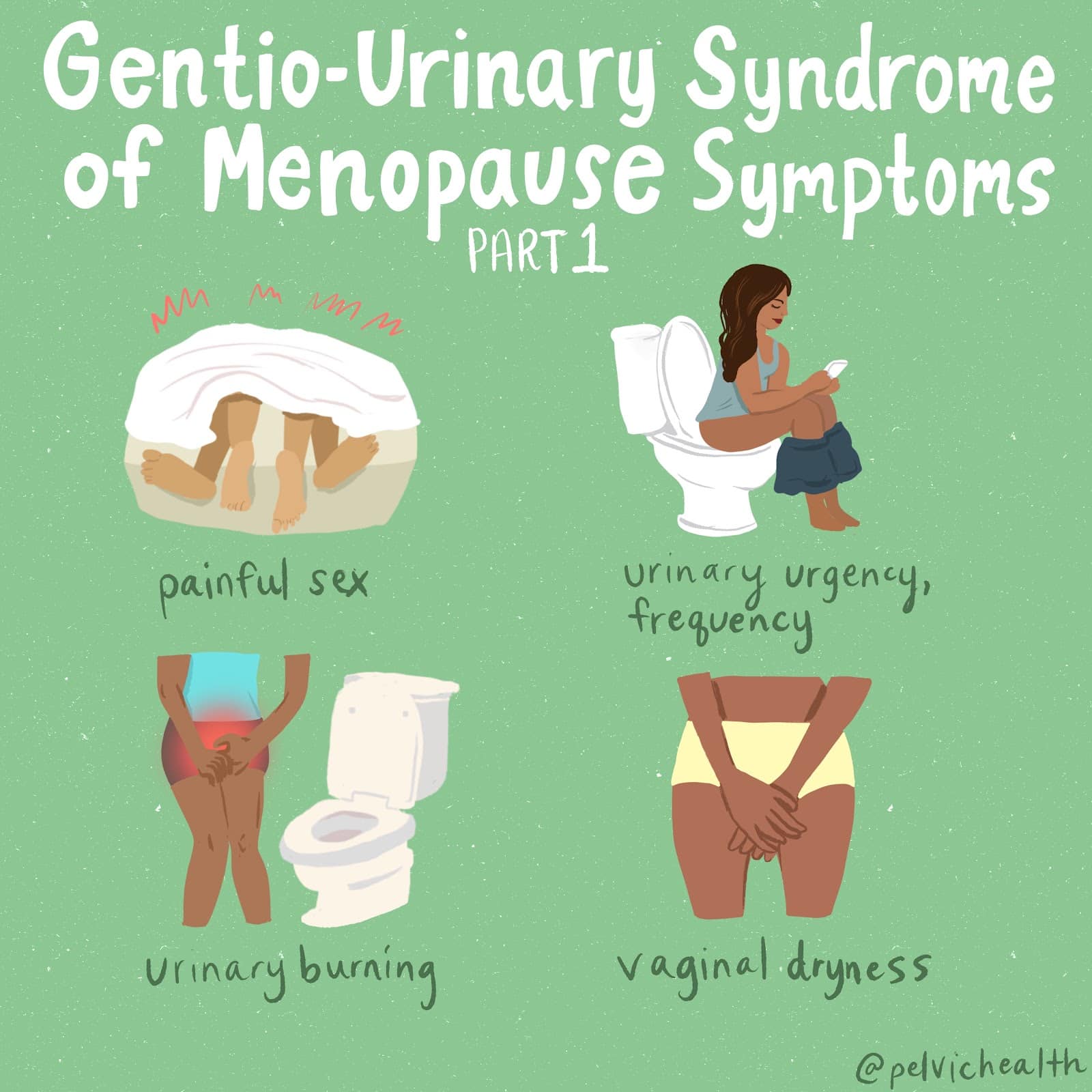
Menopause is more than just hot flushes, night sweats and mood changes! Even though 50% of the population goes through menopause the majority of people and healthcare providers are under-informed about menopause and safe and effective treatments. Too many people are suffering unnecessarily. Perimenopause, the precursor to menopause begins in the 40’s for most people and most women will be in menopause by their early 50’s. Beyond the systemic symptoms of menopause people will start to experience more subtle genitourinary symptoms that will continue to worsen over time if untreated. Painful sex, urinary urgency, frequency, leaking and burning, recurrent vaginal and urinary tract infections and vaginal dryness are symptoms of the Genitourinary Syndrome of Menopause (GSM). The symptoms of GSM are also symptoms of pelvic floor dysfunction, which almost 50% of women suffer by the time they are in their 50s.
Systemic menopause symptoms are often treated with systemic hormonal therapy. This may not be sufficient for people developing GSM symptoms. The North American Menopause Society recommends vaginal estrogen for women in menopause to help counter GSM symptoms.
Menopause is more than just hot flushes, night sweats and mood changes! Even though 50% of the population goes through menopause the majority of people and healthcare providers are under-informed about menopause and safe and effective treatments. Too many people are suffering unnecessarily. Perimenopause, the precursor to menopause begins in the 40’s for most people and most women will be in menopause by their early 50’s. Beyond the systemic symptoms of menopause people will start to experience more subtle genitourinary symptoms that will continue to worsen over time if untreated. Painful sex, urinary urgency, frequency, leaking and burning, recurrent vaginal and urinary tract infections and vaginal dryness are symptoms of the Genitourinary Syndrome of Menopause (GSM). The symptoms of GSM are also symptoms of pelvic floor dysfunction, which almost 50% of women suffer by the time they are in their 50s.
Systemic menopause symptoms are often treated with systemic hormonal therapy. This may not be sufficient for people developing GSM symptoms. The North American Menopause Society recommends vaginal estrogen for women in menopause to help counter GSM symptoms.
Differential Diagnosis:
GSM or Pelvic Floor Dysfunction
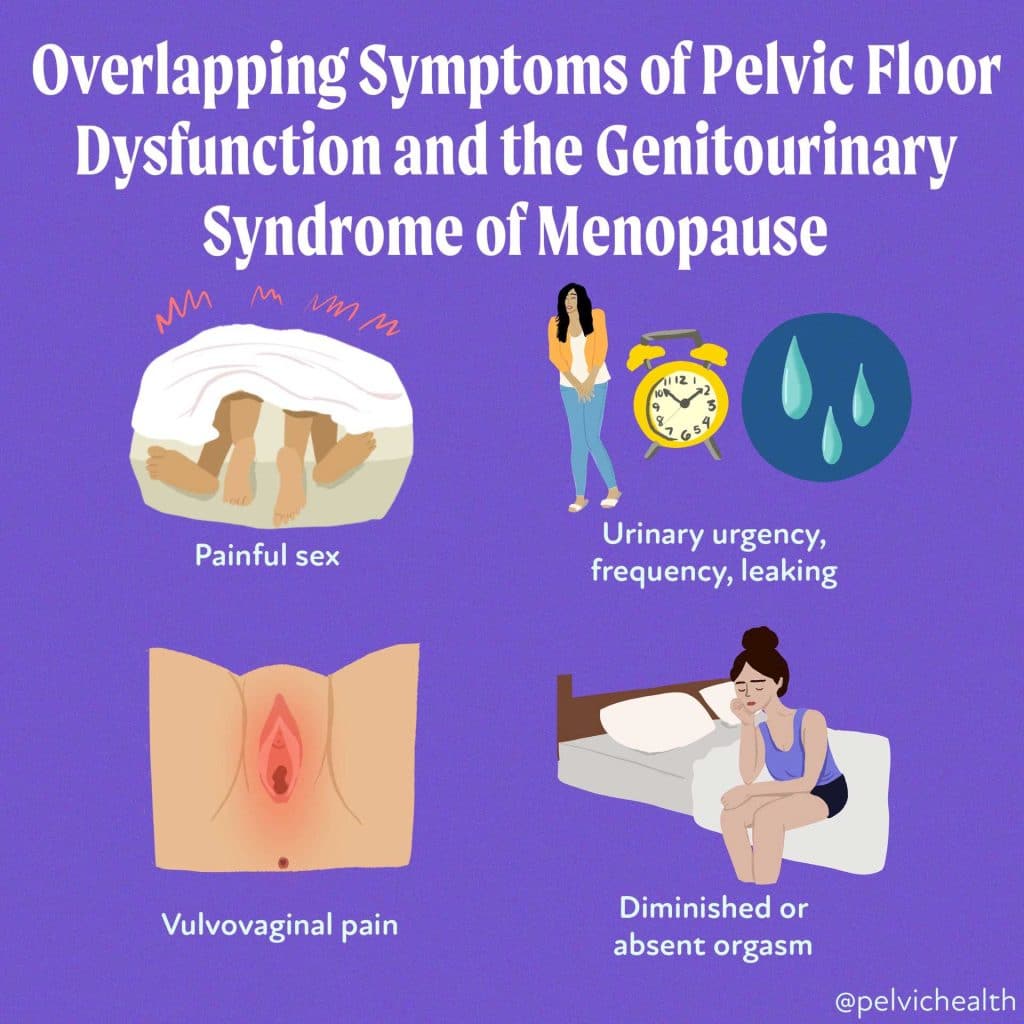
Symptoms of pelvic floor dysfunction and GSM include:
- Urinary urgency, frequency, burning, nocturia
- Feelings of bladder or pelvic pressure
- Painful sex
- Diminished or absent orgasm
- Difficulty evacuating stool
- Vulvovaginal pain and burning
- Pain with sitting
An informed healthcare provider – whether a pelvic floor physical and occupational therapists or medical doctor – can do a vulvovaginal visual examination, a q-tip test to establish pain areas, and a digital manual examination to identify pelvic floor dysfunction, hormonal deficiencies, and pelvic organ prolapse. All women will experience GSM if enough time passes without appropriate medical management. The majority of people do not realize that menopausal women can benefit from a pelvic floor physical and occupational therapy examination to address the musculoskeletal factors that are also making them uncomfortable. The combination of pelvic floor physical and occupational therapy and medical management is key to help restore pleasurable sex and eliminate urinary and bowel concerns!
FACTS
From: https://www.letstalkmenopause.org/further-reading
- 6000 women enter menopause everyday
- 50 million women are currently menopausal in the US
- 84% of women struggle with genital, sexual and urinary discomfort that will not resolve on its own, and less than 25% seek help
- 80% of OBGYN residents admit to being ill-prepared to discuss menopause
- GSM is clinically detected in 90% of postmenopausal women, only ⅓ report symptoms when surveyed.
- Barriers to treatment: women often have to initiate the conversation, believe that the symptoms are just part of aging, women fail to link their symptoms with menopause.
- Only 13% of providers asked their patients about menopause symptoms.
- Even after diagnosis, the majority of women with GSM go untreated despite studies demonstrating a negative impact on quality of life. Hesitation to prescribe treatment by providers as well as patient-perceived concerns over safety profiles limit the use of topical vaginal therapies.
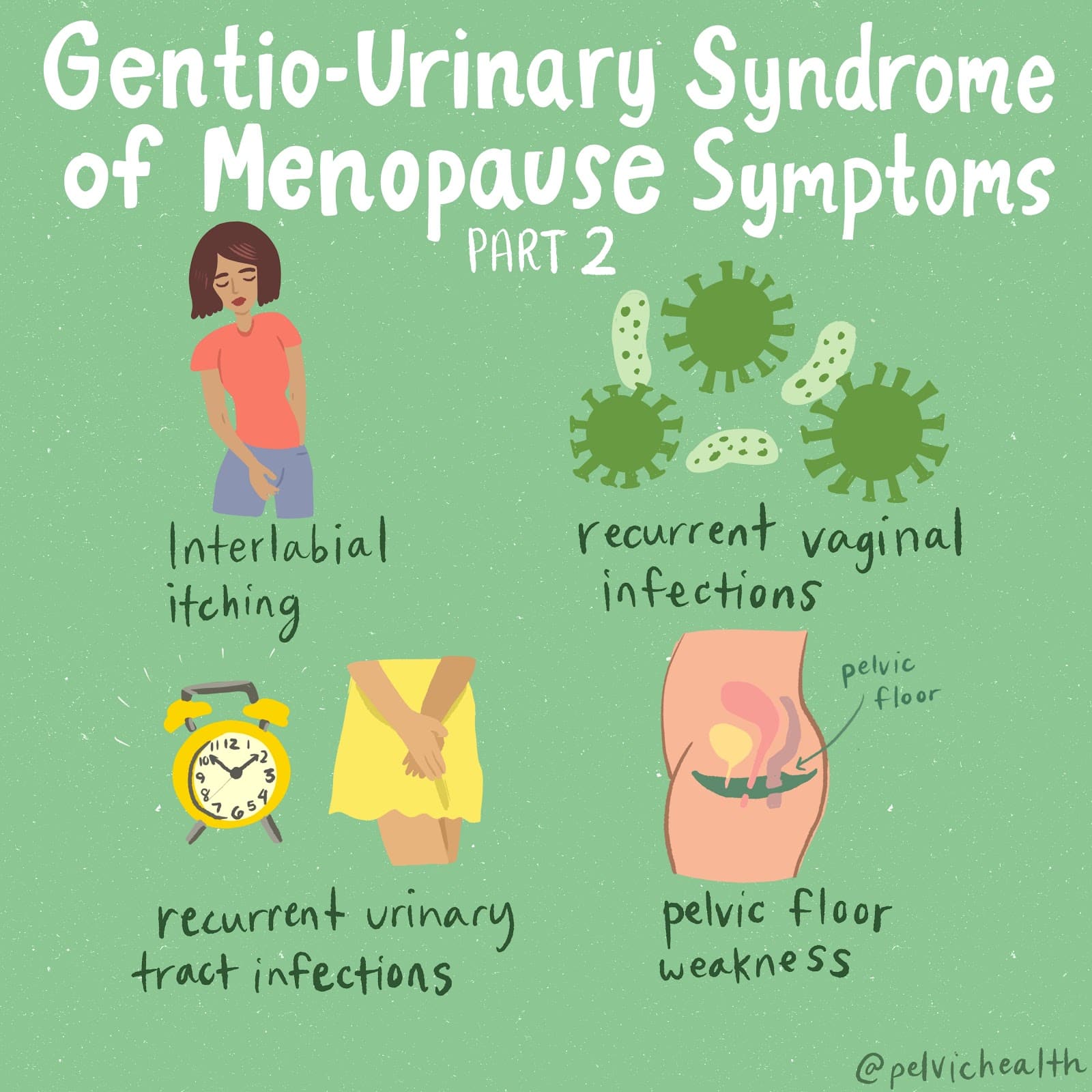
Hormone insufficiency can result in interlabial and vaginal itching. Other dermatologic issues such as Lichen Sclerosus and cutaneous yeast infections are just two of the many factors to also be considered.
Unfortunately people are vulnerable to recurrent vaginal and urinary tract infections in menopause due to:
- pH and tissue changes
- incomplete bladder emptying
- pelvic organ prolapse compromising urinary function
Recurrent infections are a leading cause of pelvic floor dysfunction! They must be stopped or the noxious visceral-somatic input can cause further pain and dysfunction after the infection is cleared. Furthermore, if the infections are left untreated without hormone therapy infections continue to occur and the consequences can be severe. Women can develop unprovoked pain, sex may be impossible, and undetected UTIs can lead to kidney problems and more sinister issues.
We encourage people to work with a menopause expert to monitor, prevent, and treat these issues as they are serious and treatable! We need to normalize the conversation about what happens during GSM, it is nothing to be embarrassed about and with the right care vulva owners can live their best lives! Pelvic floor physical and occupational therapy and medical management go hand in hand.
Treatment:
How We Can Help You
If you are having issues with your sexual function, it is in your best interest to get evaluated by a therapist for pelvic floor therapy, so they can establish what part, if any, of your pelvic floor may be contributing to the symptoms you are experiencing. During the course of the examination, the physical and occupational therapists will talk to you about your medical history and symptoms, including what you have been previously diagnosed with, the treatments or therapies you have had, and how effective or ineffective these therapies have been for you. It is significant to mention that we fully comprehend what you’ve been dealing with and that the majority of individuals are angry by the time they make it to see us. The physical and occupational therapists will conduct an evaluation of the patient’s nerves, muscles, joints, tissues, and movement patterns while doing the physical examination. After the examination is finished, your therapist will go over the results of the assessment with you. The physical and occupational therapists will conduct an evaluation to determine the cause of your symptoms and will establish both short-term and long-term therapy goals based on the results of the evaluation. Physical therapy treatments are typically administered between once and twice each week for a period of around 12 weeks. Your physical and occupational therapists will assist you in coordinating your recovery with all the other experts on your treatment team. They will provide you with an exercise regimen to complete at home and the sessions you attend in person. We are here to assist you in getting better and living the best life possible.
For more information about IC/PBS please check out our IC/PBS Resource List.

Treatment:
How We Can Help You
If you are having issues with your sexual function, it is in your best interest to get evaluated by a therapist for pelvic floor therapy, so they can establish what part, if any, of your pelvic floor may be contributing to the symptoms you are experiencing. During the course of the examination, the physical and occupational therapists will talk to you about your medical history and symptoms, including what you have been previously diagnosed with, the treatments or therapies you have had, and how effective or ineffective these therapies have been for you. It is significant to mention that we fully comprehend what you’ve been dealing with and that the majority of individuals are angry by the time they make it to see us. The physical and occupational therapists will conduct an evaluation of the patient’s nerves, muscles, joints, tissues, and movement patterns while doing the physical examination. After the examination is finished, your therapist will go over the results of the assessment with you. The physical and occupational therapists will conduct an evaluation to determine the cause of your symptoms and will establish both short-term and long-term therapy goals based on the results of the evaluation. Physical therapy treatments are typically administered between once and twice each week for a period of around 12 weeks. Your physical and occupational therapists will assist you in coordinating your recovery with all the other experts on your treatment team. They will provide you with an exercise regimen to complete at home and the sessions you attend in person. We are here to assist you in getting better and living the best life possible.
For more information about IC/PBS please check out our IC/PBS Resource List.


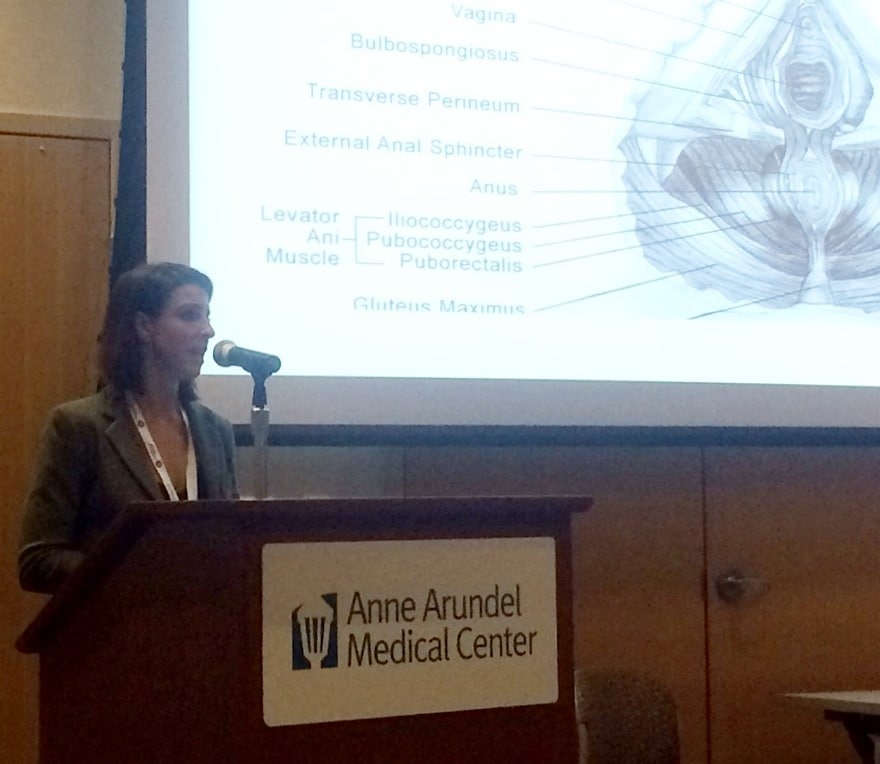
By Stephanie Prendergast, PHRC Cofounder
Most people dealing with the symptoms of Pudendal Neuralgia (PN) will tell you reading about PN, mostly online, can be traumatizing. “Chronic” conditions often translate to gloomy situations for both patients and providers.
In recent years, the knowledge of pain science and PN has advanced tremendously. In the medical community there is overwhelming evidence to support that educating people who are experiencing persistent/chronic pain on the physiology behind these symptoms elicits far better outcomes (less pain). Information about an individual’s symptoms and diagnosis matters, and it influences the way we are able to process what we are feeling in our bodies.
Let’s consider a typical situation of PN: An otherwise healthy person develops severe perineal burning when sitting. What often happens: people are bounced between physicians and are often told things from ‘it’s all in your head’ to ‘‘you have a chronic condition that no one can treat’. Conversely, let’s now imagine that the same person is told they have a treatable pelvic pain condition by the first provider they see.This person goes home with medication and a referral to a pelvic floor physical and occupational therapists. While their symptoms are uncomfortable, they were told they can and will be treated. The truth is, the impact of these initial encounters will often dictate how a person feels and reacts to navigating this complex terrain.
On May 7th, 2015, US News and World Report published this article on Pudendal Neuralgia. The information in this article is conveyed in a manner that may be necessary for media attention however, as a provider, I have a different take on it. I view this article as deleterious to people who have yet to be diagnosed, who are on the road to recovery, or who are stuck in their current treatment plan and may need better management. I am here to tell you PN is a treatable condition.
The article begins by describing how a young woman developed PN. As we approach the end of her case study, the article states,
“According to doctors, pudendal neuralgia occurs in both female and male patients, and can stem from multiple causes. However, it’s often mistaken for other conditions, or overlooked due to embarrassment or a lack of awareness. And the worst part? Sometimes it comes and goes in patients, but often lasts for years – or even decades. Receiving an early – and correct – diagnosis and treatment, experts say, is key to finding relief.”
If I recently developed symptoms of PN, and read this paragraph, my brain would lead me right to crazy town and I would think my life is over. If you are a person feeling symptoms of PN and you read this, you might think you are doomed to a life with a disorder that is not treatable. Chances are you have already seen a handful of doctors who did not know what was wrong with you, causing further hopelessness and fear. Far too many people have suffered for too long but thankfully, the landscape has changed! When I started in the field 15 years ago, most of the people I treated had lived with symptoms for over five years. Yet in the last year, and within our 5 practices, it is rare to see a person that went undiagnosed for more than a year. Symptoms of PN do not have to last years, and certainly not decades!
The article then goes on to say:
“Although doctors don’t know how often pudendal neuralgia occurs in the greater population, they say it affects women and men with almost equal frequency. It’s also “much more common than people realize,” says Dr. Jerome Weiss, a San Francisco-based urologist and founder of the Pacific Center for Pelvic Pain and Dysfunction. “It’s unrecognized in a large portion of patients. I see it frequently; I probably have 1,000 patients [with the condition]. There are people who are suffering because they have no diagnosis made.” This, he says, is because many doctors aren’t trained on how to diagnose and treat the disorder, or they’re so rushed during appointments, they don’t have time for a thorough screening. Instead, he says, “they blame it on something else – the prostate or the bladder. They don’t think about the nerve.”
Currently, we know for certain between 1 in 3 to 4 women suffer from pelvic pain at some point in their lives and that it can affect 8 -10 % of men. Pudendal Neuralgia is a pelvic pain symptom and we do not have data on the prevalence for this particular diagnosis. One of the reasons why we do not have information is because we do not have diagnostic tests to confirm the diagnosis (you can read more about this here). This diagnosis overlaps with other pelvic pain conditions, which are also symptoms. Furthermore, despite our best efforts medical providers will have a professional bias and as a result, patients are often confusingly and frustratingly given multiple diagnoses.
For example, take the case of a woman with burning vulvar pain and urgency and frequency symptoms. If this woman travels to see a ‘PN specialist’, more often than not they will be diagnosed with PN. This same person may see a urologist and get diagnosed with Interstitial Cystitis, and may see a vulvar specialist and get diagnosed with Vulvodynia. As a physical and occupational therapists, I will likely find a high-tone pelvic floor pain syndrome. All of these diagnoses may be technically accurate for this woman, but each diagnosis on its own is like a puzzle piece, only giving part of the picture and accordingly, part of the treatment picture. Because most pelvic pain diagnoses are symptom descriptors, they open the door to many different types of treatments depending on where and by whom the person is evaluated. Secondary factors include how conservative or invasive people are willing to be with treatment.
Where things go south is with a definition of chronic symptoms, multiple diagnoses, and a confused patient with pain but without medical guidance to establish a plan. This problem can be easily corrected by working with one medical professional who can act as a ‘case manager’. Primary care physicians, pain management MDs, gynecologists, physical and occupational therapistss, and urologists are well positioned to use their medical knowledge to help an individual suffering with PN make informed decisions about what is right for their particular case.
The article then claims:
“The most reliable sign that someone has pudendal neuralgia, experts say, is if he or she feels pain while sitting. That person will find relief, however, if he or she stands up, lies down or sits on a toilet seat.”
For the record, people with symptoms of PN do not always get relief with standing or on a toilet seat. Additionally, numerous musculoskeletal and central nervous system impairments other than the PN can cause pain with sitting. In order for it to be PN, the pain must be in the territory of the nerve and the nature of the pain needs to be neuropathic. Many people feel pelvic pain with sitting outside of this territory and it may be achy or sore instead of burning or numb. This is not PN. The Posterior Femoral Cutaneous Nerve is often overlooked, as pointed out here, trigger points in the Obturator Internus muscle can cause sitting pain at the ischial tuberosity, so can vulvar and anal fissures, to name just a few. Successful treatment involves identifying all of the impairments that are collectively causing the symptoms.
The article describes different factors that can contribute to development of PN. This IS important for treatment because there are many different causes and will clue us in to the differential diagnosis, leading to the initiation of an effective treatment plan. Each person with PN symptoms has different contributing factors and different symptom-causing impairments, which is why a ‘one-size-fits-all’ protocol fails. In the past, patients were prescribed three pudendal nerve blocks and then surgery if the pain persisted. This approach was not successful because multiple impairments coexisting with nerve dysfunction were often left untreated. If you have had a pudendal nerve decompression surgery and still have persisting pain it can be treated, regardless of when the ‘failed treatment’ occurred.
The article then continues with:
“Those who do receive the correct diagnosis have often suffered for about four years and have seen 10 professionals without any diagnosis,” says Dr. Jacques Beco, a Belgium-based obstetrician and gynecologist who treats patients with pudendal neuralgia. “Neurologists and neurosurgeons never make a gynecological examination or a rectal examination,” he says. “And gynecologists, urologists and proctologists treat the organs, but have little knowledge about the nerves and muscles of the area.” Because of this, a correct diagnosis of pudendal neuralgia sometimes requires a task force of urologists, gynecologists, neurologists and pain-management physicians.
The key to making a diagnosis, Beco says, is to take a full medical history, assess the patient’s symptoms and conduct a thorough external and internal physical examination.”
It is true that many medical professionals are unfamiliar with PN. However, The APTA and IPPS have links on their websites to help people find qualified medical professionals who are familiar with PN and have treated PN patients. Hundreds of skilled professionals are on these lists. In addition to providers with a particular interest in pelvic pain, pain management physicians specialize in pain and therefore can be of great help. Through conversations with my patients I have heard their disappointment regarding appointments with pain management doctors. Their expectations were to go in, see a doctor, and come out with a ‘cure’. Understanding that pain management doctors can only prescribe and manage medications while the underlying causes are getting addressed is key. It is important to remember that pain management specialists are experts at managing pain, regardless of how much they do or do not know about PN.
and then later in the article:
Many patients who experience this type of chronic pain suffer from mental health problems, experts say. “I have worked on the pudendal nerve since 1995,” Beco says. “Since then, three of my patients have killed themselves because of the pain. It’s a very, very bad disease, and many patients are depressed because of it.”
Many people experience emotional consequences of persisting pain. The situation of suicide is extremely sad and unfortunate. Many more patients have survived PN distress and treatment, than have perished due to their emotional and physical distress. PN is no longer a medical mystery. Every day my patients describe the fear, anxiety, and hopelessness that they felt when they first read about their symptoms and connected with other suffering people online, and their statements are the genesis of this blog post. Behavioral health professionals are great resources to help with the emotional consequences of pelvic pain, and have . It is useful to find a provider that specializes in strategies that can help individuals manage their emotions around their symptoms and think about their pain in a way that results in less suffering. In LA, we work with the Pain Psychology Center. Examples of their therapeutic process can be found in the How It Works section of their website.
The article then states:
Pudendal neuralgia is painful, but treatable. After identifying physical problems that might’ve contributed to the nerve damage – say, abnormal body mechanics – and possibly treating them with physical and occupational therapy, doctors can try treatments such as muscle relaxers and neuromodulator drugs, as well as manual therapy.
Here is what I felt this statement failed to inform readers:
- Physical therapists are neuromuscular experts and therefore well-positioned to treat pelvic pain syndromes after undergoing specialized training.
- Most physicians are not trained to treat the pelvic floor muscles with manual therapy.
- Physical therapy is considered a first-line, effective treatment for pelvic pain syndromes.
- A physical and occupational therapists’s opinion. Here is what what PT’s think about PN management.
As I read this article I imagined a wrecking ball demolishing the progress physical and occupational therapistss are trying to making in this field. Exacerbated I emailed the article to neuroscientist Lorimer Moseley, co-author of Explain Pain and other great resources on pain physiology. This is what he had to say:
“Hi Stephanie –
There are some disturbing things in there for sure. I agree that it is great to see PN getting some attention, but it is a reminder that what we say and how we say it will affect any pain condition. The reality of any pain condition is that pain, and anxiety, fear and expectations, is dependent on more than just information coming from the body. Therefore, we need to be very careful to give people accurate information that does not needlessly ramp up these protective responses. we need to take care in ordering tests – are the tests sensitive AND specific? that is, how common is it to have positive tests in healthy participants. if it is common, then tests and the medical terms we give to describe them, can do more harm than good, a point captured in the Choosing Wisely campaigns in US, Canada and Australia.”
I completely agree. To the individuals who are suffering with pelvic pain, please take the time to learn about pain physiology, stay strong, and remember you can and WILL get better.
All my best,
Stephanie Prendergast, MPT

Stephanie grew up in South Jersey, and currently sees patients in our Los Angeles office. She received her bachelor’s degree in exercise physiology from Rutgers University, and her master’s in physical and occupational therapy at the Medical College of Pennsylvania and Hahnemann University in Philadelphia. For balance, Steph turns to yoga, music, and her calm and loving King Charles Cavalier Spaniel, Abbie (Abbie is a daily fixture at PHRC Los Angeles). For adventure, she gets her fix from scuba diving and global travel.
FAQ
What are pelvic floor muscles?
The pelvic floor muscles are a group of muscles that run from the coccyx to the pubic bone. They are part of the core, helping to support our entire body as well as providing support for the bowel, bladder and uterus. These muscles help us maintain bowel and bladder control and are involved in sexual pleasure and orgasm. The technical name of the pelvic floor muscles is the Levator Ani muscle group. The pudendal nerve, the levator ani nerve, and branches from the S2 – S4 nerve roots innervate the pelvic floor muscles. They are under voluntary and autonomic control, which is a unique feature only they possess compared to other muscle groups.
What is pelvic floor physical and occupational therapy?
Pelvic floor physical and occupational therapy is a specialized area of physical and occupational therapy. Currently, physical and occupational therapistss need advanced post-graduate education to be able to help people with pelvic floor dysfunction because pelvic floor disorders are not yet being taught in standard physical and occupational therapy curricula. The Pelvic Health and Rehabilitation Center provides extensive training for our staff because we recognize the limitations of physical and occupational therapy education in this unique area.
What happens at pelvic floor therapy?
During an evaluation for pelvic floor dysfunction the physical and occupational therapists will take a detailed history. Following the history the physical and occupational therapists will leave the room to allow the patient to change and drape themselves. The physical and occupational therapists will return to the room and using gloved hands will perform an external and internal manual assessment of the pelvic floor and girdle muscles. The physical and occupational therapists will once again leave the room and allow the patient to dress. Following the manual examination there may also be an examination of strength, motor control, and overall biomechanics and neuromuscular control. The physical and occupational therapists will then communicate the findings to the patient and together with their patient they establish an assessment, short term and long term goals and a treatment plan. Typically people with pelvic floor dysfunction are seen one time per week for one hour for varying amounts of time based on the severity and chronicity of the disease. A home exercise program will be established and the physical and occupational therapists will help coordinate other providers on the treatment team. Typically patients are seen for 3 months to a year.
What is pudendal neuralgia and how is it treated?
Pudendal Neuralgia is a clinical diagnosis that means pain in the sensory distribution of the pudendal nerve. The pudendal nerve is a mixed nerve that exits the S2 – S4 sacral nerve roots, we have a right and left pudendal nerve and each side has three main trunks: the dorsal branch, the perineal branch, and the inferior rectal branch. The branches supply sensation to the clitoris/penis, labia/scrotum, perineum, anus, the distal ⅓ of the urethra and rectum, and the vulva and vestibule. The nerve branches also control the pelvic floor muscles. The pudendal nerve follows a tortuous path through the pelvic floor and girdle, leaving it vulnerable to compression and tension injuries at various points along its path.
Pudendal Neuralgia occurs when the nerve is unable to slide, glide and move normally and as a result, people experience pain in some or all of the above-mentioned areas. Pelvic floor physical and occupational therapy plays a crucial role in identifying the mechanical impairments that are affecting the nerve. The physical and occupational therapy treatment plan is designed to restore normal neural function. Patients with pudendal neuralgia require pelvic floor physical and occupational therapy and may also benefit from medical management that includes pharmaceuticals and procedures such as pudendal nerve blocks or botox injections.
What is interstitial cystitis and how is it treated?
Interstitial Cystitis is a clinical diagnosis characterized by irritative bladder symptoms such as urinary urgency, frequency, and hesitancy in the absence of infection. Research has shown the majority of patients who meet the clinical definition have pelvic floor dysfunction and myalgia. Therefore, the American Urologic Association recommends pelvic floor physical and occupational therapy as first-line treatment for Interstitial Cystitis. Patients will benefit from pelvic floor physical and occupational therapy and may also benefit from pharmacologic management or medical procedures such as bladder instillations.
Who is the Pelvic Health and Rehabilitation Team?
The Pelvic Health and Rehabilitation Center was founded by Elizabeth Akincilar and Stephanie Prendergast in 2006, they have been treating people with pelvic floor disorders since 2001. They were trained and mentored by a medical doctor and quickly became experts in treating pelvic floor disorders. They began creating courses and sharing their knowledge around the world. They expanded to 11 locations in the United States and developed a residency style training program for their employees with ongoing weekly mentoring. The physical and occupational therapistss who work at PHRC have undergone more training than the majority of pelvic floor physical and occupational therapistss and as a result offer efficient and high quality care.
How many years of experience do we have?
Stephanie and Liz have 24 years of experience and help each and every team member become an expert in the field through their training and mentoring program.
Why PHRC versus anyone else?
PHRC is unique because of the specific focus on pelvic floor disorders and the leadership at our company. We are constantly lecturing, teaching, and staying ahead of the curve with our connections to medical experts and emerging experts. As a result, we are able to efficiently and effectively help our patients restore their pelvic health.
Do we treat men for pelvic floor therapy?
The Pelvic Health and Rehabilitation Center is unique in that the Cofounders have always treated people of all genders and therefore have trained the team members and staff the same way. Many pelvic floor physical and occupational therapistss focus solely on people with vulvas, this is not the case here.
Do I need pelvic floor therapy forever?
The majority of people with pelvic floor dysfunction will undergo pelvic floor physical and occupational therapy for a set amount of time based on their goals. Every 6 -8 weeks goals will be re-established based on the physical improvements and remaining physical impairments. Most patients will achieve their goals in 3 – 6 months. If there are complicating medical or untreated comorbidities some patients will be in therapy longer.
Urinary tract infections (UTI) are considered to be the most common bacterial infection in humans, costing the US health care system about $1.6 billion dollars per year. These infections plague millions of people at some point or another throughout the lifetime. In fact, some research suggests that a female’s lifetime risk of getting one is as high as 1 in 2. And merely having one UTI means that we are more prone to getting another one! According to a 2008 article by Hooton and Gupta: about 20 percent of women who become diagnosed with an initial urinary tract infection will experience a recurrence. And 30 percent of those people will get diagnosed with a third. AND, 80 percent of those who have had three UTIs will get a fourth, et cetera.
But I am getting ahead of myself, let me first explain the basics. A urinary tract infection (UTI) is a bacterial infection that is found anywhere in the urinary system: kidneys, ureters, bladder, urethra. The majority of infections involve the lower urinary tract, the bladder and the urethra, and are treated with antibiotics. Bacteria, e.g. E. coli, that is found in fecal matter can migrate toward the urethra and then bladder, and if the infection isn’t treated, it can continue up the urinary tract to infect the kidneys.
Common symptoms of a UTI include:
- burning/pain with urination
- urinary urgency/frequency
- low back or abdominal pain
- cloudy, dark, bloody, or strong smelling urine
- feeling tired or shaky
- fever or chills (a more serious sign that the infection may have reached your kidneys)
- voiding frequent, small amounts of urine
Why do UTIs happen? Let’s think about the anatomy: the urethra is located really close to the anus. Both men and women can get UTIs, however women are especially prone to getting UTIs due to having shorter urethras, which allow bacteria easier access to the bladder. (Ladies, see Rachel’s blog on vulvar anatomy if you need a refresher about what is going on down there).
If you suspect you have a urinary tract infection, get in to see your doctor right away. You will need to give a urine sample, which will be tested for the presence of UTI-causing bacteria. The first line of treatment: antibiotics. *Antibiotics can be a extremely effective treatment for bacterial infections, however they can also wreak havoc on the gut and vaginal flora (aka good bacteria). I always recommend talking to the prescribing physician about ways to best maintain the health of our good bacteria while taking a course of antibiotics.*
Men, I haven’t forgotten about you. Men can experience these same symptoms however it is often diagnosed as prostatitis. For more information on this issue, read Malinda’s most recent post.
Some women will experience recurrent UTIs for a variety of reasons: genetic predisposition, anatomical issues, new sexual partner, diabetes, pregnancy, multiple sclerosis, and anything that affects urine flow, such as kidney stones, stroke, self-catheterization, and spinal cord injury.
As I mentioned above, if you are experiencing any of the listed symptoms consistent with a UTI, make an appointment to see a physician immediately. UTIs, when left untreated, can lead to serious medical complications.
So what happens if you take the prescribed antibiotics and the symptoms persist? You go back to your physician, leave ANOTHER urine sample, which is cultured and the results are negative for infection. Often the physician may prescribe another course of antibiotics. More antibiotics can lead to a further decrease in our good bacteria which can sometimes lead to bowel irritation and vaginal yeast infections.
In a different scenario-you are experiencing the maddening symptoms associated with a UTI, but you go to the doctor and they find nothing. In this case, they will often write you a prescription for antibiotics anyway, as a precaution. You take the antibiotics, nothing happens, and you are left wondering where to go from here.
If this sounds like you and you are consistently getting negative urine cultures when tested, it is time to think about trying pelvic floor physical and occupational therapy. These are extremely common presentations that the therapists at PHRC help their patients deal with on a daily basis.
As I mentioned above, UTIs are a bacterial infection occurring anywhere along the urinary tract (urethra, bladder, ureters, kidneys). Infections are considered a serious threat by our immune system, so not only will we get an influx of immune system inflammatory cells to the area, but we will also often see muscle guarding of the pelvic floor (specifically the urogenital diaphragm which has attachments to the urethral sphincter).
So even though we may be infection free, the muscles are still in protection mode. And because we have muscles in the urogenital diaphragm which can have small attachments to the urethral sphincter, they can actually mimic all of the UTI symptoms. Hence, what may have started as a real infection is now an overactive muscle dysfunction causing the same symptoms.
Does any of this sound familiar? Last month I blogged about recurrent yeast infections which can result in pelvic pain/dysfunction by an almost identical mechanism. And as we’ve blogged about before: tight muscles can lead to myofascial trigger points, pudendal nerve irritation, connective tissue restriction, and decreased blood flow to the involved tissues. This leads to a further influx of inflammatory chemicals, causing even more pain and muscle dysfunction. As a result, the self perpetuating cycle of pelvic floor muscle dysfunction caused by a UTI is in motion.
The bottom line is that if you are experiencing some or all of the symptoms that I have listed in this blog post, and you have been through all of the first line steps but are STILL having issues, get evaluated by a physical and occupational therapists that specializes in pelvic floor dysfunction. Your symptoms may not actually be a UTI but may be the pelvic floor muscles masquerading as such. Here is a link with some tips to find a pelvic floor physical and occupational therapists in your area.
*Fact: It is due to the risk of getting a UTI that women are often taught to wipe from front to back.
Readers we want to hear from you! Have you experienced any complications after a UTI? Please share in the comments section below!
And if you haven’t already, SUBSCRIBE to this blog (up top, to the right, under Stephanie’s photo!), so you can get weekly updates in your inbox, and follow us on Facebook and Twitter where the conversation on pelvic health is ongoing!
FAQ
What are pelvic floor muscles?
The pelvic floor muscles are a group of muscles that run from the coccyx to the pubic bone. They are part of the core, helping to support our entire body as well as providing support for the bowel, bladder and uterus. These muscles help us maintain bowel and bladder control and are involved in sexual pleasure and orgasm. The technical name of the pelvic floor muscles is the Levator Ani muscle group. The pudendal nerve, the levator ani nerve, and branches from the S2 – S4 nerve roots innervate the pelvic floor muscles. They are under voluntary and autonomic control, which is a unique feature only they possess compared to other muscle groups.
What is pelvic floor physical and occupational therapy?
Pelvic floor physical and occupational therapy is a specialized area of physical and occupational therapy. Currently, physical and occupational therapistss need advanced post-graduate education to be able to help people with pelvic floor dysfunction because pelvic floor disorders are not yet being taught in standard physical and occupational therapy curricula. The Pelvic Health and Rehabilitation Center provides extensive training for our staff because we recognize the limitations of physical and occupational therapy education in this unique area.
What happens at pelvic floor therapy?
During an evaluation for pelvic floor dysfunction the physical and occupational therapists will take a detailed history. Following the history the physical and occupational therapists will leave the room to allow the patient to change and drape themselves. The physical and occupational therapists will return to the room and using gloved hands will perform an external and internal manual assessment of the pelvic floor and girdle muscles. The physical and occupational therapists will once again leave the room and allow the patient to dress. Following the manual examination there may also be an examination of strength, motor control, and overall biomechanics and neuromuscular control. The physical and occupational therapists will then communicate the findings to the patient and together with their patient they establish an assessment, short term and long term goals and a treatment plan. Typically people with pelvic floor dysfunction are seen one time per week for one hour for varying amounts of time based on the severity and chronicity of the disease. A home exercise program will be established and the physical and occupational therapists will help coordinate other providers on the treatment team. Typically patients are seen for 3 months to a year.
What is pudendal neuralgia and how is it treated?
Pudendal Neuralgia is a clinical diagnosis that means pain in the sensory distribution of the pudendal nerve. The pudendal nerve is a mixed nerve that exits the S2 – S4 sacral nerve roots, we have a right and left pudendal nerve and each side has three main trunks: the dorsal branch, the perineal branch, and the inferior rectal branch. The branches supply sensation to the clitoris/penis, labia/scrotum, perineum, anus, the distal ⅓ of the urethra and rectum, and the vulva and vestibule. The nerve branches also control the pelvic floor muscles. The pudendal nerve follows a tortuous path through the pelvic floor and girdle, leaving it vulnerable to compression and tension injuries at various points along its path.
Pudendal Neuralgia occurs when the nerve is unable to slide, glide and move normally and as a result, people experience pain in some or all of the above-mentioned areas. Pelvic floor physical and occupational therapy plays a crucial role in identifying the mechanical impairments that are affecting the nerve. The physical and occupational therapy treatment plan is designed to restore normal neural function. Patients with pudendal neuralgia require pelvic floor physical and occupational therapy and may also benefit from medical management that includes pharmaceuticals and procedures such as pudendal nerve blocks or botox injections.
What is interstitial cystitis and how is it treated?
Interstitial Cystitis is a clinical diagnosis characterized by irritative bladder symptoms such as urinary urgency, frequency, and hesitancy in the absence of infection. Research has shown the majority of patients who meet the clinical definition have pelvic floor dysfunction and myalgia. Therefore, the American Urologic Association recommends pelvic floor physical and occupational therapy as first-line treatment for Interstitial Cystitis. Patients will benefit from pelvic floor physical and occupational therapy and may also benefit from pharmacologic management or medical procedures such as bladder instillations.
Who is the Pelvic Health and Rehabilitation Team?
The Pelvic Health and Rehabilitation Center was founded by Elizabeth Akincilar and Stephanie Prendergast in 2006, they have been treating people with pelvic floor disorders since 2001. They were trained and mentored by a medical doctor and quickly became experts in treating pelvic floor disorders. They began creating courses and sharing their knowledge around the world. They expanded to 11 locations in the United States and developed a residency style training program for their employees with ongoing weekly mentoring. The physical and occupational therapistss who work at PHRC have undergone more training than the majority of pelvic floor physical and occupational therapistss and as a result offer efficient and high quality care.
How many years of experience do we have?
Stephanie and Liz have 24 years of experience and help each and every team member become an expert in the field through their training and mentoring program.
Why PHRC versus anyone else?
PHRC is unique because of the specific focus on pelvic floor disorders and the leadership at our company. We are constantly lecturing, teaching, and staying ahead of the curve with our connections to medical experts and emerging experts. As a result, we are able to efficiently and effectively help our patients restore their pelvic health.
Do we treat men for pelvic floor therapy?
The Pelvic Health and Rehabilitation Center is unique in that the Cofounders have always treated people of all genders and therefore have trained the team members and staff the same way. Many pelvic floor physical and occupational therapistss focus solely on people with vulvas, this is not the case here.
Do I need pelvic floor therapy forever?
The majority of people with pelvic floor dysfunction will undergo pelvic floor physical and occupational therapy for a set amount of time based on their goals. Every 6 -8 weeks goals will be re-established based on the physical improvements and remaining physical impairments. Most patients will achieve their goals in 3 – 6 months. If there are complicating medical or untreated comorbidities some patients will be in therapy longer.

By Stephanie Prendergast, PHRC Cofounder
What is Vulvodynia? Is it a symptom, a disease, or a syndrome? What does the term ‘Vuvlodynia’ mean to people with vulvar pain, pelvic pain specialists, medical professionals, and the community in general?
In a previous blog post I wrote about how in the pelvic pain world, diagnosis does not dictate treatment. Many pelvic pain diagnoses simply describe the location of the pain, but they do not tell us how the problem developed, what is causing it, or how to treat it. “Vulvodynia” means pain in the vulva, and I consider that to be a symptom.
On April 8th and 9th, I was honored to be one of 28 vulvoaginal experts invited to participate in the International Consensus Conference on Vulvovaginal Pain (Vulvodynia) Nomenclature (click here for the entire list of participants).The event was organized by Dr. Andrew Goldstein and ISSWSH. The motivation for a consensus meeting originated because “there is an unmet medical need for a comprehensive, evidence-based set of vulvovaginal pain diagnoses that can be easily utilized by both expert and non-expert healthcare providers to establish diagnoses in their patients and to guide treatment.”

The Mission of the group was to develop evidence-based consensus among experts, experienced in the diagnosis, evaluation, treatment and/or research in vulvovaginal pain for women, for appropriate nomenclature and definitions of female sexual dysfunctions. These definitions must be applicable across disciplines and useful in both clinical and research settings, and to serve as the basis of ICD codes for women’s sexual health problems.
The conference began with a historical overview of current vulvar pain terminology:
“Vulvodynia has been defined by the International Society for the Study of Vulvovaginal Diseases (ISSVD) as chronic vulvar discomfort, most often described as a burning pain, occurring in the absence of relevant visible findings or a specific, clinically identifiable, neurological disorder,”Patients can be further classified by the anatomical site of the pain (e.g. generalized vulvodynia, hemivulvodynia, clitorodynia) and also by whether pain is provoked or unprovoked.” Chronic is considered longer than 6 months.
The above definition was voted and agreed upon…..in 2003. I began working with people with pelvic pain in 2001, and I can tell you there have been tremendous advances in the management of these disorders. Reading this archaic, horrendous definition left me thinking WTF? How would I feel if I was diagnosed with Vulvodynia, and read online that it is chronic (doomed for life!), absence of relevant visible findings (I suppose it is all in my head and the fact that I am in pain is ‘irrelevant’), and that I would be ‘classified’ based on where my pain is?
I can say for sure that we do have identifiable causes, we do have visible findings, and women with vulvar pain have a treatable condition, NOT an unresolvable medical mystery. I was grateful this conference had been organized, because patients are being thrown under the bus. Tensions were running high as we shifted into the morning lectures on possible physiological causes of vulvar pain:
- Inflammation (David Foster, MD MPH)
- Neuroproliferation (Jacob Borenstein, MD, MPA)
- Hormonal (Andrew Goldstein, MD, FACOF, IF)
- Genetic ( Nina Bohm-Starke MD, PhD)
- Peripheral Neuropathic (Lee Dellon, MD, PhD, FACS)
- Central Neuropathic (Melissa Farmer, PhD)
- Musculoskeletal (me!)
- Psychosocial (Caroline Pukall, PhD, C.Psych)
- Systemic (Deborah Coady, MD)
Listening to the lectures on these 9 evidence-based vulvar pain subsets confirmed why I consider ‘Vulvodynia’ a symptom and not a helpful diagnosis. I used five actual case examples to make this point that more developed nomenclature is necessary to help suffering women get appropriate treatment. The five women I described all have ‘Vulvodynia’.
Leah is 30 years old. Her vulvar pain developed following multiple urinary tract infections that were appropriately treated with antibiotics but unfortunately led to multiple yeast infections. Her treatment plan included manual therapy to treat high-tone pelvic floor muscles and vulvar connective tissue restrictions. Leah also needed to work with a naturopathic doctor to get to the underlying cause of the repetitive infections. Both the musculoskeletal dysfunction, inflammation, and the systemic infections were primary causes of Leah’s vulvar pain.
Michelle is 30 years old. Her vulvar pain developed after she was in a car accident. During the car accident her knees hit the dashboard, causing sacroiliac joint dysfunction. Because of the close relationship between the sacroiliac joint ligaments and the pudendal nerve, she subsequently developed pudendal nerve irritation which in turn caused a high-tone pelvic floor and constant vulvar pain. Because of the pudendal nerve irritation, Michelle could not initially tolerate physical and occupational therapy. I referred her for a pudendal nerve block (peripheral neuropathic treatment), then we resumed physical and occupational therapy that included manual therapy as well as orthopedic treatment strategies for her sacroiliac joint (musculoskeletal treatment), which was a driving factor in Michelle’s case (but clearly not in Leah’s case above).
Gwen is 49 and a triathlete. Her vulvar pain started two weeks after she started an exercise regime called Crossfit. She noticed the pain when she attempted to have intercourse. This scared her; she did a google search on ‘pain with sex’ and thought she had pudendal neuralgia. I fully expected her to have numerous trigger points and pelvic floor tone issues based on her athletic history. Instead, I discovered that her periods have been irregular and she is in peri-menopause. Upon inspection, her vulvar tissues were thin and lacking estrogen. Her musculoskeletal structures were totally normal. The vulvar pain with intercourse coincided with a change in her exercise routine, but it also coincided with resuming intercourse after a period of inactivity and perimenopause. Her treatment consisted of topical hormonal cream and she did not need physical and occupational therapy.
Michelle, who is 23 years old, always had painful periods and was using oral contraceptives to reduce her painful periods. She began to experience vulvar pain with tampon use, and for two years she experienced vulvar pain with insertion. She then developed a Bartholin’s cyst that was surgically removed. Following this procedure, she felt daily pain at the incision site. Upon physical examination I could feel scar tissue at the surgical incision site and identified other musculoskeletal findings that were likely contributed to her provoked pain. It is plausible that androgen insufficiency from oral contraceptives was a contributing cause to the provoked vulvar pain that developed with insertion and that a neuroma secondary to surgery was contributing to the daily unprovoked pain. Her treatment involved cessation of the birth control pill, topical and systemic hormonal therapy, surgical excision of the neuroma, and physical and occupational therapy. Her case was hormonal, genetic, peripheral neuropathic, and musculoskeletal.
Barb is 53 and the mother of two children, ages 25 and 27, delivered vaginally. She underwent a complete hysterectomy and anterior vaginal wall repair for uterine and bladder prolapse. Mesh was used in this repair. Following surgery, Barb developed severe and debilitating vulvar pain. Her pain was caused by peripheral nerve irritation from the mesh and it eventually was removed. Following the removal of the mesh she underwent pharmacologic therapy for CNS hypersensitivity, pudendal nerve blocks, and physical and occupational therapy, which resulted in resolution of her symptoms.
All five women have ‘Vulvodynia’ for different reasons. And we do know what they are.
Following the physiology lectures, we heard presentations on physical examination findings and tests for women with vulvar pain. These include visual and palpation examination of the vestibule, examination of the pelvic floor muscles, histopathology, laboratory testing and psychometric evaluation.
Next, we were broken into 5 small subgroups with four objectives in mind:
- Develop, through expert consensus, nomenclature describing vulvovaginal pain (vulvodynia) and subgroups of vulvovaginal pain.
- Utilize the nomenclature developed to establish diagnostic criteria for vulvodynia and its subgroups.
- Utilize the nomenclature developed to establish evidence-based treatment guidelines.
- Utilize the nomenclature developed to develop suggested areas of future research.
On day two, one leader from each breakout group presented their group’s suggested nomenclature; there were five options to chose from. 28 of us voted and one group’s option was chosen. We then spent the rest of the day in animated, thoughtful, heated and intense discussions, debating what the evidence does and does not tell us, how nomenclature can support both researchers and clinicians, and how to support nonexpert and expert clinicians and most importantly, women suffering from vulvar pain.
At the 13th hour we did reach a consensus!
- We agreed to change the title of Vulvar pain classification from ‘Chronic Vulvodynia’ to ‘Persistent Vulvar Pain’.
- Evidence supports 7 subclassifications of vulvar pain
- Infectious
- Inflammatory
- Neoplastic
- Neurological
- Trauma
- Iatrogenic
- Hormonal deficiencies
- Vulvar pain can exist without an identifiable cause
- Vulvar pain can be described as localized, provoked, by onset (primary or secondary) or by temporal patterns (intermittent, persistent, constant, immediate, delayed)
- Vulvar pain is associated with certain factors (IMPORTANT: there was not enough evidence to support cause or effect, we can state we know vulvar pain can exist with the following impairments)
- Neuoproliferation
- Musculoskeletal
- Psychosocial
- Genetic
- Hormonal
- Neurological
- Peripheral neurologic
- Central neurologic
- Comorbid pain syndromes
This classification has the potential for tremendous improvement in clinical care for our suffering patients. I was honored to be part of it and to see how far we have come in 15 years, we just need our nomenclature to show it.
The results of our meeting are currently being written up and submitted to the International Pelvic Pain Society, The International Society for the Study of Vulvovaginal Disease, and The National Vulvodynia Association. We are hoping that these three societies will adopt the new nomenclature and that they will become part of the ICD coding.
Readers we want to hear from you! If you have any questions please do not hesitate to leave them in the comment section below.
And if you haven’t already, SUBSCRIBE to this blog (up top, to the right, under my photo!), so you can get weekly updates in your inbox, and follow us on Facebook and Twitter where the conversation on pelvic health is ongoing.
All my best,
Stephanie Prendergast, MPT
Stephanie grew up in South Jersey. She received her bachelor’s degree in exercise physiology from Rutgers University and her master’s in physical and occupational therapy at the Medical College of Pennsylvania and Hahnemann University in Philadelphia. For balance, Steph turns to yoga, music, and her calm and loving King Charles Cavalier Spaniel, Abbie (Abbie is a daily fixture at PHRC Los Angeles). For adventure, she gets her fix from scuba diving and global travel. One of her most recent adventures took her to China.
FAQ
What are pelvic floor muscles?
The pelvic floor muscles are a group of muscles that run from the coccyx to the pubic bone. They are part of the core, helping to support our entire body as well as providing support for the bowel, bladder and uterus. These muscles help us maintain bowel and bladder control and are involved in sexual pleasure and orgasm. The technical name of the pelvic floor muscles is the Levator Ani muscle group. The pudendal nerve, the levator ani nerve, and branches from the S2 – S4 nerve roots innervate the pelvic floor muscles. They are under voluntary and autonomic control, which is a unique feature only they possess compared to other muscle groups.
What is pelvic floor physical and occupational therapy?
Pelvic floor physical and occupational therapy is a specialized area of physical and occupational therapy. Currently, physical and occupational therapistss need advanced post-graduate education to be able to help people with pelvic floor dysfunction because pelvic floor disorders are not yet being taught in standard physical and occupational therapy curricula. The Pelvic Health and Rehabilitation Center provides extensive training for our staff because we recognize the limitations of physical and occupational therapy education in this unique area.
What happens at pelvic floor therapy?
During an evaluation for pelvic floor dysfunction the physical and occupational therapists will take a detailed history. Following the history the physical and occupational therapists will leave the room to allow the patient to change and drape themselves. The physical and occupational therapists will return to the room and using gloved hands will perform an external and internal manual assessment of the pelvic floor and girdle muscles. The physical and occupational therapists will once again leave the room and allow the patient to dress. Following the manual examination there may also be an examination of strength, motor control, and overall biomechanics and neuromuscular control. The physical and occupational therapists will then communicate the findings to the patient and together with their patient they establish an assessment, short term and long term goals and a treatment plan. Typically people with pelvic floor dysfunction are seen one time per week for one hour for varying amounts of time based on the severity and chronicity of the disease. A home exercise program will be established and the physical and occupational therapists will help coordinate other providers on the treatment team. Typically patients are seen for 3 months to a year.
What is pudendal neuralgia and how is it treated?
Pudendal Neuralgia is a clinical diagnosis that means pain in the sensory distribution of the pudendal nerve. The pudendal nerve is a mixed nerve that exits the S2 – S4 sacral nerve roots, we have a right and left pudendal nerve and each side has three main trunks: the dorsal branch, the perineal branch, and the inferior rectal branch. The branches supply sensation to the clitoris/penis, labia/scrotum, perineum, anus, the distal ⅓ of the urethra and rectum, and the vulva and vestibule. The nerve branches also control the pelvic floor muscles. The pudendal nerve follows a tortuous path through the pelvic floor and girdle, leaving it vulnerable to compression and tension injuries at various points along its path.
Pudendal Neuralgia occurs when the nerve is unable to slide, glide and move normally and as a result, people experience pain in some or all of the above-mentioned areas. Pelvic floor physical and occupational therapy plays a crucial role in identifying the mechanical impairments that are affecting the nerve. The physical and occupational therapy treatment plan is designed to restore normal neural function. Patients with pudendal neuralgia require pelvic floor physical and occupational therapy and may also benefit from medical management that includes pharmaceuticals and procedures such as pudendal nerve blocks or botox injections.
What is interstitial cystitis and how is it treated?
Interstitial Cystitis is a clinical diagnosis characterized by irritative bladder symptoms such as urinary urgency, frequency, and hesitancy in the absence of infection. Research has shown the majority of patients who meet the clinical definition have pelvic floor dysfunction and myalgia. Therefore, the American Urologic Association recommends pelvic floor physical and occupational therapy as first-line treatment for Interstitial Cystitis. Patients will benefit from pelvic floor physical and occupational therapy and may also benefit from pharmacologic management or medical procedures such as bladder instillations.
Who is the Pelvic Health and Rehabilitation Team?
The Pelvic Health and Rehabilitation Center was founded by Elizabeth Akincilar and Stephanie Prendergast in 2006, they have been treating people with pelvic floor disorders since 2001. They were trained and mentored by a medical doctor and quickly became experts in treating pelvic floor disorders. They began creating courses and sharing their knowledge around the world. They expanded to 11 locations in the United States and developed a residency style training program for their employees with ongoing weekly mentoring. The physical and occupational therapistss who work at PHRC have undergone more training than the majority of pelvic floor physical and occupational therapistss and as a result offer efficient and high quality care.
How many years of experience do we have?
Stephanie and Liz have 24 years of experience and help each and every team member become an expert in the field through their training and mentoring program.
Why PHRC versus anyone else?
PHRC is unique because of the specific focus on pelvic floor disorders and the leadership at our company. We are constantly lecturing, teaching, and staying ahead of the curve with our connections to medical experts and emerging experts. As a result, we are able to efficiently and effectively help our patients restore their pelvic health.
Do we treat men for pelvic floor therapy?
The Pelvic Health and Rehabilitation Center is unique in that the Cofounders have always treated people of all genders and therefore have trained the team members and staff the same way. Many pelvic floor physical and occupational therapistss focus solely on people with vulvas, this is not the case here.
Do I need pelvic floor therapy forever?
The majority of people with pelvic floor dysfunction will undergo pelvic floor physical and occupational therapy for a set amount of time based on their goals. Every 6 -8 weeks goals will be re-established based on the physical improvements and remaining physical impairments. Most patients will achieve their goals in 3 – 6 months. If there are complicating medical or untreated comorbidities some patients will be in therapy longer.