

Menopause encompasses more than just hot flashes, night sweats, and mood swings. Despite being a common phase affecting roughly half of the population, menopause is often misunderstood, both by the public and many healthcare providers. This gap in knowledge can lead to unnecessary suffering, as many individuals are not fully informed about effective treatments.
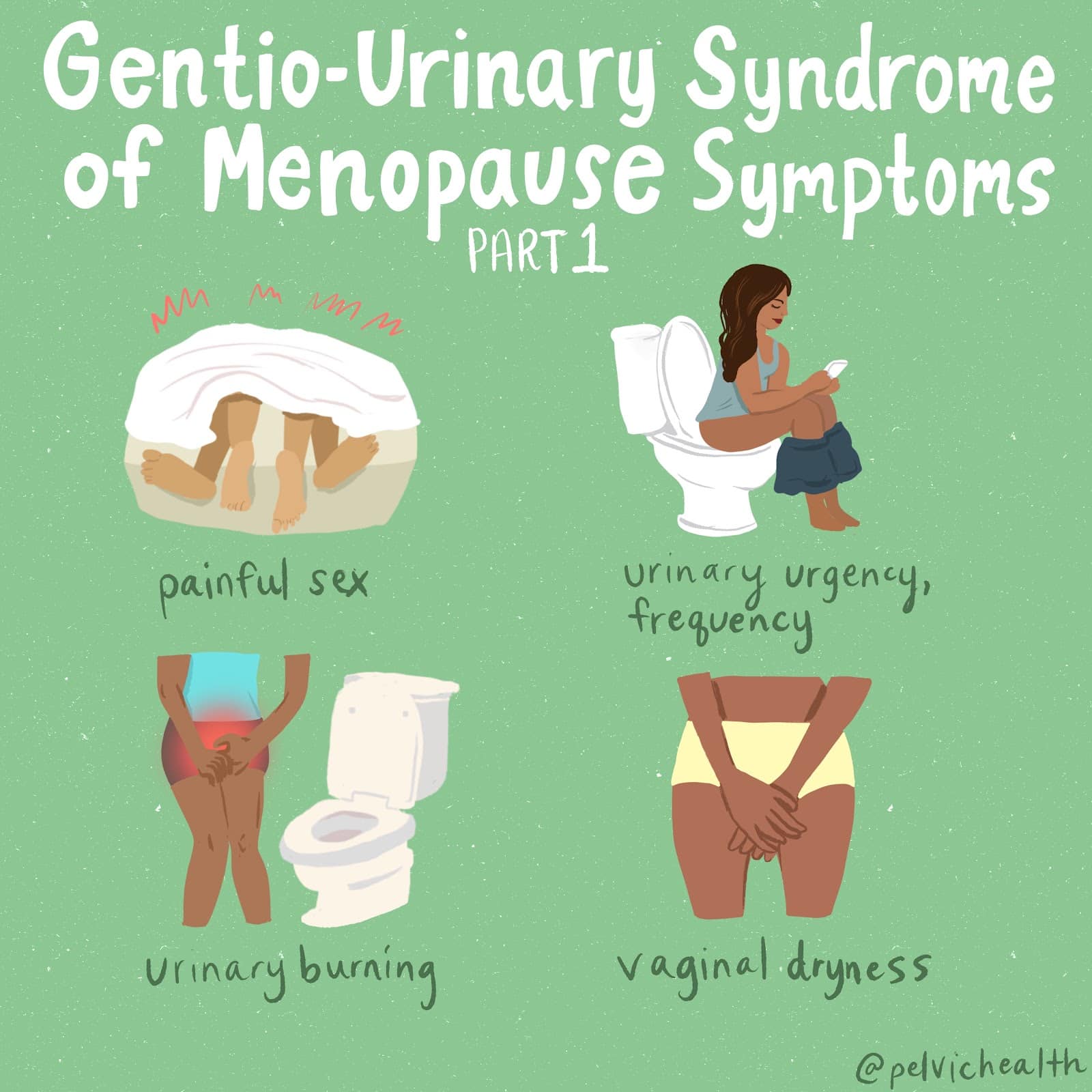
Perimenopause, the transitional phase leading up to menopause, typically begins in a person’s 40s, with menopause itself usually occurring in the early 50s. While systemic symptoms like hot flashes and mood changes are well-known, many people also experience less obvious but equally impactful genitourinary symptoms. These can include painful intercourse, urinary urgency, frequent urination, leakage, burning sensations, recurrent vaginal and urinary tract infections, and vaginal dryness. Collectively, these symptoms are part of the Genitourinary Syndrome of Menopause (GSM). Additionally, many women experience pelvic floor dysfunction, which affects nearly 50% of women by their 50s and can overlap with GSM symptoms.
While systemic hormonal therapy is commonly used to manage menopause symptoms, it may not address the specific needs of those experiencing GSM. The North American Menopause Society recommends the use of vaginal estrogen as an effective treatment for alleviating GSM symptoms and improving quality of life.
Menopause encompasses more than just hot flashes, night sweats, and mood swings. Despite being a common phase affecting roughly half of the population, menopause is often misunderstood, both by the public and many healthcare providers. This gap in knowledge can lead to unnecessary suffering, as many individuals are not fully informed about effective treatments.
Perimenopause, the transitional phase leading up to menopause, typically begins in a person’s 40s, with menopause itself usually occurring in the early 50s. While systemic symptoms like hot flashes and mood changes are well-known, many people also experience less obvious but equally impactful genitourinary symptoms. These can include painful intercourse, urinary urgency, frequent urination, leakage, burning sensations, recurrent vaginal and urinary tract infections, and vaginal dryness. Collectively, these symptoms are part of the Genitourinary Syndrome of Menopause (GSM). Additionally, many women experience pelvic floor dysfunction, which affects nearly 50% of women by their 50s and can overlap with GSM symptoms.
While systemic hormonal therapy is commonly used to manage menopause symptoms, it may not address the specific needs of those experiencing GSM. The North American Menopause Society recommends the use of vaginal estrogen as an effective treatment for alleviating GSM symptoms and improving quality of life.
Differential Diagnosis:
GSM or Pelvic Floor Dysfunction
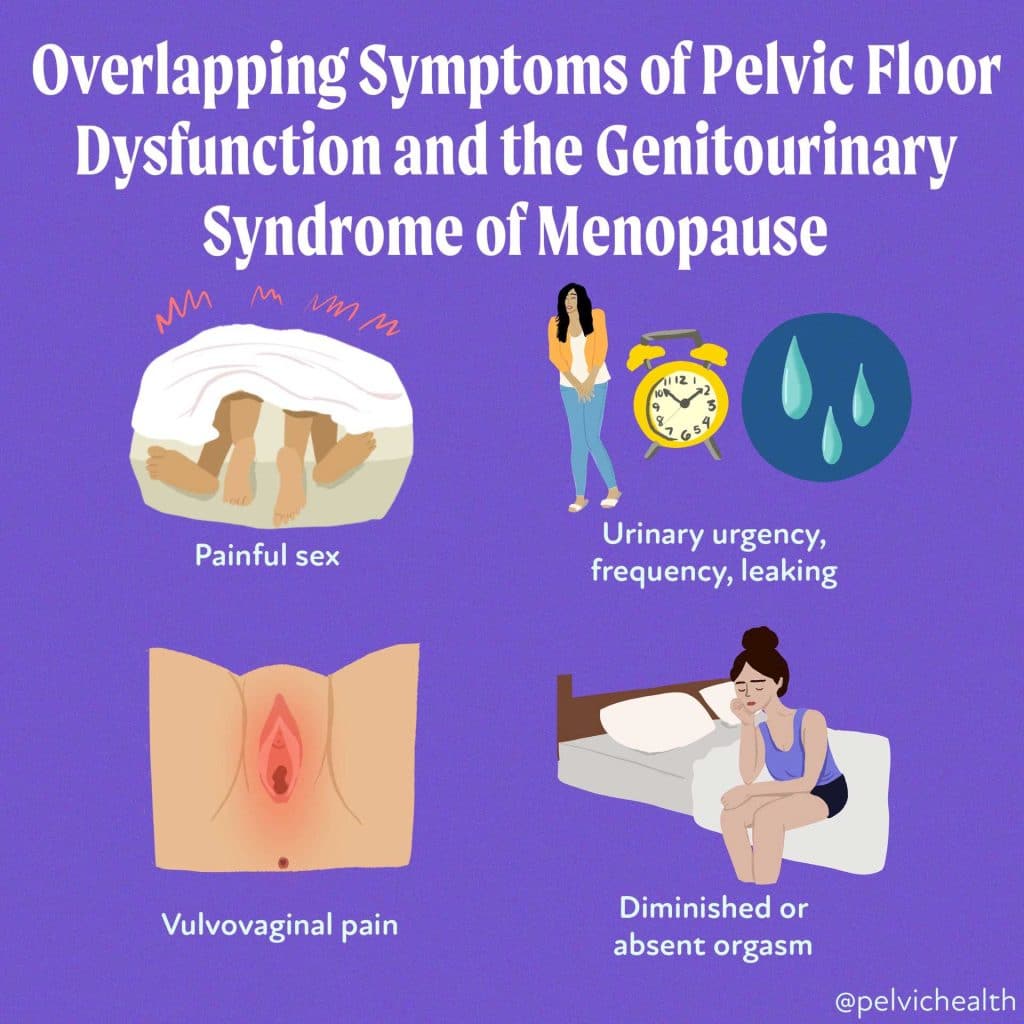
Symptoms of pelvic floor dysfunction and Genitourinary Syndrome of Menopause (GSM) can overlap and include:
- Urinary urgency, frequency, burning, nocturia
- Feelings of bladder or pelvic pressure
- Painful sex
- Diminished or absent orgasm
- Difficulty evacuating stool
- Vulvovaginal pain and burning
- Pain with sitting
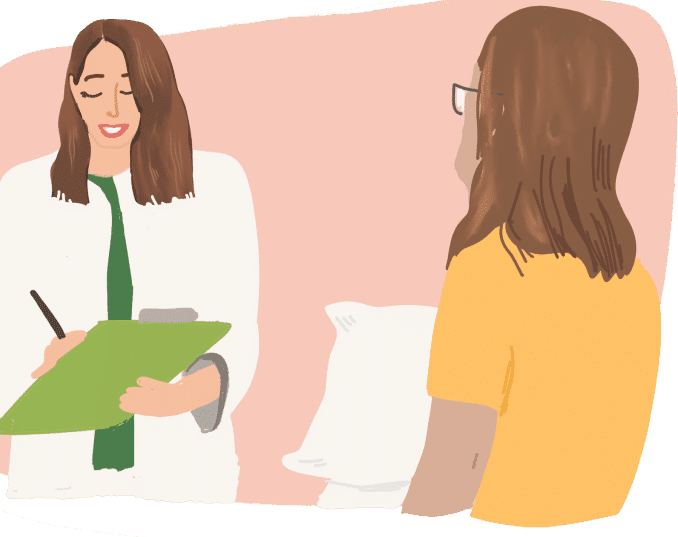
An experienced healthcare provider, whether a pelvic floor physical and occupational therapists or a medical doctor, can conduct several assessments to diagnose pelvic floor dysfunction, hormonal deficiencies, and pelvic organ prolapse. These evaluations include a vulvovaginal visual examination, a Q-tip test to pinpoint areas of pain, and a digital manual examination.
Without appropriate medical management, all women may eventually experience symptoms of Genitourinary Syndrome of Menopause (GSM). Many are unaware that a pelvic floor physical and occupational therapy evaluation can be highly beneficial for addressing the musculoskeletal issues contributing to their discomfort. Combining pelvic floor physical and occupational therapy with medical treatments can be crucial for improving sexual enjoyment and resolving urinary and bowel problems.
Virtual pelvic floor therapy for menopause—contact us to get started!
FACTS
From: https://www.letstalkmenopause.org/further-reading
- Every day, approximately 6,000 women reach menopause.
- In the United States, around 50 million women are currently navigating menopause.
- About 84% of women experience genital, sexual, and urinary discomfort related to menopause, which often does not resolve without intervention, yet fewer than 25% seek assistance.
- An estimated 80% of OB-GYN residents acknowledge feeling inadequately prepared to address menopause-related issues.
- Genitourinary Syndrome of Menopause (GSM) is clinically identified in 90% of postmenopausal women, yet only one-third report experiencing symptoms in surveys.
- Barriers to treatment include women needing to initiate discussions about their symptoms, a belief that these issues are simply part of aging, and a failure to connect symptoms with menopause.
- Only 13% of healthcare providers routinely inquire about menopause-related symptoms with their patients.
- Even after a diagnosis of GSM, many women remain untreated. This is partly due to healthcare providers’ reluctance to prescribe treatments and patients’ concerns about the safety of topical vaginal therapies, despite evidence showing that GSM significantly affects quality of life.
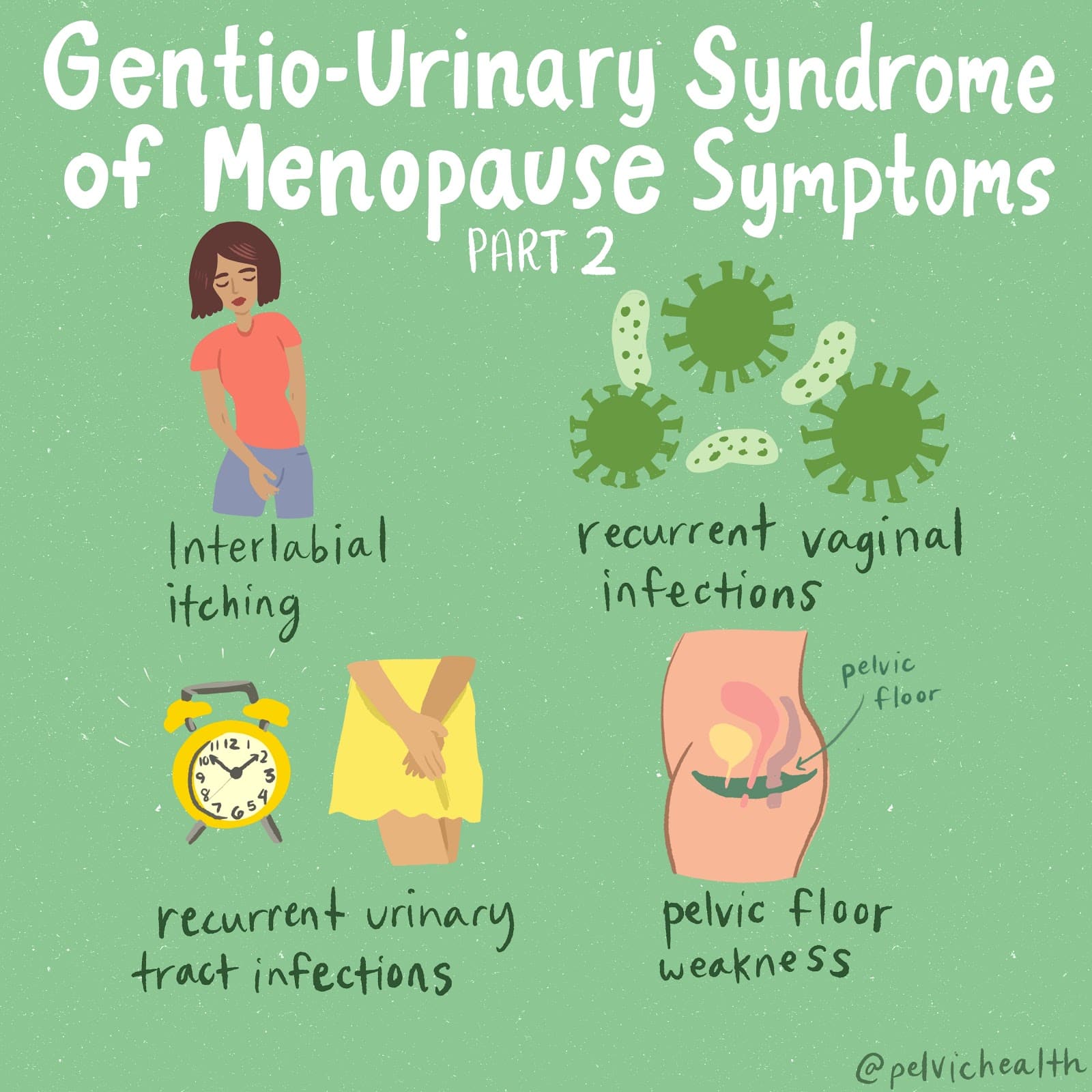
Hormone deficiency can lead to itching in the labial and vaginal areas. Additionally, other dermatological conditions, such as Lichen Sclerosus and cutaneous yeast infections, should also be considered.
During menopause, individuals are particularly susceptible to frequent vaginal and urinary tract infections due to:
- pH and tissue changes
- incomplete bladder emptying
- pelvic organ prolapse compromising urinary function
Recurrent infections are a major contributor to pelvic floor dysfunction. It’s crucial to address these infections promptly, as ongoing visceral-somatic input from untreated infections can lead to increased pain and further dysfunction even after the infection has been resolved. Without appropriate hormone therapy, infections may persist, leading to severe consequences. Untreated infections can cause unprovoked pain, make sexual activity difficult or impossible, and undiagnosed urinary tract infections (UTIs) may progress to kidney issues and other serious complications.
We recommend consulting with a menopause specialist to effectively monitor, prevent, and treat Genitourinary Syndrome of Menopause (GSM) since these issues are both significant and manageable. It’s important to normalize discussions about GSM; there’s no need for embarrassment. With appropriate care, individuals can lead fulfilling lives. Combining virtual pelvic floor physical and occupational therapy with medical management is essential for optimal results.
Treatment:
How We Can Help You
If you’re experiencing sexual dysfunction, it’s beneficial to consult a pelvic floor physical and occupational therapists online. They can assess whether any issues with your pelvic floor are contributing to your symptoms. During your initial virtual evaluation, the therapist will review your medical history, including previous diagnoses, treatments, and their effectiveness. They understand that many patients feel frustrated by the time they seek help.
The therapist will examine your nerves, muscles, joints, tissues, and movement patterns. After the assessment, they will discuss the findings with you and set both short-term and long-term therapy goals. Typically, physical and occupational therapy sessions occur once or twice a week over a period of approximately 12 weeks. Your therapist will also coordinate with other specialists on your treatment team and provide you with a personalized home exercise program. Our goal is to support your recovery and help you achieve the best possible quality of life.
Get virtual pelvic floor therapy for menopause. Book your online consultation today!

Treatment:
How We Can Help You
If you are having issues with your sexual function, it is in your best interest to get evaluated by a therapist for pelvic floor therapy, so they can establish what part, if any, of your pelvic floor may be contributing to the symptoms you are experiencing. During the course of the examination, the physical and occupational therapists will talk to you about your medical history and symptoms, including what you have been previously diagnosed with, the treatments or therapies you have had, and how effective or ineffective these therapies have been for you. It is significant to mention that we fully comprehend what you’ve been dealing with and that the majority of individuals are angry by the time they make it to see us. The physical and occupational therapists will conduct an evaluation of the patient’s nerves, muscles, joints, tissues, and movement patterns while doing the physical examination. After the examination is finished, your therapist will go over the results of the assessment with you. The physical and occupational therapists will conduct an evaluation to determine the cause of your symptoms and will establish both short-term and long-term therapy goals based on the results of the evaluation. Physical therapy treatments are typically administered between once and twice each week for a period of around 12 weeks. Your physical and occupational therapists will assist you in coordinating your recovery with all the other experts on your treatment team. They will provide you with an exercise regimen to complete at home and the sessions you attend in person. We are here to assist you in getting better and living the best life possible.
Get virtual pelvic floor therapy for menopause. Book your online consultation today!


By Rhonda Kotarinos, PT, DPT
In this week’s post, guest author and pelvic floor expert Rhonda Kotarinos shares a controversy from the 2016 International Pelvic Pain Society conference.
In October I had the privilege of presenting at the International Pelvic Pain Society’s annual meeting. During one of the presentations, a discussion ensued regarding the term contracture. The discussion was centered on whether or not the pelvic floor could ever be in a state of contracture. Given the confusion that was evident during this discussion, I thought a review of the muscle physiology associated with skeletal muscle contracture would be useful to our membership.
First, one should review the definition of contracture. Central to the definition is that a muscle or group of muscles remains in a persistent state of shortening to the point that complete range of motion of the muscle is limited and is resistant to stretching.1 Kendall et al defines a contracture as a marked decrease in muscle length where the range of motion in the direction of elongation of the muscle is markedly limited.2 Of course there are neuromuscular and ischemic pathological conditions where contractures can develop. Contractures associated with pathological conditions are usually considered irreversible.
An additional skeletal muscle phenomenon is the length-tension curve of muscle. The maximal force generated by a muscle contraction is when the muscle is at some midpoint in its range of motion. A muscle that is too short or too long will have a decreased force generation. Therefore, a muscle in a state of contracture will be weak when assessed for strength.
Given the definitions above, can the pelvic floor be in a state of contracture? The pelvic floor, with its supportive function, is considered a postural muscle composed of predominately slow twitch muscle fibers. Slow twitch muscle fibers trigger more easily and are capable of sustained contraction therefore are more inclined to become shortened and tight.3 Even though there are fast twitch muscle fibers within the pelvic floor muscles it is possible that they can be transformed from fast twitch to slow twitch. The neural impulse transmitted by the nerve conditions the fiber type.4 A contracture develops slowly but is maintained by constant continued neural stimulation.5 Postural muscles are known to shorten in response to stress.6 With pain or a constant sense of urinary urge, there is psychological stress but there is also the physical response of protective guarding. Guarding is the additional recruitment of the pelvic floor in response to pain or to inhibit urge. Initially there will be active shortening, but it will lead to a shortening of the muscle(s) without any electrical activity.7
Therefore, it appears that the pelvic floor should respond as any other skeletal muscle in the body, and is capable of developing a reversible contracture. The next question to answer is how best to evaluate the pelvic floor for contracture – is it short and weak or long and weak?
References:
- Salter R B, Textbook of Disorders and Injuries of the Musculoskeletal System. Philadelphia, Lippincott Williams &Wilkins. 1999.
- Kendall F P, McCreary E K, Provance P G. Muscles Testing and Function. Baltimore. Williams and Wilkins Inc. 1993.
- Waddell G. The Back Pain Revolution. Churchill Livingston, Edinburgh. 1998.
- Buller A. Interactions between motor neurons and muscles. Journal of Physiology (London) 150:417-439.
- Graham H. Muscles and Their Neural Control. New York, John Wiley & Sons. 1983.
- Chaitow L. Muscle Energy Techniques. Edinburgh, Churchill Livingstone, 2006.
- An Exploratory and Analytical Survey of Therapeutic Exercise, Northwestern University Special Therapeutic Exercise Project. Am J Phys Med. 1967:46;1.
About Rhonda:
Dr. Rhonda Kotarinos received her Bachelor of Science degree in Physical and Occupational Therapy from the University of Illinois, Chicago in 1974. She began her professional career as a staff physical and occupational therapists in a hospital acute care physical and occupational therapy department. Her clinical experience grew to include responsibilities in hospital administration, eventually becoming the director of a physical and occupational therapy department. In 1980, she went into private practice where she remains today. In 1989, Rhonda completed her Masters of Science in Physical and Occupational Therapy from Northwestern University with a specialization in Obstetrics and Gynecology. She served the American Physical and Occupational Therapy Association as President of the Section on Women’s Health for 7 years. This experience heightened her interest in pelvic floor dysfunction, where she currently concentrates her clinical, educational and research responsibilities. Rhonda lectures and publishes internationally, and is an active member of the American Urogynecologic Society, American College of Obstetricians and Gynecologists, The International Association for the Study of Pain, The American Pain Society, International Myopain Society, International Continence Society and the International Pelvic Pain Society. Rhonda has also completed the Trigger Point Dry Needling course at Andrews University.
FAQ
What are pelvic floor muscles?
The pelvic floor muscles are a group of muscles that run from the coccyx to the pubic bone. They are part of the core, helping to support our entire body as well as providing support for the bowel, bladder and uterus. These muscles help us maintain bowel and bladder control and are involved in sexual pleasure and orgasm. The technical name of the pelvic floor muscles is the Levator Ani muscle group. The pudendal nerve, the levator ani nerve, and branches from the S2 – S4 nerve roots innervate the pelvic floor muscles. They are under voluntary and autonomic control, which is a unique feature only they possess compared to other muscle groups.
What is pelvic floor physical and occupational therapy?
Pelvic floor physical and occupational therapy is a specialized area of physical and occupational therapy. Currently, physical and occupational therapistss need advanced post-graduate education to be able to help people with pelvic floor dysfunction because pelvic floor disorders are not yet being taught in standard physical and occupational therapy curricula. The Pelvic Health and Rehabilitation Center provides extensive training for our staff because we recognize the limitations of physical and occupational therapy education in this unique area.
What happens at pelvic floor therapy?
During an evaluation for pelvic floor dysfunction the physical and occupational therapists will take a detailed history. Following the history the physical and occupational therapists will leave the room to allow the patient to change and drape themselves. The physical and occupational therapists will return to the room and using gloved hands will perform an external and internal manual assessment of the pelvic floor and girdle muscles. The physical and occupational therapists will once again leave the room and allow the patient to dress. Following the manual examination there may also be an examination of strength, motor control, and overall biomechanics and neuromuscular control. The physical and occupational therapists will then communicate the findings to the patient and together with their patient they establish an assessment, short term and long term goals and a treatment plan. Typically people with pelvic floor dysfunction are seen one time per week for one hour for varying amounts of time based on the severity and chronicity of the disease. A home exercise program will be established and the physical and occupational therapists will help coordinate other providers on the treatment team. Typically patients are seen for 3 months to a year.
What is pudendal neuralgia and how is it treated?
Pudendal Neuralgia is a clinical diagnosis that means pain in the sensory distribution of the pudendal nerve. The pudendal nerve is a mixed nerve that exits the S2 – S4 sacral nerve roots, we have a right and left pudendal nerve and each side has three main trunks: the dorsal branch, the perineal branch, and the inferior rectal branch. The branches supply sensation to the clitoris/penis, labia/scrotum, perineum, anus, the distal ⅓ of the urethra and rectum, and the vulva and vestibule. The nerve branches also control the pelvic floor muscles. The pudendal nerve follows a tortuous path through the pelvic floor and girdle, leaving it vulnerable to compression and tension injuries at various points along its path.
Pudendal Neuralgia occurs when the nerve is unable to slide, glide and move normally and as a result, people experience pain in some or all of the above-mentioned areas. Pelvic floor physical and occupational therapy plays a crucial role in identifying the mechanical impairments that are affecting the nerve. The physical and occupational therapy treatment plan is designed to restore normal neural function. Patients with pudendal neuralgia require pelvic floor physical and occupational therapy and may also benefit from medical management that includes pharmaceuticals and procedures such as pudendal nerve blocks or botox injections.
What is interstitial cystitis and how is it treated?
Interstitial Cystitis is a clinical diagnosis characterized by irritative bladder symptoms such as urinary urgency, frequency, and hesitancy in the absence of infection. Research has shown the majority of patients who meet the clinical definition have pelvic floor dysfunction and myalgia. Therefore, the American Urologic Association recommends pelvic floor physical and occupational therapy as first-line treatment for Interstitial Cystitis. Patients will benefit from pelvic floor physical and occupational therapy and may also benefit from pharmacologic management or medical procedures such as bladder instillations.
Who is the Pelvic Health and Rehabilitation Team?
The Pelvic Health and Rehabilitation Center was founded by Elizabeth Akincilar and Stephanie Prendergast in 2006, they have been treating people with pelvic floor disorders since 2001. They were trained and mentored by a medical doctor and quickly became experts in treating pelvic floor disorders. They began creating courses and sharing their knowledge around the world. They expanded to 11 locations in the United States and developed a residency style training program for their employees with ongoing weekly mentoring. The physical and occupational therapistss who work at PHRC have undergone more training than the majority of pelvic floor physical and occupational therapistss and as a result offer efficient and high quality care.
How many years of experience do we have?
Stephanie and Liz have 24 years of experience and help each and every team member become an expert in the field through their training and mentoring program.
Why PHRC versus anyone else?
PHRC is unique because of the specific focus on pelvic floor disorders and the leadership at our company. We are constantly lecturing, teaching, and staying ahead of the curve with our connections to medical experts and emerging experts. As a result, we are able to efficiently and effectively help our patients restore their pelvic health.
Do we treat men for pelvic floor therapy?
The Pelvic Health and Rehabilitation Center is unique in that the Cofounders have always treated people of all genders and therefore have trained the team members and staff the same way. Many pelvic floor physical and occupational therapistss focus solely on people with vulvas, this is not the case here.
Do I need pelvic floor therapy forever?
The majority of people with pelvic floor dysfunction will undergo pelvic floor physical and occupational therapy for a set amount of time based on their goals. Every 6 -8 weeks goals will be re-established based on the physical improvements and remaining physical impairments. Most patients will achieve their goals in 3 – 6 months. If there are complicating medical or untreated comorbidities some patients will be in therapy longer.
By admin
You hit your 40s or 50s and all of the sudden things start spiraling: Your period is out of whack, your undergarments are damp with urine after a one mile walk with your dog, and you can no longer wear your favorite jeans because they’re irritating to your lady parts. As if that wasn’t enough to deal with, you also wake up in the middle of the night in a puddle of sweat, you have to forgo the post-dinner tiramisu because you know it’s already going to take three times as long to exercise away the two glasses of wine you’ve consumed, and you’re in bed an hour before your partner because sex is uncomfortable. Of course, these are all quite animated examples, and women that are perimenopausal may or may not experience irregular menstrual cycles, urinary incontinence, vaginal dryness, hot flashes, interrupted sleep, weight gain, and painful intercourse. But because these symptoms are possible, it’s important to understand the changes our bodies go through midlife so we can find ways to mitigate some of these unpleasantries.
True menopause is defined as the absence of your menstrual cycle for 12 consecutive months, however, symptoms can creep in sooner during the perimenopausal stage. So what exactly happens to our bodies during this time that funnels them into this craze? In the simplest of terms, when we reach perimenopausal age there is a natural decline of the reproductive hormones released by the ovaries. These include estrogen, progesterone, and testosterone. Rachel wrote a fantastic post highlighting the functions of these hormones. As Rachel discussed, the reproductive hormones play an integral role in maintaining healthy vulvovaginal tissue. Because these tissues are hormone-dependent, the decrease in available reproductive hormones during menopause can lead to pelvic floor muscle strength deficits, decreased elasticity of the vaginal walls, decreased lubrication, and secondary irritation of the vestibule and external genitalia atrophy. For these reasons, perimenopausal women can sometimes experience pain with intercourse, or “dyspareunia.” It is estimated that up to 40% of women hovering around menopause experience painful sex, but only half of these women seek medical assistance.1 This statistic is shocking, as dyspareunia can have negative implications on quality of life. In a cross-sectional study examining the differences in sexual function and quality of life between perimenopausal women with and without dyspareunia, those with dyspareunia reported impaired sexual function (e.g., diminishing arousal, inadequate lubrication, less frequent orgasm) and decreased quality of life.5
Fortunately, “menopause-induced” dyspareunia is not a life sentence. Let’s go ahead and debunk the myth that once you hit menopause, painful sex has to become the the new normal. Yes, menopause is part of the aging process, but by no means should it interfere with your ability to have a healthy, satisfying, and pain-free sex life. Thankfully, there are many options available to help counteract or manage some of the vulvovaginal changes with menopause and associated painful intercourse:
- Hormone Replacement Therapy – To some women, the words “hormone replacement therapy” sound scary. After findings from studies such as The Million Women Study and those performed by the Women’s Health Initiative were released in the early 2000s, many perimenopausal women have been resistant to going this route because they suggested that women who participated in hormone replacement therapy had an increased risk of heart-related conditions and cancer. However, some in the medical community have met these conclusions with resistance, stating that either the doses used in these studies were too high or that the sample groups consisted of women way past menopausal years. Read more about how to differentiate quality studies from the not-so-great ones. Subsequent studies have since found no significant differences in these risks and have stated that hormone replacement therapy is effective in managing menopausal symptoms. However, if you have a history of reproductive hormone cancers such as breast or ovarian, hesitancy may be warranted. But have no fear, there are many other options for you which you can find below.
- Localized Hormones (i.e. Estrace, Vagifem, Estring) – As opposed to the systemic delivery of hormones via hormone replacement therapy, localized hormones in the form of a topical cream, insert, or ring may be a good alternative as they only target adjacent vulvovaginal tissues. These can be prescribed “off the shelf” or compounded with a base that is agreeable with you and your body. It can take weeks to months to start to see positive tissue changes with localized hormones so being patient with the process is key. A critical review of the literature suggests localized topical hormones can improve menopause-initiated vaginal tissue changes and associated symptoms.1
- Lubricants (Water-, Petroleum-, Natural Oil-, Silicone-based) – Lubricants are a non-hormonal option that can help bring moisture back to the vulvovaginal tissues. Because they are non-hormonal, they do not exactly mimic the effects of the above hormonal options, but can be used to help manage vaginal dryness and pain during intercourse. There are many types of lubricants available, and something as simple as coconut oil or as fancy as Vital V Wild Yam Salve can be used as a lubricant. Visit Melinda’s post for more specifics about lubricants.
- Phytoestrogens – If you prefer to go an even more natural route, phytoestrogens may be a good starting point for you. These are naturally occurring plant compounds that have estrogen-like properties and can be found in products such as soy, lentils, flaxseed and berries. The jury is still out on whether or not they directly affect the vulvovaginal tissue, but there have been some anecdotal success. Specific dietary guidelines are still being explored.2,4
If you’re approaching menopause and have noticed any vulvovaginal tissue changes or experience pain with intercourse, you may want to consult with your physician about one of the above options. In addition to addressing the tissue changes, you may also consider consulting with a pelvic floor physical and occupational therapists. In some instances, especially in the case of longstanding dyspareunia, the muscles of the pelvic floor may guard as an innate protective response to pain. When the pelvic floor muscles rest in this contracted state, they decrease the blood flow to the area and can cause more pain creating a negative feedback loop. For cases such as this, a physical and occupational therapists can perform manual techniques and teach you strategies to help relax the pelvic floor muscles and restore normal mobility. Here’s what you can expect with pelvic floor physical and occupational therapy. This in combination with treatment specific to the vulvovaginal tissues can help reset you to a pain-free and pleasurable sex life.
As an aside, it is also worth mentioning that any decline or alteration in the reproductive hormones can cause similar menopausal-like vulvovaginal tissue changes and potential dyspareunia. These include history of hysterectomy, radiation to the pelvis or use of oral birth control pills. Check out the links to read up on some of these specifically!
References:
- Alina Kao, Yitzchak BM, Kapuscinski A, Khalife S. Dyspareunia in postmenopausal women: A critical review. Pain Research and Management. 2008;13(3):243-254.
- Glazier MG, Bowman MA. A review of the evidence for the use of phytoestrogens as a replacement for traditional estrogen replacement therapy. Archives of Internal Medicine Journal. 2001;161(9):1161-72.
- Kingsberg S, Kellogg S, Krychman M. Treating dyspareunia caused by vaginal atrophy: a review of treatment options using vaginal estrogen therapy. International Journal of Women’s Health. 2010; 1:105-11.
- Patisaul, H. B., & Jefferson, W. (2010). The pros and cons of phytoestrogens. Frontiers in Neuroendocrinology, 31(4), 400–419.
- Schvartzman R, Bertotto A, Schvartzman L, Wender MC. Pelvic floor muscle activity, quality of life, and sexual function in peri- and recently postmenopausal women with and without dyspareunia: a cross-sectional study. Journal of Sex and Marital Therapy. 2014;40(5):367-78.
FAQ
What are pelvic floor muscles?
The pelvic floor muscles are a group of muscles that run from the coccyx to the pubic bone. They are part of the core, helping to support our entire body as well as providing support for the bowel, bladder and uterus. These muscles help us maintain bowel and bladder control and are involved in sexual pleasure and orgasm. The technical name of the pelvic floor muscles is the Levator Ani muscle group. The pudendal nerve, the levator ani nerve, and branches from the S2 – S4 nerve roots innervate the pelvic floor muscles. They are under voluntary and autonomic control, which is a unique feature only they possess compared to other muscle groups.
What is pelvic floor physical and occupational therapy?
Pelvic floor physical and occupational therapy is a specialized area of physical and occupational therapy. Currently, physical and occupational therapistss need advanced post-graduate education to be able to help people with pelvic floor dysfunction because pelvic floor disorders are not yet being taught in standard physical and occupational therapy curricula. The Pelvic Health and Rehabilitation Center provides extensive training for our staff because we recognize the limitations of physical and occupational therapy education in this unique area.
What happens at pelvic floor therapy?
During an evaluation for pelvic floor dysfunction the physical and occupational therapists will take a detailed history. Following the history the physical and occupational therapists will leave the room to allow the patient to change and drape themselves. The physical and occupational therapists will return to the room and using gloved hands will perform an external and internal manual assessment of the pelvic floor and girdle muscles. The physical and occupational therapists will once again leave the room and allow the patient to dress. Following the manual examination there may also be an examination of strength, motor control, and overall biomechanics and neuromuscular control. The physical and occupational therapists will then communicate the findings to the patient and together with their patient they establish an assessment, short term and long term goals and a treatment plan. Typically people with pelvic floor dysfunction are seen one time per week for one hour for varying amounts of time based on the severity and chronicity of the disease. A home exercise program will be established and the physical and occupational therapists will help coordinate other providers on the treatment team. Typically patients are seen for 3 months to a year.
What is pudendal neuralgia and how is it treated?
Pudendal Neuralgia is a clinical diagnosis that means pain in the sensory distribution of the pudendal nerve. The pudendal nerve is a mixed nerve that exits the S2 – S4 sacral nerve roots, we have a right and left pudendal nerve and each side has three main trunks: the dorsal branch, the perineal branch, and the inferior rectal branch. The branches supply sensation to the clitoris/penis, labia/scrotum, perineum, anus, the distal ⅓ of the urethra and rectum, and the vulva and vestibule. The nerve branches also control the pelvic floor muscles. The pudendal nerve follows a tortuous path through the pelvic floor and girdle, leaving it vulnerable to compression and tension injuries at various points along its path.
Pudendal Neuralgia occurs when the nerve is unable to slide, glide and move normally and as a result, people experience pain in some or all of the above-mentioned areas. Pelvic floor physical and occupational therapy plays a crucial role in identifying the mechanical impairments that are affecting the nerve. The physical and occupational therapy treatment plan is designed to restore normal neural function. Patients with pudendal neuralgia require pelvic floor physical and occupational therapy and may also benefit from medical management that includes pharmaceuticals and procedures such as pudendal nerve blocks or botox injections.
What is interstitial cystitis and how is it treated?
Interstitial Cystitis is a clinical diagnosis characterized by irritative bladder symptoms such as urinary urgency, frequency, and hesitancy in the absence of infection. Research has shown the majority of patients who meet the clinical definition have pelvic floor dysfunction and myalgia. Therefore, the American Urologic Association recommends pelvic floor physical and occupational therapy as first-line treatment for Interstitial Cystitis. Patients will benefit from pelvic floor physical and occupational therapy and may also benefit from pharmacologic management or medical procedures such as bladder instillations.
Who is the Pelvic Health and Rehabilitation Team?
The Pelvic Health and Rehabilitation Center was founded by Elizabeth Akincilar and Stephanie Prendergast in 2006, they have been treating people with pelvic floor disorders since 2001. They were trained and mentored by a medical doctor and quickly became experts in treating pelvic floor disorders. They began creating courses and sharing their knowledge around the world. They expanded to 11 locations in the United States and developed a residency style training program for their employees with ongoing weekly mentoring. The physical and occupational therapistss who work at PHRC have undergone more training than the majority of pelvic floor physical and occupational therapistss and as a result offer efficient and high quality care.
How many years of experience do we have?
Stephanie and Liz have 24 years of experience and help each and every team member become an expert in the field through their training and mentoring program.
Why PHRC versus anyone else?
PHRC is unique because of the specific focus on pelvic floor disorders and the leadership at our company. We are constantly lecturing, teaching, and staying ahead of the curve with our connections to medical experts and emerging experts. As a result, we are able to efficiently and effectively help our patients restore their pelvic health.
Do we treat men for pelvic floor therapy?
The Pelvic Health and Rehabilitation Center is unique in that the Cofounders have always treated people of all genders and therefore have trained the team members and staff the same way. Many pelvic floor physical and occupational therapistss focus solely on people with vulvas, this is not the case here.
Do I need pelvic floor therapy forever?
The majority of people with pelvic floor dysfunction will undergo pelvic floor physical and occupational therapy for a set amount of time based on their goals. Every 6 -8 weeks goals will be re-established based on the physical improvements and remaining physical impairments. Most patients will achieve their goals in 3 – 6 months. If there are complicating medical or untreated comorbidities some patients will be in therapy longer.

By Stephanie Prendergast
After a fun holiday season the crew at PHRC is back at work and excited to start the new year. In this week’s post we take a grateful look back on 2016 as we start working on our goals for 2017. Last year,
We published our book…..

On January 16, 2016, Pelvic Pain Explained arrived on our doorsteps! Liz and I know how hard it can be for patients to navigate effective treatment for pelvic floor disorders. The entire PHRC team fights on behalf of our patients everyday. We are physical and occupational therapistss, not writers, but with the right help we were excited to publish what we know about pelvic pain and how to get rid of it.
We moved and grew….
In February of 2016, PHRC expanded from Waltham into a larger office in Lexington, MA. PHRC welcomed administrative assistant Erika Toronto and physical and occupational therapistss Shannon Pacella to the team. Back in California, PHRC welcomed administrative assistants Aeryn Merced and Desiree Torres to San Francisco, physical and occupational therapistss Ciel Yogis and Nicole Davis to the Bay Area, and Jandra Mueller and Katie Hunter (as of last week!) to Los Angeles.
BestMemes2016final (Converted) from Pelvic Health on Vimeo.
We are truly blessed with a supportive, talented team which grew our company by much more than just numbers in 2016. We found our resident “Martha Stewart’ with graphic design talent in Erika Toronto who makes our memes, Rachel Gelman continues to make us laugh with her pelvic humor on the memes and in our blogs, Kristen Leli puts our reluctant faces and the cute fur babies of PHRC on Instagram, while Fiona Carlone organizes our blogs, podcasts, and media publications on Pinterest! Malinda Wright, Rachel Gelman, Melinda Fontaine and Allison Romero were pivotal in training our new employees, while Britt Van Hees taught us all a thing or two (or five about the coccyx! Read her post here). Breann Petree remains an unsung hero on the administrative front in the Bay Area while Brittany Abajelo keeps our grammar in tact for each and every blog post. Speaking of the blog….
As the Pelvic Turns Blog…
The physical and occupational therapistss of PHRC and a few esteemed colleagues published 48 blog posts in 2016! While I love them all, Here are the top 5 posts from 2016, in no particular order:
- Jagged Little Pill: how oral contraceptives wreak havoc on the female body by Joshua Gonzalez, MD
- How hernias cause pelvic pain by Shirin Towfigh, MD
- Your pelvic floor, what is it good for? by Shannon Pacella, DPT
- Diastasis Recti: closing the gap between research and function by Jandra Mueller, DPT
- A mesh of a situation by Liz Akincilar, MSPT
Please visit our Pinterest page to see all of our posts, organized by category (wink, wink).
PHRC in the news….
2016 was a big year for postpartum pelvic health care, or lack there of, in the media. Stephanie and Liz talked to Cosmo magazine and the amount of shares, comments, and reads surprised everyone. Stephanie also talked to Fox Health News, NPR, and Mother Jones.
PHRC turned 10!
2016 PHRC Anniversary Blog from Pelvic Health on Vimeo.
And finally, PHRC turned 10 this year! While it is a major milestone, it truly seems small compared to the balance and inspiration our entire crew brings to to table. As we close 2016, the entire crew at PHRC is ready to work hard for our patients and colleagues in 2017 and we wish everyone a healthy, prosperous New Year!
FAQ
What are pelvic floor muscles?
The pelvic floor muscles are a group of muscles that run from the coccyx to the pubic bone. They are part of the core, helping to support our entire body as well as providing support for the bowel, bladder and uterus. These muscles help us maintain bowel and bladder control and are involved in sexual pleasure and orgasm. The technical name of the pelvic floor muscles is the Levator Ani muscle group. The pudendal nerve, the levator ani nerve, and branches from the S2 – S4 nerve roots innervate the pelvic floor muscles. They are under voluntary and autonomic control, which is a unique feature only they possess compared to other muscle groups.
What is pelvic floor physical and occupational therapy?
Pelvic floor physical and occupational therapy is a specialized area of physical and occupational therapy. Currently, physical and occupational therapistss need advanced post-graduate education to be able to help people with pelvic floor dysfunction because pelvic floor disorders are not yet being taught in standard physical and occupational therapy curricula. The Pelvic Health and Rehabilitation Center provides extensive training for our staff because we recognize the limitations of physical and occupational therapy education in this unique area.
What happens at pelvic floor therapy?
During an evaluation for pelvic floor dysfunction the physical and occupational therapists will take a detailed history. Following the history the physical and occupational therapists will leave the room to allow the patient to change and drape themselves. The physical and occupational therapists will return to the room and using gloved hands will perform an external and internal manual assessment of the pelvic floor and girdle muscles. The physical and occupational therapists will once again leave the room and allow the patient to dress. Following the manual examination there may also be an examination of strength, motor control, and overall biomechanics and neuromuscular control. The physical and occupational therapists will then communicate the findings to the patient and together with their patient they establish an assessment, short term and long term goals and a treatment plan. Typically people with pelvic floor dysfunction are seen one time per week for one hour for varying amounts of time based on the severity and chronicity of the disease. A home exercise program will be established and the physical and occupational therapists will help coordinate other providers on the treatment team. Typically patients are seen for 3 months to a year.
What is pudendal neuralgia and how is it treated?
Pudendal Neuralgia is a clinical diagnosis that means pain in the sensory distribution of the pudendal nerve. The pudendal nerve is a mixed nerve that exits the S2 – S4 sacral nerve roots, we have a right and left pudendal nerve and each side has three main trunks: the dorsal branch, the perineal branch, and the inferior rectal branch. The branches supply sensation to the clitoris/penis, labia/scrotum, perineum, anus, the distal ⅓ of the urethra and rectum, and the vulva and vestibule. The nerve branches also control the pelvic floor muscles. The pudendal nerve follows a tortuous path through the pelvic floor and girdle, leaving it vulnerable to compression and tension injuries at various points along its path.
Pudendal Neuralgia occurs when the nerve is unable to slide, glide and move normally and as a result, people experience pain in some or all of the above-mentioned areas. Pelvic floor physical and occupational therapy plays a crucial role in identifying the mechanical impairments that are affecting the nerve. The physical and occupational therapy treatment plan is designed to restore normal neural function. Patients with pudendal neuralgia require pelvic floor physical and occupational therapy and may also benefit from medical management that includes pharmaceuticals and procedures such as pudendal nerve blocks or botox injections.
What is interstitial cystitis and how is it treated?
Interstitial Cystitis is a clinical diagnosis characterized by irritative bladder symptoms such as urinary urgency, frequency, and hesitancy in the absence of infection. Research has shown the majority of patients who meet the clinical definition have pelvic floor dysfunction and myalgia. Therefore, the American Urologic Association recommends pelvic floor physical and occupational therapy as first-line treatment for Interstitial Cystitis. Patients will benefit from pelvic floor physical and occupational therapy and may also benefit from pharmacologic management or medical procedures such as bladder instillations.
Who is the Pelvic Health and Rehabilitation Team?
The Pelvic Health and Rehabilitation Center was founded by Elizabeth Akincilar and Stephanie Prendergast in 2006, they have been treating people with pelvic floor disorders since 2001. They were trained and mentored by a medical doctor and quickly became experts in treating pelvic floor disorders. They began creating courses and sharing their knowledge around the world. They expanded to 11 locations in the United States and developed a residency style training program for their employees with ongoing weekly mentoring. The physical and occupational therapistss who work at PHRC have undergone more training than the majority of pelvic floor physical and occupational therapistss and as a result offer efficient and high quality care.
How many years of experience do we have?
Stephanie and Liz have 24 years of experience and help each and every team member become an expert in the field through their training and mentoring program.
Why PHRC versus anyone else?
PHRC is unique because of the specific focus on pelvic floor disorders and the leadership at our company. We are constantly lecturing, teaching, and staying ahead of the curve with our connections to medical experts and emerging experts. As a result, we are able to efficiently and effectively help our patients restore their pelvic health.
Do we treat men for pelvic floor therapy?
The Pelvic Health and Rehabilitation Center is unique in that the Cofounders have always treated people of all genders and therefore have trained the team members and staff the same way. Many pelvic floor physical and occupational therapistss focus solely on people with vulvas, this is not the case here.
Do I need pelvic floor therapy forever?
The majority of people with pelvic floor dysfunction will undergo pelvic floor physical and occupational therapy for a set amount of time based on their goals. Every 6 -8 weeks goals will be re-established based on the physical improvements and remaining physical impairments. Most patients will achieve their goals in 3 – 6 months. If there are complicating medical or untreated comorbidities some patients will be in therapy longer.