BALANCE: A Perimenopause Journey: Why This Documentary Matters for Women’s Pelvic Health

BALANCE: A Perimenopause Journey — Why This Documentary Matters for Women’s Pelvic Health
By Stephanie Prendergast, MPT, PHRC Pasadena
A new four-part documentary series, BALANCE: A Perimenopause Journey, is bringing long-overdue attention to one of the most misunderstood and under-recognized phases of women’s health: perimenopause. Premiering in early 2026, this powerful series explores the years leading up to menopause—years that can be marked by profound hormonal shifts, physical symptoms, emotional changes, and significant impacts on quality of life.
For decades, perimenopause has been minimized, medicalized without nuance, or dismissed as something women should simply “push through.” BALANCE challenges that narrative. Through a combination of deeply personal stories and expert medical commentary, the series invites viewers to understand perimenopause as a major biopsychosocial transition, not a minor inconvenience.

At Pelvic Health and Rehab Center, we are thrilled to see this conversation moving into the mainstream—because many of the symptoms discussed in the series overlap directly with what we treat every day in pelvic health physical therapy.
What Is Perimenopause, Really?
Perimenopause is the transitional phase before menopause, often beginning in a woman’s 40s but sometimes earlier. During this time, estrogen and progesterone levels fluctuate unpredictably rather than declining in a smooth, linear way. These fluctuations can last for several years and may cause a wide range of symptoms, including:
- Sleep disturbances and insomnia
- Mood changes, anxiety, or depression
- Brain fog and memory challenges
- Fatigue and decreased exercise tolerance
- Changes in sexual desire, arousal, and orgasm
- Vaginal dryness or irritation
- Pelvic pain
- Urinary urgency, frequency, or leakage

BALANCE does an excellent job of expanding the conversation beyond hot flashes and night sweats, highlighting how pervasive and disruptive these symptoms can be—especially when women are juggling careers, caregiving, relationships, and their own health needs.
The Missing Link: Pelvic Floor Dysfunction in Perimenopause
One of the most important takeaways—though not always explicitly named—is how often pelvic floor dysfunction emerges or worsens during perimenopause.
Hormonal fluctuations affect:
- Muscle tone and coordination
- Connective tissue elasticity
- Blood flow and tissue health
- Pain sensitivity and nervous system regulation
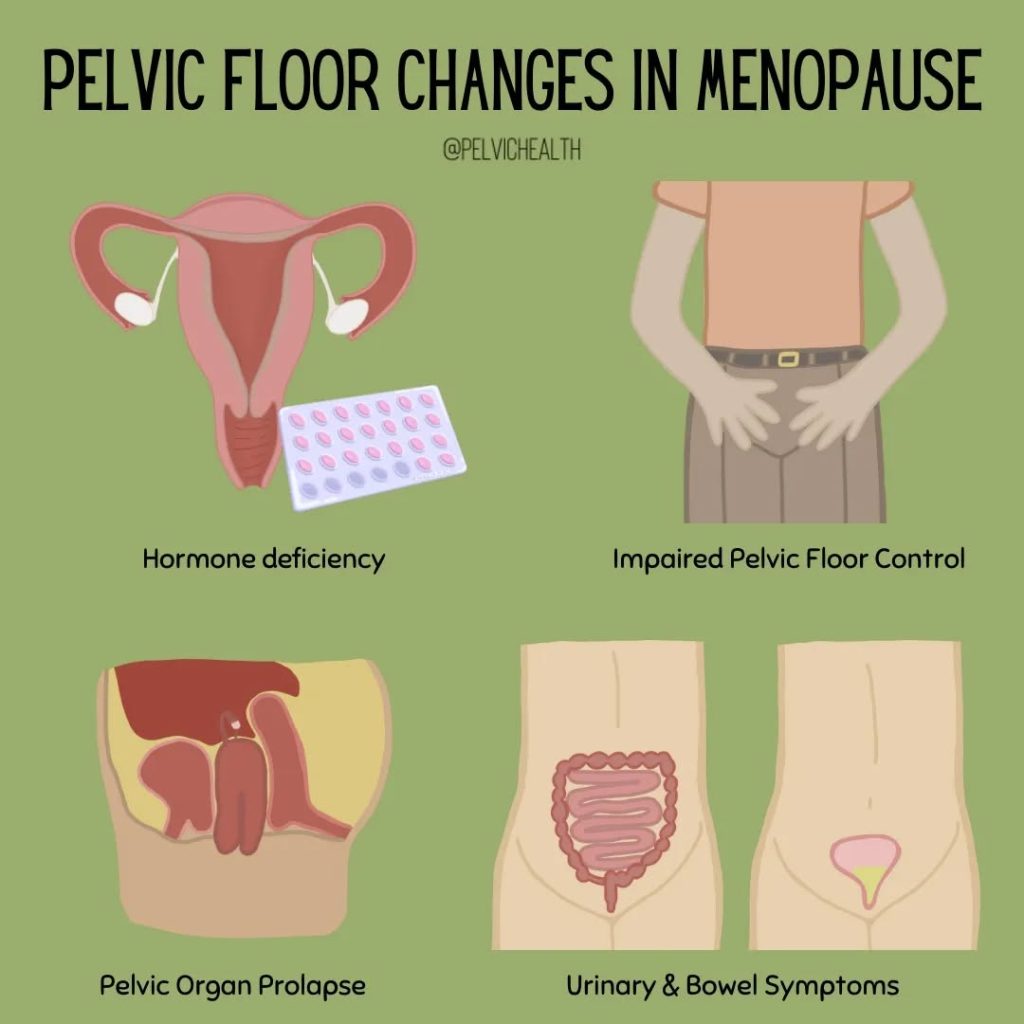
The pelvic floor muscles do not function in isolation. They are influenced by hormones, posture, breathing patterns, stress levels, and prior life events such as pregnancy, childbirth, surgery, trauma, or chronic pain. As estrogen levels fluctuate, pelvic tissues may become more sensitive, less resilient, or more prone to irritation and pain. For some women, this shows up as urinary leakage or urgency; for others, pelvic pain, painful intercourse, tailbone pain, or difficulty fully emptying the bladder or bowels.
These symptoms are common, but they are not normal and should not be dismissed as an inevitable part of aging.
Why So Many Women Suffer in Silence
A recurring theme in BALANCE is how frequently women are told that their symptoms are “just stress,” “just aging,” or “just hormones.” Many women bounce between providers without receiving a cohesive explanation—or worse, are made to feel that their concerns are exaggerated or insignificant.
Pelvic floor symptoms are especially stigmatized. Bladder leakage, pain with sex, or pelvic discomfort are rarely discussed openly, even among close friends. As a result, women may not realize that help exists, or that conservative, non-surgical, non-pharmaceutical treatment options are available.
This silence leads to delayed care, worsening symptoms, and unnecessary suffering.
How Pelvic Health Physical/Occupational Therapy Can Help
At Pelvic Health and Rehab Center, we specialize in treating pelvic floor dysfunction across the lifespan—including during perimenopause and menopause. Pelvic health physical therapy is grounded in evidence-based assessment and individualized care. Treatment may include:
- Comprehensive pelvic floor muscle assessment
- Manual therapy to address muscle tension, trigger points, and connective tissue restrictions
- Neuromuscular re-education to improve coordination and control
- Bladder and bowel retraining strategies
- Pain neuroscience education
- Breathing and pressure management
- Guidance for safe, effective exercise during hormonal transitions
- Collaboration with medical providers when appropriate
Importantly, pelvic health physical therapy does not assume that all pelvic floor issues are due to weakness. In perimenopause, we frequently see overactivity, guarding, altered motor control, and pain sensitization, all of which require a nuanced, skilled approach.
Whole-Person Care During a Time of Change
What BALANCE captures beautifully is that perimenopause is not just a hormonal event—it is a whole-person experience. Physical symptoms intersect with identity, self-image, relationships, work demands, and mental health. Pelvic floor dysfunction often amplifies this experience, particularly when it affects intimacy, confidence, or daily function.
Pelvic health physical/occupational therapists are uniquely positioned to provide patient-centered, trauma-informed, and empowering care. Our goal is not just symptom reduction, but helping women feel informed, supported, and in control of their bodies during a time that can feel unpredictable.
You Are Not Alone—and You Are Not Broken
One of the most powerful messages of BALANCE is reassurance: you are not alone. Millions of women experience challenging symptoms during perimenopause, yet far too few receive accurate information or timely care.
At Pelvic Health and Rehab Center, we see you. We listen. And we help.
We currently serve patients at 8 clinic locations, offering specialized pelvic health physical therapy for women navigating perimenopause, menopause, and beyond. Whether you are dealing with bladder symptoms, pelvic pain, painful intercourse, or changes in function that no one has adequately explained, there is help available. We’re here to help—every step of the way.
Watch the Series. Start the Conversation. Seek Support.
We encourage our community to watch BALANCE: A Perimenopause Journey and use it as a starting point for conversations—with friends, partners, and healthcare providers. Awareness is the first step, but action is what leads to change.
If perimenopause is affecting your pelvic health, your comfort, or your quality of life, you do not have to “wait it out.” Evidence-based pelvic health care can make a meaningful difference.
You can stream it starting January 30, 2026 via major platforms like Amazon Prime Video and Apple TV or directly through the official site: Watch BALANCE: A Perimenopause Journey (Official)
Follow the Conversation & Stay Updated
Join the growing global conversation and get updates, resources, and community connection through the documentary’s social channels and site:
-
Official Website: includes watch info, trailer, updates, and a newsletter signup.
______________________________________________________________________________________________________________________________________
Check out our recently published e-book titled “Vulvodynia, Vestibulodynia, and Vaginismus,” designed to empower and inform individuals on their journey towards healing and understanding.
Are you unable to come see us in person in the Bay Area, Southern California or New England? We offer virtual physical therapy appointments too!
Virtual sessions are available with PHRC pelvic floor physical therapists via our video platform, Zoom, or via phone. For more information and to schedule, please visit our digital healthcare page.
Do you enjoy or blog and want more content from PHRC? Please head over to social media!