

Do you feel the urge to urinate frequently, or find yourself leaking before you make it to the bathroom? Many people, especially as they get older, are prescribed medication to manage bladder symptoms and discomfort. And while medication can sometimes minimize symptoms, relief is often temporary and doesn’t address the real underlying cause: pelvic floor dysfunction.
If you’re urinating more than six to eight times in a 24-hour period, or leaking any urine at all, it could be because your pelvic floor is tight, weak, or uncoordinated.
Pelvic floor physical and occupational therapy can help and is considered the gold standard for treating bladder issues related to the pelvic floor.
What Is The Pelvic Floor?
The pelvic floor is a group of muscles and connective tissues that span the base of your pelvis. These muscles support your bladder, bowel, and, in women, the uterus. They play a very critical role in controlling the bladder (as well as bowel movements, sexual function, and maintaining pelvic stability).
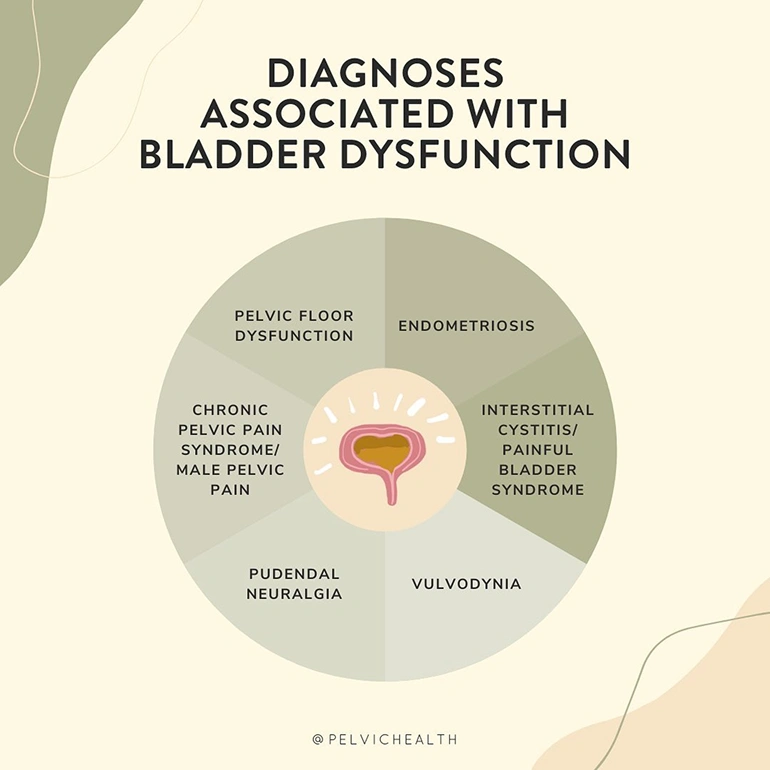
The issue is that when these muscles become too tight, weak, or uncoordinated, it leads to a variety of problems collectively referred to as pelvic floor dysfunction. These problems can show up as many different symptoms related to bladder control, including (but not limited to) bladder pain, leaking, and urgency.
Pelvic floor physical therapy is often the first line of treatment for bladder and urinary issues associated with pelvic floor dysfunction. A trained pelvic floor physical and occupational therapist will assess your pelvic floor muscles, determining whether they are too tight, weak, or uncoordinated. Treatment may involve lengthening the muscles before strengthening them through guided exercises. Bladder retraining, manual therapy, and lifestyle changes are often part of a comprehensive treatment plan.
Important Things To Know About Healthy Bladder Function
Many people think bladder issues only affect women, and that medication is often needed. But neither is true. Bladder dysfunction can affect all people, and in many cases, medication is not the appropriate treatment. Here are some other important facts to know:
- Normal urination is six to eight times in a 24-hour period.
- The urge to go should feel manageable, not like a five-alarm fire.
- It should take roughly 20 seconds to empty your bladder.
- Starting the stream should be easy and happen quickly.
- After voiding, urgency should go away completely.
- Fluid intake should increase how much you urinate, not how often.
- Bladder capacity is typically 300–600 mL.
- Under age 60, waking once per night is considered normal; over age 60, up to twice per night is generally normal.
- Leaking urine is never normal, no matter how little or how long it’s been happening.
- Pain before, during, or after urinating is never normal.
If any of these don’t sound like your experience, it could be due to pelvic floor dysfunction, and pelvic floor physical and occupational therapy could help.

Your Bladder Symptoms Could Be Caused By Pelvic Floor Dysfunction
Issues with the urinary system are one of the most common signs of pelvic floor dysfunction. These symptoms can vary from mild discomfort to significant disruptions in daily life.
-
Stress Incontinence
: Leaking urine when coughing, laughing, sneezing, or during exercise
-
Bladder Pain
: Discomfort or pain in the bladder region
-
Urgency/Frequency
: The feeling of needing to urinate urgently, even when the bladder isn’t full
-
Leaking
: Involuntary leakage of urine, either before reaching the bathroom or during activities
-
Urethral Pain
: Pain or burning in the urethra during or after urination
-
Mixed Incontinence
: A combination of both stress and urge incontinence
-
Urinary Hesitancy
: Difficulty starting the urine stream or having a slow flow
-
Climacturia
: Leaking urine with orgasm
Working with a pelvic floor physical and occupational therapist can address these symptoms by lengthening and strengthening the muscles, retraining the bladder, and using manual therapy and lifestyle changes to address the root cause of your symptoms.
Additional Causes Of Urinary Issues And Bladder Dysfunction
A tight, weak, or dyscoordinated pelvic muscle floor is one reason many people experience bladder issues, but there are also several other potential causes, including:
-
UTIs
: Repetitive urinary tract infections
-
Hormonal Changes
: Childbirth, breastfeeding, menopause
-
Surgical Trauma
: Post-prostatectomy complications or other surgeries
-
Yeast Infections
: Repeated yeast infections
-
Use of Hormonal Suppressive Medications
: Oral contraceptives, GnRH agonists, acne medications
-
Biomechanical or Structural Dysfunction
: Hip dysfunction, sacroiliac joint dysfunction, piriformis syndrome, scoliosis, leg length discrepancy
-
Pelvic Organ Prolapse
: Downward displacement of pelvic organs leading to bladder issues
-
Constipation and Gastrointestinal Distress or Bloating
: Increased pressure on the pelvic floor
Some of the above issues and conditions can benefit from visiting with your primary care doctor. However, things like biomechanical or structural dysfunction, pelvic organ prolapse, and gastrointestinal distress can often be treated by a pelvic floor physical and occupational therapist.
How Pelvic Floor Therapy At PHRC Can Help With Bladder Control
During your evaluation at PHRC, your pelvic floor physical and occupational therapist reviews your history and all symptoms with you, what you have been diagnosed with in the past, the treatments you have undergone (if any), and how effective or not effective these treatments have been.
We understand that the process of finding relief can be exhausting, which is why we take the time to listen. We never rush you in telling your story.
During your physical examination, your PHRC pelvic floor physical and occupational therapist examines muscles, tissues, joints, nerves, and your movement patterns. Once they complete the evaluation, they will review your findings with you and create an assessment that explains how they believe you developed the pain and establish short- and long-term goals for your bladder control treatment plan.
Most patients schedule appointments one to two times per week for roughly 12 weeks. You’ll also be given a home exercise program to complement your in-person sessions, and your PHRC pelvic floor physical and occupational therapist will help to coordinate your recovery with the other members of your treatment team (if applicable).
We’re here to help you get relief from your bladder and urinary symptoms.