View Post

What is the Fetus Ejection Reflex and is it real?

In Pregnancy/Postpartum by Emily Tran8 Comments

By Katie Hunter   “In the wild, mother and young have a better chance of survival if the mother can regulate labor so that the young are born in safe, quiet surroundings.” –Niles Newton, behavioral scientist and professor at Northwestern University circa 1987   Before I explain what all of this means… let’s go over some of the facts.   …

View Post

Male Pelvic Pain and Chronic Nonbacterial Prostatitis: A Story of Hope and Determination

In Male Pelvic Pain by Shannon Pacella6 Comments

  By Shannon Pacella, DPT, PHRC Lexington   Unfortunately, the majority of the men we see at PHRC have been through quite a journey with their pelvic pain, before finding pelvic floor physical and occupational therapy. I want to share a recent success story about one of my male patients, Ben (his name has been changed for anonymity). My hope …

View Post

THINKING OUTSIDE THE GUT: Could Endometriosis be the culprit behind your Constipation or Bloating?

In Endometriosis by Stephanie Prendergast1 Comment

By Iris Kerin Orbuch, MD   Did you know that Gastrointestinal (GI) symptoms are as common as gynecological symptoms in women with endometriosis? Do you suffer from bloating and/or constipation? Endometriosis may be the cause of your bloating and/or constipation. Over 90% of women diagnosed with endometriosis actually present with GI symptoms as their initial symptoms. Before we delve into why …

View Post

Love and Vaginismus: Mary’s story of personal growth

In Female Pelvic Pain by Melinda Fontaine1 Comment

By Melinda Fontaine   Mary is an amazing story because in a matter of months, she went from not having any penetrative sex for many years to having unrestricted intercourse with her partner. When Mary was a young woman, she saw a gynecologist for a routine exam. Now, lying on the exam table with your butt almost falling off the …

View Post

Period Drama: Endometriosis Diagnosis and Treatment

In Endometriosis by Stephanie Prendergast1 Comment

  By Stephanie Prendergast, Cofounder, PHRC Los Angeles   Severe menstrual pain is not normal. If you experience severe pain during your period it is possible you are suffering from an underdiagnosed disease called Endometriosis.   Endometrial tissue lines the uterus. In response to hormonal influences, the endometrium of a healthy uterus thickens and then sheds through the cervix, through …

View Post

Diaphragmatic breathing, pelvic pain, peeing and pooping

In Bladder Dysfunction by Emily Tran5 Comments

    Diaphragmatic breathing aka deep belly breathing – how is that an exercise? Many of my patients are surprised when I prescribe and emphasize diaphragmatic breathing in their home exercise programs. Historically, they have associated physical and occupational therapy and/or exercise with strengthening, stretching or the need to get the heart rate up. However, with the pelvic floor muscles, …

View Post

Sitting on painful fascia: connective tissue and pelvic pain

In Pelvic Floor Physical Therapy by Emily Tran6 Comments

    By: Admin   If you’ve recently been to your physical and occupational therapists, massage therapist, personal trainer, or body worker and heard the words “fascia” and “manipulation” in the same sentence, you are not alone. Fascia has become quite the buzzword for treating everything from chronic neck pain, ACL repair surgery, plantar fasciitis, and yes—even pelvic floor dysfunction. …

View Post

Time to Man Up: The Future of Male Birth Control

In Pregnancy/Postpartum by Elizabeth AkincilarLeave a Comment

  By Elizabeth Akincilar-Rummer   MEN!!! Are you ready?? Birth Control for men is here….almost.   Contraception. For some of us, that word has been a saving grace in preventing unwanted pregnancies and diseases. For others, it is fraught with moral and ethical dilemmas. But, those who are the most concerned with and often the most involved with contraception, are …

View Post

Pelvic floor physical and occupational therapy for vulvodynia: a clinician’s guide

In Female Pelvic Pain by Stephanie Prendergast12 Comments

By Stephanie Prendergast, MPT, Cofounder, PHRC Los Angeles   Recently I was asked to write an article about pelvic floor physical and occupational therapy for the treatment of vulvodynia, which will be published later this year as a tool for gynecologists. Since our blog readers are a combination of clinicians and people with pelvic pain I figured I would share …

View Post

Proper Treatment for Male Pelvic Pain: A Need for Change

In Male Pelvic Pain by Stephanie Prendergast and Elizabeth Rummer21 Comments

  By Stephanie Prendergast and Elizabeth Akincilar-Rummer   Tony is one of those people who seem superhuman. In his early 30s, he’s lean and athletic. When he isn’t chasing after one of his three young children or helping to run a successful family business, you can find him surfing, hunting, snowboarding, golfing, swimming, or playing basketball.   It’s hard to …

Contracture: Can it occur in the pelvic floor?

In Pelvic Floor Physical Therapy by Emily Tran2 Comments

By Rhonda Kotarinos, PT, DPT In this week’s post, guest author and pelvic floor expert Rhonda Kotarinos shares a controversy from the 2016 International Pelvic Pain Society conference. In October I had the privilege of presenting at the International Pelvic Pain Society’s annual meeting. During one of the presentations, a discussion ensued regarding the term contracture. The discussion was centered on …

View Post

Happy New Year from PHRC!

In Pelvic Floor Physical Therapy by Stephanie PrendergastLeave a Comment

  By Stephanie Prendergast   After a fun holiday season the crew at PHRC is back at work and excited to start the new year. In this week’s post we take a grateful look back on 2016 as we start working on our goals for 2017. Last year,   We published our book…..     On January 16, 2016, Pelvic …

View Post

Diastasis Recti: Closing The Gap Between Research and Function

In Pregnancy/Postpartum by Emily TranLeave a Comment

By Admin   During pregnancy and the postpartum period, many women suffer from both functional and cosmetic issues caused from the widening of the abdominal wall from stretch and pressure generated from the growing uterus. This stretching can result in a separation of the rectus abdominis muscle, known as a diastasis recti (DR).  Diastasis recti occur in approximately 66% of …

View Post

Your pelvic floor: what is it good for?

In Bladder Dysfunction by Shannon Pacella9 Comments

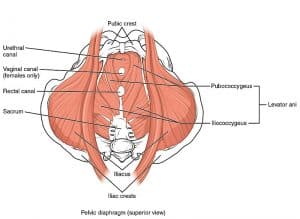
By Shannon Pacella, DPT, PHRC Lexington   The pelvic floor is a phrase used very frequently here on the blog as well as in our clinics, but to those unfamiliar with this area of the body, it may still be this illusive mystery. I want to break down the pelvic floor into each of the muscles it is comprised of, …

View Post

Oh coccyx, my coccyx!

In Pelvic Floor Physical Therapy by Emily Tran7 Comments

  By Admin   If you don’t know what or where your coccyx is, count yourself lucky.  This little bone can make quite a ruckus when it’s not happy, often called coccydynia.  The coccyx, or tailbone, is our little vestigial tail, after eons of evolution.  It is often ignored and forgotten by most, but to me, it’s one of the …

View Post

Is your internal thermometer working correctly? Persisting pain and your thyroid

In Pelvic Floor Physical Therapy by Emily Tran2 Comments

As a physical and occupational therapists specializing in pelvic floor disorders, specifically pelvic pain, I have noticed a strong correlation between chronic pain, the thyroid, and the endocrine system. I wanted to explore what hormonal imbalances can do to chronic pain. I won’t go into too much detail about persistent pain here,  instead please refer to the blog post Pain …

View Post

Physical and Occupational Therapy Treatment for Interstitial Cystitis and Chronic Pelvic Pain Syndrome

In Interstitial Cystitis by Stephanie Prendergast2 Comments

  By Stephanie Prendergast, MPT, Cofounder, PHRC Los Angeles   Urinary tract infections hurt. It hurts as your bladder fills, you constantly feel the need to pee and when you do it feels like knives are coming out of your body. You do not experience post-void relief and immediately feel like you need to pee again. Your doctor asks you …