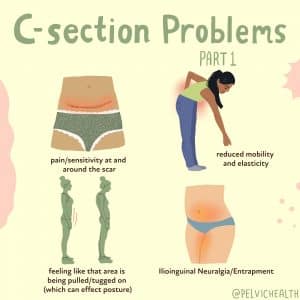
By Shannon Pacella, DPT, PHRC Lexington If you’re reading this, you probably know what a Cesarean birth (C-section) is,* but what you may not know is what to do once you have had one. Most women post C-section are not given much information regarding their healing incision, except to “keep it clean in order to prevent infection.” …
Pelvic Pain and Childbirth. Dr. Mark Conway tells us what we need to know.
By Elizabeth Akincilar-Rummer As we learned in a recent previous post by Stephanie Prendergast, the vast majority of women are not well informed when it comes to their pelvic floor, pregnancy and childbirth. In fact, 93% of women felt like they were insufficiently informed about their pelvic health! Unlike the rest of the population, many of our patients …
More Than The Baby Blues?
By Melinda Fontaine The majority of women experience some emotional fluctuations known as the Baby Blues in the first three weeks after they give birth, and it is natural. A smaller, but still significant percentage of women will experience Perinatal Mood and/or Anxiety Disorders (PMADs) before or after giving birth. There is a pressure for moms to feel a …
Postpartum sex, your pelvic floor and your body
It is now the six week mark and you are at your postpartum check up and are told by your doctor, everything looks great, you can resume having sex. You’ve finally hit this goal that everyone talks about- “six weeks.” But what does that really mean? Does it mean that everything ‘down there’ is back to normal? Sex will now …
Reducing perineal trauma during labor and delivery
By Stephanie Prendergast, Cofounder, PHRC Los Angeles Who doesn’t love a crowning baby cake? If our image didn’t catch your eye the title of this post probably did if you are pregnant or thinking about becoming pregnant. Last week we presented a pelvic health quiz about the role of the pelvic floor muscles play in childbirth. This week we …
What women do and don’t know about childbirth and their pelvic floor muscles
By Stephanie Prendergast, MPT, Cofounder, PHRC Los Angeles Recently, a number of studies were published on what women do and don’t know about their pelvic floor muscles, childbirth, and longer-term pelvic health. How much do you actually know? Take our quiz and find out! If you do not know the answers, don’t fret. You are amongst 93% of …
Beating the Odds: How one woman overcame a traumatic birth and had a successful second birth
Childbirth is no picnic: 85% of women who deliver vaginally experience perineal trauma and a third of those women in the USA and UK require stitches.2 The thought of having another baby after having gone through a traumatic birth can be daunting, to say the least. Returning to sex can also seem like a feat, especially when pain is involved. …
Yoga throughout Pregnancy and Beyond
By Shannon Pacella This week Shannon Pacella of the Pelvic Health and Rehabilitation Center interviews a yoga instructor about the benefits of yoga before and delivery. What is a typical Prenatal Yoga class like (length of the class, any specific areas of focus)? Each prenatal yoga class can vary widely, depending on the teacher’s style, the …
Fertility: The Other F Word
The older I get, the more I realize that there is another ‘F-word.’ For many people it is a harmless word, but for others it carries the same weight as any other profanity. I am talking about fertility. For a portion of people who are sexually active, fertility is a scary word. For some, fertility can mean a pregnancy that …
Pelvic Girdle Pain During Pregnancy
We all know one or two of those superhero mamas that REALLY enjoy being pregnant. You know, the ones that can eat anything without feeling nauseous during their first trimester or the ones that are able to run 20 miles a week until they deliver. Yes, pregnancy is a beautiful part of life and yes, we are happy for those …
Make Erections Great Again
By Dr. Joshua Gonzalez As a sexual medicine specialist, I spend a good deal of time talking about erections. Erectile dysfunction (ED) is actually a pretty common problem. Estimates of the prevalence of ED range from 9% to 40% of men by age 40, and generally increase by 10% with each decade thereafter1. ED affects approximately 30 million …
Pelvic floor physical and occupational therapy helps men after prostatectomy
By Melinda Fontaine, DPT, PHRC Walnut Creek What would men’s health month be without a blog about prostate cancer? One in seven men will be diagnosed with prostate cancer in his lifetime. Will this number be affected by the recent change in the U.S. Preventive Services Task Force’s change in recommendations on screening for prostate cancer? What happens when …
Brace yourselves: protecting your pelvic floor during CrossFit and loaded exercise
If you are a male and either currently participate in CrossFit workouts or another form of Olympic weightlifting, and have developed one or more of these symptoms: perineum pain with sitting, lower abdominal pain with intense activity or ejaculation, testicular pain that radiates to the abdomen or the vice versa, and urinary hesitancy with urgency and frequency, this blog is …
Prostatitis, pelvic pain, and physical and occupational therapy: a case of success!
By Admin David was diagnosed with a urinary tract infection and prostatitis. Antibiotics did not help. Did he have an infection or pelvic floor dysfunction? A few initial words from David: “My journey that ended with pelvic health and rehabilitation began with an unfortunate experience that I understand is all too common a story for men. After I …
Understanding Pelvic Floor Movement
By Katie Hunter, DPT Drop, push, bulge, squeeze. These words are used regularly when talking about pelvic floor function but what do they actually mean? We often talk about how the pelvic floor muscles become dysfunctional and can cause daily symptoms of pelvic pain, bladder and bowel urgency and frequency, incontinence, prolapse, and sexual dysfunction. Today, I …
Posture and the Pelvis: Part One
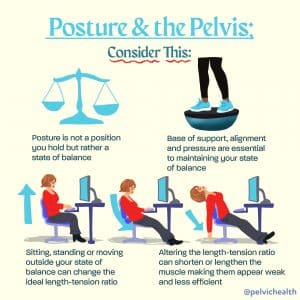
By Admin “In all nature structure determines function” – William Herbert Sheldon, father of somatotyping “Form and function are a unity, two sides of a coin” – Ida P. Rolf, biochemist and fascial genius “Conjunction junction, what’s your function?” – Schoolhouse Rock, how us 30+s learnt grammar Structure and function are intricately connected. Our posture is the structure in …
I insist! My pelvic pain is my Tarlov cyst!!
By Elizabeth Akincilar-Rummer For the average person, the words Tarlov cyst mean absolutely nothing. For the average medical professional, they mean little to nothing. So why are we devoting an entire blog post to these cysts that no one seems to care about? Full disclosure, personally, I was curious what the literature had to offer on Tarlov cysts since …
The Female Prostate: Fact or Fiction?
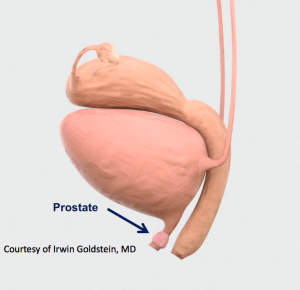
By Stephanie Prendergast Do women have a prostate? Where is the female prostate and what does it do? I have been a pelvic floor physical and occupational therapists for 17 years and, until recently, had never heard of such a structure. Last month, Dr. Irwin Goldstein, urologist, sexual medicine enthusiast, and International Society for the Study of …
The Liver and Hormone Connection
By Dr. Thalia Farshchian It can be both a beautiful and frustrating thing that the body is so interconnected. In some respects, it is fascinating and comforting and in other ways, it can feel so complicated. The more I study medicine, the more in awe I become of how it all works. As a doctor, I focus on …
Check Yourself Before You Stress Yourself
Stress: I’m all too familiar with it. As I write this blog I feel the stress of the deadline rapidly approaching. Writing is not my forte, so I tend to start writing assignments at the last minute, which puts me under pressure and causes, well…stress. I can feel the heaviness in my chest, the adrenaline pumping through my body, and …
The Scoop on Poop: More than Constipation
Everybody poops! I hope that everyone reading this blog accepts this reality. At PHRC, we spend a lot of time talking to our patients about the importance of proper pooping. Often, this discussion is uncomfortable. I get it. No one is keen to bond with their bowel movements. Poop has a bad reputation, which is unfortunate because it can …