By guest blogger Steve Hodges, MD with an introduction from Elizabeth Akincilar As pelvic floor physical and occupational therapistss, we often notice a common denominator among our patients suffering with pelvic pain: CONSTIPATION. Probably more frequently than not, our patients with pelvic pain also struggle with constipation currently, or have at some point in their lives. Many of …
PHRC teams up with Innovative Wellness in Walnut Creek!!!!
By Stephanie Prendergast The Pelvic Health and Rehabilitation Center is expanding to Walnut Creek! We are excited for a unique opportunity to team up with Rachael Cabreira, RN, BSN, MSN, FNP-C and Certified Sexual Health Clinician inside her new private practice, Innovative Wellness. People who know us at PHRC know that we believe in coordinated, interdisciplinary care for …
A Biopsychosocial Approach to Vulvodynia
Throughout my years of practice I’ve treated many women with vulvodynia. I’ve noticed that it’s rare for women to return to 100% solely with physical and occupational therapy treatment; even though their musculoskeletal impairments may have returned to normal, some women continue to feel pain. In my experience, it takes a team of practitioners to treat vulvodynia, such as …
Mechanistic Interplay among Peripheral, Spinal and Brain Adaptions to Chronic Visceral Pain
For those of you following our journey through the 3rd World Congress on Abdominal and Pelvic Pain (#WCAPP17), here is another light-bulb lecture explaining the interconnections of chronic visceral pain. The presenter, Melissa A. Farmer, PhD, is a researcher at the Feinberg School of Medicine at Northwestern University with a long-standing relationship with the International Pelvic Pain Society (the …
Autonomic Dysregulation in Functional Gastrointestinal Disorders
By Melinda Fontaine, DPT, Walnut Creek At the 3rd World Congress on Abdominal and Pelvic Pain organized by the International Pelvic Pain Society, Professor Qasim Aziz spoke about Autonomic Dysregulation in Functional Gastrointestinal Disorders. Qasim Aziz, MBBS, FRCP, PhD is Professor of Neurogastroenterology at Barts and The London School of Medicine and Dentistry at Queen Mary, University …
When Sex Hurts: A Diagnostic Algorithm
Most people know that I am a fan of sexy science. So when I saw that the World Congress on Pelvic Pain (WCAPP) had an entire section dedicated to sexual dysfunction I was pretty stoked. You may already be imagining some very arousing presentations; or you may think listening to a talk on intercourse would induce the same amount …
The Peripheral Nervous System, Interstitial Cystitis, and Pelvic Pain
By Katie Hunter I had the pleasure of attending Dr. Kenneth Peters’ lecture on the role of the Peripheral Nervous System(PNS) in the development and management of pelvic pain. Kenneth Peters, MD is a urologist practicing at Beaumont Hospital in Royal Oaks, MI, who specializes in treating complex pelvic pain including interstitial cystitis. For more information on Dr. …
This is Us: a look inside PHRC
By Stephanie Prendergast, Cofounder, PHRC Los Angeles January is often the time to reflect on the past year and set goals for the future. So, in that spirit, we thought it would be fun to dedicate this post to a few top Pelvic Health and Rehabilitation Center events of 2017….and a peak forward to 2018. In no particular …
Positive Affect Helps Mitigate Chronic Pain: Building a Positive Piggy Bank
Many patients find that managing chronic pelvic pain conditions can sometimes be difficult. Oftentimes there is no one “thing” or pathology that symptoms can be tied to which, understandingly, can be frustrating or overwhelming. More accurately, chronic pelvic pain is a complex interaction of both physiological and psychosocial components. It is not only the body but the mind and …
Urologic Chronic Pelvic Pain & Manual Pelvic Floor Physical and Occupational Therapy
By Shannon Pacella While attending the 3rd World Congress on Abdominal and Pelvic Pain organized by the International Pelvic Pain Society, I had the privilege of listening to Rhonda K. Kotarinos, DPT, MS give a lecture on the topic of urologic chronic pelvic pain and manual physical and occupational therapy. Rhonda K. Kotarinos, DPT, MS is a Doctor …
Autonomic Features of Chronic Pelvic Pain
By Elizabeth Akincilar Understanding and effectively treating chronic pain continues to challenge the medical community. Now more than ever, there is a sense of urgency to treat this disease. With the astounding reports of opiate addiction and opiate related deaths in this country, we now know that throwing drugs at chronic pain is not the answer. So what …
Endometriosis: Beyond the lesions
By: Jandra Mueller, DPT, MS, PHRC Encinitas In our second post of our series covering the Third World Congress on Abdominal and Pelvic Pain, I will cover the lecture titled Endometriosis-associated pain, why should we consider the central nervous system? If you missed our first post, click here. This year at the annual meeting of the International Pelvic …
3rd World Congress on Abdominal and Pelvic Pain Pain Updates, Part I
By Stephanie Prendergast Last month, pelvic pain enthusiasts traveled from all over the globe to attend the 3rd World Congress on Abdominal and Pelvic Pain in Washington, DC. The World Congress on Abdominal and Pelvic Pain is joint scientific meeting between the International Association for the Study of Pain Special Interest Group on Abdomino-Pelvic Pain, Convergences in pelvic-Perineal …
Beating Interstitial Cystitis
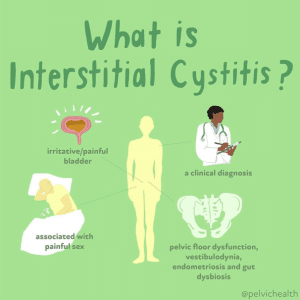
By Stephanie Prendergast “Thousands of people with Interstitial Cystitis live healthy, pain-free lives and so can you.” – The Interstitial Cystitis Solution, Nicole Cozean PT, DPT, WCS In honor of Bladder Health Month this week’s blog is dedicated to Interstitial Cystitis/ Painful Bladder Syndrome. IC/PBS is a treatable pelvic pain syndrome affecting roughly 3 million men and 9 …
How to Stop Worrying and Obsessing About Pelvic Pain Symptoms
By Lorraine Faehndrich If you’re suffering with pelvic pain it’s very likely that you’ve spent a lot of time worrying and obsessing about your symptoms. Maybe you’ve spent hours online searching for answers, reading stories of others’ experiences with pelvic pain, or participating in “support” groups that leave you even more stressed, worried and fearful than you already …
How Diane beat Vulvodynia
By Diane I suffered with pelvic pain for years. I want to share my story, so others won’t have to suffer needlessly. It started in February 2009 when I tried having sex with my boyfriend. Intercourse was extremely painful, and each time, my perineum tore a bit. I’d be sore for days afterward. Eventually I’d heal, but it …
Solving Female Sexual Dysfunction
By: Dr. Lisa Valle What if the cure for adding more luster to your life is a fulfilling, sex life? But what happens when a woman feels distress about her sex life? Or she experiences sexual pain? Is there anything that she can do about it? The answer is an emphatic yes! There is an …
Tips for Coping With Persistent Pelvic Pain
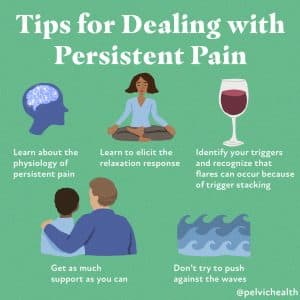
By Jessica Newman, LMHC Living with persistent pelvic pain is, by definition, painful physically. What can be hard to talk about (especially for folks with pelvic pain) is just how emotionally distressing the pain is. And because the mind and body are a functional whole (think: a Mobius strip) emotional distress can trigger or amplify physical pain and vice …
Posture and the Pelvis: Part Deux
“Share the load” – Samwise Gamgee “It’s all about the base ” – Meghan Trainor “Drop it like it’s hot” – Snoop Dogg Some different quotes from last time, but after reading today’s post you’ll understand how Samwise, Ms. Trainor and Dr. Dogg are all talking about posture and the pelvis, and they didn’t even know it. …
Foul! What the Media Got Wrong about Women’s Health!
Over the last year, the media has come under increasing scrutiny: visit almost any website, and you’ll see that the terms “fake news” and “alternative facts” have taken over the headlines and the comments section. Now, I love the people who produce pieces that aim to educate the community, especially when the subject is women’s health and the author is …
How Pelvic Floor Physical and Occupational Therapy Helps Fecal Incontinence
Loss of bowels can be quite alarming considering a recent systematic review revealed that nearly 7.7% of community adults, with no difference in gender, have fecal incontinence.2 Fecal incontinence is defined as an uncontrolled loss of stool and can have significant implications on one’s physical and psychological well being. It is associated with social isolation, anxiety, loss of employment and …