View Post

Vulvodynia, Vestibulodynia, and Vaginismus: what’s the difference and why does it matter?

In Female Pelvic Pain by Stephanie Prendergast3 Comments

  By Stephanie Prendergast, PHRC Cofounder   As many as 28% of women experience painful sex at some point during their reproductive years and that sucks. Knowledge is power and May is Pelvic Pain Awareness Month so we want to provide women with useful information about the three most common diagnoses associated with painful sex: vulvodynia, vaginismus, and vesitbulodynia. Differentiating …

View Post

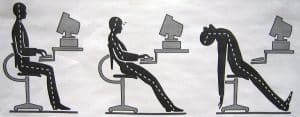
Posture Revisited: Sitting and the Pelvic Floor

In Pelvic Floor Physical Therapy by Emily Tran5 Comments

Photo via Joe Loong via Flickr In previous entries, Britt beautifully took us through all things posture (Posture and the Pelvis Part One and Part Deux). Here are some important takeaways from her posts to consider as we explore how sitting may affect your pelvic floor:   The diaphragm, trunk (back extensors, transversus abdominis, obliques, etc.) and pelvic floor muscles are …

View Post

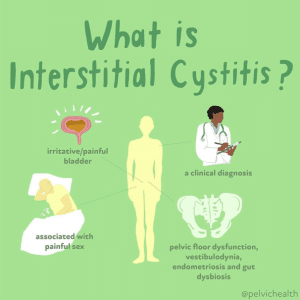
The Most Proven IC Treatment: Pelvic Floor Physical and Occupational Therapy

In Interstitial Cystitis by Stephanie Prendergast4 Comments

  By Guest Blogger Nicole Cozean, PT, DPT, WCS and author of The Interstitial Cystitis Solution   Pelvic floor physical and occupational therapy is the most proven treatment for interstitial cystitis. It’s the only therapy given an evidence grade of ‘A’ by the American Urological Association and recommended in the first line of medical treatment. But patients often wonder how …

View Post

Autonomic Dysregulation in Functional Gastrointestinal Disorders

In Pelvic Floor Physical Therapy by Melinda FontaineLeave a Comment

  By Melinda Fontaine, DPT, Walnut Creek     At the 3rd World Congress on Abdominal and Pelvic Pain organized by the International Pelvic Pain Society, Professor Qasim Aziz spoke about Autonomic Dysregulation in Functional Gastrointestinal Disorders. Qasim Aziz, MBBS, FRCP, PhD is Professor of Neurogastroenterology at Barts and The London School of Medicine and Dentistry at Queen Mary, University …

View Post

When Sex Hurts: A Diagnostic Algorithm

In Female Pelvic Pain by Emily TranLeave a Comment

  Most people know that I am a fan of sexy science. So when I saw that the World Congress on Pelvic Pain (WCAPP) had an entire section dedicated to sexual dysfunction I was pretty stoked. You may already be imagining some very arousing presentations; or you may think listening to a talk on intercourse would induce the same amount …

View Post

This is Us: a look inside PHRC

In Pelvic Floor Physical Therapy by Stephanie Prendergast2 Comments

  By Stephanie Prendergast, Cofounder, PHRC Los Angeles   January is often the time to reflect on the past year and set goals for the future. So, in that spirit, we thought it would be fun to dedicate this post to a few top Pelvic Health and Rehabilitation Center events of 2017….and a peak forward to 2018. In no particular …

View Post

Beating Interstitial Cystitis

In Interstitial Cystitis by Stephanie Prendergast4 Comments

  By Stephanie Prendergast   “Thousands of people with Interstitial Cystitis live healthy, pain-free lives and so can you.” – The Interstitial Cystitis Solution, Nicole Cozean PT, DPT, WCS   In honor of Bladder Health Month this week’s blog is dedicated to Interstitial Cystitis/ Painful Bladder Syndrome. IC/PBS is a treatable pelvic pain syndrome affecting roughly 3 million men and 9 …

View Post

Foul! What the Media Got Wrong about Women’s Health!

In Female Pelvic Pain by Emily TranLeave a Comment

Over the last year, the media has come under increasing scrutiny: visit almost any website, and you’ll see that the terms “fake news” and “alternative facts” have taken over the headlines and the comments section. Now, I love the people who produce  pieces that aim to educate the community, especially when the subject is women’s health and the author is …

View Post

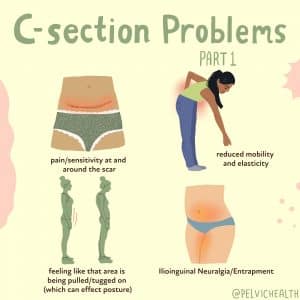
C-section Scar Problems and Solutions from a Pelvic Floor Physical and Occupational Therapists

In Pregnancy/Postpartum by Shannon Pacella13 Comments

  By Shannon Pacella, DPT, PHRC Lexington   If you’re reading this, you probably know what a Cesarean birth (C-section) is,* but what you may not know is what to do once you have had one. Most women post C-section are not given much information regarding their healing incision, except to “keep it clean in order to prevent infection.”   …

View Post

Reducing perineal trauma during labor and delivery

In Pregnancy/Postpartum by Stephanie Prendergast2 Comments

By Stephanie Prendergast, Cofounder, PHRC Los Angeles   Who doesn’t love a crowning baby cake? If our image didn’t catch your eye the title of this post probably did if you are pregnant or thinking about becoming pregnant. Last week we presented a pelvic health quiz about the role of the pelvic floor muscles play in childbirth. This week we …

View Post

What women do and don’t know about childbirth and their pelvic floor muscles

In Pregnancy/Postpartum by Stephanie Prendergast1 Comment

By Stephanie Prendergast, MPT, Cofounder, PHRC Los Angeles   Recently, a number of studies were published on what women do and don’t know about their pelvic floor muscles, childbirth, and longer-term pelvic health.   How much do you actually know? Take our quiz and find out! If you do not know the answers, don’t fret. You are amongst 93% of …

View Post

Hormones: Your Body’s Frenemies

In Female Pelvic Pain by Emily Tran6 Comments

Hormones drive me crazy. As a woman, my biological clock seems to be more like an overactive alarm clock lately. For example, on a certain day I may see a baby and feel an intense urge to procreate. It is as if my uterus wants nothing more than for me to have 18 babies right now and then star in …

View Post

How do I know if I have Pudendal Neuralgia or Pudendal Nerve Entrapment?

In pudendal neuralgia by Stephanie Prendergast561 Comments

Part I in the “Demystifying Pudendal Neuralgia” Series For so many the term “pudendal neuralgia” conveys a frightening and mysterious chronic pain diagnosis. And to be sure, at one time, receiving a diagnosis of pudendal neuralgia, or “PN” as it’s commonly called, was truly terrifying, especially considering that it was against the backdrop of a medical community that didn’t have …